Chinese automakers outside Europe: how they enter depends on each country's tariffs and localization requirements
Denza imports fully built vehicles into India, Geely uses Renault's network in Argentina, Chery's suppliers are forming joint ventures in Malaysia for steering and braking, and Canada requires Chinese automakers to build plants first. The four entry routes reflect each country's tariffs, quotas and local content requirements.
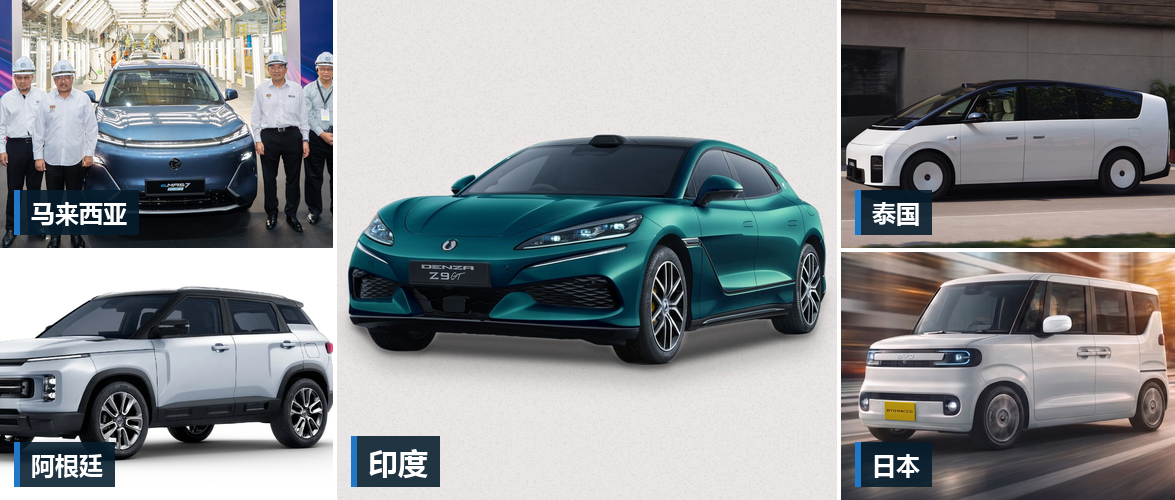
On Nov 13, BYD's premium brand Denza launched the D9 and Z9 GT in India, both imported fully built from China. On Nov 16, Canadian Prime Minister Carney said that if trade talks with the US fail to preserve an integrated North American auto industry, Canada could turn to Chinese automakers, but any Chinese investment would require substantial manufacturing in Canada. On Nov 17, Renault Argentina announced it had become the official distributor of Geely's new energy vehicles. This week, Malaysian components maker Feytech signed MoUs with two Chinese suppliers to explore local production of steering and braking systems for Chery; Li Auto announced its channel arrangements for entering Hong Kong, Singapore, Thailand and Vietnam; and BYD's cumulative sales in Japan passed 10,000 units.
Importing complete vehicles, leveraging partner networks, localising components and building plants in exchange for market access — each approach corresponds to different tariff, quota and local content conditions in each country. Where the host country offers duty-free or low-tariff quotas without mandating local production, automakers import first and use existing channels; where the host market caps import volumes or ties market opening to manufacturing, costs shift to plants and the component supply base.
Malaysia's assembly requirements
Feytech's tripartite MoU is with Zhejiang Libang Hexin Intelligent Brake Systems and Wuhu Shiteruì Steering Systems. The three plan to study a joint venture in Malaysia to make chassis parts for Chery's local vehicle localisation project. They will start with a feasibility study to select steering and braking parts suited to local CKD assembly. The MoU does not disclose investment, shareholdings or capacity.
Feytech already works with Chery. According to the Malaysian Investment Development Authority (MIDA), in Dec 2024 Feytech set up a car seat joint venture with Chery subsidiary Wuhu Ruitai, with Feytech holding 51% and Ruitai 49%. Initial investment was RM 6 million, with a further RM 7.73 million in the second year. By expanding from seats into steering and braking, Feytech can capture more content per vehicle. Brands assembled by Chery Group in Malaysia include Chery, Omoda, Jaecoo, iCAUR and Jetour.
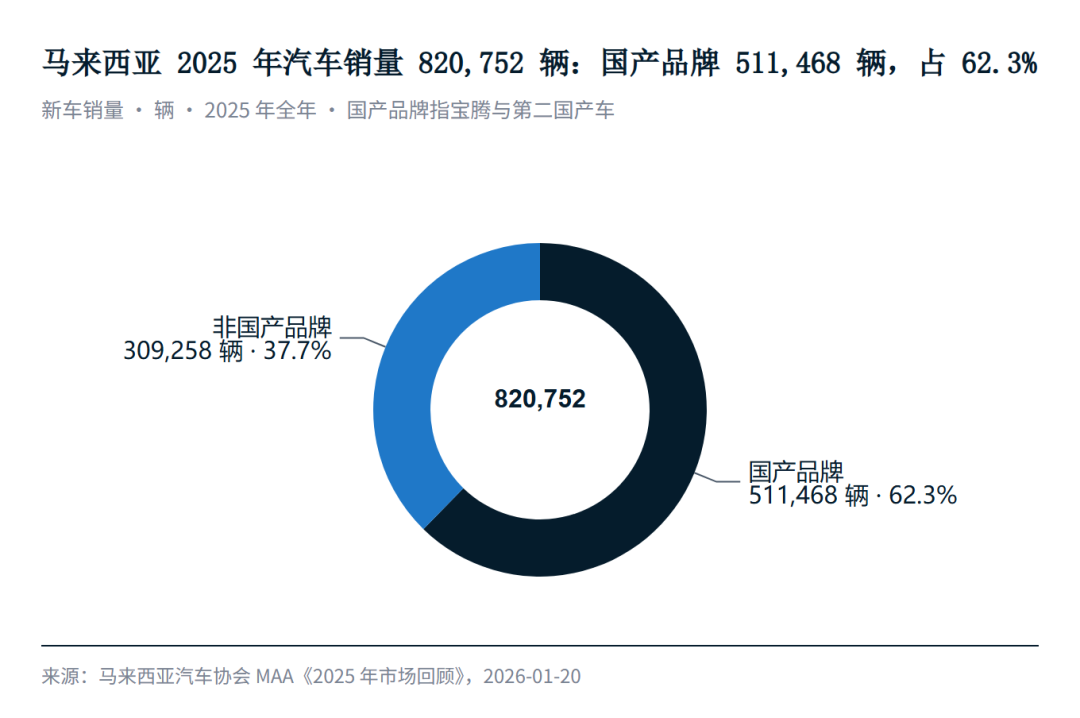
The reason suppliers are following lies in host-country rules. According to a clarification issued in March by Malaysia's Ministry of Investment, Trade and Industry (MITI), new vehicle investments after Sep 2025 (except those using existing assembly plants) are capped at 10,000 units in domestic sales, must carry out body, paint and trim operations locally, and must have a minimum on-the-road price of RM 100,000. 10,000 units is about 1.2% of Malaysia's 2025 national sales of 820,752 units. The price floor for imported EVs is also rising: from 2022 to the end of 2025, the minimum on-the-road price for imported EVs was relaxed from RM 250,000 to RM 100,000, and that arrangement has now expired; from Jul 2026, imported fully built EVs must have a CIF price of at least RM 200,000 and an output of at least 180 kW. To sell low-priced EVs in Malaysia, they have to be assembled locally.
Chery is taking exactly this route. Since Jun 2023, Chery's Omoda 5 and other models have been contract-assembled at the Inokom plant in Kulim; on Jun 26, 2025, Chery obtained a manufacturing licence from MITI and is building its own plant at the Beringin high-tech automotive valley.
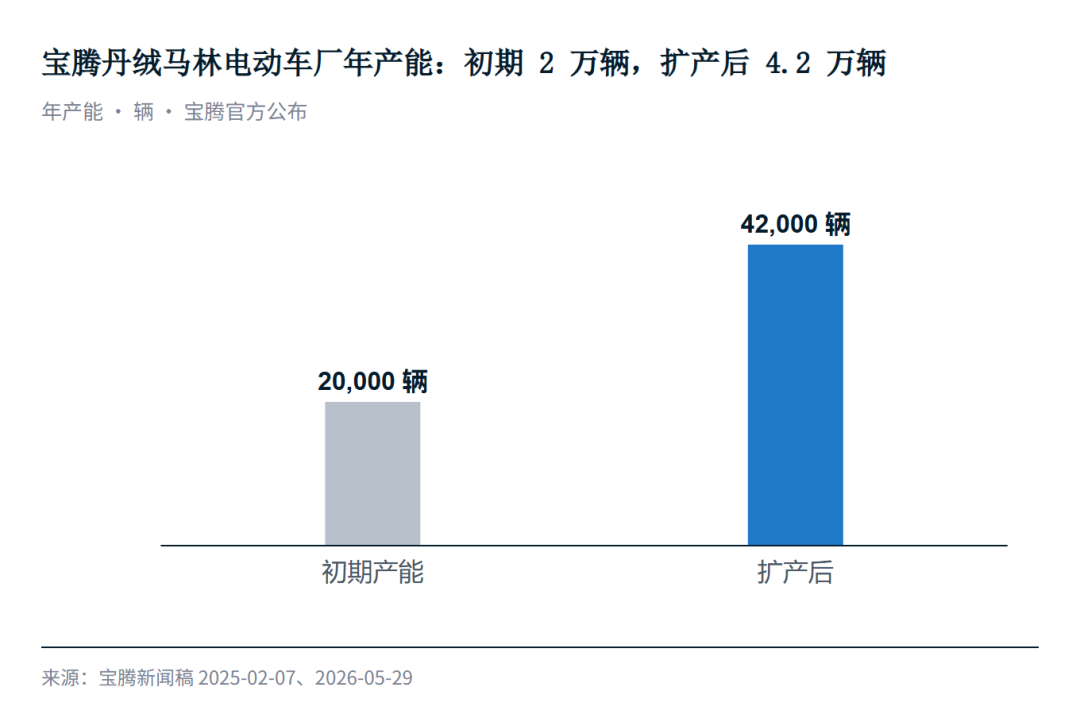
Geely took a different approach. In 2017 it acquired a 49.9% stake in Malaysia's national brand Proton, with DRB-HICOM retaining 50.1%. Data show that Proton-Geely reached a 76% localisation rate in 2025. According to the Malaysian Automotive Association (MAA), national brands sold 511,468 units in 2025, a 62.3% share. Proton's EV plant in Tanjung Malim has expanded capacity from 20,000 to 42,000 units, and locally sourced parts account for 30% of the locally assembled e.MAS 7 PHEV. With a local brand, Geely's vehicles are not bound by the 10,000-unit cap on new entrants.
The market is already crowded. According to MITI, 14 of the 34 foreign car brands sold in Malaysia are Chinese, or 41%. From 1 to 9 this year, Malaysian vehicle sales reached 602633 units, up 4% year on year.
In Malaysia, new Chinese entrants must spread the cost of a plant and a local body paint line across a domestic cap of 10,000 units, and the share of local parts determines how far costs can fall. For Chinese suppliers, following OEMs into joint ventures with locally listed companies is the most direct way into the market.
India's vehicle imports
Denza has appointed dealers in six Indian cities: Gurgaon, Ahmedabad, Mumbai, Bengaluru, Chennai and Hyderabad, with showrooms already open in Gurgaon and Mumbai. The D9 and Z9 GT are available overseas in both PHEV and BEV versions, but in India only as BEVs. Both are imported from China as CBUs, each in a single trim, priced at INR 9 million and INR 15.68 million respectively, excluding registration, insurance and the 1% tax collected at source.
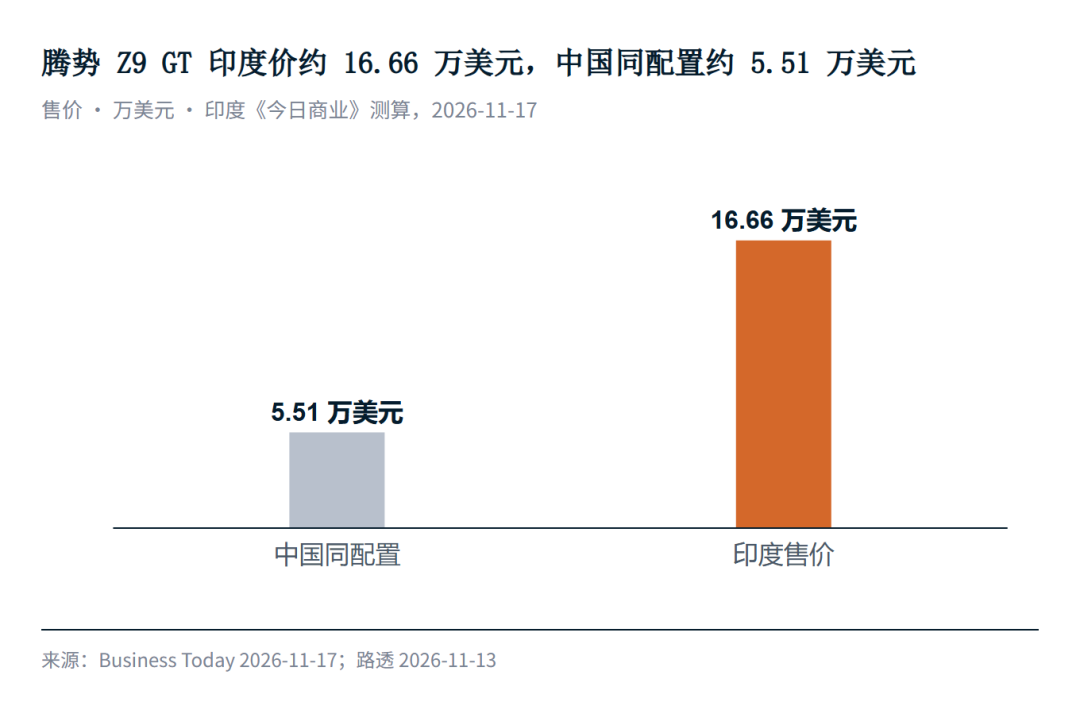
India's 2025 budget cut the basic customs duty on fully built vehicles with a CIF value above $40,000 from 125% to 70%, while adding a new 40% agriculture infrastructure cess, leaving the effective tax burden unchanged. Reuters reports that BYD faces tariffs of up to 100% on vehicles imported from China. India's Business Today estimates the Z9 GT costs about $166,600 in India, three times the roughly $55,100 for the same spec in China, and the D9's Indian price is nearly 80% higher than in China. India's luxury car market is about 52,000 units a year; Mercedes-Benz sold 19,007 cars there in 2025.
India has opened some room for imported cars. The SPMEPCI scheme announced by the Ministry of Heavy Industries in Mar 2024 allows EVs with a CIF value of at least USD 35,000 to be imported at a 15% tariff, up to 8,000 units a year. In return, companies must invest at least INR 4,150 crore (about USD 500 million) within 3 years and reach 25% local value addition within 3 years and 50% within 5 years. However, Press Note 3 of Apr 2020 requires government approval for investment from countries sharing a land border with India. Even after it was eased in March this year, Chinese entities still need prior approval. In 2023, BYD and India's Megha Engineering planned to invest USD 1 billion in a vehicle plant in Hyderabad with annual capacity of 10,000 to 15,000 units; according to The Economic Times, the plan was not approved because of security reviews.
Models without local Indian certification are limited to 2500 imported units per model per year. BYD has obtained certification for the Atto 3, eMAX 7 and Sealion 7, but Denza's two models are not yet certified. The company said it will watch market response before deciding, and local manufacturing will also depend on the response.
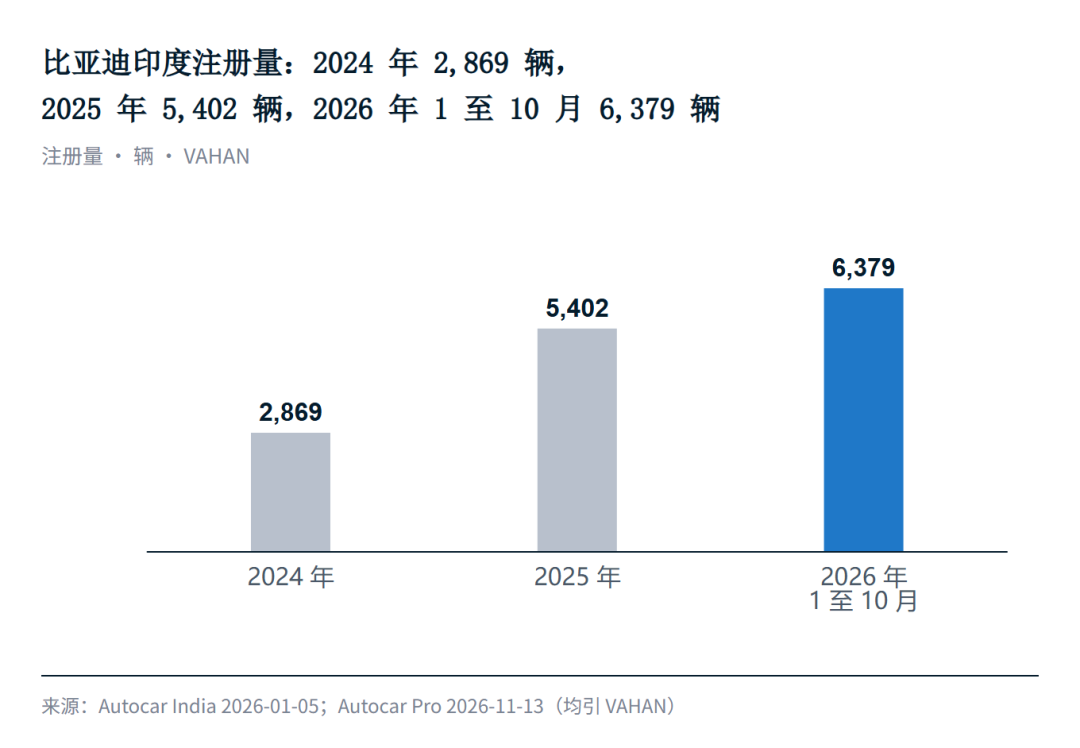
The BYD brand in India also relies on imports. Data from India's VAHAN vehicle registration system show BYD registered 5,402 units in India in 2025, up 88%, or 3.05% of that year's 176,817 electric passenger cars; registrations of 6,379 units from January to October this year already equal 118% of last year's total. BYD has about 50 showrooms in India, where passenger car wholesales totalled 4.49 million units in 2025.
Argentina's import quotas
Renault Argentina will become the official distributor of Geely new energy vehicles in Argentina, with Geely using Renault's commercial structure and dealer network. Geely currently sells two models in Argentina: the EX5 battery-electric SUV and the Icon petrol compact SUV. Renault will sell only Geely's electrified models, including hybrids, PHEVs and BEVs. Geely's existing import agent, Autos Sustentables del Sur, keeps its contract, reportedly until 2029. The announcement did not list models, timing or volumes, and producing Geely models at Renault's Santa Isabel plant in Córdoba is not on the agenda.
Since 2017, Geely has changed import distributors in Argentina three times, relaunching with the EX5 in Oct 2025. Renault and Geely already have equity ties in other markets: in 2022 Geely took a 34.02% stake in Renault Korea, and in Nov 2025 a 26.4% stake in Renault do Brasil, where the two produce the EX5 M-i.
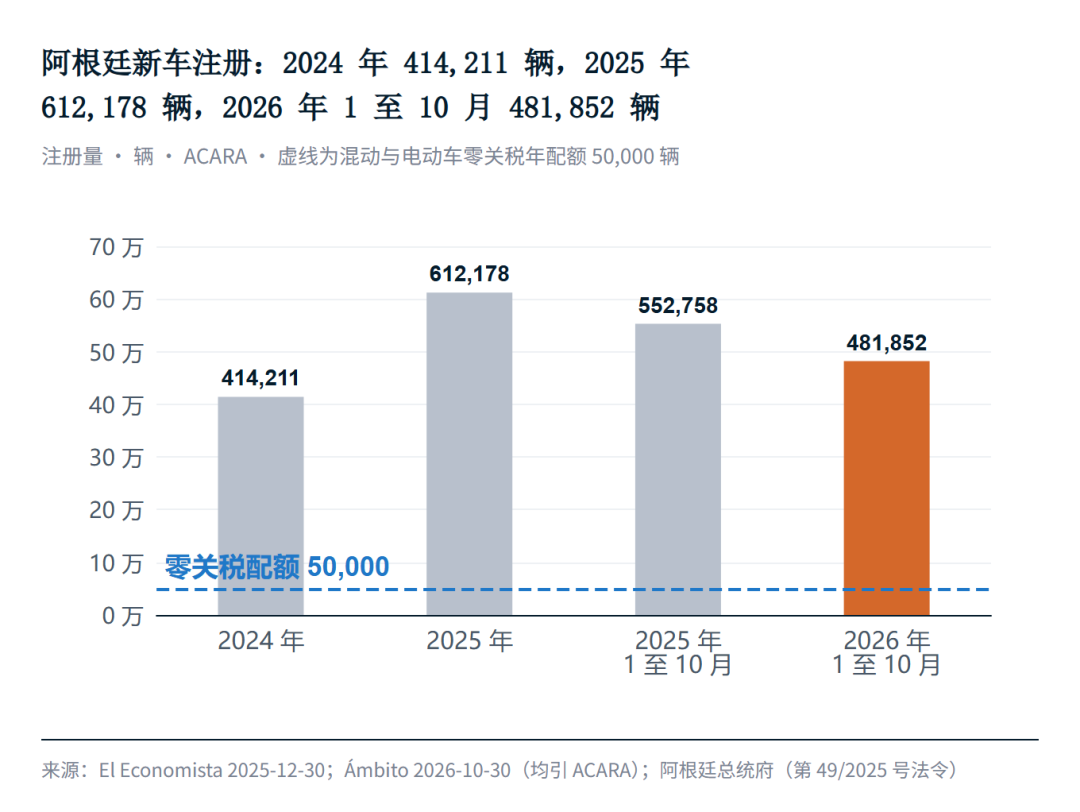
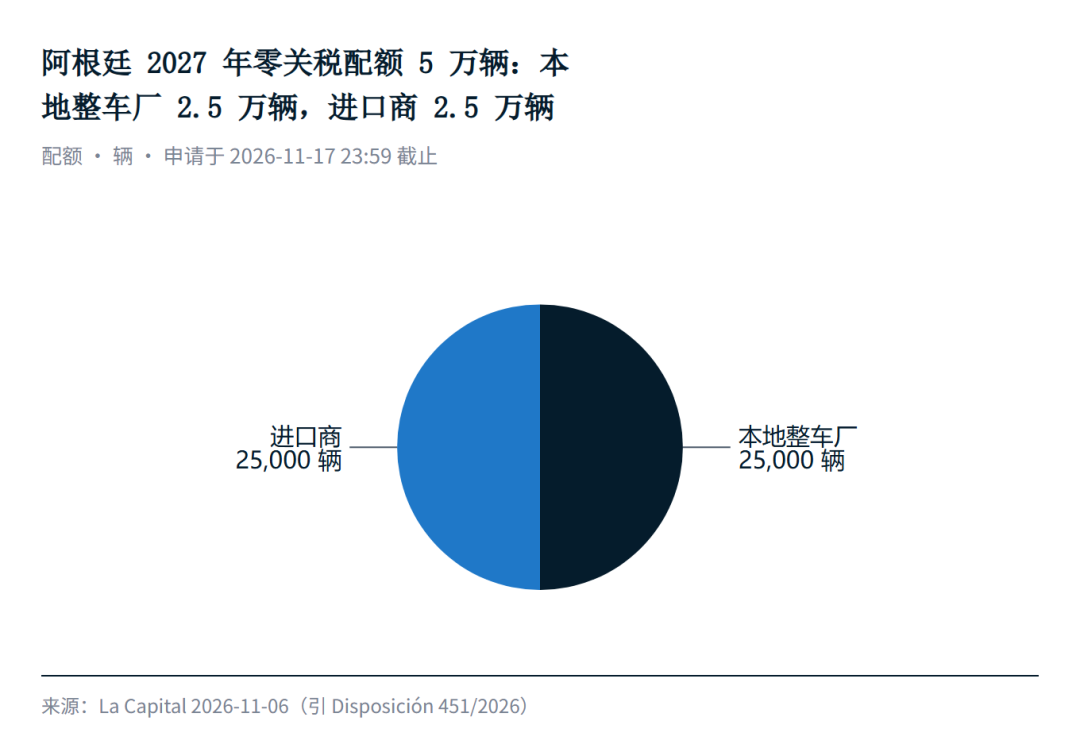
Argentina's condition is a quota. Decree No. 49 of Jan 2025 cut import tariffs on hybrid and electric vehicles from 35% to zero for vehicles with an FOB price of up to USD 16,000, capped at 50,000 units a year for five years. Decree No. 1128 of September 30 this year adjusted the price ceiling; media reported it was raised to USD 35,000 for BEVs, with the total quota unchanged. 50,000 units is about 8.2% of Argentina's 612,178 registrations in 2025. The 2027 quota of 50,000 units is split evenly between local vehicle makers and importers, 25,000 units each. Renault Argentina falls on the local-maker side; neither party has said whether this partnership is linked to a quota application.
This market is shrinking this year. According to Argentina's car dealers' association ACARA, 612178 vehicles were registered in 2025, up 47.8%. From 1 to 10 this year, registrations totalled 481852, down 12.8% year on year. The ACARA president said Asian brands' share has exceeded 11%. BYD registered 13634 vehicles in the first ten months, about 2.8% of the national total for the period.
In Argentina, duty-free quotas determine how much Chinese brands can sell, and distribution determines where they can sell. After three importers, Geely is using Renault's dealer network to extend its coverage, but with one brand selling electrified and combustion models through two separate channels, pricing and after-sales policies need to be aligned first.
Canada's manufacturing conditions
Canada's door is capped. From Oct 1, 2024, Canada imposed a 100% surtax on Chinese-made EVs. In January this year Prime Minister Carney reached an arrangement with China under which, from Mar 1, up to 49,000 Chinese EVs a year may enter Canada at the 6.1% most-favoured-nation tariff rate. Global Affairs Canada documents state that the first-year quota is 49,000 units, rising 6.5% a year thereafter, to about 52,185 in year two; the share reserved for models with an FOB price of no more than C$35,000 rises from 10% in year two to 50% in year five. 49,000 units is about 2.5% of Canada's 2025 new vehicle sales of 1,958,582.
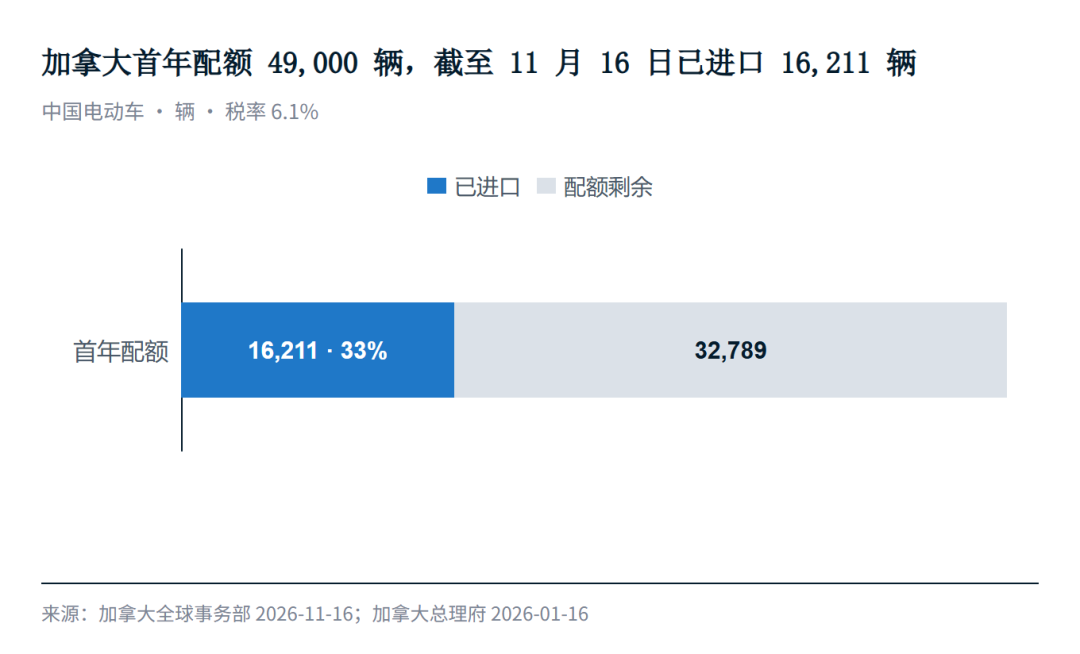
Global Affairs Canada announced on Nov 16 that 16,211 Chinese EVs have been imported under the quota, about half of them priced below CAD 35,000, and a second Chinese OEM has just begun importing. That volume equals about 33% of the first-year quota.
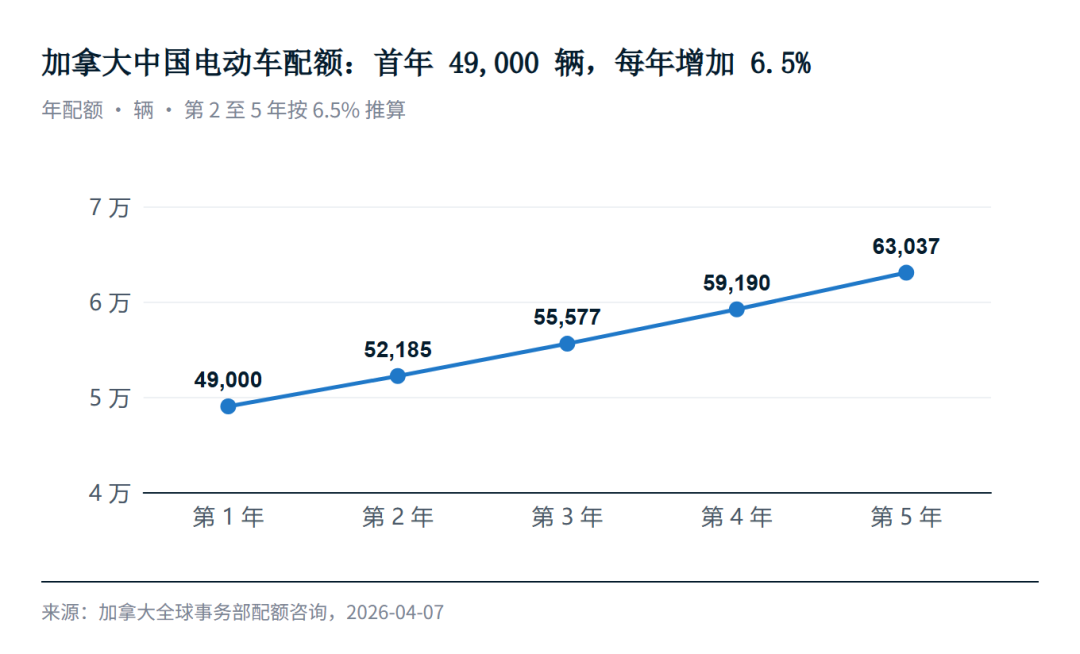
Canada said any Chinese investment must involve substantial manufacturing in Canada, not just assembly of imported parts. It must come with labour standards, factories and a progressively expanding local supply chain, including the use of Canadian critical minerals in EVs.
Canada now offers a capped import channel, and the conditions for scaling up are building a plant, using the local supply chain and critical minerals. For Chinese automakers, the price of entering Canada is a factory, and whether that factory's output can be sold into the US depends on the outcome of US–Canada negotiations.
Channel choices in Southeast Asia and Japan
Li Auto is using two approaches in its four new markets in Southeast Asia and Hong Kong. In Hong Kong, Jebsen Group's Inchcape-style distributor Zung Fu acts as sole distributor; in Singapore the partner is Wearnes Automotive, and in Vietnam it is Neera Motors. Thailand is different: Li Auto has set up a local subsidiary and works with two dealers, Evante and Infinite Automobile Company. Li Auto's first right-hand-drive model is its flagship battery-electric MPV, the Li MEGA, which will debut at the Thailand International Motor Expo in 12, with a second RHD model to follow within a year. Vietnam's Neera said it would study local assembly when volumes and conditions allow; there is no investment figure or production timeline yet.
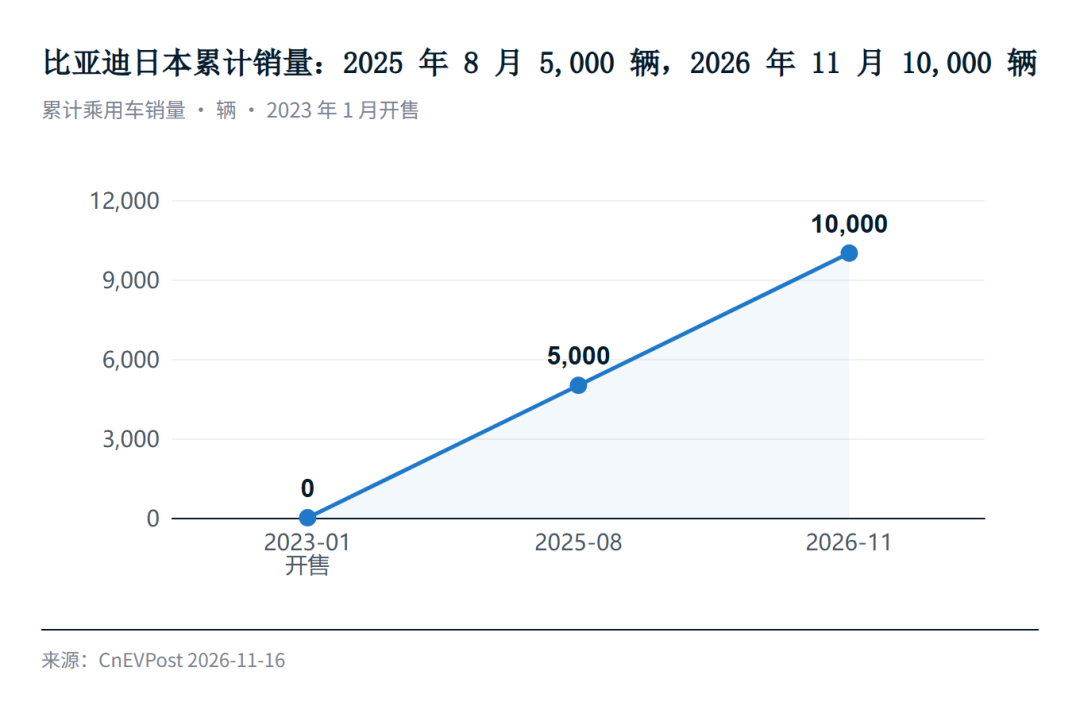
In Japan, BYD is building its own network. BYD launched the Atto 3 in Japan in Jan 2023 and took about 2.5 years to reach 5,000 cumulative sales in Aug 2025, then sold another 5,000 in about 15 months. It currently has about 80 stores in Japan and plans to reach 100 by the end of 2026 and 120 by the end of 2027. What BYD must adapt to in Japan is local vehicle standards: kei cars account for nearly 40% of Japanese new car sales. In July this year BYD launched the Racco, a battery-electric kei car developed specifically for Japan, starting at ¥2.145 million including tax; after a ¥150,000 subsidy the entry version comes in under ¥2 million. It received 1,002 orders in its first two weeks on sale.
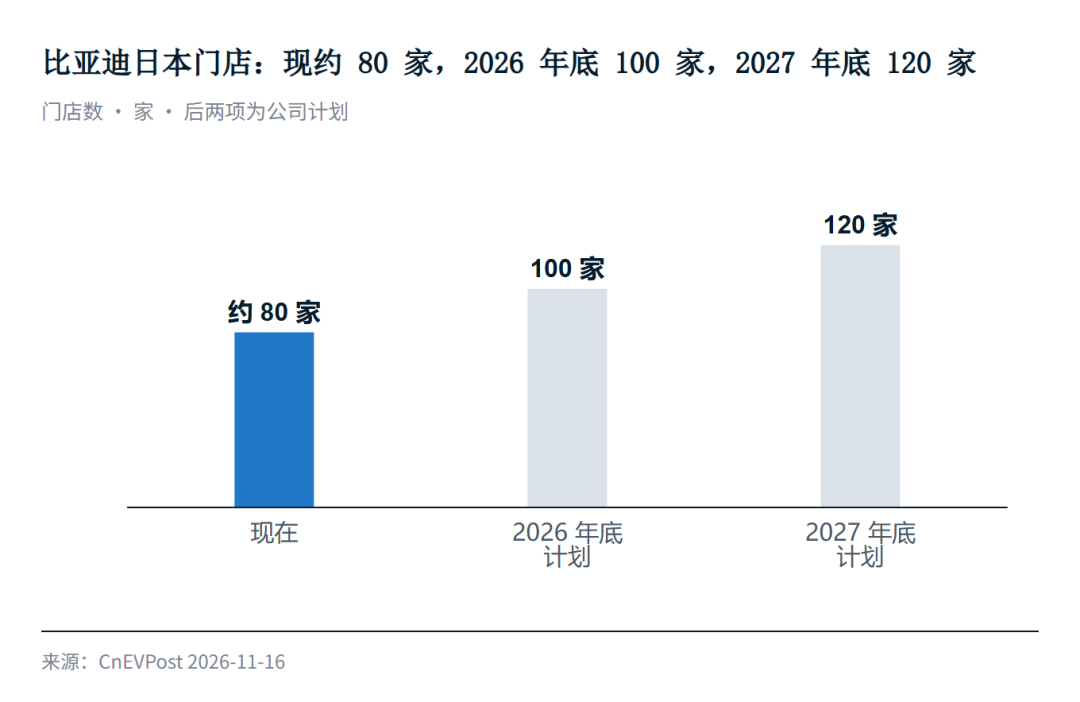
Source: Chart by AutoMusic based on the public sources listed in the article; first published on the AutoMusic WeChat account.
A general distributor uses its partner's capital, showrooms and customers, gaining speed; a subsidiary with company-owned stores carries its own inventory and network costs, gaining control over pricing and service. Li Auto in Thailand and BYD in Japan chose the latter, and their investment in these two markets is heavier than in markets served by general distributors.
Final thoughts
Coming up: the debut of Li Auto's right-hand-drive MEGA at the Thailand International Motor Expo in December; Denza's target of 80–90 units over two months; the allocation of Argentina's 50,000-unit quota for 2027 and whether Chinese automakers will announce investments in Canada; whether Feytech's memorandum turns into a formal joint venture agreement; and when Chery's plant at Beringin starts production. Malaysia's 10,000 units, Argentina's 50,000 and Canada's 49,000: each of these markets is opening to Chinese cars only up to a volume cap. Below the cap, importing through borrowed distribution channels costs least; going beyond it means trading factories, local parts and jobs for access.
Sources: Malaysian Automotive Association (MAA), Ministry of Investment, Trade and Industry (MITI), Malaysian Investment Development Authority (MIDA), Proton website, Drive Safe and Fast; India's Ministry of Heavy Industries, Autocar India, Autocar Pro, Business Today, electrive; Argentine Presidency and Official Gazette, ACARA, La Nación, Infobae, Ámbito; Prime Minister's Office of Canada, Global Affairs Canada, Department of Finance Canada, TT News; electrive, CnEVPost