Thailand raises excise tax on imported EVs to 35%
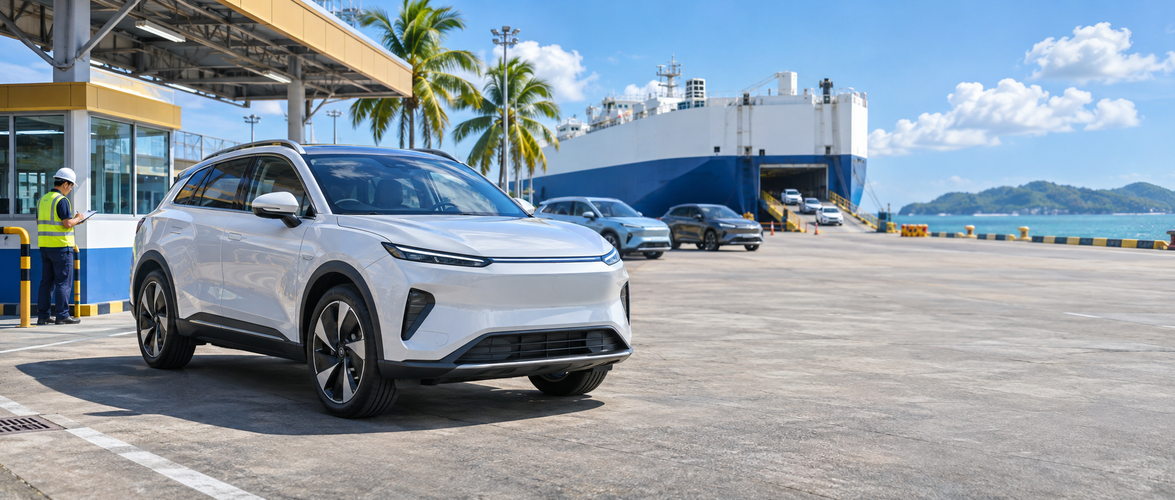
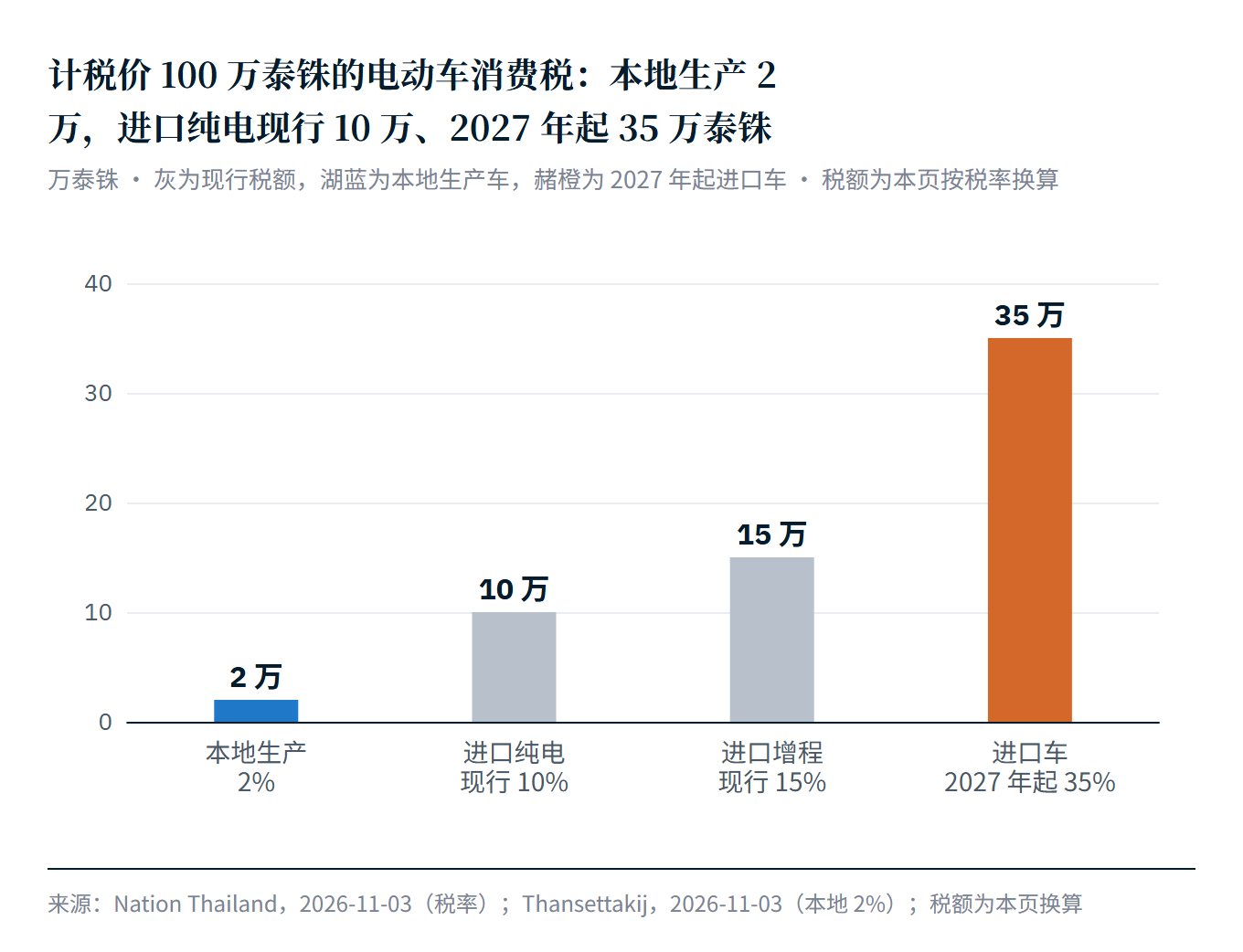
Thailand's cabinet met in Udon Thani on Nov 3 and approved raising the excise tax on imported BEVs from 10% and on imported range-extended EVs from 15% to a uniform 35% from Jan 1, 2027, applying to vehicles not produced in Thailand and not using Thai components. EVs produced in Thailand under the promotion measures will continue to be taxed at 2%. The Excise Department said the adjustment is based on two resolutions of the National EV Policy Committee, dated Nov 2025 and Sep 2026. For Chinese brands, Thailand is changing from a market where sales could be grown through vehicle exports into one where local production is needed to sell.
Per-vehicle tax gap
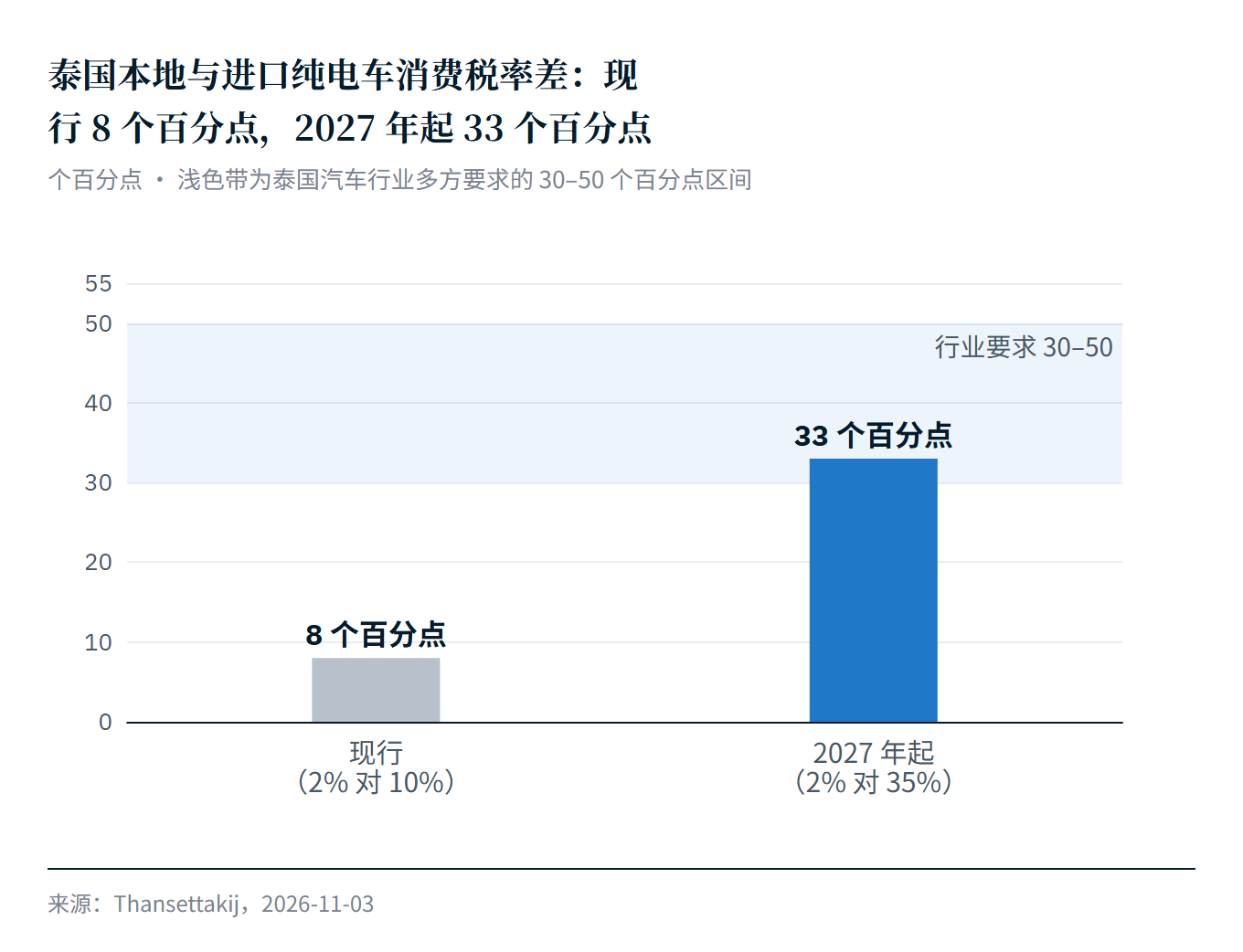
At a taxable price of THB 1 million, the excise tax on an imported BEV rises from THB 100,000 to THB 350,000, an increase of THB 250,000; a locally built car at the same price pays only THB 20,000, a gap of THB 330,000. The rate gap between local and imported cars was previously only 8 percentage points. Several parties in Thailand's auto industry had called for widening it to 30–50 percentage points; once the new rates take effect, the gap will be 33 percentage points. The China–ASEAN Free Trade Agreement eliminated tariffs on complete vehicles from 2010, leaving excise tax as Thailand's only adjustable lever. Whether companies that already have plants in Thailand can import some models at the old rate, and how quotas will be allocated, remain undecided.
A tax gap of this size is beyond what price concessions can absorb, so the model of exporting complete vehicles to Thailand needs to change.
Imports still half
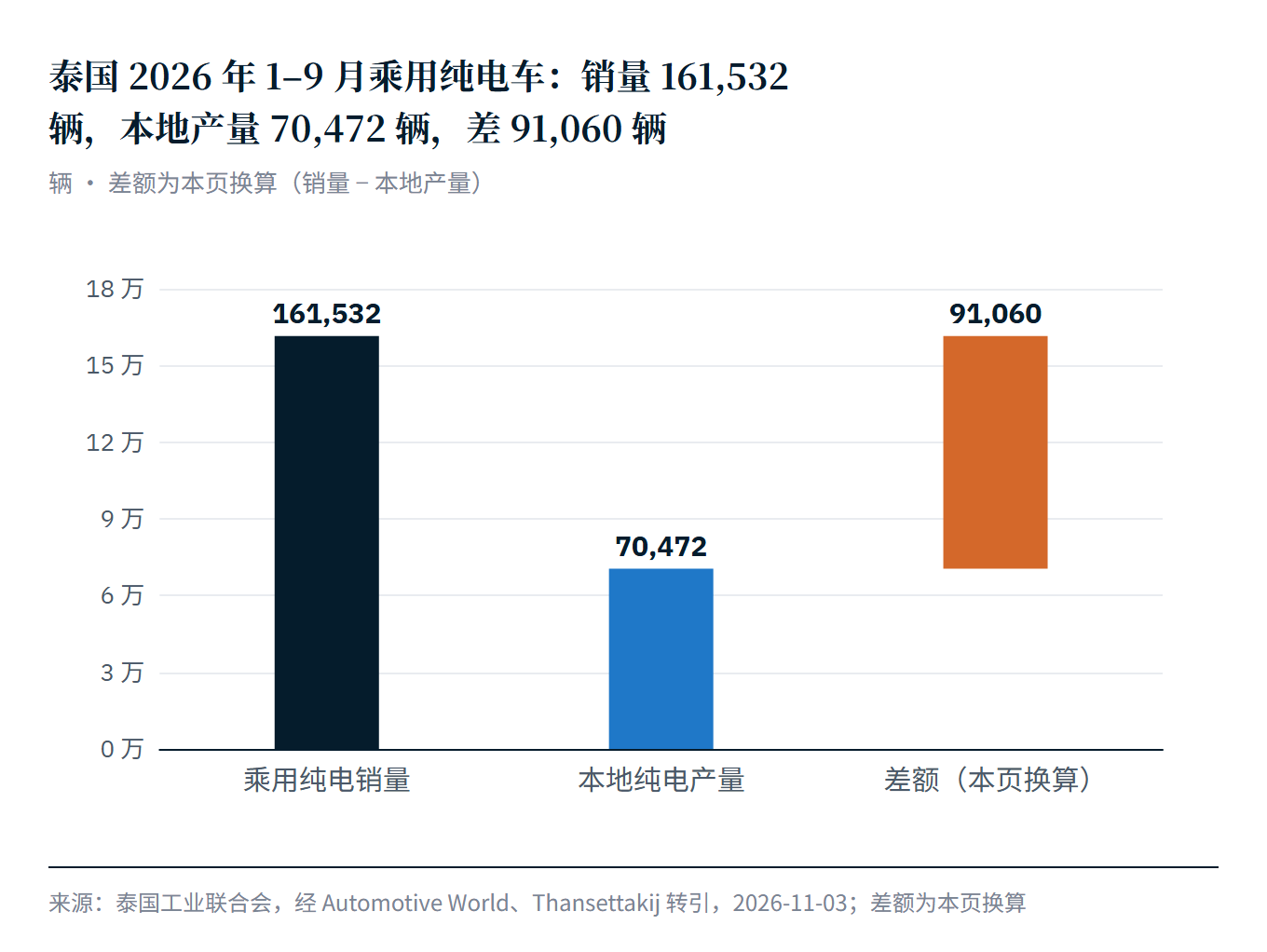
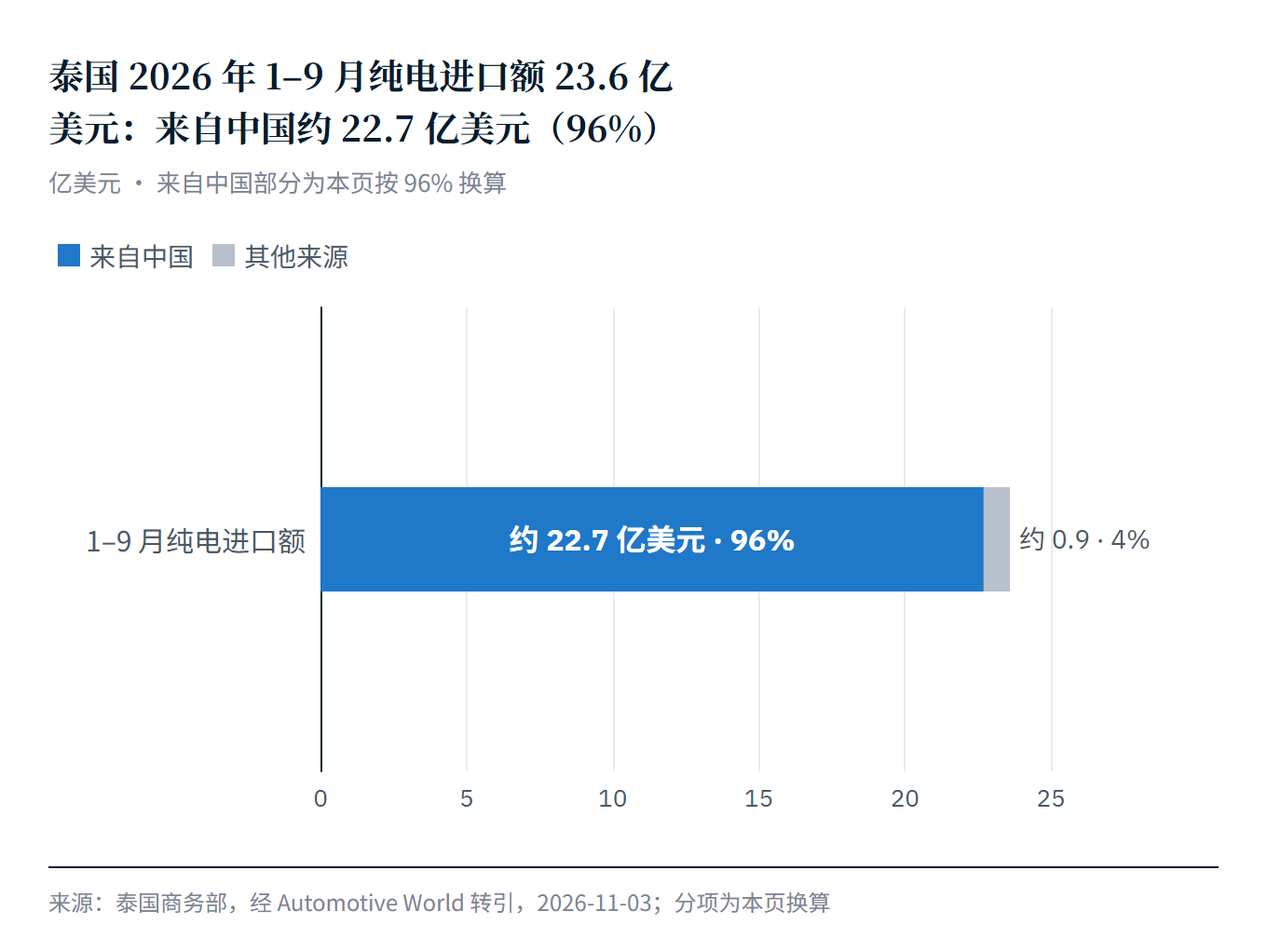
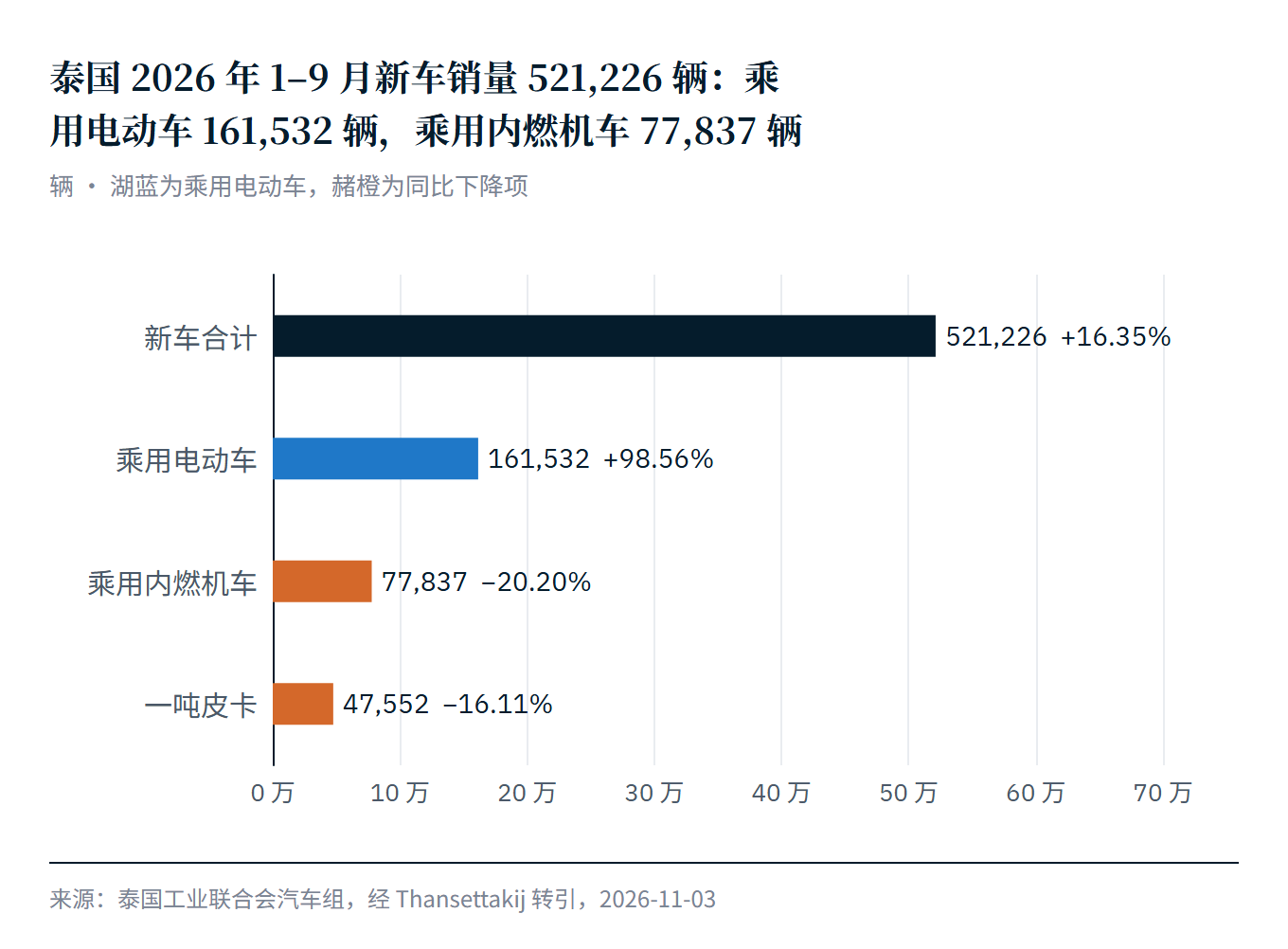
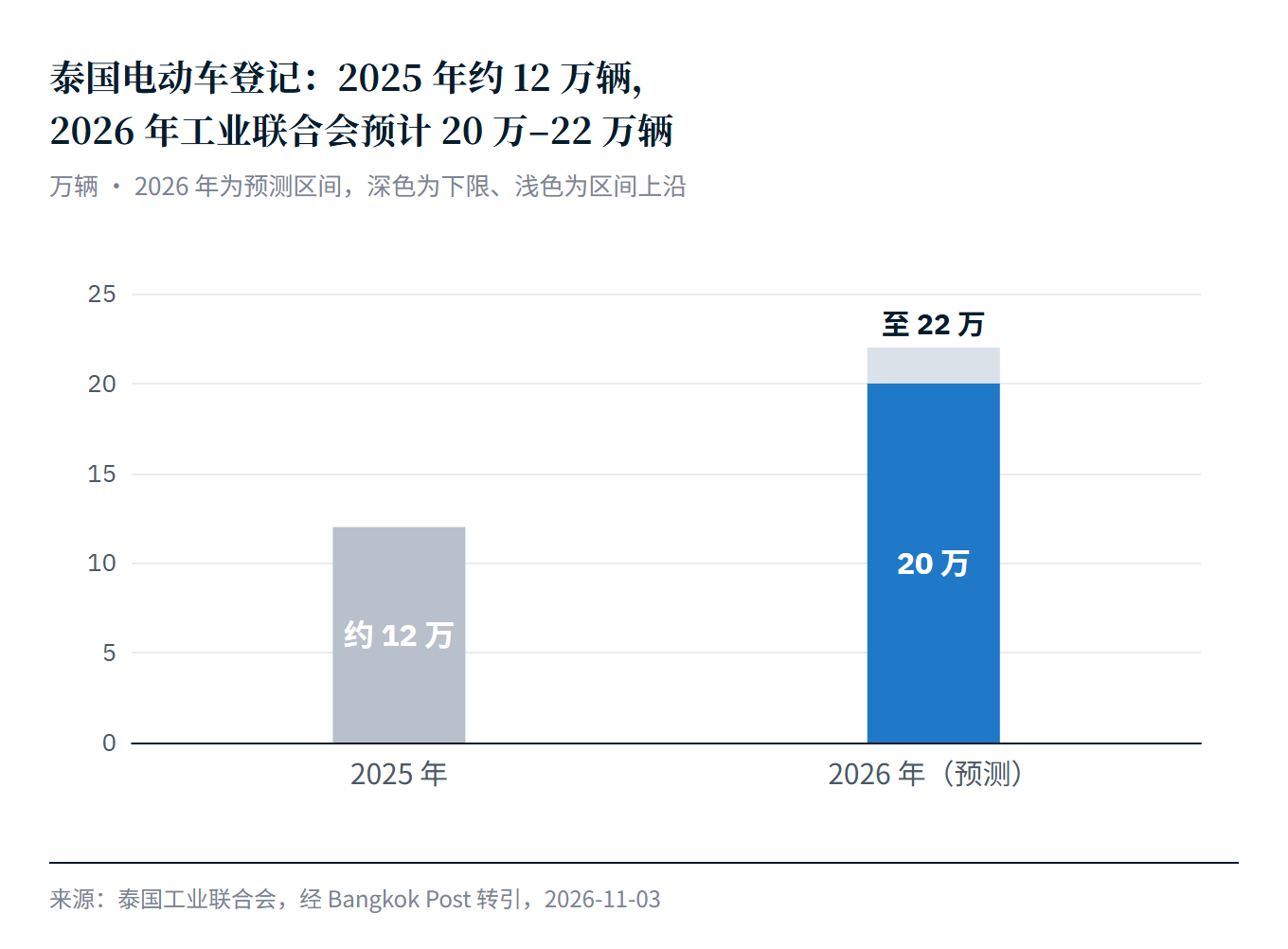
According to the Federation of Thai Industries, battery-electric passenger car sales in January–September this year reached 161,500 units, 31% of the new car market and nearly double the year-earlier figure. Local BEV production in Thailand over the same period was 70,500 units, about 91,000 fewer than sales, a gap that has to be filled by imports. If some local output was exported, the import requirement would be even larger. Thailand's Ministry of Commerce reports BEV imports worth USD 2.36 billion over the same period, 96% of them, about USD 2.27 billion, from China. The federation expects full-year EV registrations of 200,000 to 220,000 units, compared with about 120,000 last year. Board of Investment data show that BEVs, hybrids and PHEVs together accounted for 55% of new vehicles in the first seven months, overtaking combustion vehicles for the first time; as of August, approved investment in the EV supply chain totalled USD 4.59 billion across 189 projects.
The pressure from the 35% falls on the bulk of Chinese brands' vehicle exports to Thailand.
Local content rules tighten
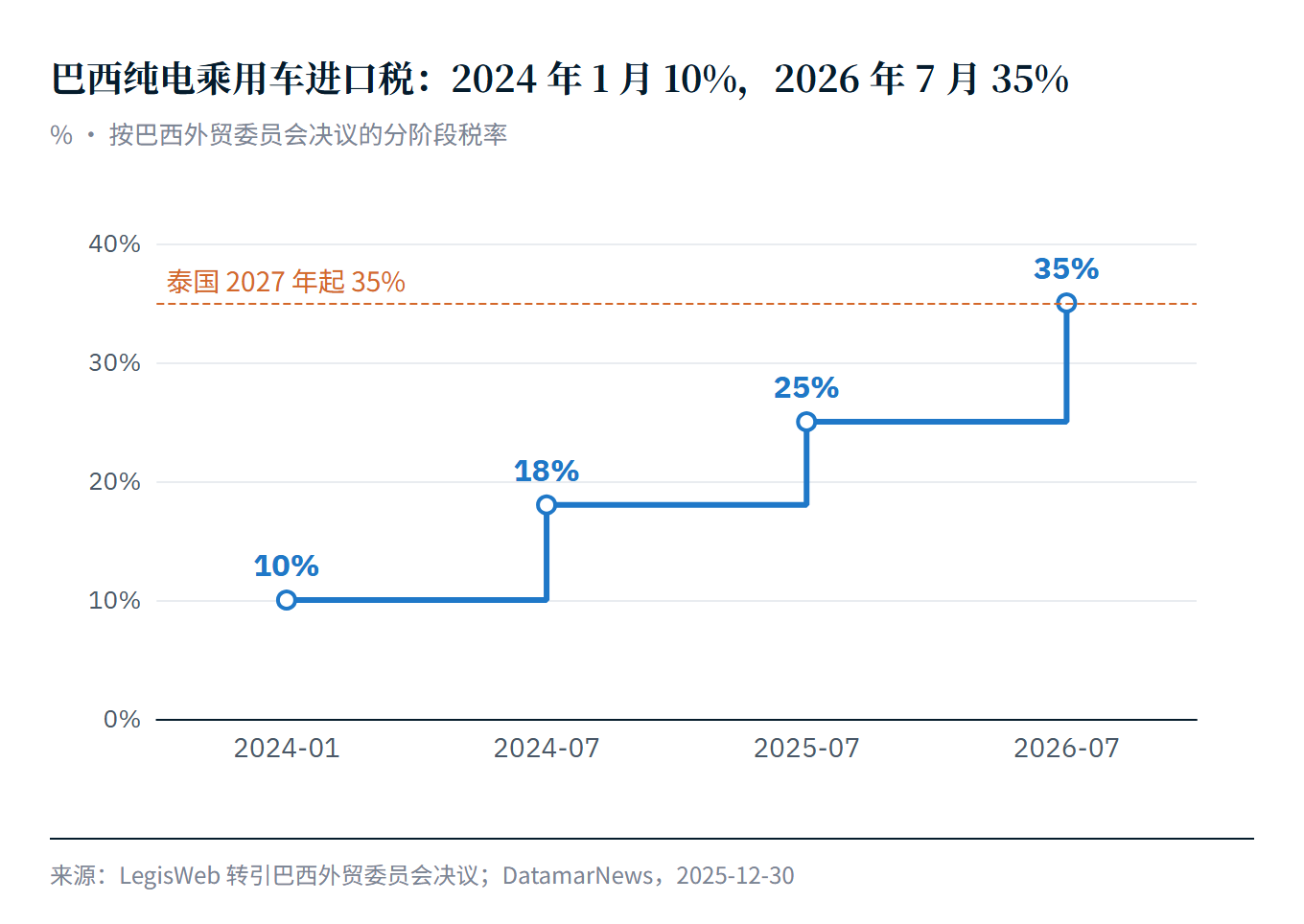
Further changes will also affect models assembled in Thailand. Thai financial media report that the Excise Department plans to raise taxes within a year on models assembled in Thailand that have a low share of Thai parts and do not use Thai-made key electronic components. Electricity and water costs will no longer count towards local content, and the minimum share has not yet been published. The existing EV 3.5 requirements are also being tightened: in 2027, every 1 imported units must be matched by 3 produced locally. Other emerging markets are tightening policy too. Brazil's import duty on battery-electric passenger cars rose to 35% in month 7 this year. Indonesia's tariff exemption for fully imported BEVs expired at the end of last year, and in 2026–2027 companies must produce locally at a 1:1 ratio to import volumes.
Having built plants in Thailand, Chinese brands next need to work out the share of components produced locally. Whether battery, e-drive and electronics suppliers follow OEMs to set up lines in Thailand will also require costs to be recalculated against this standard.
Source: Chart by AutoMusic based on the public sources listed in the article; first published on the AutoMusic WeChat account.