Chinese automakers' European logistics chain: from in-house fleets to local assembly
Geely's JISU GLORY makes its first call at Vigo, and all 8 of BYD's car carriers are now in service; Chinese vehicle arrivals at Antwerp-Bruges rose 38.1% in the first 9 months.
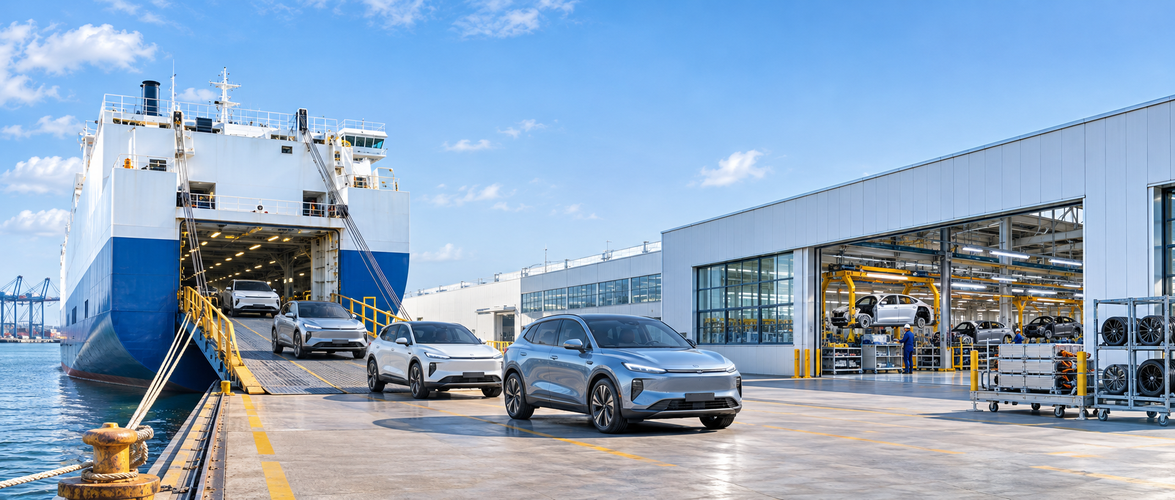
In Nov 15, Geely Holding's ro-ro vessel JISU GLORY made its first call at the Bouzas terminal in the Spanish port of Vigo, unloading 323 electric vehicles, about 200 of them Geely-brand and the rest Zeekr. The ship has 7000 vehicle slots and sailed from China around the Cape of Good Hope, avoiding the Suez Canal and the Red Sea. In month 8, Geely ships had already called at Vigo twice, delivering more than 1500 vehicles in total.
In Europe, Chinese automakers are taking control of sea freight with their own ships while moving part of their production to Europe. EU anti-subsidy duties and the EU–UK rules of origin from 2027 make the latter step more urgent.
The fleet is taking shape
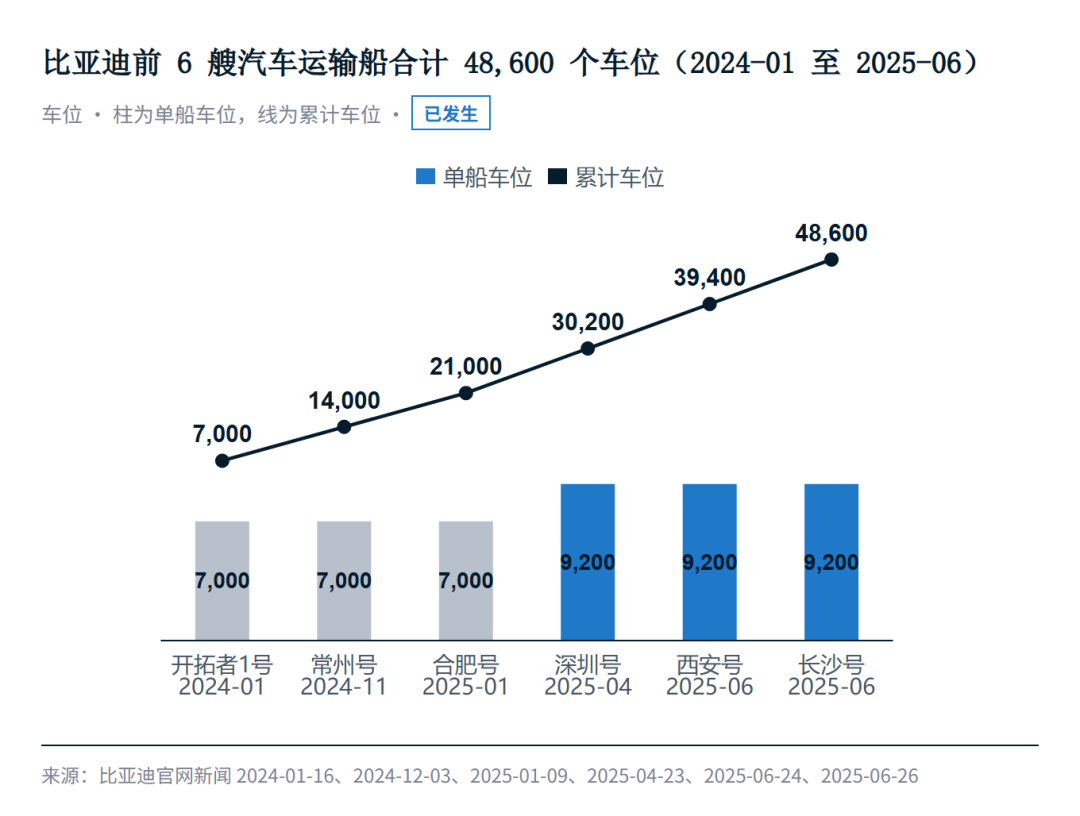
BYD currently has the most complete fleet. According to official reports, the first vessel, BYD Explorer No. 1, was delivered in Jan 2024. By Jun 2025, the Changzhou, Hefei, Shenzhen, Xi'an and Changsha had joined the fleet. The first 6 vessels have a combined capacity of 48600 vehicles, with the last three carrying 9200 each. On its maiden voyage, the Xi'an carried about 7000 vehicles bound for the UK, Italy, Spain and Belgium. With the 8th vessel, the Jinan, entering service in Sep 2025, all 8 of BYD's ships are now in operation.
Geely's two vessels are operated by its subsidiary Jisu Logistics, each with a capacity of 7,000 vehicles. JISU FORTUNE made its maiden voyage from Taicang in May 2025 carrying 5,000 vehicles; JISU GLORY made its maiden voyage in September, bound for the UK and Belgium. Geely says both are its own ships, though GLORY's owner is Zodiac Maritime and it is on long-term charter to Geely. SAIC Anji Logistics has the largest fleet of the three, with 41 vessels (including domestic routes) after taking delivery of eight new ships in 2025, and ocean-going capacity of 600,000 vehicles in 2026.
Charter rates are highly volatile. Data from shipping consultancy Clarksons show the one-year charter rate for a 6,500-car vessel averaged $55,000 a day in the first half of 2025 and about $95,000 in Oct 2026. The global orderbook is also large: Norwegian carrier Höegh Autoliners counted 147 vessels in the second quarter, about 21% of the existing fleet, but deliveries stretch to 2030. By Clarksons' measure, Chinese owners hold only about 10% of global car carrier capacity, including the orderbook.
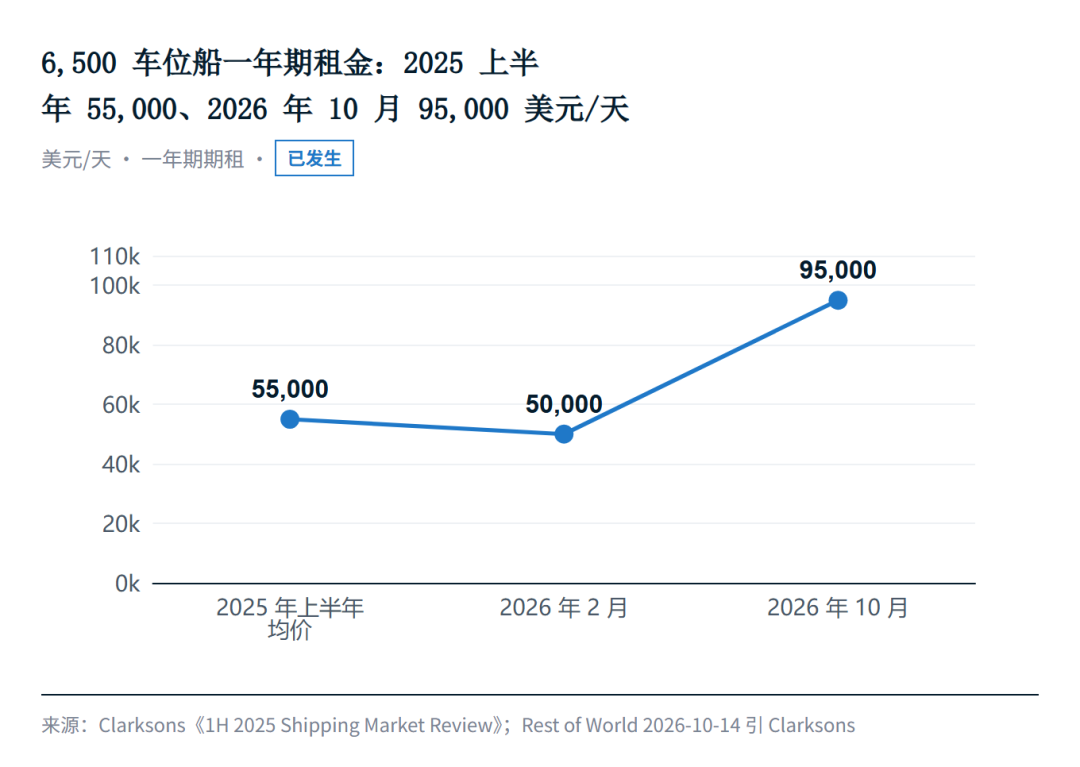
Announced plans are still being stepped up. BYD Executive Vice President Stella Li told media in 10 that the company had bought another 10 ships. With charter rates nearly doubling, owned and long-term chartered vessels mean automakers don't have to fully follow charter market rates, and they have more certainty over capacity and sailing schedules.
Ports of arrival are shifting
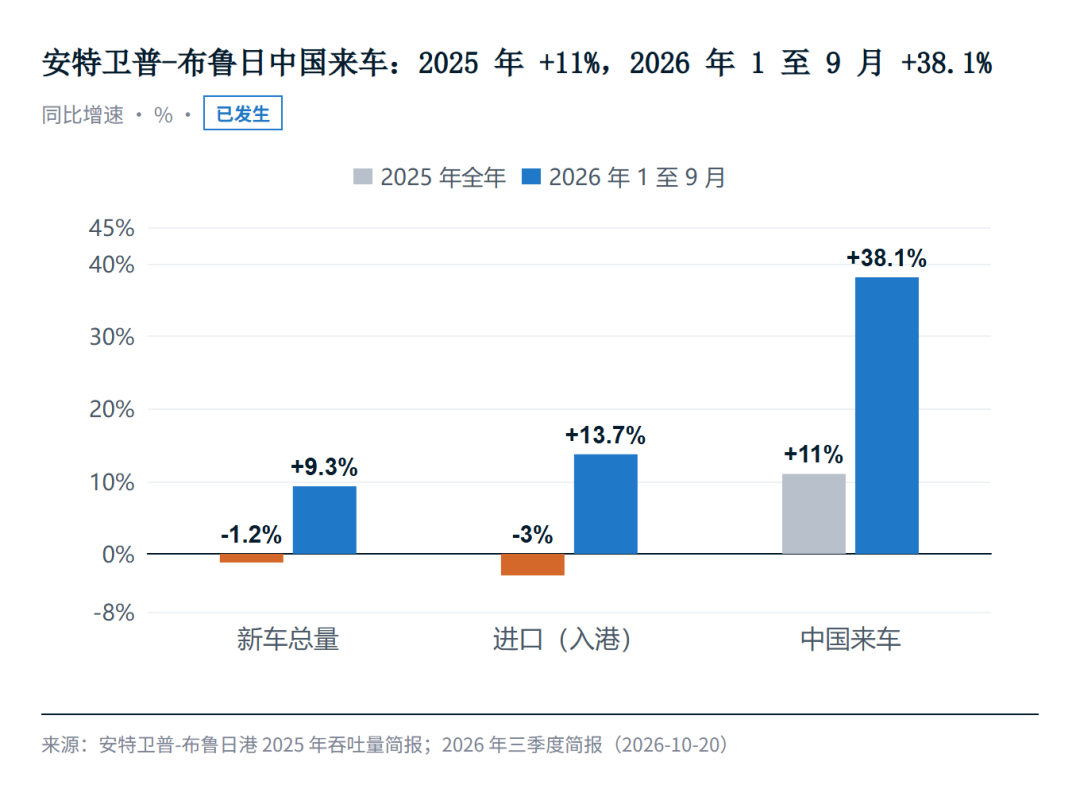
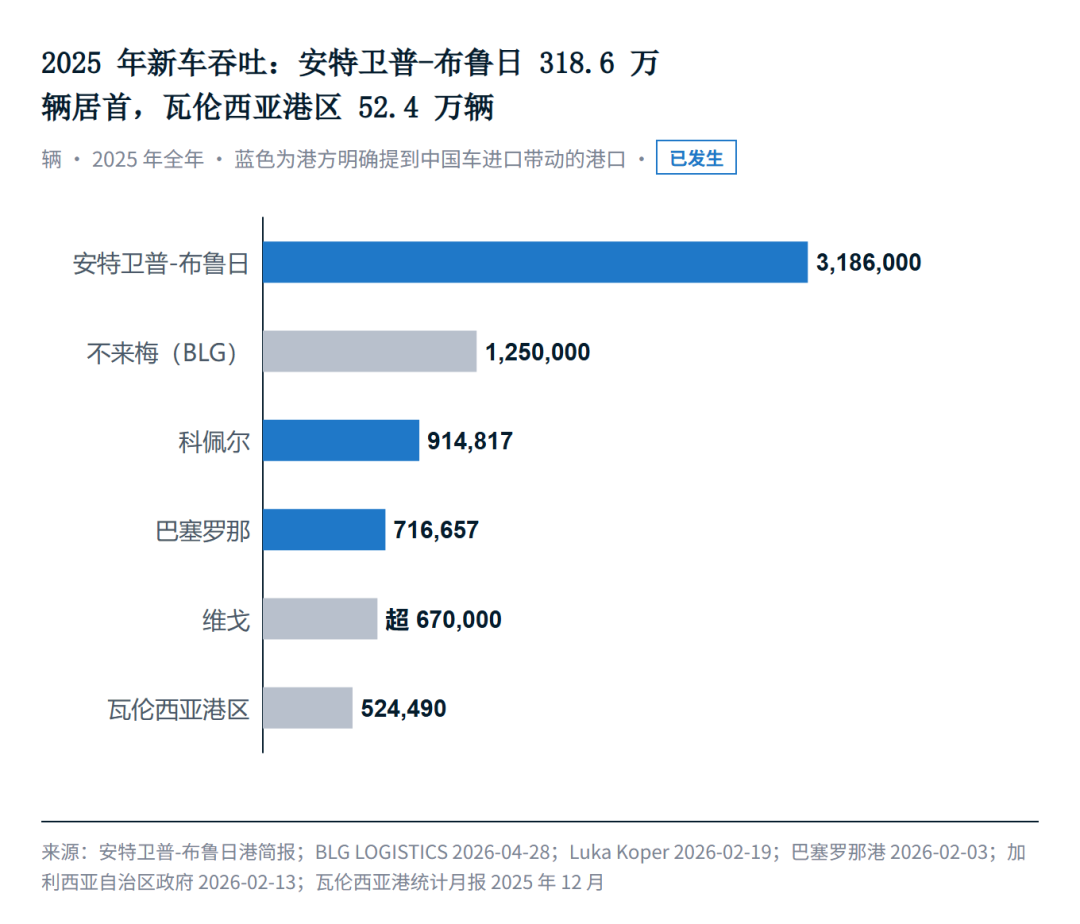
Port statistics show that vehicles shipped from China have already changed the cargo mix at several ports. The Port of Antwerp-Bruges handled 3.186 million new vehicles in 2025, down 1.2% year on year, but imports from China rose 11%, and China overtook Japan as the largest source country. From January to September 2026, the port handled 2.561 million new vehicles, up 9.3%, with vehicles from China up 38.1%.
Growth was faster on the Mediterranean side. The Port of Barcelona handled 717,000 new vehicles in 2025, up 5.1%, with imports up 44%, which the port said came mainly from Chinese ports. Slovenia's Port of Koper handled 915,000 vehicles in 2025, up 3%, attributing the growth to imports by several Chinese automakers. The Port of Vigo handled more than 670,000 vehicles in 2025, a record. Germany's Bremerhaven on the North Sea was different: BLG's automobile terminal handled 1.25 million vehicles in 2025, down from 1.3 million the year before, and the company expects only a slight increase in Chinese imports in 2026.
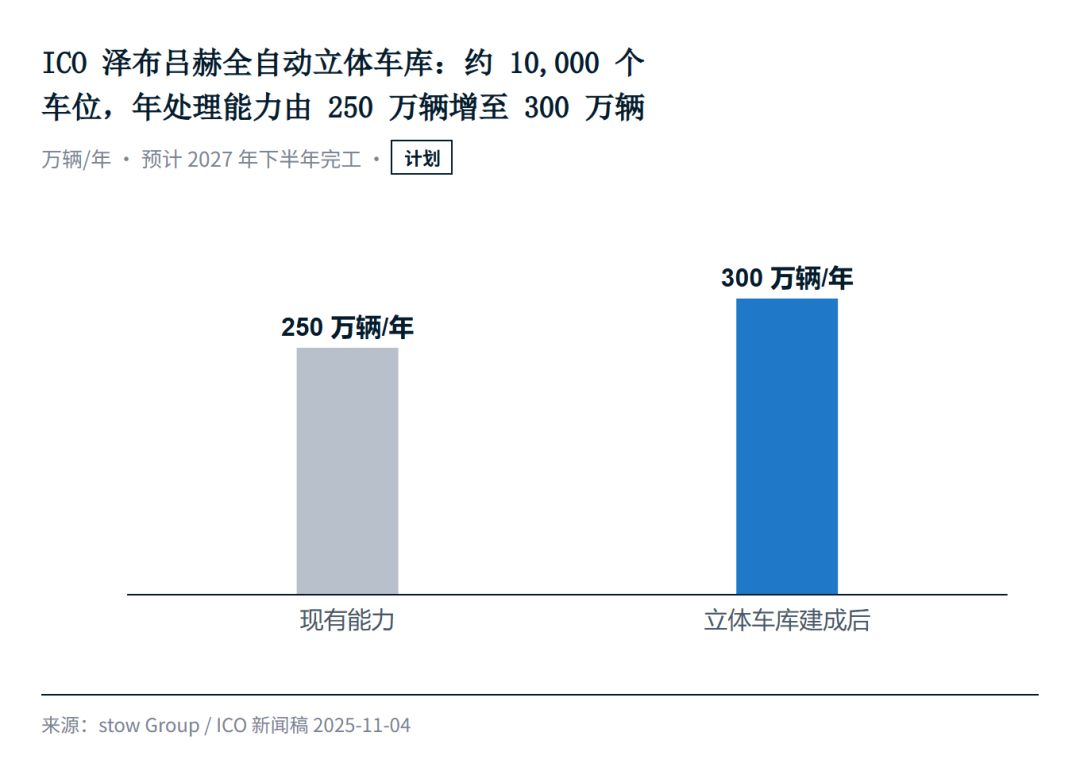
So ports are expanding capacity too. ICO, the terminal operator in Zeebrugge, is building a fully automated multi-storey car park with about 10,000 spaces. Once completed in the second half of 2027, annual handling capacity will rise from 2.5 million to 3 million vehicles.
How much extra volume ports gain depends on where carmakers route their ships. Geely's latest shipment sailed around the Cape of Good Hope to call at Vigo, and BYD's vessel BYD Xi'an unloaded cars in four countries on its maiden voyage. Terminal yards and inland hauliers have to plan their capacity and handling around carmakers' sailing schedules.
From shipping to manufacturing
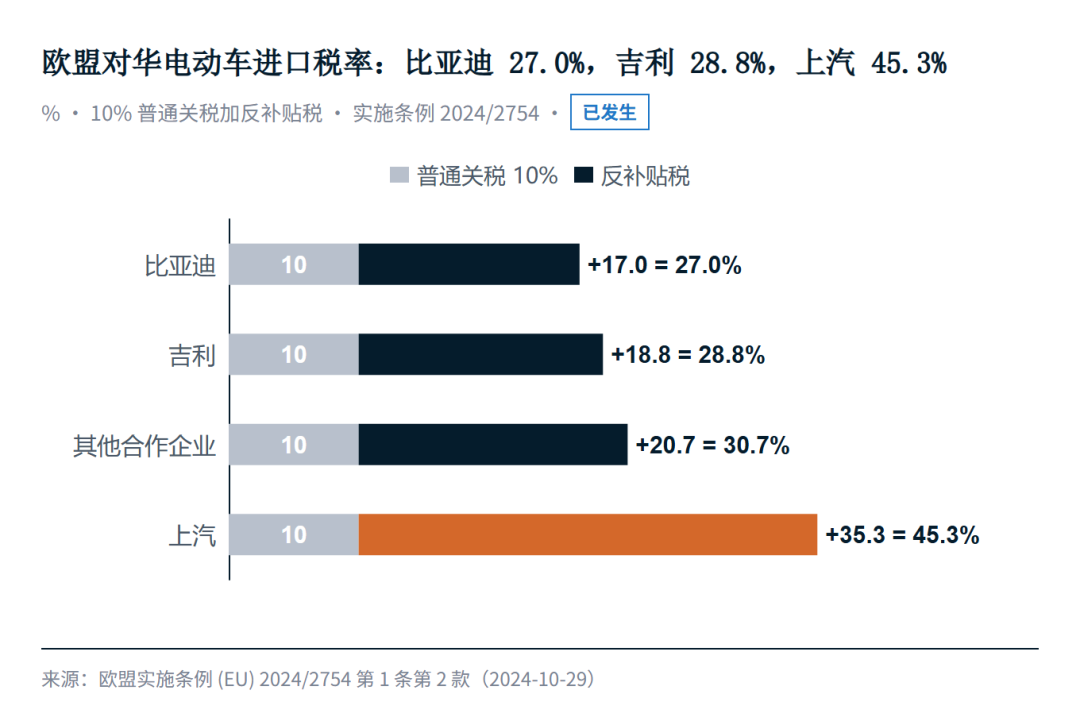
Tariffs are a direct driver of plant localisation. Under the EU anti-subsidy duties in force since Oct 2024, BYD faces 17.0%, Geely 18.8% and SAIC Motor 35.3%; added to the 10% base tariff, the three pay 27.0%, 28.8% and 45.3% respectively on BEVs imported from China. In the UK, under the EU–UK Trade and Cooperation Agreement, the transition period for EV rules of origin runs to the end of 2026; from 2027, EVs traded between the EU and the UK whose vehicle and battery fail to meet local value-content thresholds will face a 10% tariff. The European Automobile Manufacturers' Association (ACEA) estimates that about 82%, or roughly 426,000, of the 520,000 electric passenger cars expected to be sold between the EU and the UK in 2027 would be tariffed. According to the Financial Times, a delay is highly likely, with UK officials saying substantive negotiations will wait until after the EU–UK summit on Nov 20.
Three projects are already under way. The plant Chery runs jointly with long-established Spanish brand Ebro in Barcelona will have annual capacity of 50,000 units by year-end, according to Spain's investment agency. The Leapmotor B10 entered series production in October at Stellantis's Zaragoza plant, with the European business run by the Leapmotor–Stellantis joint venture. BYD's plant in Szeged, Hungary, began trial production in January, with series production postponed to the fourth quarter.
Both planned projects are in Valencia, Spain. Ford holds 66% and Geely 34% of their joint-venture plant there. Besides Ford models, it will build two Geely electric SUVs, with production starting in 2028, and the whole plant has a potential annual capacity of about 500,000 units. Spain has been shortlisted for BYD's second European plant, and Valencia has three candidate sites: Sagunt, Cheste and Requena.
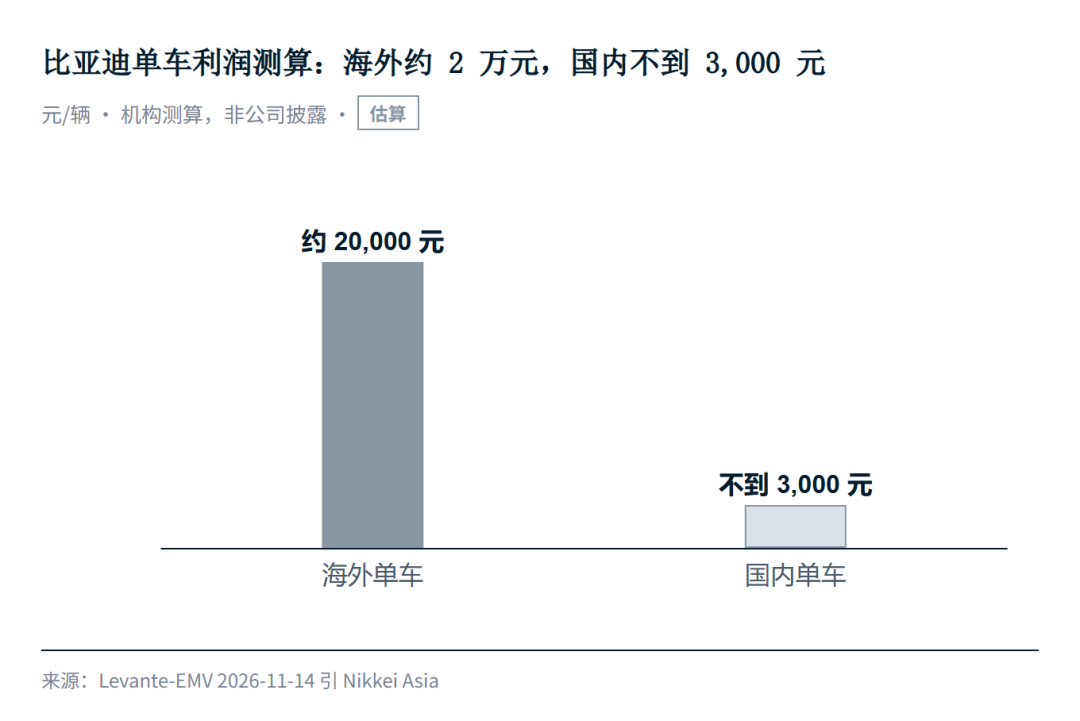
According to Nikkei Asia's financial estimates, BYD earns about RMB 20,000 per vehicle sold overseas versus less than RMB 3,000 in China, a gap of roughly 6.7 times. Spanish media report that growth in European demand has outpaced the capacity of BYD's own fleet of ships.
Source: Chart by AutoMusic based on the public sources listed in the article; first published on the AutoMusic WeChat account.
Starting production at a plant does not automatically confer originating status, and part of the tariff risk will shift into component and logistics costs. Whether shipments of finished vehicles decline, and how much more in kits and batteries must be shipped, depends on demand growth, model ramp-up and the local value-content threshold in the rules of origin.
Further news on whether the rules of origin will be postponed is expected after the EU-UK summit on Nov 20. BYD's Szeged plant is scheduled to start volume production by year-end. Until both the rules of origin and Szeged volume production are settled, imported finished vehicles remain the main way Chinese automakers supply Europe. Within that chain, the shipping fleet is the link automakers control most directly.