Steyr contract-manufacturing for Sinotruk: the buyer logic of Europe's commercial vehicle market has changed
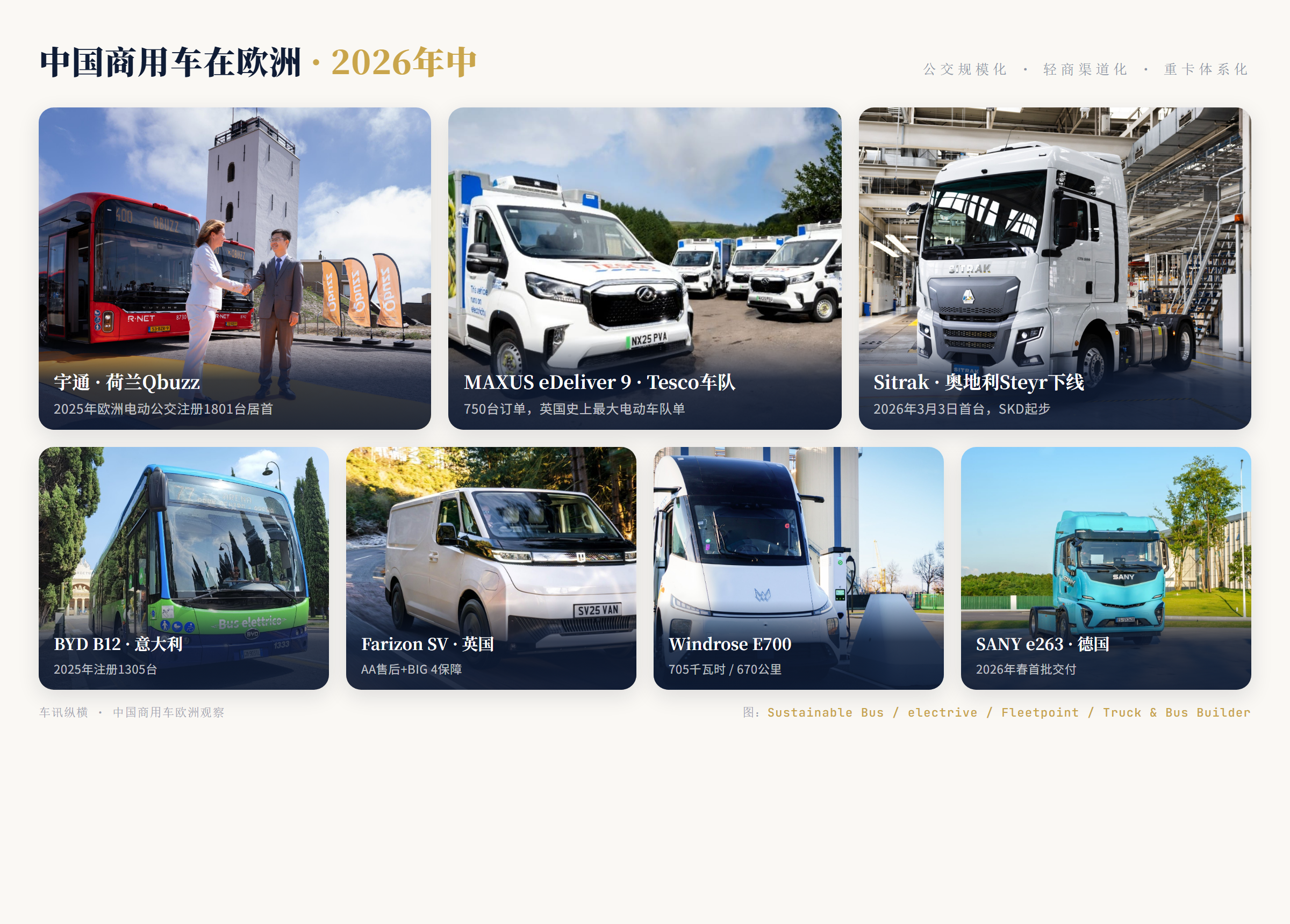
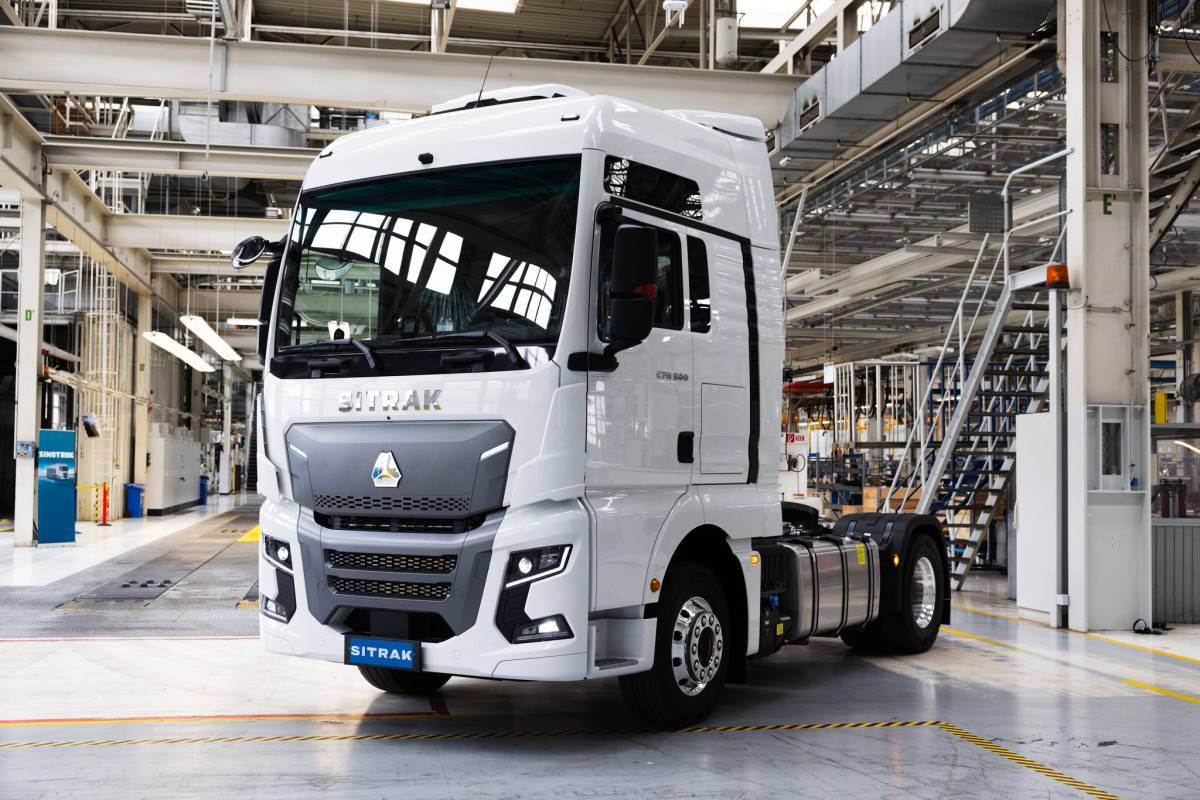
In 1983, Sinotruk licensed heavy truck technology from Austria's Steyr 91, a technology line that laid the foundation for China's heavy truck industry for the next three decades. On Mar 3, 2026, the roles reversed: the first Sitrak tractor rolled off the line at Steyr Automotive, with Austrian workers assembling a Chinese brand fitted with the modernised MAN TG2 cab. The plant currently has about 1100 employees. Production starts with SKD kits, with CKD, local cab manufacturing and painting to follow. After forty-three years, technology exporter and recipient have swapped places.
This picture sums up Chinese commercial vehicles in Europe in 2026: the products have long been buildable, and what is now being filled in is what European buyers care about most: who assembles, who repairs, who finances and who carries the residual value. Broken down, European buyers have four distinct decision-making mechanisms, and Chinese OEMs' positions differ greatly in each.
Public procurement: a market whose direction is locked in by regulation
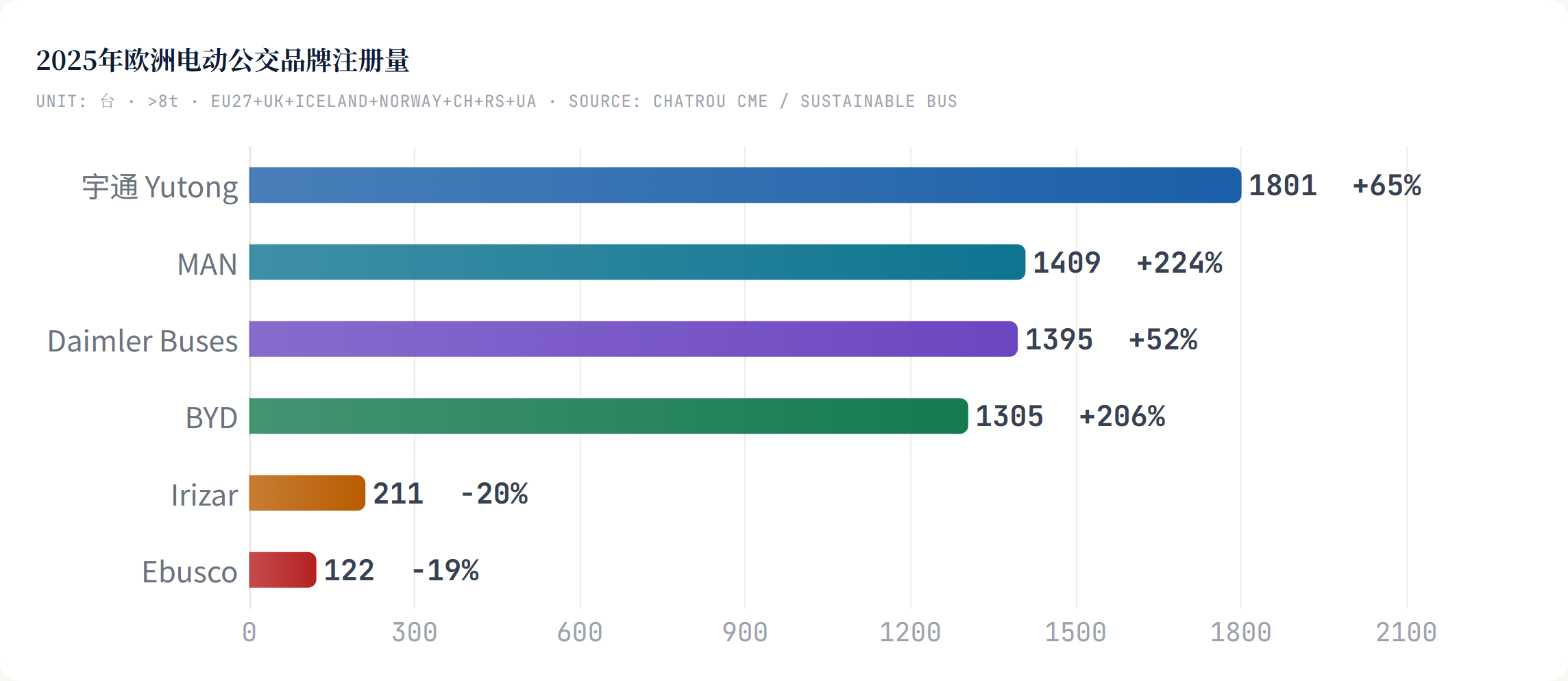
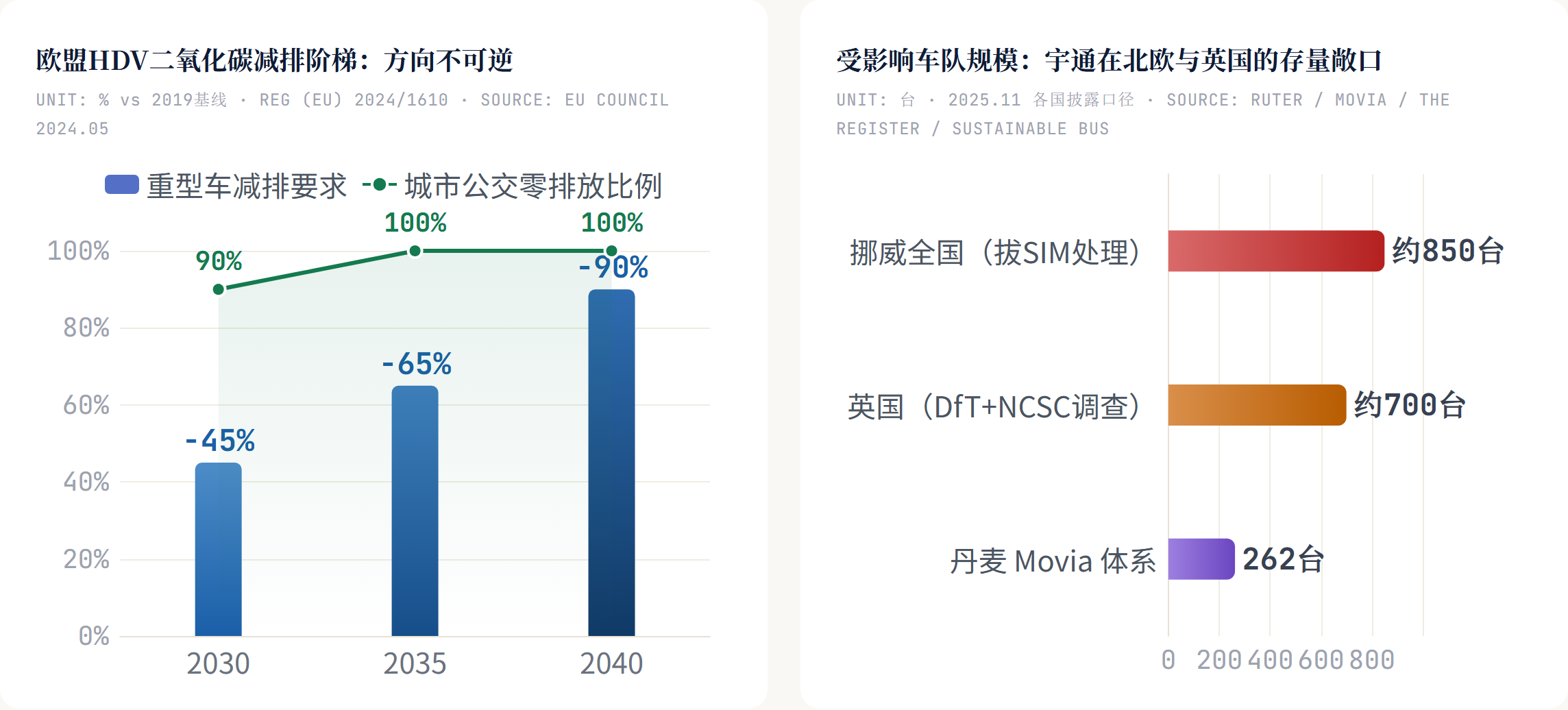
Buses are the category where Chinese brands have done best in Europe, and the reason lies in how they are bought. Buses are procured through tenders run by municipalities and public transport authorities, and bids are judged on unit price, range compliance, delivery time and TCO, with little weight on brand sentiment. EU regulation also locks in the direction: 90% of city buses must be zero-emission by 2030 and 100% by 2035, so operators have no option to keep buying diesel.
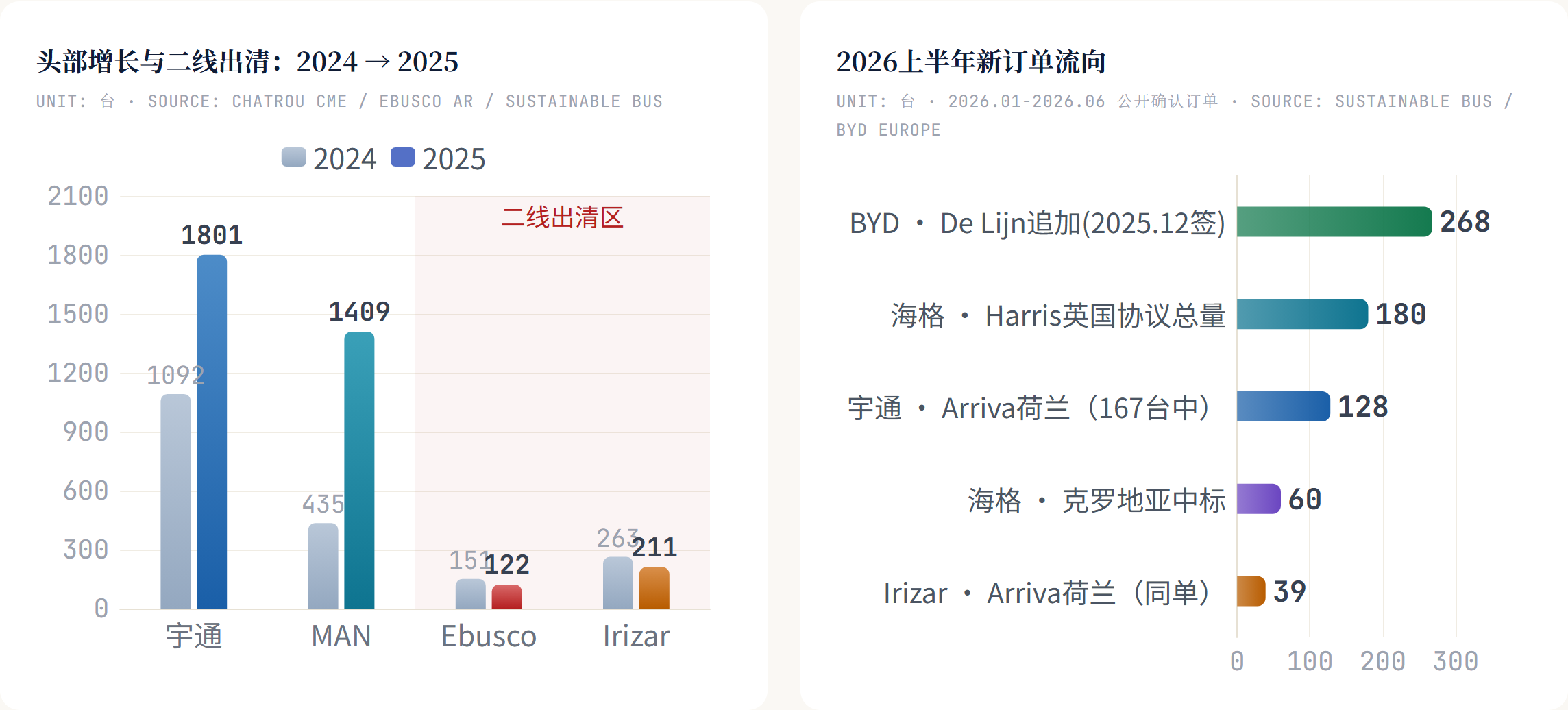
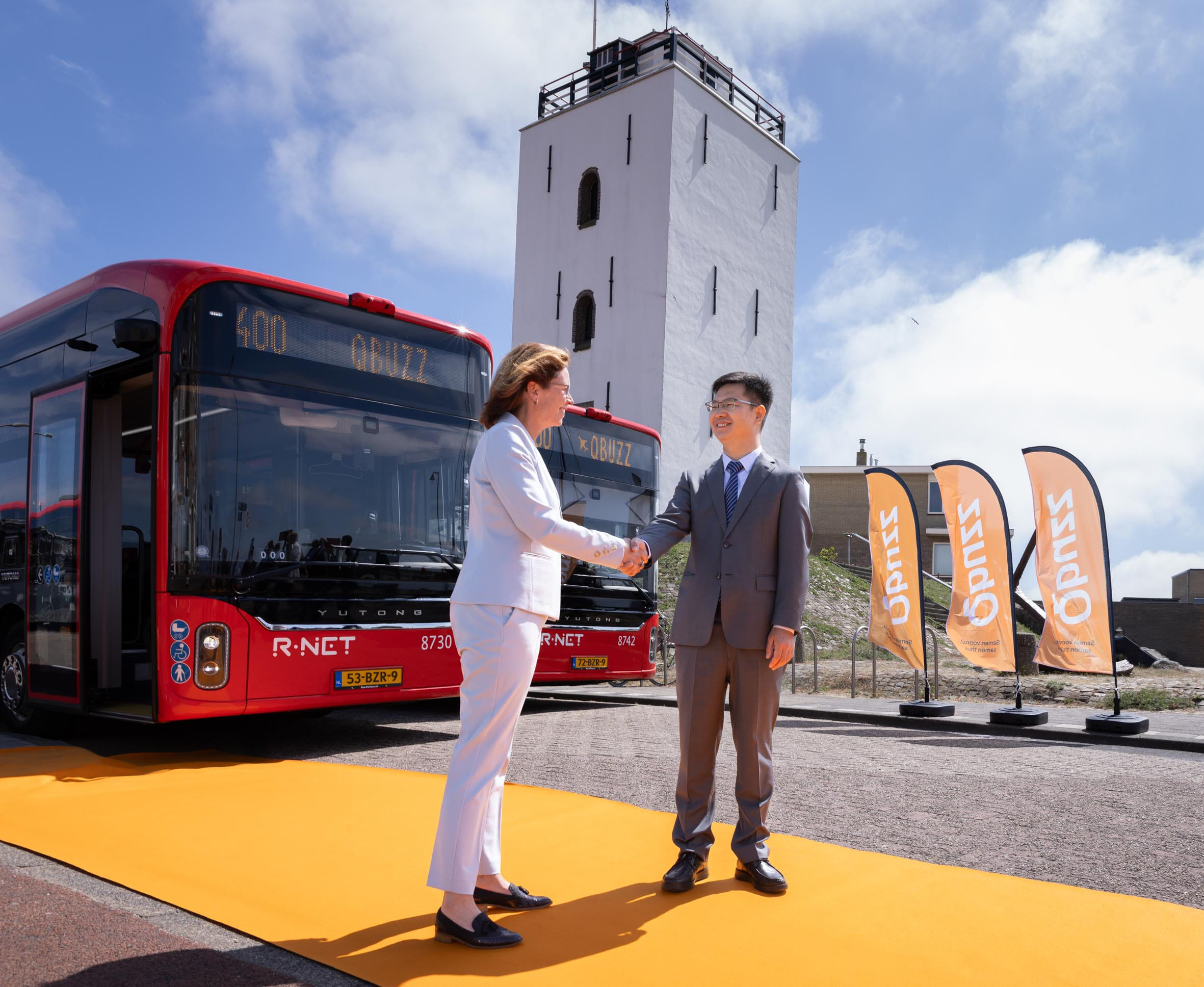
Under this mechanism, 2025 saw top Chinese and European players go head to head while Europe's second tier was squeezed out. Yutong and BYD together took about 27% of Europe's electric bus market, but Europe's leading players hit back even faster. MAN grew 224% and moved electric bus production to Ankara, Turkey (start of production in March–April 2026, its third site after Poland and South Africa), using Turkish wage levels to offset China's cost advantage. Daimler Buses grew 52%. The second tier is being pushed out: Ebusco registered only 122 units for the full year, filed for insolvency at the end of Apr 2025 and survived on a EUR 32 million debt-for-equity swap, while Irizar's share fell to 1.8%. Electric platforms need scale to amortise R&D. European bodybuilders without enough scale can compete on neither front and are the first to go.
In H1 2026, orders kept concentrating among the leaders. Of Arriva's 167-unit order in East Brabant, the Netherlands, 128 went to Yutong and 39 to Irizar; Higer won a 60-unit contract in Croatia and, backed by a ten-year exclusive agreement with Harris, secured a 180-unit purchase. The timing matters more than the orders themselves: Arriva placed its order after the Norwegian cybersecurity incident became public, showing the commercial logic of public procurement has for now outweighed political concerns.
Fleet CFOs: they calculate the monthly lease, but residual value decides
LCV buyers are a completely different group: logistics companies, leasing companies and fleet managers at retail chains. They don't tender; they do the maths: cost per mile, downtime losses, what the vehicle will be worth in three years. Leasing companies fold every uncertainty into the monthly rate. A lower residual value expectation means a higher monthly rate, and the price advantage evaporates on the spot.
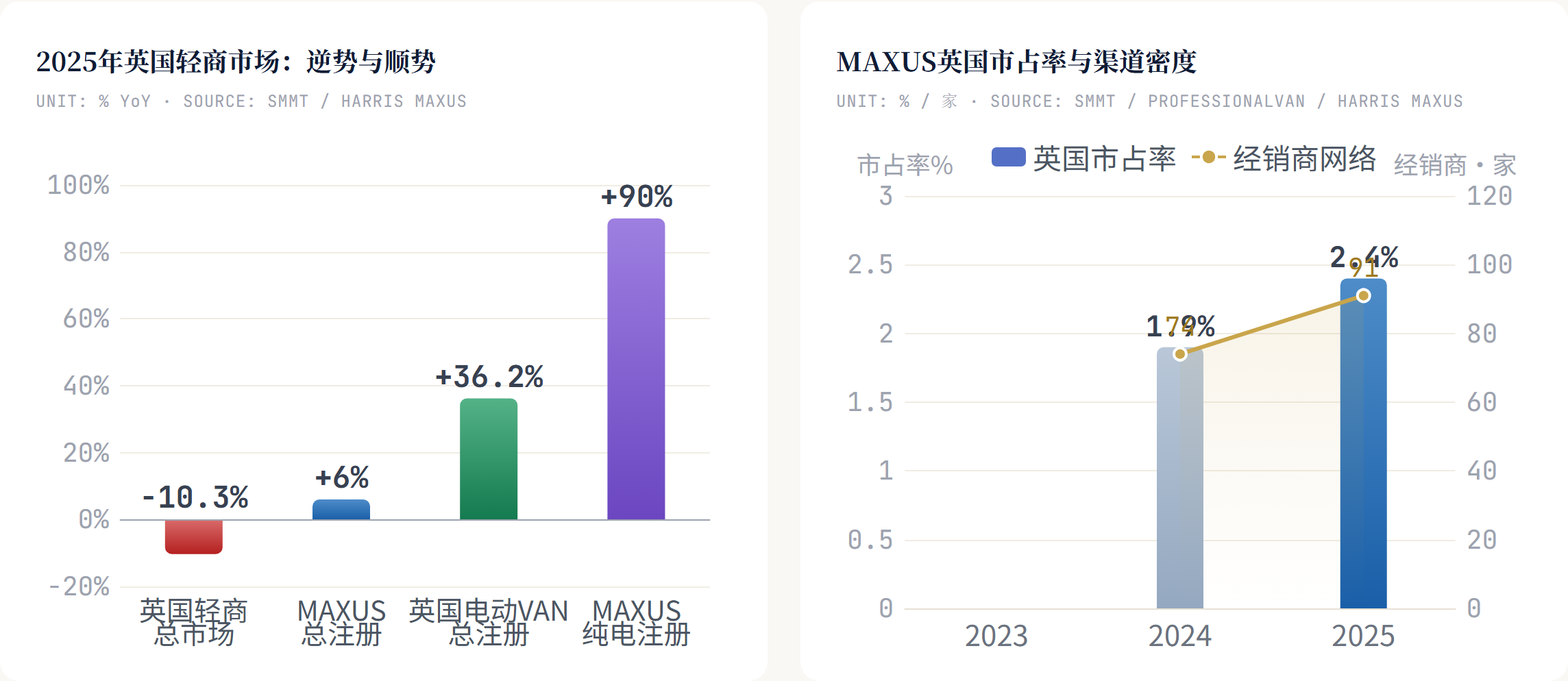
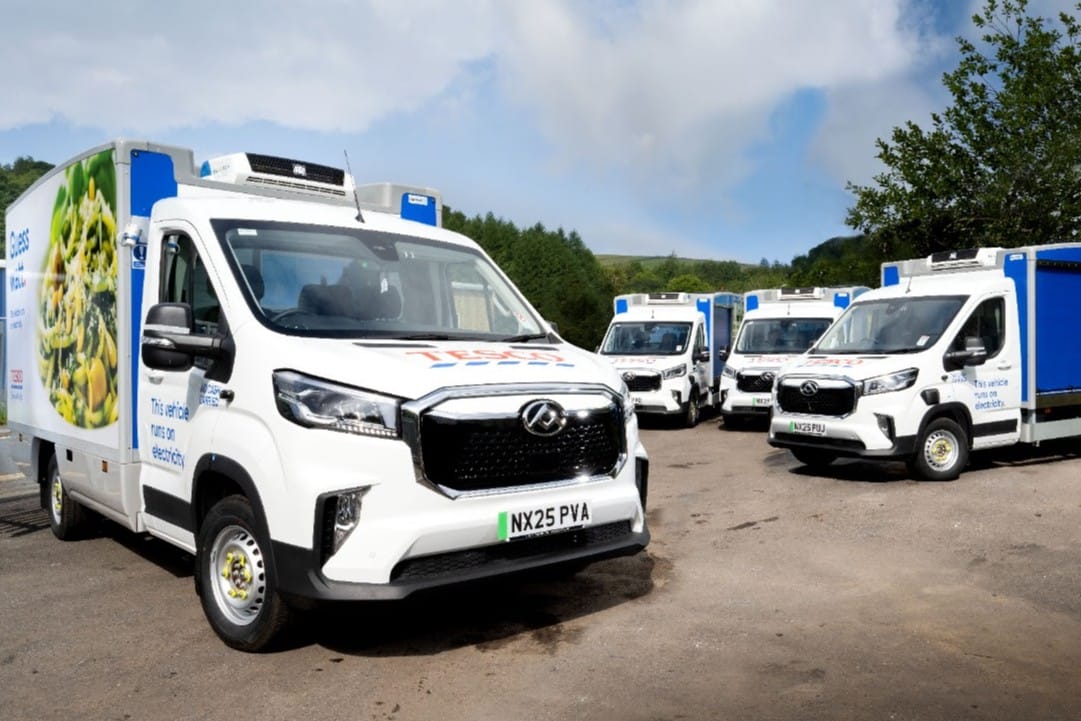
Tesco's order for 750 eDeliver 9 vans is the landmark approval under this mechanism. For the UK's largest retailer to hand its trunk delivery fleet to a Chinese brand, the preconditions were that Harris MAXUS had already delivered 232 units, its Liverpool parts hub had raised inventory by 55% to GBP 15 million, and 91 dealers nationwide covered the service radius. The order was announced on Nov 6, 2025, with deliveries starting in Feb 2026. MAXUS took six years to build its UK market share to 2.4%, by turning a "Chinese vehicle" into an asset that leasing companies can quantify in their risk models.
Farizon's approach is more aggressive: a new brand has no historical data, so it uses contracts to buy out the risk. A 4-year/120,000-mile vehicle warranty, an 8-year battery warranty and 4 years of free servicing, with after-sales fully outsourced to the AA: 100 mobile technicians, more than 200 certified workshops and an average roadside response time of 49 minutes. In essence, this "BIG 4" package has the OEM shoulder residual value and reliability risk itself, in exchange for a monthly rental figure that fleet CFOs find acceptable in their spreadsheets. Once its German parts warehouse goes live in Q1 2026, the approach will start to be replicated in continental Europe.
Finance: the BYD-DLL nine-country partnership is the real move
The second battleground in commercial vehicles is the balance sheet. Half of the moat enjoyed by Europe's seven major truck makers lies in their captive finance arms: full-vehicle leasing, maintenance packages, residual value guarantees and used-vehicle refurbishment channels, which take on the customer's lifecycle risk as a package. This is precisely the layer Chinese OEMs lack.
That is why BYD's partnership with DLL in Feb 2026 matters more than any motor show launch: retail finance and dealer inventory finance went live simultaneously in nine countries: the Netherlands, Germany, Italy, Spain, France, Portugal, Ireland, Poland and the UK. Inventory finance covers dealers' cost of carrying stock, and retail finance lowers the barrier for customers. Only with both ends working can the channel scale up.
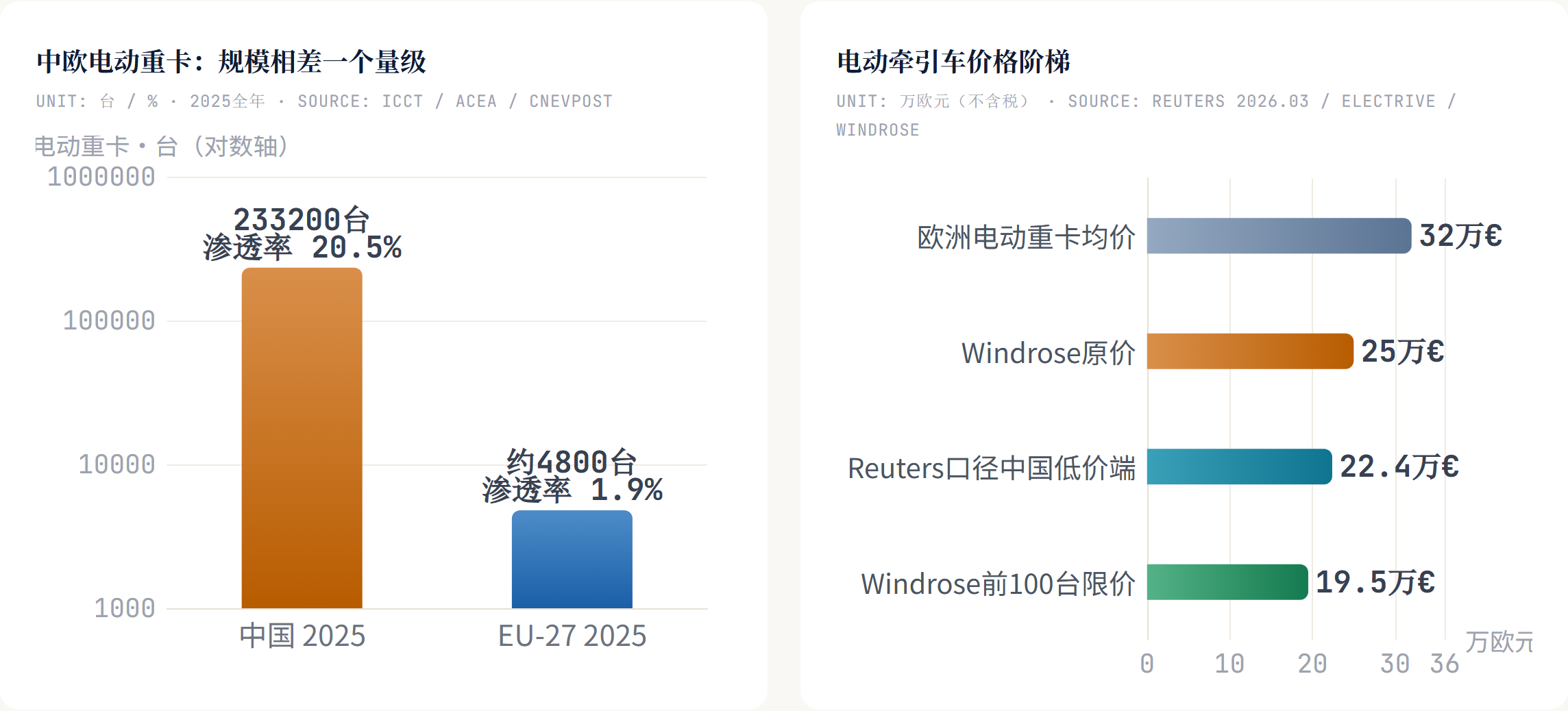
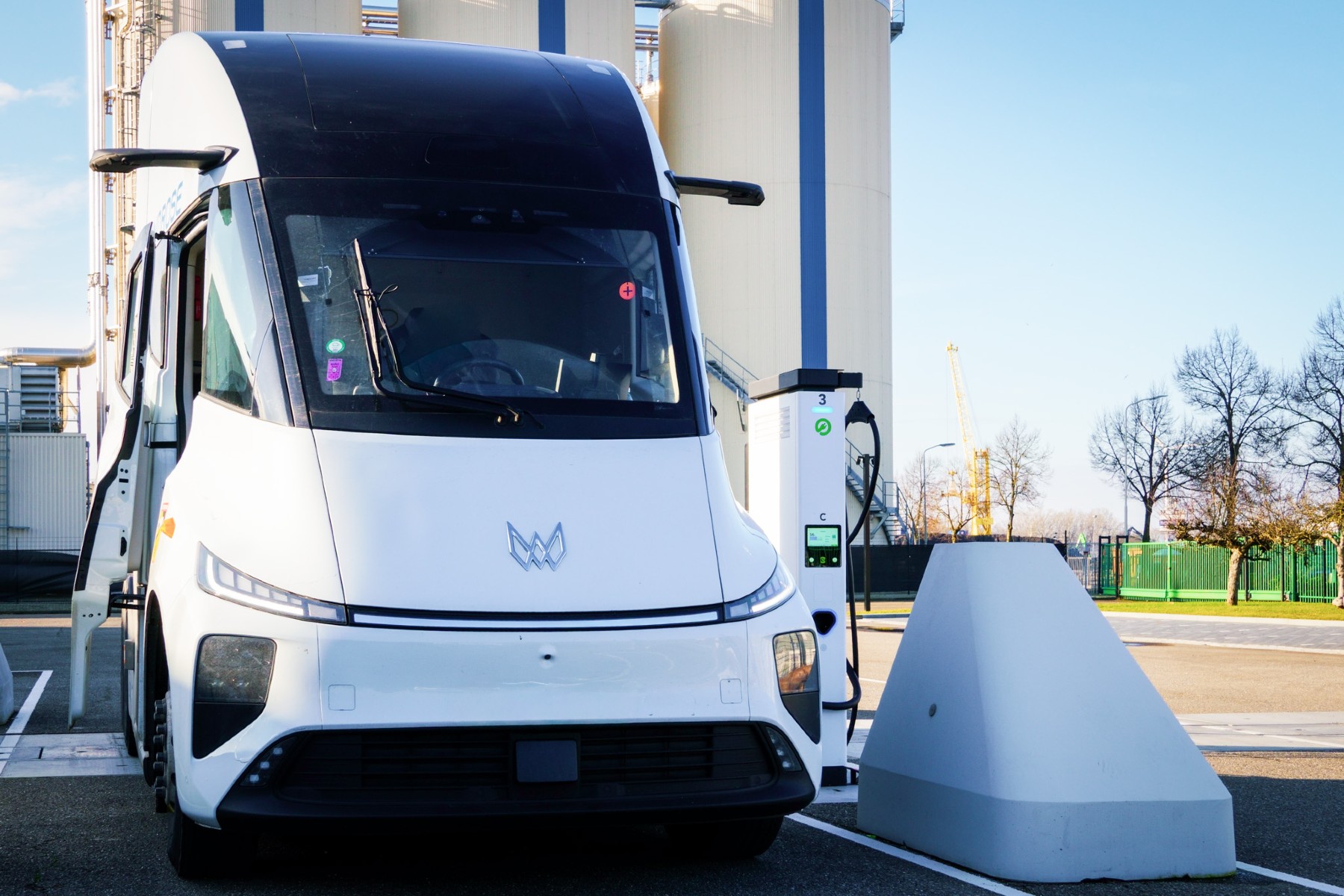
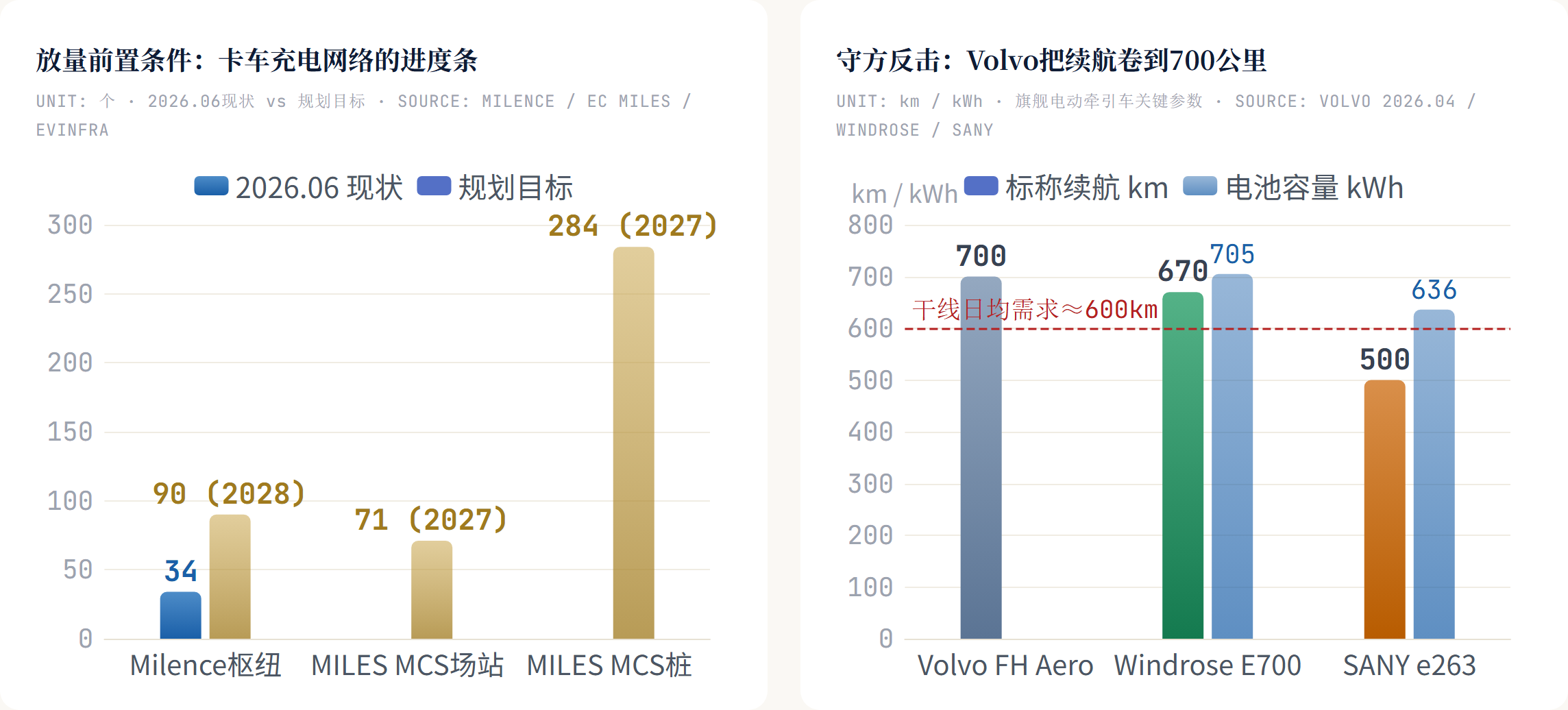
The price gap in heavy trucks is clear: the average European electric heavy truck costs about EUR 320,000, Chinese makers price up to 30% lower according to Reuters, and Windrose offered its first 100 units at a capped price of EUR 195,000 (list price EUR 250,000). But the price gap does not win orders, because a third variable is missing: residual value. Used Chinese-brand electric trucks have almost no transaction record in Europe; if leasing companies cannot quote residual values they cannot provide financing, so fleets only dare to run small trials. The incumbents know this well: in Apr 2026 Volvo launched the FH Aero Electric with 700 km of range and megawatt charging, going from 20% to 80% in 50 minutes, using a product upgrade to erase the "Chinese trucks have longer range" selling point outright, while backed by residual value guarantees from its own finance arm.
Politics: from mine tests to procurement clauses
Ruter's isolation test in the underground Franzefoss mine in Norway turned something the industry takes for granted into a political event: modern connected vehicles all have remote access capability, but when the vehicle is made in China, its SIM card roams on a Romanian network, and it accesses battery and power control systems, a technical issue becomes a sovereignty issue. Norway pulled the SIM cards from about 850 Yutong buses nationwide, Denmark's Movia is auditing 262, and the UK's DfT and NCSC are investigating about 700 in the UK.
As of Jun 2026, the politicisation has produced contract clauses, not bans. No country has passed a law banning Chinese buses, and electric buses and trucks fall outside the EU's anti-subsidy duties on BEVs. However, Norway has announced stricter cybersecurity requirements for future tenders. The EU's automotive package proposed in Dec 2025 would also add "Made in EU" content conditions to public procurement. Public procurement makes up more than 70% of the EU city bus market, so if this proposal becomes law, it would do far more damage than tariffs. In 2023, Yutong became the first Chinese commercial vehicle maker to receive UN R155 cybersecurity management system certification. But process certification does not cover audits of how systems are actually implemented, and that gap will be written into every tender document from now on.
For Chinese OEMs, the hedge against political risk has been validated by the Steyr model: using European plants, European workers and European partners to turn "imported goods" into "local industry". Sinotruk and SuperPanther chose Austria, Windrose chose Antwerp (9.5 hectares, an initial EUR 100 million, planned annual capacity of 2,000 units), and BYD is expanding in Komárom, Hungary; all these paths point in the same direction.
Six things to watch over the next 12 months
Six things to watch when judging the landscape in 2027. First, Steyr's actual Sitrak output. The annual figure of 600 to 800 units comes from media reports and has not been officially confirmed; how much of it materialises will decide whether the SKD model is credible. Second, whether Windrose delivers the more than 100 units it promised by the end of Sep 2026. This is the first test of volume deliveries of long-haul electric tractors in Europe. Third, delivery of and operating feedback on Tesco's 750 units, which will decide whether the next big UK customer dares to follow. Fourth, whether the EU's "Made in EU" procurement clause enters the legislative process. Fifth, the findings of the UK DfT investigation, which will set the compliance baseline for operating Chinese connected vehicles in Europe. Sixth, when the first European leasing company quotes a residual value for a Chinese electric truck. Only on that day will the heavy truck price war truly begin.
Bus market share, LCV distribution, heavy truck plants: in 2026, Chinese commercial vehicles made progress on all three fronts in Europe, but the variables that decide the outcome have changed. Every element of risk pricing in buyers' procurement mechanisms says more about where this market is heading than any new vehicle launch.