Mercedes-Benz liquid-hydrogen heavy truck deliveries imminent: regulation bets on gaseous hydrogen, Daimler bets on liquid
At the same plant in Wörth am Rhein, Daimler Truck has put two technology paths under one roof. The eActros 600 electric heavy truck has been in series production here since Nov 2024. It has now been delivered to more than 15 European countries, including a single Amazon order of more than 200 units. From the end of 2026, a small series of 100 units of the NextGenH2 liquid-hydrogen heavy truck will also roll off the line here. The first customer is confirmed: logistics firm Dachser will take the first liquid-hydrogen tractor at the end of month 12 and two more before mid-2027. The three trucks will be based at the Karlsruhe logistics centre, about 30 km from the plant, running long-haul trunk routes, some of them cross-border.
Line allocation on the factory floor is more honest than any strategy launch. Battery-electric heavy trucks are earning today's money; liquid-hydrogen heavy trucks are buying a ticket for the 2030s.
The regulatory ramp: compliance is mandatory, the route is optional
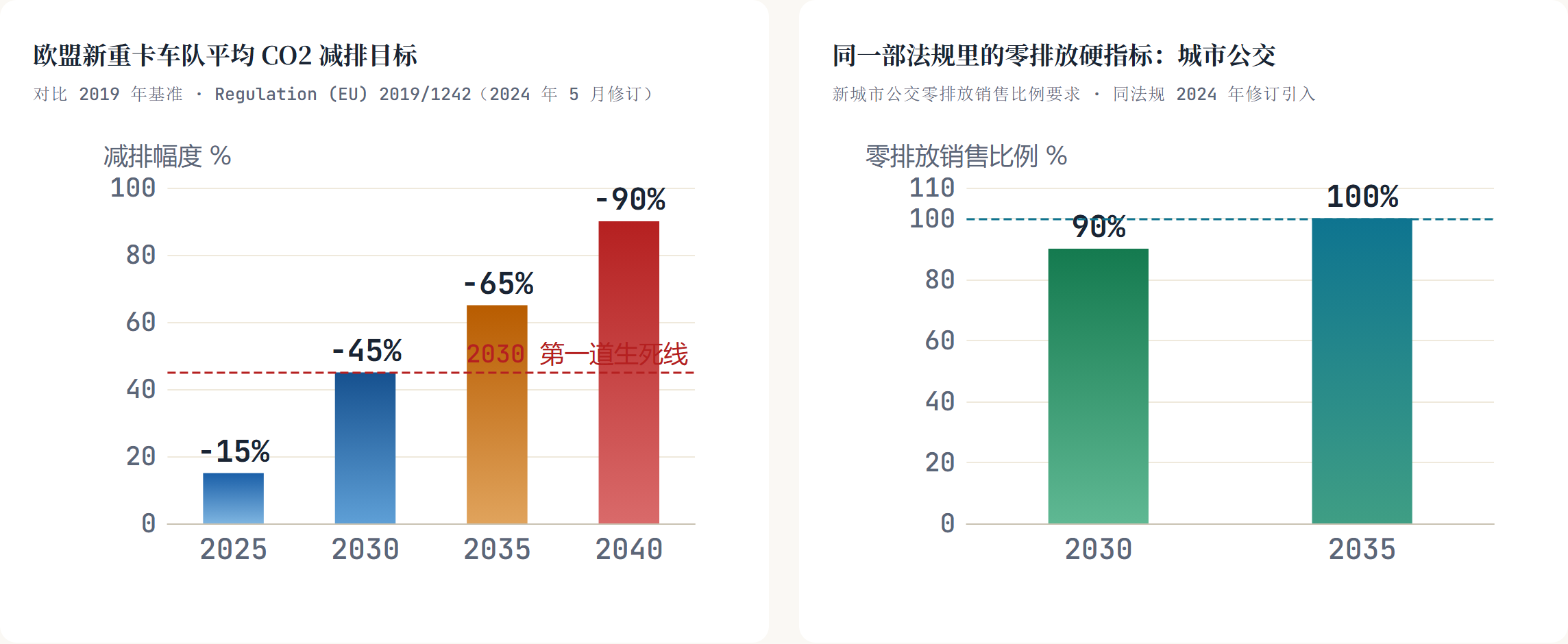
The bet starts with the EU's emissions-reduction ramp for heavy-truck makers. Under the heavy-truck CO2 standards revised in May 2024, average new-fleet emissions must fall by 15% by 2025, 45% by 2030, 65% by 2035 and 90% by 2040, against a 2019 baseline. In late Mar 2026, the Council approved targeted flexibility for manufacturers, which eases the pace but leaves the direction unchanged. Every European OEM must sell zero-emission heavy trucks over the next fifteen years. How they do it is still open: battery-electric or hydrogen.
 Open original image ↗
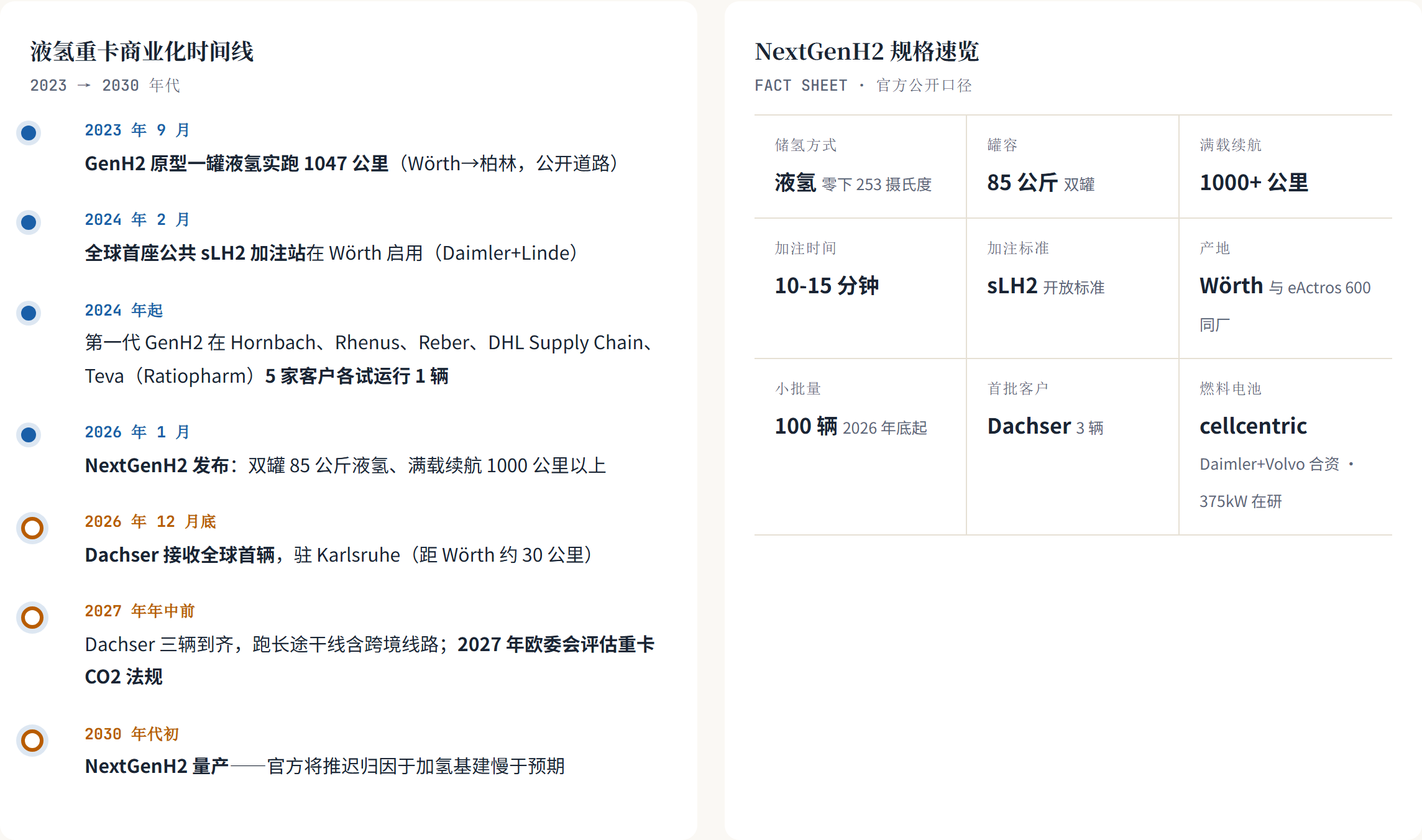
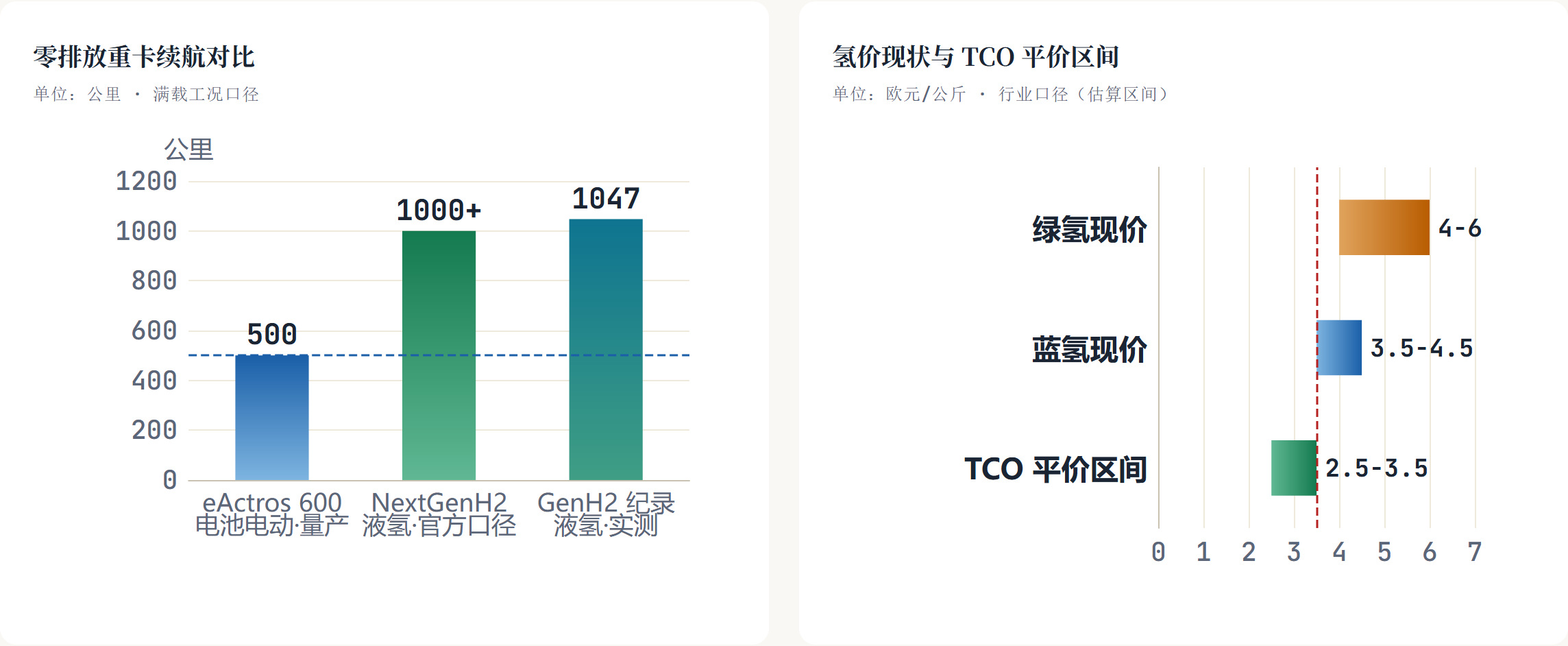
Infrastructure regulation tilts the balance toward one side. The EU's AFIR regulation requires hydrogen refuelling stations from 2030 every 200 km along the TEN-T core network, plus in every urban node, each mandated to offer 700-bar gaseous dispensers and a daily capacity of 1 tonnes. Every requirement in the regulation is for gaseous hydrogen; it does not require a single liquid hydrogen station. Daimler chose liquid hydrogen. Its two tanks hold 85 kg, giving a fully loaded range of more than 1000 km. That figure is backed by a real-world test in Sep 2023, when a GenH2 prototype drove from Wörth to Berlin on public roads on a single fill of liquid hydrogen, covering 1047 km. Using the sLH2 standard, the minus 253°C cryogenic liquid hydrogen can be filled in 10 to 15 minutes, on par with diesel refuelling. Energy density is the whole rationale: a tank of a given size holds more hydrogen in liquid form than in gaseous form, which buys range and payload.
 Open original image ↗
The costs are just as clear. By 2030, AFIR will roll out a 700-bar gaseous hydrogen network along Europe's trunk routes that Daimler's trucks cannot use; funding for sLH2 liquid hydrogen stations will have to come from Daimler and Linde themselves, together with any partners willing to follow. The world's first and so far only public sLH2 station is in Wörth, opened in Feb 2024. Dachser's three trucks are based in Karlsruhe, 30 km away: the refuelling radius dictated the location.
In 2027, the European Commission is due to review the heavy truck CO2 regulation, the most realistic window for the liquid hydrogen camp to get sLH2 written into European infrastructure regulation. If it succeeds, liquid hydrogen stations gain the same legal build-out status as gaseous hydrogen; if not, the pathway will keep building its own roads at its own expense into the 2030s.
Three rivals, three approaches
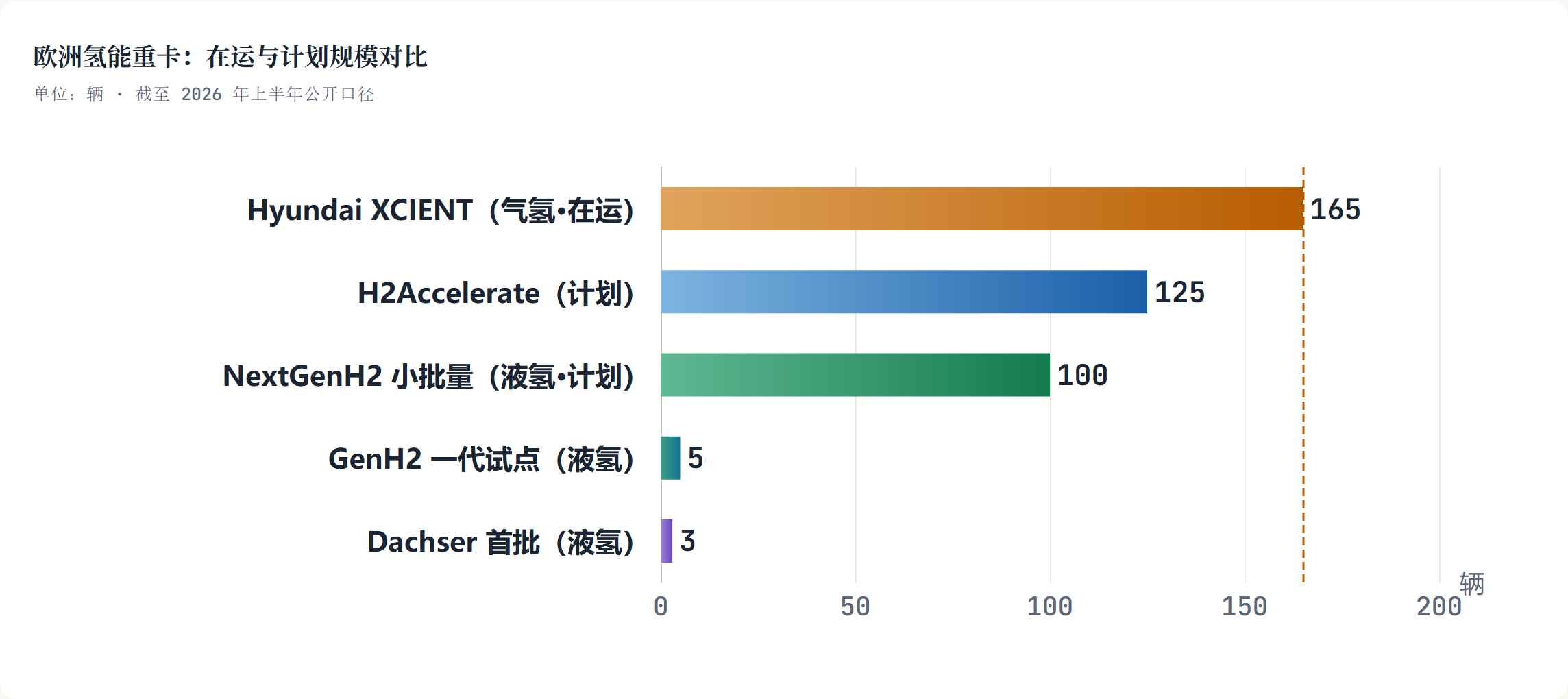
Competitors' positioning makes Daimler's isolation all the more conspicuous. Hyundai's XCIENT fuel cell truck uses 700-bar gaseous hydrogen; as of Jan 2026, 165 units had been deployed in five European countries, covering a cumulative 20 million km, making it the world's largest fuel cell heavy truck fleet in operation. The gaseous hydrogen route holds Europe's only track record of operation at scale. Volvo's stance is the most intriguing: it and Daimler each own half of the fuel cell joint venture cellcentric, which is developing a 375 kW fuel cell system for heavy trucks. Yet in Apr 2026 Volvo put a hydrogen combustion engine heavy truck into road testing first, with commercialization slated before 2030. Two shareholders of the same joint venture, one betting on liquid hydrogen fuel cells and the other trying hydrogen combustion first: the split in strategy is out in the open.
 Open original image ↗
sLH2's answer is an open standard: the technical specifications are public, and Daimler is inviting the whole industry to adopt them. The beneficiary of this move shows up on Linde's books: the standard is free, while liquefaction equipment, refuelling station engineering and hydrogen supply are the business. Every additional OEM that adopts the liquid hydrogen standard brings Linde another batch of equipment orders. Behind the standards battle stands the seller of shovels.
€425 per tank of hydrogen: the numbers don't add up
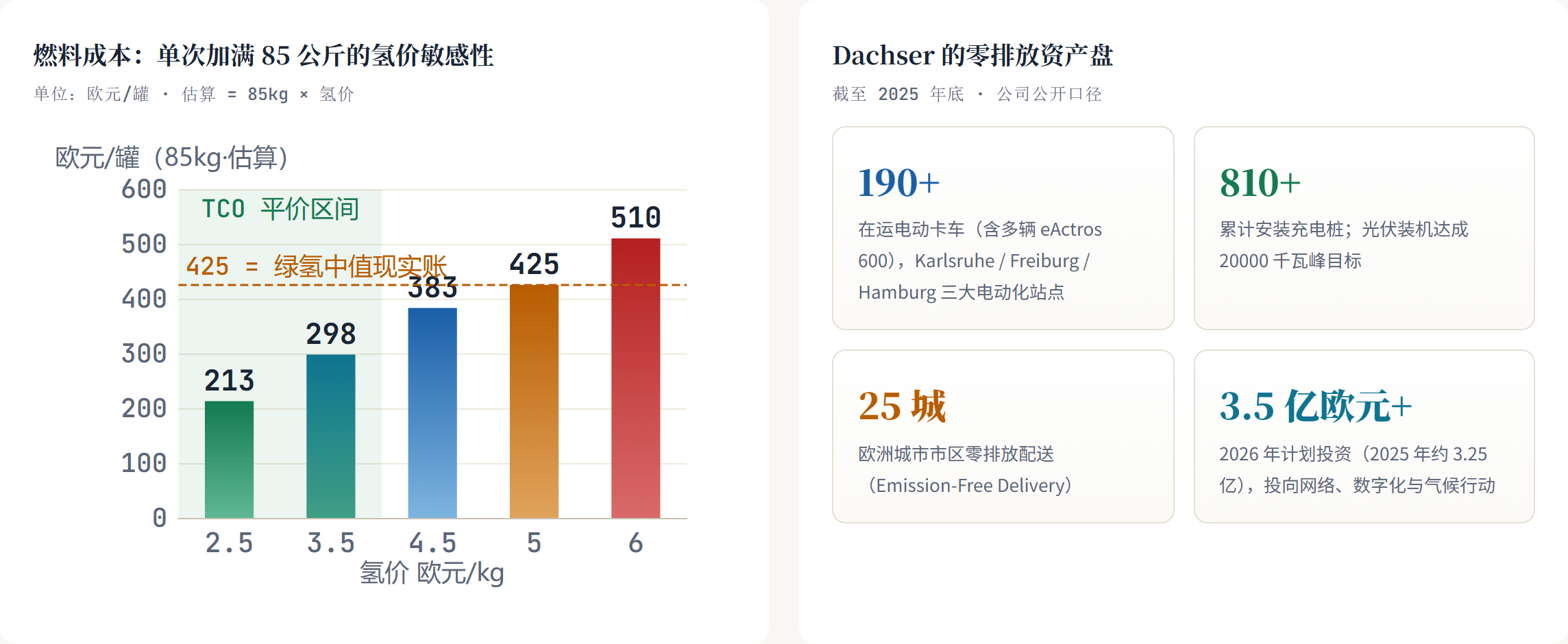
Translate the performance figures into operating costs and liquid hydrogen's weakness shows up in fuel prices. Industry figures put green hydrogen at about EUR 4 to 6 per kg and blue hydrogen at EUR 3.5 to 4.5. At a green hydrogen midpoint of EUR 5, a full tank of 85 kg costs about EUR 425 and covers just over 1000 km. The industry generally estimates that for fuel cell heavy trucks to reach total cost of ownership parity with diesel, hydrogen would need to fall to EUR 2.5 to 3.5 per kg, nearly half the current price. Add residual values that cannot be priced for low-volume models, a lack of long-term data on fuel cell stack life and a maintenance network yet to take shape, and in 2026 fleet procurement plans this truck goes not in the capacity column but in the R&D column.
 Open original image ↗
This is exactly what the small batch of 100 units is for. Customer trials of the first-generation GenH2 began in 2024. Hornbach, Rhenus, Reber Logistik, DHL Supply Chain and Teva's Ratiopharm each received one truck, a sample of just five. NextGenH2 scales that sample up 20-fold and puts it on the real trunk routes of a network logistics operator like Dachser, which has annual revenue of about EUR 8.3 billion, 37,500 employees and more than 190 electric trucks in service. Fuel consumption, vehicle availability, maintenance hours and driver acceptance: this data will define the series-production truck of the early 2030s, and decide what kind of truck cellcentric's 375 kW system ends up in.
The real constraint in logistics: the grid, not range
Dachser Chief Development Officer Stefan Hohm put the reason for taking part bluntly: battery-electric heavy trucks have made great progress in recent years, and series-production models with a range of more than 500 km are already available — his fleet includes the eActros 600 with a 621 kWh LFP battery — but grid connection capacity at logistics hubs remains a major challenge. The mechanism is simple: when dozens of electric heavy trucks return to charge in the same overnight window, the site needs megawatt-level peak power. Grid expansion involves utilities, local permitting and construction lead times; logistics companies cannot set the pace themselves, and waits are often measured in years. Liquid hydrogen refuelling puts almost no peak load on the site's grid, offering a workaround for grid-constrained hubs. That is the real reason logistics firms are willing to trial liquid hydrogen alongside OEMs — far more concrete than the decarbonisation narrative.
 Open original image ↗
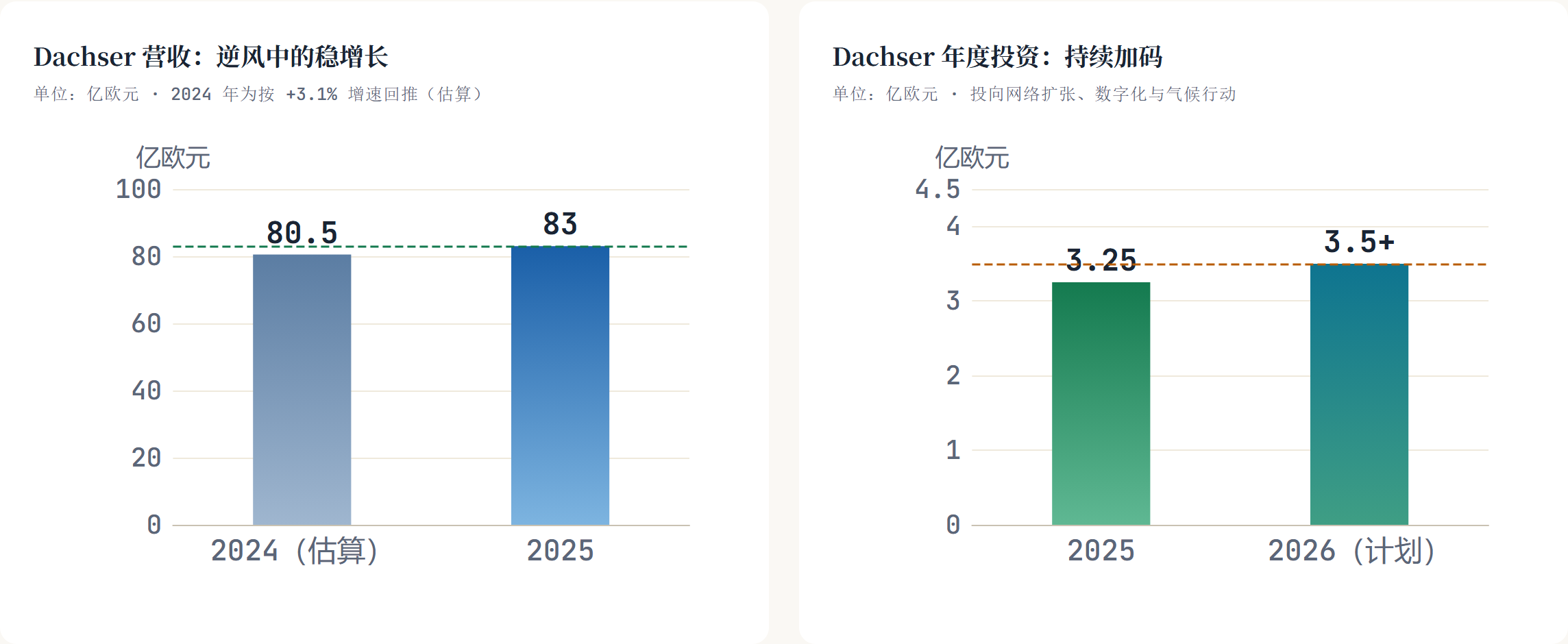
Dachser's asset side supports this view: it invested about EUR 325 million in 2025 and has raised its 2026 budget to more than EUR 350 million, spent on network expansion, digitalization and climate action. It runs zero-emission urban deliveries in 25 European cities, has 20,000 kW peak of solar PV capacity and more than 810 charging points. Energy capability is already a network asset on this company's books. The three liquid hydrogen trucks fill a missing test case in its asset portfolio: when a trunk route exceeds battery range, or a hub's grid connection cannot be expanded, what are the real cost and reliability of a liquid hydrogen solution?
 Open original image ↗
The early market structure for zero-emission heavy trucks can therefore be predicted. Major customers are writing zero-emission transport capability into their supplier tiering criteria. Leading logistics providers are using electric truck and hydrogen pilots to build operating evidence and offer verifiable decarbonization pathways in tenders. Small and mid-sized logistics firms are shut out by four hurdles: grid connection for charging, hydrogen availability, residual values and financing costs. In the hands of the leaders, technology pilots become a service-level moat, and hydrogen naturally favors big players in the early market.
Four things to watch over the next 6 to 12 months
First, the quality of the customer list for the small batch of 100 vehicles. If later buyers stay concentrated within reach of Wörth and inside Germany, the liquid hydrogen supply radius has not grown; if customers appear in France, the Netherlands or the Nordics, it means a second and third sLH2 station have found sites. Second, the site announcement for the second public sLH2 refuelling station, the route's first milestone in moving from a single point to a network. Third, the European Commission's 2027 review of the heavy-duty vehicle CO2 regulation. Whether liquid hydrogen makes it onto the mandatory list in European infrastructure regulation will decide whether, in the 2030s, it rides on public infrastructure or keeps paying for its own. Fourth, the hydrogen price curve. How fast green hydrogen approaches €2.5 to €3.5 per kg is closer to the life-or-death line for this route than any vehicle specification.
Three trucks cannot shake up European long-haul transport. Their role is to turn liquid-hydrogen heavy trucks from launch-event specifications into line after line of measured figures in a logistics network's books. When the four-year validation period ends, those figures will make the series production decision for Daimler, and will answer for the whole industry what the second route to zero-emission long-haul transport is really worth.