EUR 120 million electric bus order: the lever for southern Europe's electrification lies in the financing structure
UK company Zenobē and Spanish operator Vectalia have signed a three-year framework agreement worth up to EUR 120 million, which Zenobē calls its largest deal of its kind in Spain and indeed Europe. Yet what a press release should contain is missing: how many vehicles, from which manufacturer, and for which cities, none of it is disclosed. An electric bus deal that deliberately leaves out the buses sends a clear signal: what is being sold is a structure bundling vehicles, batteries, charging and financing.
The numbers add up, yet no one dares buy in volume
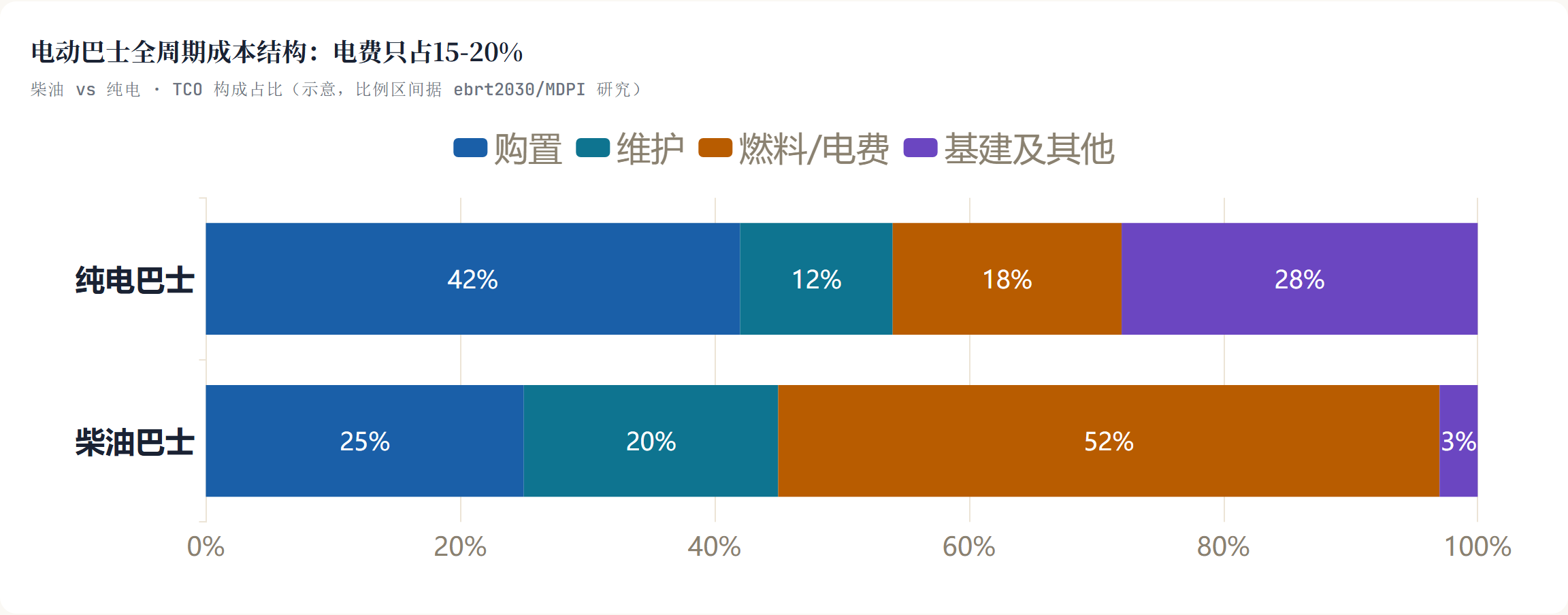
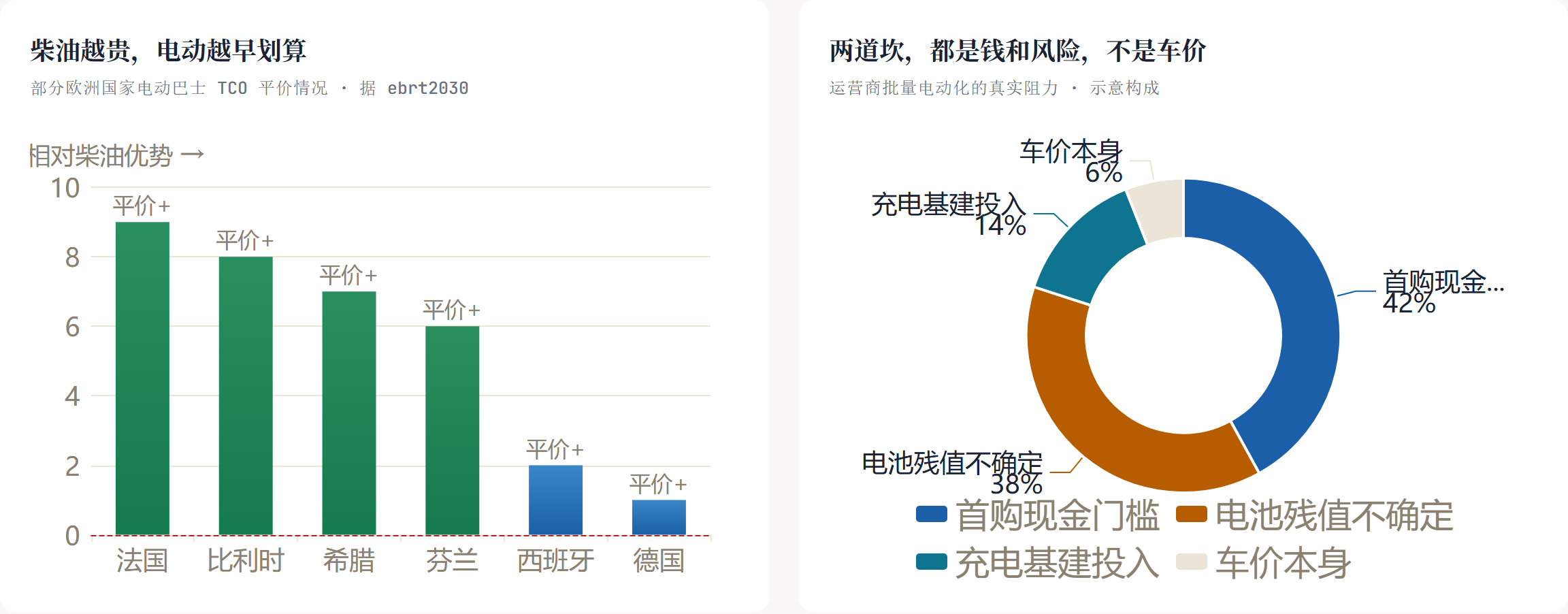
"Electric buses are expensive" is an outdated view. A battery-electric bus does cost 1.2 to 1.5 times as much as a diesel bus to buy, but its maintenance costs are 30 to 40% lower, and electricity makes up only 15 to 20% of total cost of ownership, whereas diesel eats up more than half of a conventional bus's cost structure. Spread over a 8- to 10-year cycle, the TCO of electric buses is already below diesel in countries with high diesel prices (about EUR 1.7 per litre) and moderate electricity prices, such as France, Belgium, Greece and Finland.
Policy is adding momentum behind the scenes. The EU Clean Vehicles Directive requires clean vehicles to make up 45% of new public transport procurement from 2025, and purchase subsidies in Spain, France and other countries can cover 20–30% of the cost. Demand is being pushed by regulation and subsidies together.
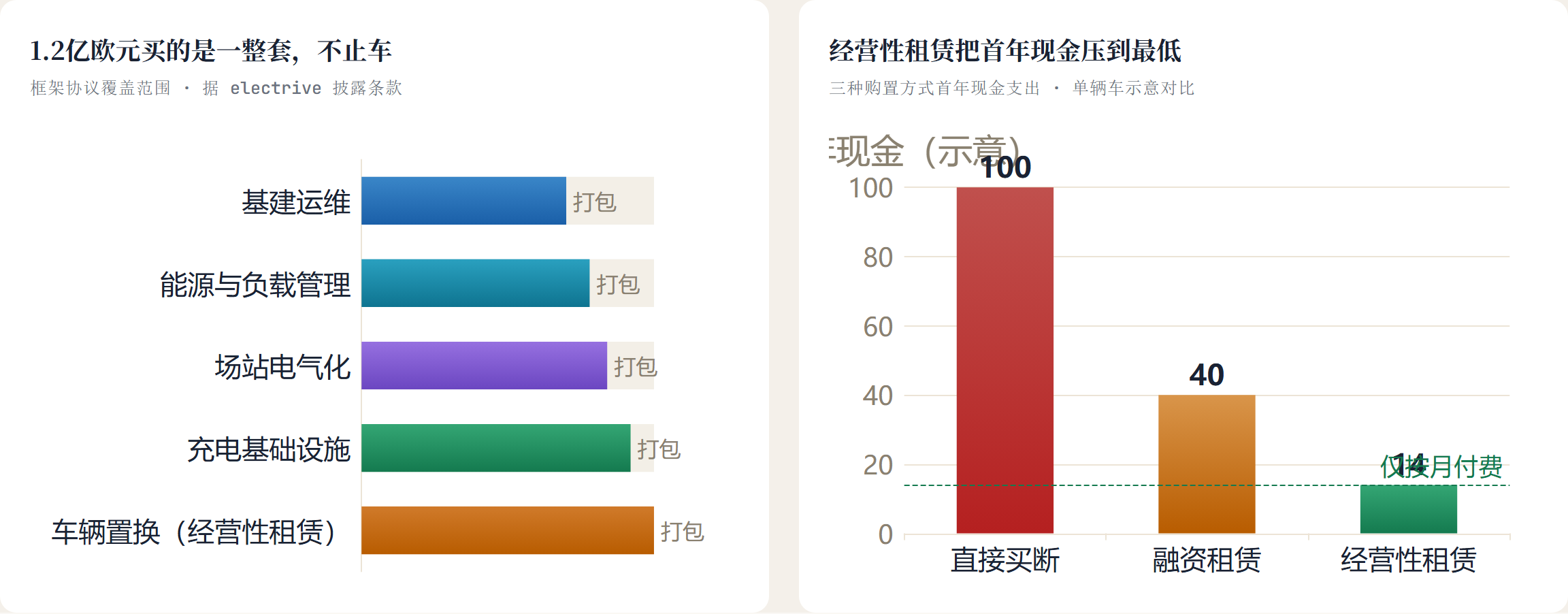
The problem is that even when the numbers add up and subsidies are in place, municipal transit companies still hesitate. There are two sticking points, both tied to money and risk. The first is the upfront purchase: even after subsidies, the remaining vehicle price plus EUR 10,000 to EUR 30,000 per vehicle for charging infrastructure still has to be paid from public funds in one go, while public budgets are approved year by year. The second is the battery: it accounts for 30 to 50% of the vehicle's cost, yet no one can give operators a firm figure for its residual value after eight or nine years in service. Buying outright means carrying this biggest uncertainty on their own books.
Zenobē's solution: turning vehicle purchase into a monthly service fee
What Zenobē does is take over the two things operators fear most.
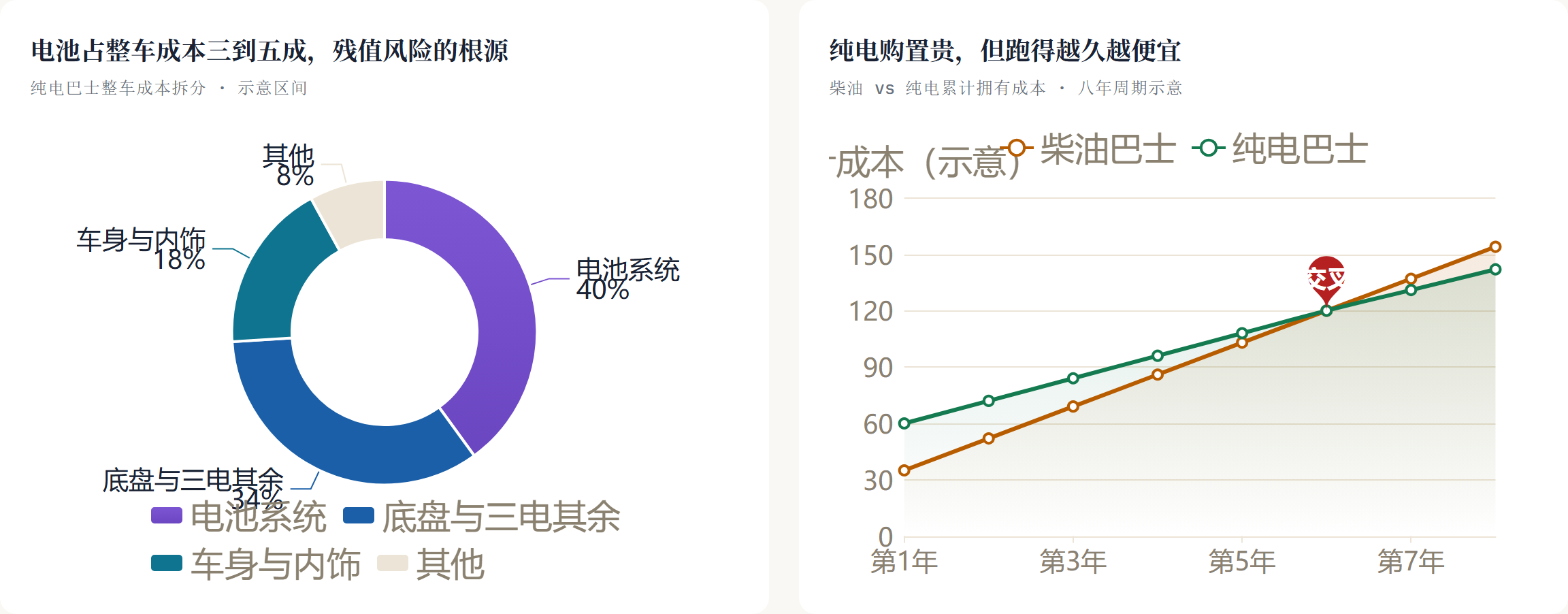
The buses are not sold outright but supplied under an operating lease. The assets stay on Zenobē's books and Vectalia pays a monthly usage fee, turning a large one-off outlay into monthly cash flow that matches fare revenue. Under the new lease accounting standard most leases still go on the balance sheet, so the value of the arrangement lies not in accounting maneuvers but in the fact that the risk genuinely changes hands. Under the accompanying battery management framework, Zenobē takes on battery risk and handles health and degradation monitoring, shifting the hidden variable of residual value off the operator. The agreement also bundles in charging infrastructure, depot electrification, energy and load management, and operations and maintenance. The operator only has to keep the buses running with enough power; Zenobē covers the capital and technology behind it.
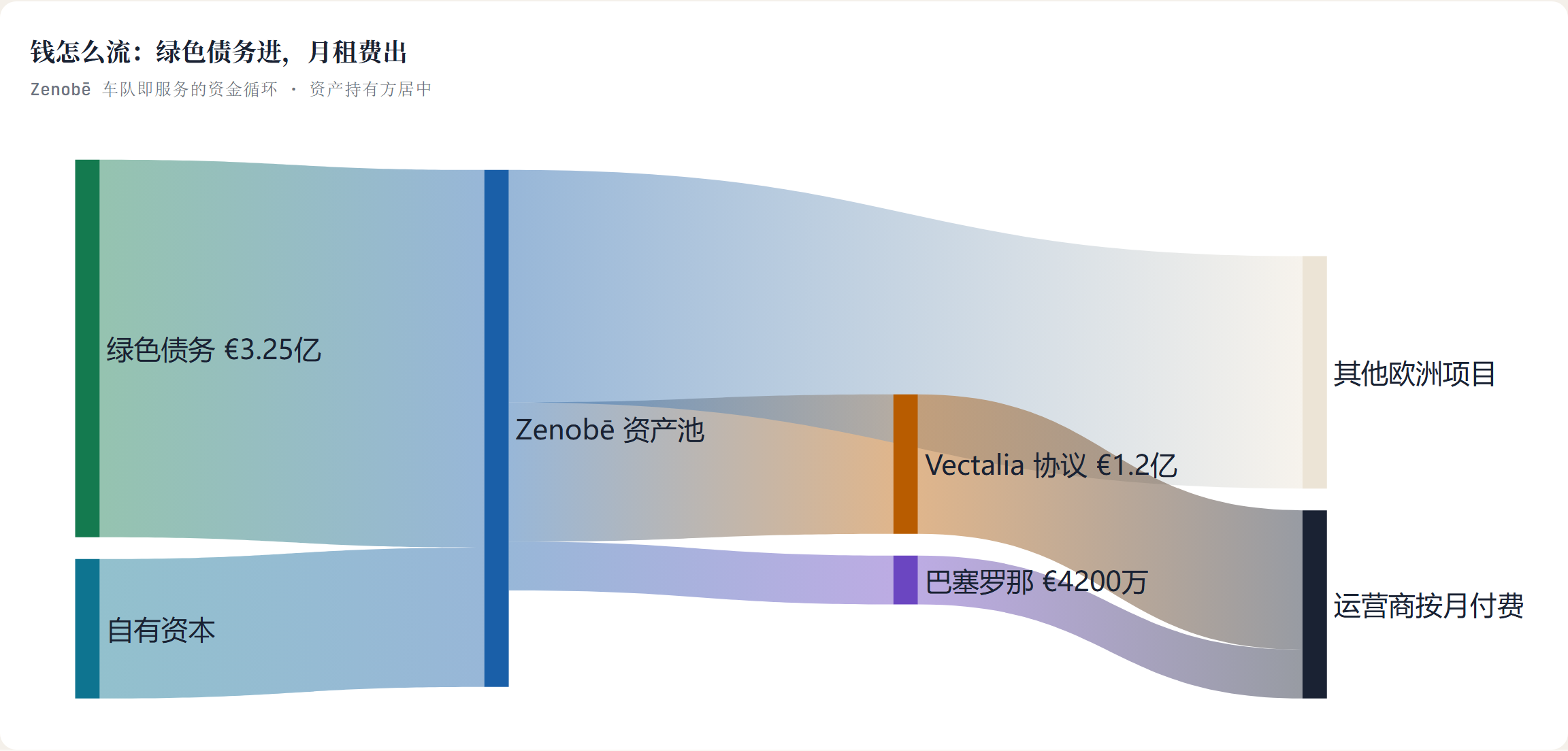
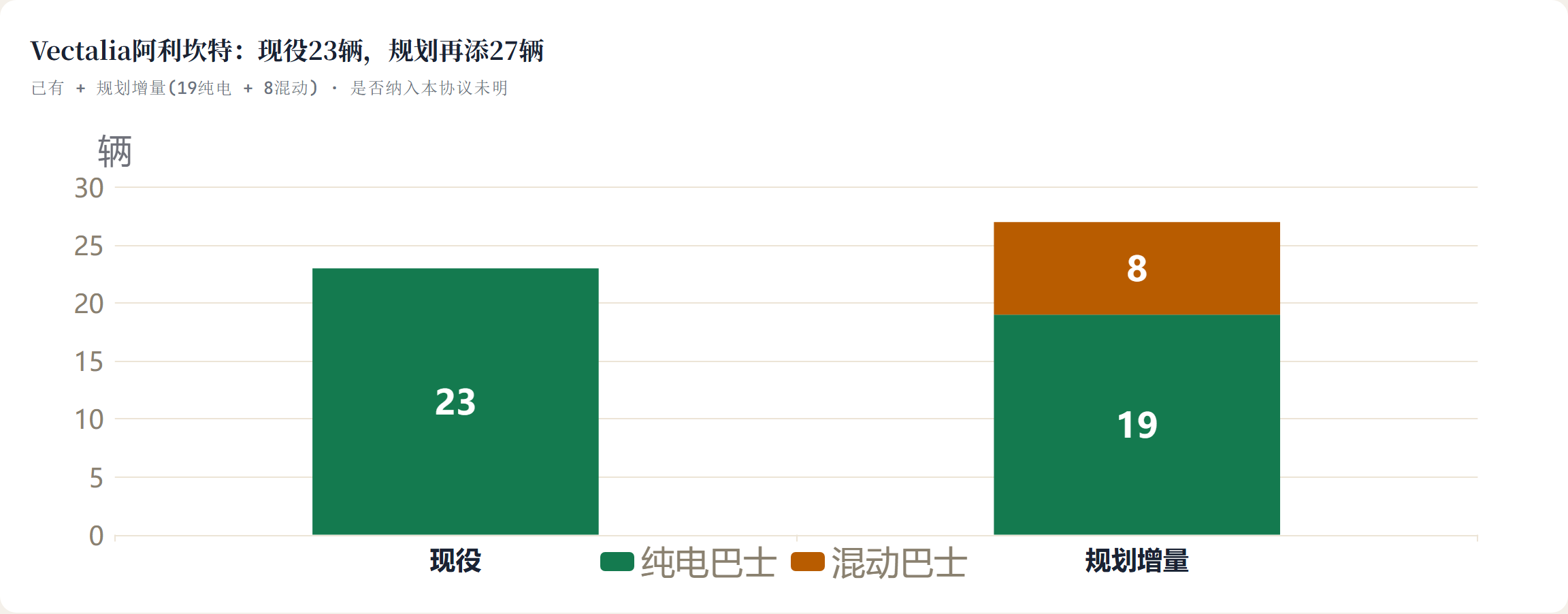
Also in Spain, Zenobē and Grupo Julià's project in Barcelona is worth EUR 42 million, covering 44 battery-electric buses plus a complete charging infrastructure package, which works out at roughly EUR 955,000 all-in per vehicle (illustrative estimate). On that ratio, EUR 120 million could in theory support around 125 vehicles of the same scale; given that the marginal cost of infrastructure falls as volumes grow, the actual number could be higher. For reference, Vectalia currently runs 23 battery-electric buses in Alicante and has another 27 planned (19 BEV and 8 hybrid). The new agreement is 2.85 times the size of the Barcelona project, and the execution challenge jumps from a single city and single operator to a cross-regional system overhaul.
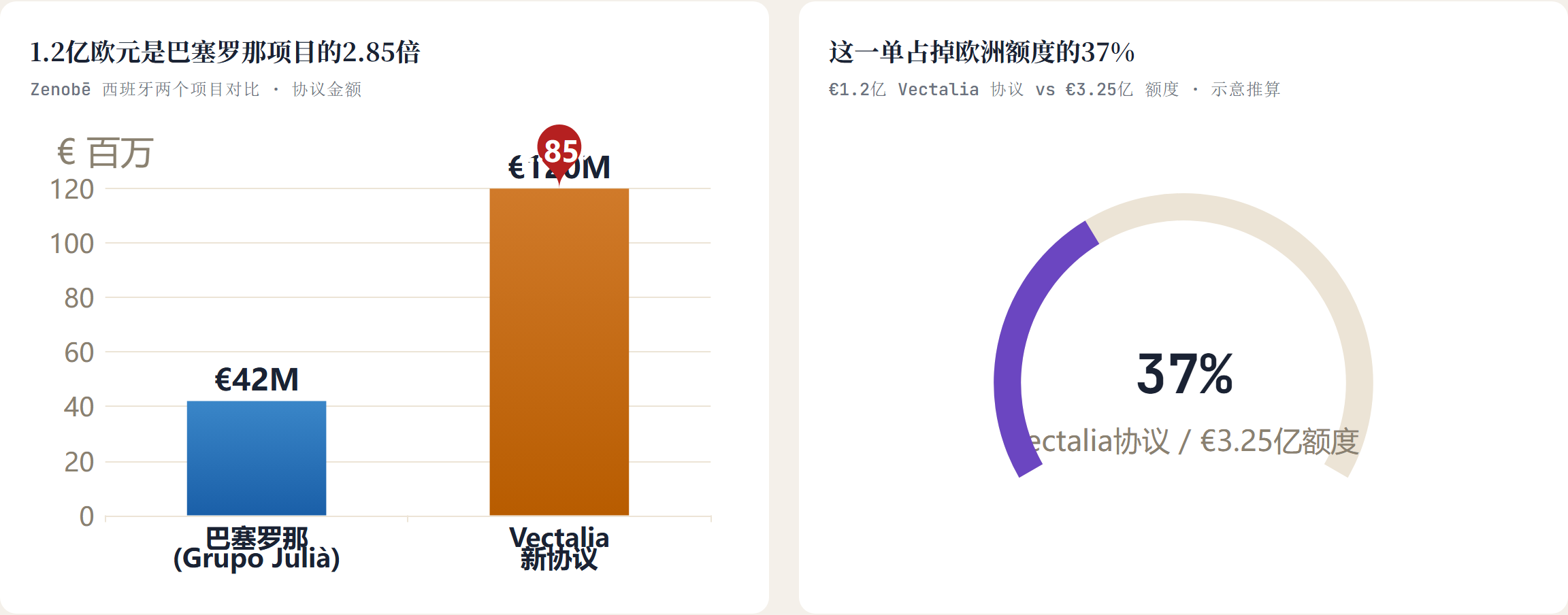
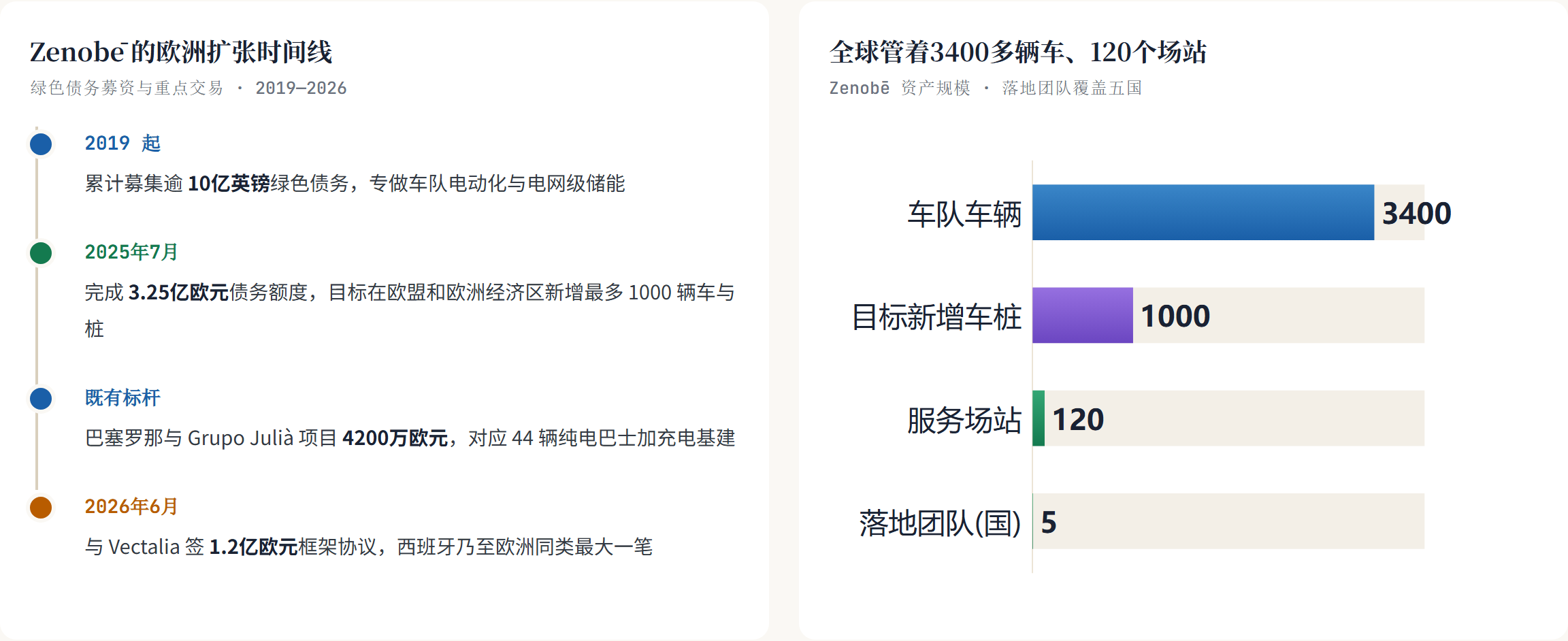
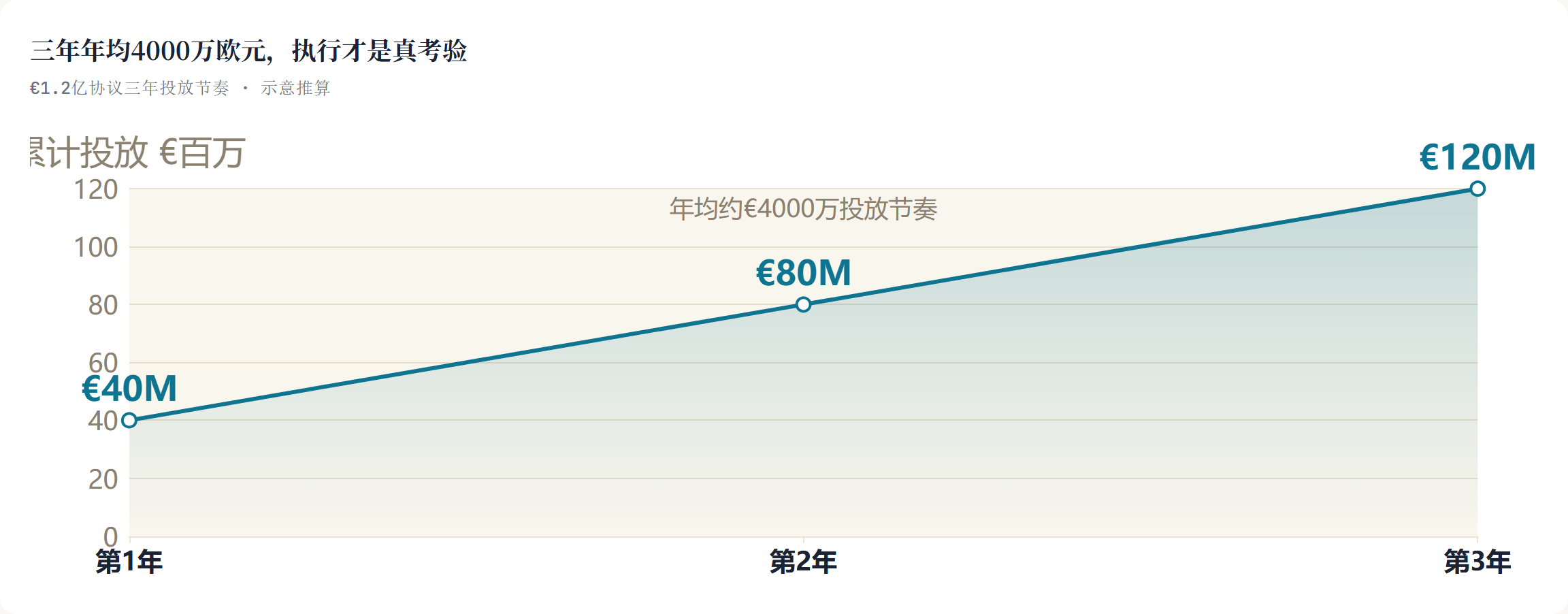
Whether the model holds up depends on where the money comes from. In Jul 2025, Zenobē secured a EUR 325 million debt facility. Together with its own capital, it aims to deploy up to 1,000 more electric buses, electric trucks and chargers across the EU and EEA. The EUR 120 million Vectalia deal alone takes up about 37% of that facility. Spread over three years, that means deploying about EUR 40 million a year, which is a demanding pace. Taking a longer view, Zenobē has raised more than GBP 1 billion in green debt since 2019. It manages more than 3,400 fleet vehicles and 120 depots worldwide and has teams in Germany, Spain, Belgium, the Netherlands and Sweden. Its income no longer comes from margins on hardware sales but from asset management fees plus energy service fees.
The risk changed hands; it's not an accounting trick
The value of this structure is often misread as accounting "off-balance-sheet maneuvering". Under the new lease accounting standard, most leases still have to go on the balance sheet; what really changes is who bears the risk: battery residual value, the biggest hidden variable, shifts from the operator to a specialist asset owner.
Under the accompanying battery management framework, Zenobē bears the battery risk and monitors health and degradation. The operator swaps unpredictable capital expenditure for monthly cash flows that match fare revenue, and that holds regardless of accounting standards.
This also explains why subsidies cannot solve everything. The EU Clean Vehicles Directive and national subsidies can lower the initial purchase cost, but they do nothing about the residual value risk of batteries after eight to ten years. Pricing that risk, hedging it and spreading it across a sufficiently large asset pool is the real moat for asset service providers.
Chinese automakers: the next hurdle is residual value credibility
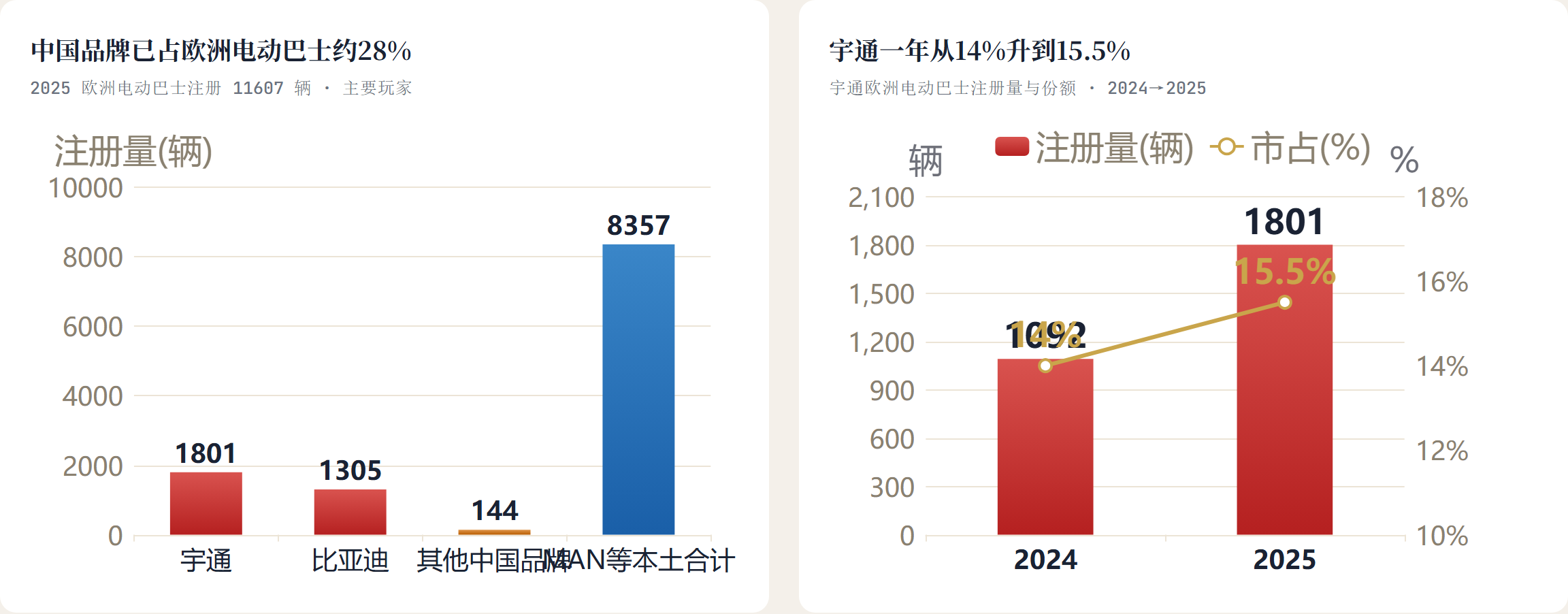
In 2025, Europe registered 11607 electric buses, up 48% year on year. Yutong ranked first with 1801 units and a 15.5% market share, up from 1092 units and 14% the previous year. BYD registered 1305 units, a surge of 206%, breaking into the top four. Chinese brands together took about 28% of the market. In terms of product competitiveness and price, Chinese buses have established a foothold in Europe.
But the existence of asset service providers like Zenobē raises a harder question. Operating leases make the lessor responsible for residual value, so when choosing vehicles it favours brands whose residuals can be calculated reliably. Solaris, MAN, the Mercedes-Benz eCitaro and VDL have run in Europe for years; there is used-market data and their residuals can be modelled. Yutong and BYD fleets in Europe have only just begun to build up, and the residual value sample is too small, which actually makes them more likely to be kept off the lists of such financial packagers. In other words, the next hurdle for Chinese OEMs in winning southern Europe is making their vehicles acceptable to financial institutions in terms of residual value, warranty and maintenance data, so they can get onto the shortlists of asset owners like Zenobē. That will do far more than cutting the list price by another 10%.
Finance packagers favour brands with predictable residual values
Operating leases make the lessor responsible for residual values, so asset owners favour brands with years of operating and used-vehicle data. Solaris, MAN, the Mercedes-Benz eCitaro and VDL have run in Europe for many years and their residual values can be modelled; Yutong and BYD fleets are only just getting started and their residual value samples are too small, making them more likely to be left out of packages.
The next hurdle for Chinese automakers to win in Southern Europe is making their vehicles acceptable to financiers on residual value, warranty and maintenance data. This part is extrapolation: the deal names no Chinese manufacturer, and the vehicles may well be from a European brand. But it shifts the competitive focus from vehicle price to residual-value credibility and service data, which is precisely the capability Yutong and BYD have built over years of finance leasing in China but have yet to establish in Europe.
Seen from another angle, this is also an opportunity for China's industrial chain. The party able to provide residual value guarantees, warranty backstops and fleet data locally in Europe will not necessarily be the OEM; it could be a battery maker or a specialised asset services company. Whoever first builds these capabilities in Europe, and makes them credible to local financial institutions, will hold the ticket to the next round.
To be clear: this deal does not name any Chinese manufacturer, and the vehicles could well be from European brands; the above is an extrapolation. But it shifts the focus of competition from vehicle list prices to residual value credibility and service data. Yutong and BYD have been doing bus finance leasing in China for more than a decade; what they lack is precisely the ability to replicate this capability locally in Europe and win the trust of local financial institutions.
Not yet a model to copy, but worth watching long-term
Vectalia has only 23 electric buses in service in Alicante, and the increase amounts to a few dozen vehicles at most, a tiny slice of Europe's annual total of 11,607 units. The EUR 120 million is also a ceiling over three years, with no guarantee of how much will ultimately be drawn. It looks more like an early signal than an established model.
The thing to watch is whether the model can be standardised. Suppose Zenobē gets the whole process working smoothly in these non-core Spanish provinces, from financing to vehicles to grid connection. Then it would not just be repeating an order. It would have an asset cycle it can take to Germany, Belgium and the Netherlands. Upstream, it raises money through low-cost green debt. In the middle, it owns the vehicle and battery assets and manages the risk. Downstream, it leases the right to use them to operators on a monthly basis. This is already close to an early form of asset securitisation for public transport. Heavy assets that used to sit on the books of individual bus companies are pooled with a specialist firm, which finances them, prices them and manages their residual value in one place.
In southern Europe, the edge in electric buses is shifting from whose vehicle is cheapest to who can help operators make the transition with less pressure on cash and risk. What the €120 million is really testing is whether this playbook can be replicated. For any player wanting to scale in Europe, Chinese or local, those who understand this deal will look past the vehicle spec sheet to the financials behind it.
The winning edge shifts from "whose vehicle is cheapest" to "who makes the transition lighter"
In Southern Europe, the winning edge for electric buses is shifting from how much cheaper the vehicle is to who can help operators make the transition with less cash and risk pressure. What the EUR 120 million is really testing is whether this playbook can be replicated.
For every player hoping to scale in Europe, Chinese or local, the weight of this deal only becomes clear when attention shifts from the vehicle spec sheet to the balance sheet behind it. A small order that doesn't even disclose the model has shifted the competitive coordinates of the entire industry.
The electric bus story is shifting from "building a better vehicle" to "building the financing and services that give customers the confidence to own it long-term." Chinese automakers have achieved the former; the latter is only just beginning.