European bus and coach CO2 data: in long-distance electrification, the clock is running ahead of the products
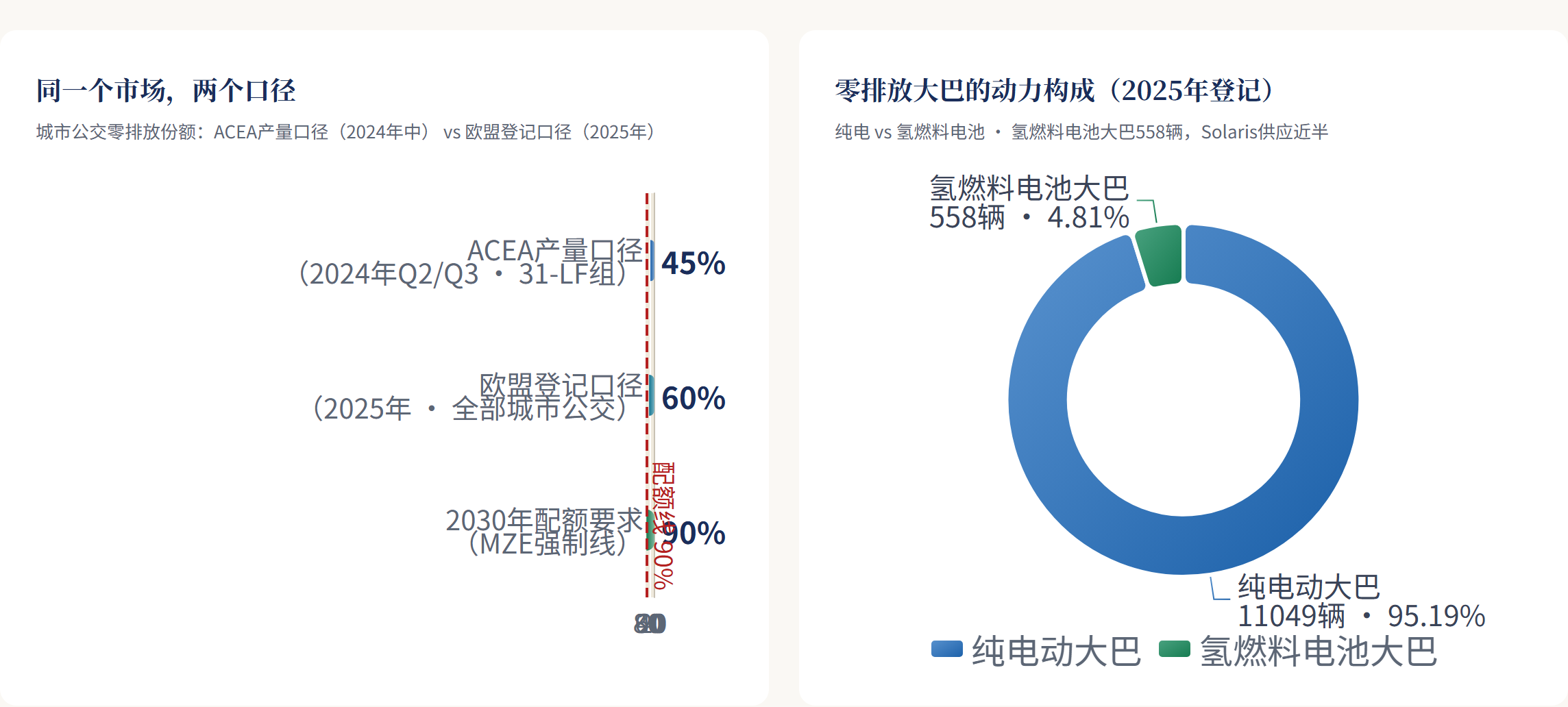
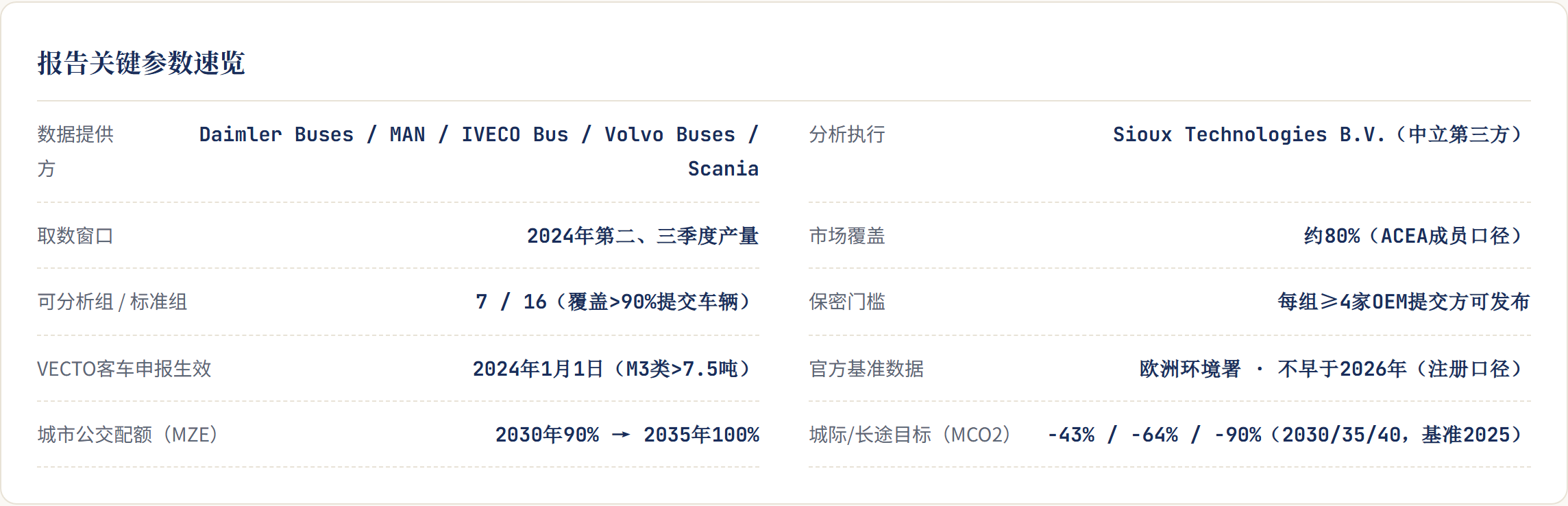
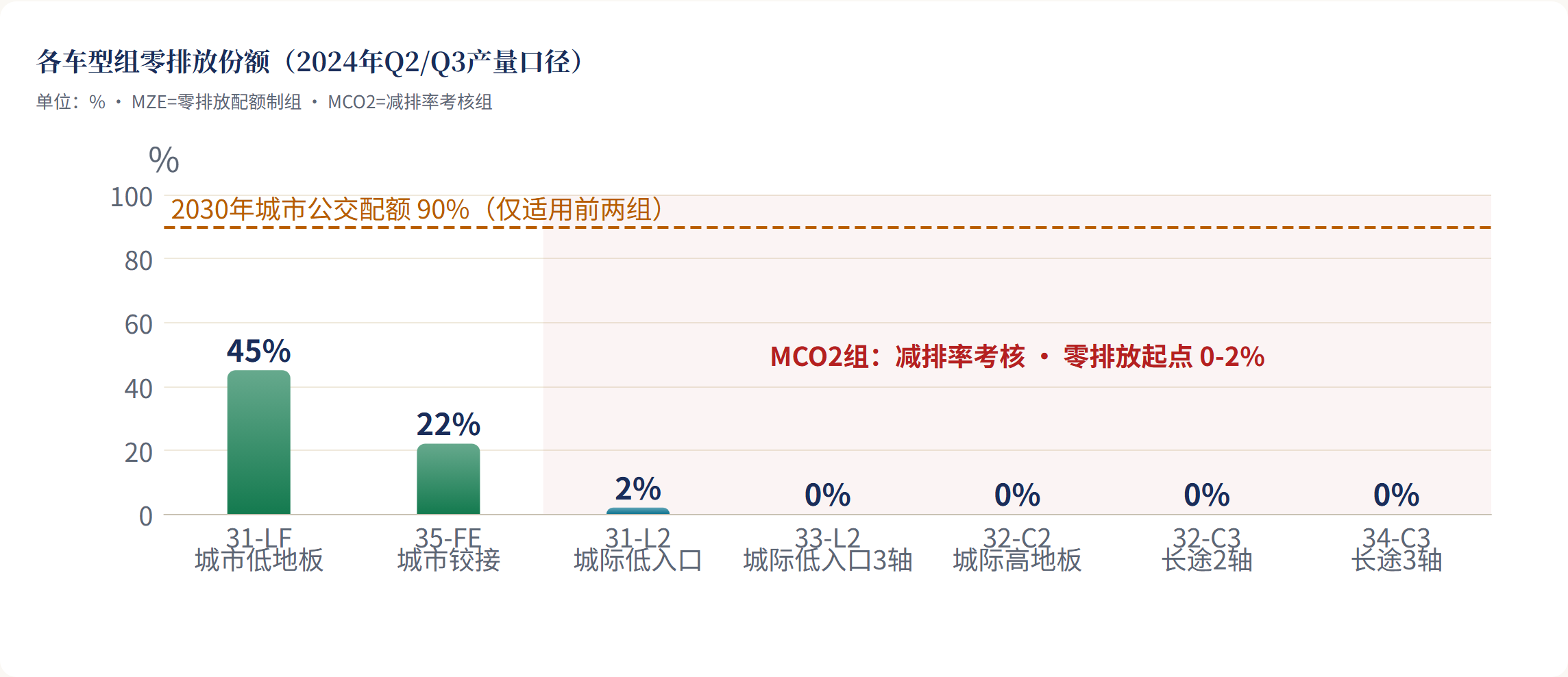
The zero-emission share of European long-distance coaches today stands at 0. For city buses, the same metric has reached 45% in the top group. Both figures come from the same document: ACEA's VECTO fleet analysis for buses and coaches, published in month 6 of this year, covering the entire Q2 and Q3 2024 production of five member companies (Daimler Buses, MAN Truck & Bus, IVECO Bus, Volvo Buses, Scania), roughly 80% of the European market. Unlike the electrification figures previously scattered across manufacturers' press releases, VECTO is a statutory reporting tool, with every vehicle's g/pkm entered into a regulatory database. This is the first verifiable ledger for the bus and coach industry.
Long-haul: starting from 0%, a five-year test
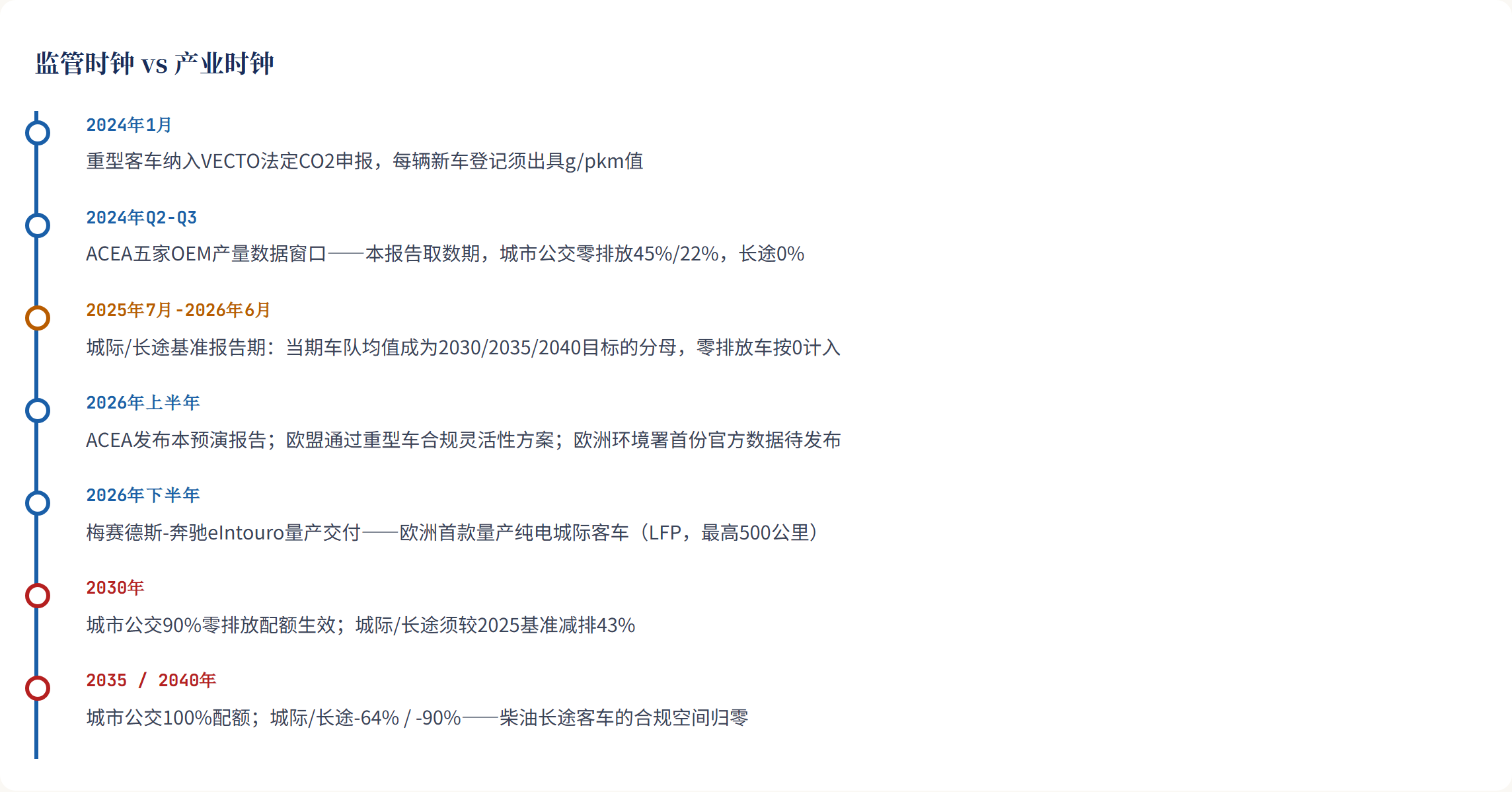
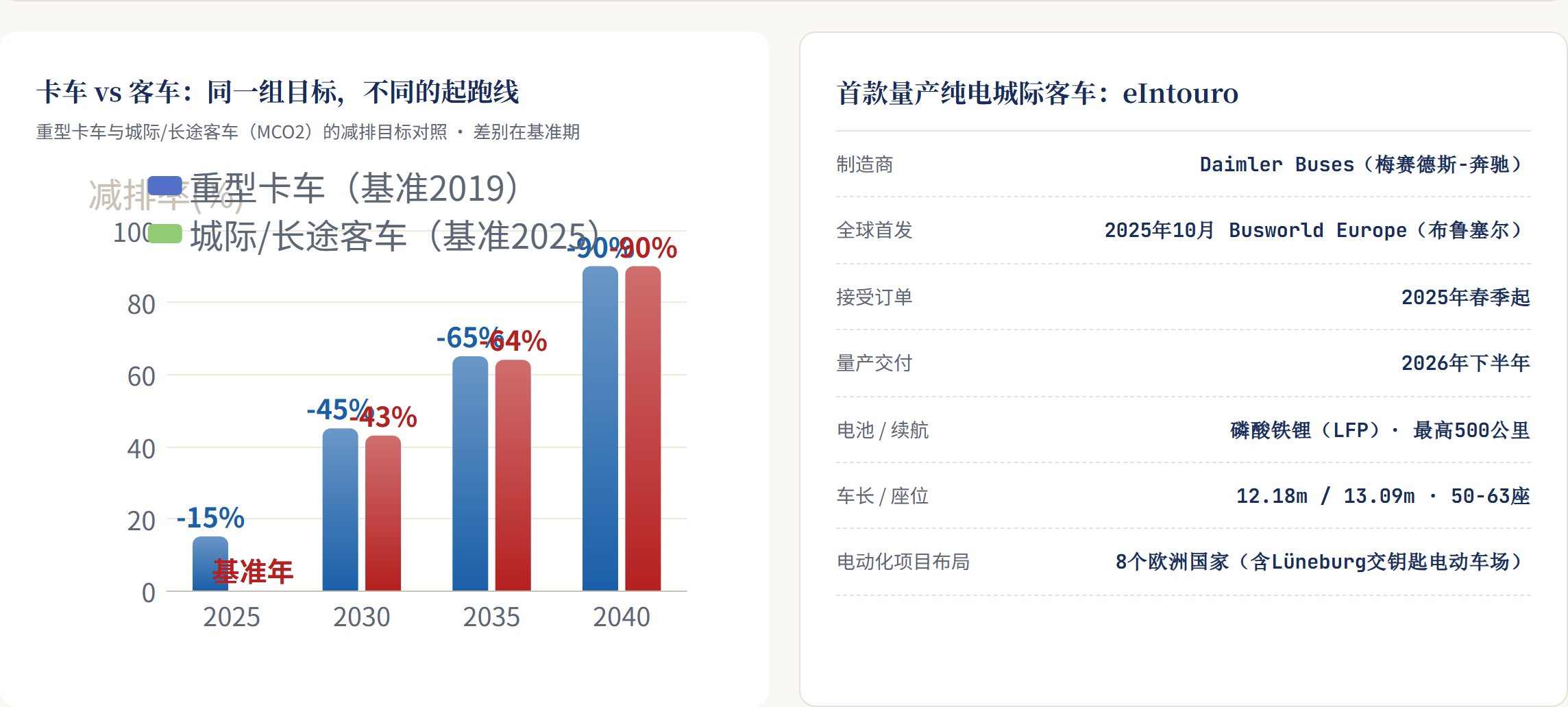
Regulatory requirements for intercity and long-distance coaches are tied to reduction rates: fleet-average CO2 must be 43% below the baseline in 2030, 64% below in 2035, and 90% below in 2040. The baseline is the 2025 reporting period, six years later than the 2019 baseline for trucks, so coaches cannot borrow a single day of the reduction progress the truck industry has built up in recent years.
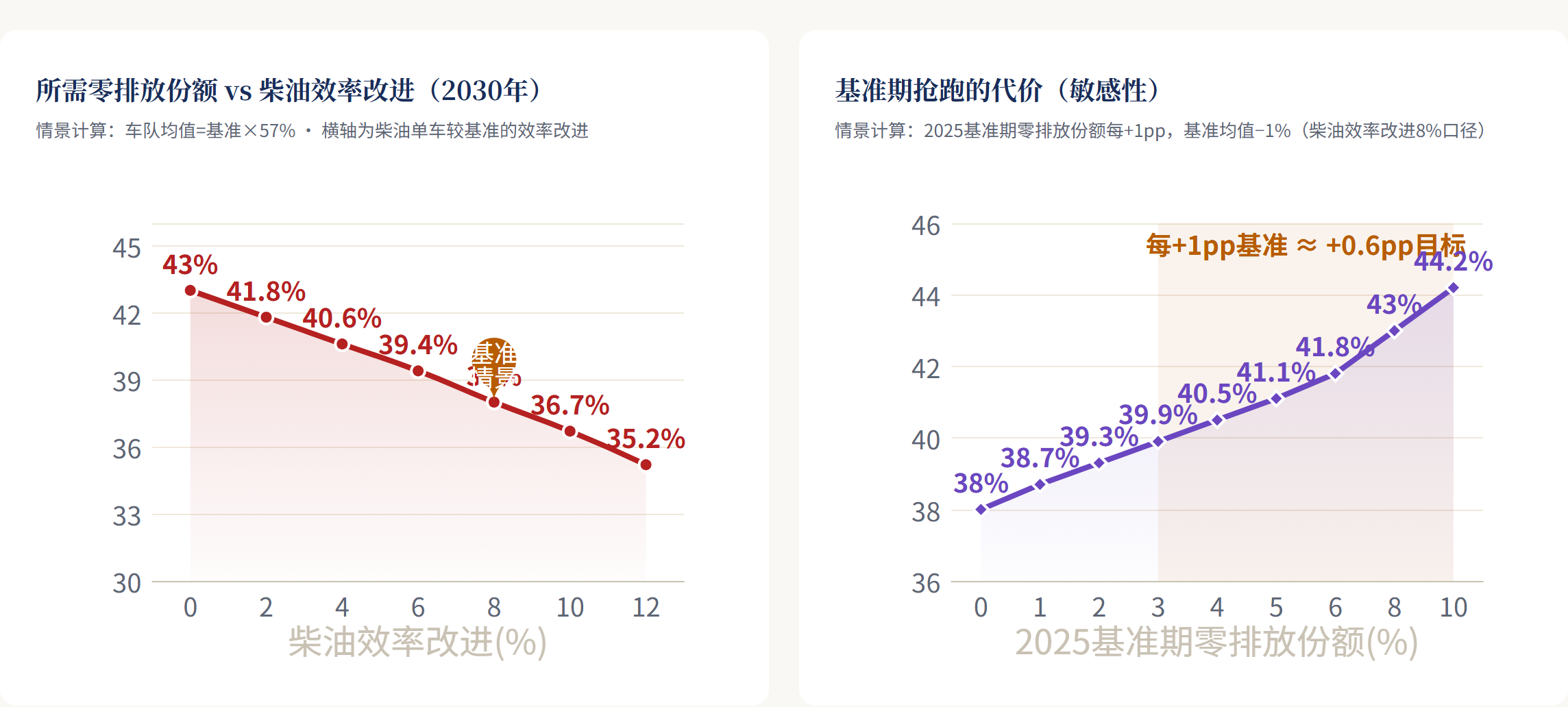
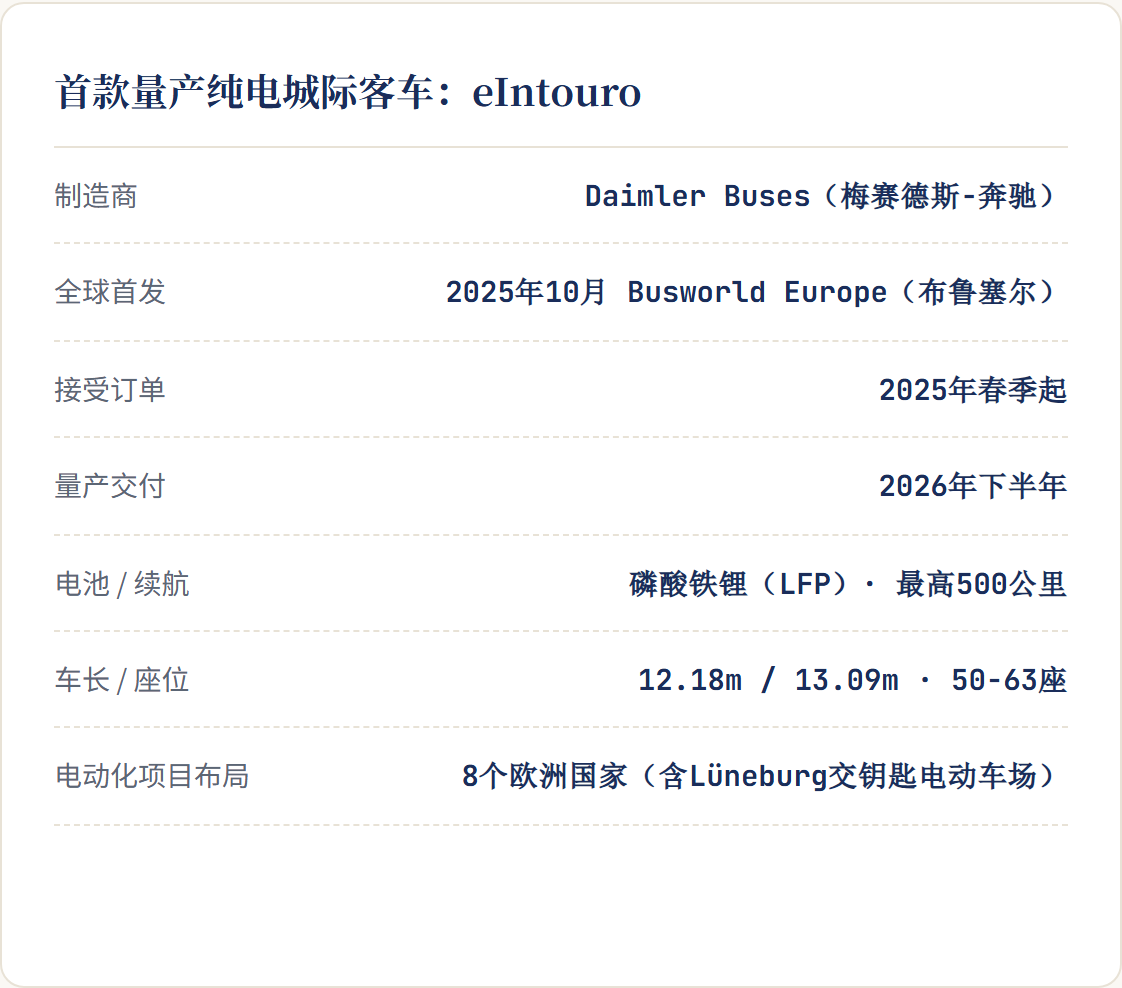
The product calendar cannot keep up with this timetable: Europe's first series-production battery-electric intercity bus, the Mercedes-Benz eIntouro, only began deliveries in the second half of 2026, with LFP batteries and a rated range of up to 500 km. In the baseline year itself, there was not a single series-production zero-emission intercity bus on the market; the first product arrived only in the first year after the test began. Break down the -43% and diesel thermal efficiency and aerodynamic improvements can deliver only limited cuts over five years; the rest of the gap must come from zero-emission share. Working backwards, 30-40% of new vehicles in 2030 would have to be electric or hydrogen. Going from 0 to 30-40% in five years is a pace the entire car industry never managed in its own electrification.
The first consequence that can be worked out in advance is a pre-buy wave. Operators know that diesel long-distance coaches will get more expensive after 2030, because compliance costs will be passed into vehicle prices. The rational choice is to lock in diesel capacity early, in 2028–2029. As a result, the first two reporting periods after the baseline will show a window where diesel sales stay unusually strong and the emissions curve moves the wrong way. The truck industry has gone through this before every round of emissions regulation. The second consequence is a reset of residual values. The used-value curve for long-distance diesel coaches will show a policy-driven break around 2030. When finance and leasing companies set residuals for diesel coaches contracted after 2027, they will have to build that break into their models.
Perverse incentive: early movers raise the bar for themselves
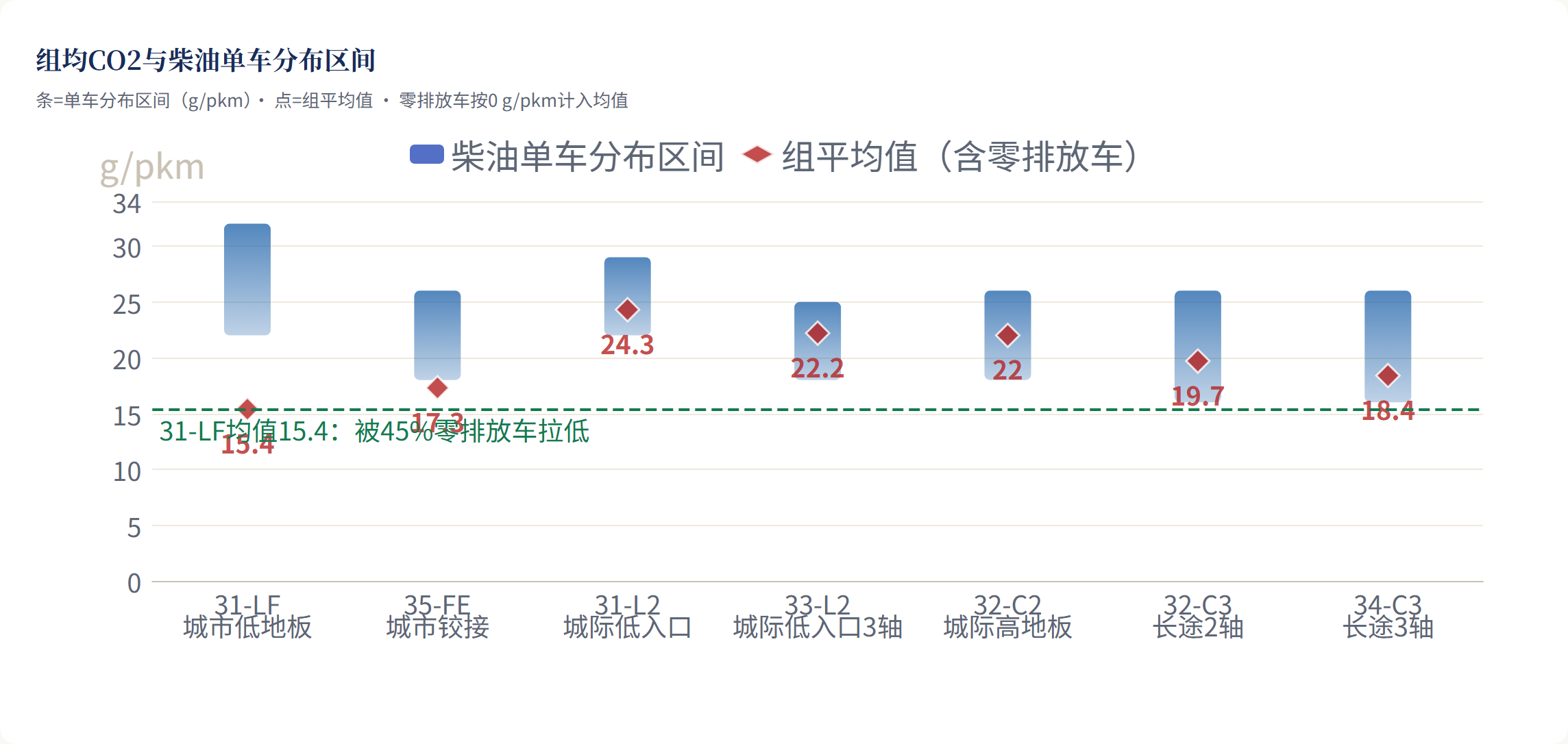
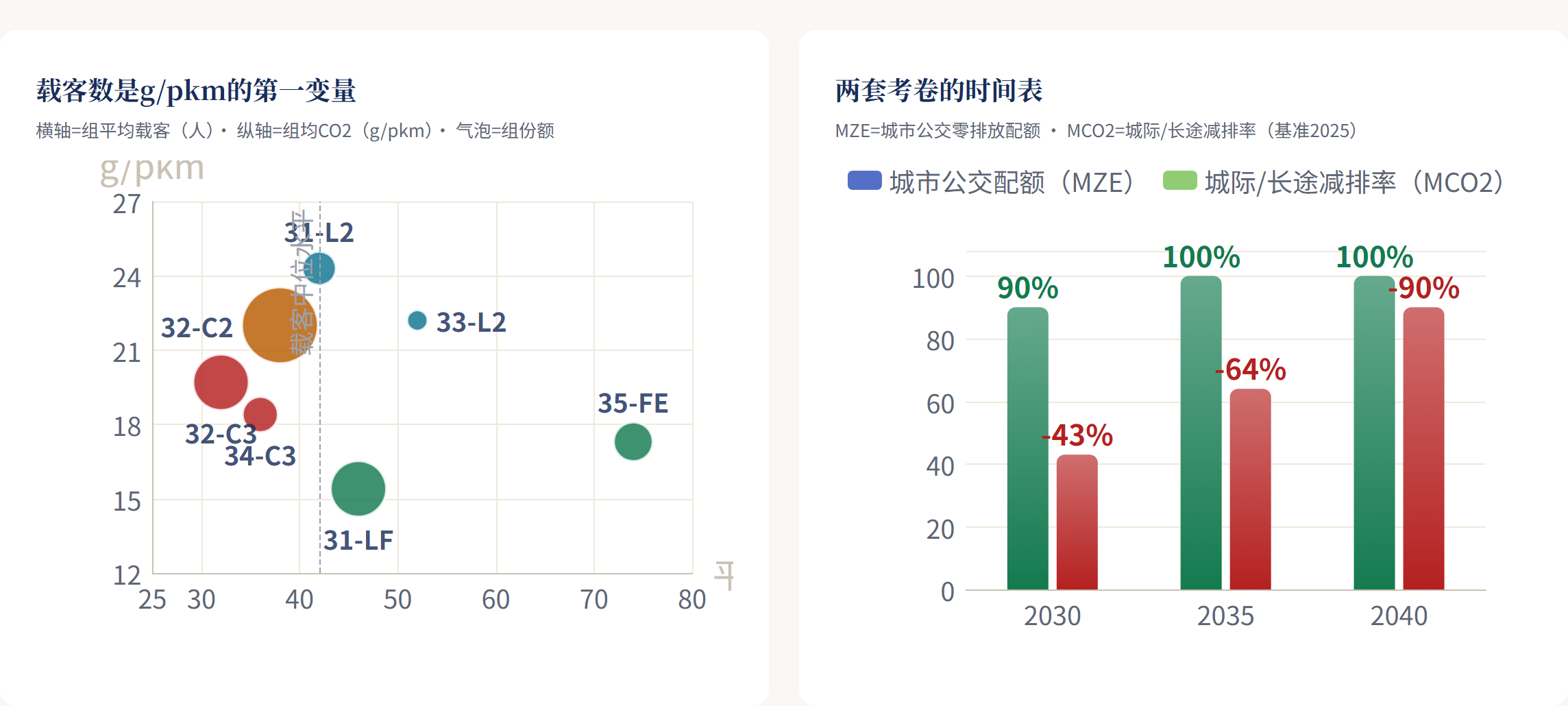
The 2025 baseline is that year's fleet-average CO2, and VECTO counts zero-emission vehicles at 0 g/pkm in the average. ACEA's own data shows the effect: in the city bus 31-LF group, a 45% zero-emission share pulled the group average down from 22–32 g/pkm for a single diesel bus to 15.4. Apply the same arithmetic to the intercity fleet in the baseline year and the conclusion is simple: every extra zero-emission intercity coach delivered in 2025 lowers the bar a manufacturer must clear in 2030 by another notch.
Following this mechanism, during the 2025 reporting period (Jul 2025 to Jun 2026), European OEMs will hold deliveries of zero-emission intercity coaches to token levels, with volume ramping up only after Jul 2026. eIntouro's series deliveries are scheduled for the second half of 2026; this aligns too neatly with the boundary of the baseline period to be explained by engineering progress alone. Conversely, if any OEM delivers zero-emission intercity coaches in large numbers during the baseline period, there is only one explanation: it has no confidence at all in meeting the 2030 target and would rather grab customers first.
City buses: compliance is easy, business is hard
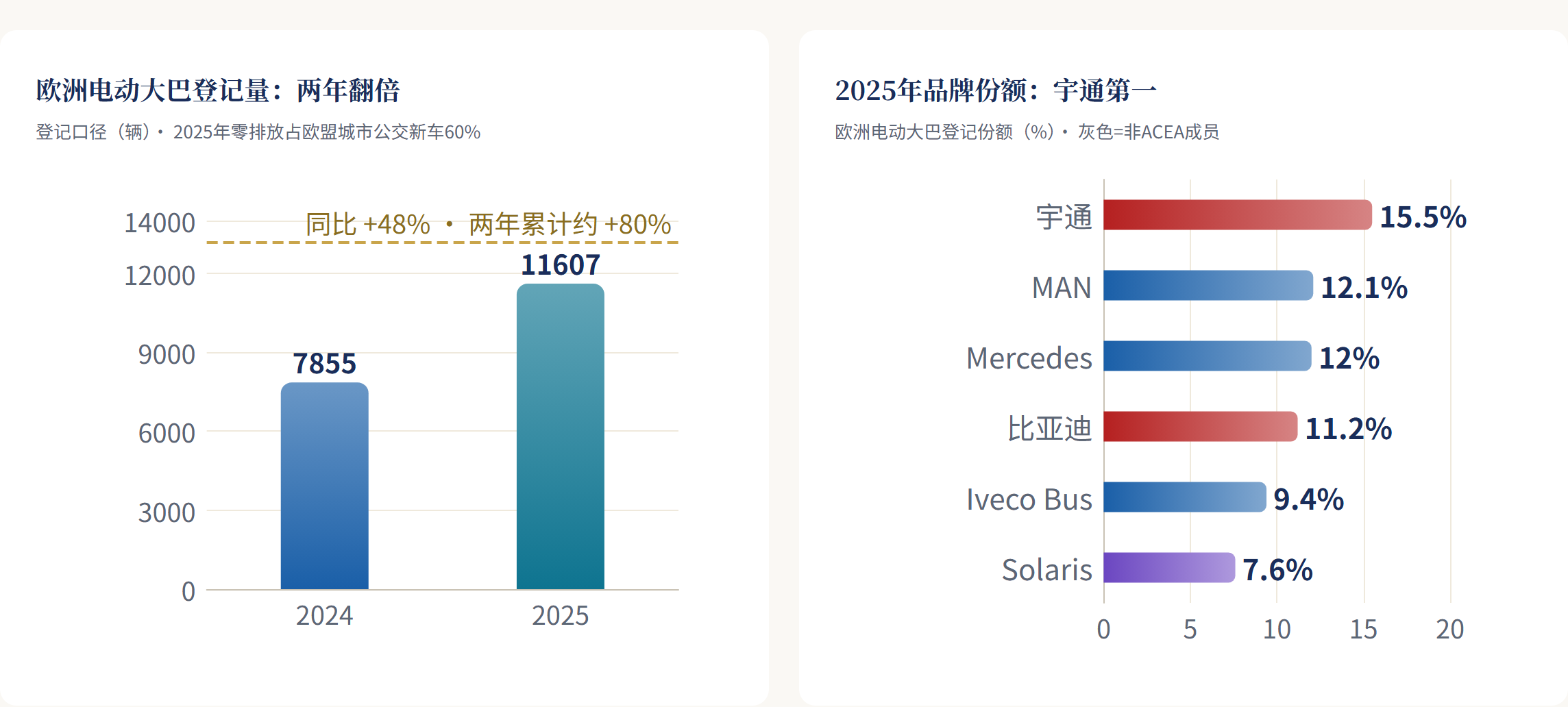
The 90% quota (2030) and 100% quota (2035) for city buses look daunting, but this is actually the least pressured segment for the five OEMs — the direction, products and tender mechanisms are all already in place. The hard part is the business itself. On a registration basis, zero-emission vehicles already accounted for 60% of new EU city buses in 2025; total European electric bus registrations that year reached 11607 units, up 48%. Yutong ranked first with a 15.5% share; Chinese brands combined held about 28%. This 28% is neither in ACEA's "80% coverage" sample nor much troubled by the quotas — the vehicles Yutong and BYD sell in Europe are already close to fully zero-emission, so they comply with the regulation automatically.
MAN's electric bus registrations rose 224% in 2025 to 1409 units. Domestic OEMs can chase volume, but every additional electric city bus sold puts their margins head to head with Yutong's prices and BYD's delivery times. The closer city bus zero-emission rates get to 100%, the more competition degenerates into pure cost competition, which is home turf for Chinese brands. The predictable next step is the politicisation of procurement rules: local content requirements, data security reviews and made-in-Europe clauses will appear more and more often in bus tender documents, because these are domestic OEMs' only line of defence beyond the cost curve.
Bodybuilders: consolidation signals behind the data gaps
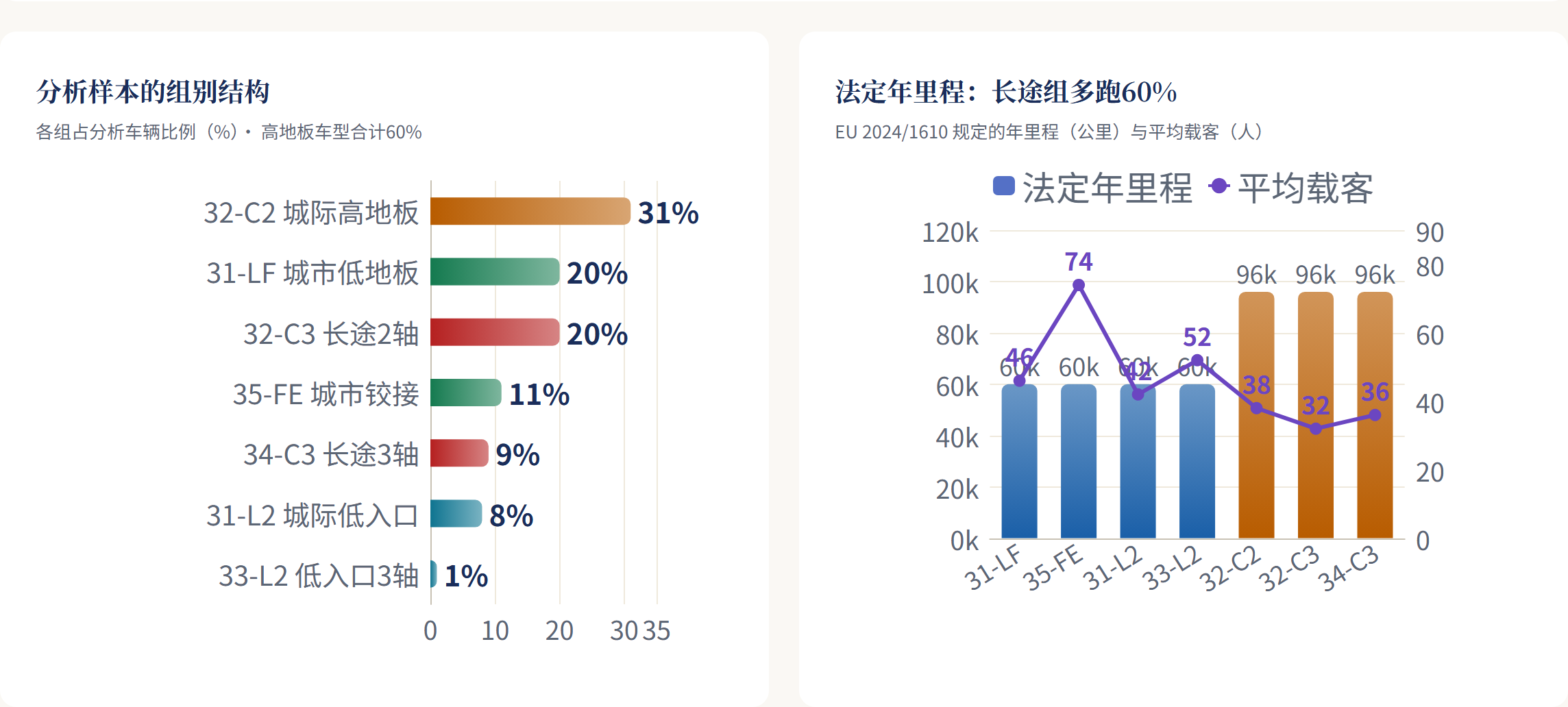
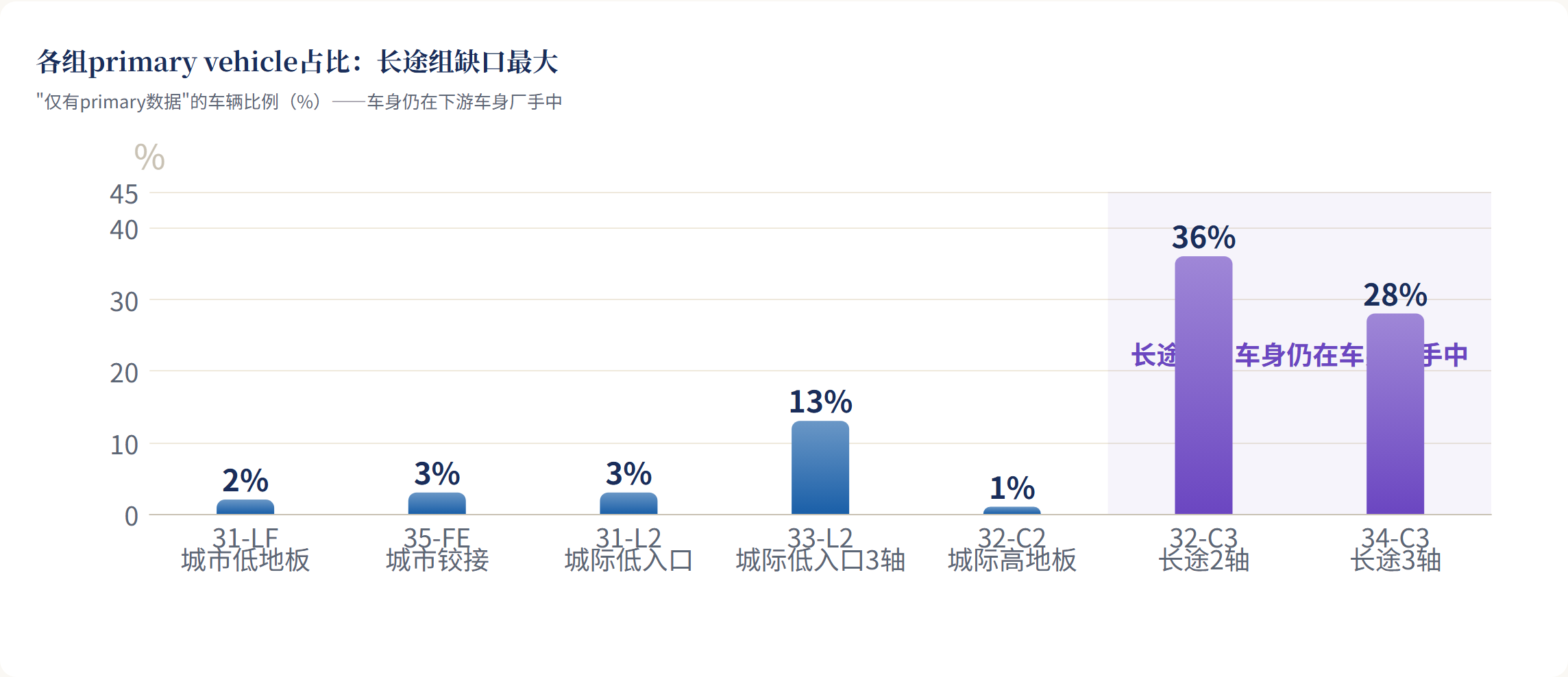
The bus industry's multi-stage manufacturing structure leaves a conspicuous gap in this data: in the long-distance group, 36% of vehicles in 32-C3 and 28% in 34-C3 have only primary (powered chassis) data, because the bodies are still unfinished at downstream bodybuilders. Under VECTO's two-step declaration, emissions responsibility lies with the primary manufacturer, but the final declared value depends on the complete vehicle: every extra kilogram of body weight and every revised seating layout moves the g/pkm figure.
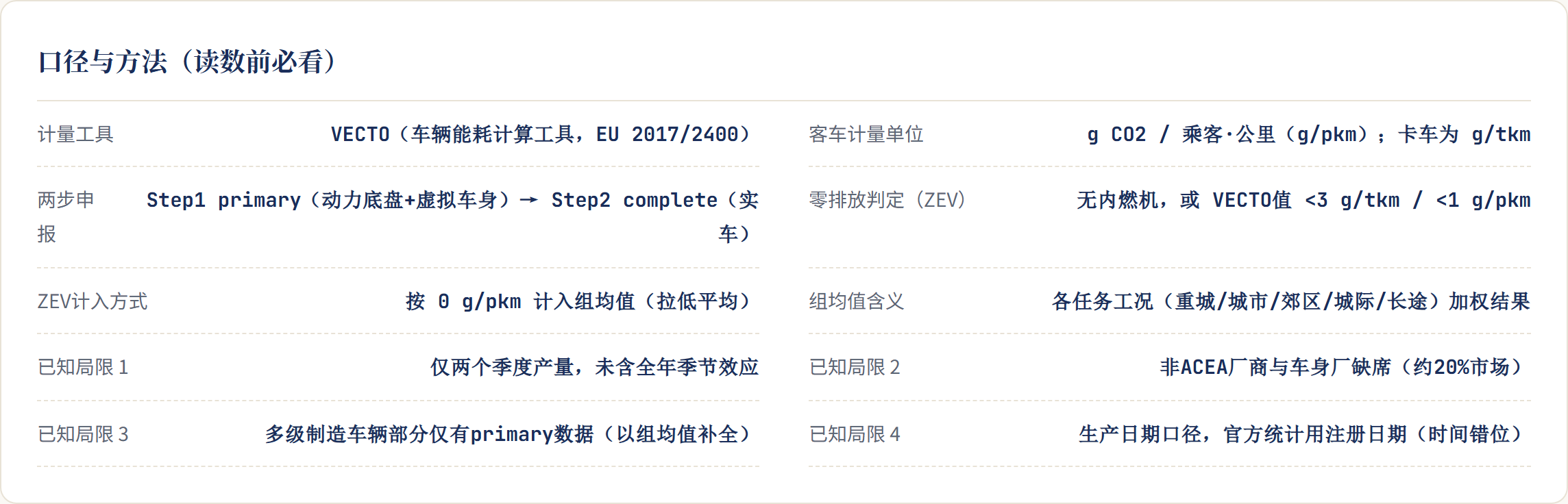
This separation of responsibility and control means that over the next few years OEMs will push data standards hard onto bodybuilders: weight limits, specification lists and reporting interfaces, all written into supply contracts. Large bodybuilders that can afford simulation engineers and compliance teams will turn this into a competitive barrier, while small ones will find they can no longer take on orders. Consolidation and M&A among European bus bodybuilders will come sooner than most expect, driven by an emissions reporting form.
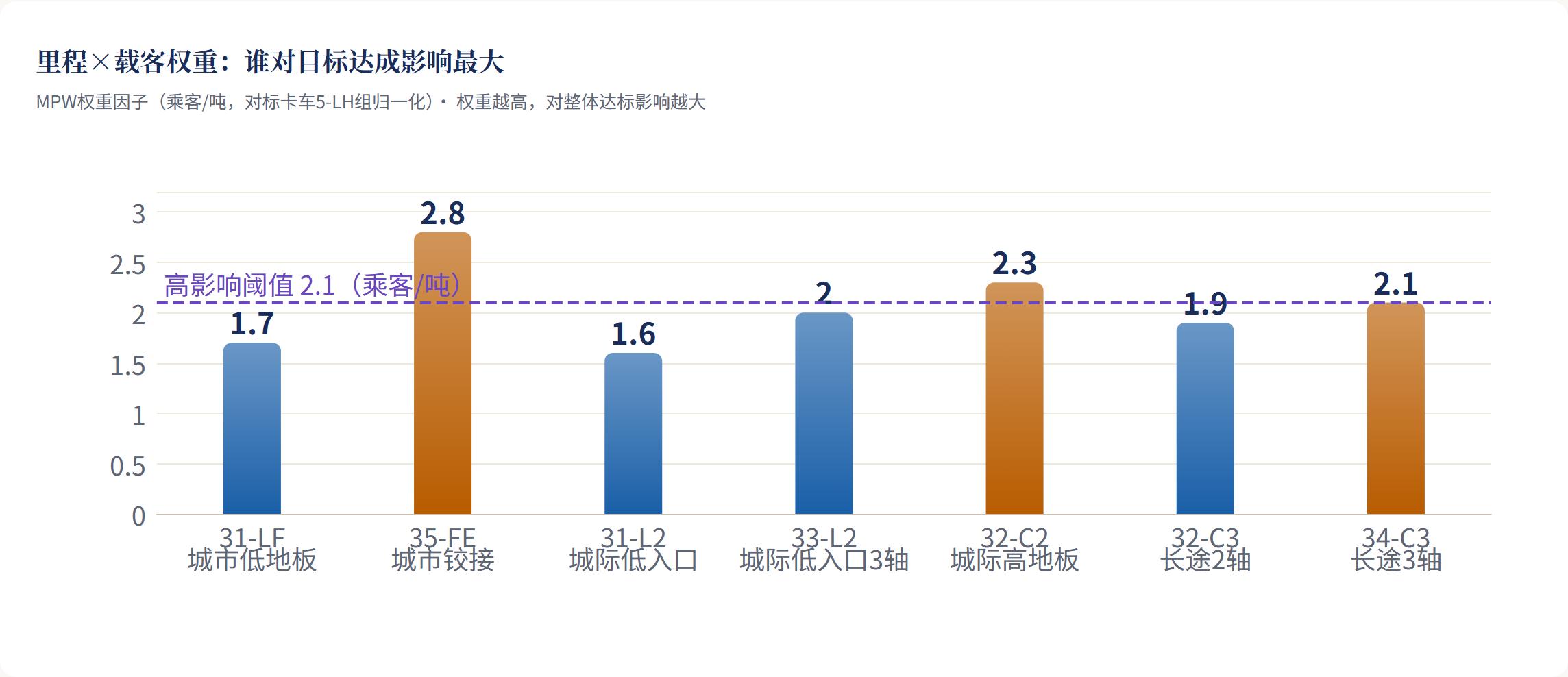
Three things to watch over the next 6–12 months
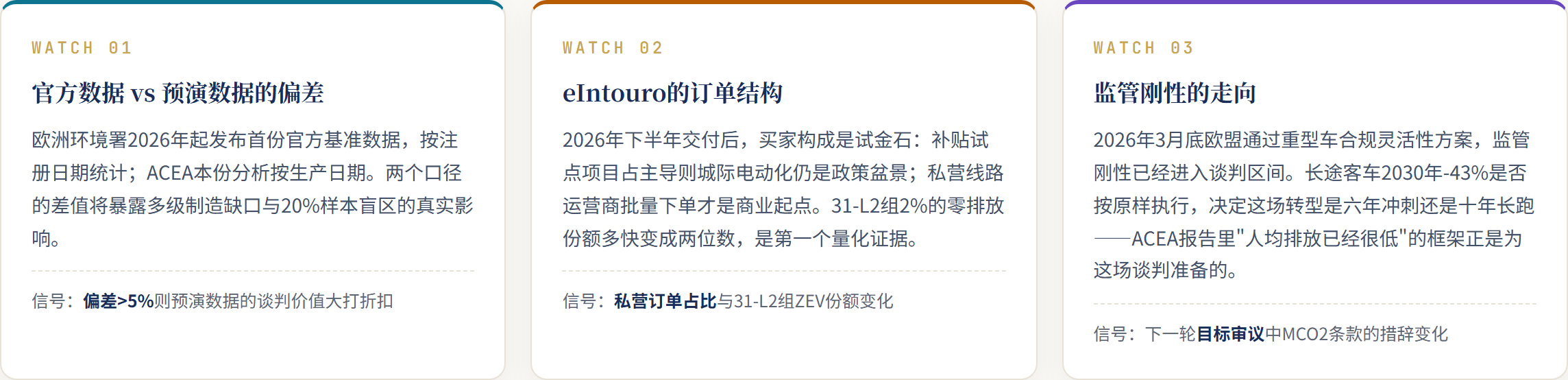
First, watch the European Environment Agency's first official data. The official figures count by registration date, while this ACEA report counts by production date; the gap between the two will show how much the preliminary data is inflated or how solid it is. Second, watch the order mix after eIntouro deliveries begin: whether buyers are subsidized pilot projects or private route operators paying with real money will determine whether intercity electrification is a policy showpiece or a commercial starting point. Third, watch the mood in Brussels: at the end of Mar 2026 the EU had just passed a package of compliance flexibilities for heavy-duty vehicles. Will the -43% for coaches be loosened the same way in the next review? The line ACEA repeats throughout the report, "16-32 g/pkm is already very low", is the opening statement prepared for that negotiation.
Buses are the last segment of Europe's commercial vehicles to get a CO2 ledger, and also the one whose baseline period is furthest from product maturity. At its core, this data report is a race between the regulatory clock and the industry clock, and right now the gap between the two is plain to see.