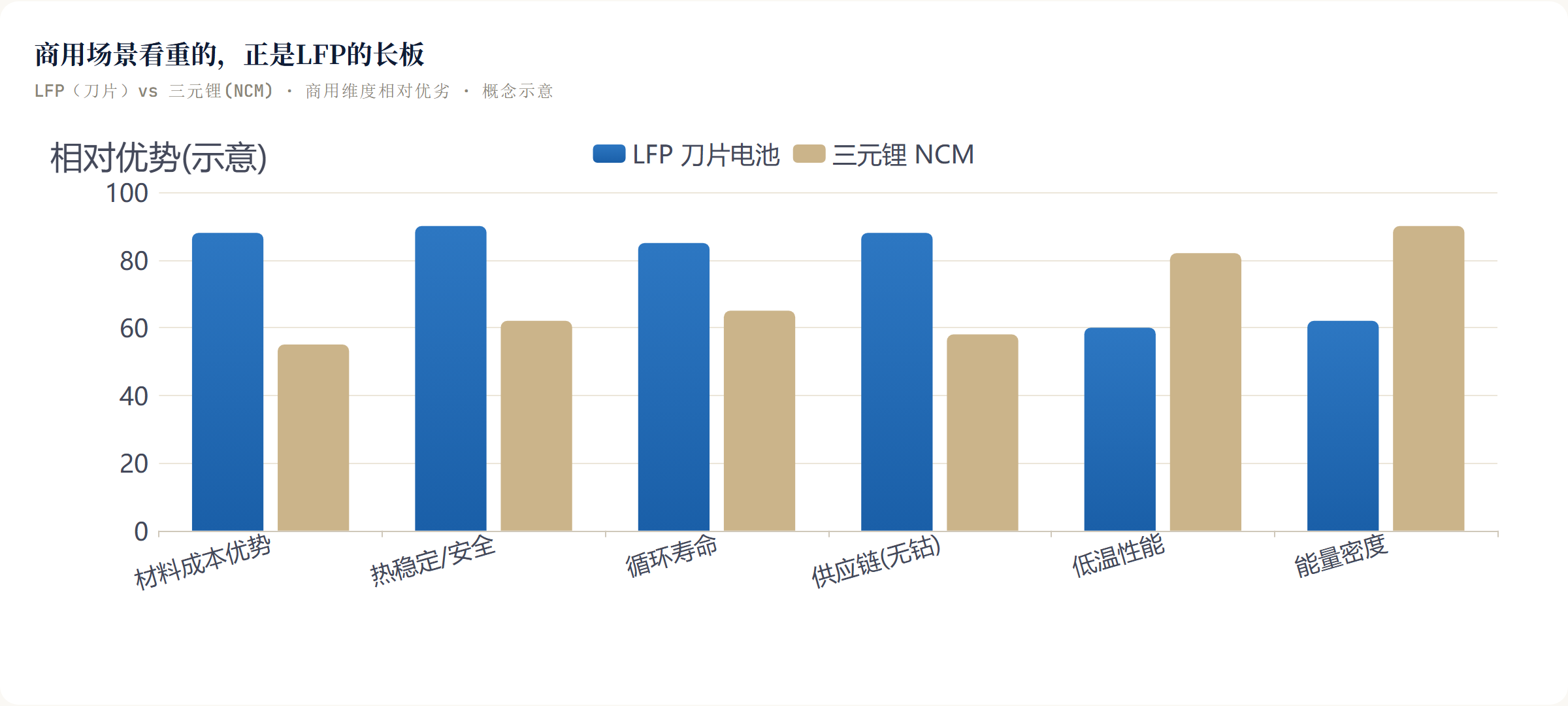
BYD Dolphin Cargo: vehicles come from China, conversion profits stay in the UK
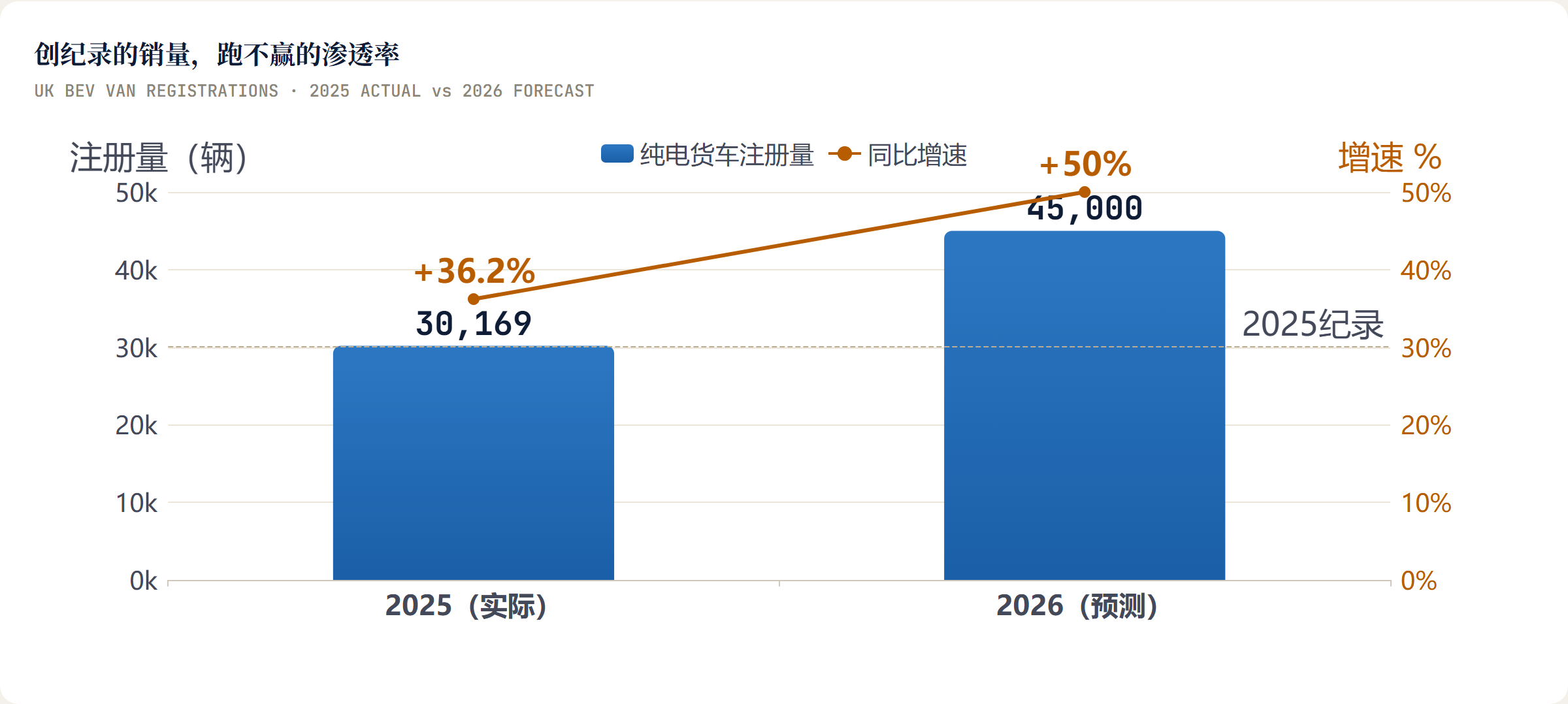
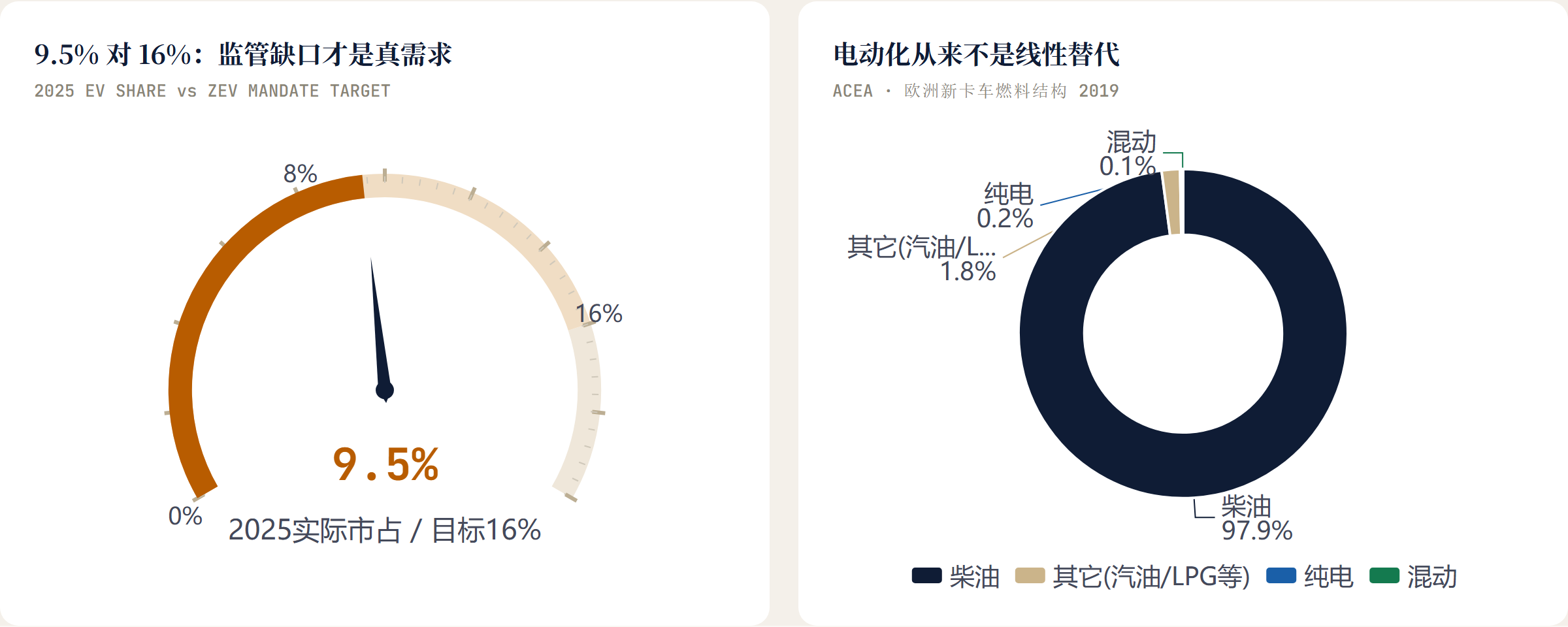
UK battery-electric van registrations reached 30169 units in 2025, up 36.2% year on year, a record. Yet market share was only 9.5%, against a government ZEV mandate target of 16%. Growth is impressive, but the gap is bigger. This gap is the real backdrop to BYD Dolphin Cargo's market entry.
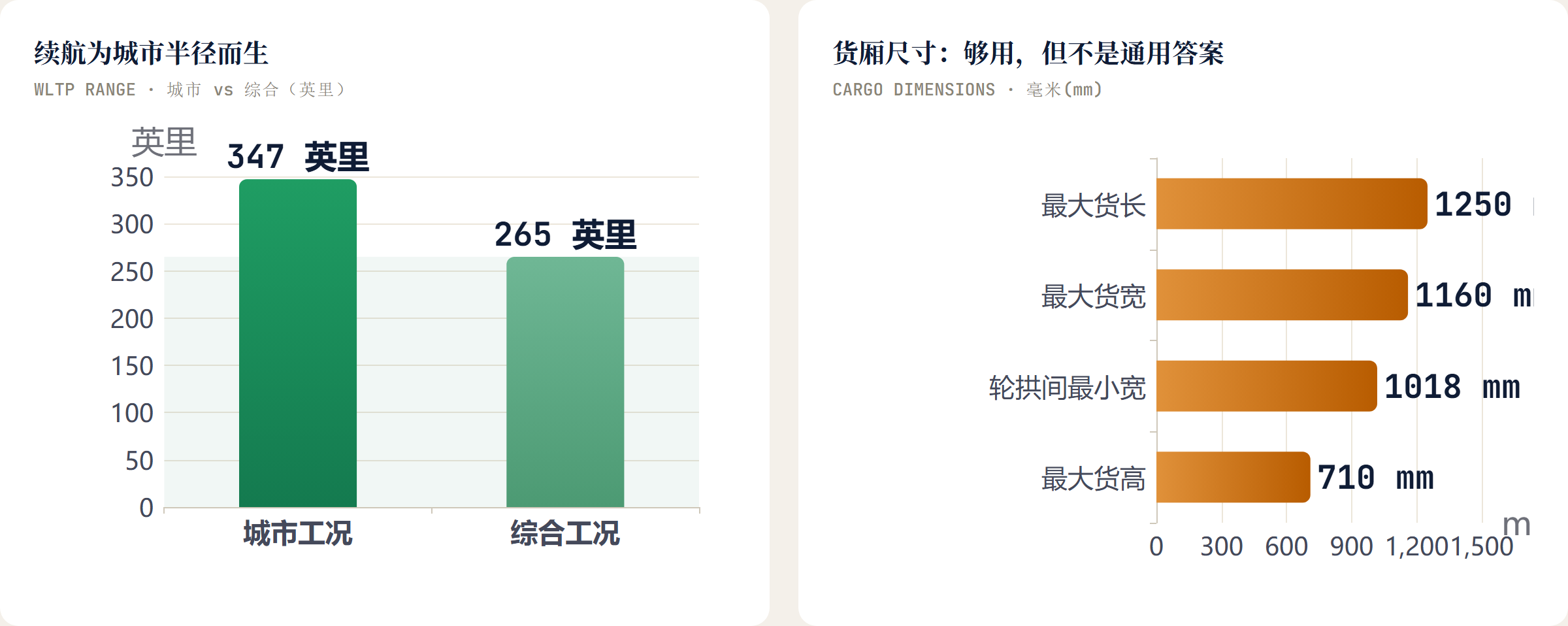
On Jun 2026, BYD published the full UK specifications for the Dolphin Cargo. Based on the Dolphin passenger hatchback, the compact electric LCV (e-LCV) has a 204PS motor and a 60.4kWh Blade LFP battery, with a WLTP city range of 347 miles and a combined range of 265 miles. It offers 1093 litres of cargo space and starts at £36305 including VAT, or £29358 excluding VAT, putting it below what the industry calls the "sub-£30k" threshold. The spec sheet looks good. But the spec sheet is not what matters most about this vehicle.
Conversion stays in the UK
The most overlooked detail of the Dolphin Cargo is that its LCV conversion is done in the UK, rather than a finished van being exported fully built from China.
The conversion list looks ordinary: rear seats removed, a full-metal bulkhead fitted, and a 1093-litre cargo area created (including a 47-litre underfloor storage compartment). Maximum load length is 1250 mm, minimum width between the wheel arches 1018 mm, maximum load height 710 mm, and overall vehicle length 4290 mm. A reversing alarm, amber warning beacons, company livery and custom storage solutions do not appear in the main spec sheet. Yet each one decides whether the vehicle is accepted in niches such as municipal field services, facilities maintenance, security patrols, last-mile delivery and mobile after-sales service.
Keeping the conversion stage in the UK deliberately locks in the added value from certification, corporate specification and fleet customization locally. This subtly reshapes the supply chain. UK bulkhead makers, storage solution suppliers and warning equipment integrators, which used to serve mainly scattered fleet customers, now have a new opportunity: getting onto BYD's shortlist for standard fitments. Those that make the list gain economies of scale; those left with one-off orders will keep fighting on price.
This move sidesteps the high-volume, high-payload segment where traditional truck brands are strongest, targeting instead a more fragmented niche driven more by operating costs.
Fleets are redoing the math
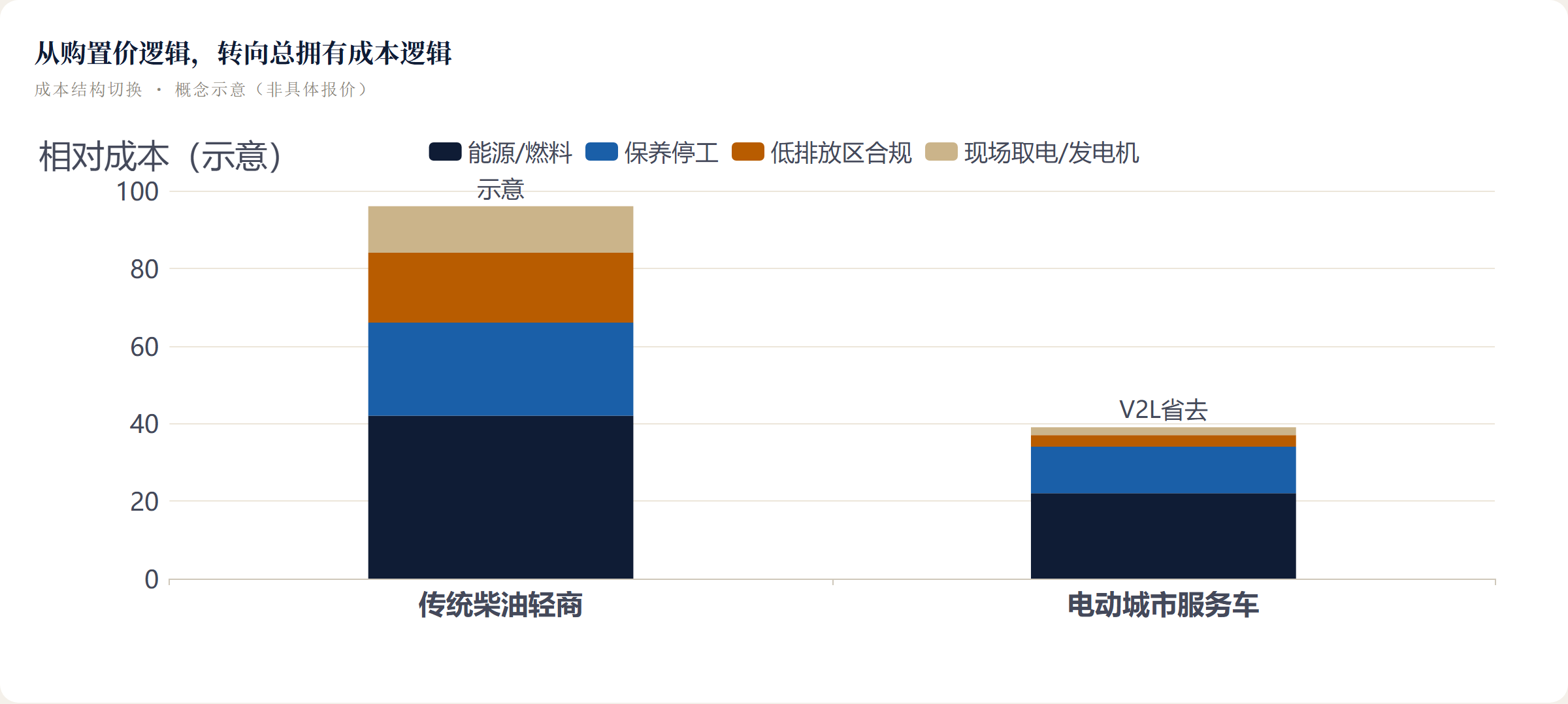
Attributing the growth of electric vans in the UK simply to green policy is accurate but insufficient. The more fundamental driver is that the total lifecycle bill for diesel vans in urban operations is becoming unsustainable.
Compliance fines in low-emission zones (ULEZ, CAZ), cost forecasting made difficult by fuel price swings, the purchase and maintenance of diesel generators for idle power, and the extra energy burned when drivers run the heating in the cargo area: added together, these friction costs have prompted fleets that run the numbers to start seriously calculating the cost of switching. ACEA data confirms how low the starting point is: in 2019, diesel accounted for as much as 97.9% of Europe's new truck market, BEVs for just 0.2% and hybrids for 0.1%. Commercial vehicle electrification has never been a linear replacement. It spreads outward from a small number of high-certainty use cases.
The Dolphin Cargo's city range of 347 miles maps precisely onto an operating model of "running city routes by day and charging at the depot overnight." The standard Comfort spec list also merits a close read: a heat pump rather than resistive heating, directly cutting energy use in cold weather; heated steering wheel and front seats that warm the driver rather than the cargo area, further protecting battery efficiency; V2L outbound power, whose core use is not consumer camping but powering mobile repair tools, temporary site lighting and equipment charging directly from the vehicle, eliminating a portable fuel generator; and a 360-degree surround-view parking camera plus CarPlay/Android Auto, easing concerns about dense urban traffic. A 70 mph speed limiter is also optional; its real value is bringing driver behavior, energy consumption swings and tyre wear within the scope of fleet management.
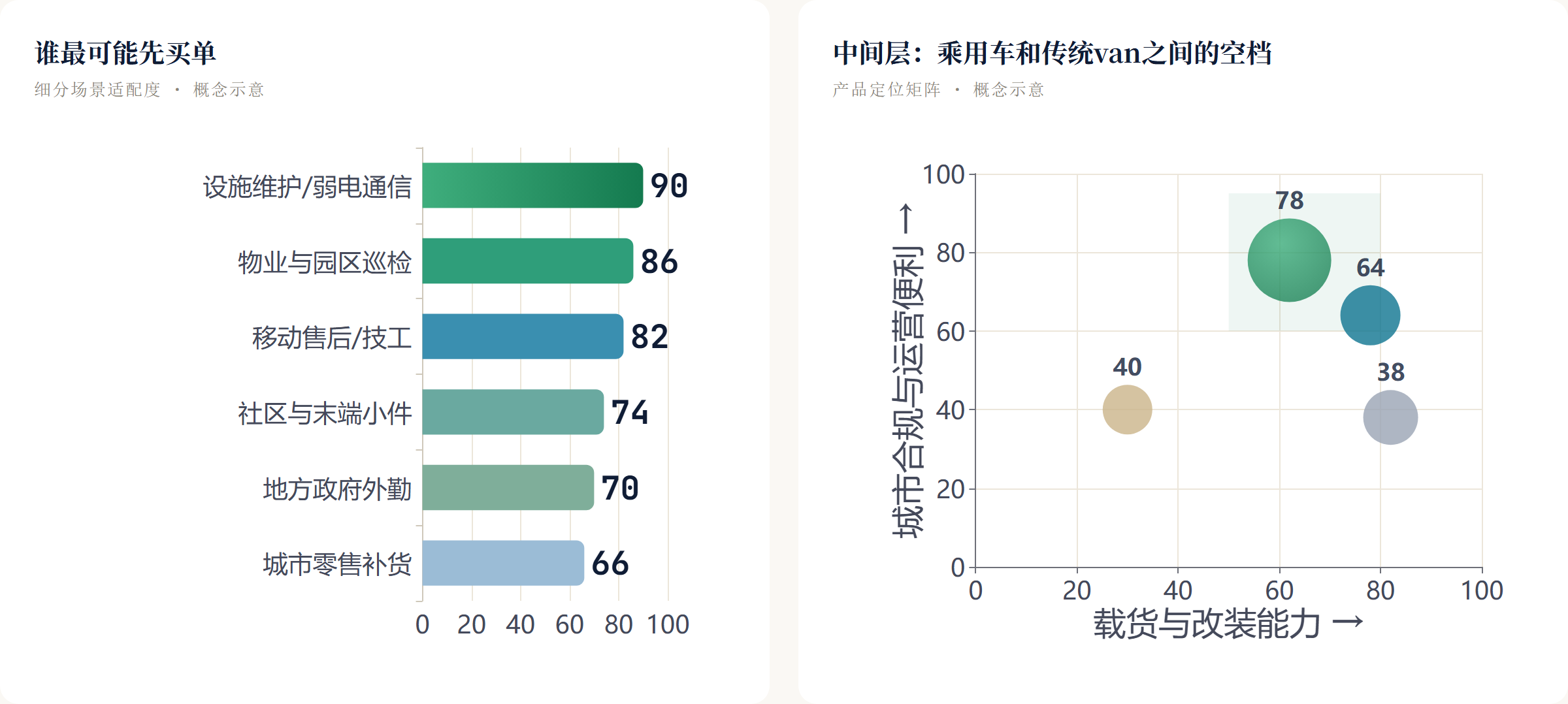
The logic of this spec is not "comfort for the driver" but "letting the fleet manager get the costs straight".
Competitive landscape: Ford and Volkswagen are already in the game
The UK electric LCV market is by no means a blue ocean waiting to be tapped. Registration data for the first 7 months of 2025 show Ford registered 4596 battery-electric vans, a 28.8% share, firmly in first place; Volkswagen came second with 3140 units and 19.7%. The Ford E-Transit Custom is the best-selling single model, in some months taking more than 25% of the market on its own. Stellantis brands Peugeot, Citroën and Vauxhall, together with Renault and Nissan, form the main competitive axis of the UK electric van market.
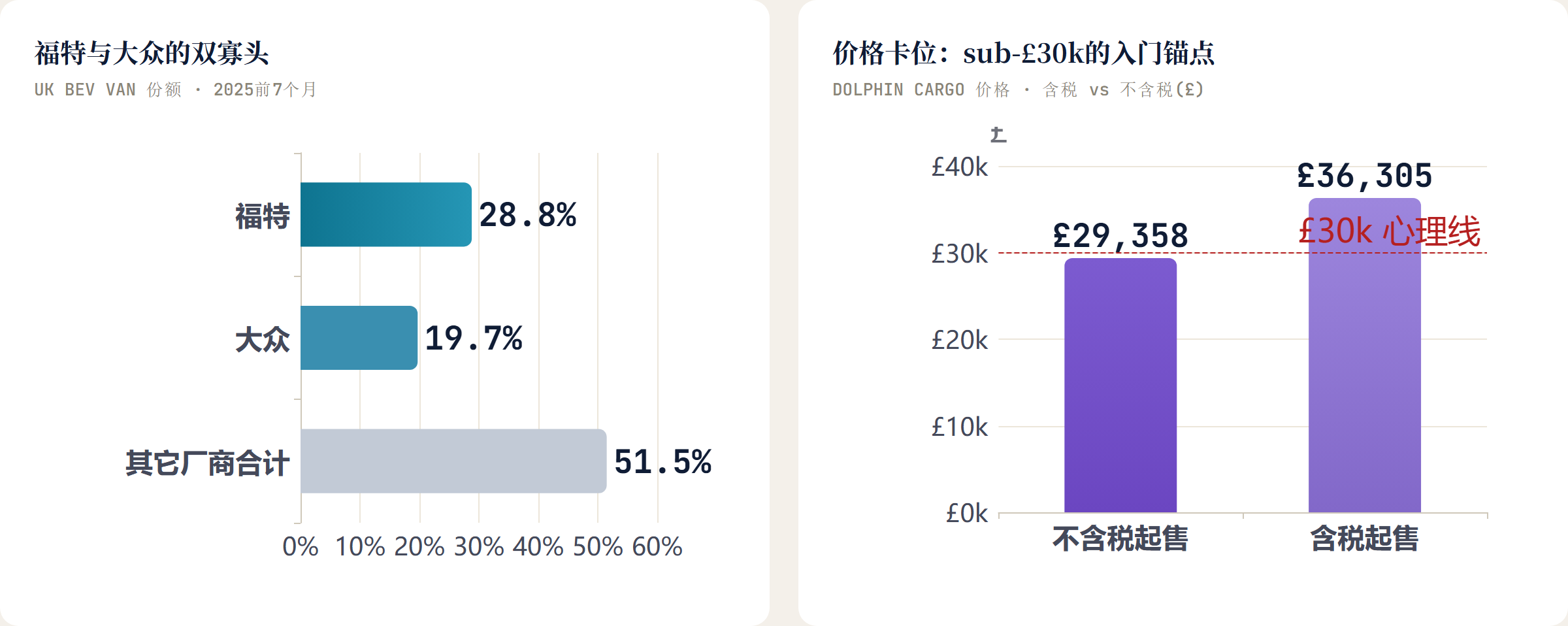
A head-on assault by BYD on these legacy brands, with their deep dealer and after-sales networks, is unrealistic. But the Dolphin Cargo sidesteps the battlefield where they are strongest and targets the fragmented demand of light urban services. Its 1093-litre cargo area is not designed for dense parcel delivery of large packages, but it serves tool delivery, sample transport, high-frequency small-item delivery, urban inspection, mobile after-sales service and community services well: vehicles need not run fully loaded every day, but must move flexibly in and out of cities, park easily, face little compliance pressure and have predictable energy costs.
Established brands are not facing a collapse in sales but a squeeze on margins. Pricing room for entry-level e-LCVs is under pressure, and profits from servicing and maintaining combustion vehicles will fade as fleets electrify faster. They have to hold the line on both fronts at once.
The pain point of legacy channels: the aftersales profit pool is pulled forward
For UK dealers, electrification hits the profit structure, not sales revenue.
The long-term profit model of combustion LCV dealer channels relies on the aftermarket: scheduled maintenance, parts replacement, conversions and upgrades, and repair downtime. Over its lifetime, a diesel van visits the service centre far more often than an electric one. Electric vans eliminate routine consumables such as spark plugs, transmission fluid, belts and coolant, systematically reducing maintenance frequency.
More importantly, Dolphin Cargo's strategy of front-loading equipment shifts added value to the point of delivery. V2L, heat pumps and custom conversion packages, which were aftermarket revenue items in the combustion era, become factory-fixed options on electric vehicles. In effect, value-added services that dealers used to earn from over the long term are largely compressed into a one-off delivery price.
Dealers who can hold their position in this landscape must transform: from selling vehicles plus maintenance to offering fleet energy consulting, chargepoint planning, remote diagnostics subscriptions and vehicle configuration management. Those who cannot will be left with nothing but a delivery-point role, and that role commands very little premium.
The risk of platform mismatch
Stretching a passenger car platform into commercial use comes with structural constraints. The Dolphin Cargo's load bay shape, door opening dimensions and floor height are still passenger car underpinnings at heart, unlike a purpose-built panel van. 1093 litres is enough for light urban service work, but if customers need frequent loading and unloading with racking, the passenger platform's cargo area becomes a limitation. The 47-litre underfloor storage suits tools and small items, not bulky goods or standardised pallet handling. The full-metal bulkhead improves safety and compliance, but it also locks in how the interior space can be used.
Range also needs a realistic check. The WLTP city figure of 347 miles holds under standard test conditions, but real-world consumption is pushed up significantly by changing payloads, temperature, heavy air-conditioning use, sustained V2L power draw and congestion, cutting range. A 70 mph speed limiter helps keep consumption in check, but it also shows that fleets need to actively manage driver behaviour to meet range expectations.
If BYD cannot provide fleets with detailed duty-cycle energy consumption models and operational data tools, buyers will discount range in the most conservative way, ultimately reducing actual purchase volumes. An advantage on paper needs data tools to pay off.
Delivery hinges on closed-loop capability
UK commercial vehicle buyers, especially fleet managers, never look only at the purchase price. A day off the road means driver costs, lost orders and broken service commitments, costs that often outweigh the fuel savings.
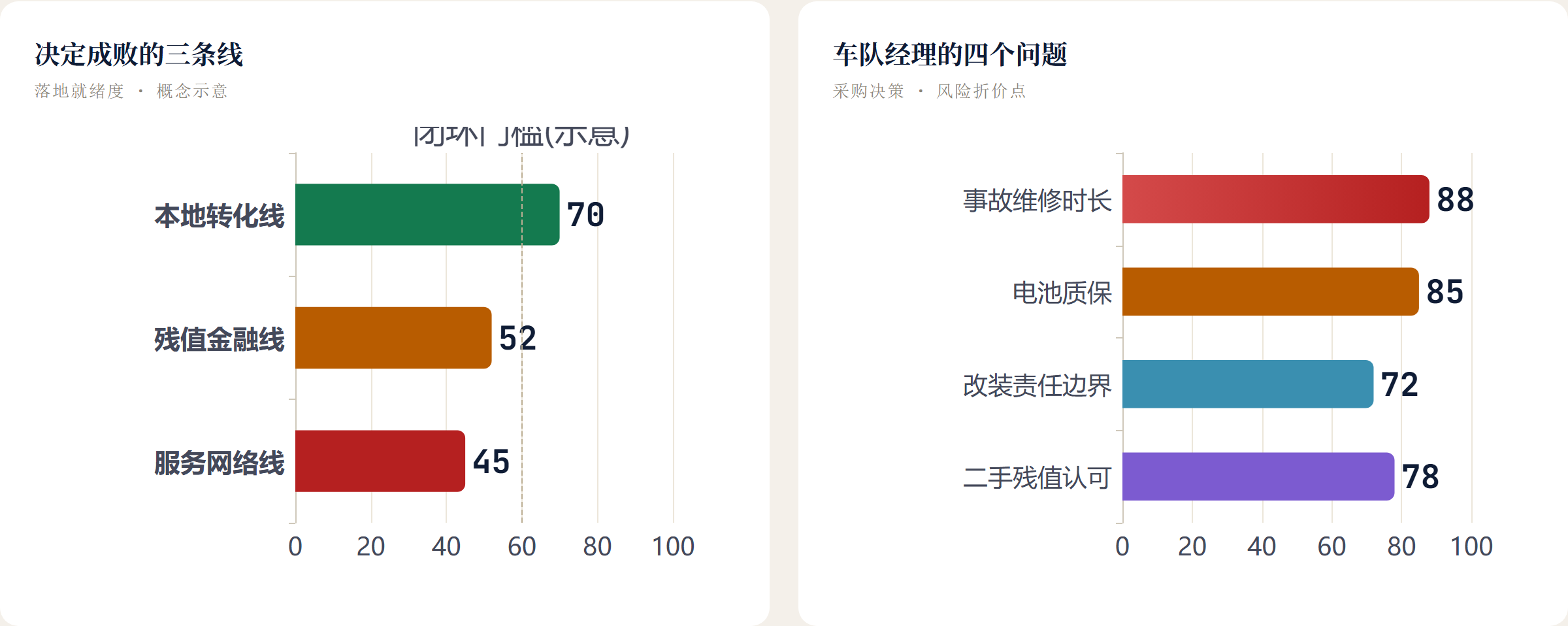
Whether the Dolphin Cargo can make it in the UK will be tested on four fronts: how quickly accident repairs are handled and how reliably parts are available; how the warranty on the 60.4 kWh Blade battery affects residual values; whether liability is clearly defined for a converted passenger-car platform; and whether the used LCV market will accept this kind of conversion. If any one of these goes unanswered, buyers will discount the spec-sheet advantages for procurement risk.
Incumbent manufacturers' moat has never been leadership in any single technology, but years of accumulated finance and leasing packages, fleet replacement-vehicle arrangements, dense service networks and customer relationships. What BYD really needs to build is not just product strength but a complete, closed-loop local service system.
Three threads are worth tracking after launch: **local conversion**: whether UK conversion can deliver consistent quality and respond quickly to different specification requirements; **residual value and finance**: whether a passenger-platform LCV can achieve reasonable pricing in the UK used market, which directly affects monthly payment models and fleet decisions; **service network**: whether existing passenger car dealers can be upgraded into full-service LCV hubs. Only if all three work together can the Dolphin Cargo move from "an imported vehicle with eye-catching specs" to "an operational tool fleets can rely on".
This vehicle changes the underlying logic of commercial vehicle competition: from competing on bigger cargo space and stronger specs to competing on who can serve specific operating scenarios at the lowest total cost of ownership. The winners under this logic are those who close the loop across platform, battery, upfitting, finance and after-sales. The first to fall behind are intermediaries that can only sell new-powertrain models through old channels and cannot hold on to the aftermarket profit pool.