SANY e263 makes first German delivery: electric heavy truck competition shifts from "building trucks" to "closed-loop profit pools"
In Q1 2026, SANY's e263 long-haul battery-electric tractor officially began operating on German roads. German-language media focused on "yet another Chinese brand going global". The question really worth asking is what competitive logic sits behind SANY's move into Europe: is it just vehicle sales, or has it entered the profit pool of European-style heavy trucks?
In Q1 2026, the SANY e263 long-haul electric tractor officially entered service on German roads. German-language media focused on "yet another Chinese brand going global". The real question is SANY's competitive logic in entering Europe: is this just about selling vehicles, or about entering the profit pool of the European heavy truck business model?
Closing the loop is the core issue
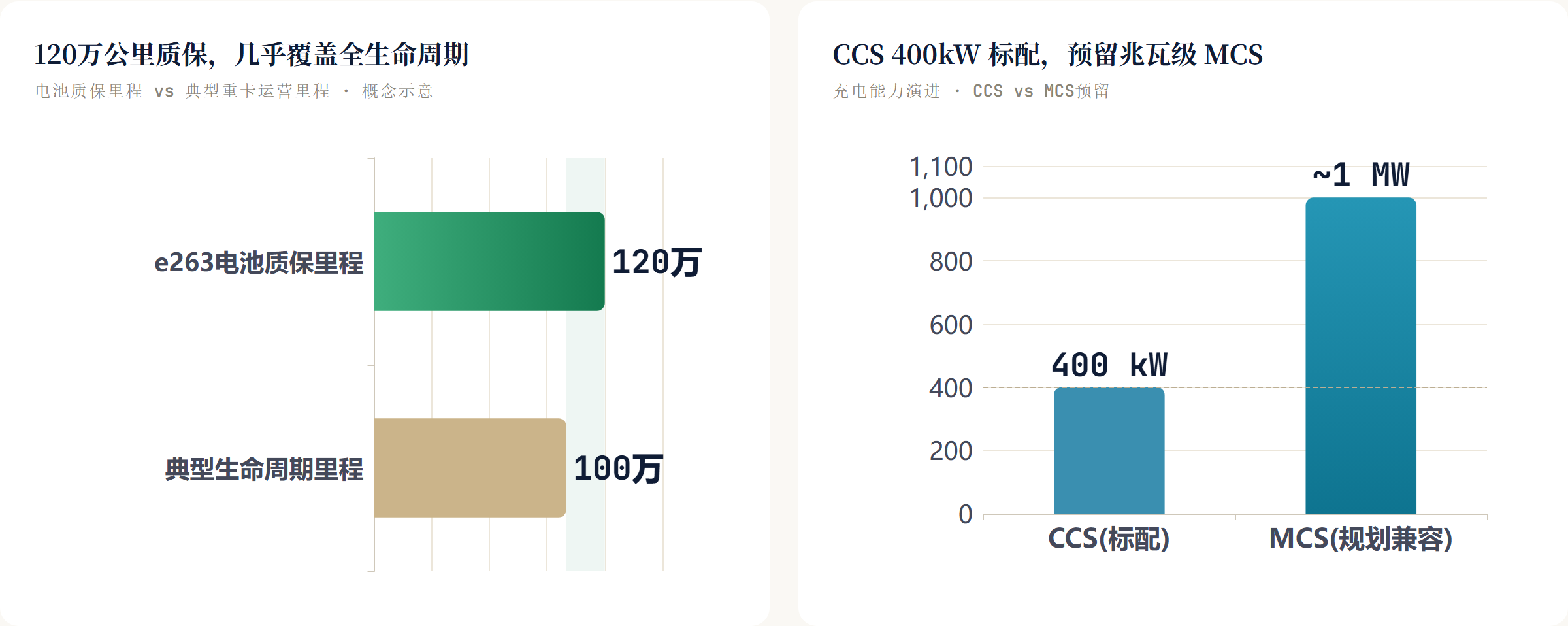
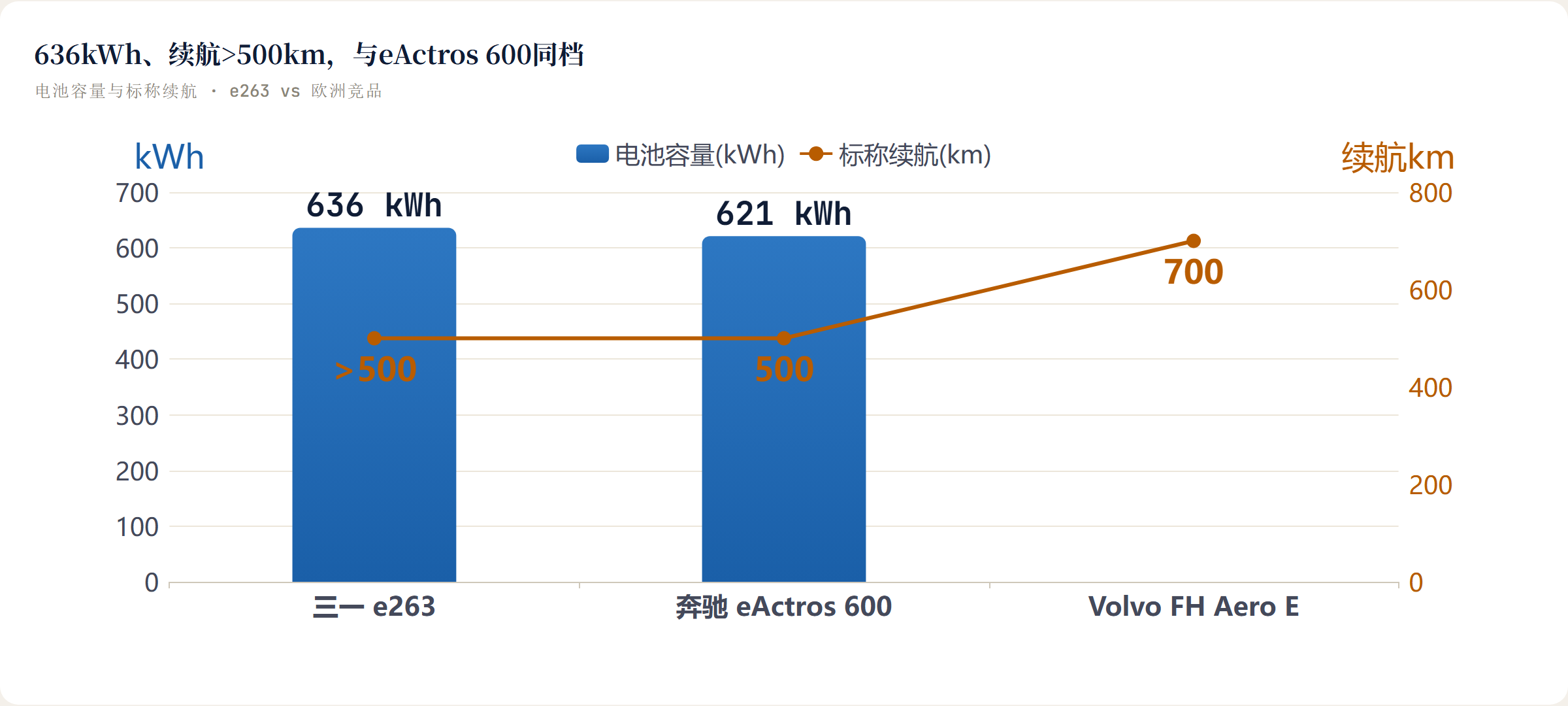
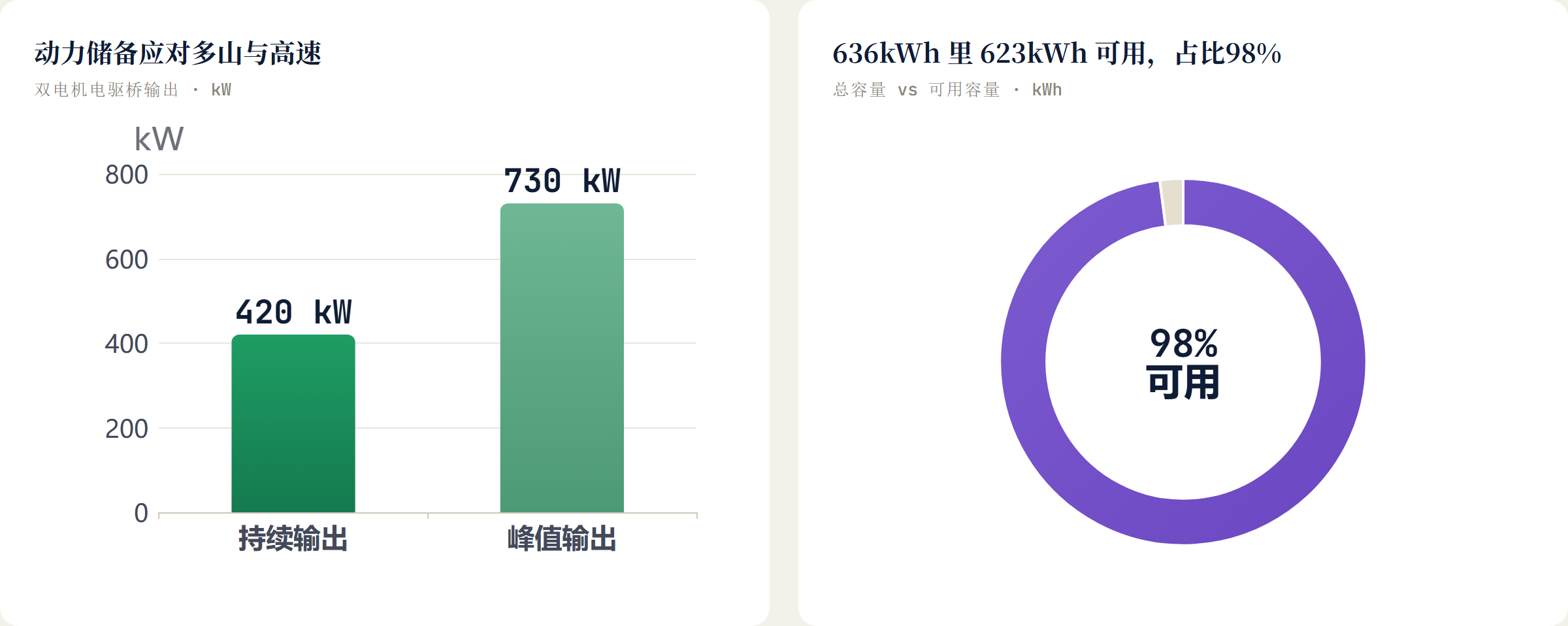
The e263 is a 4×2 tractor with an 800V high-voltage architecture. Its dual-motor e-axle delivers 420kW continuous and 730kW peak power, with peak torque of 1760Nm. Batteries are supplied by EVE Energy, with a capacity of 636kWh. Rated range exceeds 500 km. Charging supports CCS at up to 400kW, with planned compatibility with MCS megawatt charging. The battery warranty covers 8 years or 1.2 million km, with state of health (SoH) of no less than 70%. Energy consumption at 40 tonnes is 0.9–1.2 kWh/km.
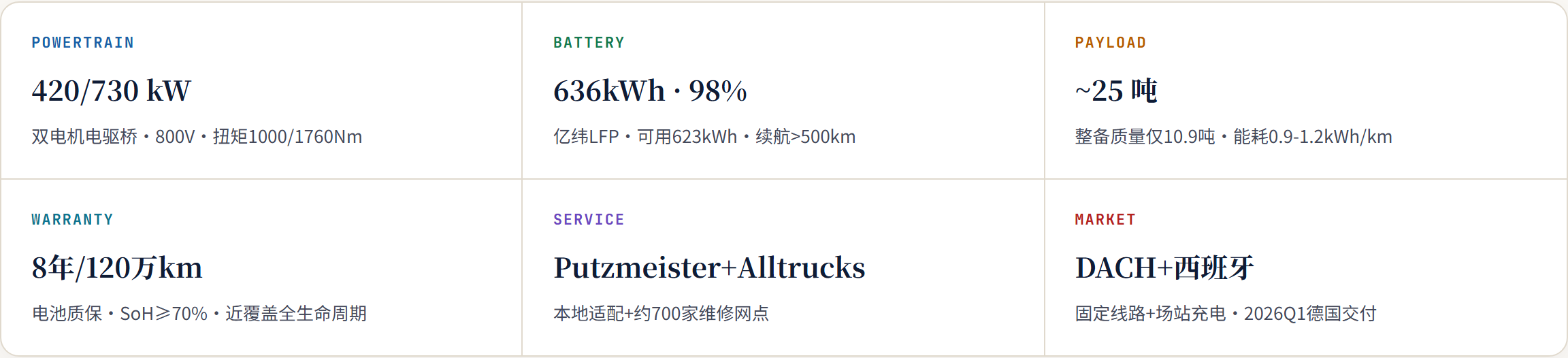
For European customers, this specification is good enough. But good enough only gets you in the door. Heavy truck procurement in Europe essentially comes down to a TCO calculation: purchase amortisation, charging costs, access to servicing, downtime risk, used-vehicle residual value and financing rates. If any one of these six variables carries significant uncertainty, the numbers don't add up. Strategically, SANY's first German deliveries are about more than volume. They build a credible operating record under European conditions: energy consumption patterns on real roads, cab feedback, how well fast-charging fits into operations, and spare parts response times. Every one of these data points is a ticket into the purchasing decisions of mainstream fleets.
Policy pressure does not equal orders
The EU's CO2 reduction roadmap for heavy-duty vehicles is clear and demanding: cuts of 45% by 2030, 65% by 2035 and 90% by 2040. Heavy-duty vehicles currently account for more than a quarter of greenhouse gas emissions from EU road transport, and the European Commission is scheduled to review how the regulation is working in 2027, which could signal tighter rules. These figures are often read as a direct driver of demand for electric heavy trucks.
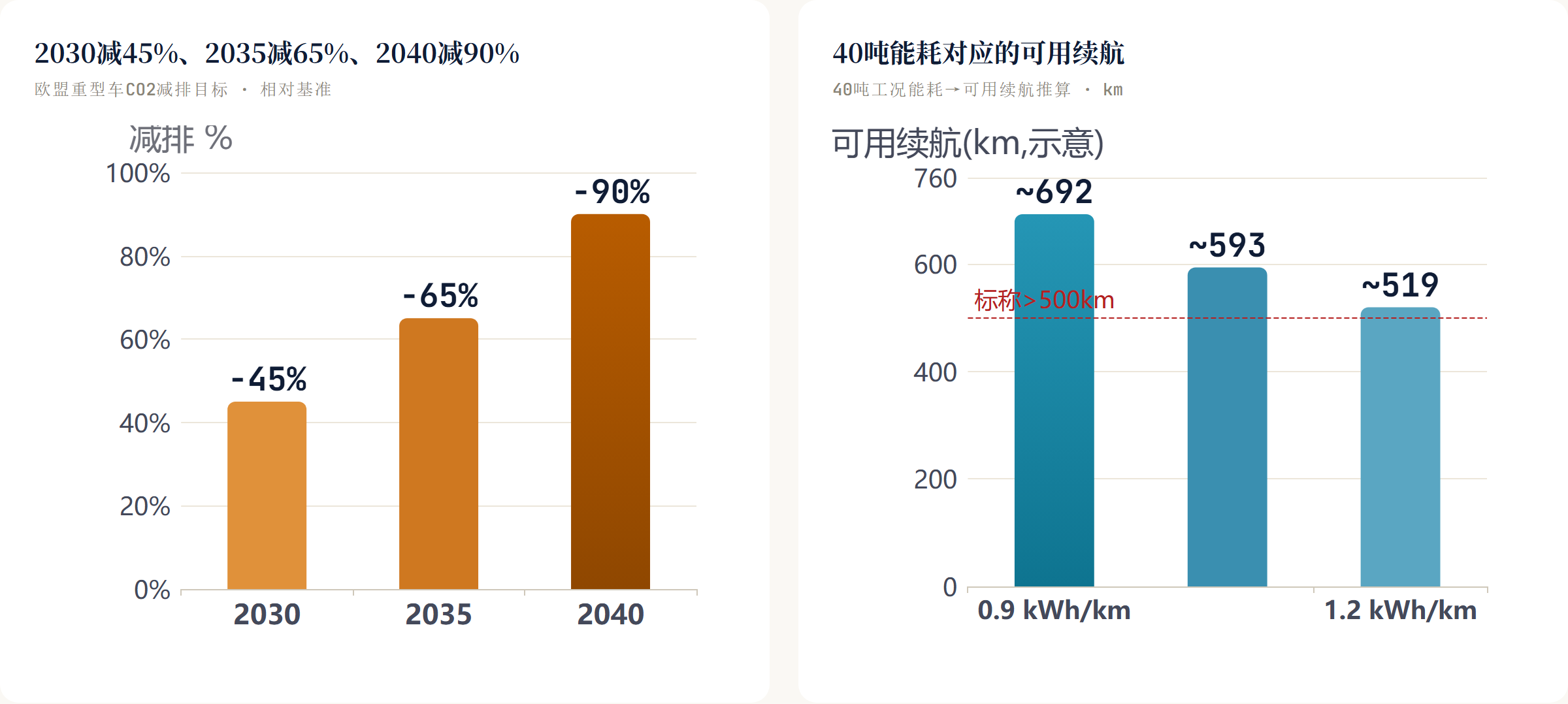
For procurement departments, however, policy is a constraint, not a reason to buy. Logistics operators will not replace entire fleets on the strength of 2030 carbon targets alone while their existing diesel trucks are still depreciating. SANY's first trucks in Germany use a predictable fixed-route plus depot charging model, targeting DACH (Germany, Austria, Switzerland) and Spain, where regulatory pressure is highest and charging infrastructure relatively well developed. This deliberately sidesteps the immaturity of Europe's public motorway charging network, prioritising the use cases where TCO breaks even first: company depots, ports, building materials transport and contract logistics.
Price not disclosed: betting on short supply chains
So far SANY has not published a retail price or leasing quote for the e263 in Europe. It says only that the "purchase price and total cost of ownership are better than existing solutions". This wording is often read as an indirect hint that the truck is "cheap", but that inference is not precise enough.
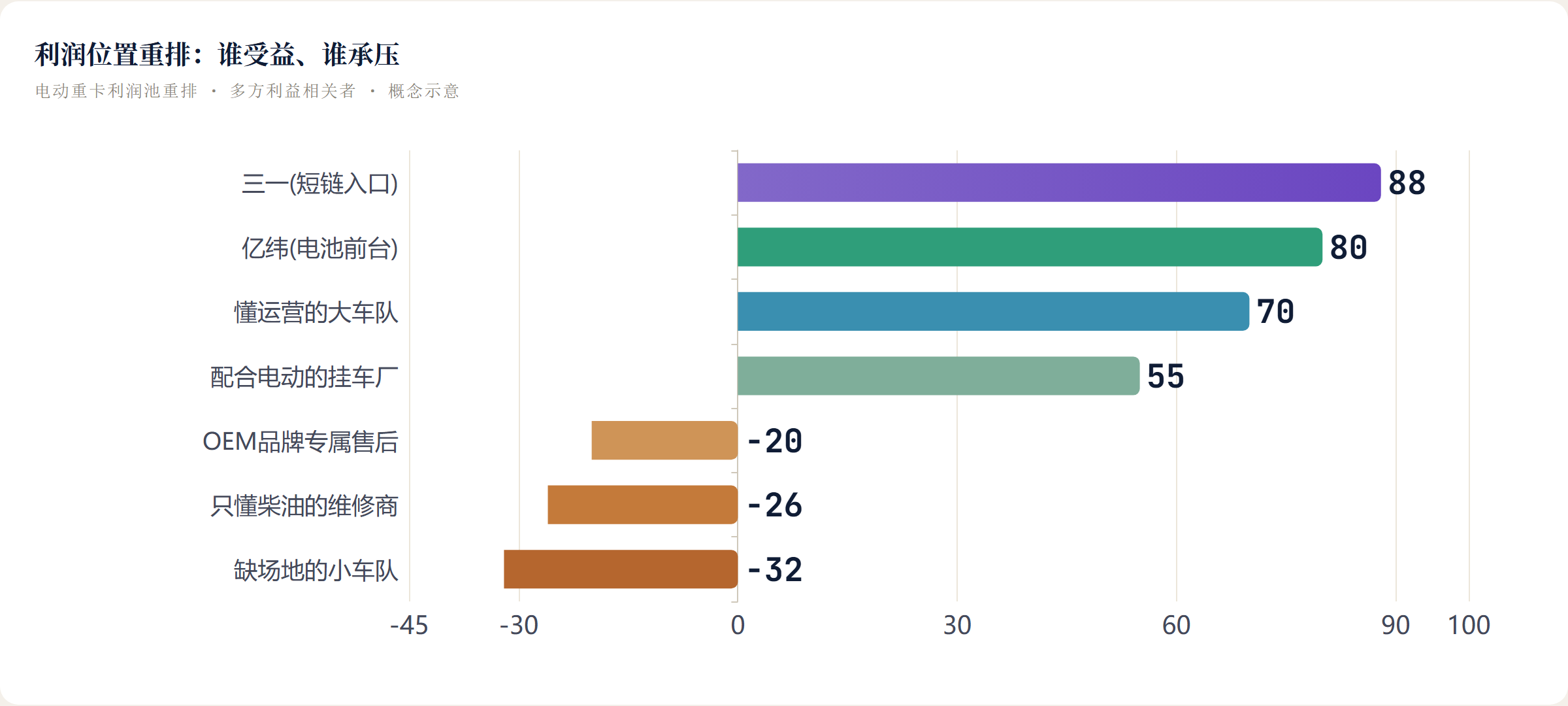
SANY's cost advantage stems from its supply chain structure: the e263 is built in Changsha, drawing on SANY's existing domestic electric heavy truck capacity and a battery supply system represented by EVE Energy. Large-scale production in China lets European orders benefit from already-amortised manufacturing costs without building a new plant in Europe, combining a short supply chain with economies of scale. Electric heavy trucks from Europe's legacy OEMs are constrained by relatively fragmented battery supply chains, European plant cost structures and parallel investment during the technology transition, leaving them under structural pressure on this front. SANY does not need to start a price war; simply by maintaining a reasonable margin it can squeeze the high premiums of Europe's early electric heavy truck market. Daimler Truck, Volvo, TRATON's MAN and Scania, and Iveco will all be forced to reassess their pricing headroom.
Putzmeister acceptance, Alltrucks aftersales profit pool
Putzmeister is the German concrete pump manufacturer SANY acquired in 2012. In the European rollout of the e263, its value lies in local European compliance capability: German equipment spare-parts warehouses, local service processes, and the claims and warranty routes European customers are familiar with. The "supported by Putzmeister" label on eTrucks means SANY has turned a vehicle built in Changsha into a product European customers can accept, maintain and hold accountable within familiar legal and service frameworks. This is a natural path outward from existing Putzmeister customer relationships in ports, construction and building materials, expanding along established industry trust.
SANY has partnered with Alltrucks, a multi-brand independent repair network, with around 700 European workshops handling maintenance, diagnostics and repairs. Established European heavy-truck brands have long used their own aftersales networks to lock in revenue from customers' full-lifecycle service — repairs, maintenance, spare parts, extended warranties and financing. This profit sits outside vehicle-sales margins and tends to be more stable and sticky. By entering through a third-party network, SANY sidesteps the high barrier of building its own service system while reaching into this profit pool. If the model proves successful, other Chinese heavy-truck brands will quickly copy it, and Europe's aftersales profit pool will face a systematic redistribution. Those under the most pressure will be traditional independent repairers whose expertise rests on diesel powertrains and who have not yet completed training in high-voltage e-drive and battery diagnostics.
Three types of PTO interfaces reach into bodybuilder profit margins
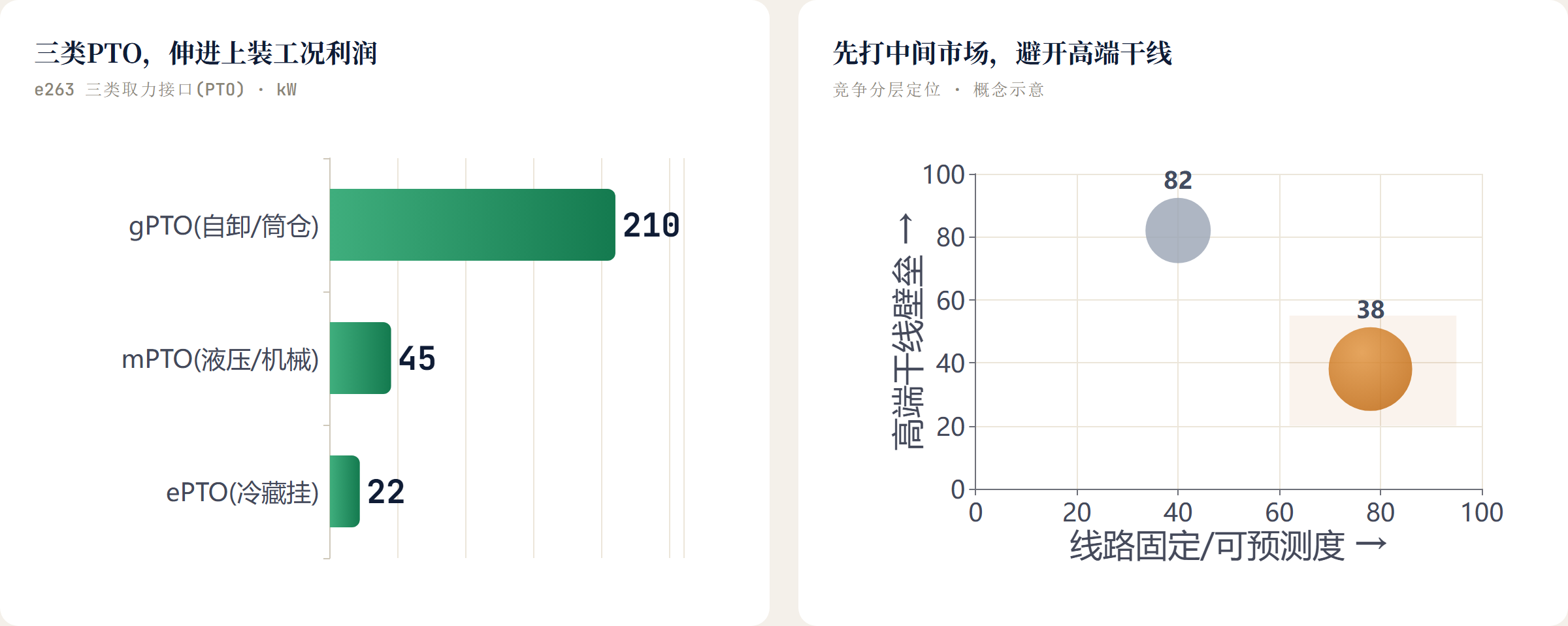
The e263 offers three power take-off interfaces: an mPTO (mechanical) with 45 kW continuous output, a 210 kW gPTO (generator), and a 22 kW/400 V ePTO (electric). These three interfaces show that SANY's European product strategy is not limited to standard long-haul tractors. Body applications such as cold chain, concrete mixing, cranes and bulk cargo all require stable PTO capability, which are also the use cases most familiar to Putzmeister's customer base. Through its PTO layout, SANY is reaching into the profit pools of trailer makers and bodybuilders, expanding from selling a tractor to taking part in the value chain of the entire transport operation.
Competitive tiers: the middle market is the most dangerous
SANY's entry into Europe will not hit every segment equally hard; competitive pressure is tiered. The premium long-haul segment is guarded by the Volvo FH Aero Electric (range of about 700 km, supporting 700 kW MCS fast charging), the Mercedes-Benz eActros 600 (621 kWh LFP, range of about 500 km) and the MAN eTGX (range of about 500 km). These brands have real moats in home-market customer relationships, used-vehicle residual value systems, brand premium and compliance documentation, and will be hard to dislodge in the short term.
SANY is more likely to break through first in the middle ground where European OEMs' electric models are too expensive and lighter alternatives fall short, but routes are fixed and predictable enough: system transport, port haulage, building materials distribution, regional cold chain and short- to medium-haul bulk freight. Customers here are more price-sensitive and relatively less willing to pay a brand premium, so a TCO advantage is more directly persuasive.
The tiered pressure ultimately bears not only on OEMs but on the entire middle layer of the industry: diesel repairers that cannot keep up with electrification face customer losses; trailer makers unable to match electric duty-cycle parameters will be sidelined; and small fleets lacking depot charging and financial bargaining power will be increasingly passive in their purchasing choices.
The risk lies in opaque pricing
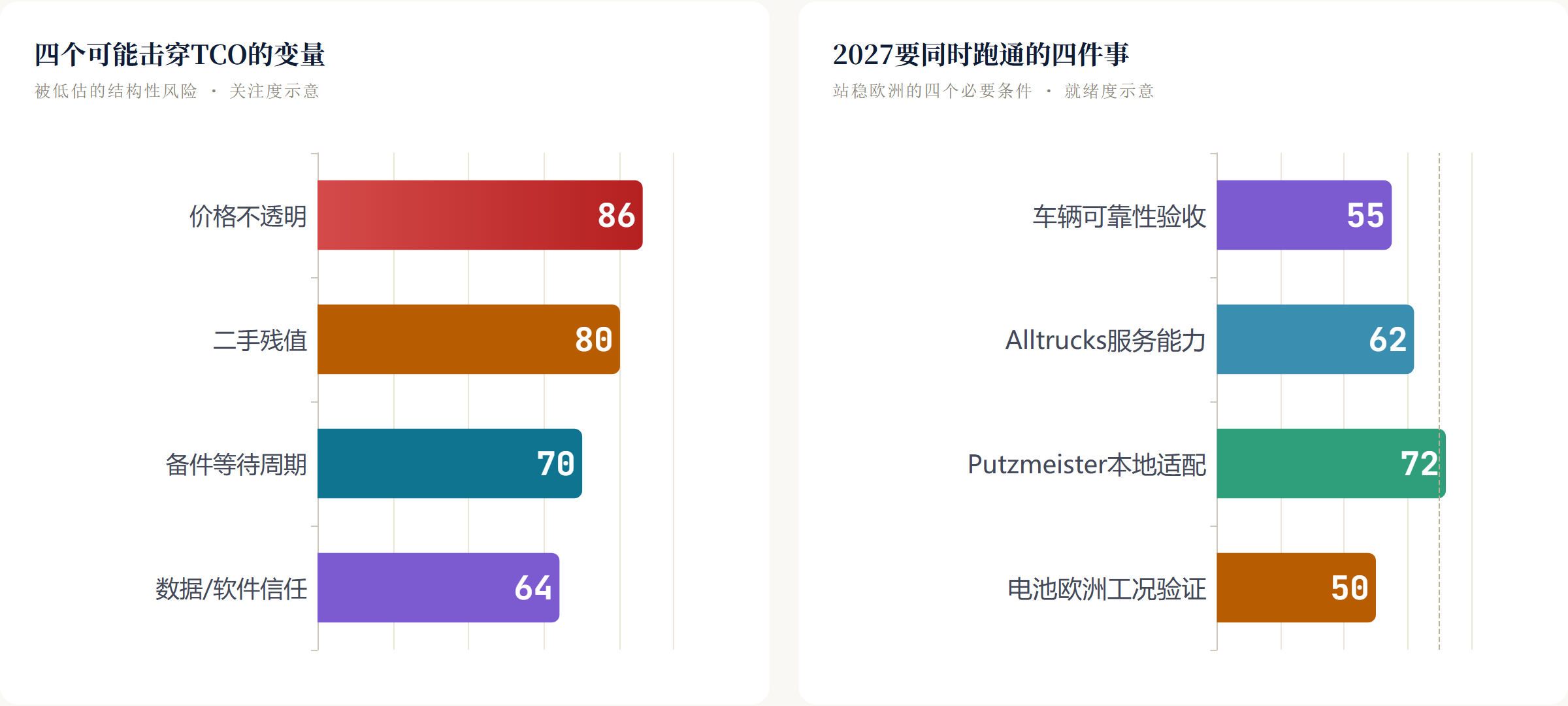
2026 is a validation year; real divergence will only show in 2027. The biggest uncertainty right now is not tariffs or trade friction but the fact that opaque pricing makes TCO impossible to verify: without public price lists, European fleet procurement teams cannot independently build a combined model of battery warranties, service contracts, residual value assumptions and financing rates. If residual values come in below expectations, leasing costs immediately have to be recalculated backwards. If frequent fast charging accelerates battery degradation, warranty costs will come back to bite the supply chain. If spare-parts lead times fall short of what was promised, downtime losses will wipe out the energy-cost advantage. On top of that, large European logistics operators are increasingly sensitive to data storage sovereignty, cybersecurity compliance and where responsibility for software updates lies. For Chinese brands to get into core operating fleets, trust has to build up over time, and that cannot be accelerated.
To truly establish itself in Europe, SANY must achieve four things at once: vehicle reliability within mainstream fleet acceptance thresholds, real service capability through Alltrucks, local adaptation and a spare parts system at Putzmeister, and proof that EVE Energy batteries show controllable degradation under European operating conditions. Miss any one, and the cost advantage turns into a risk discount; deliver all four, and SANY gains not just orders but a long-term entry point into the profit pool of Europe's electric heavy truck market.
If you were a fleet buyer in Europe, faced with a Chinese electric heavy truck with no public list price but a better TCO on paper, which gap would it have to close before you'd dare sign the first order: residual value guarantees, spare parts lead times, or data compliance?