European electric trucks: delivery trucks scale up first, long-haul tractors still held back by charging and vehicle prices
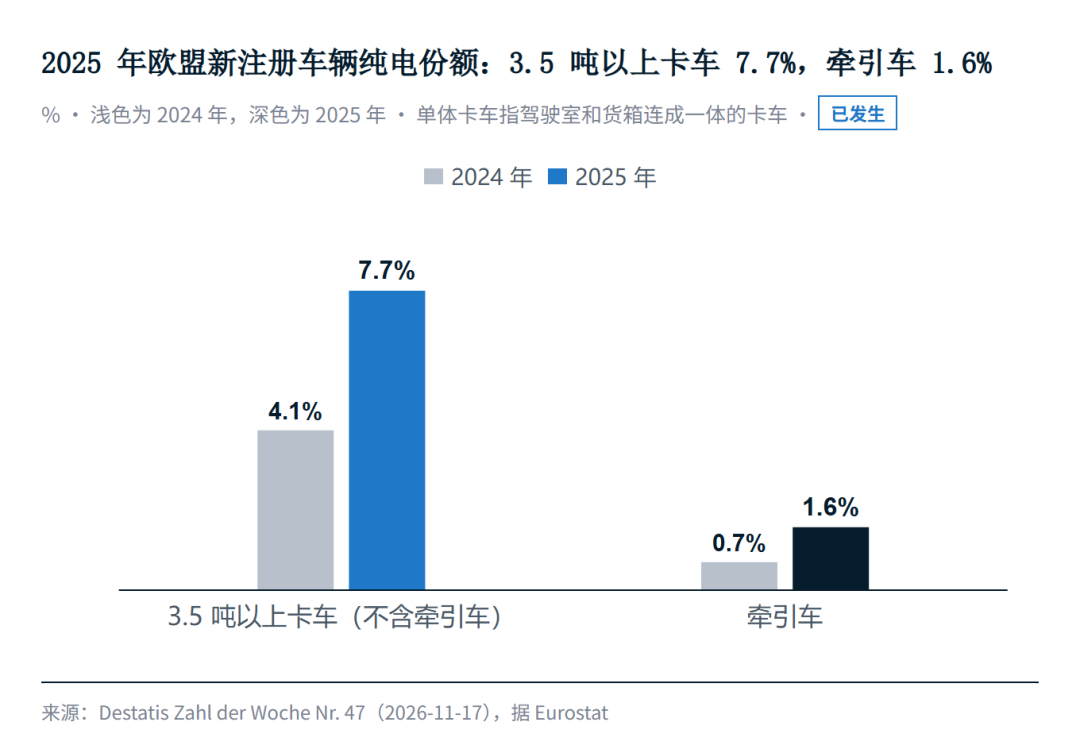
In 2025, battery-electric models took 7.7% of EU rigid truck sales but only 1.6% of tractor units.
On Nov 17, Destatis, using Eurostat data, broke down EU electric trucks by vehicle type for the first time. In 2025, 126600 trucks above 3.5 tonnes (excluding tractor units; rigid trucks with cab and cargo body in one) were newly registered in the EU, about 9800 of them battery-electric, with the share rising from 4.1% the previous year to 7.7%; about 157500 tractor units were registered, about 2500 of them battery-electric, with the share rising from 0.7% to 1.6%.
In the same year and the same market, the BEV shares of the two vehicle types differ by about 4.8 times. The European Automobile Manufacturers' Association (ACEA) monthly statistics list only total trucks.
Rigid trucks are mostly used for urban and regional distribution and on construction sites. They can return to the depot to charge overnight, and fleets have started replacing them in batches. Long-haul tractors need to recharge en route and cost more than twice as much as diesel models, so they are still at the trial stage. Suppliers are also taking two approaches: Chinese manufacturers are entering the tractor market with prices about 20% lower, while European manufacturers are focusing mainly on battery-electric models.
Rigid trucks and tractor units
The two categories of battery-electric trucks counted by Destatis total about 12300 units, broadly consistent with the industry association's total: ACEA's annual report puts externally chargeable trucks in 2025 at 12858 units, a 4.2% share. The difference of just over 500 units arises mainly because ACEA includes plug-in hybrids; in addition, data for Bulgaria, Hungary and Croatia are incomplete and Destatis does not include them.
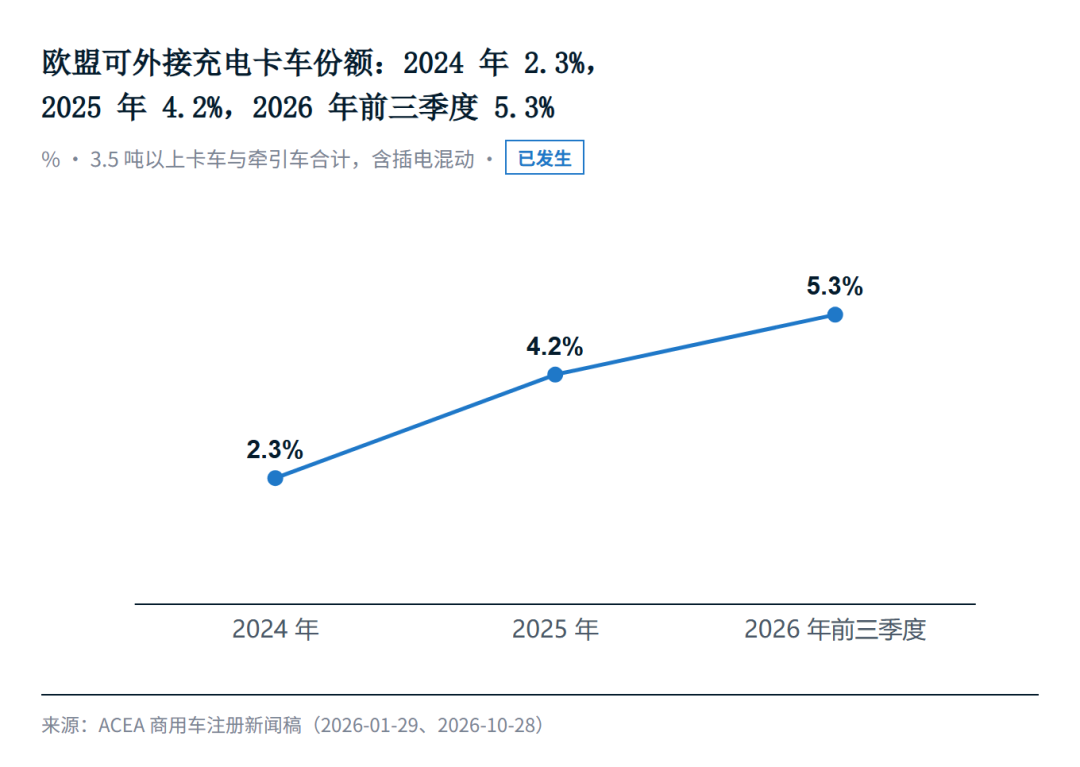
Growth has been concentrated in the past two years. On ACEA's basis, the EU share of electric trucks was 2.3% in 2024 and doubled to 4.2% in 2025. In the first three quarters of this year, 12873 plug-in trucks were sold, nearly half again the 8591 sold a year earlier, for a 5.3% share. Diesel still accounts for 91.7%.
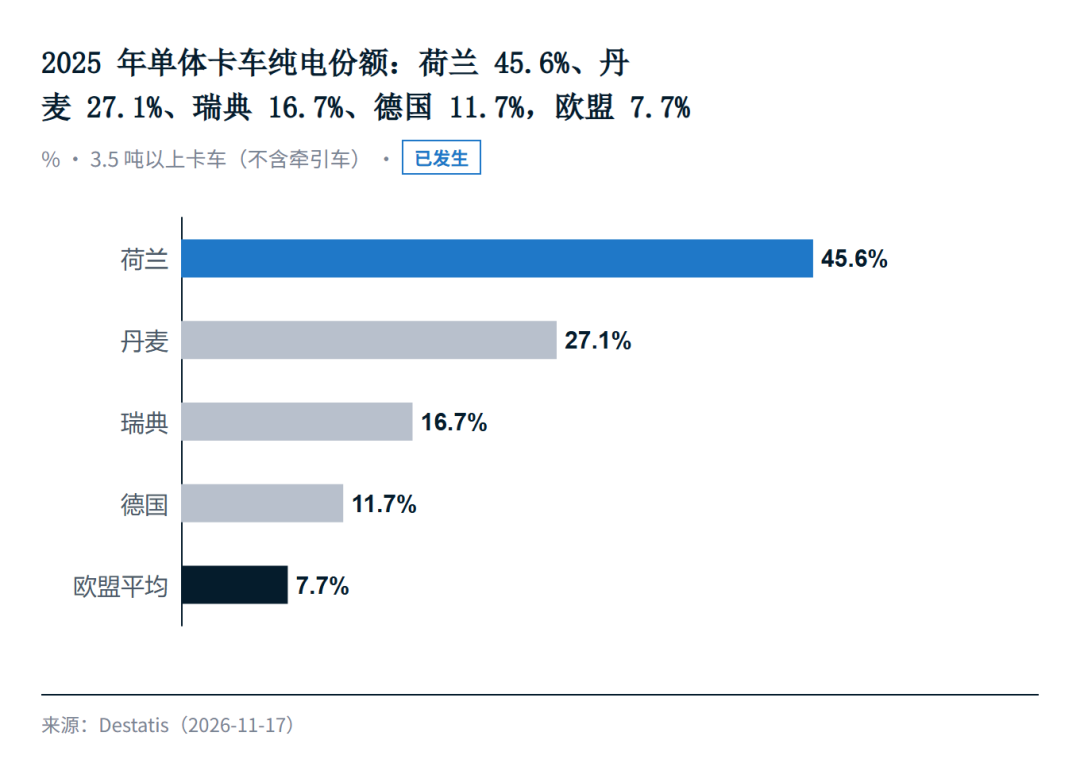
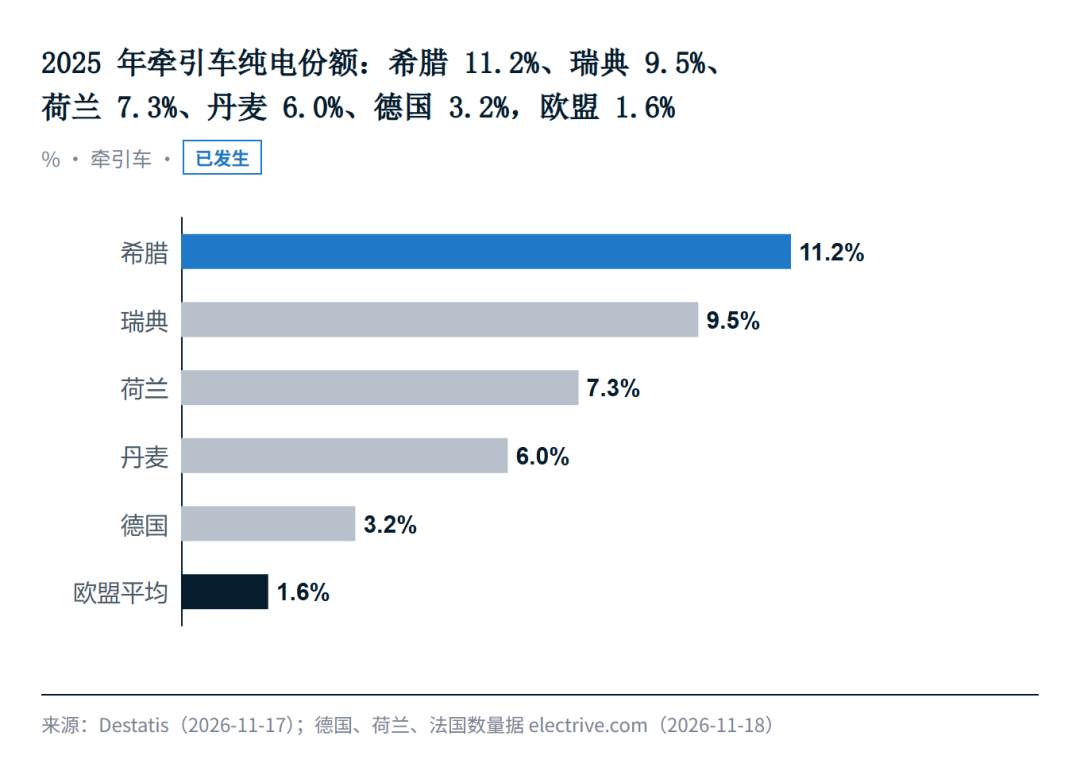
Gaps between countries are even wider. For rigid trucks, the BEV share has reached 45.6% in the Netherlands, 27.1% in Denmark and 16.7% in Sweden; Germany is at 11.7%, but ranks first by volume at about 4200 units. For tractor units, Greece has the highest BEV share at 11.2%, followed by Sweden 9.5%, the Netherlands 7.3%, Denmark 6.0% and Germany 3.2%. Germany's 926 battery-electric tractors account for about 37% of the EU total.
BEVs still account for a very small share of the parc. In 2024, the EU had about 3.6 million registered trucks over 3.5 tonnes, of which BEVs made up just 0.4%, about 14,100 units, with 54.2% in Germany; of about 2.2 million tractor units, around 2,400 were BEVs, about 0.1%.
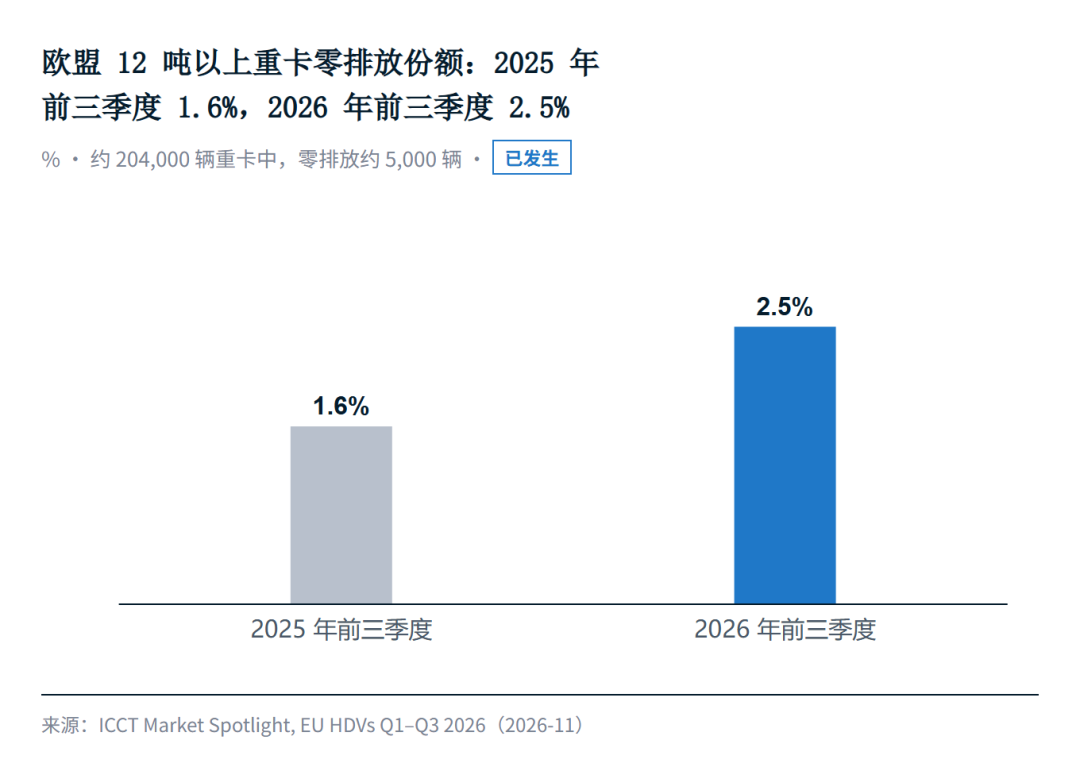
Looking only at heavy trucks above 12 tonnes, growth is also more modest. The International Council on Clean Transportation (ICCT) counts about 204000 heavy trucks sold in the EU in the first three quarters of this year, of which about 5000 were zero-emission, a share of 2.5%, compared with 1.6% a year earlier. ACEA has previously noted that electric truck growth in 2025 came mainly from medium trucks of 3.5 to 16 tonnes.
BEVs are spreading first among vehicles on fixed routes that return to the depot overnight. In the Netherlands and Denmark, BEVs already account for between a quarter and nearly half of new rigid trucks; for cross-border long-haul tractors, European OEMs and fleets are still running small-batch trials.
Tractor units held back by charging and vehicle price
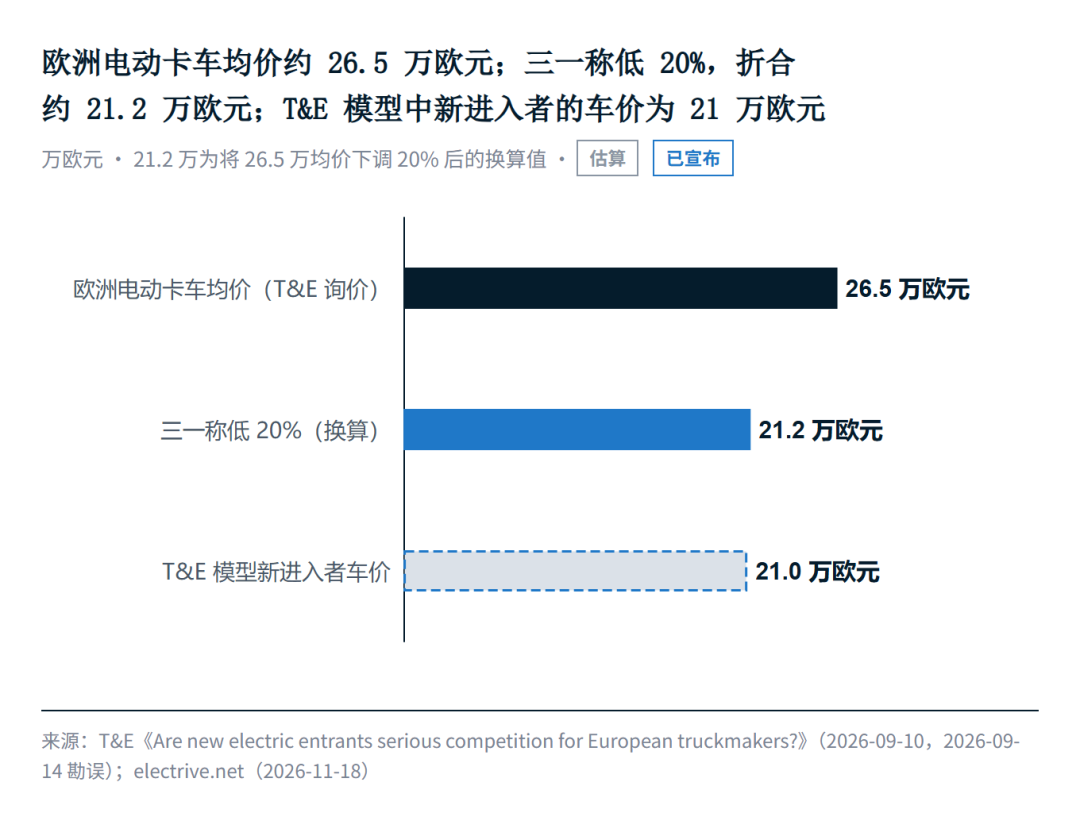
Vehicle price is still the top purchasing factor. When Daimler Truck launched the eActros 600 in Oct 2023, it said the electric tractor would cost about 2 to 2.5 times as much as a comparable diesel. By its estimate, it takes about five years or 600,000 km for total cost to break even with diesel. In September this year, Transport & Environment (T&E) estimated, based on dealer quotes, that battery-electric trucks in Europe cost about EUR 265,000 on average.
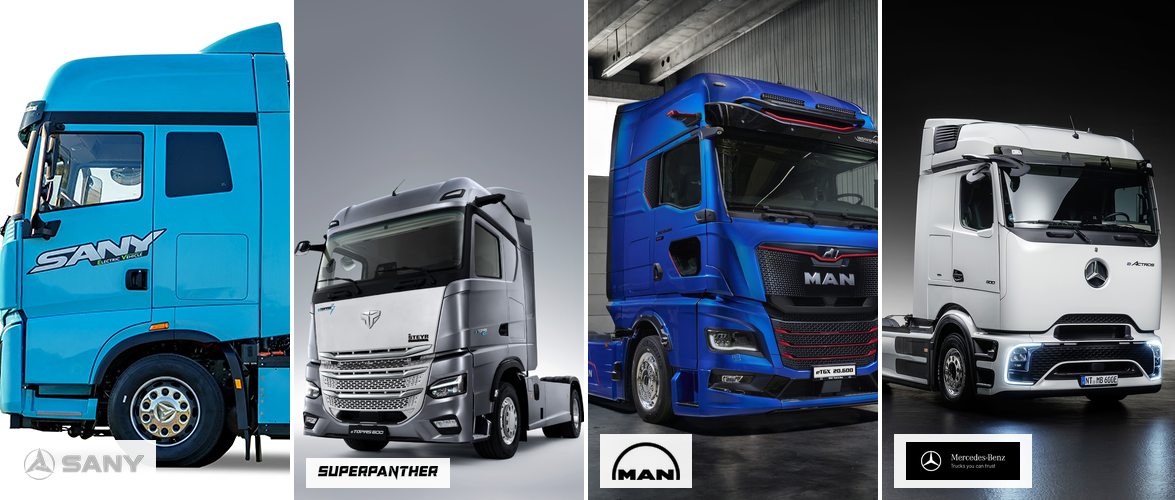
Charging en route is still one of the main difficulties. The SuperPanther eTopas 600 has a 621 kWh battery and can charge through two CCS2 ports at the same time. The maker claims 20% to 80% in under 38 minutes; in a test by Steyr Automotive in month 7 this year, peak power reached 646.7 kW. That requires two high-power charge points to be free at the same site at the same time.
The Megawatt Charging System (MCS) has only just been finalized. The International Electrotechnical Commission published the MCS DC charging equipment standard as a full international standard on 8/21 this year; MAN started series production of MCS-capable trucks in month 7 this year, at up to 750 kW; the MCS version of the Mercedes-Benz eActros 600 is still listed as "available later". Public sites are being built as planned: in month 11, Energie Südbayern broke ground at the Dasing service area on the A8, with 5 truck and bus charging points supporting MCS at up to 1000 kW, scheduled to open in mid-2027.
The EU's Alternative Fuels Infrastructure Regulation (AFIR) requires heavy truck charging on 15% of the Trans-European Transport Network (TEN-T) by the end of 2025, 50% by the end of 2027, and a site every 60 km on the core network by the end of 2030. Until then, fleets mostly install their own chargers. Austrian logistics company Gartner ordered 40 electric tractor units and is building 12 DC fast chargers at its Lambach headquarters. SANY's head of electric trucks in Europe said the first use cases SANY is targeting in Europe are ones where "long-haul is possible, but most charging happens at depots".
Subsidies also determine whether early fleets can break even. Germany has extended the motorway toll exemption for zero-emission trucks to Jun 30, 2031, currently the most direct incentive for long-haul trucks; however, the federal KsNI purchase subsidy was not continued in the 2024 budget. According to ICCT, Germany has had no national purchase subsidy for zero-emission commercial vehicles since then. France has, since June 1 this year, offered incentives of over EUR 100,000 for electric tractor units assembled in the European Economic Area through its energy savings certificate scheme. Bus subsidies are also changing fast: Germany's federal e-bus subsidy is set to fall from EUR 403.4 million to EUR 130 million in 2027, a cut of about 68%; the budget committee has approved it, but it still requires a plenary vote in the Bundestag. Industry association VDV says up to 7,200 electric buses could be left without funding.
Tractor units currently rely on toll exemptions, subsidies and private chargers to break even, and the public MCS network will not reach scale until after 2027. Until then, the pace of electrification for long-haul fleets will depend mainly on how much each country offers in subsidies.
Chinese makers' price-led market entry
SANY gave the most direct figure. At the IAA Transportation show in Hanover in month 9 this year, SANY said: "We want to be 20% cheaper than European manufacturers so customers can switch to electric smoothly." The video interview was not published until Nov 18. He said the SANY e263 electric tractor has a range of about 500 km and 620 kWh of usable energy, and has been in customer use since month 5, first as dump trucks and cement-mixer trailers in construction, with logistics next; standard lead time is about four months. SANY has no European sales target; he said "every truck we sell is a gain for us".
Based on T&E's average price, 20% lower works out to about €212,000 per truck, roughly €53,000 less than a European truck. This matches the assumption in T&E's model, which sets the new entrants' truck price at €210,000, about 79% of a European truck, resulting in a 9% lower five-year total cost of ownership. In March this year Reuters reported an even more aggressive claim: Chinese truckmakers plan to price their trucks in Europe up to around 30% below the €320,000 average price of European electric trucks.
Beyond price, Chinese manufacturers are also leveraging existing service networks. SANY is partnering with independent repair network Alltrucks, with about 650 workshops to be certified in stages, and can also draw on the sites, parts logistics and warranty processes of Putzmeister, the concrete pump maker wholly owned by SANY since 2012. The four months before deliveries give workshops just enough time to prepare. SuperPanther has partnered with DHL: according to DHL's Oct 28 press release, DHL handles parts shipments from China and provides SuperPanther with a 1300 m² warehouse at the automotive park in Holtum, the Netherlands.
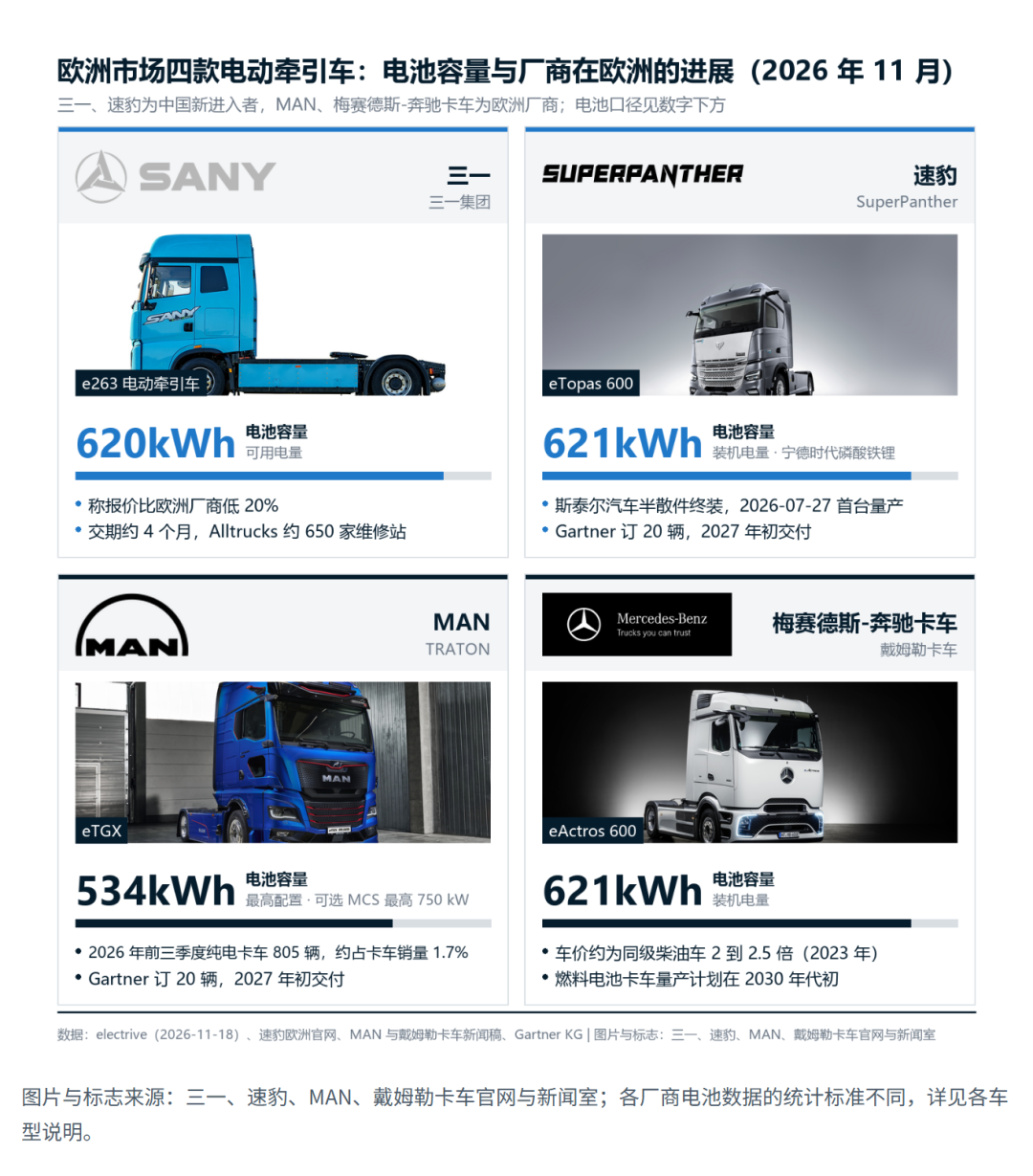
The SuperPanther eTopas 600 undergoes final assembly at Steyr Automotive from semi-knocked-down (SKD) kits, and the first series-production unit rolled off the line on Jul 27. Steyr is responsible for final assembly, commissioning and quality inspection, and the first customers include four logistics companies, among them DHL. Steyr also assembles vehicles for Sinotruk: the first was completed on Mar 3, covering diesel and battery-electric models. Assembly starts with SKD kits and will move to completely knocked-down (CKD) kits as volumes grow, with cab manufacturing and painting also to be carried out at the Steyr plant.
An order from Austria's Gartner also shows where fleets stand. Of the 40 electric tractor units it announced in month 10, half are SuperPanther eTopas 600 and half MAN eTGX, with deliveries starting in early 2027. With both makes in the same fleet, it will have directly comparable operating data after a period in service.
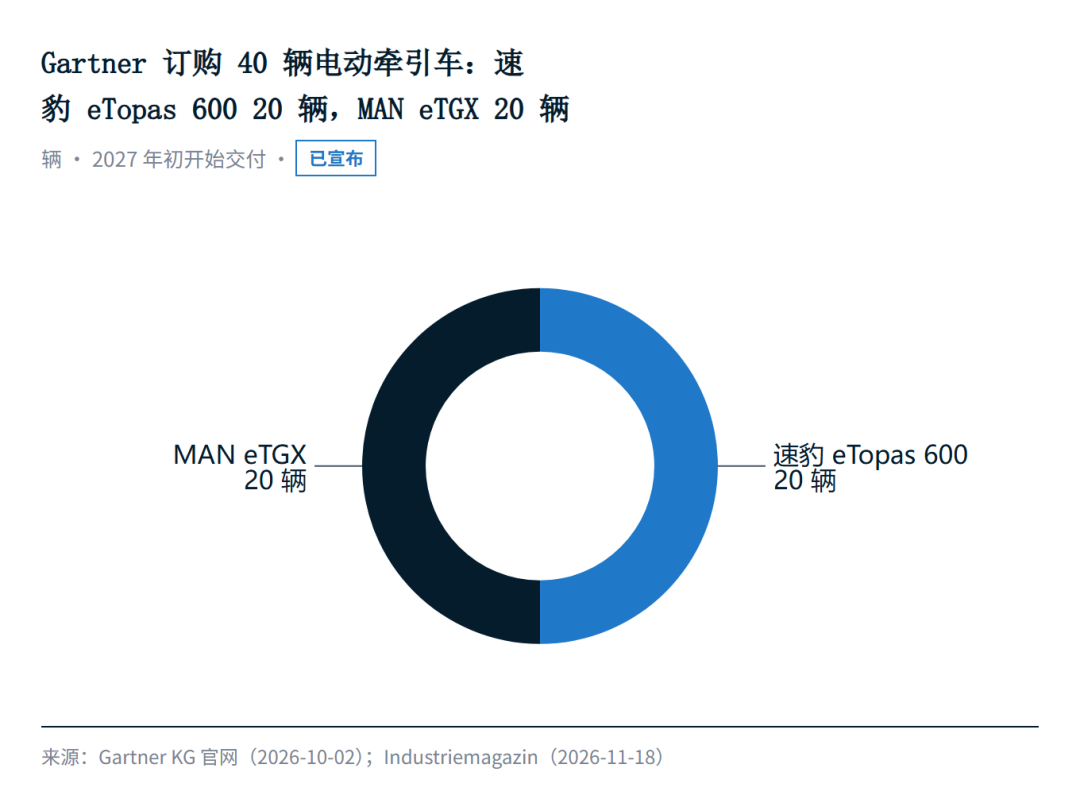
Chinese makers compete on price and delivery times; their weaknesses are service networks and long-term reliability, which they are addressing through Alltrucks, DHL and Steyr Automotive. Fleets splitting orders shows they are willing to trial Chinese trucks.
European manufacturers share hydrogen risk
European manufacturers are still betting mainly on battery-electric. MAN began series production of the eTGX and eTGS in Munich in Jun 2025, building electric and diesel trucks on the same line. In the first three quarters of this year, MAN sold 805 BEV trucks, about 1.7% of its total truck sales of 47385 units. Hydrogen spending, meanwhile, is shrinking. In an exclusive report today, the trade publication Hydrogen Insight said MAN will stop investing in hydrogen beyond its existing pilots because hydrogen trucks and buses currently have "no viable business model". MAN has not commented.
Daimler Truck has not abandoned fuel cells but has pushed back series production. According to its announcement in month 9 last year, Daimler will first build a small batch of 100 fuel cell tractors at its Wörth plant, with customer deliveries starting at the end of this year; large-scale series production focused on Europe is planned for the early 2030s.
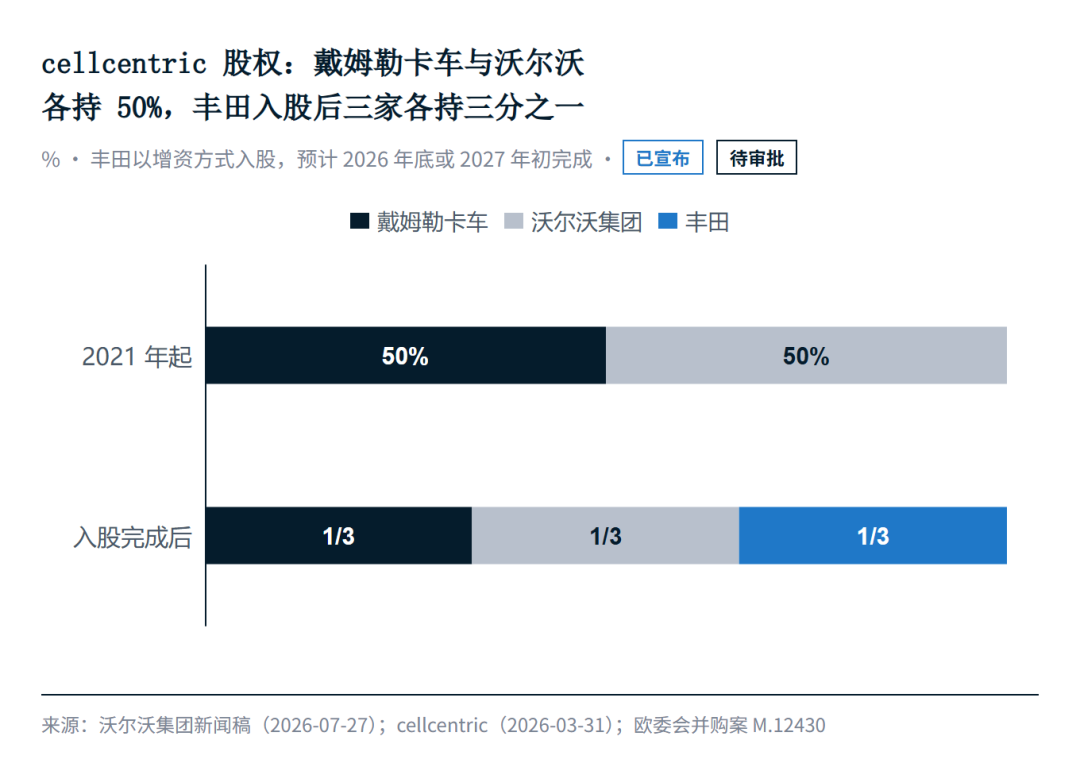
The fuel cell systems come from cellcentric. Daimler Truck and Volvo Group set up this joint venture in Mar 2021, with Volvo paying about €600 million for a 50% stake. At the time, large-scale production was planned to start in 2025, with fuel cell trucks entering series production in the second half of the 2020s. In Jan 2025 the plant's start of production was pushed back to around 2030; CTO Loughlan said a large plant would only be built once hydrogen prices fall to around €6 per kilogram, and the land option in Weilheim is retained until the end of 2029.
Source: Chart by AutoMusic based on the public sources listed in the article; first published on the AutoMusic WeChat account.
According to Volvo Group's announcement of Jul 27, the three parties signed a binding agreement under which Toyota becomes a shareholder on equal footing with Daimler Truck and Volvo, each holding one-third. A cellcentric announcement in 3 stated that Toyota is joining through a capital increase, aiming to achieve the scale and investment efficiency needed to commercialise fuel cells, and will jointly develop and produce fuel cells with Toyota. The European Commission accepted the merger notification on Nov 16, with a provisional Phase 1 review deadline of Dec 21; the three parties expect to close the deal at the end of this year or early next year.
MAN has pulled out, while Daimler and Volvo have brought in Toyota. The approaches differ, but they reflect the same judgement: hydrogen trucks will not make money before 2030, battery-electric is the main track for the next few years, hydrogen is only a fallback, and its costs are shared among more shareholders.
Subsequent milestones
In early 2027, Gartner's SuperPanther and MAN tractors begin delivery; in mid-2027, the Dasing MCS charging park is scheduled to open; by end-2027, AFIR requires heavy-truck charging on half of the trans-European transport network; in 2030, CO2 emissions from new EU heavy-duty vehicles must be 45% below the 2019 baseline.
The BEV share of rigid trucks will keep rising along the path of the Netherlands and Denmark; whether tractor units can keep up depends on when the public MCS network is built and how far European manufacturers can cut prices. The 20% price gap cited by SANY is surely the benchmark European manufacturers are all measuring against.
Sources: Destatis (2026-11-17); electrive (2026-11-18, 2026-11-17, 2026-07-30, 2025-07-16); ACEA commercial vehicle registration press releases (2023, 2025 full year, 2026 Q1–Q3); ICCT EU heavy-duty vehicle market report (2026-11); Daimler Truck press releases (2023-10-10, 2025-09-18, 2026-06-02); T&E report (2026-09-10); Reuters (2026-03-10); SuperPanther Europe website; Steyr Automotive press releases (2026-03-03, 2026-07-27); DHL press release (2026-10-28); Gartner KG (2026-10-02); Industriemagazin (2026-11-18); EU Regulations (EU) 2023/1804 and (EU) 2024/1610; German Federal Ministry of Transport (2025-12-01); Hydrogen Insight (2026-11-16); Traton; Volvo Group press releases (2021-04-29, 2026-07-27); cellcentric press release (2026-03-31); European Commission merger case M.12430; FreightWaves (2026-11-11).