Chinese heavy trucks enter Europe: electric heavy trucks 9% cheaper over five years
A September study by Transport & Environment (T&E) estimates that in 2026, a Chinese electric tractor unit sold in Germany would have a five-year total cost of ownership 9%, or about EUR 34,000, lower than a comparable European model.
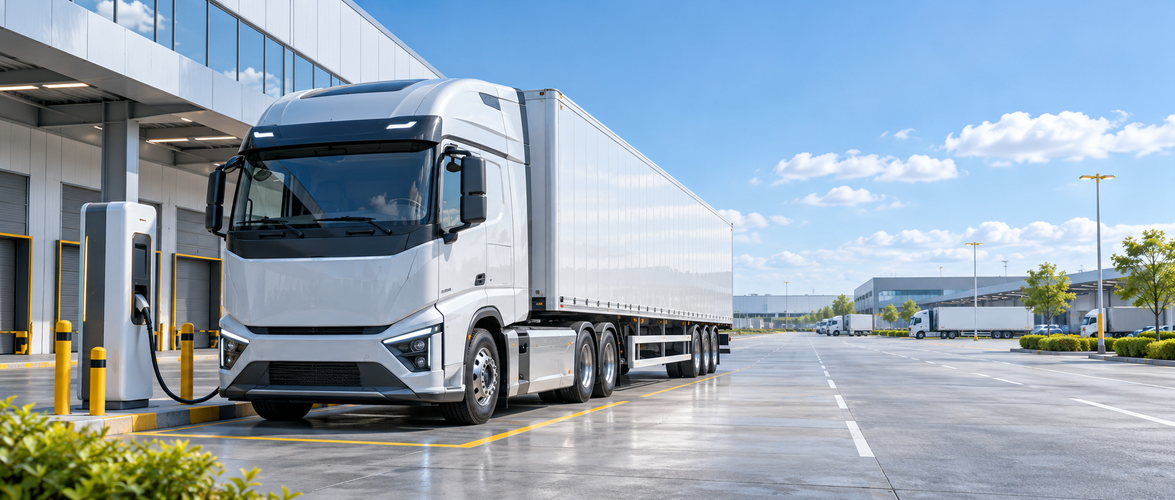
A September study by Transport & Environment (T&E) estimates that a Chinese electric tractor unit sold in Germany in 2026 would have a five-year total cost of ownership 9%, or about EUR 34,000, lower than a comparable European model. Almost all of the gap comes from the purchase price. If European manufacturers succeed in pushing back the CO₂ deadlines, new entrants will have longer to win orders on price.
Cost gap
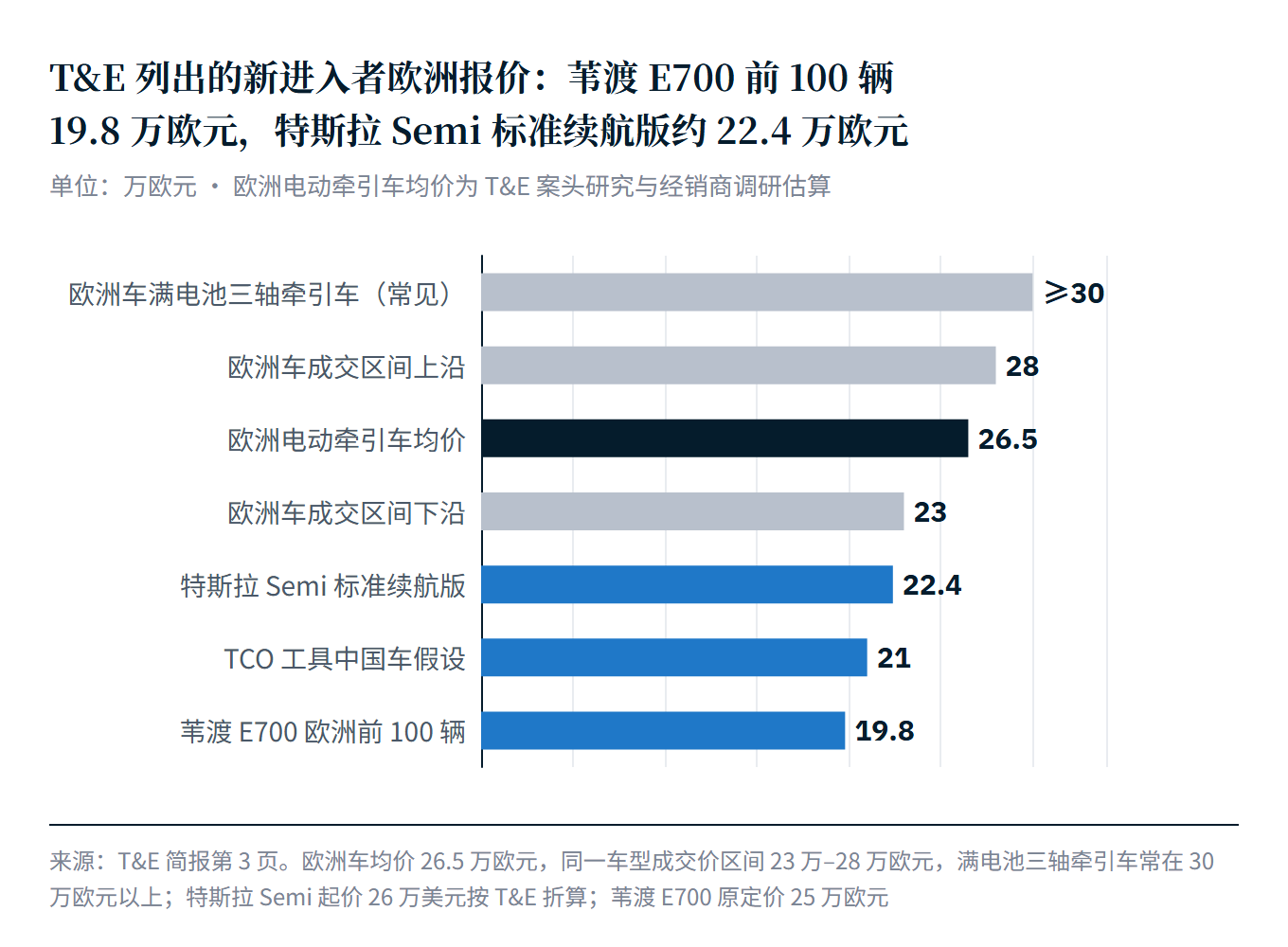
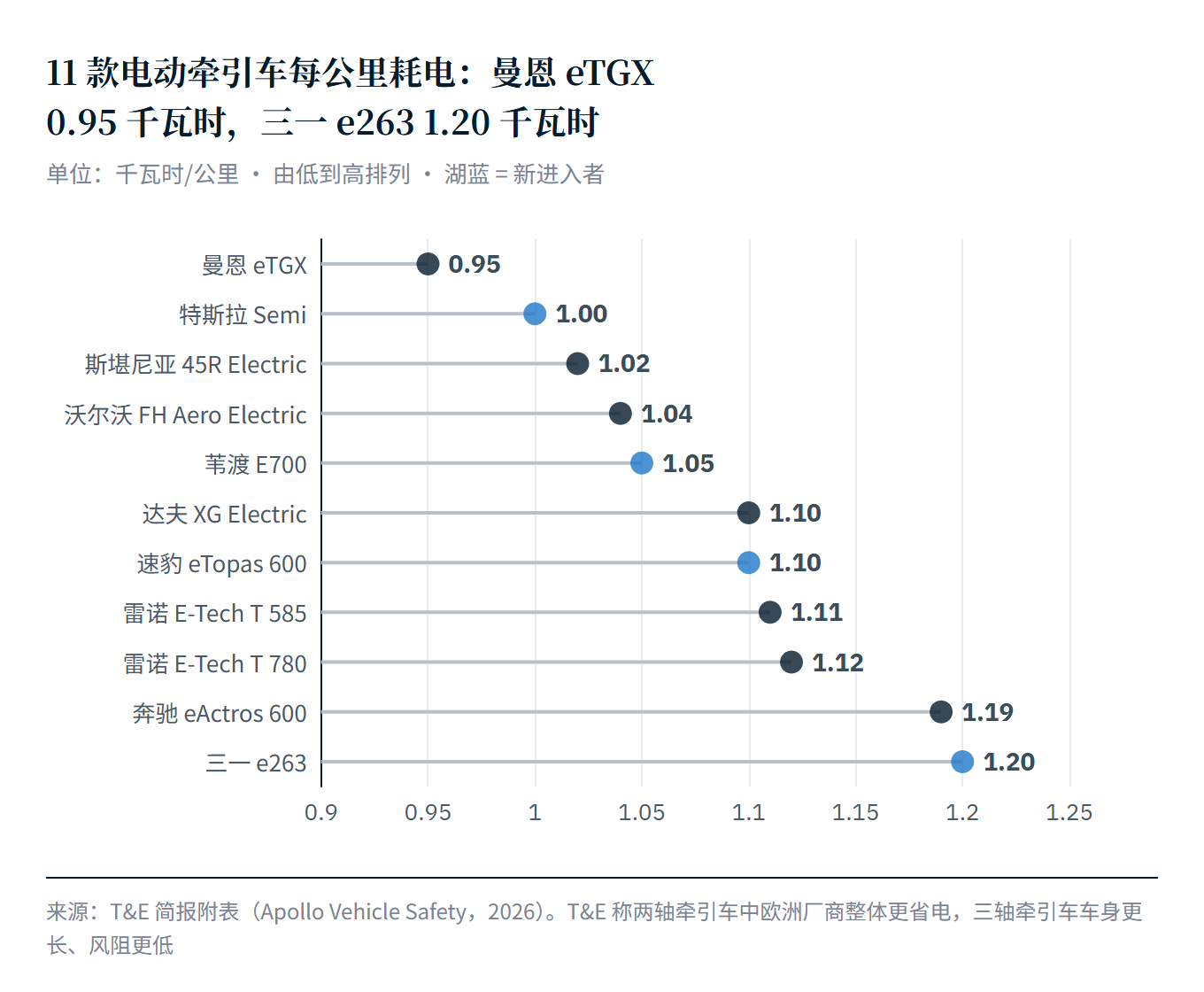
The case vehicle is a two-axle long-haul tractor (EU group 5-LH) covering 116,000 km a year, with a 9.5% discount rate and costs including a residual value of 35% of the vehicle price. Five-year total cost is €382,400 (€0.66/km) for the European heavy truck and €348,400 (€0.60/km) for the Chinese one. Vehicle prices are assumed at €265,000 and €210,000 respectively, a gap of €55,000. The Chinese truck consumes 1.15 kWh/km against 1.07 for the European truck, so its electricity cost is actually higher.
Spread over five years and 580,000 km, the difference comes to 6 euro cents per km. Road freight margins have long sat between 1.5% and 2%, so this gap is enough to change a per-km tender bid.
Parameter comparison
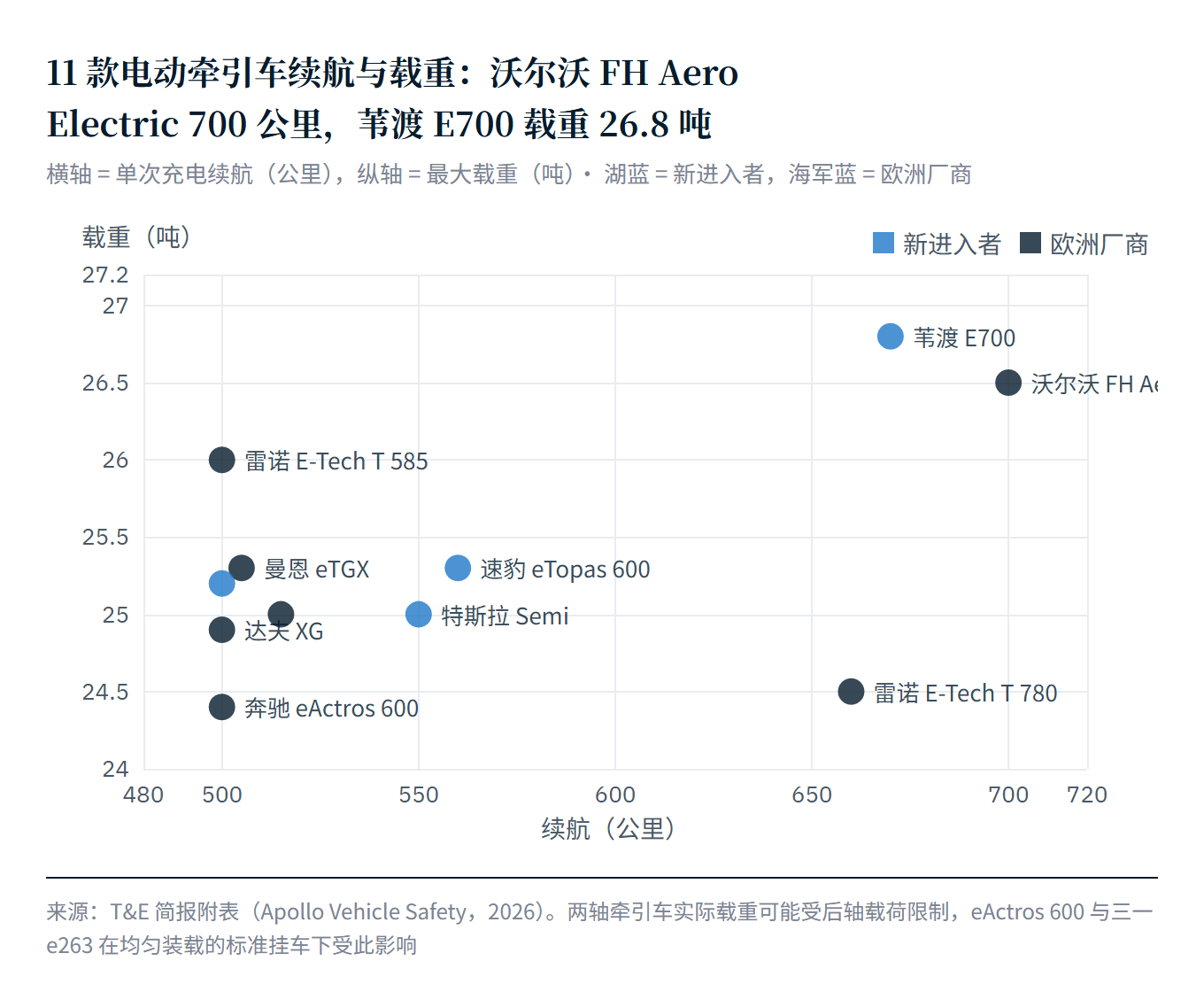
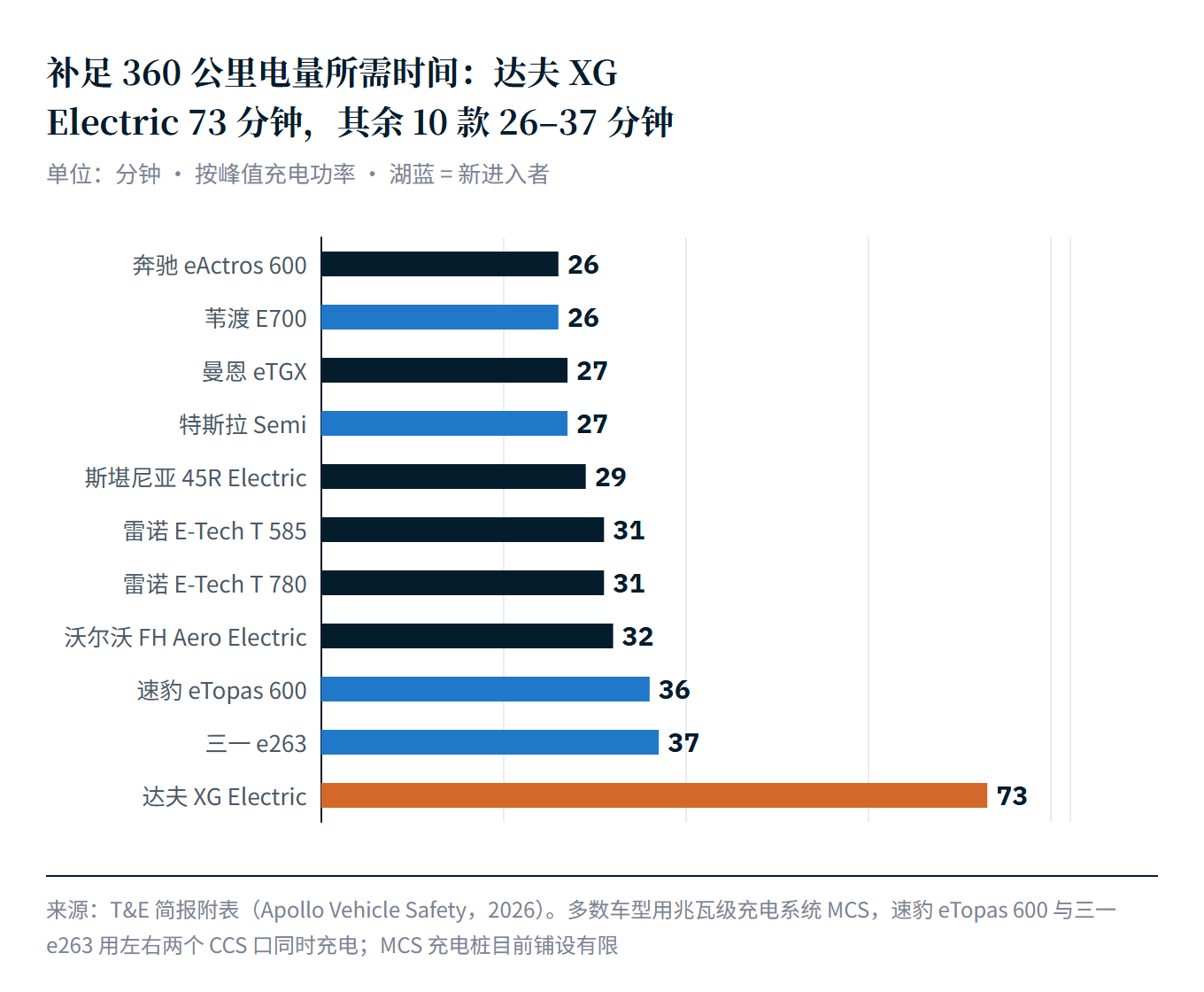
The T&E comparison covers 11 trucks. The Chinese-brand models are the SANY e263, SuperPanther eTopas 600, Tesla Semi and Windrose E700. Chinese-brand models carry payloads of 25 to 26.8 tonnes, versus 24.4 to 26.5 tonnes for European models. The Volvo FH Aero Electric has the longest range at 700 km. Adding 360 km of charge takes 73 minutes on the DAF XG Electric and 26 to 37 minutes on the other 10 models.
SANY and SuperPanther offer repair services in Europe through the Alltrucks network. The moat that service networks give incumbent heavy truck makers in Europe still exists but will gradually narrow. With similar specifications, fleets will focus on comparing price and after-sales coverage.
Methodology
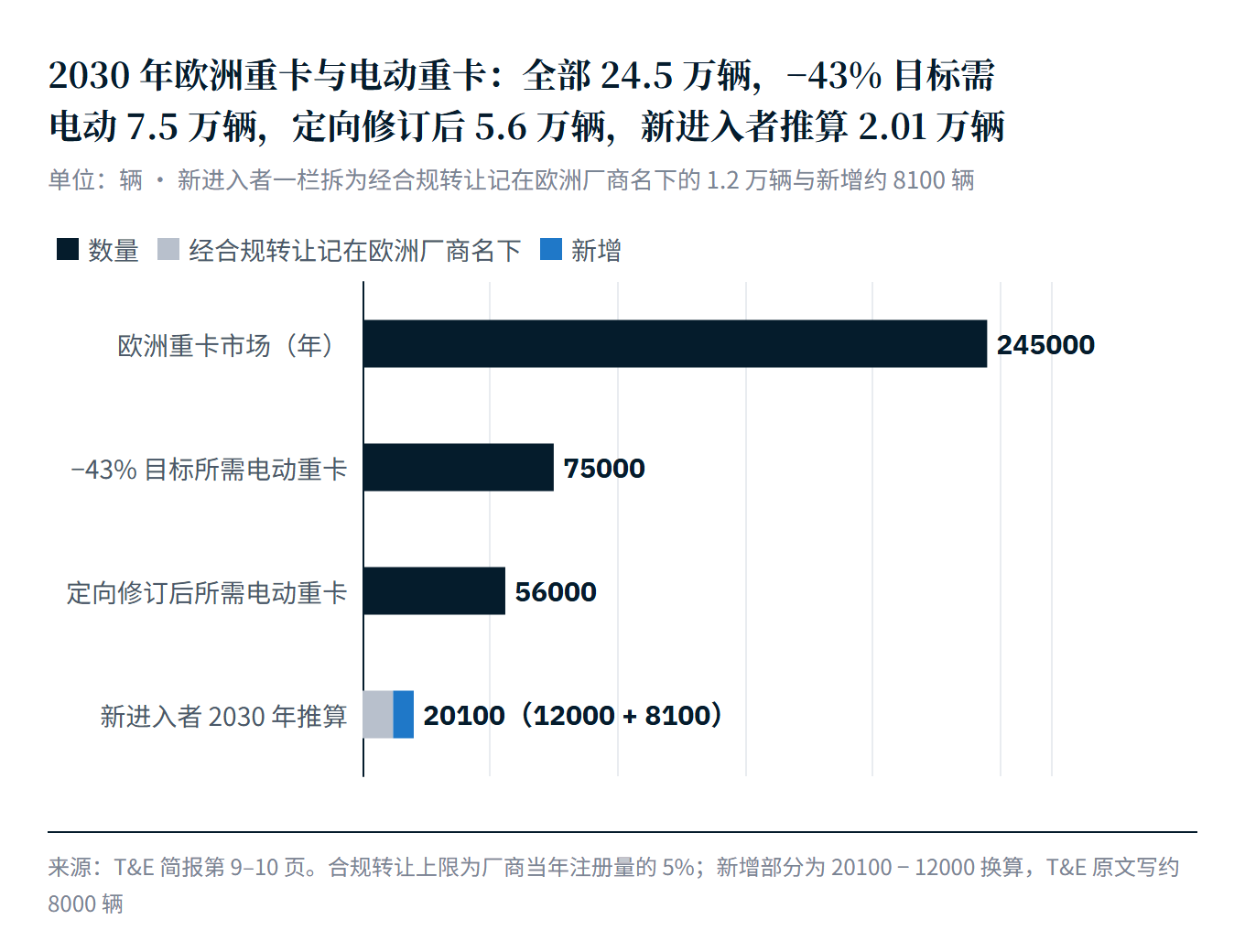
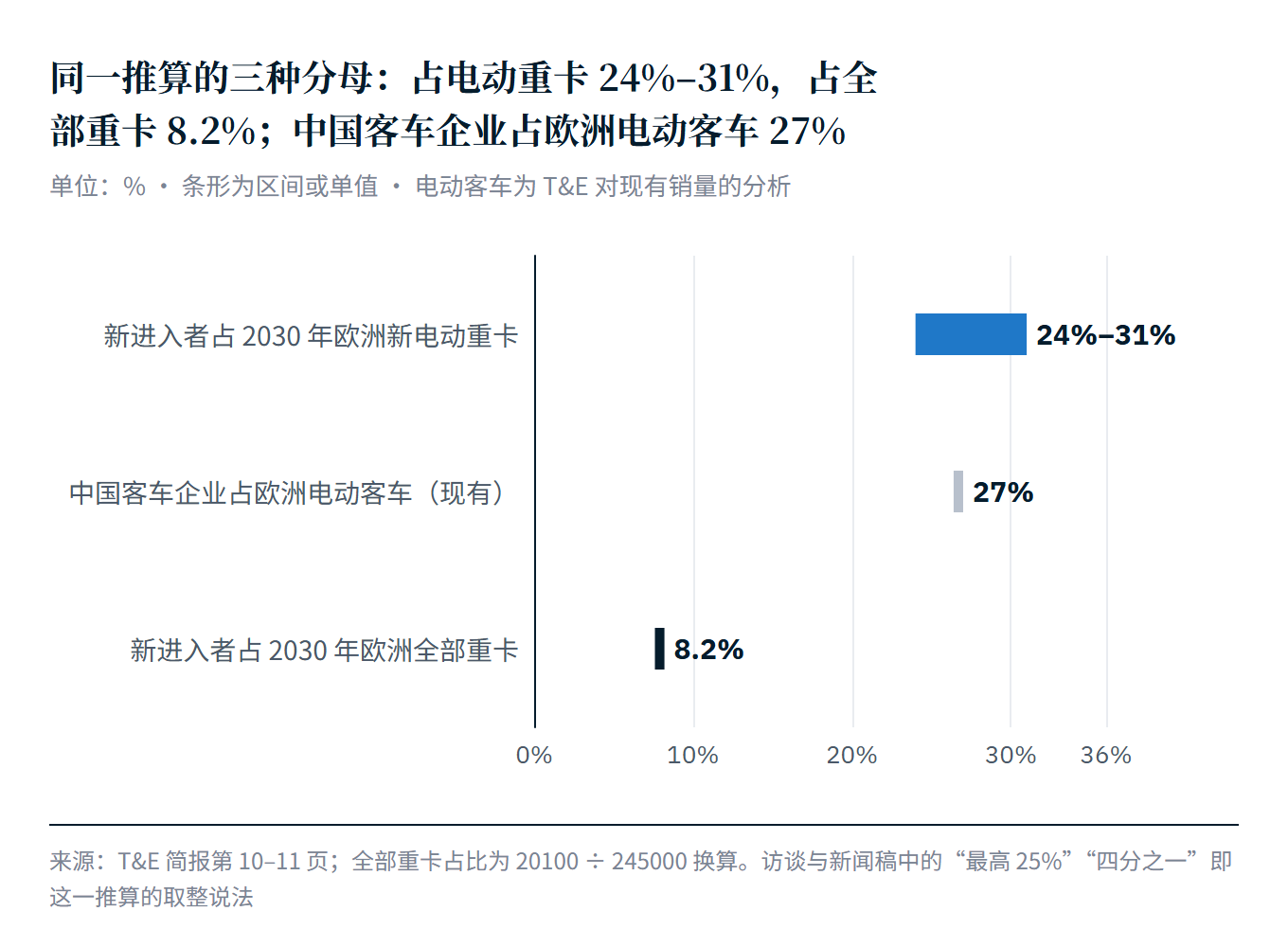
"Up to 25%" is a projection for 2030. Chinese brands would total about 20,100 units, or 24% to 31% of new electric heavy trucks in Europe that year, assuming each company meets its public targets. Against Europe's 245,000 heavy trucks a year, that would be about 8.2%. T&E estimates that 12,000 of these units would be credited to European manufacturers through compliance pooling between automakers. These are only the manufacturers' targets, not a forecast.
Compared with Daimler's demands
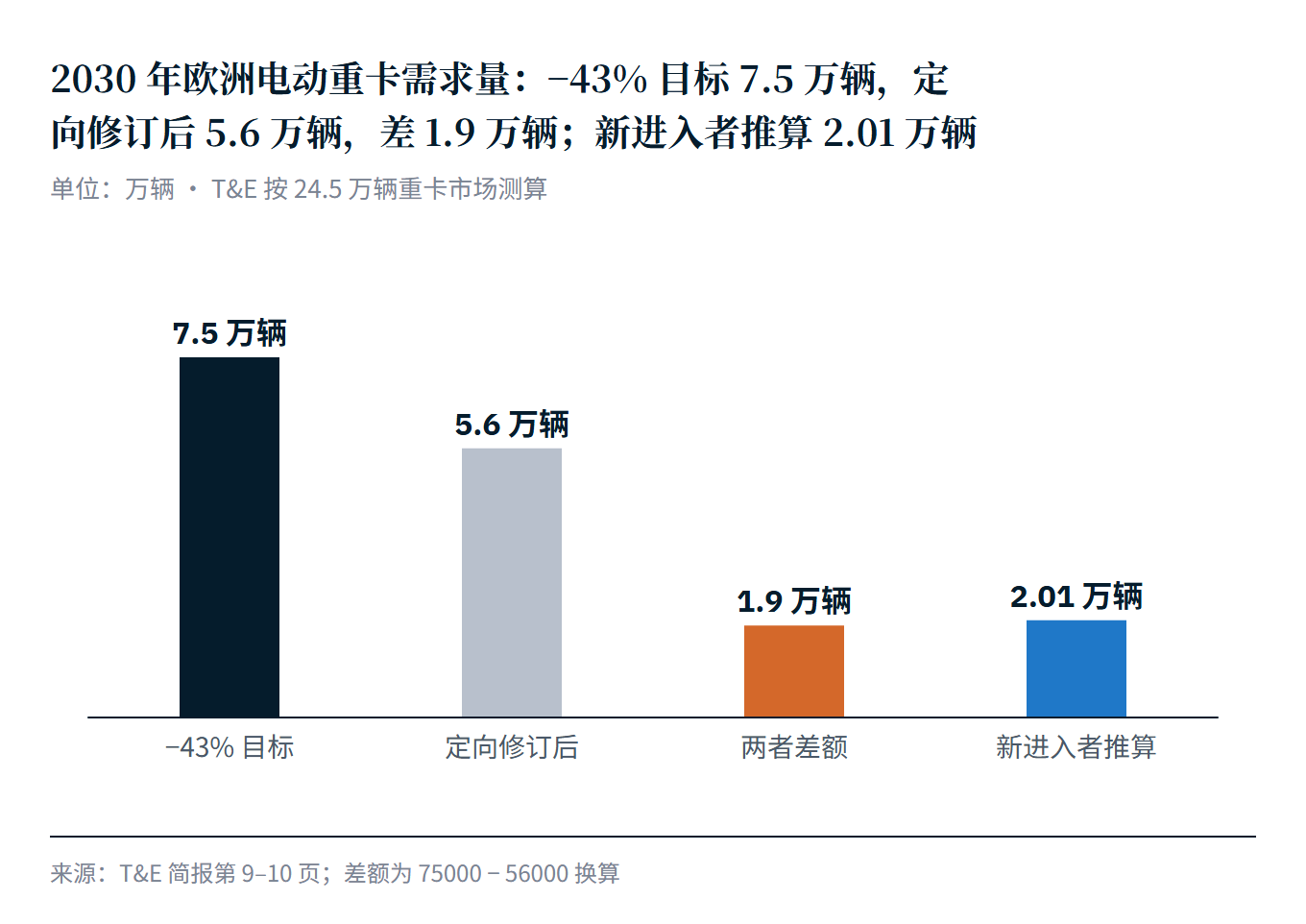
Daimler Truck board member Puchert recently called for heavy-truck CO₂ targets to be linked to charging infrastructure, and at IAA in September the CEOs of seven manufacturers jointly called for the 2030 compliance deadline to be pushed back three years. By T&E's calculation, a 43% emissions cut in 2030 would require sales of 75,000 electric heavy trucks; the targeted amendment passed this year lowers that to 56,000. The reduction of 19,000 is close to the entire target volume of Chinese brands.
For European manufacturers to defend their home market for electric heavy trucks, the key is cutting vehicle prices enough to offset the 6-cent gap; if the deadline is pushed back, price pressure eases, but Chinese brands also keep their price advantage for longer.
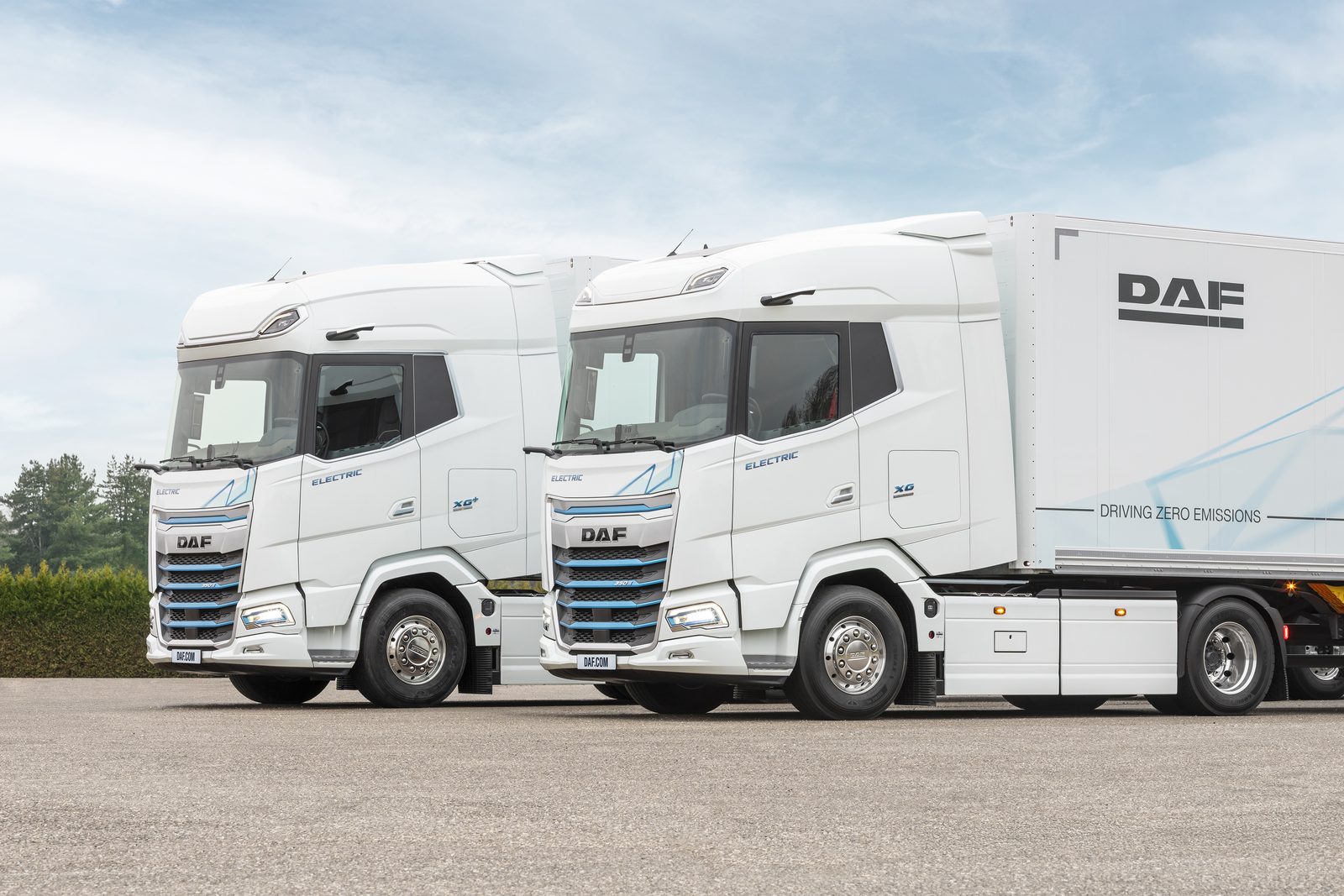
Image source: DAF Trucks.
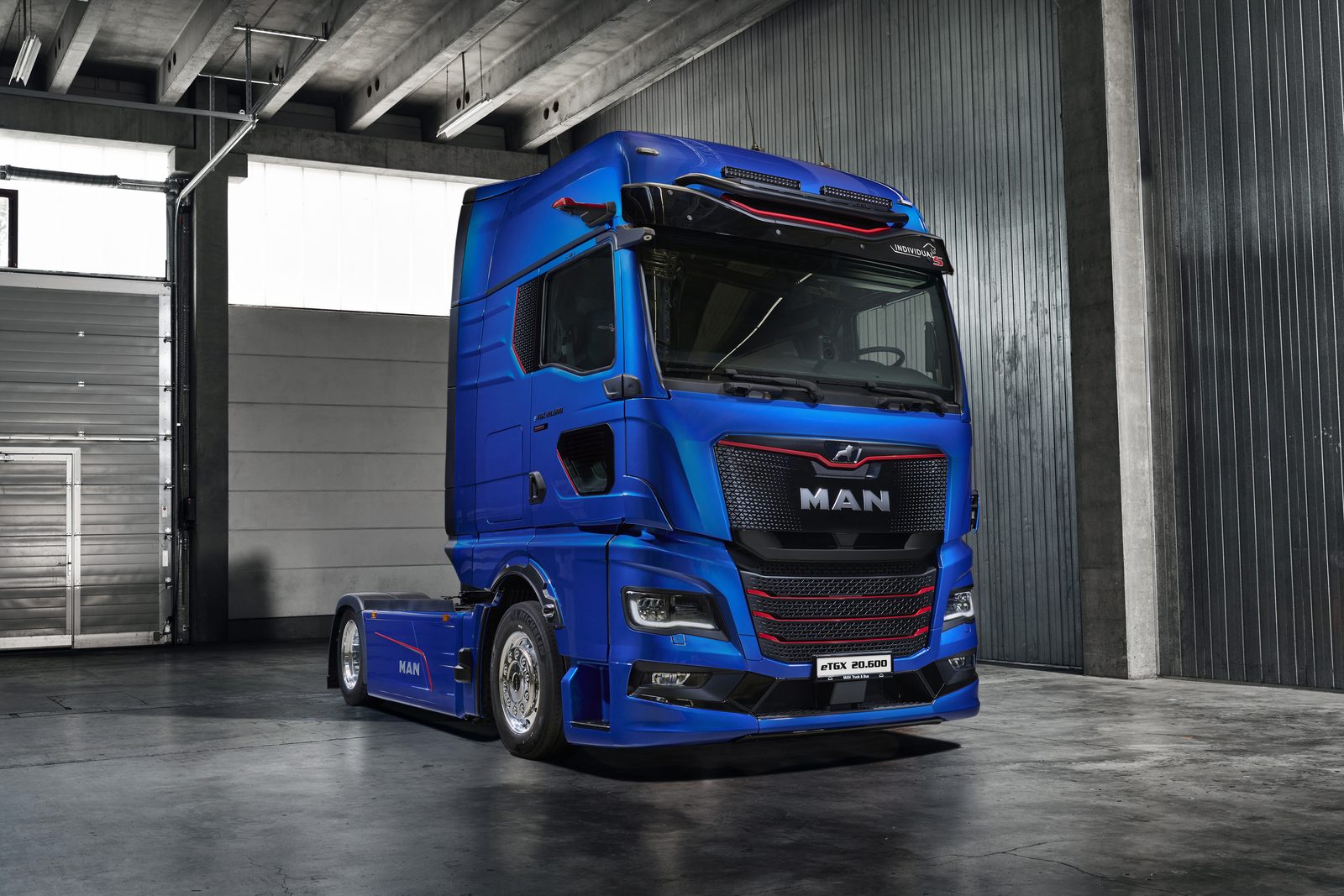
Image source: MAN Truck & Bus.
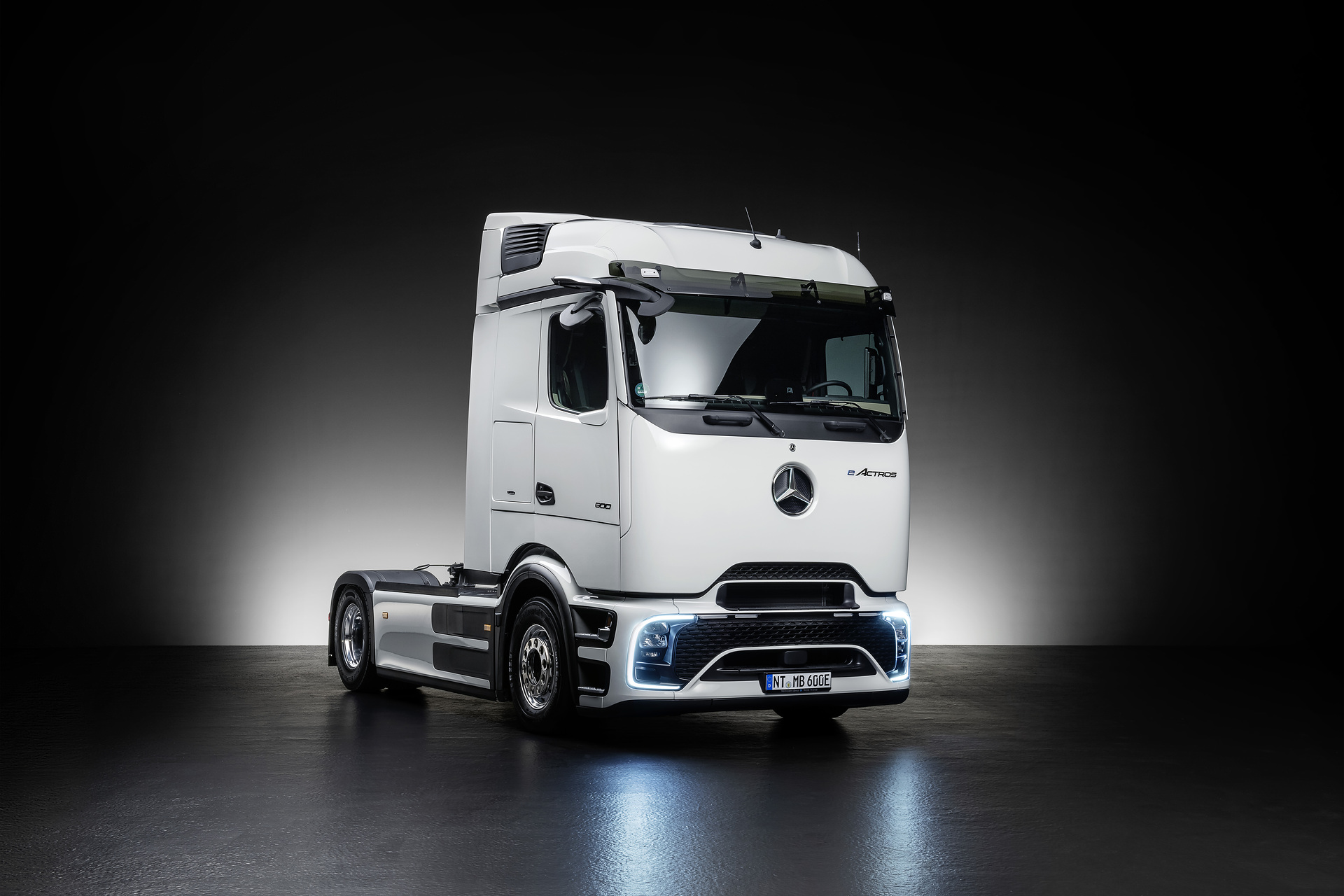
Image: Daimler Truck.
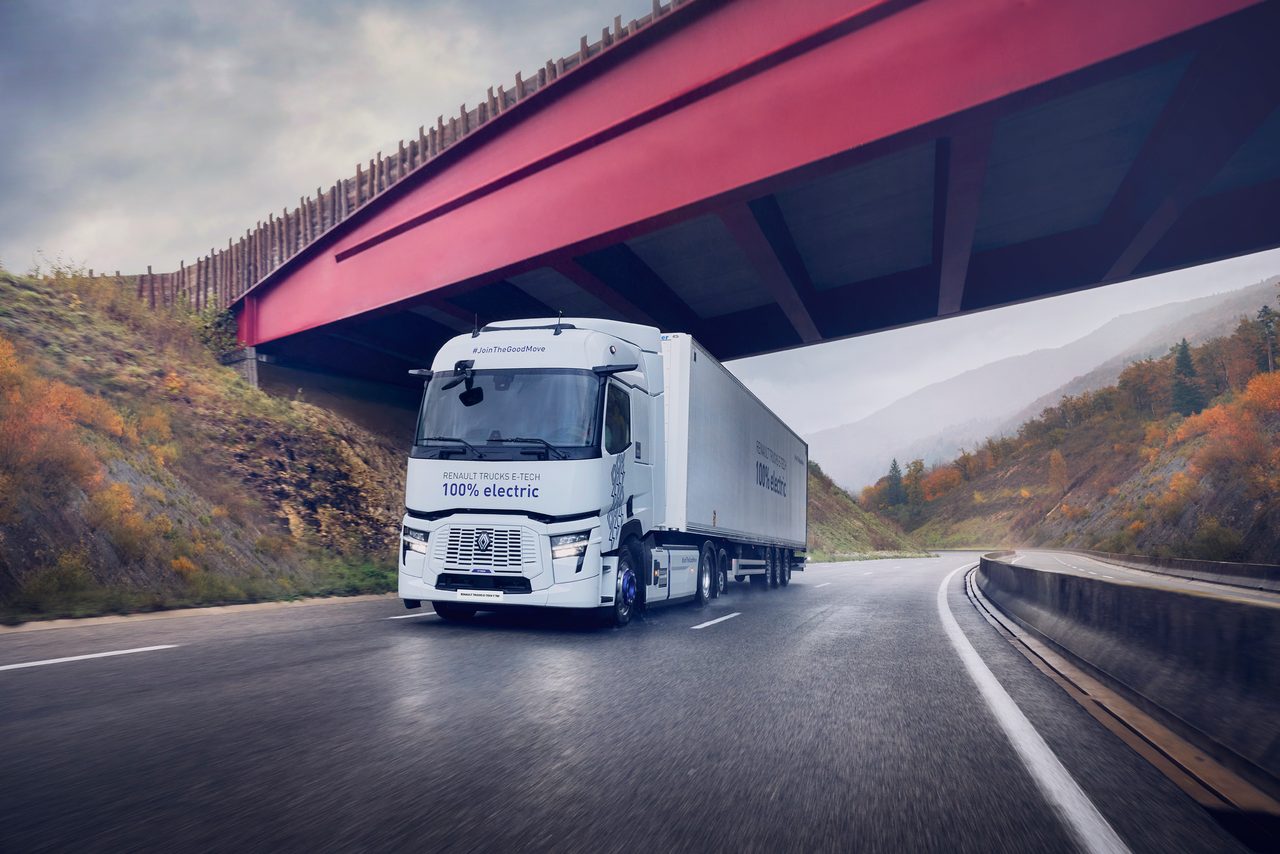
Image source: Renault Trucks.
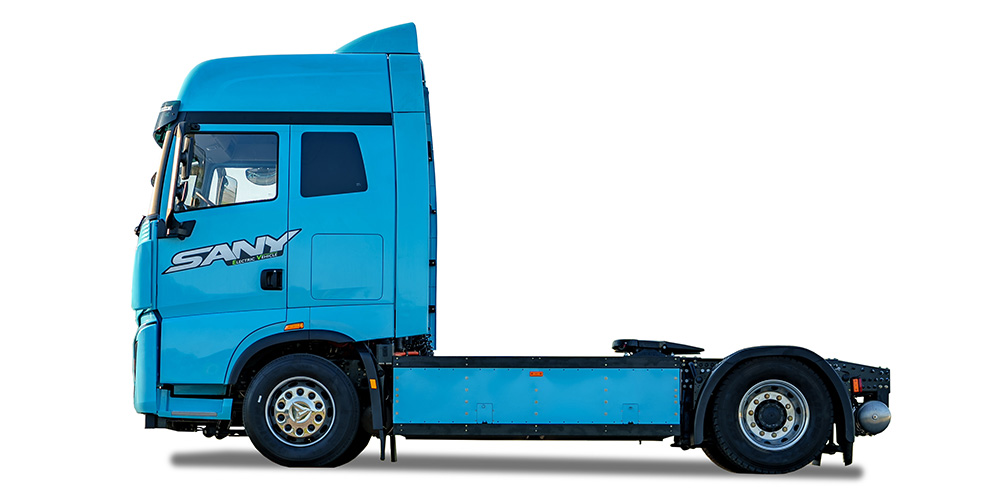
Image source: SANY Trucks.
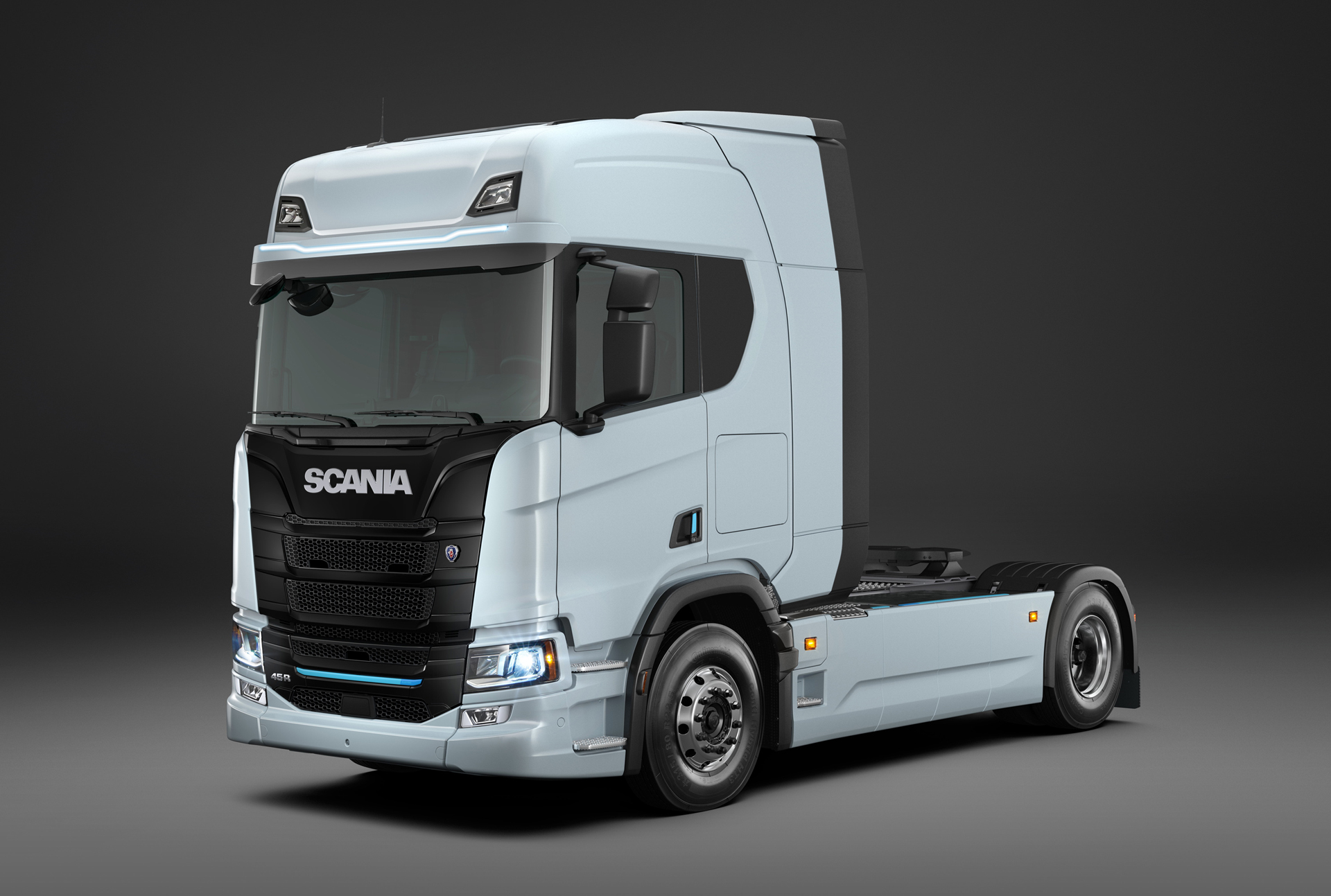
Image source: Scania.
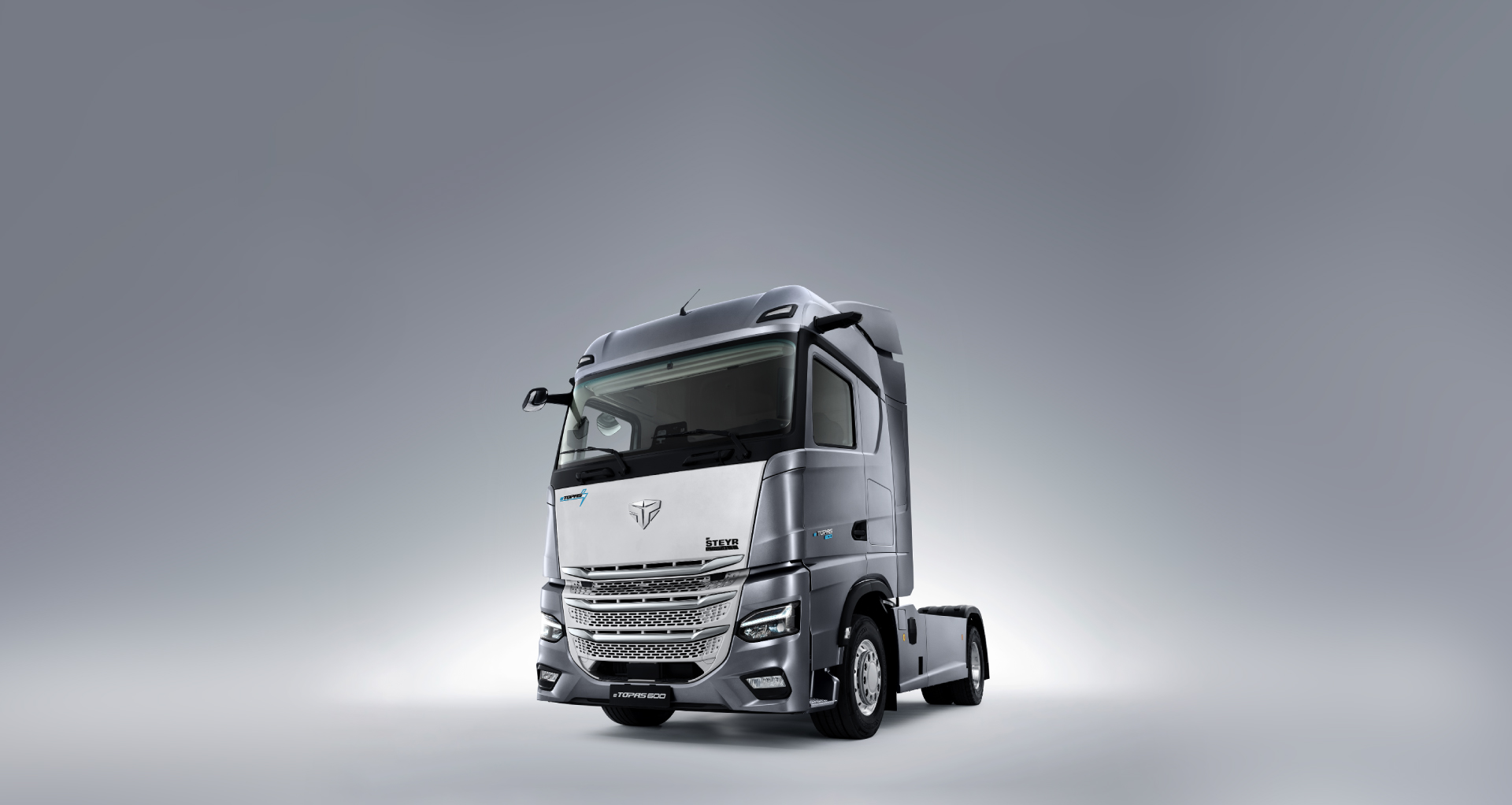
Image source: SuperPanther.
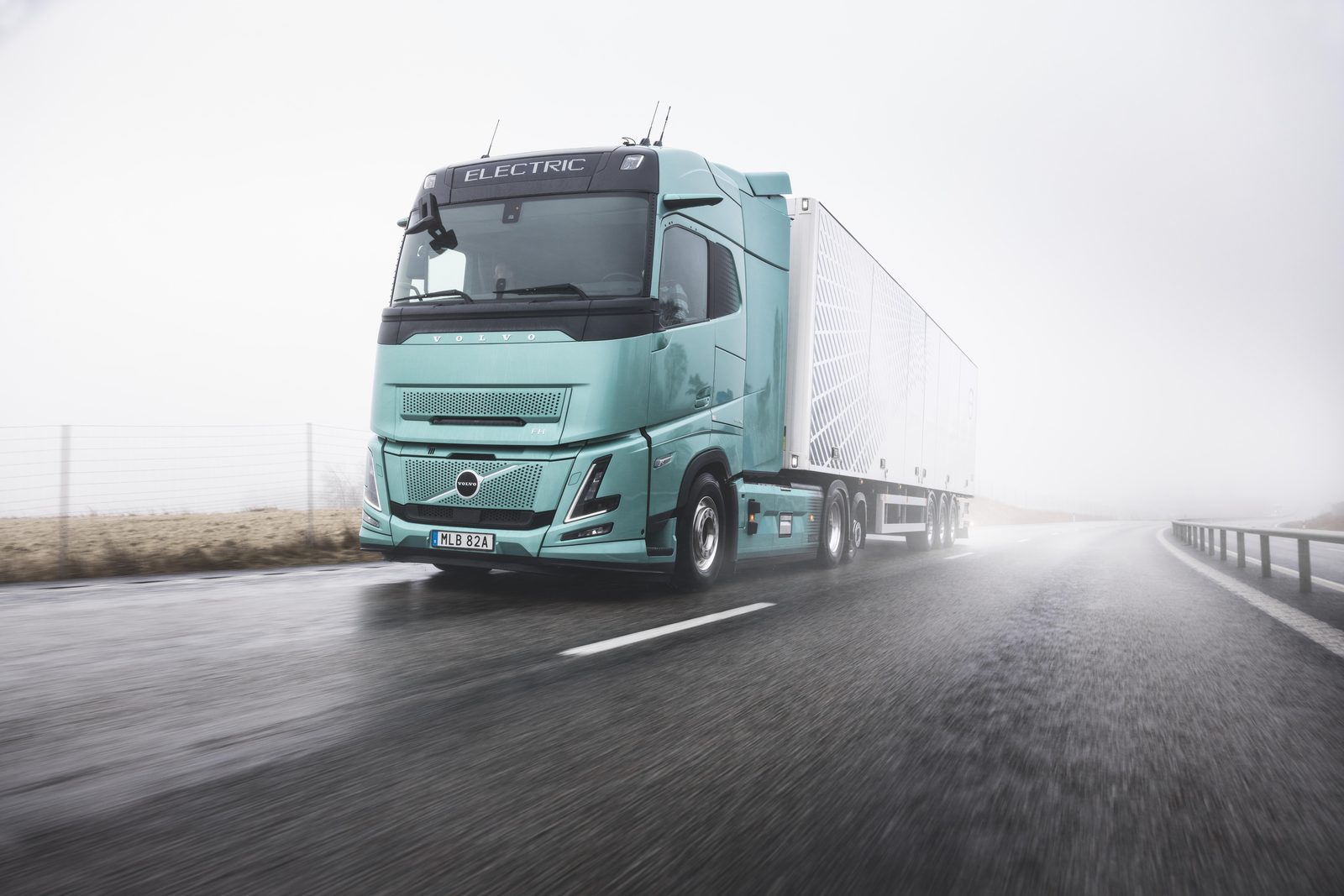
Image source: Volvo Trucks.
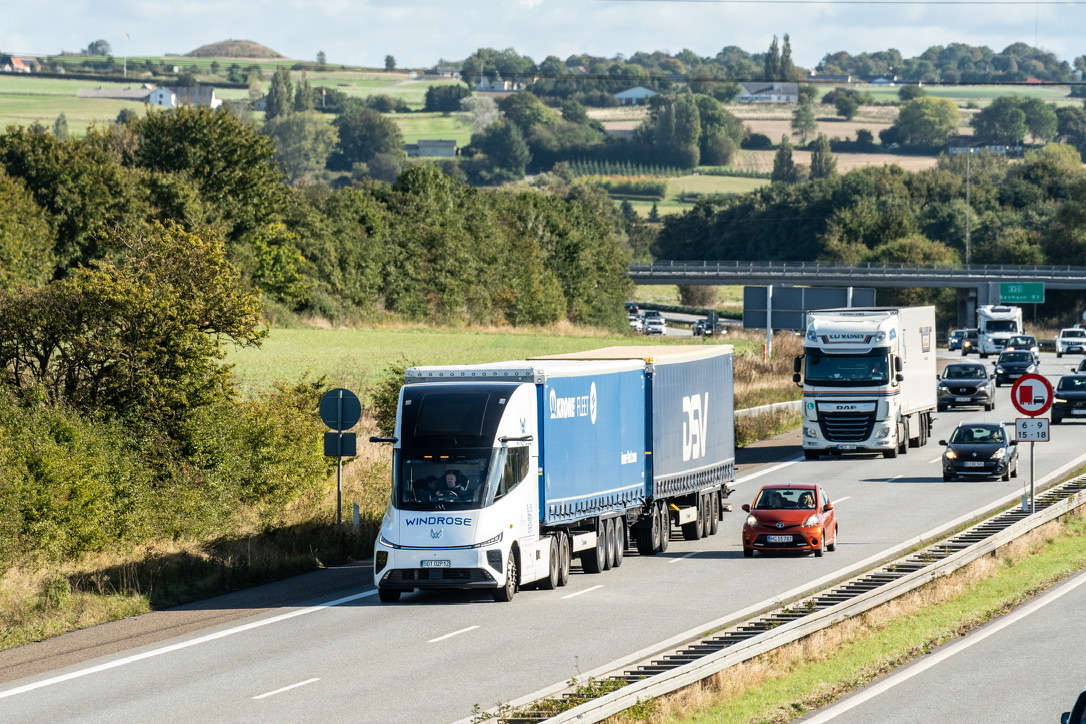
Image source: Windrose.
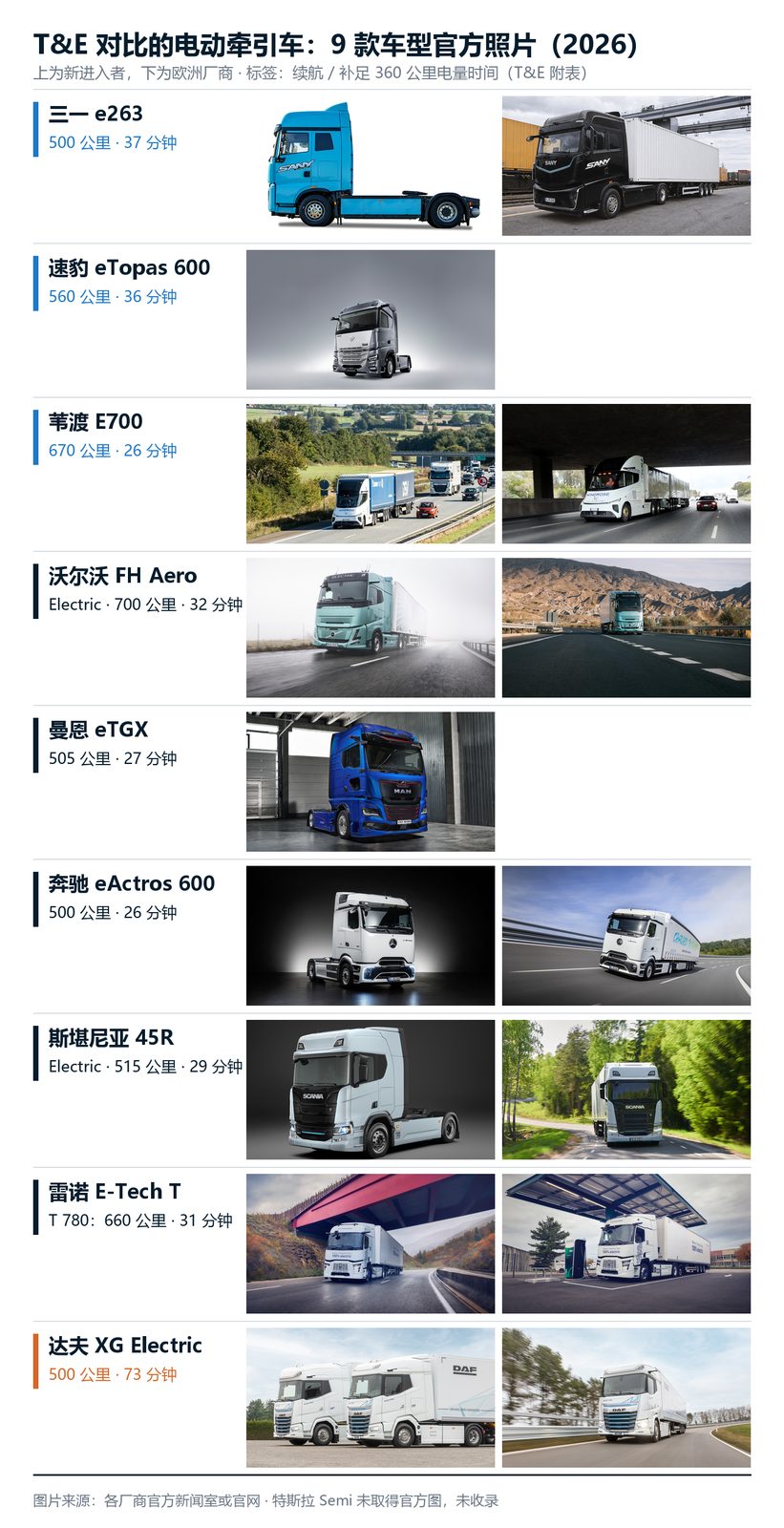
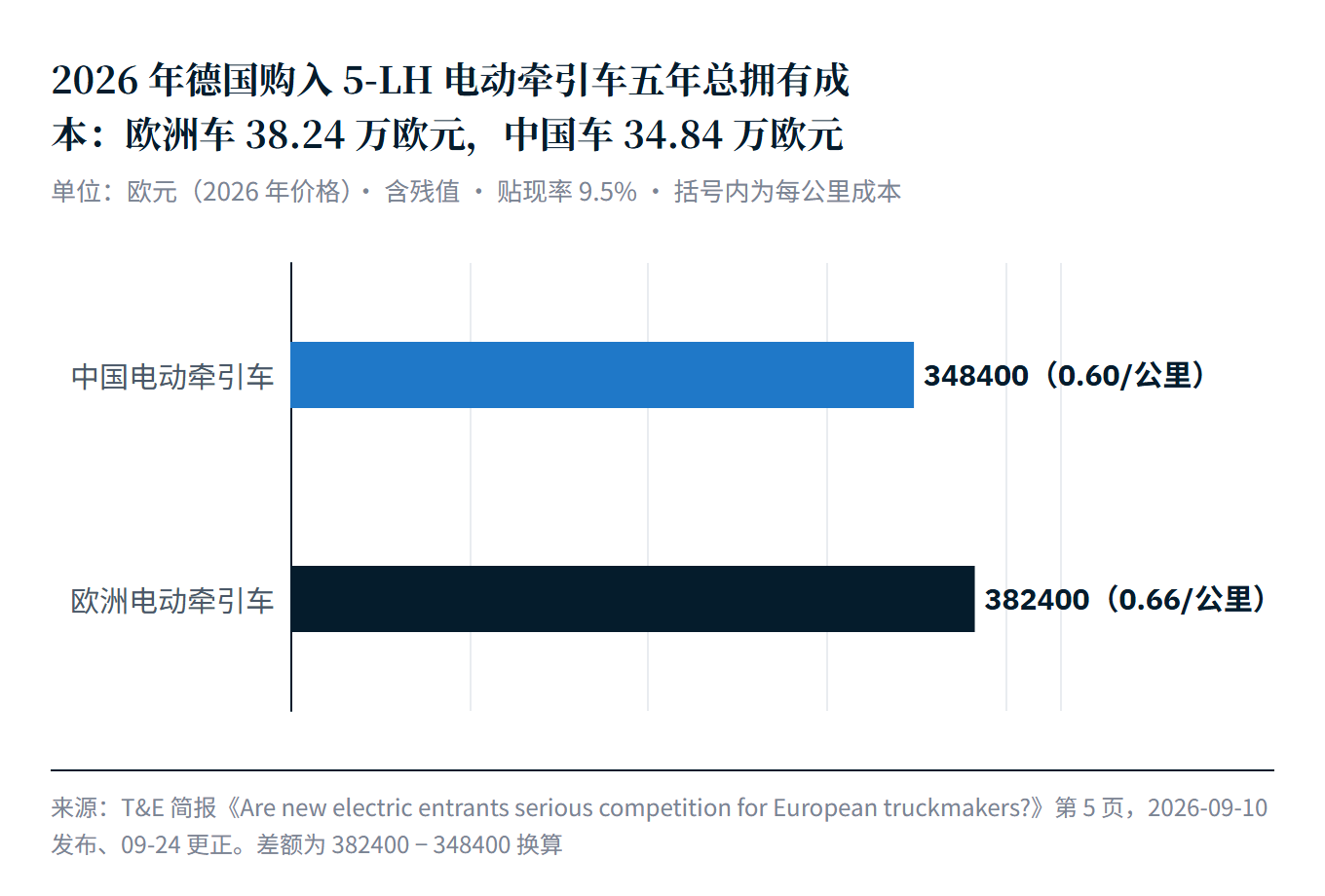
Source: Chart by AutoMusic based on the public sources listed in the article; first published on the AutoMusic WeChat account.