ACEA European electric commercial vehicles, Q1–Q3: the vehicles are selling, but conditions haven't kept pace
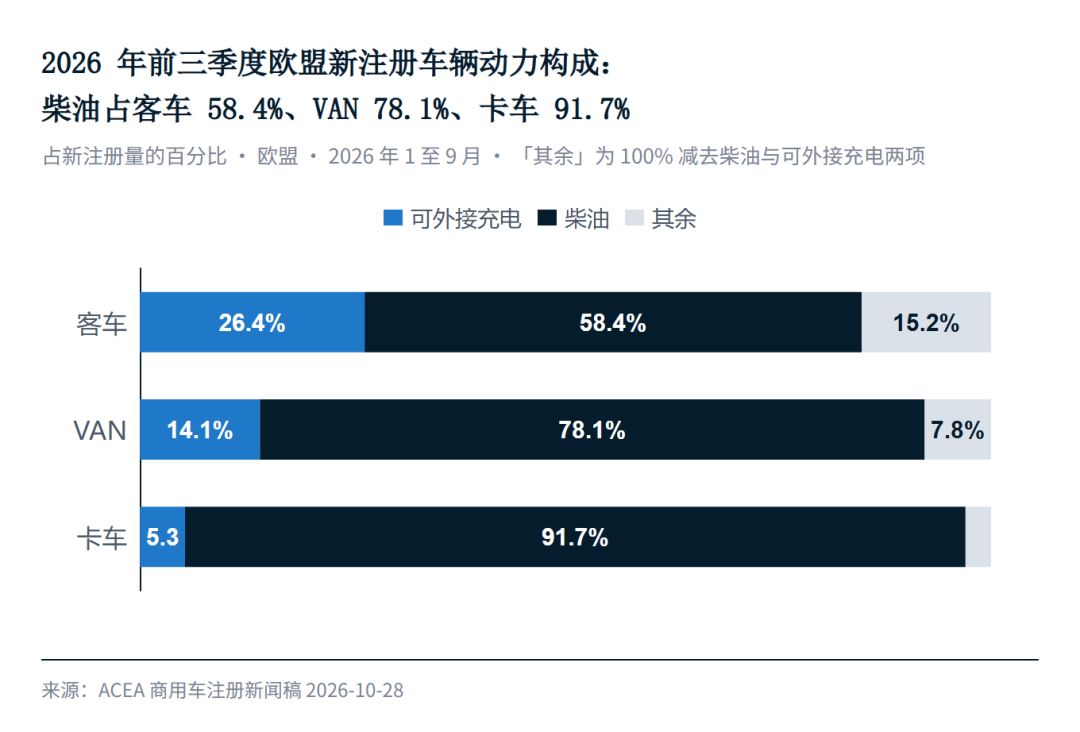
In the first three quarters, 26.4% of new EU buses were plug-in rechargeable, versus 14.1% of vans and 5.3% of trucks.
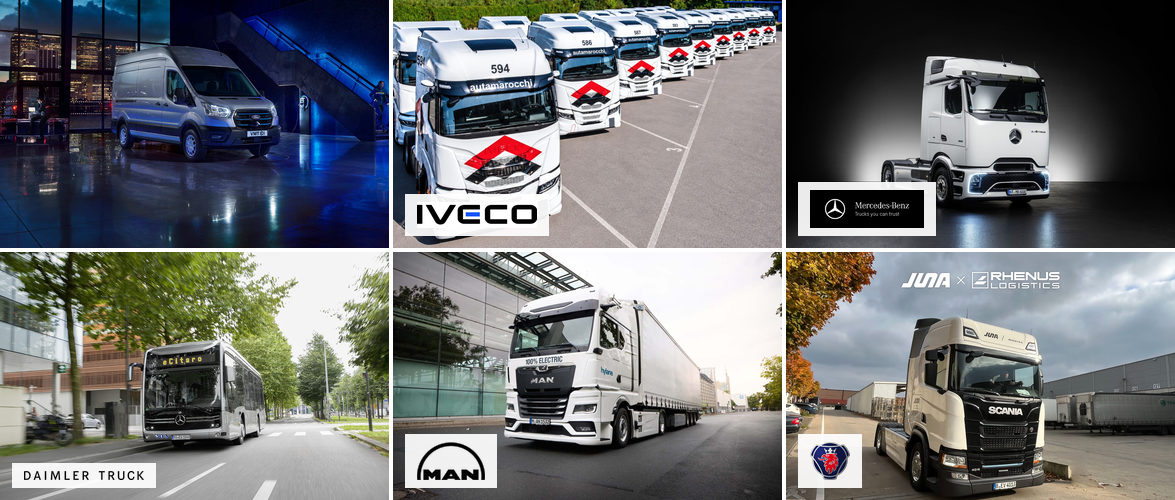
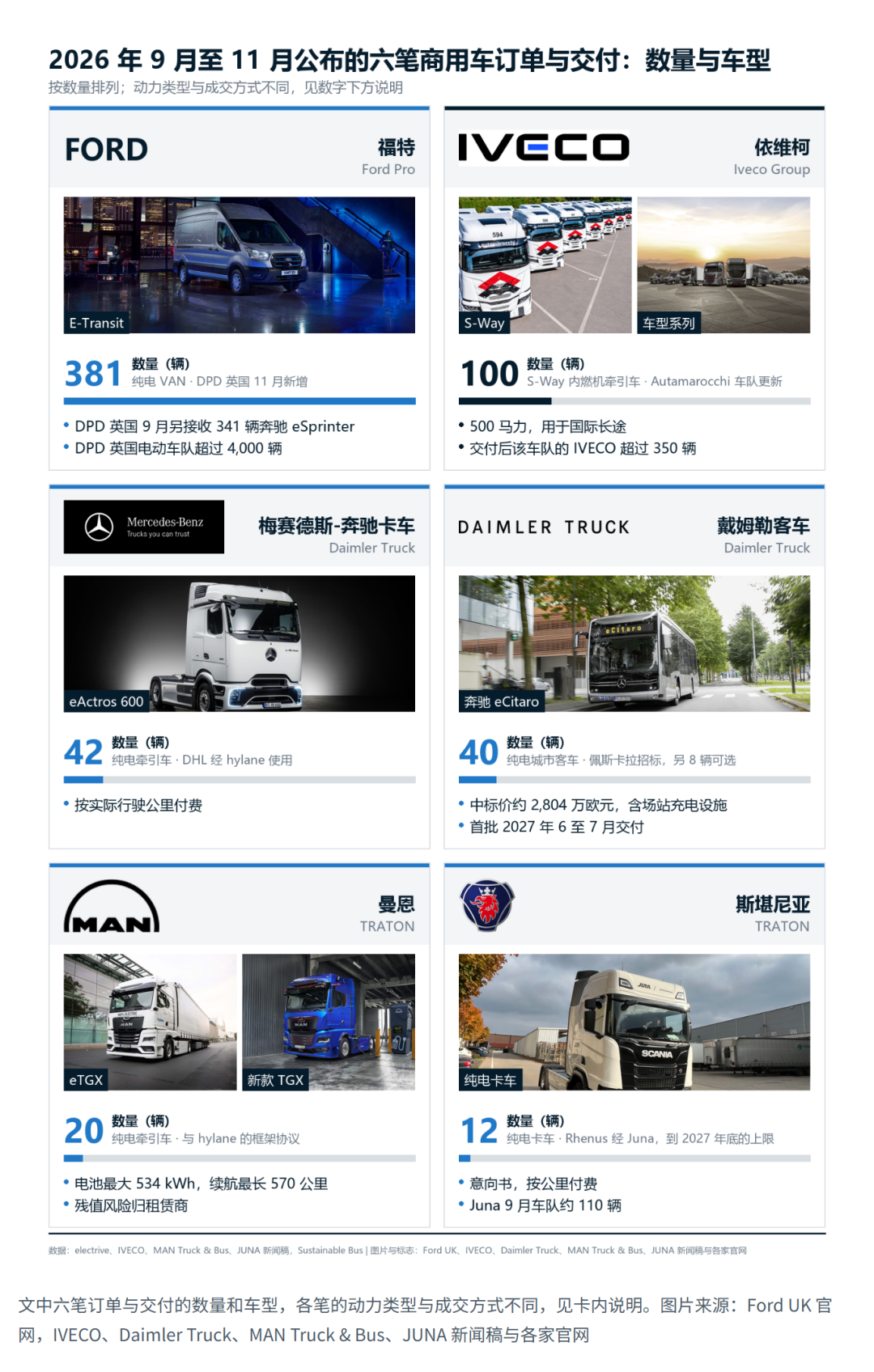
In the first three quarters of 2026, 26.4% of new buses registered in the EU were plug-in capable, versus 14.1% of vans and 5.3% of trucks. Nov 10–12: Daimler Buses won a contract for 40 electric city buses in Pescara, Italy; MAN is supplying a further 20 battery-electric tractors to leasing company hylane; and IVECO announced a fleet renewal order for 100 diesel tractors.
Electric share across three vehicle classes
All three shares come from the same ACEA (European Automobile Manufacturers' Association) statistics, on an electrically chargeable basis, combining BEV and PHEV:
The bus share is about 5 times that of trucks. For diesel the ranking is reversed: 58.4% of new buses, 78.1% of new vans and 91.7% of new trucks.
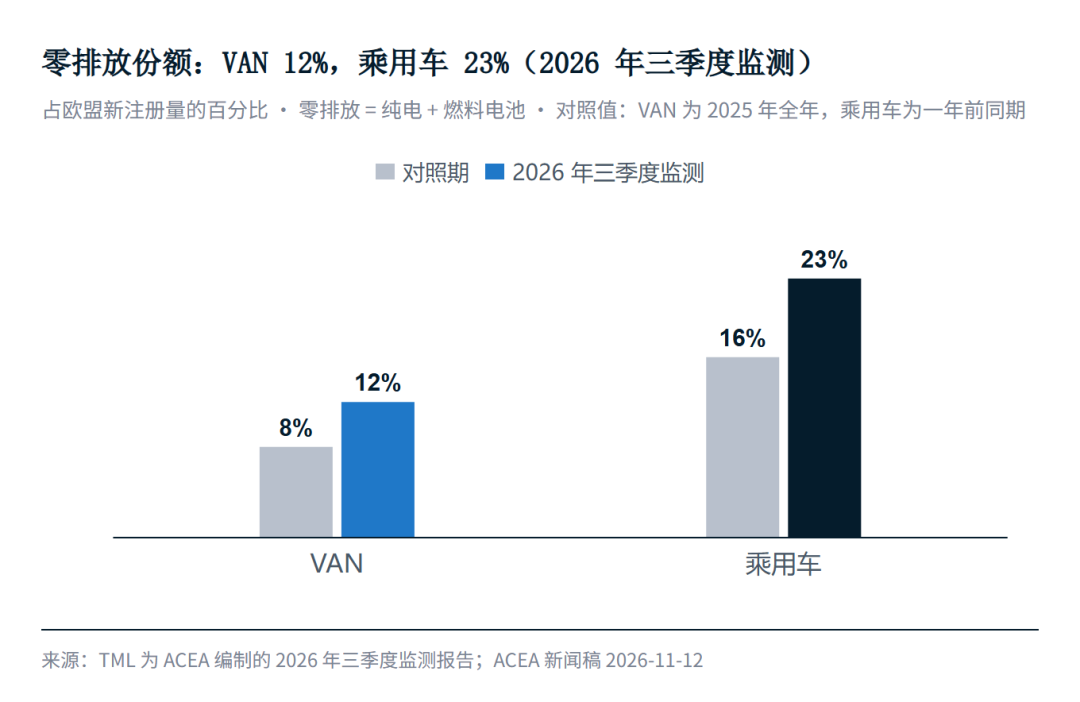
ACEA's third-quarter monitoring report, published in Nov 12, counts only zero-emission models. Compiled by Belgian research institute TML, it shows zero-emission models accounted for 12% of new EU van registrations, versus 8% in 2025; for passenger cars the figure is 23%, so vans are at roughly half the passenger car level.
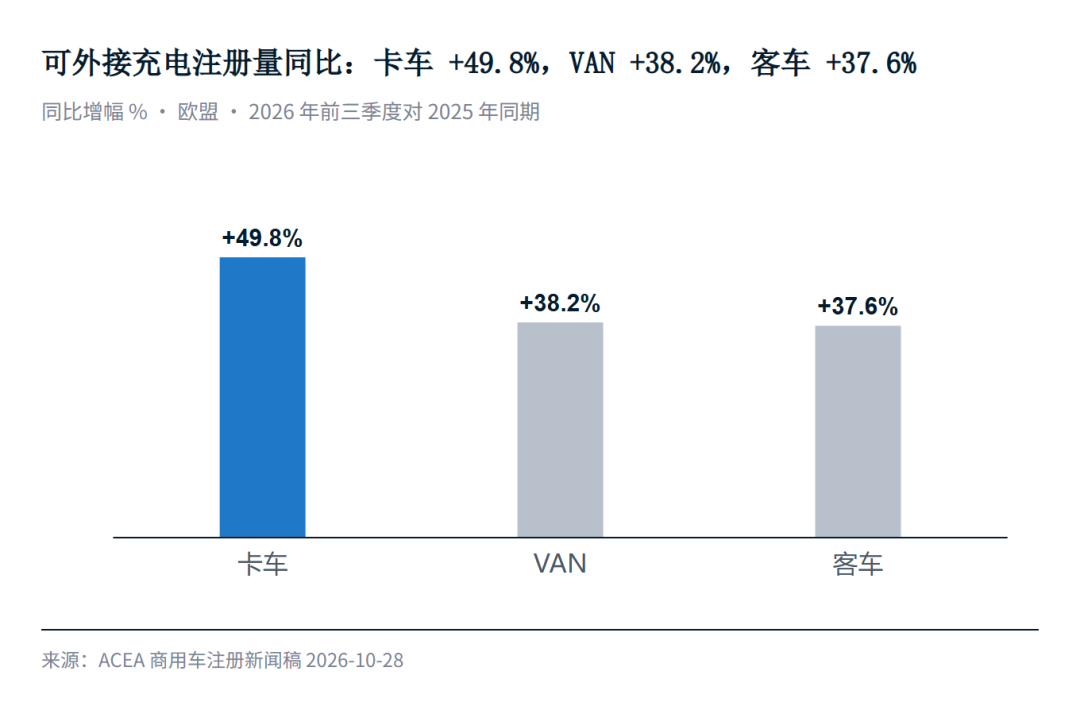
Electric registrations in all three vehicle categories are growing at around 40%, yet their shares differ several-fold. Different duty cycles are part of the reason, but the more direct difference lies with the buyers: who pays, and where the vehicles charge.
City bus tenders
A contract in Pescara, Italy, buys the buses and the charging together. TUA, the public transport operator of the Abruzzo region, bundled 40 electric city buses, the design and construction of depot charging infrastructure, and subsequent maintenance into a single tender. Daimler Buses' Italian subsidiary and STI won the contract for about EUR 28.04 million, roughly 12.3% below the contracting authority's estimate, with an option for 8 more buses. That works out to about EUR 700,000 per bus, but the figure includes charging infrastructure and should not be read as a unit vehicle price. Funding comes from the European Regional Development Fund and Italy's national sustainable mobility plan. The buses must complete a full day's schedule without opportunity charging and recharge back at the depot. The charging infrastructure is expected to be completed first, in April–May 2027, with the first buses delivered in June–July; by then, 60 of the roughly 90 buses in daily service in central Pescara will be electric.
Behind the tenders lies a hard requirement. The EU's revised CO2 standards for heavy-duty vehicles require 90% of new city buses to be zero-emission from 2030, and all of them from 2035. Daimler Buses says two-thirds of the city buses it sold in Europe in 2025 were already electric, and it has delivered more than 4600 Mercedes-Benz eCitaro buses since the model's launch in 2018.
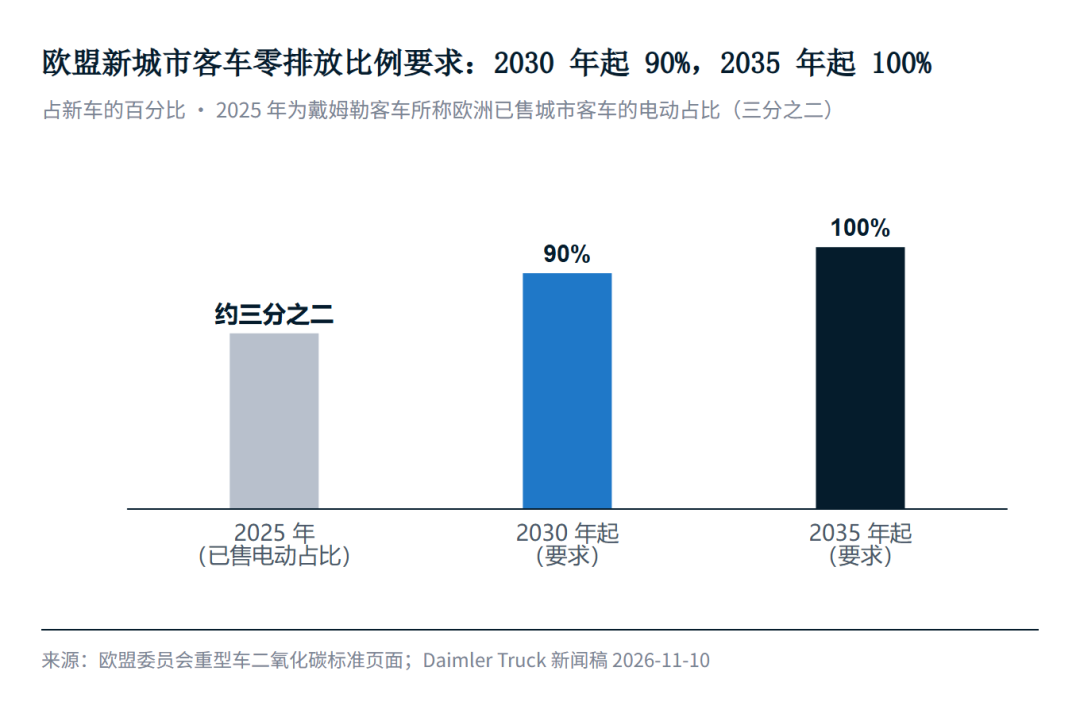
Long-distance and intercity coaches rely more heavily on public charging along their routes. On Nov 10, Daimler Buses proposed that the 43% emissions reduction target for these vehicles in 2030 be postponed to 2033, arguing that the build-out of public charging along routes is at least three years behind schedule.
City bus buyers are public bodies, routes are fixed, buses return to their own depots to charge, and financing and charging are written into the same contract; this segment is what mainly underpins the 26.4% electric share of new buses.
Key accounts' van fleets
EU van registrations in the first three quarters totalled 1073427, flat year on year, while plug-in vans rose 38.2%. For every 1 plug-in van registered, about 5.5 diesel vans were registered. Germany stands in sharp contrast: the overall market fell 4.1%, while plug-in vans grew 49.7% to 28755 units.
The bulk buyers are large parcel delivery companies. DPD UK put 341 Mercedes-Benz eSprinters into service in 9 this year, taking its electric fleet past 4000 vehicles, and in 11 ordered another 381 Ford E-Transits, which have been entering service from mid-month. These fleets leave from and return to fixed depots every day, with chargers installed on their own sites.
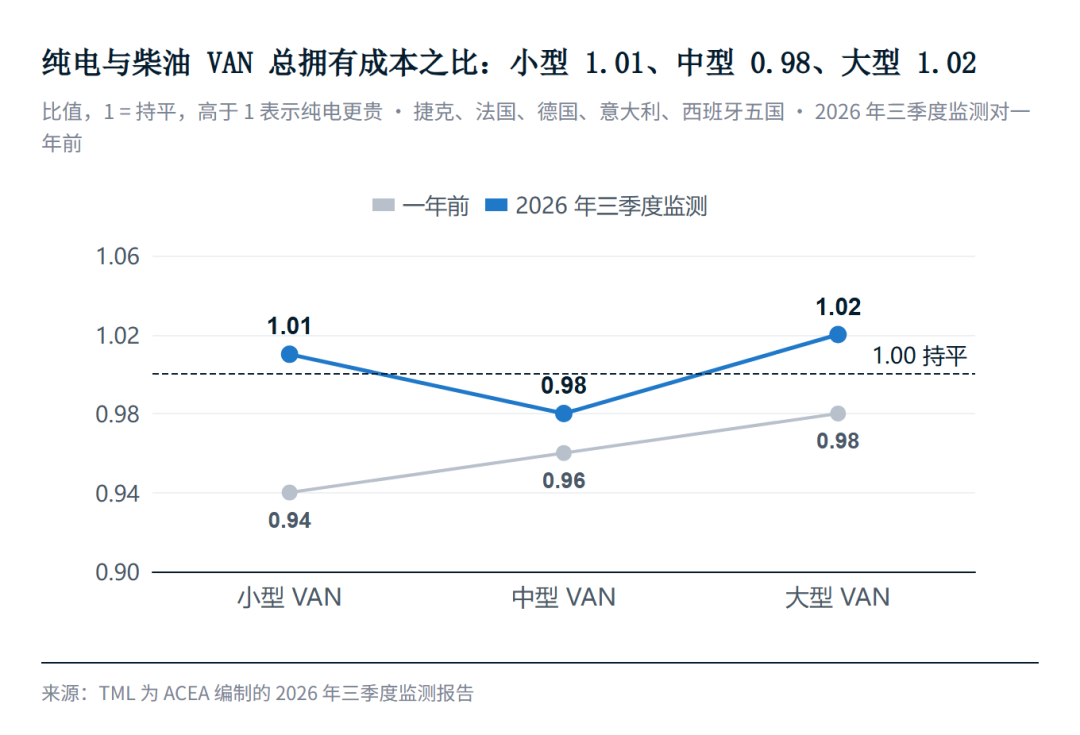
On cost, electric vans are roughly at parity with diesel vans. TML calculated the ratio of BEV to diesel van total cost of ownership across five countries (Czech Republic, France, Germany, Italy and Spain), where 1 means parity: small 1.01, medium 0.98, large 1.02. A year ago the three figures were 0.94, 0.96 and 0.98, so the cost comparison has actually worsened over the past year. Compared with Q2, Germany improved as diesel prices rose and electricity prices fell, while Italy worsened after changes to purchase incentives. Gaps between countries are also wide: the zero-emission share of new vans is 79% in the Netherlands, 12% in Germany, 6% in Spain and 4% in Italy and Poland.
With total cost of ownership within 2%, large fleets with fixed routes and their own depots will switch first; small owner-operators without depots running single vehicles have much less incentive to change.
Heavy truck leasing and long-haul orders
Long-haul heavy trucks must first clear two hurdles: purchase price and residual value. Juna, the joint venture between Scania and the digital freight platform Sennder, has given two figures. Electric trucks cost two to three times as much as comparable diesel trucks, and about 70% of Europe's trucks belong to companies with fleets of fewer than 10 vehicles.
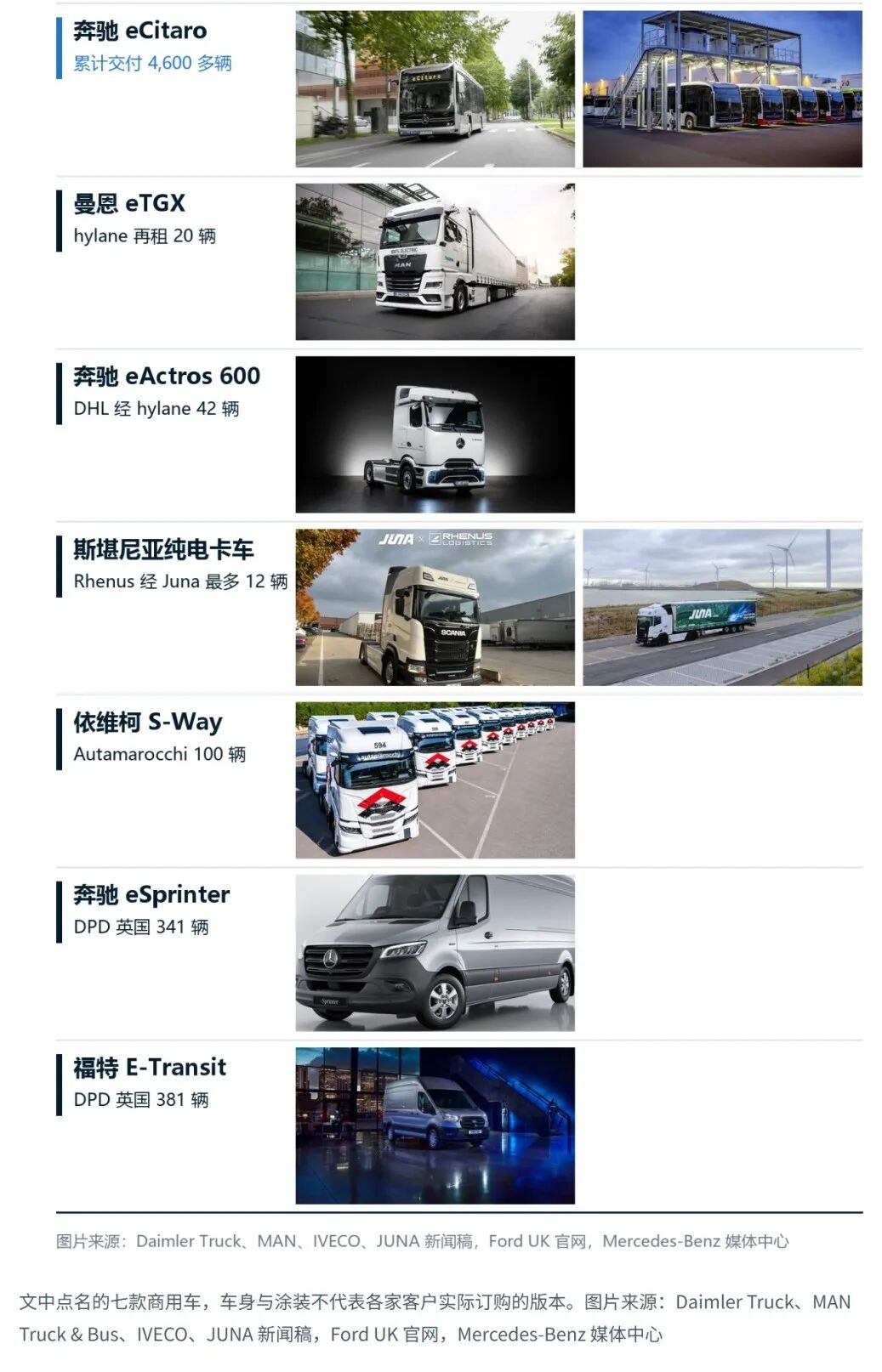
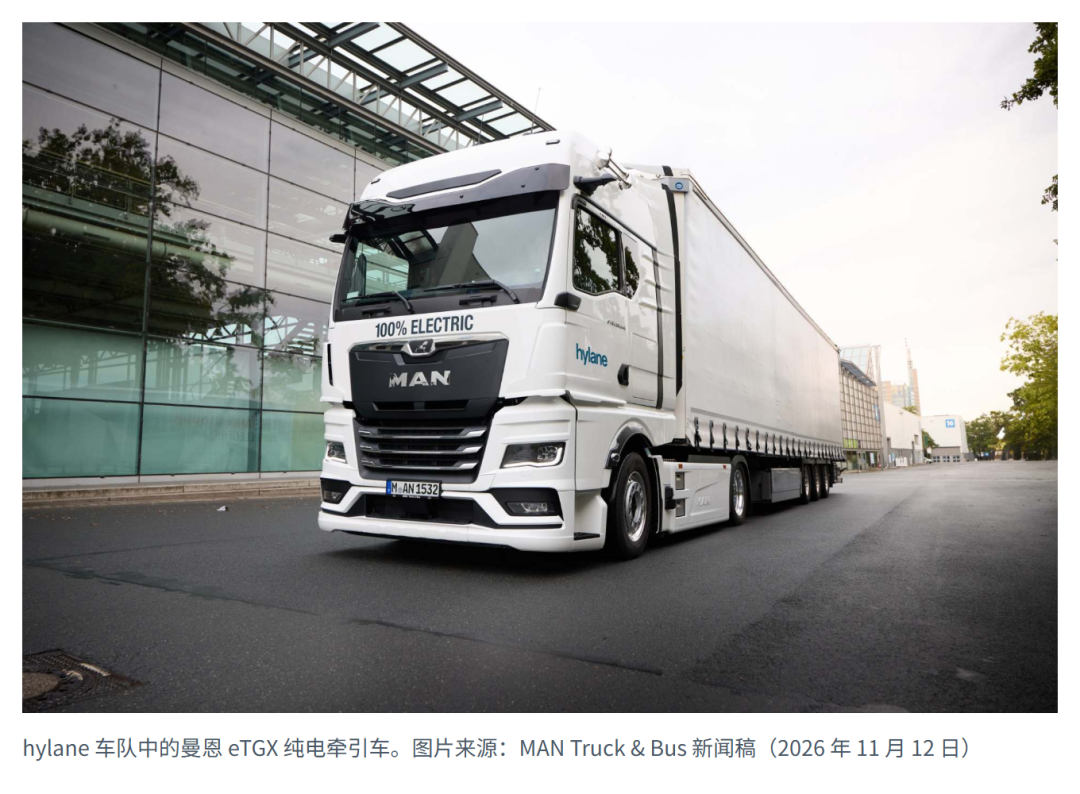
Leasing companies have taken on both risks. On Nov 12, MAN signed a framework agreement with hylane, a truck leasing company founded in 2021, to supply a further 20 battery-electric eTGX trucks with batteries of up to 534 kWh and a range of up to 570 km. hylane handles purchase, registration, maintenance, insurance and charging access; according to MAN, the vehicles stay off customers' balance sheets and the residual-value risk remains with the leasing company. There are two similar arrangements: DHL uses 42 Mercedes-Benz eActros 600 trucks via hylane on a pay-per-kilometre basis, and logistics group Rhenus signed a letter of intent with Juna to use up to 12 Scania battery-electric trucks by the end of 2027. The three deals total 74 trucks, of which 20 are under a framework agreement and 12 are a ceiling. Electric heavy trucks have seen large orders before: in Jan 2025, Amazon ordered more than 200 eActros 600 trucks in one go for Germany and the UK, a buyer being a major shipper that controls its own freight and logistics centres.
The same week, IVECO announced a fleet renewal plan for Italian haulier Autamarocchi: 100 S-Way tractors with 500 hp engines for international long-haul. Fuel savings were among the selling points listed in the press release, which made no mention of electric. The order is 5 times the size of MAN's new agreement with hylane, and once delivered, Autamarocchi's fleet will include more than 350 IVECO vehicles.
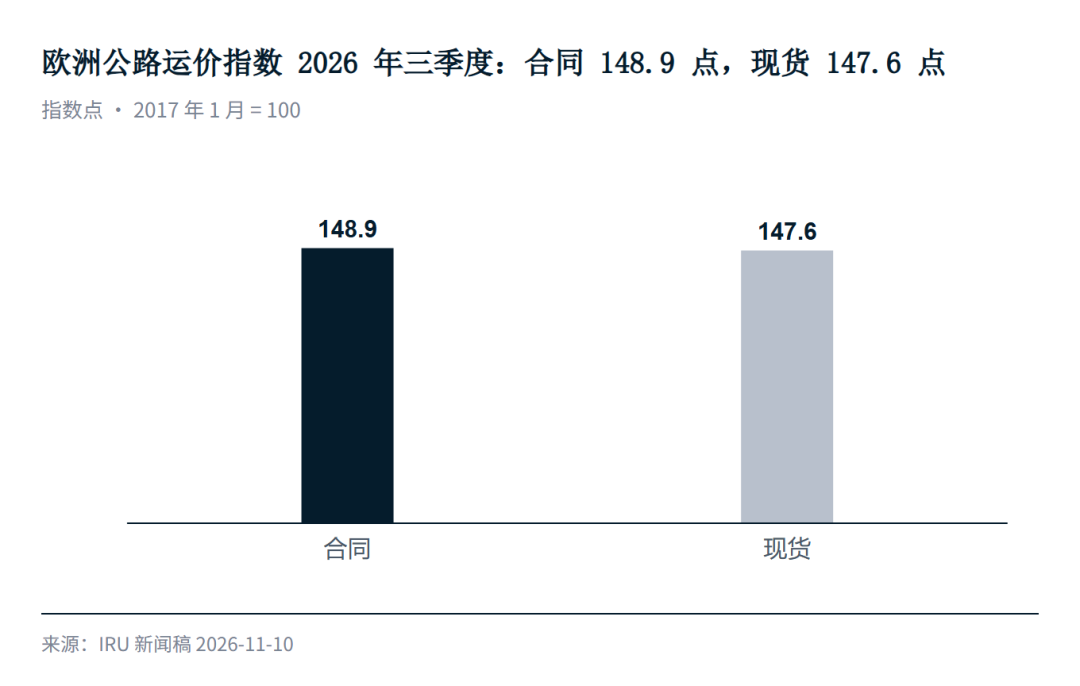
Long-haul hauliers are also short of cash. In the International Road Transport Union (IRU) Q3 report, the average EU diesel price was EUR 2.05 per litre, 32% higher than a year earlier. Based on ACEA data, EU heavy truck registrations in Q3 alone were 60101, up only about 2.7% year on year, versus 11.1% in the first half.
Leasing shifts the purchase financing and residual value risk of electric heavy trucks from hauliers to third parties, with these deals ranging from a dozen or so to several dozen units each. When international long-haul fleets such as Autamarocchi renew in bulk, they still buy combustion tractors.
Public charging and electricity prices
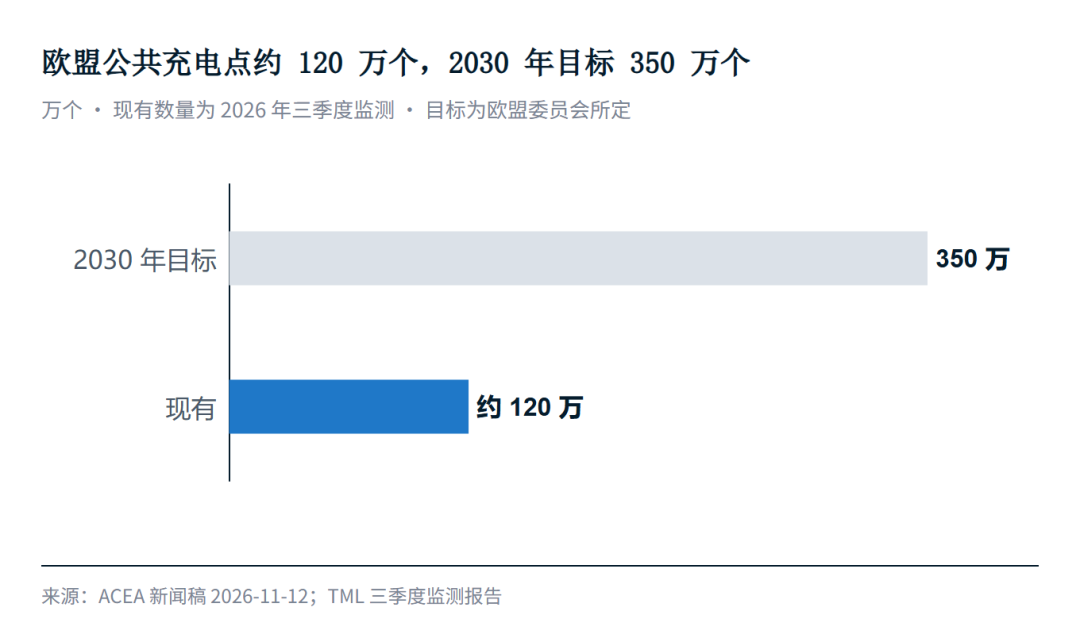
The EU currently has about 1.2 million public charging points, against a European Commission target of 3.5 million for 2030, meaning current numbers are about 34% of the target. Charging capacity is rising, reaching 42.9 GW in September, up 24% from a year earlier. TML estimates that if capacity stays at the current level, the ratio of available to required power will fall from 2.6 to 0.9 by 2030.
TML's report covers passenger cars and vans; heavy vehicles need high-power charging along trunk routes. Daimler Buses cites ACEA figures that Europe's main transport corridors will need about 35000 heavy vehicle charging points by 2030, plus more than 14000 bus charging points.
New heavy-vehicle stations are combining several energy types. Energy company MB Energy and IVECO plan to build a publicly accessible multi-energy station next to IVECO's plant in Ulm, Germany, near the A7 and A8 motorways. It will offer 700 bar and 350 bar hydrogen refuelling, HVO100 renewable diesel, conventional diesel and AdBlue, plus two DC fast chargers for battery-electric commercial vehicles. The permit application is due by the end of 2026, with commissioning planned for mid-2027. Electricity costs are also high on the manufacturing side: ACEA says European industrial electricity prices are about 75% higher than in China and about 110% higher than in the US.
Public charging for passenger cars and vans is catching up with targets, while the en-route charging network for heavy vehicles is still being rolled out, which limits the routes that long-haul electric trucks and coaches can run.
UK–EU rules of origin
On Jan 1, 2027, the rules of origin for EVs under the UK-EU trade agreement will tighten: at least 55% of a vehicle's value must come from the EU or UK, 65% for cells and modules and 70% for battery packs. Vehicles that fall short face a 10% tariff. The two sides already postponed once at the end of 2023: the increase originally due from 2024 was scrapped, the transitional rules then in force were extended to the end of 2026, and the full rules were written in to apply from 2027.
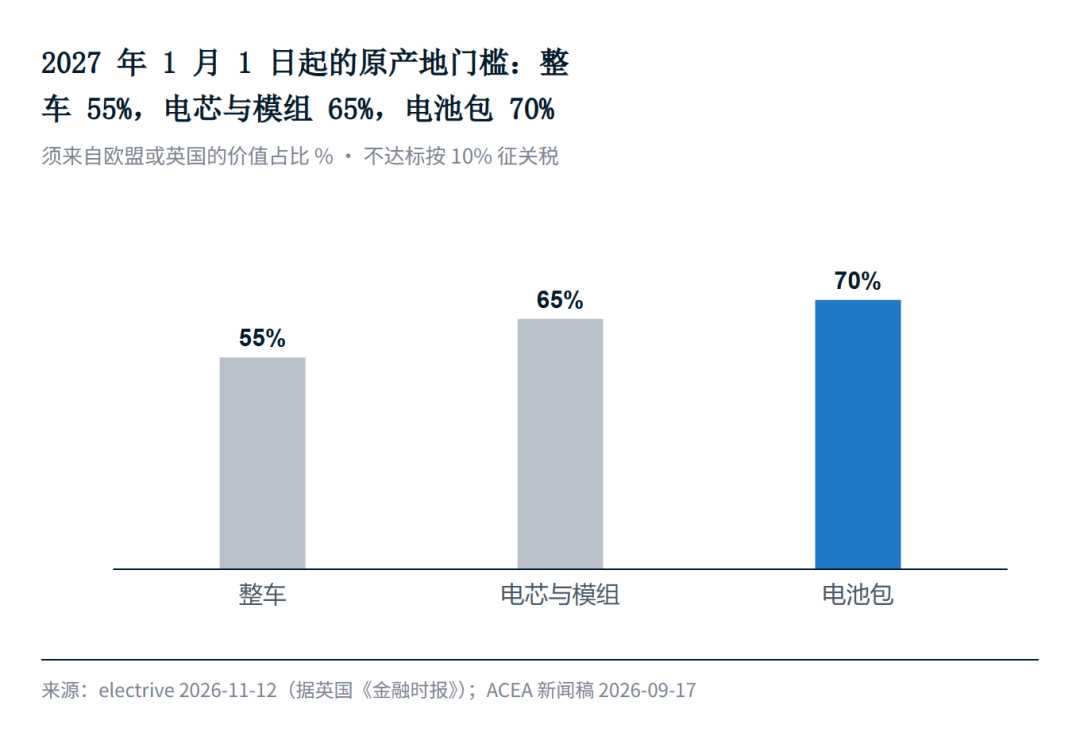
Source: Chart by AutoMusic based on the public sources listed in the article; first published on the AutoMusic WeChat account.
Electric vans are subject to the same rules as electric passenger cars. In a September letter to EU leaders, ACEA said that in 2027 the EU would export about 520,000 electric passenger cars and vans worth about €17.9 billion to the UK, 82% of which would fail to meet the requirements, incurring about €1.47 billion in tariffs a year. That is about €3,450 per non-compliant vehicle, roughly a tenth of the average unit price of about €34,400; this average combines passenger cars and vans.
The impact runs the other way too. Some Stellantis electric vans built in UK plants are exported to the EU; the UK itself registered 37133 plug-in vans in the first three quarters, more than France's 34355 and Germany's 28755. According to reports, the European Commission is considering a one-year delay, or allowing carmakers to offset with compliant sales in their home market within two years; formal negotiations will wait until after the EU-UK summit in Nov 20.
According to TML's estimates for five countries, the total cost of ownership gap between electric and diesel vans is within 2%. If the 10% tariff is passed on to vehicle prices, the economics worsen; quotes for electric vans sold across the UK and EU will need to include the tariff.
Final thoughts
This week's electric commercial vehicle orders came from public tenders, large fleets and leasing companies, each type of buyer with its own funding and charging arrangements. For Chinese commercial vehicle makers looking to enter Europe, the product alone is not enough: they also need charging and maintenance packages that can be included in tenders, and leasing arrangements that take on residual value risk for customers; those selling across the UK-EU border must also get battery origin right. Until public charging along routes catches up, these arrangements are likely to remain the most important bargaining chips in winning orders.