BEVs face duties, hybrids face quotas: Chinese automakers in Europe pivot to combustion cars, commercial vehicles and local assembly
The EU plans to cap hybrid imports at 350,000 units a year from Dec 1, while BEVs remain subject to anti-subsidy duties. Hongqi is bringing petrol SUVs to Germany, Changan is adding more PHEVs, Great Wall, XPeng, GAC and Leapmotor are assembling in EU plants, and Farizon and BYD are expanding in commercial vehicles.
Around the Paris Motor Show in late October, several Chinese automakers made European launches with different emphases. Hongqi confirmed its entry into Germany, with the launch HS3 and HS5 both offered only with a 2.0-litre turbo petrol engine. Changan added a PHEV version of the Deepal S05 in Germany, Spain and the UK, having originally planned to sell only BEVs in Europe. Great Wall announced an assembly base in Bulgaria with planned annual capacity of 50,000 units. Geely Farizon launched electric VANs and minibuses in France. AITO said it will enter Europe in autumn 2027. These moves come as the EU advances a second restriction on Chinese cars. On Oct 9, the EU trade commissioner and China's MOFCOM reached an understanding on hybrid vehicle trade. The EU will cap hybrid imports at 350,000 units a year, effective Dec 1 at the earliest.
Two measures
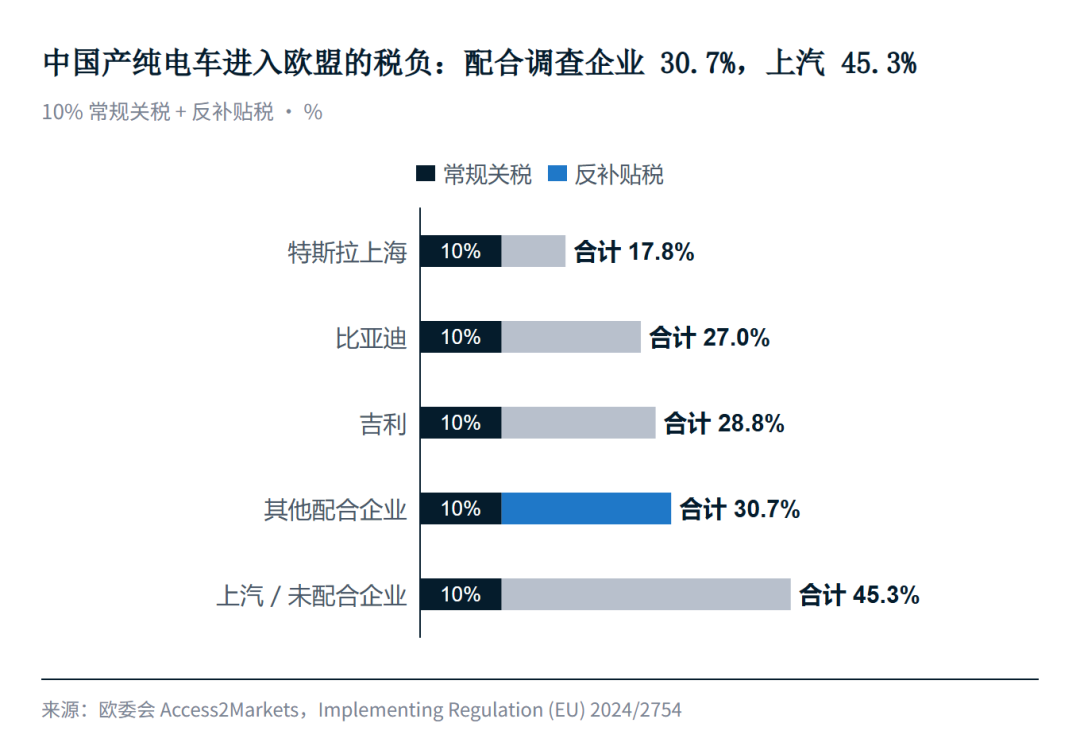
The first is the anti-subsidy duty levied from Oct 30, 2024 for five years. It applies to new Chinese-made battery-electric passenger cars, defined by two criteria: designed principally to carry no more than 9 persons (including the driver), and propelled solely by electric motors. Vehicles with combustion range extenders are also included in the definition and treated as BEVs. Rates vary by company: BYD 17.0%, Geely 18.8%, SAIC Motor 35.3%, and 20.7% for other cooperating companies, on top of the standard 10% tariff. At the 20.7% rate, the total border duty on an imported BEV comes to 30.7%.
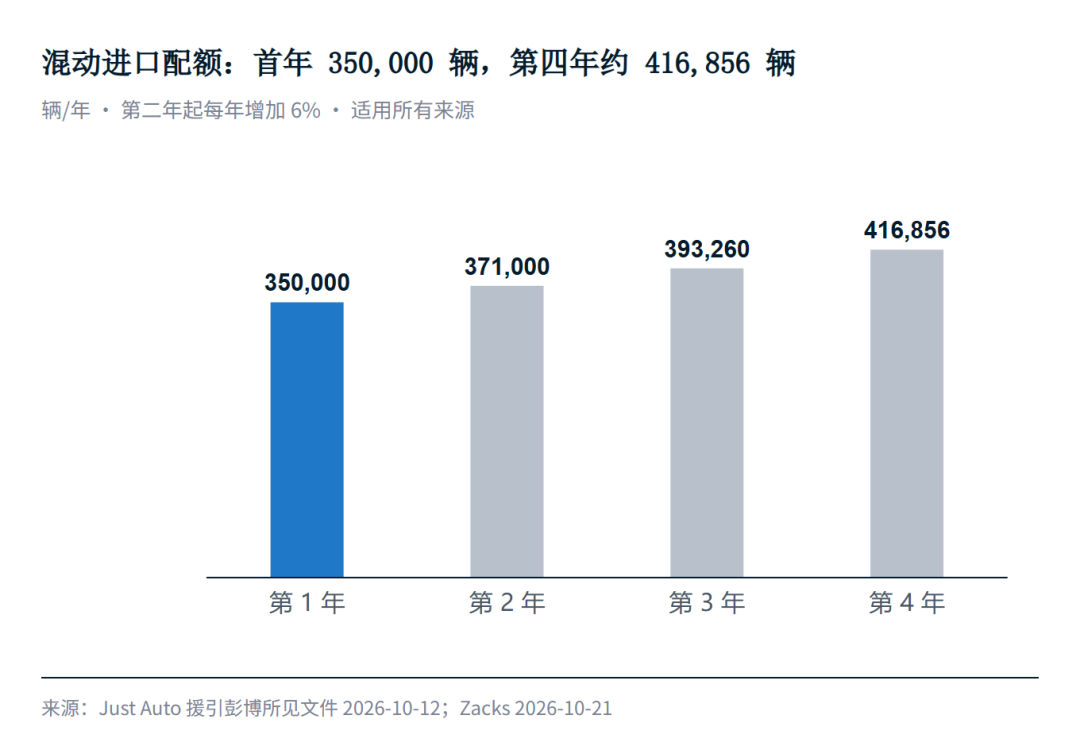
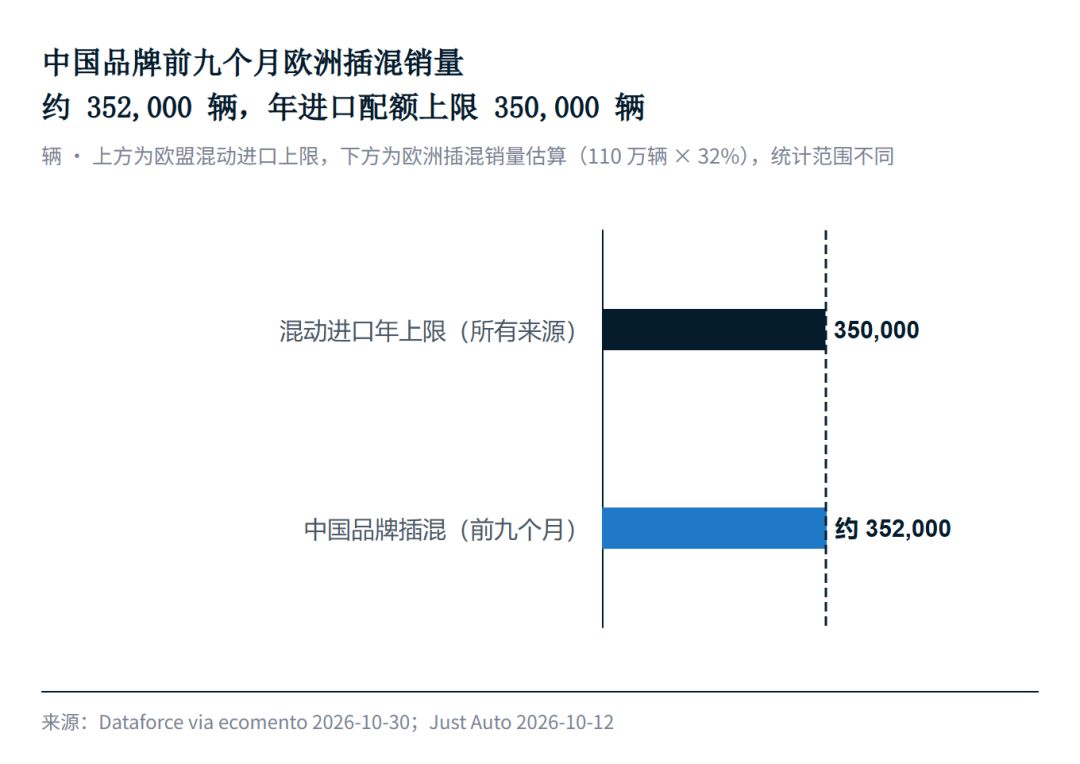
The second element is a hybrid quota. The cap is 350,000 units in the first year, rising 6% a year from the second year over a four-year term, reaching about 417,000 units in year four. To comply with the WTO non-discrimination principle, the cap applies to hybrid imports from all origins, not only Chinese cars. The proposal still requires a decision by the European Council, and the two sides plan another round of talks before January.
Neither measure covers three categories: combustion-only passenger cars, which pay only the 10% tariff; goods-carrying vans and buses carrying more than 9 passengers, which fall outside the definition of BEV passenger cars; and vehicles assembled in the EU, which are not imports and do not count against the quota.
Petrol cars
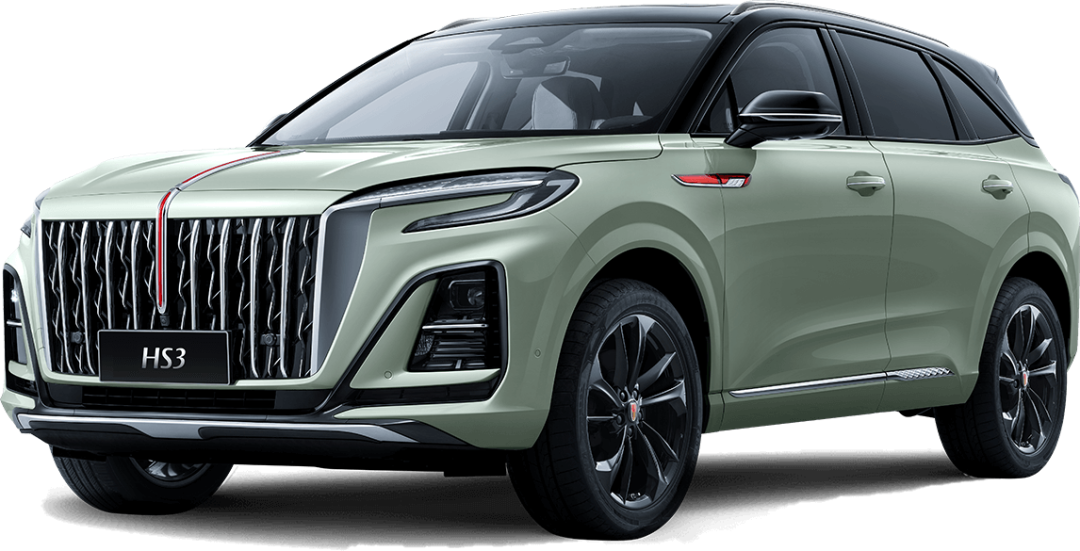
Hongqi's importer in Germany is AEC Automotive Systems, which handles homologation, logistics and the dealer and service network. The HS3 is 4.66 m long with a 2.77 m wheelbase and a 2.0-litre four-cylinder turbo petrol engine producing 252 hp and 380 Nm, paired with an eight-speed Aisin automatic and permanent all-wheel drive, with no electrification at all. The HS5 is 4.79 m long and uses the same powertrain, with combined fuel consumption of 11.0 l/100 km, versus 8.6 l for the HS3. Neither model has completed European homologation, and prices have not been announced.
FAWCAR, part of FAW, is distributed in Italy by China Car Company. Its five models are mainly petrol cars, plus one PHEV with an electric-only range of over 150 km. A BEV model launches in 3. Combustion models will also be fitted with LPG systems. The distributor's general manager said combustion cars remain the most attractive to customers. The current network has 70 sales points and 100 service points, with sales point targets of 110 in 2027 and 130 in 2028.
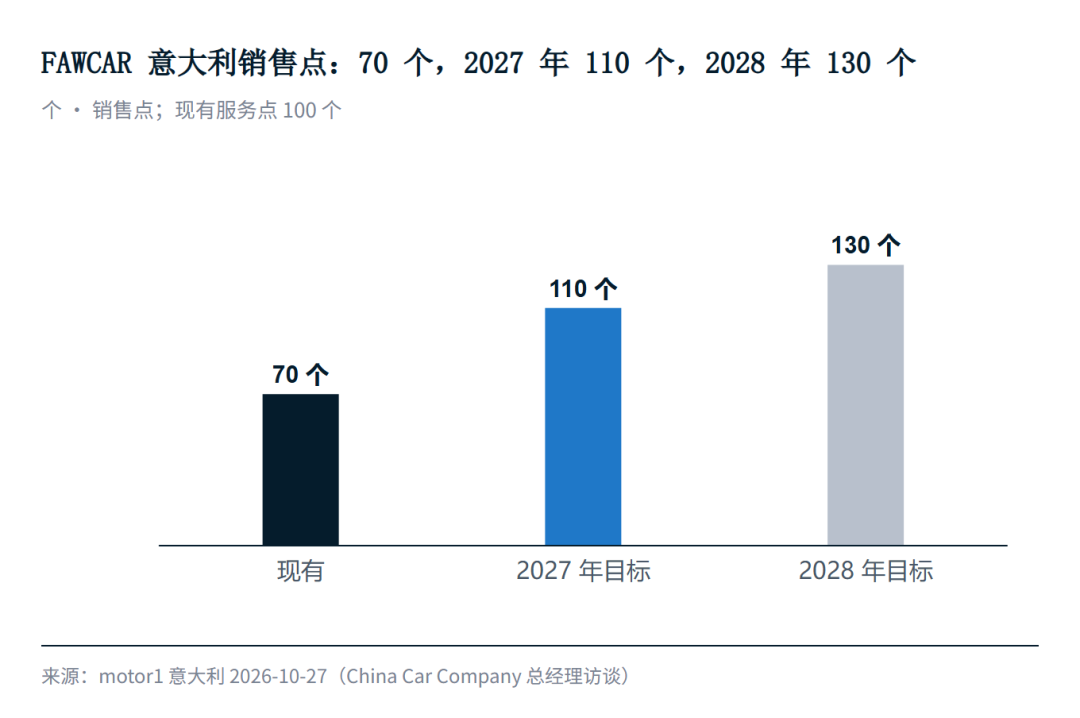
Hongqi and FAWCAR are both represented by local importers or distributors, with the brands not building their own networks. The petrol models both chose pay only standard tariffs at the border and do not count against the hybrid quota.
PHEVs and quotas
Changan Europe's head of powertrain said the company initially thought it would never bring cars with combustion engines to Europe and planned to sell only BEVs, but that plan soon changed. The Deepal S05 PHEV uses a 1.5-litre petrol engine and a 18 kWh battery, with an electric range of 100 km. When the battery is low, the engine drives a second motor to generate electricity; at higher speeds, a clutch connects the engine to the driveshaft and the system switches from series to parallel operation. Range-extended vehicles are taxed as BEVs in the EU.
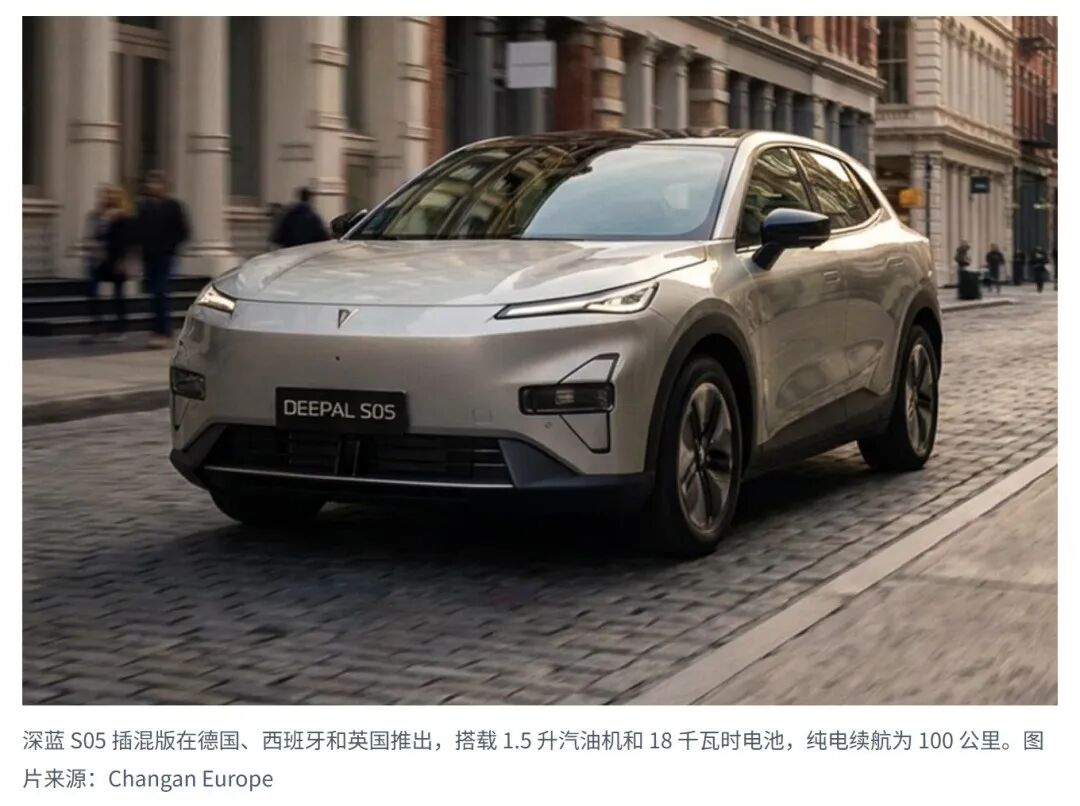
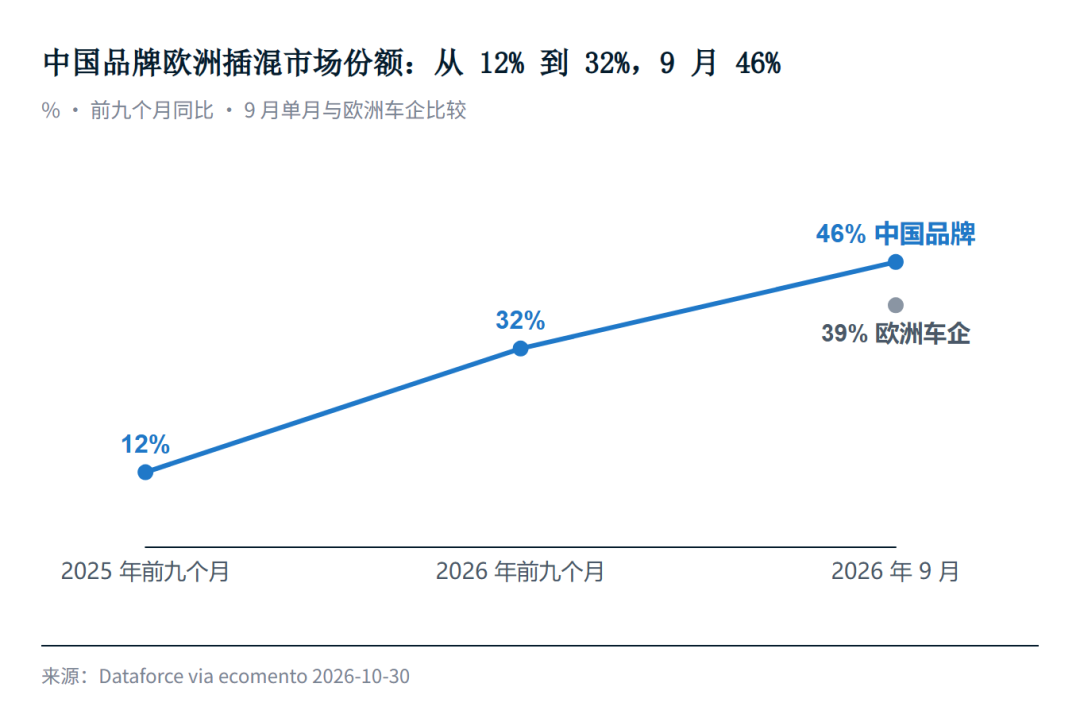
The shift is backed by sales. In Spain in September, the S05 PHEV sold 428 units versus 348 for the BEV, making the PHEV 1.23 times the BEV. Changan sold 9,656 units in Europe in the first nine months. According to the data, Europe's PHEV market grew 23% in the first nine months to more than 1.1 million units; Chinese brands held a 32% share, versus 12% a year earlier, reaching 46% in September alone, compared with 39% for European automakers.
32% of 1.1 million units is about 352,000 units (this figure includes non-EU markets such as the UK). The PHEVs sold by Chinese brands in nine months already match the EU's proposed annual cap on hybrid imports. That cap also covers conventional hybrids, and imports from other countries must share the same quota.
Zeekr's PHEV flagship, the 9X, has just started its European rollout and also falls within the quota. Zeekr's Europe CEO said at the Paris Motor Show that the hybrid rules are still unclear and it is too early to say how the company will respond; it has already dealt with the BEV tariffs. Zeekr has 200 dealers in Europe, and its business has grown 200% year on year this year.
Assembly within the EU
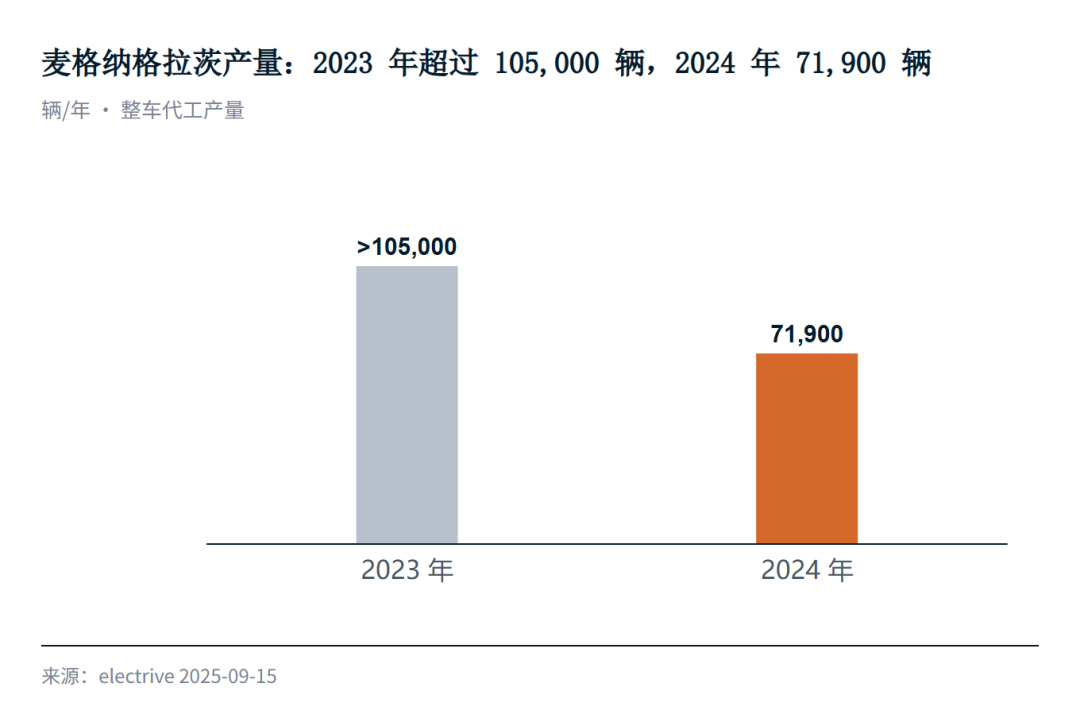
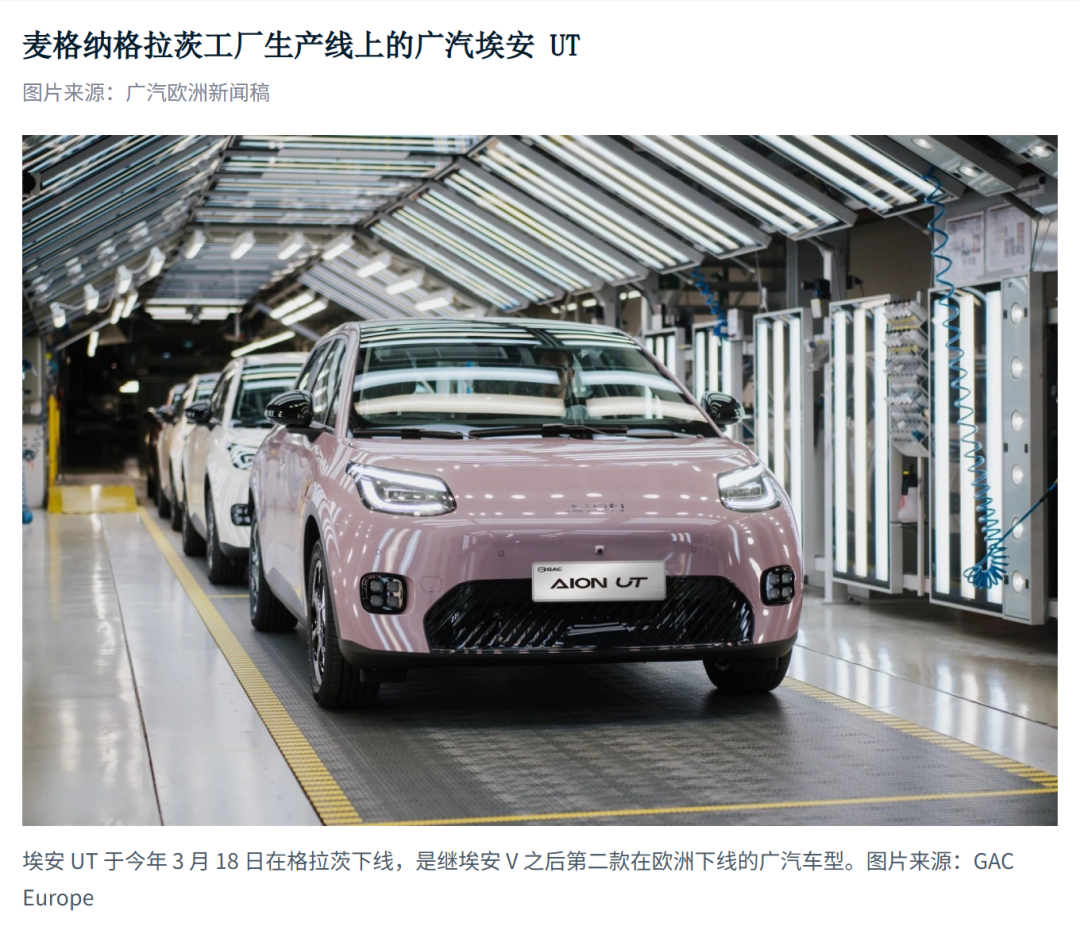
The quota applies to imports; cars assembled in the EU do not count against it. Chinese automakers have taken different approaches:
Apart from BYD, all of these projects use existing European plants or contract manufacturers. Chinese brands need production sites inside the EU, and some European plants are short of orders, so the two sides' needs fit neatly.
Vans, buses and the UK
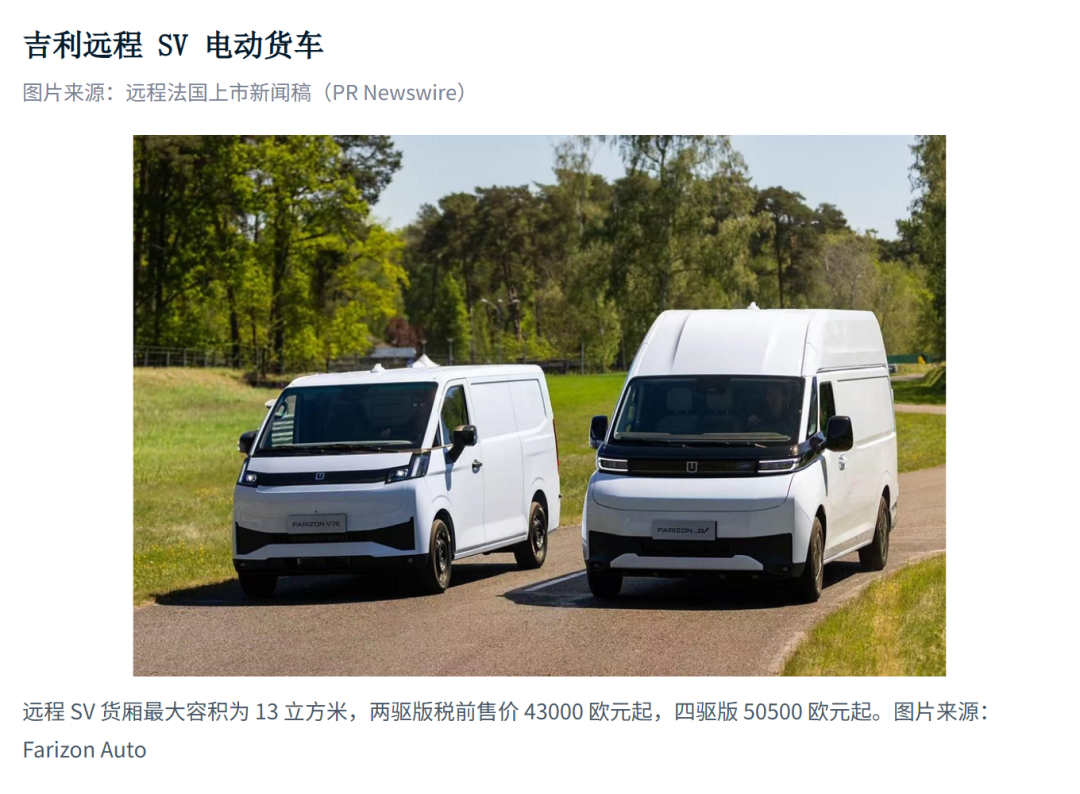
On Oct 27, Geely Farizon launched its electric light commercial vehicle line-up at the Rungis International Market in France. The SV van offers up to 13 cubic metres of cargo space, priced from EUR 43000 excluding tax for the 2WD version and EUR 50500 for the 4WD version. The passenger-carrying SV Minibus will be delivered in Q4 this year and the SV Combi in Q1 next year. The V7E urban delivery van has a WLTP combined range of 328 km. Farizon plans to have more than 40 dealers and 80 after-sales points in France by the end of 2027.
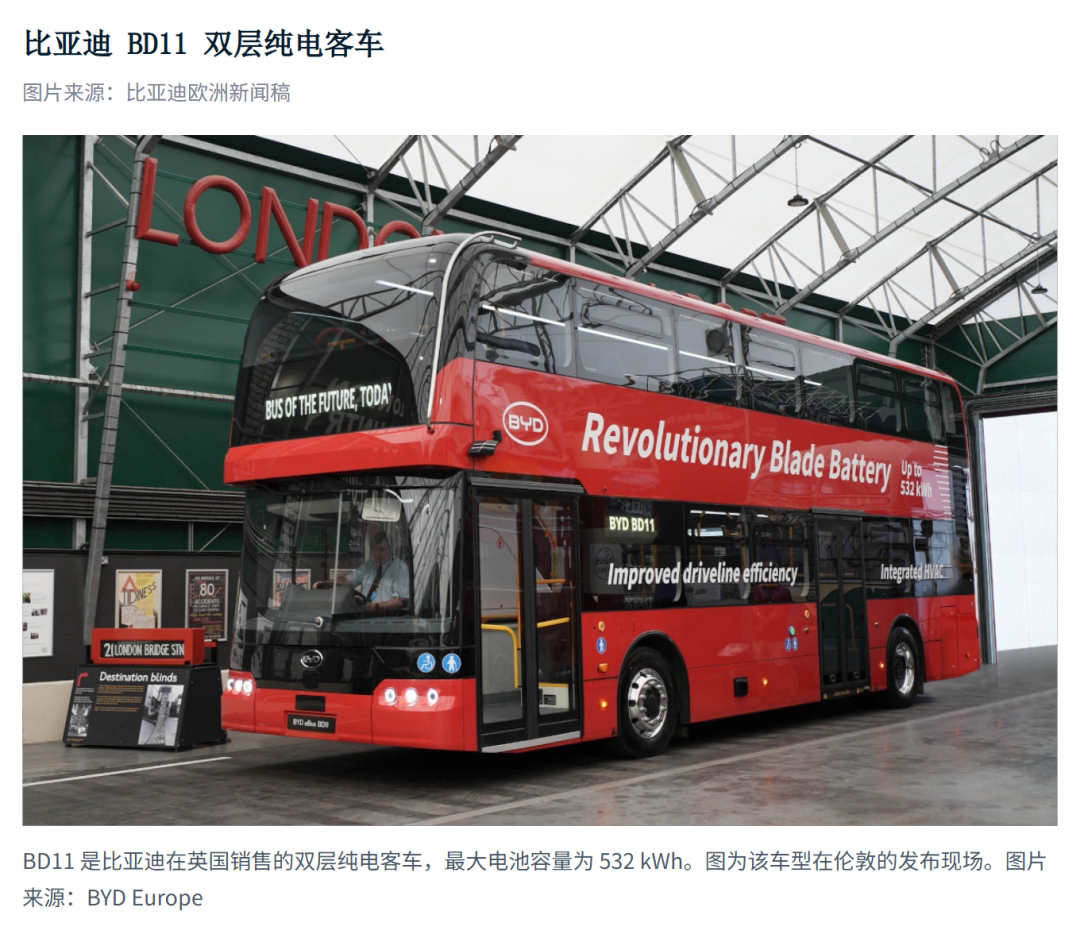
BYD has delivered or has on order more than 1000 electric buses in the UK. Before year-end it will also launch a battery-electric coach developed specifically for the UK, using the same dual 150 kW drive as its city and intercity buses.
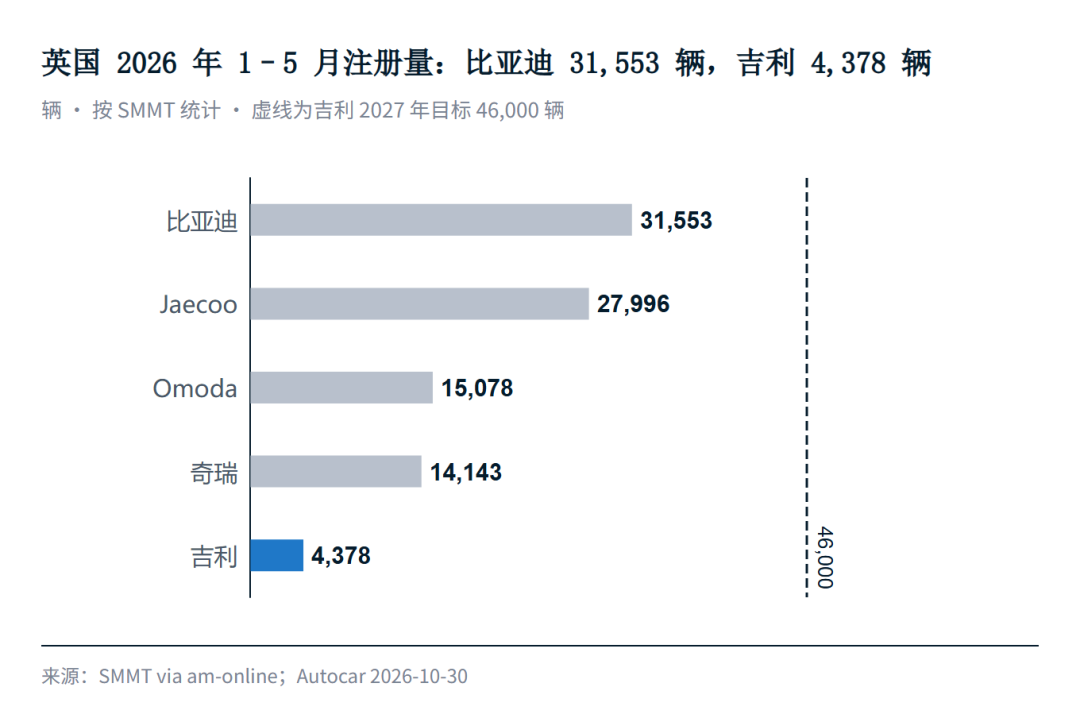
The UK is outside the EU customs area, so neither measure applies. Geely plans to sell 46000 units in the UK in 2027, more than double its 2026 figure. Data from the Society of Motor Manufacturers and Traders show Geely registered 4378 units in the UK from 1 to 5 this year; 46000 units is about 10.5 times that. Over the same period, Chery registered 14143 units and BYD 31553.
AITO plans to enter Europe in autumn 2027 and is applying for EU whole-vehicle type approval, with both BEV and range-extender models. Under the definition used for the anti-subsidy duties, both types are taxed as BEVs at the border.
1981 quota
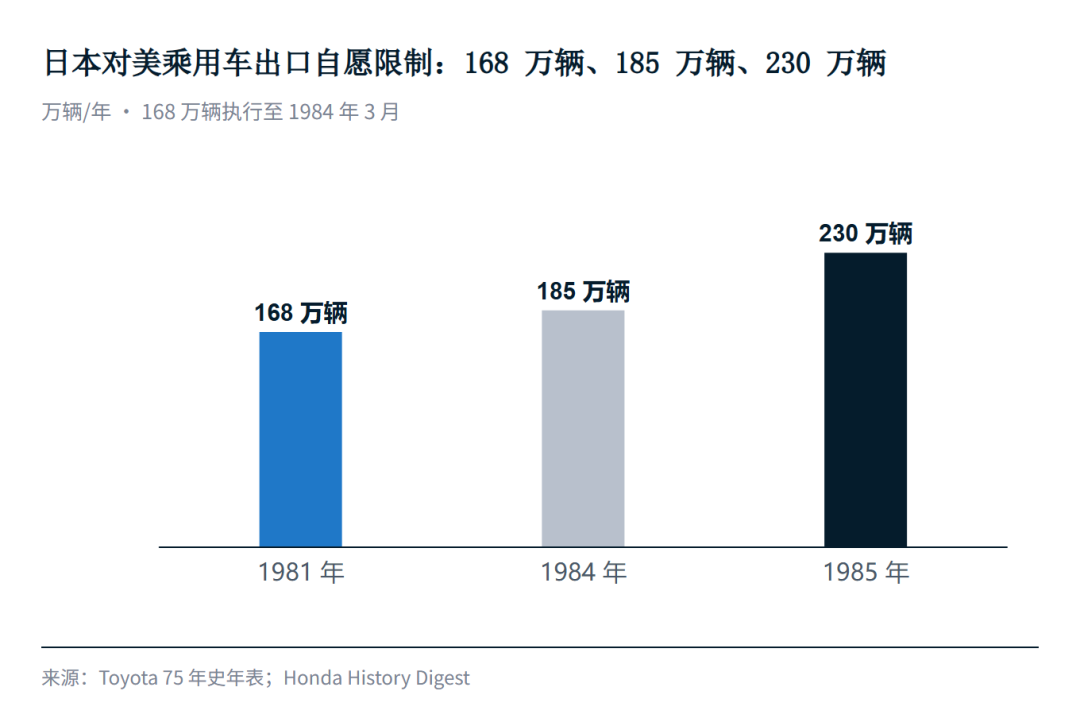
Quantitative limits driving local production have precedent in the auto industry. In 1981, Japan imposed voluntary export restraints on passenger cars to the US at 1.68 million units a year, in force until Mar 1984; the cap was then raised to 1.85 million and later to 2.3 million, about 1.37 times the original cap. In 1982, Honda's first mass-produced Accord four-door sedan rolled off the line at its US plant.
Source: Chart by AutoMusic based on the public sources listed in the article; first published on the AutoMusic WeChat account.
The EU quota is 350,000 units in the first year, rising to about 417,000 four years later. BYD's Szeged plant is scheduled to start volume production in Q4 this year, and Great Wall's Lovech plant in Q1 2027. If the quota takes effect on schedule on Dec 1, the first few months of output from both plants will fall squarely within its first year.