Great Wall Motor returns to assembly in Bulgaria: SKD production of the ORA 5, annual capacity of 50,000 units
Great Wall Motor will assemble the battery-electric ORA 5 in Bahovitsa, Bulgaria from Q1 2027, with annual capacity of 50,000 units, starting with SKD.
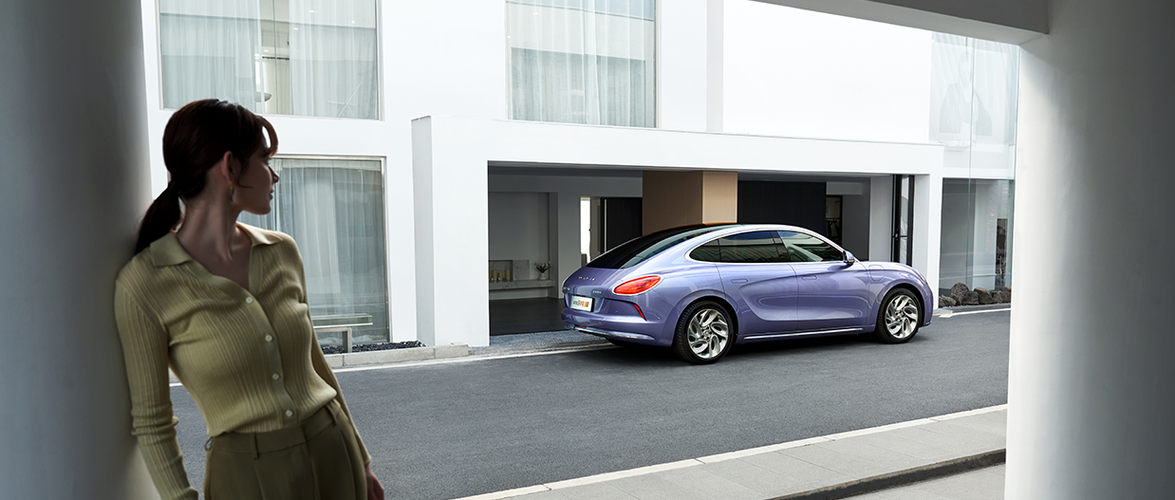
On Oct 27, Great Wall Motor (GWM) announced in Milan that from Q1 2027 it will assemble the battery-electric ORA 5 in Bahovitsa, near Lovech in Bulgaria, with a planned annual capacity of 50,000 units. The plant belongs to Bulgarian Automotive Industries (BAI), which will produce contracted volumes as an independent contract manufacturer. Production will start with SKD (semi-knocked-down) assembly: major assemblies are pre-assembled in China and shipped to Bulgaria for final assembly, with some parts sourced locally from day one.
The first thing Bahovitsa gives Great Wall is the "assembled in the EU" status. How much border duty the battery-electric Ora 5 can avoid, and whether it qualifies for national purchase incentives, depends on its local content share. Great Wall has not yet disclosed that share.
30.7% tariff rate
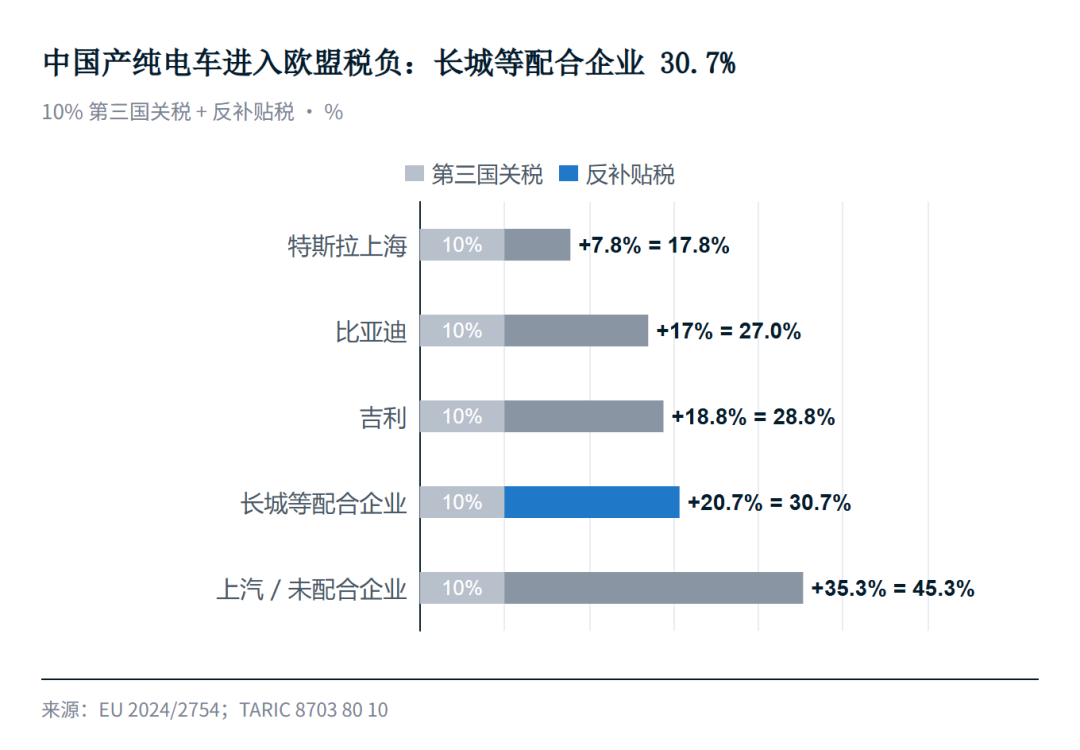
Battery-electric cars made by Great Wall in China and exported to the EU are subject to two duties: the standard 10% passenger car tariff, and the five-year anti-subsidy duty levied by the EU since Oct 30, 2024 (the regulation text calls it a countervailing duty, not an anti-dumping duty).
Anti-subsidy duties are set company by company: BYD 17.0%, Geely 18.8%, SAIC Motor 35.3%, with Great Wall in the 20.7% tier for cooperating companies.
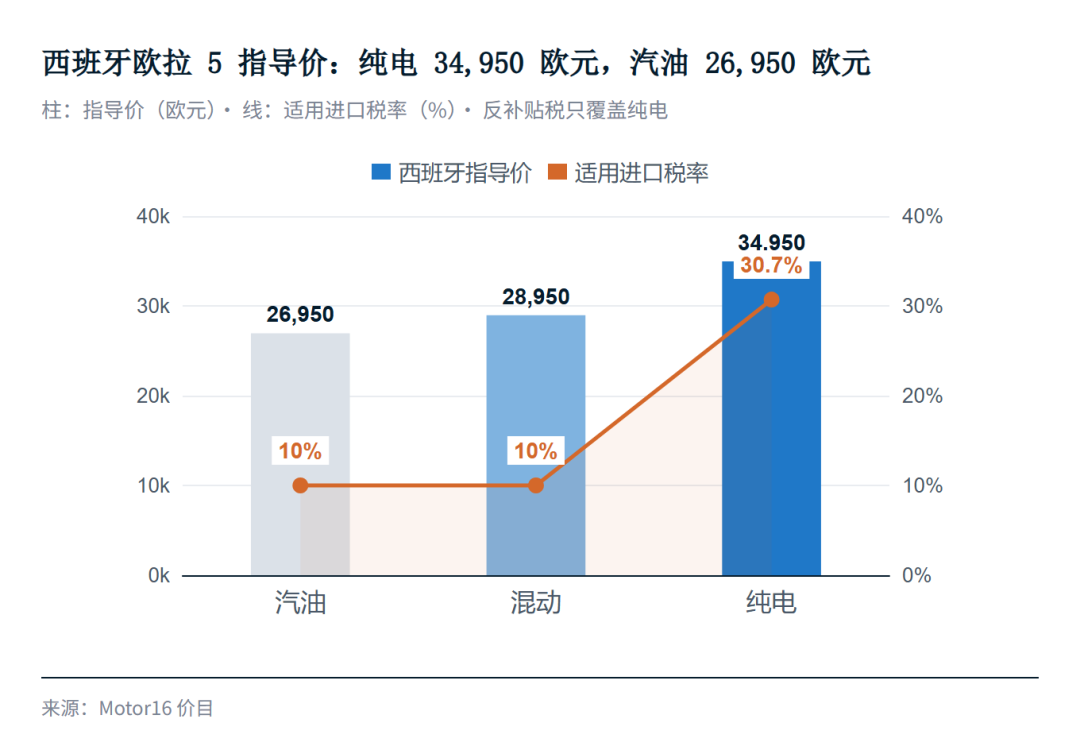
The two duties total 30.7%, or EUR 3,070 for every EUR 10,000 of customs value. The anti-subsidy duty applies only to BEVs; the hybrid and petrol versions of the Ora 5 pay only the standard 10% tariff. In Spain, the BEV version lists at EUR 34,950, EUR 6,000 more than the hybrid. The Bahovitsa plant's first task is to cut costs on the BEV version and narrow that gap.
SKD tariff rate
The anti-subsidy duty regulation makes no mention of SKD or CKD. Under General Interpretative Rule 2(a) of the EU tariff nomenclature, an article imported disassembled is classified as the complete article as long as it has the essential character of the complete article. SKD kits with major assemblies pre-installed are quite likely still to be charged the 30.7% duty as complete vehicles. What can be saved is the value that no longer crosses the border: local parts and assembly labor are not included in the customs value, so every EUR 10,000 less saves EUR 3,070 in duty, although local parts and labor carry their own costs.
If KD kits are broken down further and imported under component tariff codes, they fall outside the anti-subsidy duty, and the third-country tariff on lithium-ion batteries is only 2.7%. However, Article 23 of the Basic Anti-Subsidy Regulation allows the Commission to extend duties to components once circumvention is established, and unlike the anti-dumping regulation, it has no explicit circumvention thresholds of 60% of parts and 25% of value added, so how far disassembly can go before triggering an investigation is a case-by-case judgement. The finer the breakdown, the larger the savings on paper, and the greater the risk of retroactive duties.
The European Commission has a separate reference rule of 45% value added for assembly in third countries. But Bulgaria is an EU member state, so vehicles assembled there are EU goods in their own right. The rule does not apply, and duty is levied only once, when the kits enter the EU.
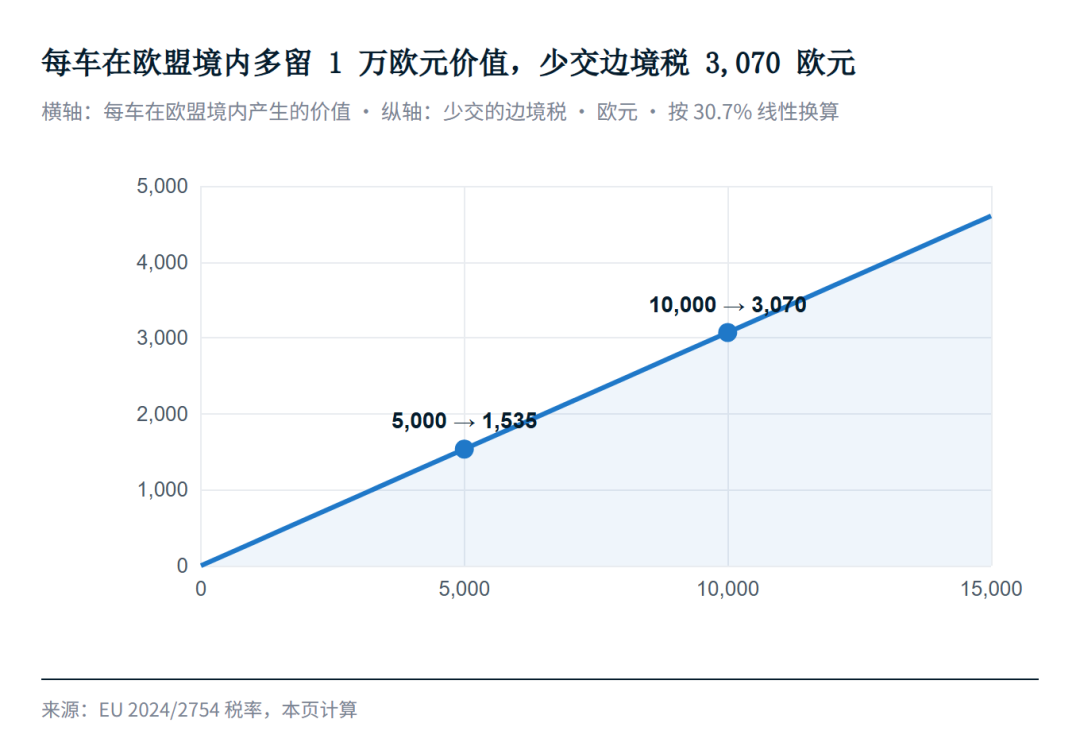
Border tax savings per vehicle at the SKD stage are limited. The only reliable way for Great Wall to keep cutting the tax burden on its BEV versions is to raise local sourcing.
Made in the EU
Beyond the border, there is another set of requirements. The Industrial Accelerator Act proposal submitted by the European Commission on Mar 5, 2026 sets "EU origin" requirements for EVs, applying to "made in EU" determinations for public procurement, government purchase subsidies and corporate fleets.
The proposal still needs approval from the European Parliament and the Council; the German government has said it will adjust its EV subsidies accordingly at that point.
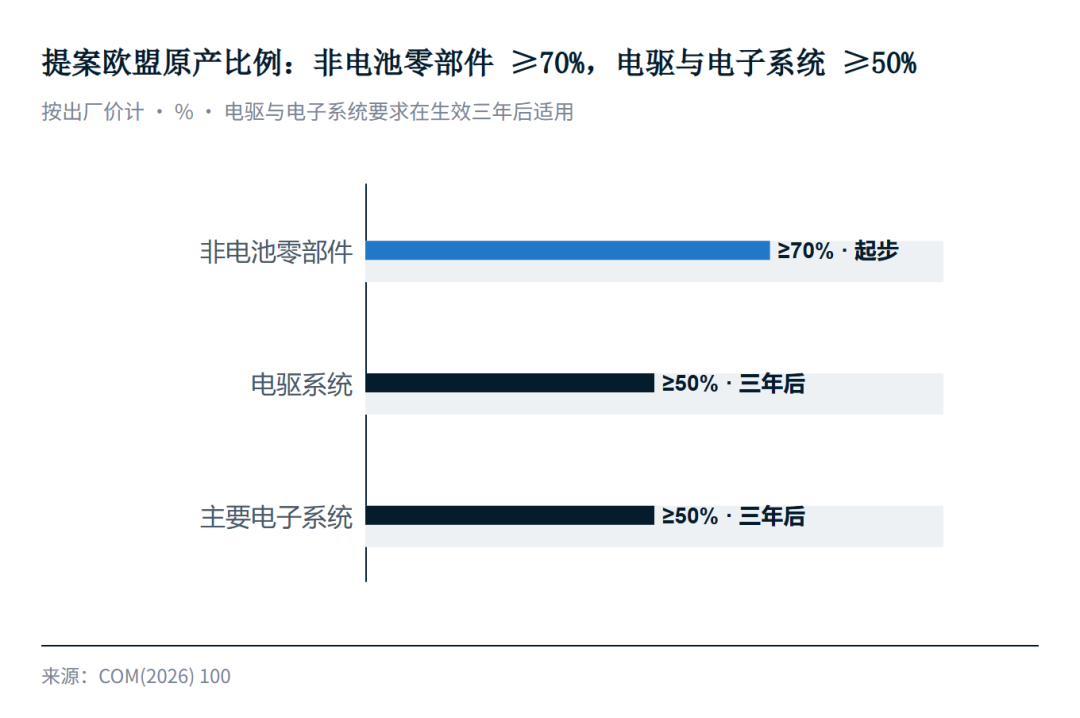
The Ora 5, starting with semi-knocked-down (SKD) assembly, can meet the first condition; the second depends on the share of local parts. If it falls short of 70%, it can still be sold as EU goods but will likely be ineligible for subsidies and public procurement.
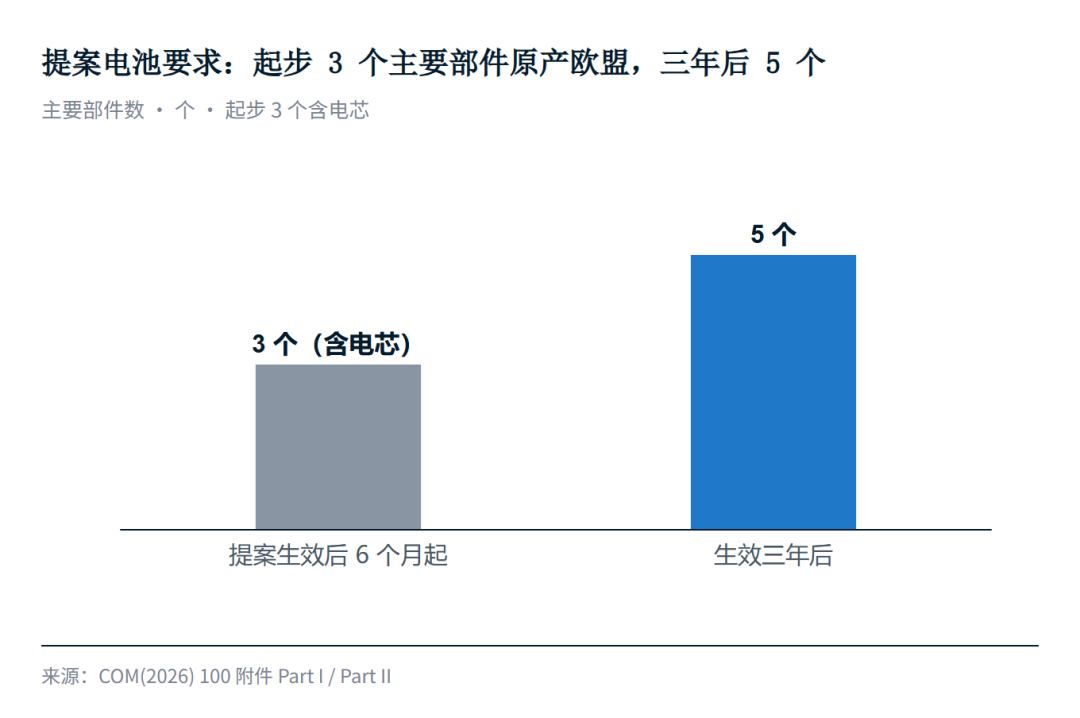
In June this year, BYD paused its roughly USD 1 billion plant project in Manisa, Turkey. Turkey is in a customs union with the EU, so assembly there is not subject to anti-subsidy duties; reports pointed to the "Made in EU" rules as the reason for the pause, and BYD later said it would prefer to take over an existing plant in southern Europe. Although these rules have not yet been adopted, they are already changing Chinese automakers' site selection strategies. By placing assembly in an EU member state, Great Wall avoids the problem BYD ran into in Turkey; the next hurdle is the 70% threshold.
Bachowice plant
Great Wall has built cars at Bahovitsa before. In Feb 2012, Bulgaria's Litex Motors began assembling Great Wall models from kits at the site, making Great Wall the first Chinese carmaker to assemble complete vehicles inside the EU. In 2015, the line produced 5000 vehicles. In Feb 2017, Litex filed for bankruptcy, and BAI later took over the plant.
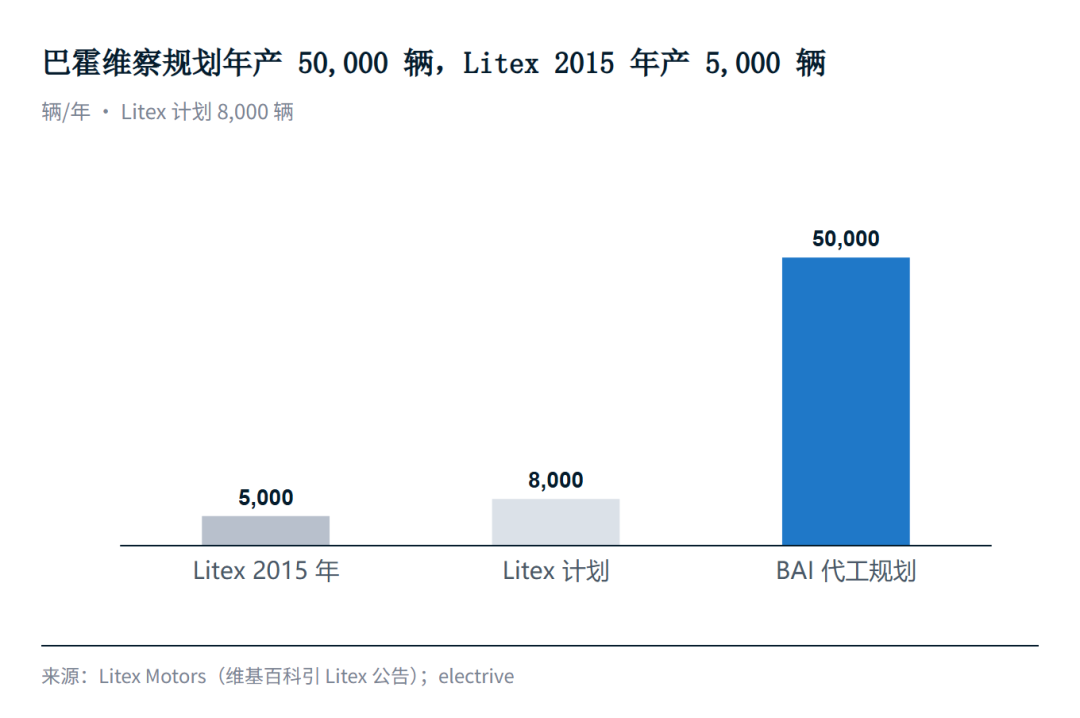
The newly planned 50,000 units is ten times the volume back then, and the contract structure differs: last time it was licensed assembly, with Litex also handling distribution itself; this time ownership stays with BAI, which builds vehicles under contract to agreed volumes. Great Wall carries no plant assets, so exiting costs less than last time if sales disappoint. The trade-off is that local content, the issue that matters most for both tariffs and subsidies, must be negotiated with the contract manufacturer and cannot be decided unilaterally.
Targets and capacity
Great Wall's previous push into Europe began in 2021; in 2024 it closed its European headquarters in Munich, cut about 100 jobs and paused expansion into new markets. Its European sales fell 25.4% in 2024 and nearly 30% more in 2025, leaving only about 3500 units; that same year BYD sold 187657 units in Europe, about 54 times Great Wall's figure.
Great Wall's current targets: 60,000 units sold in Europe in 2027, 300,000 units produced in Europe in 2029, and a 3% to 5% European market share in 2030.
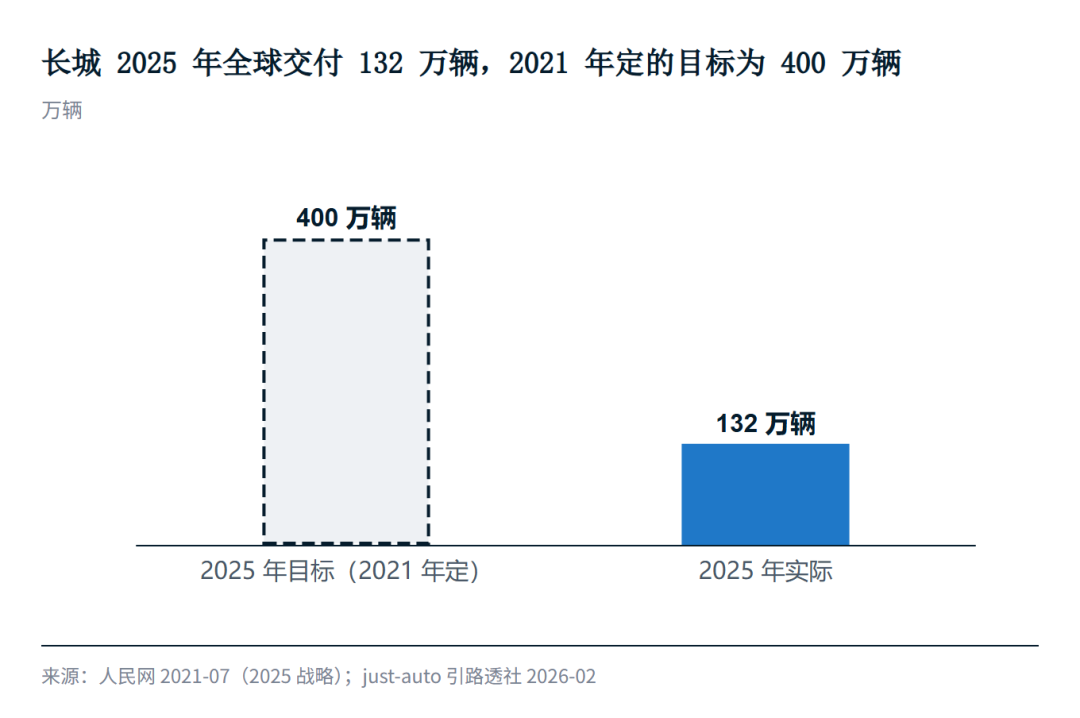
In 2021 Great Wall set a target of 4 million annual global sales by 2025; actual deliveries were 1.32 million, about one third.
Great Wall's sales network is also still being built out: it currently sells only in Italy and Spain, and will enter seven more markets, including France and Austria, in the first half of 2027. Starting from a base of about 3,500 units, the main constraint in 2027 is on the demand side: the 60,000-unit target requires the dealer network to reach scale within a year.
Chinese companies building plants in Europe
Chinese automakers have used several different approaches to building plants in Europe:
Great Wall's approach is similar to Leapmotor's: both use a partner's plant. The difference is that Leapmotor's partner is a European vehicle group, while Great Wall's is a local independent contract manufacturer. Borrowing a plant requires less investment and allows a faster start, while building one's own plant makes it easier to deepen the local supply chain. Facing the EU's 70% origin requirement, whether automakers using borrowed plants can build up local suppliers around their partners will matter more than plant capacity in determining whether they qualify for subsidies.
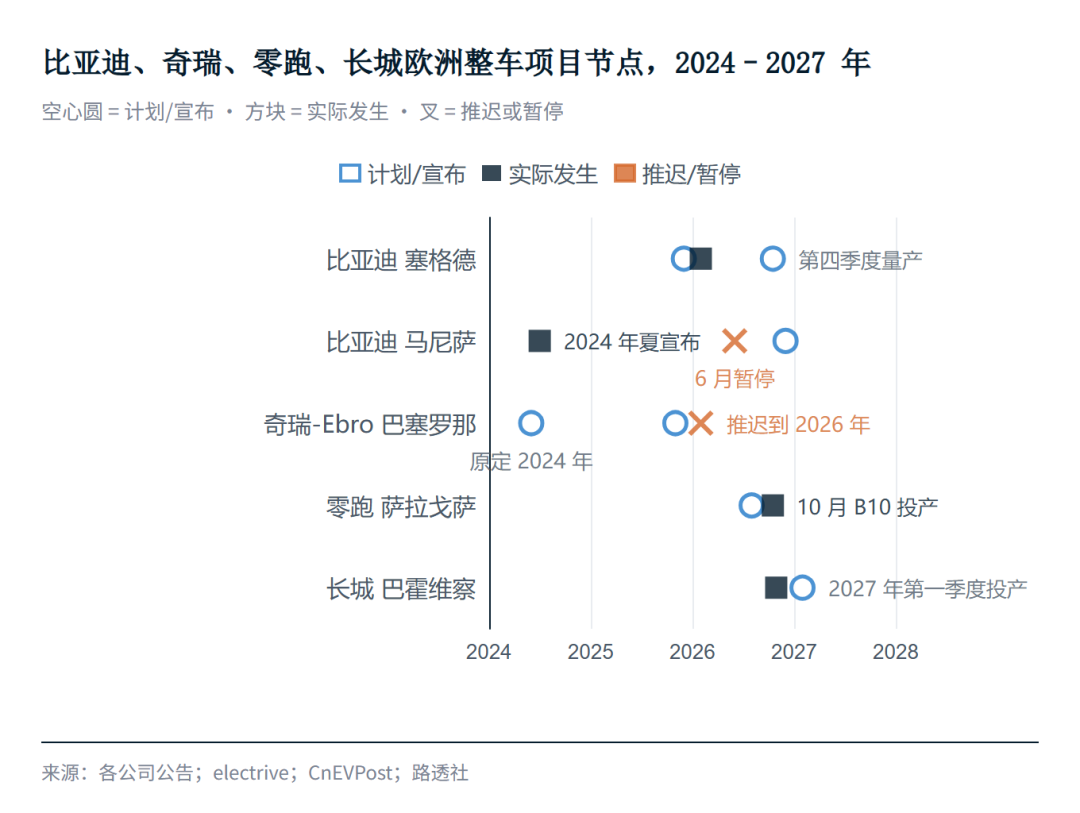
Source: Chart by AutoMusic based on the public sources listed in the article; first published on the AutoMusic WeChat account.
Great Wall says it will build an integrated vehicle and components industrial park in Europe, but has given no timeline, and its local content ratio and suppliers have not been announced. Until both materialize, all Bahovitsa can be certain to give Great Wall is "EU-assembled" status; how much it saves on border duties and subsidy eligibility can only be calculated once the localization ratio is published.