BYD Europe: fifth in Spain, asset attachment lifted in The Hague
BYD registered 5306 units in Spain in 10, entering the brand top five for the first time; it ranked seventh in Italy and grew 54.3% year on year in Germany. The same week, a court in The Hague lifted JLR's seizure of its documents, Germany's Defence Ministry responded on restrictions at military bases, and 14 MEPs submitted questions.
On Nov 11, a court in The Hague lifted the seizure of materials at BYD's two Dutch offices obtained by JLR and ordered the seized materials destroyed. Germany's Der Spiegel reported that the Bundeswehr is restricting Chinese-brand vehicles, including BYD, Geely and NIO, from entering bases designated as security areas; the week before, 14 MEPs wrote to the European Commission asking it to assess the security risks of BYD vehicles. Data for 10 released in the same period showed BYD registered 5306 units in Spain, entering the top five brands for the first time; it ranked seventh in Italy and grew 54.3% year on year in Germany.
Sales are rising, and friction has increased over the same period, but the level of certainty varies widely across these developments. The restrictions in place so far apply only to military sites. There are no EU-level rules targeting BYD yet, and until such rules take shape, private car purchases are not affected.
Three-country registrations, month 10
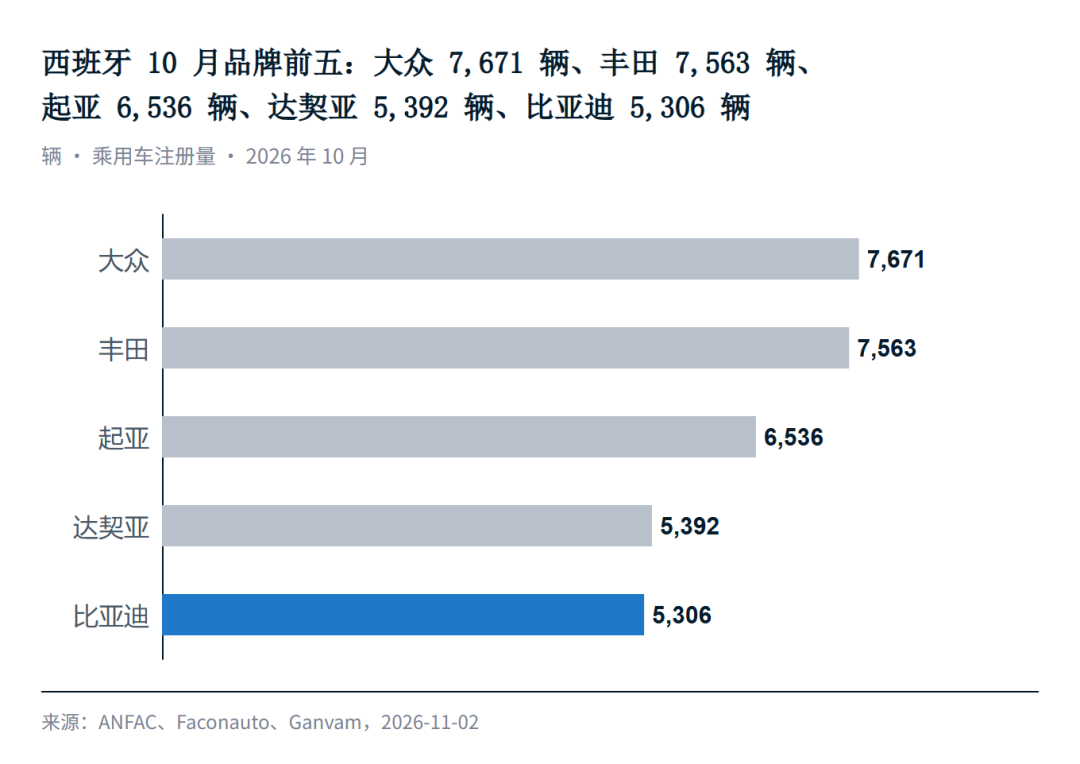
Spain registered 98487 passenger cars in 10, up 1.8% year on year. BYD ranked fifth with 5306 units, up 89.1%, 86 units behind fourth-placed Dacia at 5392, for 5.4% of all passenger cars. Cumulative registrations for 1–10 were 39690, up 104.3%.
According to Italian industry association UNRAE, BYD registered 6009 vehicles for a 4.6% share, ranking seventh among brands, compared with 1874 in the same month last year, roughly 3.2 times as many. Of these, 4957 were PHEVs, about 82.5% of BYD's registrations that month and 29.15% of Italy's PHEV market.
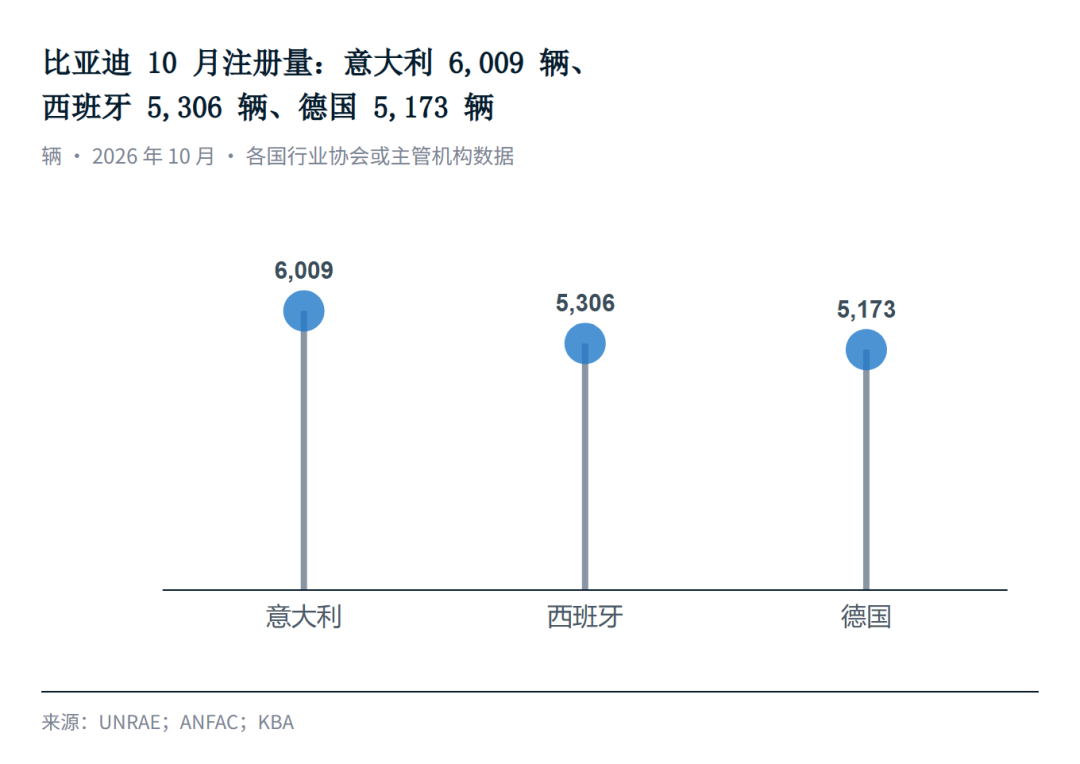
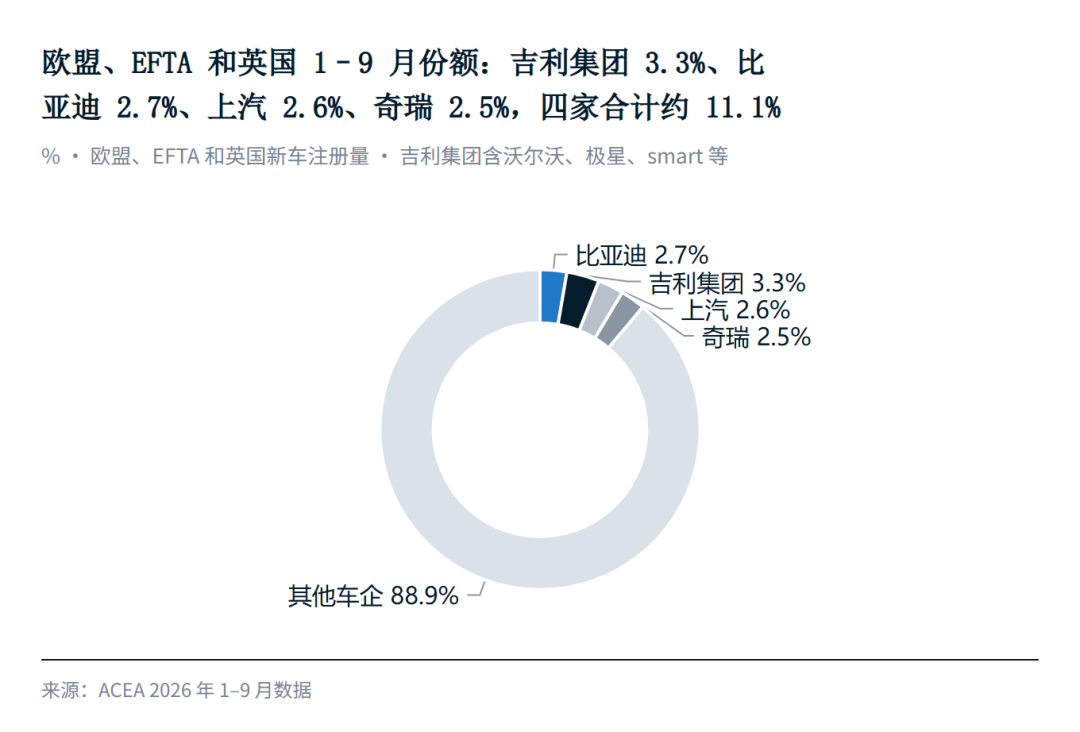
Data from Germany's Federal Motor Transport Authority (KBA) show BYD registered 5173 units, up 54.3% year on year, for a 2.0% share. Across the EU, EFTA and the UK combined, ACEA data show BYD registered 283997 units from 1 to 9, for a 2.7% share.
More than 80% of BYD's registrations in Italy are PHEVs. The anti-subsidy duties the EU imposed in 2024 apply only to China-made BEVs, so these sales fall outside their scope, and tariffs do little to constrain its growth in southern Europe.
Hague evidence ruling
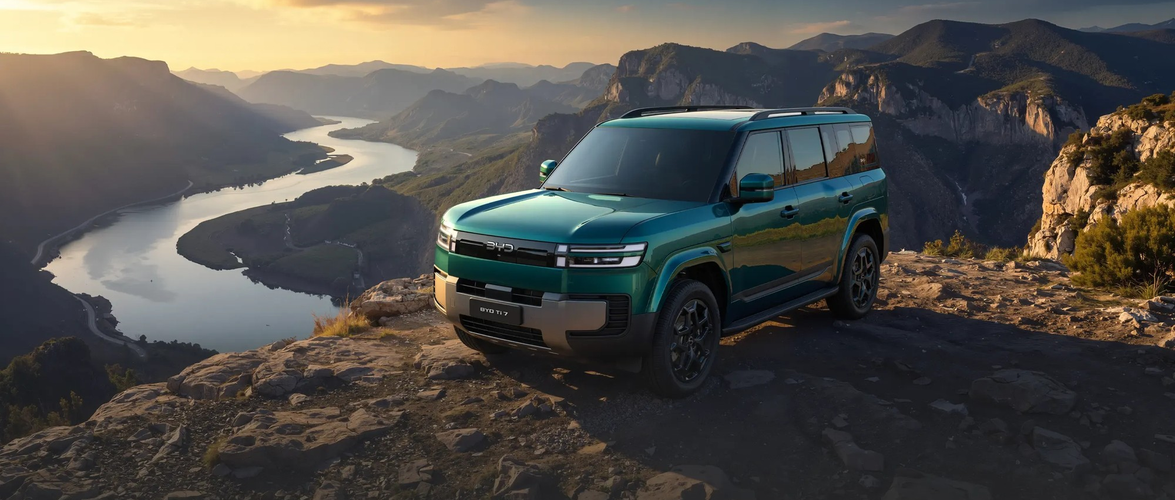
The dispute concerns the Fangchengbao Tai 7, exported as the Ti7 and sold in the UK as a seven-seat PHEV. JLR argues that it copies the Land Rover Defender and infringes its EU design rights. On Aug 2026, with permission from a Dutch court, bailiffs entered BYD's offices in Schiedam and Hoofddorp to secure electronic records relating to the vehicle. BYD objected, calling it a "fishing expedition".
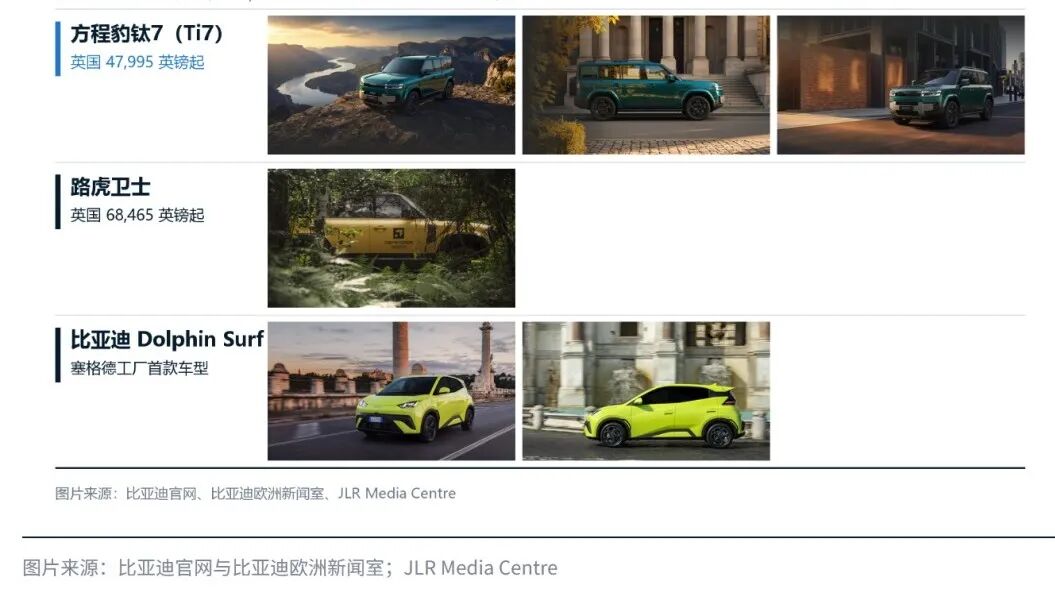
On Nov 11, the interim-relief judge at the Hague court ruled for BYD on two grounds. First, JLR does not need the materials to argue that the Tai 7 is a copy of the Defender. Second, the Tai 7 has never been sold in the EU, so the materials are not needed to show how large the damages are.
The ruling does not address whether the Tai 7 is a copy; JLR has filed separate summary proceedings on that question in the Rotterdam and The Hague courts. The Tai 7's market for now is the UK: it starts at £47995, arrives in showrooms in month 11 and begins deliveries in Jan 2027. The Defender 110 starts at £68465, a difference of £20470, or about 30%. Since Brexit, the UK falls outside the scope of EU design rights.
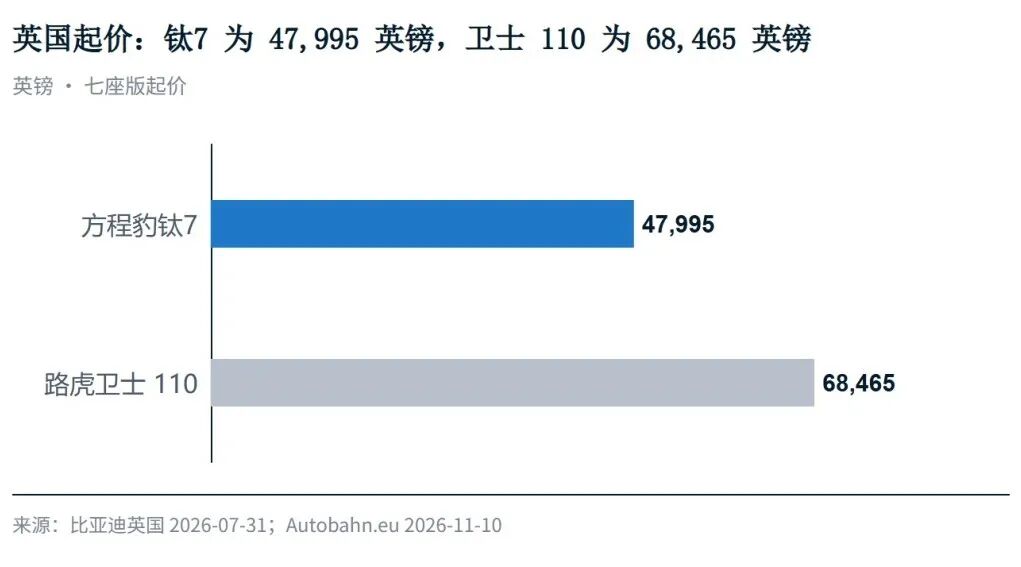
Source: Chart by AutoMusic based on the public sources listed in the article; first published on the AutoMusic WeChat account.
Lifting the preservation order does not remove the infringement litigation risk for the Titanium 7 in the EU. If a separate case goes in JLR's favor, it will affect the model's EU launch plans.
Access restrictions at military sites
Germany's Der Spiegel reported on Nov 10 that cars from brands including BYD, Geely and NIO are barred from military bases designated as security areas. Owners must park outside and enter on foot. The concern is that onboard cameras and sensors could transmit data to China. The report did not say when the restriction takes effect, how many models are affected or whether all bases enforce it.
Germany's Ministry of Defence responded on Nov 11 that there is no general ban on vehicles from specific countries or manufacturers; sensors in modern vehicles are regarded as a potential security risk, and vehicle access to sensitive military sites can be restricted where necessary. Poland and the US have already taken formal decisions. In 2 this year, Poland's Chief of the General Staff ruled that Chinese-made motor vehicles may not enter protected military facilities, with facilities open to the public, such as military hospitals and clinics, excluded. In 10, the US Air Force banned BYD vehicles from Kadena Air Base in Okinawa, the only US military base in Japan to do so.
MEP questions and public procurement
In Nov 4, 14 MEPs submitted a written question to the European Commission, asking for the EU cybersecurity agency ENISA to assess BYD's threat level, to consider adding it to the list of high-risk suppliers, and whether BYD would be excluded from public procurement. The Commission usually replies within six weeks. BYD responded that neither cloud nor in-vehicle data can be accessed remotely from China, and that BYD Europe does not provide this data to BYD entities in China or to third parties.
In 1, the European Commission proposed an amendment to the Cybersecurity Act that would assess high-risk suppliers by country of origin; a draft public procurement regulation proposed in 9 would allow suppliers to be excluded on security grounds, applying only two years after the regulation enters into force. These questions and proposals are still some way from producing concrete restrictions on BYD, but the MEPs have cited military practice as precedent. Chinese automakers operating in European bus and government fleet business will first face questions in specific tenders about where data is stored and who can access it remotely.
Hungary under construction, Spain a candidate
BYD's first European passenger car plant is in Szeged, Hungary. Executive Vice President Stella Li said the plant plans to start assembly in Q4 2026, about a year later than originally planned, with the Dolphin Surf as the first model. The site for a second plant has not been chosen. In an interview with Spanish news agency EFE in month 11, BYD said Spain was on the shortlist but gave no timeline for a decision. Reports of a battery plant in Portugal have appeared only in the Portuguese weekly Expresso and have not been confirmed by BYD.
On Oct 2024, the European Commission imposed anti-subsidy duties on China-made BEVs, with BYD's rate at 17.0%; producing in Europe can soften the impact of this duty. What lawmakers and the military are asking is where the vehicle data goes. That question has nothing to do with where the car is built and has to be answered through data processing arrangements.
Public procurement and government fleet business are the most likely to feel these institutional frictions first. Until the European Commission responds and the two pieces of legislation are settled, companies can prepare model-by-model documentation on data storage locations, remote access rights, software updates and audit records.