EU commercial vehicle registrations Q1–Q3: trucks up 7.5%, Q3 alone up only about 3%
EU truck registrations rose 7.5% in the first three quarters; stripping out the first half, Q3 alone grew about 2.6%, while vans fell about 4% in the quarter. Electric trucks took a 2.5% share of heavy trucks and close to 20% of medium trucks; Italian electric bus registrations dropped by about 40% in the quarter after the subsidy deadline.
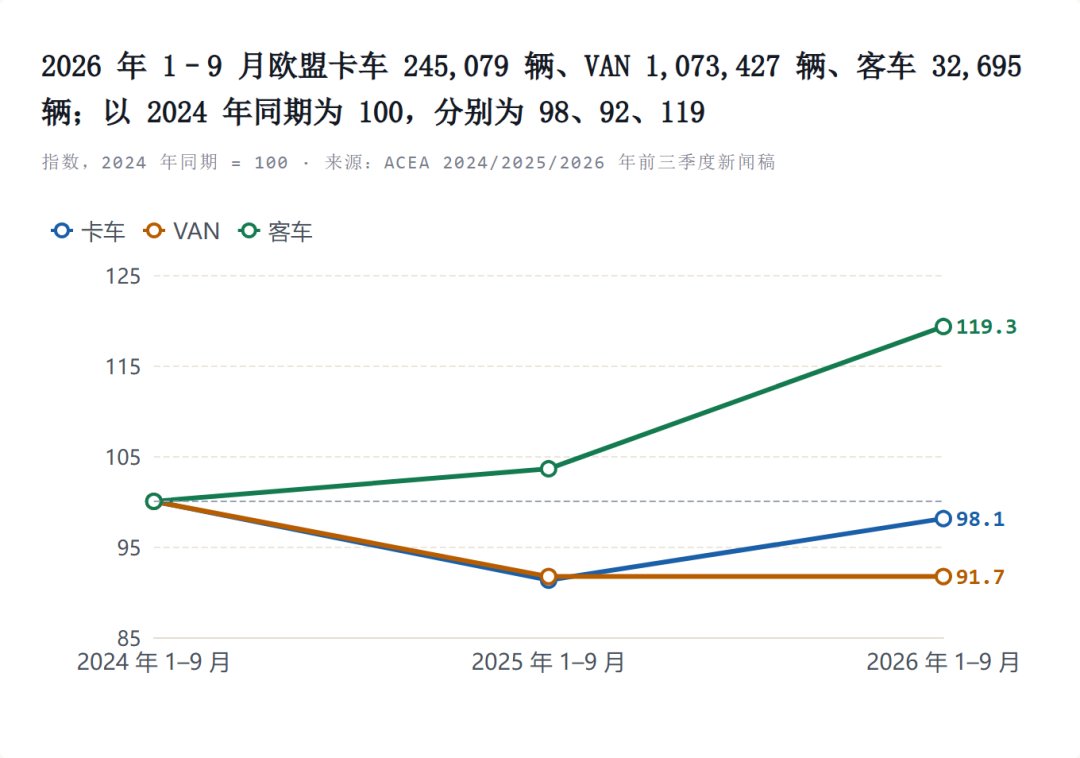
On Oct 28, ACEA released EU commercial vehicle registrations for the first three quarters of 2026: light commercial vehicles (vans) totalled 1073427, just 227 fewer than a year earlier; trucks 245079, up 7.5%; buses 32695, up 15.2%.
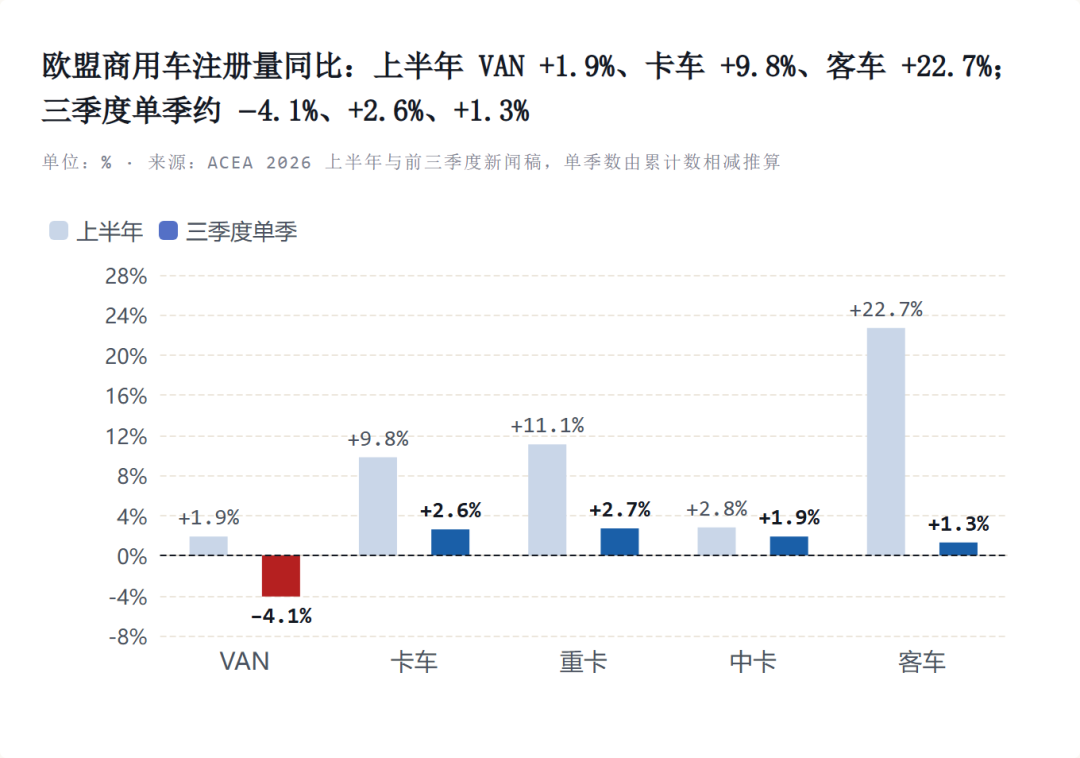
All three growth rates were driven almost entirely by first-half performance. First-half data released in 7 showed vans up 1.9%, trucks up 9.8% and buses up 22.7%. Subtracting first-half data from the nine-month figures gives an estimate of the third quarter on its own.
Q3 alone
Truck growth slowed from nearly 10% in H1 to the low single digits in Q3. Buses fell from over 20% growth to flat, and vans went from growth to decline.
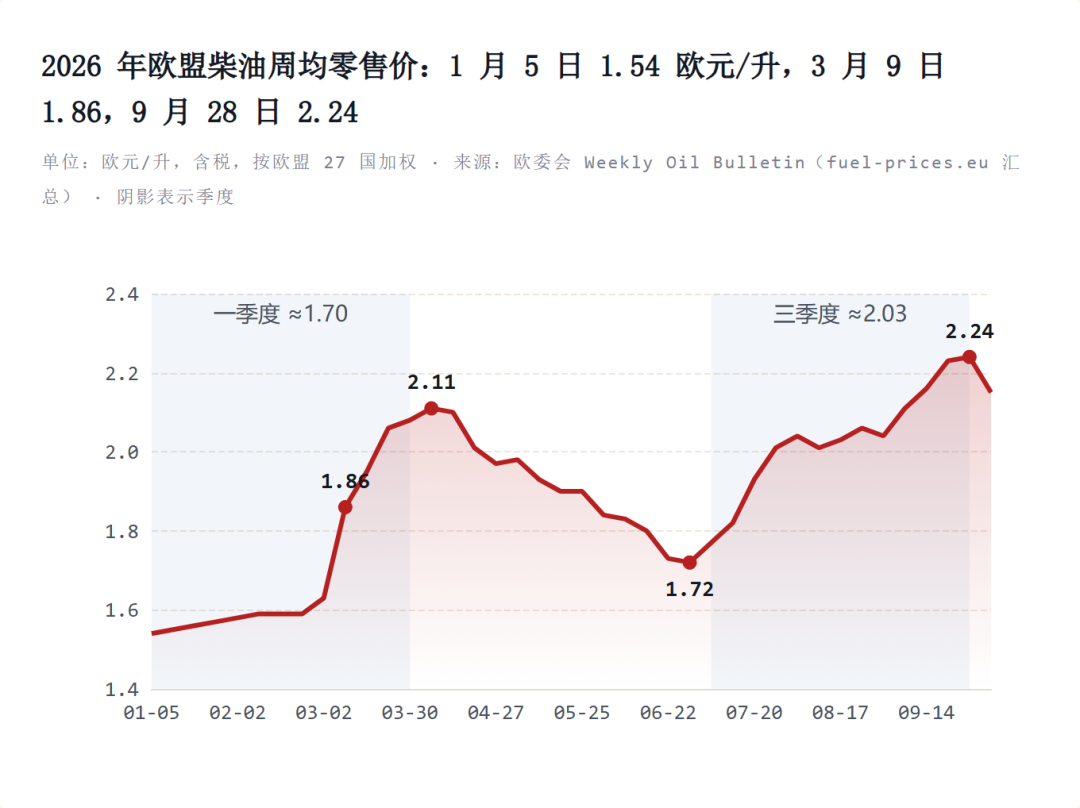
ACEA noted that the data came against a backdrop of rising energy prices. According to the European Commission's Weekly Oil Bulletin, the EU average retail diesel price was EUR 1.54 per litre on Jan 5. In the week to Mar 9 it rose 14.3% to EUR 1.86, the largest single-week increase since the series began in 2005. The timing coincides with the outbreak of the Iran conflict and a sharp drop in oil shipments through the Strait of Hormuz.
Diesel prices reached EUR 2.11 in Apr 6, fell back to EUR 1.72 at the end of month 6, and generally rose again from month 7, reaching EUR 2.24 in Sep 28, the highest level of the year. The weekly average in Q3 was about EUR 2.03, nearly 20% higher than the roughly EUR 1.70 in Q1. From late month 7, EU diesel prices were higher than petrol every week.
Registrations cannot be equated directly with fuel prices. Heavy trucks typically take several months from order to registration, so many trucks registered in Q3 may have been ordered before fuel prices jumped. Vans have shorter cycles and react faster to cost changes. Looking back another year, the base for this growth in 2026 was also low. In the first three quarters of 2025, EU truck registrations fell 9.8% and vans fell 8.2%. In the same period of 2024, trucks totalled 249708 units and vans 1170310. In the first three quarters of this year, trucks were still about 1.9% below the same period of 2024 and vans about 8.3% below; only buses were up, by about 19% on 2024.
Light commercial vehicles
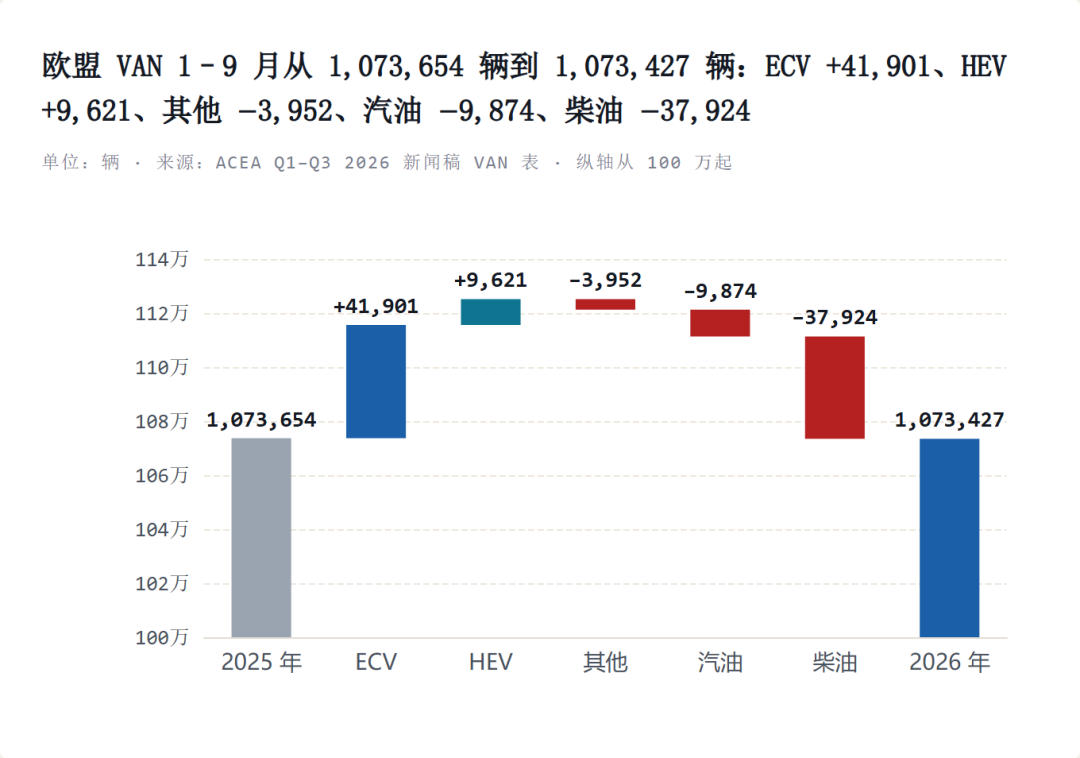
Total van registrations were flat, but the powertrain mix shifted considerably. In the first three quarters, BEV and PHEV vans reached 151691 units, up 38.2%, or 41901 more than a year earlier; diesel vans totalled 838830, down 37924; petrol vans fell by 9874. The 41901-unit increase in electric vans is close in scale to the 37924-unit drop in diesel vans; hybrid vans also rose by 9621.
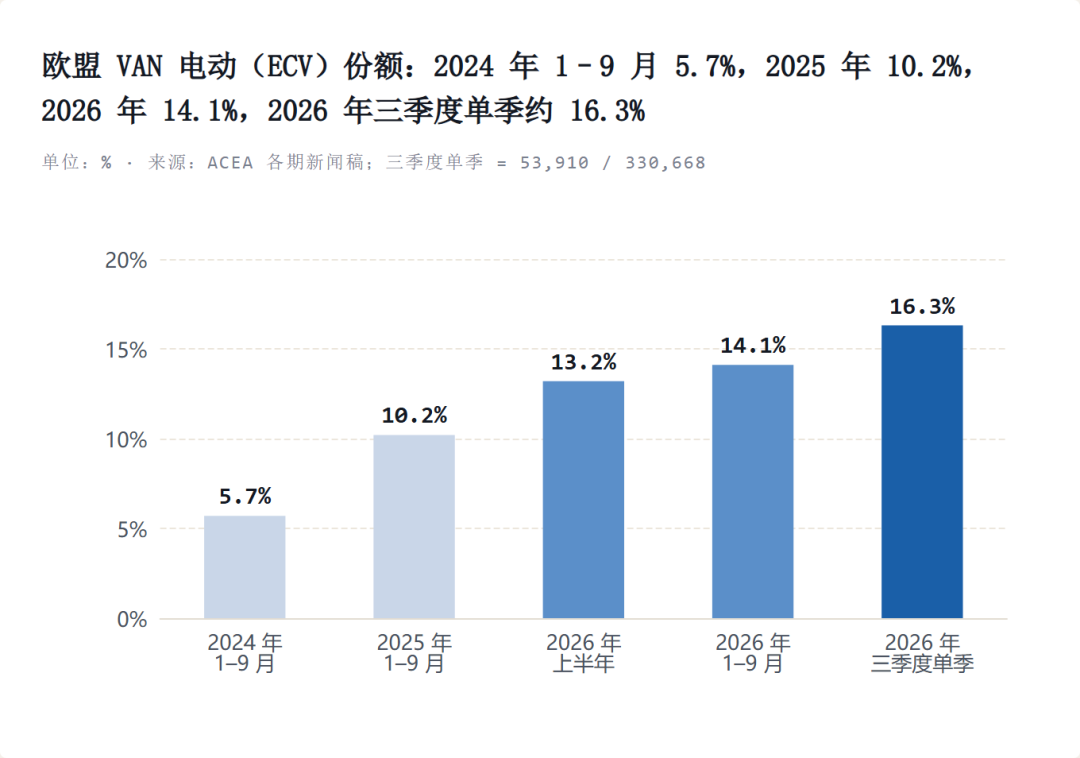
Electric van share trend:
The Q3 share was higher than the 13.2% recorded in the first half, partly because total van registrations fell. Van registrations dropped 4.1% in Germany, 5.1% in Italy and 5.6% in France, but electric vans grew in all three: Germany registered 28755 units, up 49.7%, and France 34355 units, up 33.3%. The gains in electric vans did not fully offset the losses in combustion models.
The relevant regulation is easing. On Oct 22, the European Parliament's Committee on Industry, Research and Energy and its Committee on Transport and Tourism voted on a compromise text amending the van CO2 standards. It cuts the 2030 emission reduction target for vans from the current 50% to 35%, and the 2035 target from 100% to 80%. The plenary vote is expected in 12. If the plenary approves it, European automakers will need to sell fewer electric vans to comply than current rules require.
Trucks
ACEA reports an electric truck share of 5.3%. That is an average. Split by the EU's weight categories, the gap between the two markets is wide.
Medium trucks are mostly used for urban distribution, with short daily mileage and the ability to charge back at the depot, so electric models can more easily meet range requirements. In the Netherlands, 1195 of 1787 medium trucks were electric, about two-thirds; in Germany the electric share is about 22% for medium trucks and about 4.2% for heavy trucks.
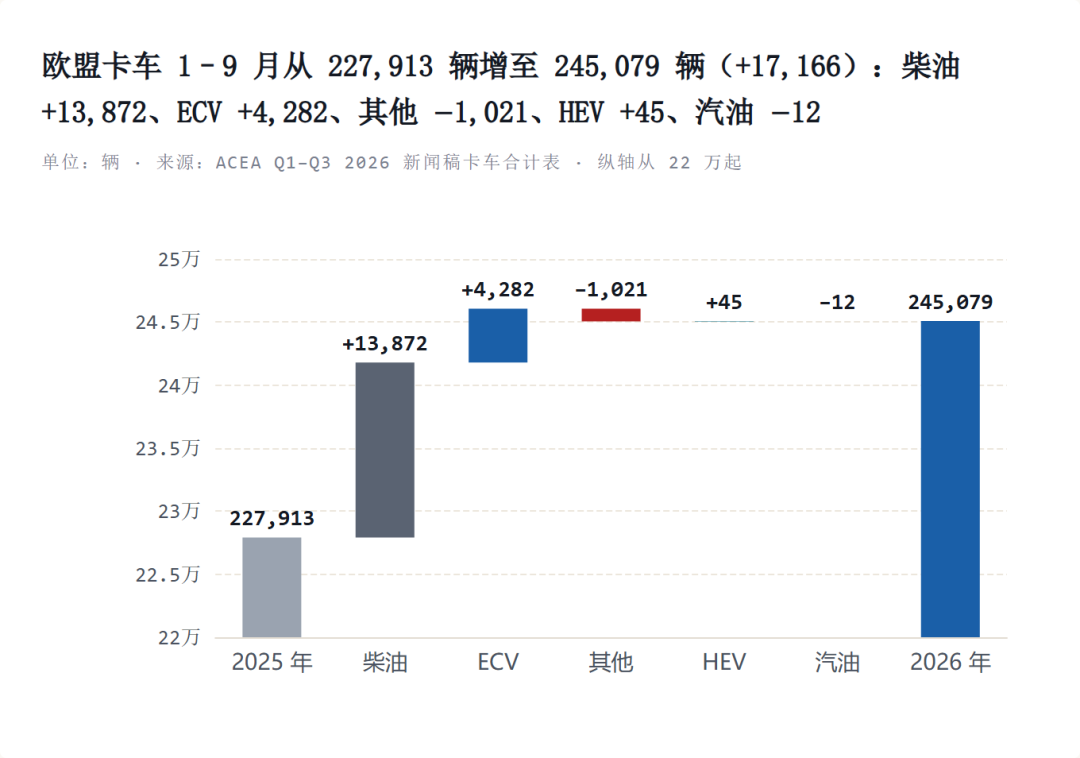
Truck sales were up 17166 units in the first three quarters. Electric trucks accounted for only 4282 of that increase, about a quarter, while diesel heavy trucks alone rose by 14840 units.
Growth in electric heavy trucks also slowed in Q3. In the first half, EU electric heavy truck registrations were 3518 units, up 83.3% year on year; Q3 alone saw about 1602 units, only about a quarter more than the roughly 1284 in the same quarter last year, accounting for about 2.7% of heavy truck registrations in the quarter. Electric medium trucks totalled about 3036 units in the quarter, up about 75%.
Heavy trucks were also the first vehicle type covered by the EU's heavy-duty vehicle CO2 standards. The first target under the EU heavy-duty CO2 standards applies from the reporting period running from Jul 2025 to Jun 2026: average new-vehicle emissions must be 15% lower than in 2019, 45% lower from 2030, 65% lower in 2035 and 90% lower in 2040. Manufacturers can meet the targets using super-credits accumulated from 2019 to 2024, zero-emission vehicle incentives and pooling within their group, and a broader review is due in 2027.
Buses
Electric share for buses in the first three quarters was 26.4%, versus 22.1% a year earlier, the highest of the three vehicle categories. Electric buses totalled 8633, up 37.6%, while diesel buses also grew 5.0%.
Italy was the fastest-growing market. Bus registrations in the first three quarters reached 5338 units, up 34.4%, making it the EU's largest bus market; electric buses totaled 1970 units, more than double the previous year. Much of this is tied to the EU Recovery Fund: Italy's national recovery plan requires around 3000 clean buses to be in service by Jun 30, 2026, so urban transit operators rushed to take deliveries before the deadline. Italy registered 1667 electric buses in H1 alone, versus just 401 a year earlier.
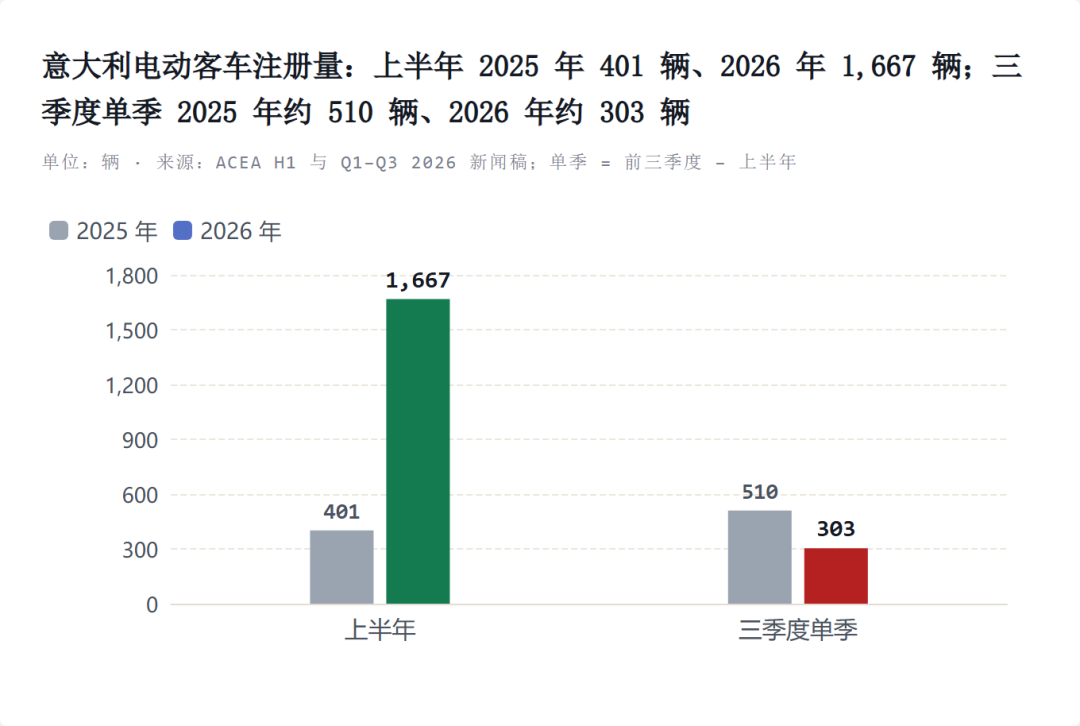
After the deadline, Italy registered only about 303 electric buses in the third quarter, versus about 510 a year earlier, down roughly 40%. Other member states together added about 301 more electric buses in the quarter, and EU electric bus registrations still grew about 4% in the quarter.
Counting vehicles over 8 tonnes, Italy registered 1587 battery-electric buses in the first half, including 218 from BYD, 107 from King Long, 80 from Yutong and 79 from CRRC, with Chinese brands accounting for about 30% combined. Iveco Bus ranked first with 889 units.
Poland registered 3107 buses in the first three quarters, up 68.6%, already more than Spain's 2952. Electric buses totalled 999, compared with 152 a year earlier. Contracts funded by Poland's recovery plan cover 1779 city and regional buses, 1241 of them battery-electric. Polish manufacturer Solaris won more than 40% of the orders.
Outside the EU
In the first three quarters, the UK registered 251036 vans, up 3.8%, of which 37133 were electric; 41358 trucks, up 13.0%; and 5672 buses, down 27.2%. In Norway, 10204 of 17877 vans were electric, more than half; of 3762 trucks, 889 were electric, about a quarter.
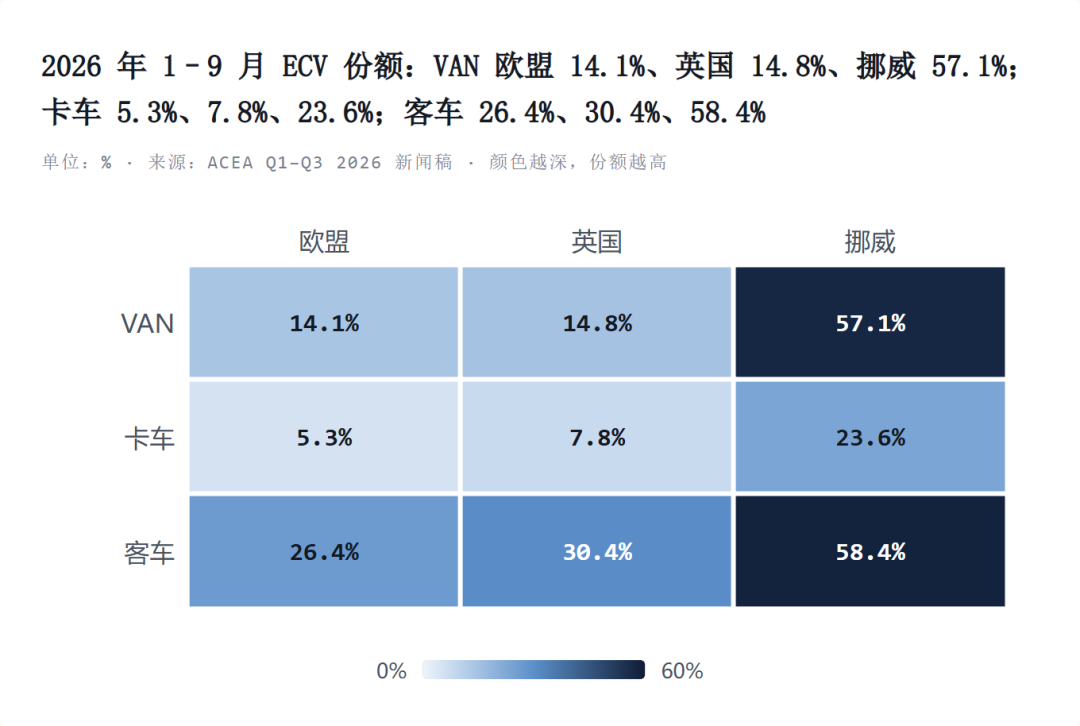
Source: Chart by AutoMusic based on the public sources listed in the article; first published on the AutoMusic WeChat account.
For Chinese companies exporting electric buses to Europe, subsidy program deadlines determine which quarter deliveries cluster in: Italy's deadline is June 30, while Poland's program is currently delivering. The electric share of heavy trucks remains 2.5%, and the heavy-duty vehicle CO2 standards will undergo a full review in 2027.