Kempower megawatt charging test for electric heavy trucks in Sweden
In Norrköping, Sweden, Kempower recently showcased a megawatt-class … closer to being “operational”…
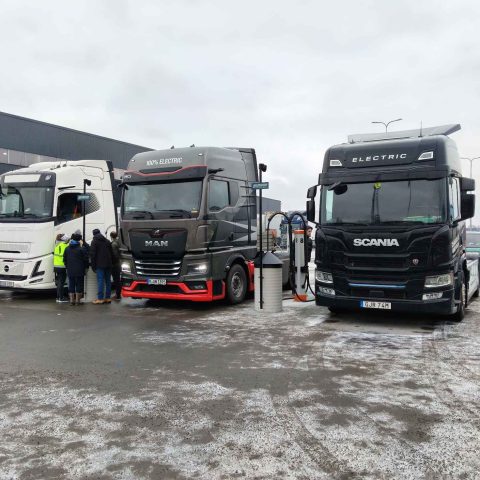
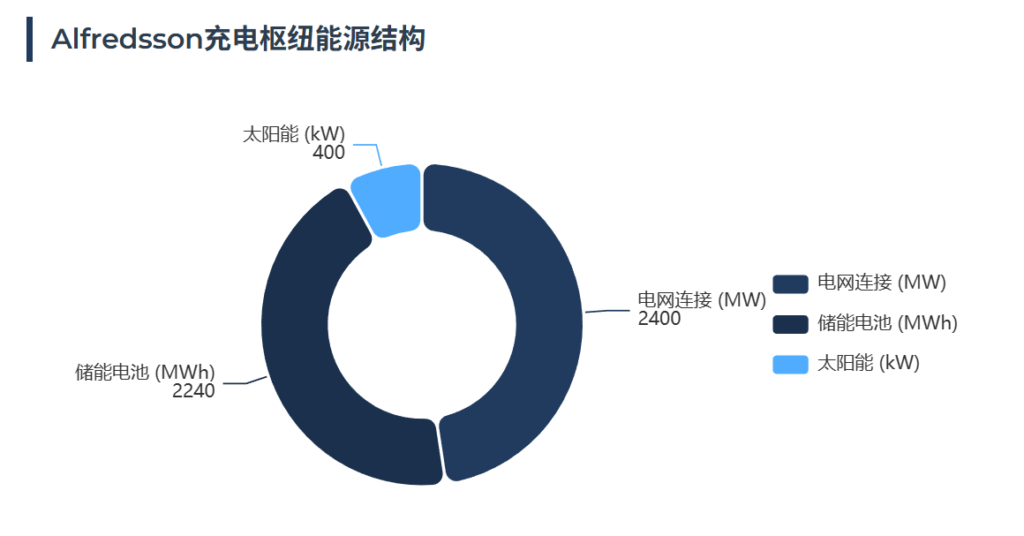
In Norrköping, Sweden, Kempower recently showed a megawatt charging setup that is much closer to commercial operation. The site has 12 heavy-truck charging bays with power ranging from about 400kW to 1.2MW. It can serve Nordic truck combinations up to about 34 metres long. Grid connection, energy storage, solar PV and energy management software are combined into one system that can deliver peak power.
Delivering peak power under grid constraints
The site has about 2.4MW of available grid power, plus about 400kWp of solar PV and energy storage of around 2.2MWh. The reasoning is that grid upgrades take a long time and heavy trucks have short charging windows. Storage smooths out peak demand, solar supplies part of the energy, and an energy management system shares power dynamically across the bays.
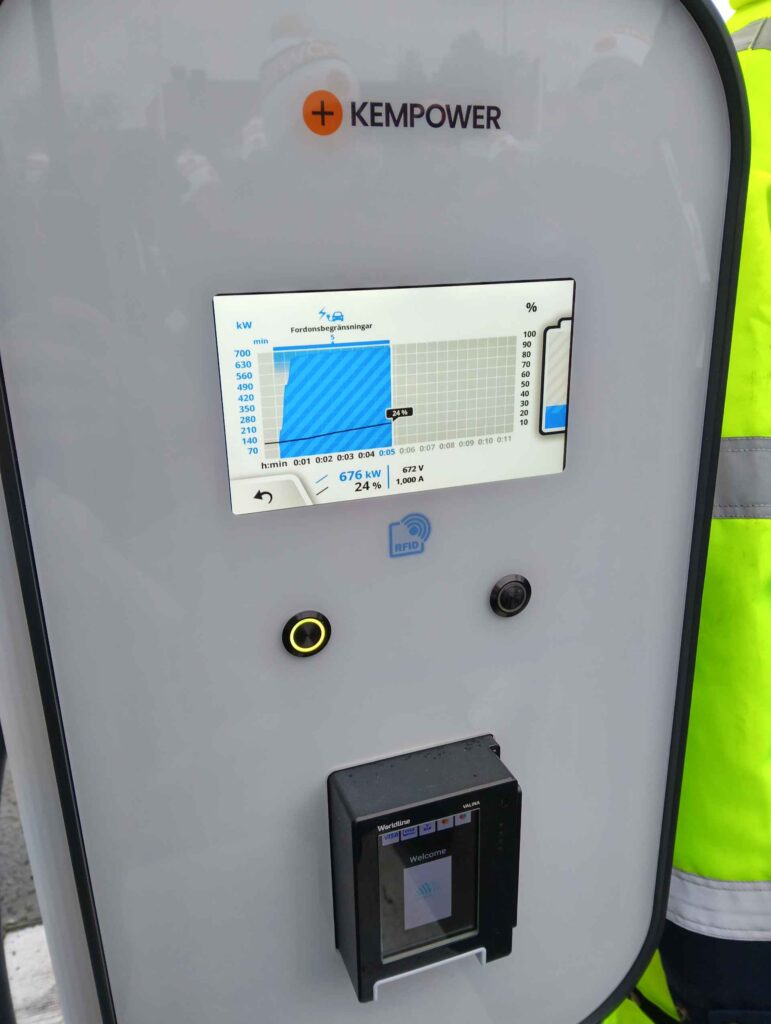
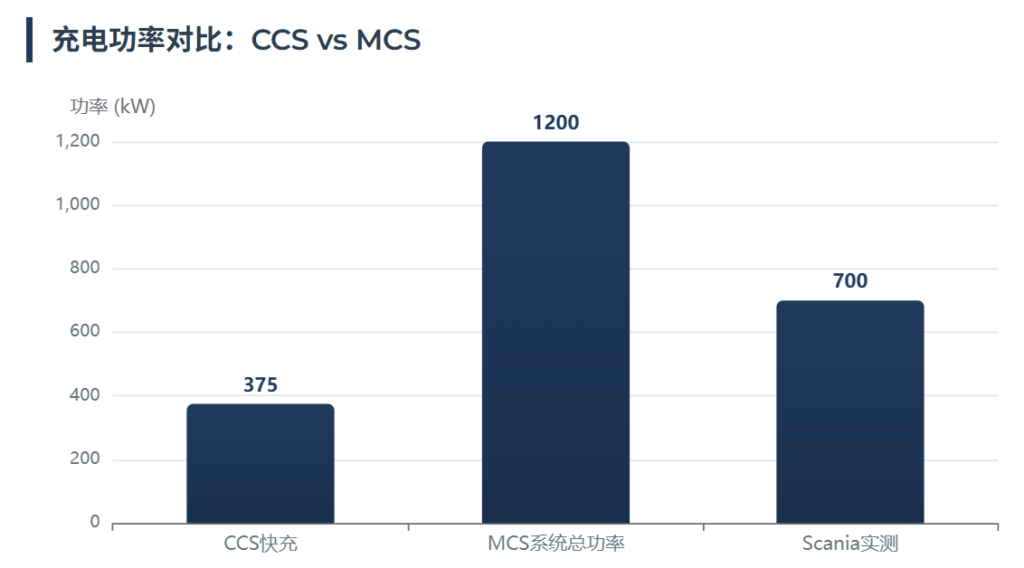
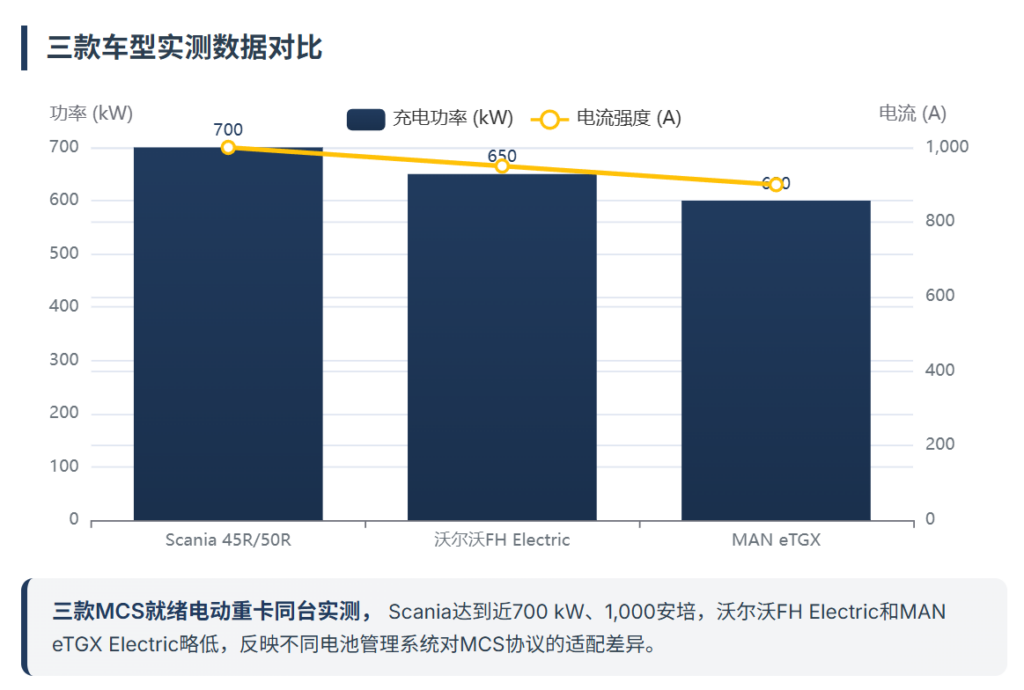
In testing, a Scania truck charged at nearly 700 kW and 1,000 amps, close to the maximum that current battery technology can safely accept. The cable system is the main engineering challenge. MCS cables are much larger than conventional CCS cables, have a maximum length of only 2.7 metres, and the entire system is liquid-cooled.
Semi-public fleet depots emerge as a middle ground
The site is not purely for private use. It is semi-public and open to outside users for a fee. This reflects how slowly Europe's public heavy-truck charging network is being built and how few dedicated heavy-truck sites exist. Fleet depots already have truck-friendly traffic flow, large bays, maintenance staff and steady demand. They can build up utilisation first and then open spare capacity to others. The result is a structure where fleets lead and the public network fills the gaps.
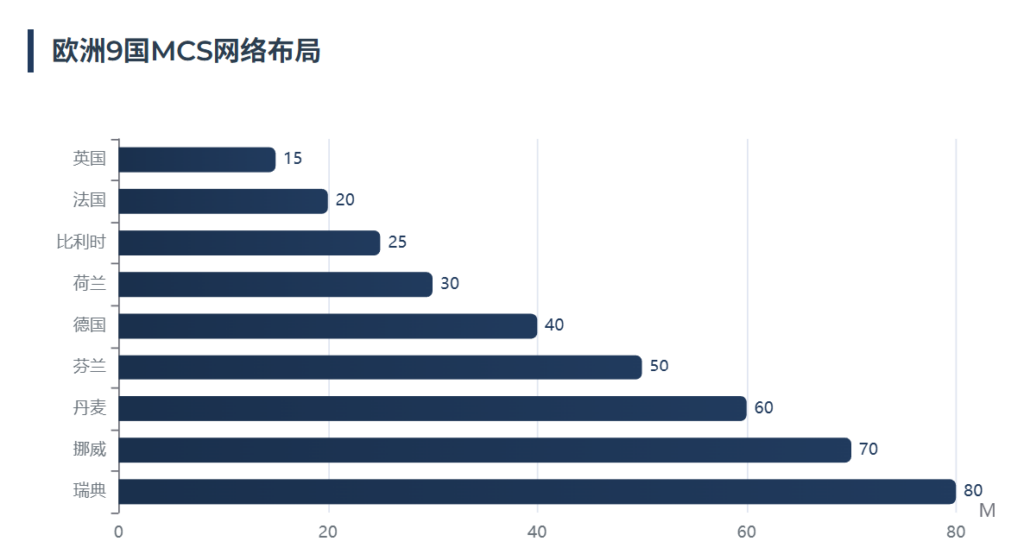
Kempower has installed similar megawatt charging systems in Norway, Denmark, Finland and the UK. Together, these sites form the early outline of a pan-European trunk-route charging network.
Ports, border crossings and logistics hubs scale up first
Several Nordic countries are already rolling out deployments. High-turnover locations such as ports and border crossings are scaling up most easily: traffic is concentrated, waiting is costly, and sites can more easily be set up as multi-bay high-power systems.
2026 is the first year of MCS commercialisation
Scania began offering MCS-capable electric trucks in early 2026. MAN starts series production of MCS models in Q2 2026. Mercedes-Benz has been testing its eActros 600 electric heavy truck across borders. E.ON, Voltixa and Greenway received €70 million in government subsidies and plan to install about 330 MCS chargepoints in nine European countries by 2028.
#ElectricHeavyTrucks #MegawattCharging #MCSStandard #EuropeanChargingNetwork #EnergyStorage #SolarPV #FleetOperations #LogisticsParks #ZeroEmissionTransport #EnergyManagement#MercedesBenz#Scania#MAN#MAN#Scannia