Leapmotor B05 launches in the UK from £28995
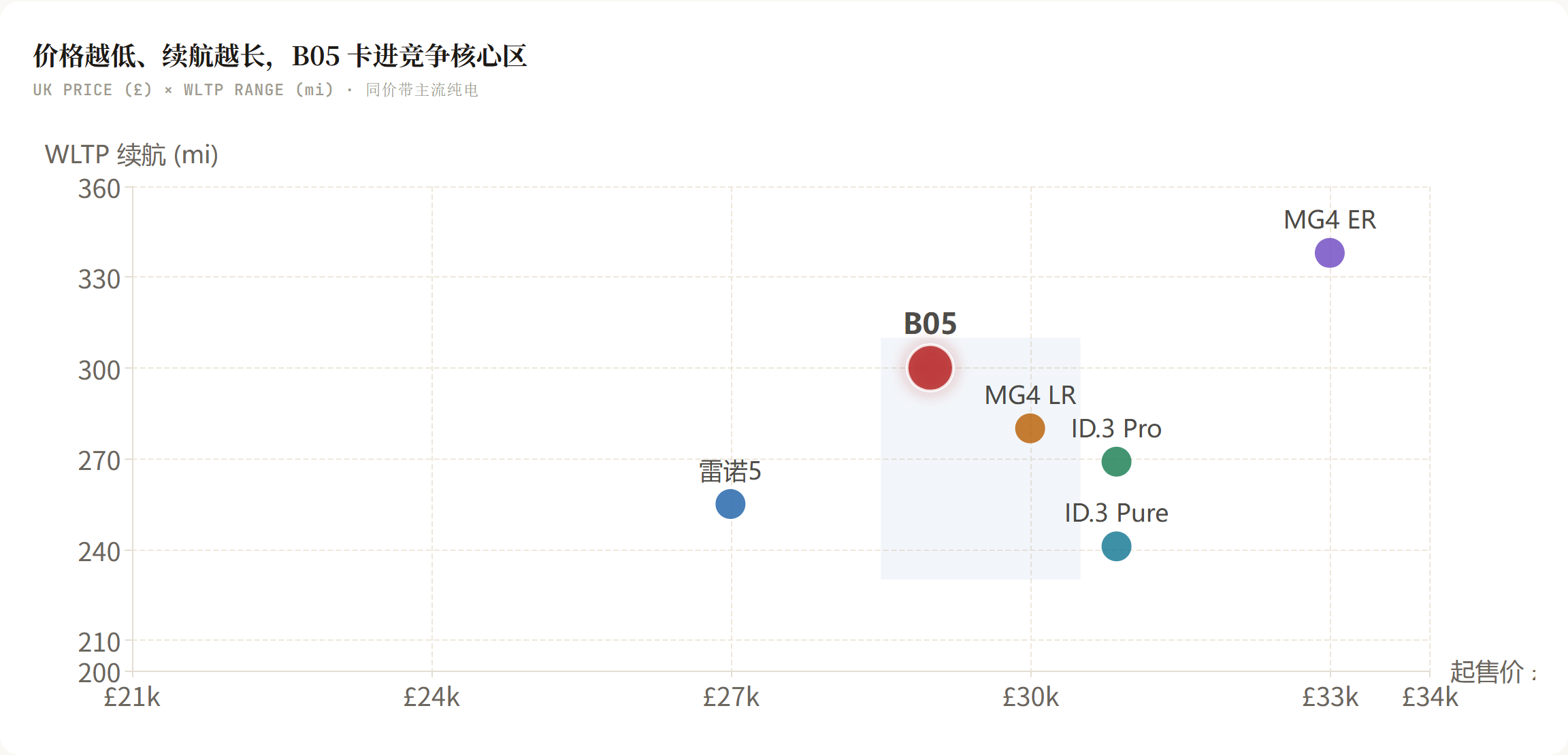
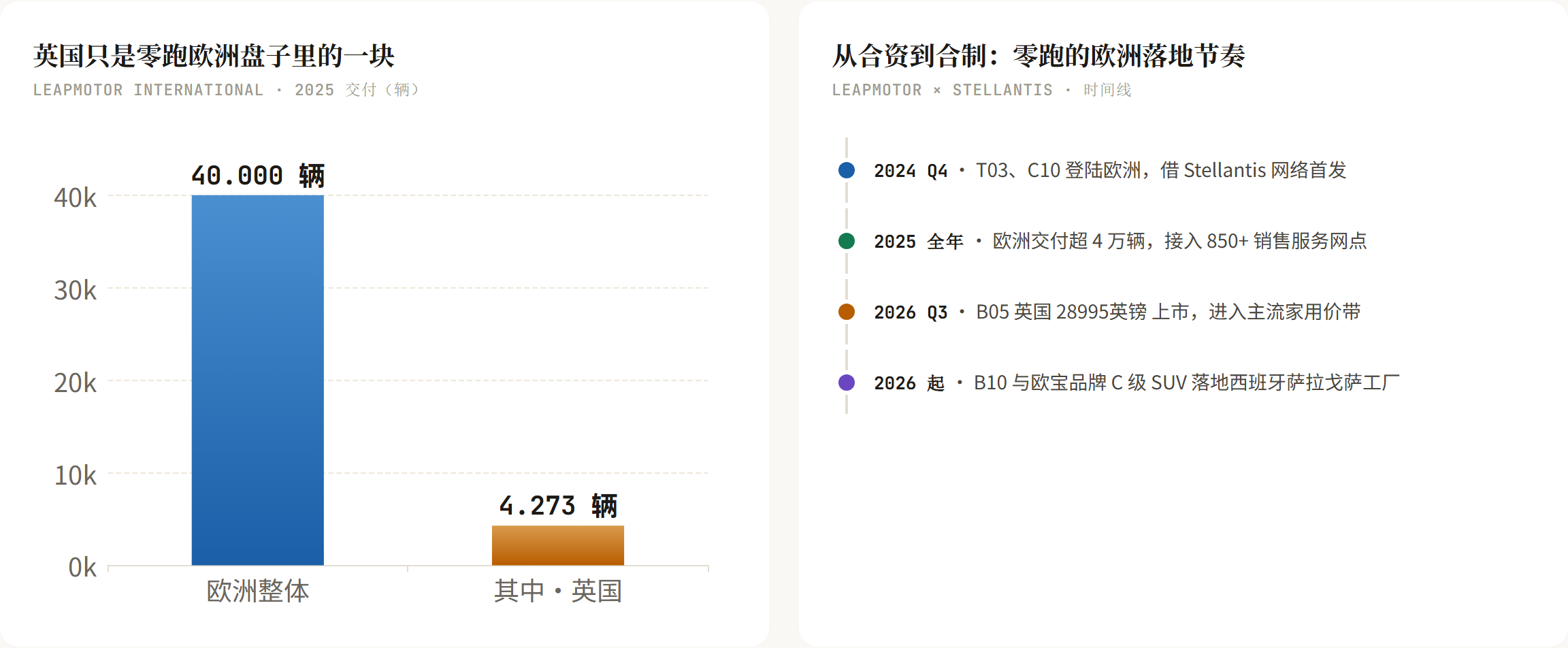
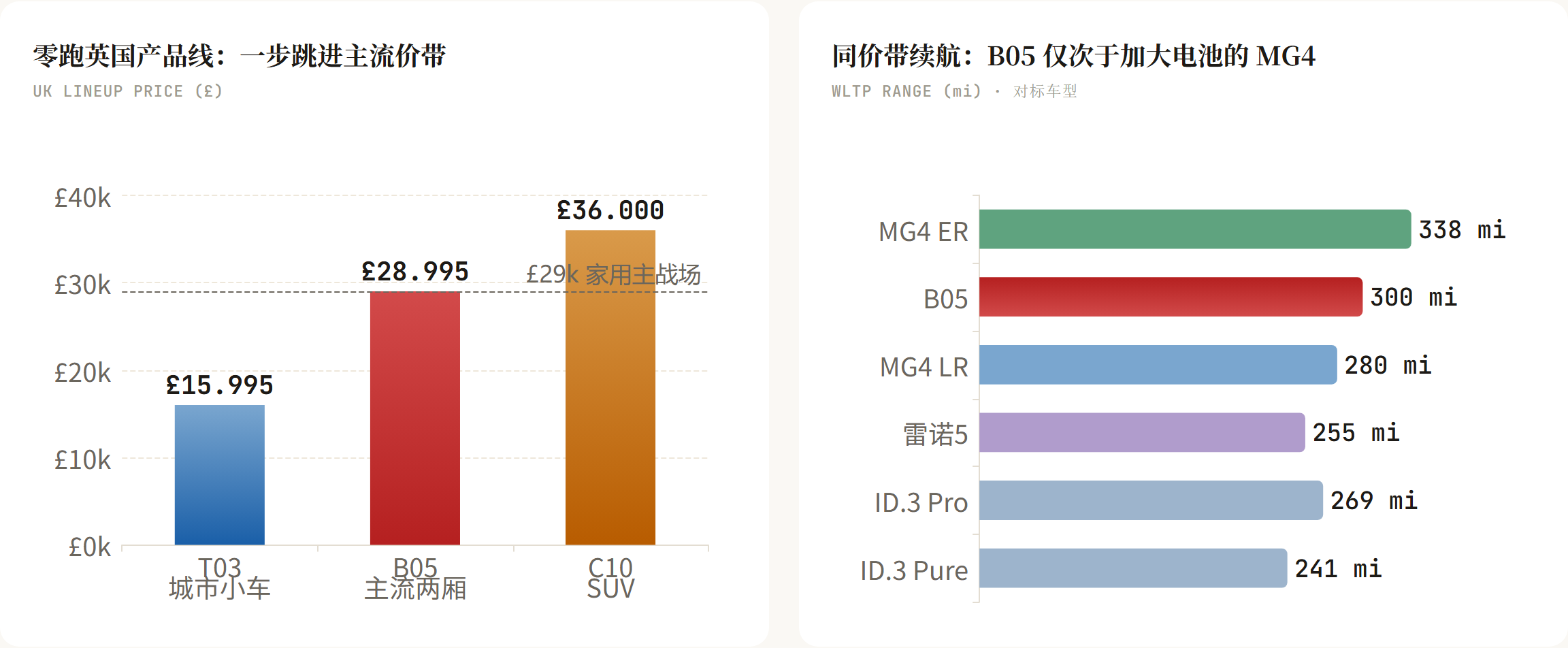
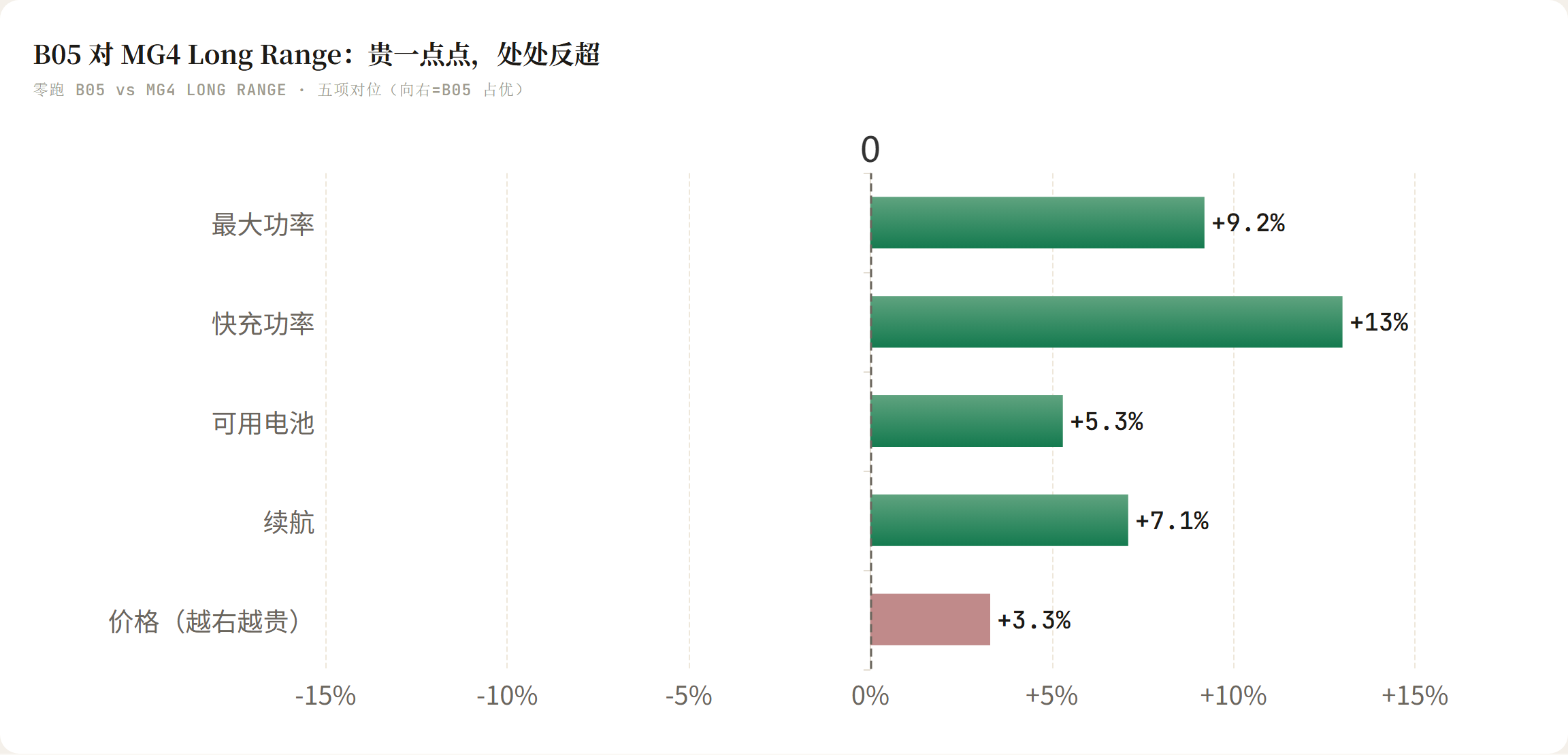
On the spec sheet alone, the B05's "300-mile range for under £30,000" makes it nearly £2,000 cheaper than the Volkswagen ID.3 with nearly 60 miles more range, and less than £1,000 dearer than the SAIC Motor MG4 with 20 miles more range. However, Leapmotor sold just 4,273 units in the UK in 2025, about 0.2% of the UK's 470,000-unit BEV market.
On the spec sheet alone, the B05, with "300 miles of range for under £30,000", is nearly £2,000 cheaper than the Volkswagen ID.3 with nearly 60 miles more range, and less than £1,000 more expensive than the SAIC Motor MG4 with 20 miles more range. Yet Leapmotor sold just 4,273 units across the UK in 2025, about 0.2% of the UK's 470,000-unit BEV market.
UK: the landing point for Chinese EVs
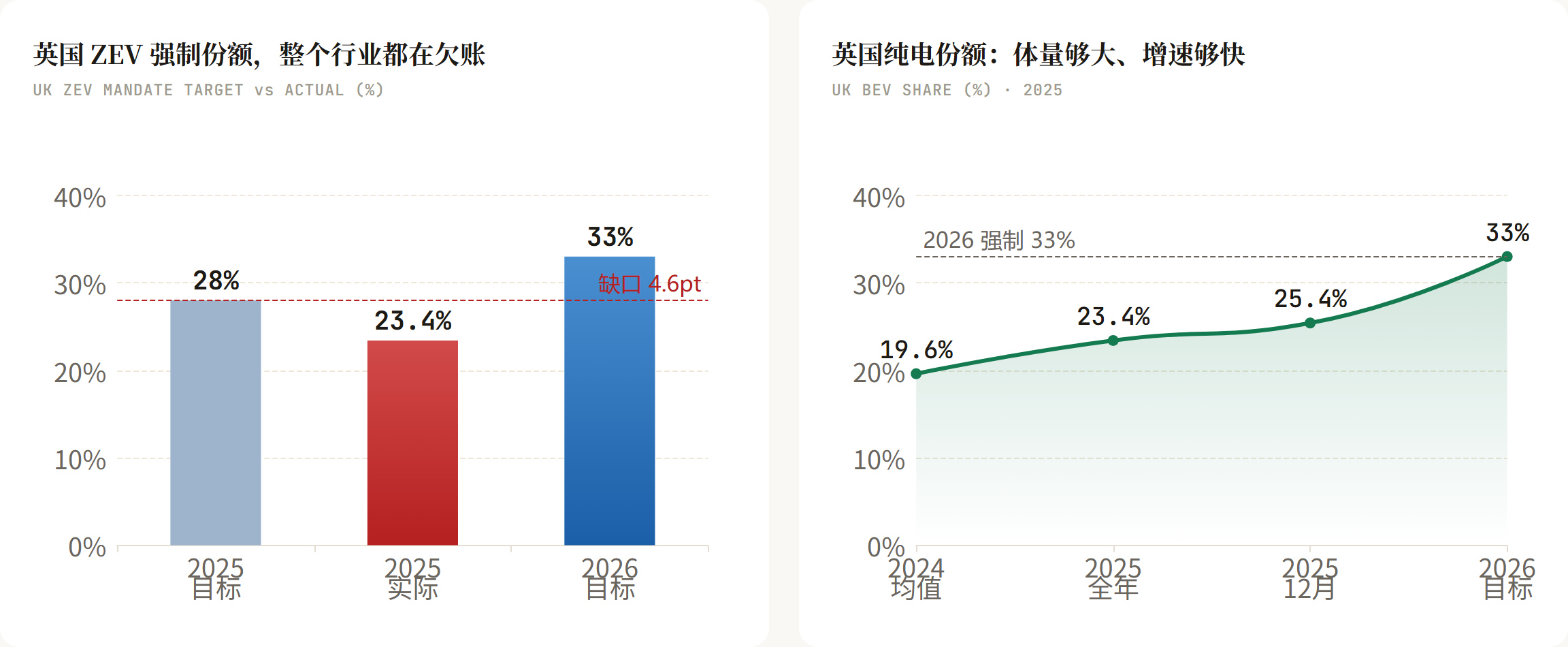
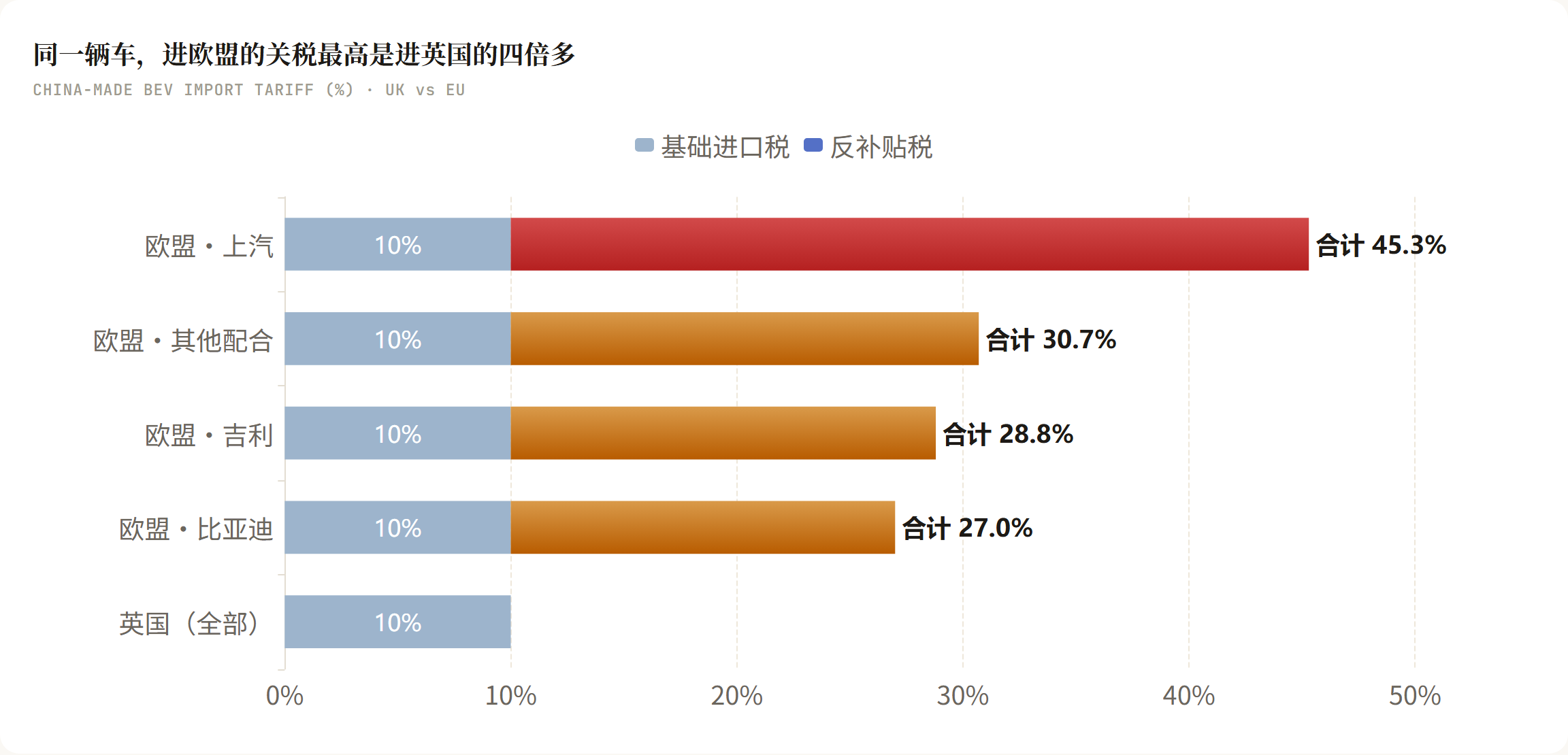
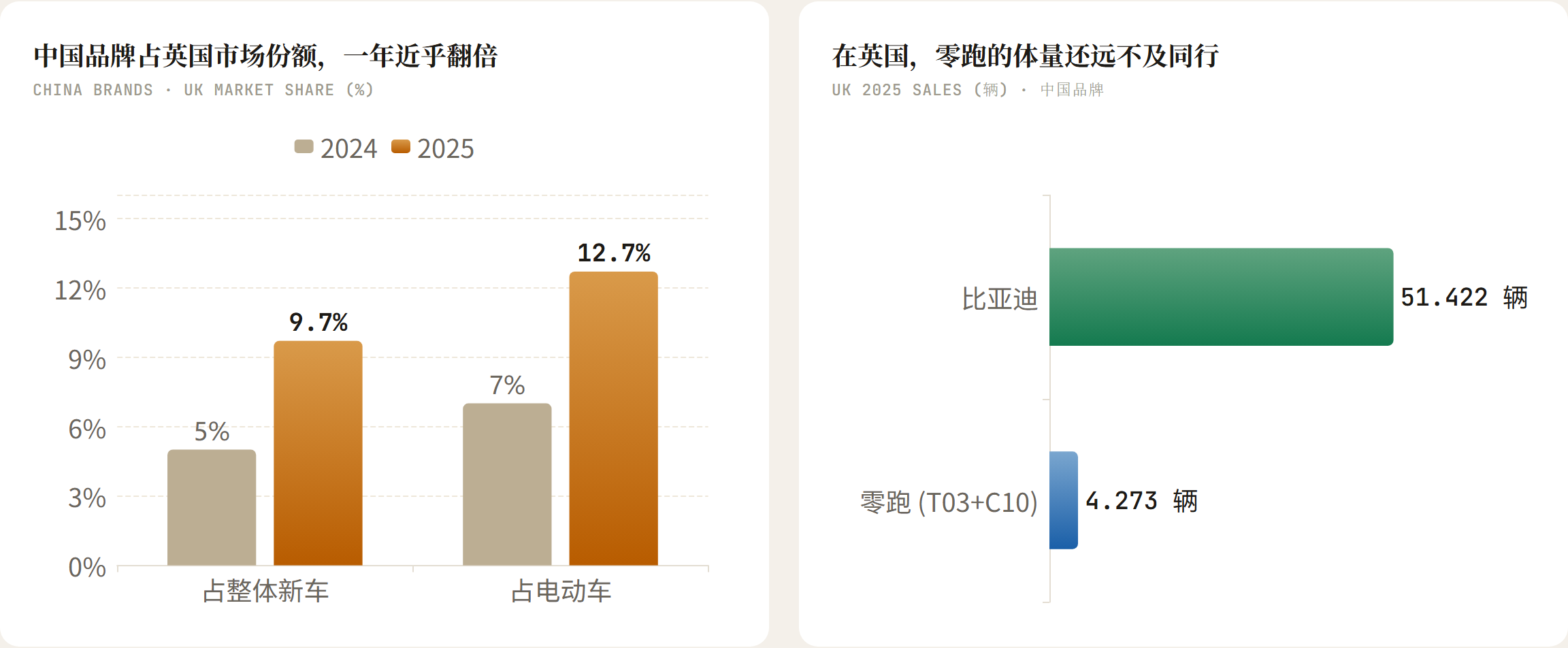
The UK sold 2,020,520 new cars in 2025, passing 2 million for the first time; of these, 473,348 were BEVs, a share of 23.4%, rising to 25.4% in December alone. It is a market with enough volume and fast enough electrification. And it is especially friendly to Chinese cars. On one hand, since Oct 2024 the EU has imposed anti-subsidy duties on Chinese-made BEVs on top of the 10% base import tariff: 35.3% for SAIC Motor, 17% for BYD and 18.8% for Geely, bringing the combined total to as much as about 45%. The UK did not follow. Chinese cars entering the UK pay only the 10% base import tariff, so the landed cost of the same car can differ by a third between the UK and the EU. On the other hand, there is the ZEV mandate gap. The UK requires automakers' BEV sales to reach about 33% in 2026, yet the industry as a whole missed the 2025 target of 28%, achieving only 23.4%, a shortfall of nearly 5 percentage points. The gap means pressure from fines, and it also means any car that can contribute BEV sales has extra value for legacy automakers. With both factors combined, Chinese brands already accounted for 12.7% of UK EV sales and 9.7% of the overall market in 2025, nearly double the previous year. The UK is the largest market for Chinese cars in Europe, at 213,768 units for the year.
How many units it takes for this playbook to work
To put "moving upmarket successfully" into a falsifiable number: Leapmotor sold 4,273 units across the UK in 2025, about 0.2% of the 470,000-unit BEV market. The presence of a "value-for-money EV" like the MG4 rests on tens of thousands of units a year for a single model. For the B05 to grow from a 0.2% brand base to MG-level volumes in the most crowded price band, it will take years of building reputation and residual values; the spec sheet is only the entry ticket.
For scale: the UK sells about 470,000 BEVs a year. If the B05 cannot reach even 1% (about 5,000 units) in its first year, "moving upmarket via a borrowed badge" will remain just a narrative in the UK, not a proven template. Watching that one first-year number is far more useful than watching the spec sheet at the launch event.
£28995 price tag
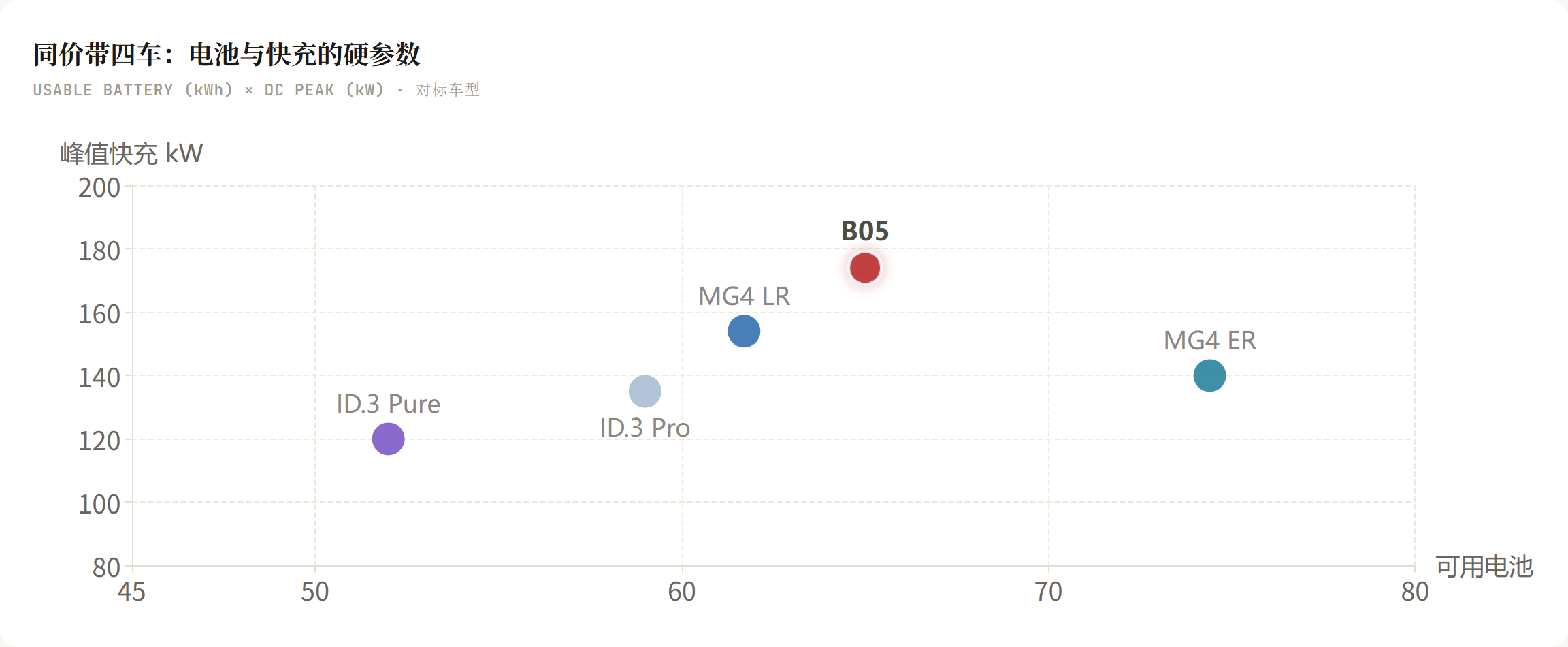
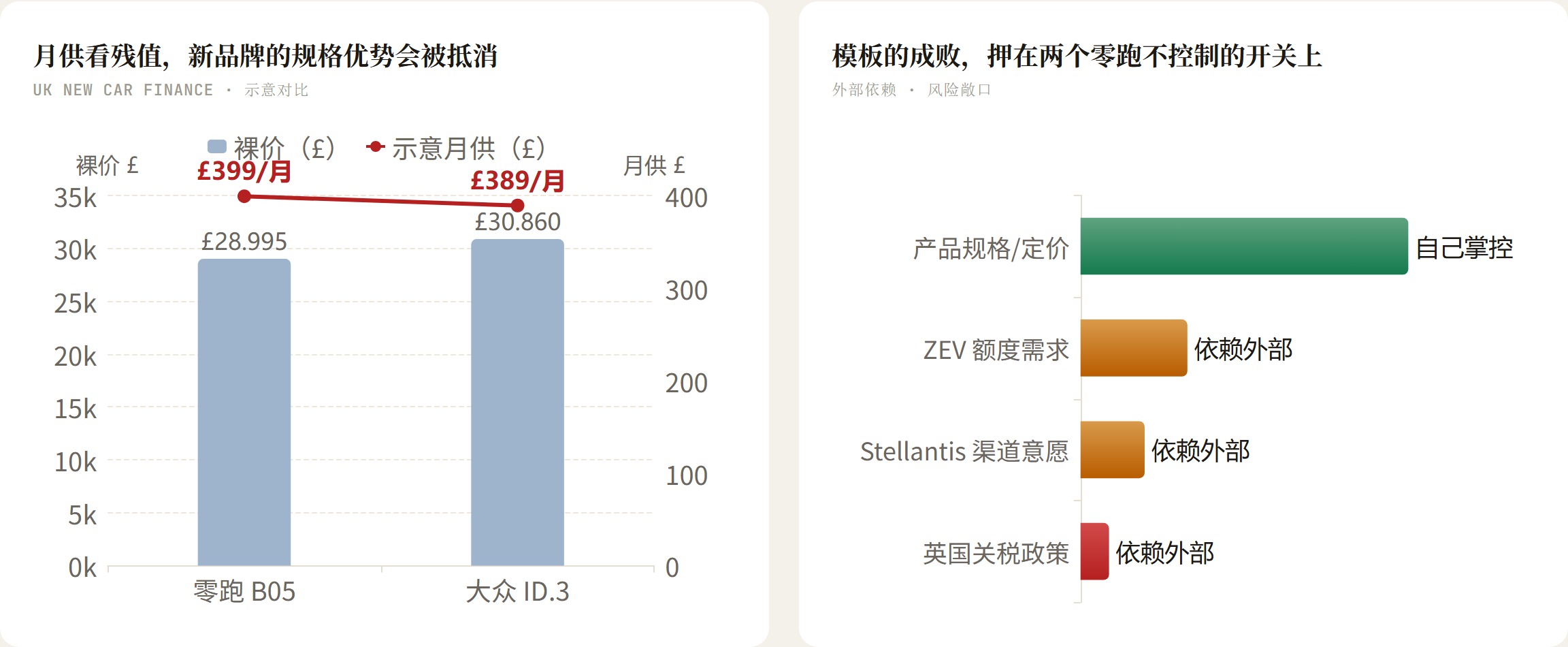
The UK-spec B05 comes in a single trim: a 67.1kWh battery, 300 miles of WLTP range, 215hp, 174kW fast charging from 30% to 80% in just 17 minutes, a 14.6-inch central display and 21 Level 2 driver-assistance features. In Europe, this spec usually comes with a higher price tag. The £28,995 price actually includes the UK government's £1,500 EV grant; the pre-grant OTR price is £30,495. Placed on the UK shelf, the price map is clear: among European rivals at the same price, the Volkswagen ID.3 Pure costs £30,860 but offers only 241 miles, with more range costing extra. Among Chinese peers, the MG4 Long Range offers 280 miles for £29,995, and longer range means the £32,995 Extended Range with 338 miles. The Renault 5 E-Tech is cheaper, starting at £22,995, but it is a small B-segment car in a different size class altogether. The B05 is precisely positioned. Compared with Leapmotor's own line-up a year ago, the brand had only the £15,995 T03 and the roughly £36,000 C10 in the UK, selling 4,273 units in full-year 2025. The B05 pushes its core price point from £16,000 to £29,000, straight into the family-car battleground that has the highest volumes and is the most brand-sensitive.
The first rival is Chinese brand MG
SAIC Motor's MG long ago claimed the "value-for-money EV" position in the UK with the MG4, which has been on sale for three years, building up reputation, residual value data and dealer familiarity. BYD sells 51422 units a year in the UK, more than Tesla. In the B05's price band, the first rival is the MG4: also from China, also selling on equipment and price, and SAIC got there three years earlier. Great Wall's Ora, Aiways and Seres all tried the "cheaper than Volkswagen, better equipped" playbook in Europe; most have exited or stalled. The only one that made it work was MG, thanks to its British heritage, decades of local recognition and a ready-made dealer network. Leapmotor will need something else to make up for its weakness in brand trust.
Stellantis' dealer network is both floor and ceiling
Leapmotor's answer to its brand weakness is to hand distribution to Stellantis. In the joint venture Leapmotor International, Stellantis holds 51% and Leapmotor 49%. The B05 plugged into Stellantis's network of more than 850 sales and service outlets in Europe from launch, and in 2025 this network delivered over 40,000 units in Europe. For a brand with almost no local recognition, getting nationwide distribution straight away is both the floor and the ceiling. The same showrooms carry Stellantis's own higher-margin models, such as the Peugeot e-308 and Citroën e-C4, so dealers have an incentive to push their in-house brands first. Control over Leapmotor's pricing, allocation and marketing sits with Stellantis. Once the B05 starts taking orders from Stellantis's own models, Stellantis can simply tighten its supply. Stellantis is willing to push the B05 for now because of its ZEV gap: to meet the 33% BEV share required in 2026, Leapmotor's sales slot neatly into its compliance quota. This means Leapmotor's sales ceiling depends, to some extent, on Stellantis's compliance needs.
The ceiling is in the same place. At £28995, the B05 sits in the same showroom as Stellantis' own, higher-margin Peugeot e-308 and Citroën e-C4, so dealers have an incentive to push the in-house brands first. Leapmotor is a minority shareholder, and allocation is in its partner's hands. Stellantis' strongest reason to push the B05 right now is to reach its own 33% ZEV share for 2026, so Leapmotor's sales ceiling depends to some extent on Stellantis' compliance needs.
Financing still matters
More than 80% of new cars in the UK are bought on PCP finance. Buyers focus on the monthly payment, and the monthly payment depends on the residual value. New brands have no residual value history and are usually given low residuals. Because the B05's residual value is unknown, its monthly payment could easily end up higher than that of an ID.3 with stable residuals. What makes the B05 interesting is not its specs. Through a single European joint venture, Leapmotor avoids three costs at once: the tariff wall, building its own brand and building its own sales network. If the B05 reaches 10,000 units, it will show that this "going global through a JV" model can be repeated. Chinese brands' share of the UK market rose from under 5% to 9.7% within a year, driven by a policy window. How quickly that window closes will decide how much longer the model can be repeated.
Which variable separates the B05 from the failures before it
Great Wall's ORA, Aiways and Seres all stumbled in Europe, which makes it easy to conclude that "new Chinese brands can't break in." But they have one thing in common: each built its own channels and went it alone, relying on an unknown brand to win customers and build after-sales from scratch.
B05 swaps out this variable: it borrows Stellantis's existing network of 850 outlets. So what B05 really has to prove is something else: whether a borrowed channel can substitute for the local brand heritage that SAIC Motor's MG built up over decades. This proposition can be falsified by sales, and it is more worth watching than "only MG has made it work": it tests a new model of overseas expansion, which matters more than the success or failure of a single model.
Of the three dependencies, which will loosen first?
Taken together, tariffs, ZEV and channels are really three faces of the same vulnerability: the B05's costs, shipments and sales ceiling all hinge on the current stance of Stellantis and the UK government. But the three are loosening at different speeds.
Tariffs are a political choice, and the UK carmakers' association is already lobbying to tighten them, so they are the most reversible factor. The ZEV mandate has a statutory timetable running to 2030 and cannot be changed in the short term. The sales channel is locked in by the joint venture contract, so it is also stable. The leading indicator for B05's fate is therefore the direction of UK tariff policy on China: once it shifts, the cost advantage disappears first, giving a signal earlier than monthly sales. By the time sales show problems, it is often too late.