SAIC MG4 EV Urban priced at EUR 24990 in Germany
On Apr 2026, SAIC Motor's MG launched the MG4 EV Urban in Germany at a starting price of €24990. What MG is doing in Germany is not simply selling cars cheaply, but using a precisely coordinated supply-chain strategy to carve up the €25000–32000 price band that previously belonged to European brands.
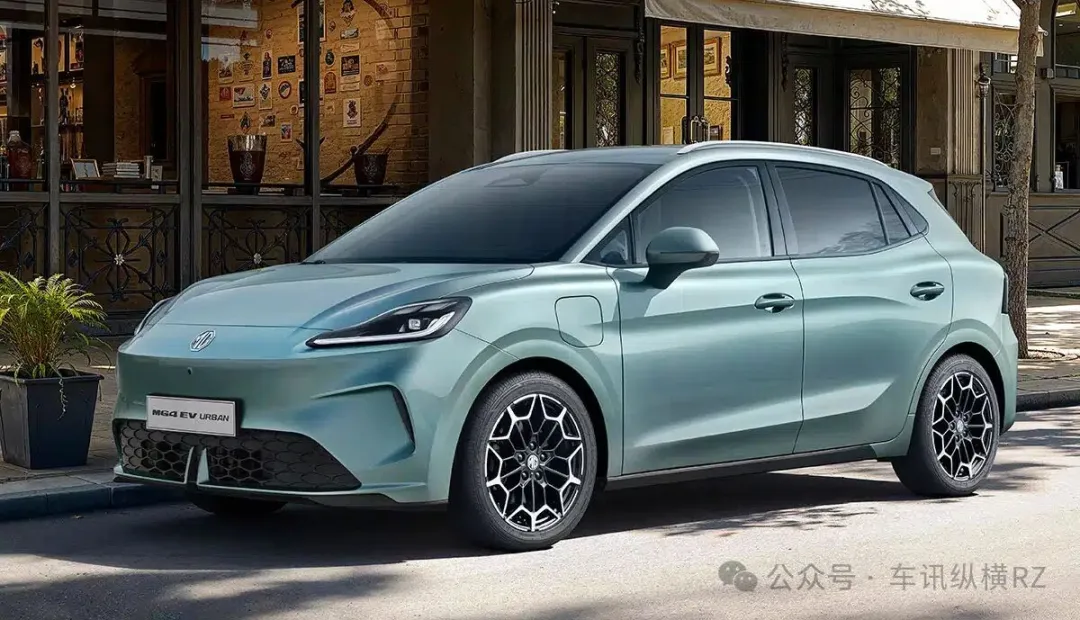
On Apr 2026, SAIC Motor's MG launched the MG4 EV Urban in Germany at a starting price of €24990. What MG is doing in Germany is not simply selling cars cheaply, but using a precisely coordinated supply-chain strategy to carve up the €25000–32000 price band that previously belonged to European brands.
Demand structure has changed
The starting point for understanding the MG4 EV Urban's pricing is not technological maturity but the shift in Germany's demand structure. Data show the BEV share of new cars in the EU rising from 9.1% in 2021 to 17.4% in 2025, and further to 18.8% in 1–2 2026. Germany is the core engine: BEV registrations grew 43.2% year on year in 2025, and another 26.3% in the first two months of 2026. As of Jan 1, 2026, Germany had 2034260 battery-electric passenger cars on the road, a net increase of 382617 in one year. German consumers are asking whether their next family car can keep total cost of ownership under control.
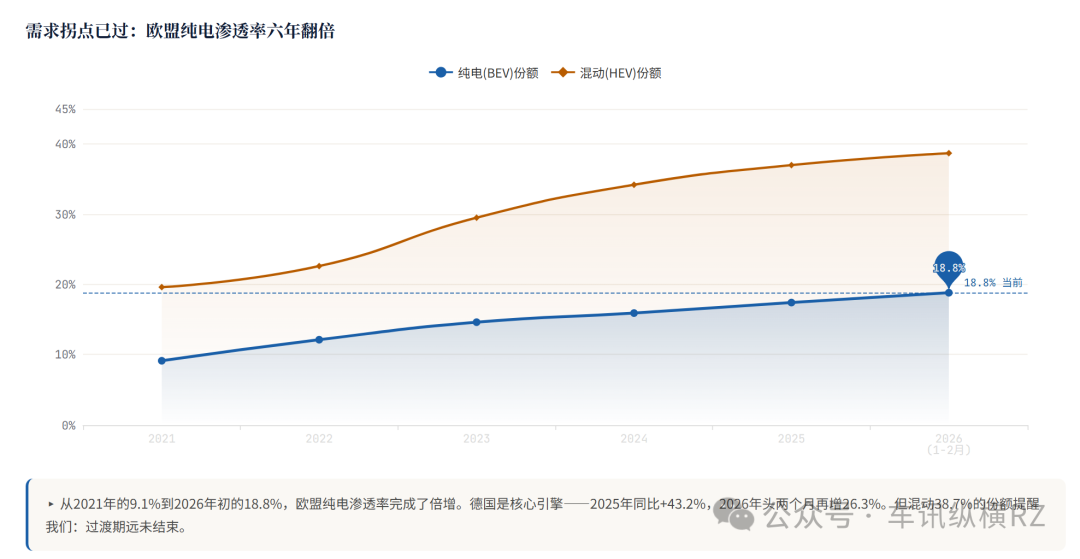
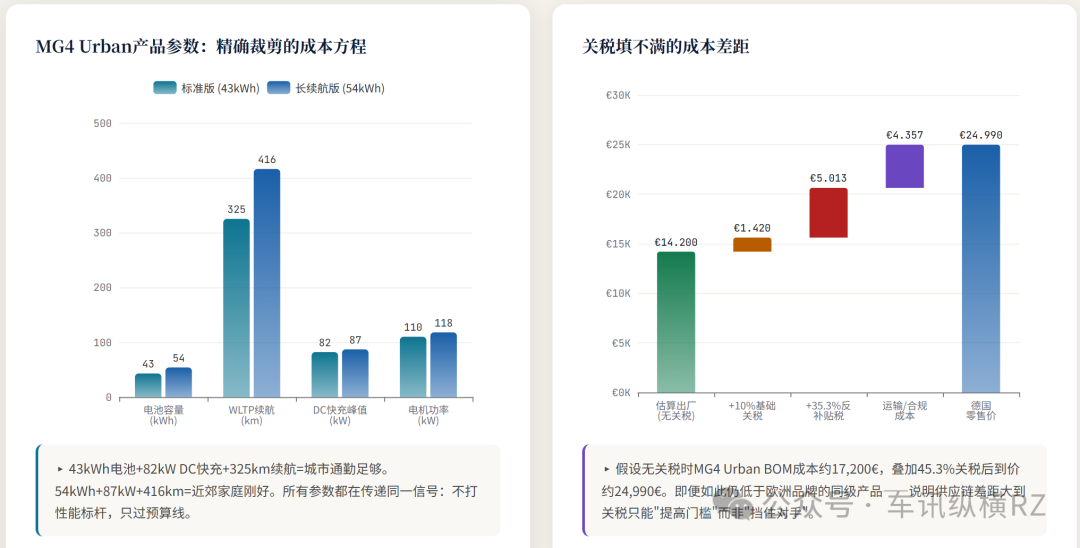
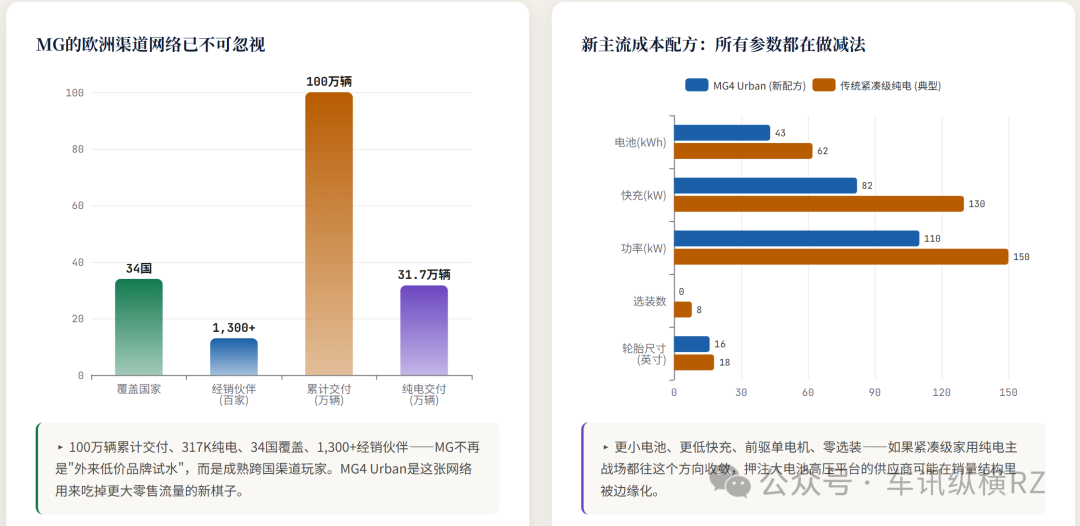
But the other half of the picture matters just as much. In the first two months of 2026, hybrids still held a 38.7% share of the EU market, more than twice the 18.8% for BEVs. Charging infrastructure is very uneven, and only one in seven public chargers in the EU is a fast charger. A car with a 43 kWh or 54 kWh battery and a DC peak charging power of only 82 kW or 87 kW is naturally suited to city commuting and suburban families. It is not suited to being a household's only car for long trips. So the MG4 EV Urban is not meant to replace combustion cars outright. It is a tightly trimmed, cost-focused EV. Every spec is set to stay within what German households can afford. It does not try to lead on performance; it only has to come in under budget.
The German government is covering MG's customer acquisition costs
On Jan 19, 2026, the German federal government announced a new EV purchase subsidy scheme. Buying or leasing a new BEV qualifies for a subsidy of at least EUR 3,000, rising to a maximum of EUR 6,000 for low-income families with children. The annual household income threshold is EUR 80,000, raised by EUR 5,000 per child up to a cap of EUR 90,000. It applies to new cars first registered from Jan 2026, and the application portal is expected to open in May. The three-year budget is EUR 3 billion, enough to support up to 800,000 vehicles.
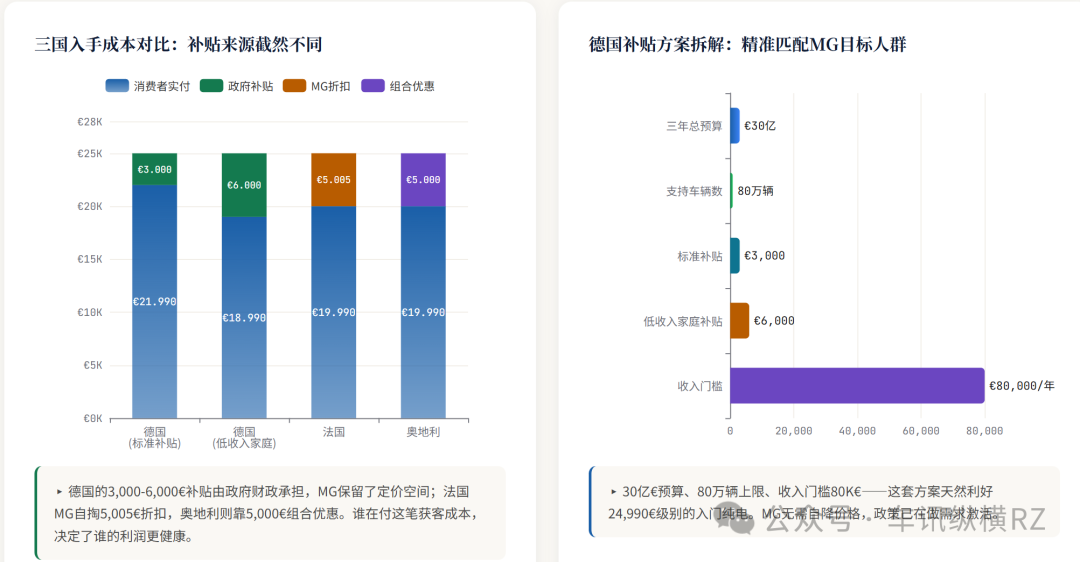
This overlaps closely with the MG4 EV Urban's target group – MG itself defines its target customers as families, commuters and city dwellers. At EUR 24990 plus a subsidy of at least EUR 3000, the theoretical entry price falls to about EUR 21990; for low-income families with two children it can drop as low as EUR 18990.
In France, the MG4 Urban has official prices of 24995/27495/30495 across three trims, and until Jun 30, 2026 MG is giving private buyers a direct €5005 discount, bringing the entry version down to €19990. In Austria, a package of a €2500 trade-in bonus + €2000 leasing incentive + €500 insurance achieves the same €19990. In Germany, MG does not need to fund a market subsidy of the same scale out of its own pocket, because public finances are already bearing the cost of stimulating demand. Germany is not the hardest market for MG to trade profit for volume; it may in fact be the market where it can most easily turn low prices into actual sales. The mainstream view sees only the low price, not who is paying for it.
Still priced at €24990 despite 45.3% tariffs
Since Oct 30, 2024, the EU has levied definitive anti-subsidy duties on Chinese-made battery-electric passenger cars. SAIC Motor's rate is 35.3%, which comes on top of the existing 10% base tariff for a total duty burden of 45.3%. Even under this pressure, MG has still managed to bring its starting price down to EUR 24990.
MG's vehicle BOM, procurement system, manufacturing efficiency and logistics are still strong enough to keep it competitive. Tariffs have not shut MG out; they have only shifted competition from "crushing on price" to "who can absorb more margin". Second, if the supply chain gap is so large that even tariffs cannot close it, the policy no longer "keeps rivals out" but merely "raises the bar" — a signal European brands need to take seriously.
Dealer networks are key
-
The MG4 EV Urban is not a cheap version of the old MG4. The existing MG4 EV is still sold in Germany from EUR 42990, keeping rear-wheel drive, more power and up to 545 km of range. The Urban targets the EUR 24990 to 31490 bracket on its own, creating a four-tier price ladder. This protects two profit pools at once: entry-level family volume, plus the higher per-unit margin of the original MG4.
-
-
Having no paid options is generous to consumers and a structural cost reduction for the channel: fewer SKUs, lighter inventory, and easier stock management and standardised deal packages for dealers (subsidy + financing + insurance + trade-in bundled). In Germany's strongly retail-driven subsidy market, that is worth more than an extra feature.
-
By Feb 2026, MG had delivered a cumulative 1 million vehicles in Europe, 317,000 of them battery-electric, across 34 countries and more than 1,300 dealer partners. MG is an established multinational channel player.
Mid-tier brands are the first casualties
The Volkswagen ID.3 Pure lists at €33330, or €29330 after a €4000 purchase incentive, still €4340 more than the entry-level MG4 Urban. For price-sensitive families, that is no small sum.
But Volkswagen is not the most vulnerable party. In Germany's BEV registration ranking for the first two months of 2026, the Skoda Elroq led with 6527 units, the ID.7 was second with 4878 and the ID.3 third with 4860. Volkswagen Group's brand recognition, service network, residual value expectations and acceptance among corporate fleets remain more solid than MG's. Volkswagen faces margin pressure, not an existential crisis.
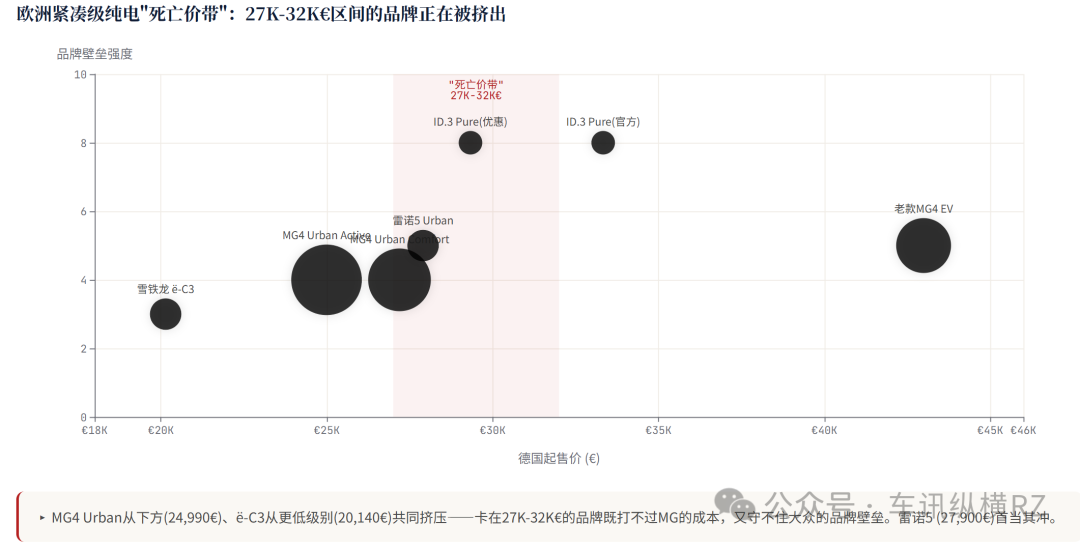
The brands that really suffer are those caught in the middle. The Renault 5 40 kWh Urban Range version starts at EUR 27900 in Germany; Stellantis's Citroën ë-C3 can be had for EUR 20140, but it is a smaller class and cannot meet the compact-class space needs that the MG4 Urban addresses. MG is targeting brands that have neither Volkswagen's dealer and finance moat, nor ultra-low-segment entry products, nor local manufacturing advantages, yet sit at the EUR 27000 to 32000 price point. They will be the first to be squeezed out.
The MG4 EV Urban shows a new mainstream cost recipe: a smaller battery, lower DC fast-charging power, a single front-wheel-drive motor, limited wheel sizes, simple trim packages and no options. If the core compact family BEV segment converges in this direction, suppliers betting on bigger batteries, higher-voltage platforms and more complex chassis could be sidelined in the sales mix, even if their technology is more advanced.
Residual value is the biggest hidden variable
Germany's subsidy covers both purchase and leasing, which naturally pushes more deals toward financing. But whether low monthly payments hold up depends above all on residual values three years out. The MG brand iterates fast, moves prices aggressively, and uses the same names on different architectures, which can confuse the used-car market. Selling the MG4 EV Urban alongside the pricier MG4 EV helps segment new-car price bands, but may add identification costs in the used market over "which car is the MG4, exactly". If any link loosens among new-car margins, lease residuals and used-car turnover, the business loop becomes unstable. Buyback prices in three years, parts turnaround for repairs, insurance claims assessment and the stability of software updates are the real variables that will decide this contest.
Who closes the business loop first
Competition in Europe's compact BEV segment is no longer about who electrifies first but about who closes the business loop first. Only those who control battery packs, specifications, distribution channels and financing have the standing to talk about scale; those who talk only about technology roadmaps and industrial visions will lose pricing power in the face of a figure like EUR 24990. Nor has MG stopped at the importer stage: in Mar 2026 it opened a European engineering centre in Frankfurt, Germany, and plans to bring its SolidCore semi-solid-state battery to the European market by year-end.
For every player in Europe's automotive value chain, what matters most now is not the first batch of MG4 Urban orders but three follow-up indicators: how quickly German subsidies are actually paid out, how MG's used-car residual values trend three years from now, and how fast mid-priced brands exit. Only these three numbers will really tell you whether the EUR 24,990 price anchor is a flash in the pan or the new normal.