A fifth wheel a few centimetres lower: Mercedes-Benz rewrites the rules of electric heavy truck competition
What can an electric truck change? Most people think first of range, charging speed and payload. In Jun 2026, Mercedes-Benz Trucks launched the eActros Lowliner (low-chassis version) and pointed the answer in a different direction: not a bigger battery or longer range, but a lower fifth-wheel height on the tractor. The move sounds anything but sexy, yet it may be one of the most produ
What can an electric truck change? Most people first think of range, charging speed and payload. On June 2026, Mercedes-Benz Trucks launched the eActros Lowliner (low-chassis version), taking the answer in a different direction: not a bigger battery or longer range, but **lowering the tractor's fifth-wheel height**. It sounds anything but sexy, yet it may be the most strategically significant move among electric heavy-truck products of the past two years. Why "a few centimeters lower" means real money in logistics The fifth wheel, the coupling on a tractor unit that connects it to the semi-trailer, directly determines how tall the trailer's interior can be. European freight makes heavy use of mega-trailers. These high-volume trailers are constrained by a legal maximum overall height (usually around 4 m), so every 1 cm reduction in the tractor's fifth-wheel height adds the same amount of internal clearance to the trailer. For logistics companies hauling e-commerce parcels, cartons and light industrial goods, the bottleneck has never been payload but volume: space fills up before weight does. Fifth-wheel height directly determines how many more pallets can be loaded per trip, and in turn shapes the operating cost structure. Conventional low-chassis diesel tractors lower the fifth wheel by optimising the driveshaft layout, which is manageable. Electric trucks face a structural obstacle: heavy battery packs and e-drive systems take up chassis space, making a low fifth-wheel height harder to achieve than on comparable diesel trucks. This is the root reason electric trucks have made slow progress in volume transport. The problem is not insufficient range but a structure that takes up more interior height than a diesel truck. The eActros Lowliner claims fifth-wheel height and ground clearance comparable to equivalent diesel low-chassis trucks. If delivery data bear this out, logistics companies switching to electric tractors **will not need to replace their existing Mega-Trailers or modify loading dock heights**, making the operational transition almost frictionless. Shifting adaptation costs away from shippers is how the Lowliner really lowers the barrier to electrification. 400 or 600 version: doing the maths on payload versus range Lowliner comes in two configurations, with clear differences and transparent trade-offs: **eActros 400 Lowliner**: 2 battery packs, 414 kWh installed capacity, payload of up to **24 tonnes**, 10%–80% charge in about **46 minutes**. 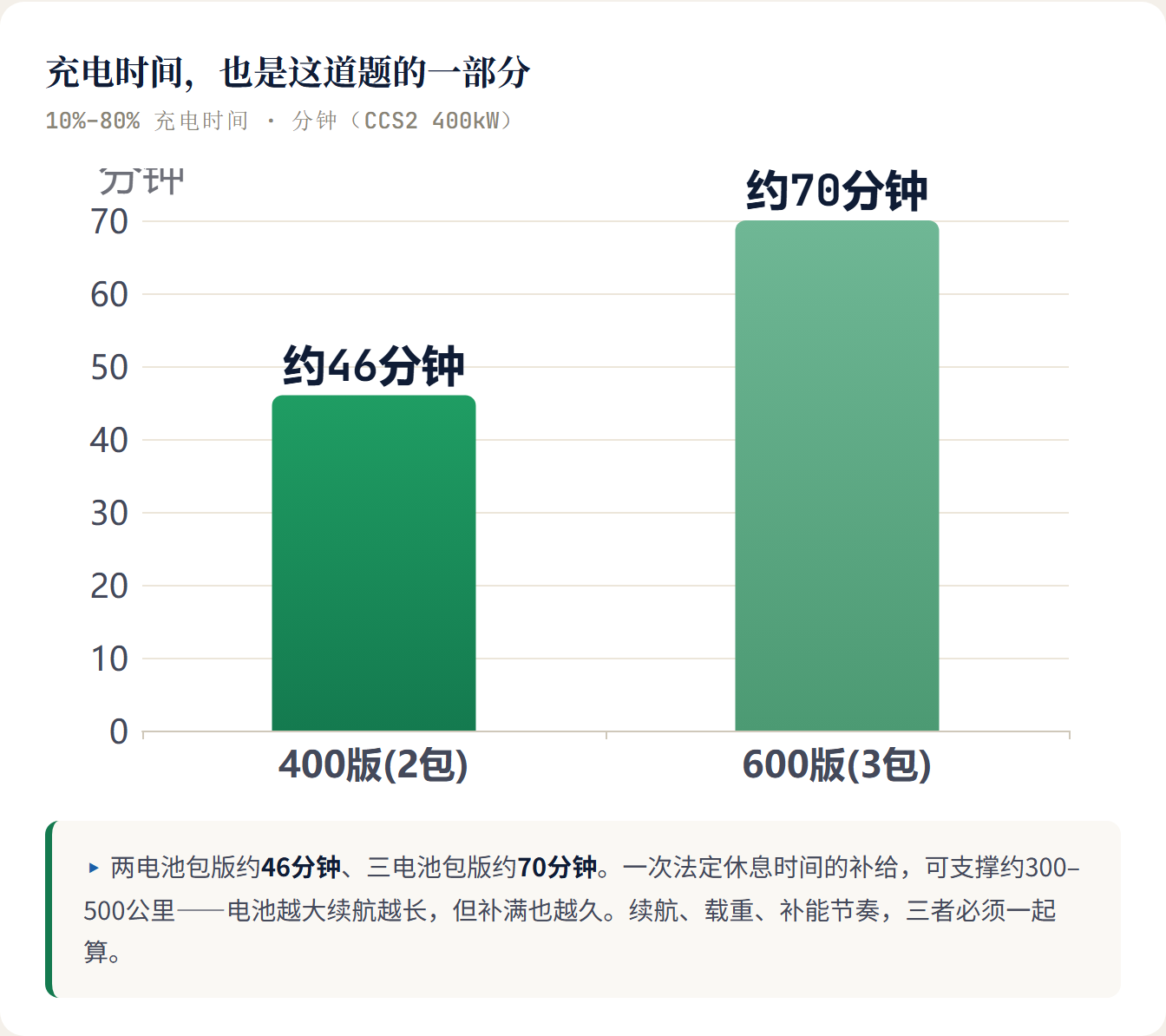 **eActros 600 Lowliner**: 3 battery packs, 621 kWh installed capacity, payload of up to **21 tonnes**, 10%–80% charge in about **70 minutes**. 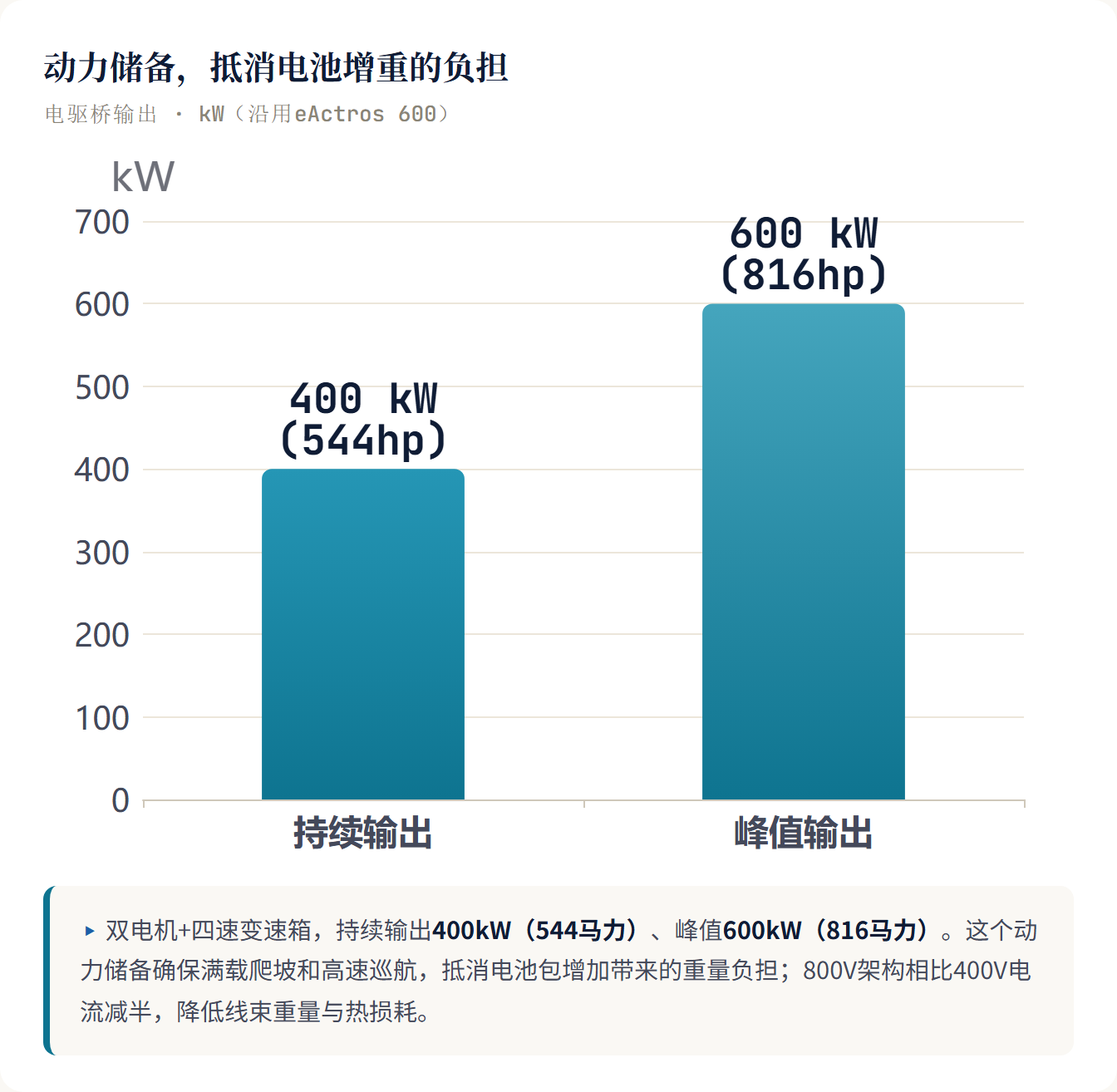 Each battery pack is standardised at 207 kWh. Fitting one fewer pack converts the weight saved into 3 tonnes of extra payload. What do these 3 tonnes mean in freight economics? Depending on cargo density, roughly **10% to 15%** more cargo, which directly lifts load revenue for long-haul operations with fixed trip counts and fixed routes. 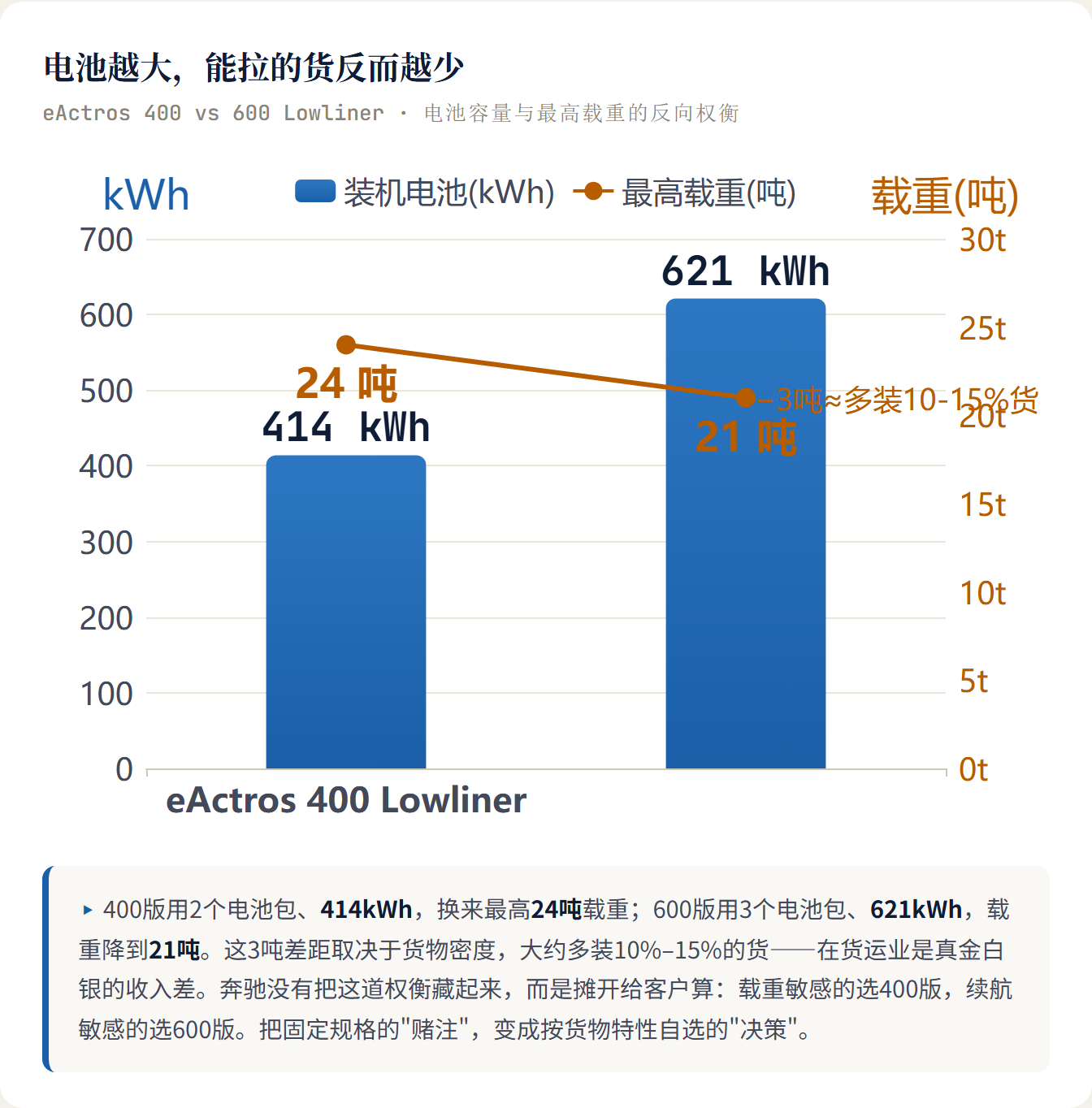 The two versions offer similar range: at 40 tonnes gross combination weight under standard conditions, up to about **500 km**. That covers a large share of intercity distribution and regional line-haul work in Europe. For customers hauling dense freight, the 400 version's logic is "maximize payload first; the range is already sufficient". For customers carrying light, bulky goods, the 600 version trades a bigger battery for stronger range assurance, with volume already an advantage in itself. The clever part of this modular design is that it turns the purchasing decision from "which truck do I buy" into "what is my cargo density". Shippers plug in their own operating data and work out which version gives the lower cost per tonne-kilometre. The logic holds up on its own, with no need to be won over by brand messaging. Both versions share the same drivetrain: twin motors with a four-speed gearbox, delivering 400 kW (544 hp) continuous and 600 kW (816 hp) peak, while the 800-volt architecture keeps heat losses under control at high power. Platforms: the real moat behind 40 variants The Lowliner is not a model developed from scratch but another derivative of the eActros platform. The eActros 600 entered customer operation at the end of 2024, and by the time the Lowliner was launched, Mercedes-Benz had derived **about 40 configuration variants** from this chassis platform. The Lowliner directly reuses the core components of the eActros 600: the e-axle, 800-volt high-voltage architecture, LFP (lithium iron phosphate) batteries (usable capacity above 95%, with relatively strong cycle life and thermal stability), the Interactive 2 cockpit, Predictive Powertrain Control, five-level energy recuperation and one-pedal driving. 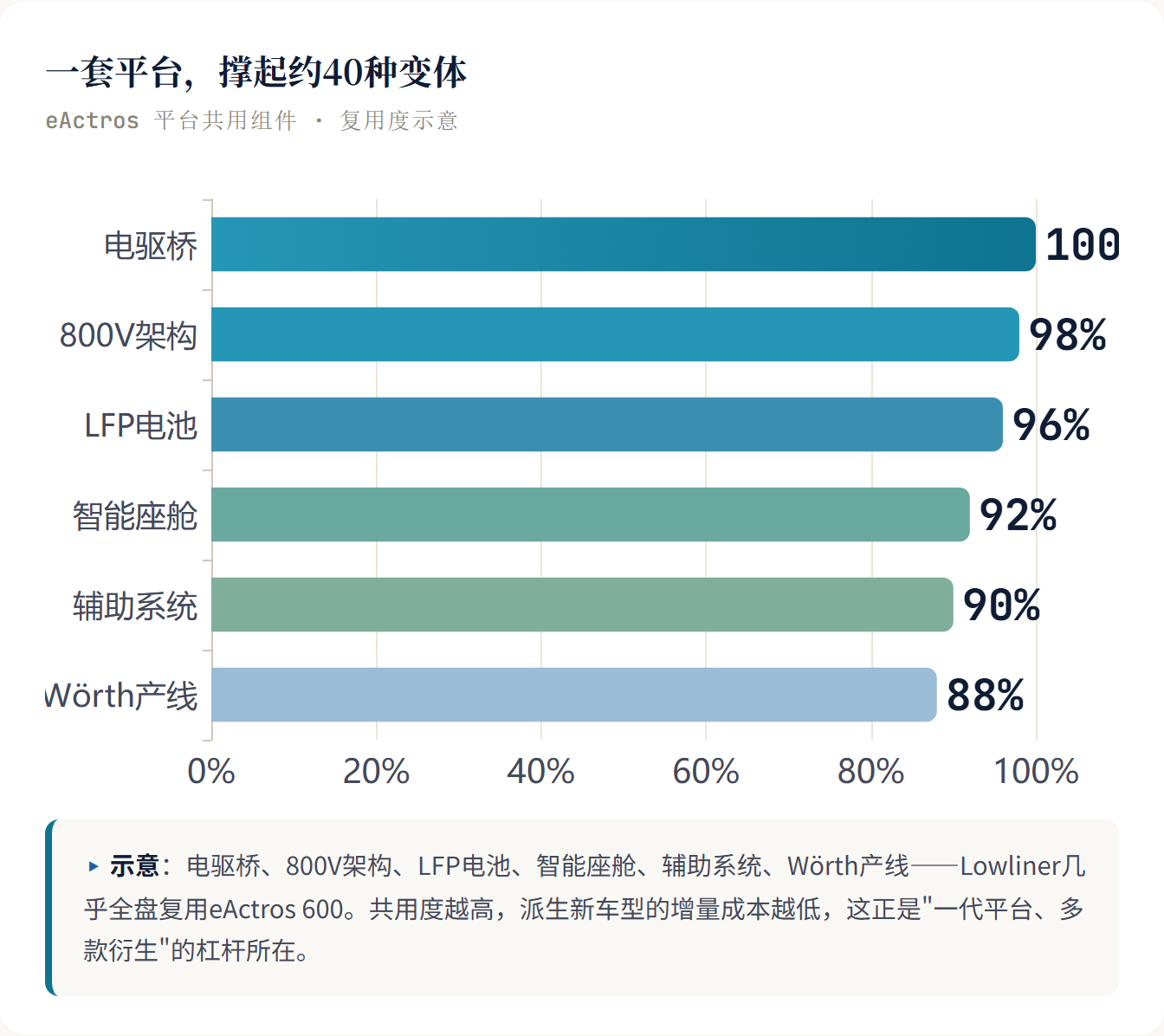 A shared platform also means shared production lines at the Wörth am Rhein plant. The electric models are integrated into mainstream manufacturing rather than run as standalone projects, so their cost curve and iteration pace will diverge from those of specialist electric truck makers going it alone. **The real barrier in platform strategy is accumulated time.** With each generation of the eActros platform, the engineering experience, supplier relationships, service network and driver training are spread over more variants, driving down unit costs. This compounding effect is something a well-funded newcomer can buy technology for, but can hardly buy. When a brand can spin off new models quickly at very low incremental R&D cost and spread initial manufacturing costs by sharing capacity with diesel trucks, its staying power in electrification follows an entirely different competitive logic from that of "electric-only" start-ups. Charging strategy: 400 kW today, 1 MW tomorrow The Lowliner's charging design reveals Mercedes-Benz's view of how infrastructure will develop over the next 5 years. A CCS2 connector is standard, supporting **DC fast charging of up to 400 kW**. On the 400 version, a single charge (10%–80%) takes about 46 minutes, short enough to fit within the driver's statutory rest break; on the 600 version it takes about 70 minutes, which can usually be slotted into a stop along the route in real-world scheduling. This is already enough to support daily operations on most European intercity delivery routes: the vehicle recharges while the driver takes the mandatory break. 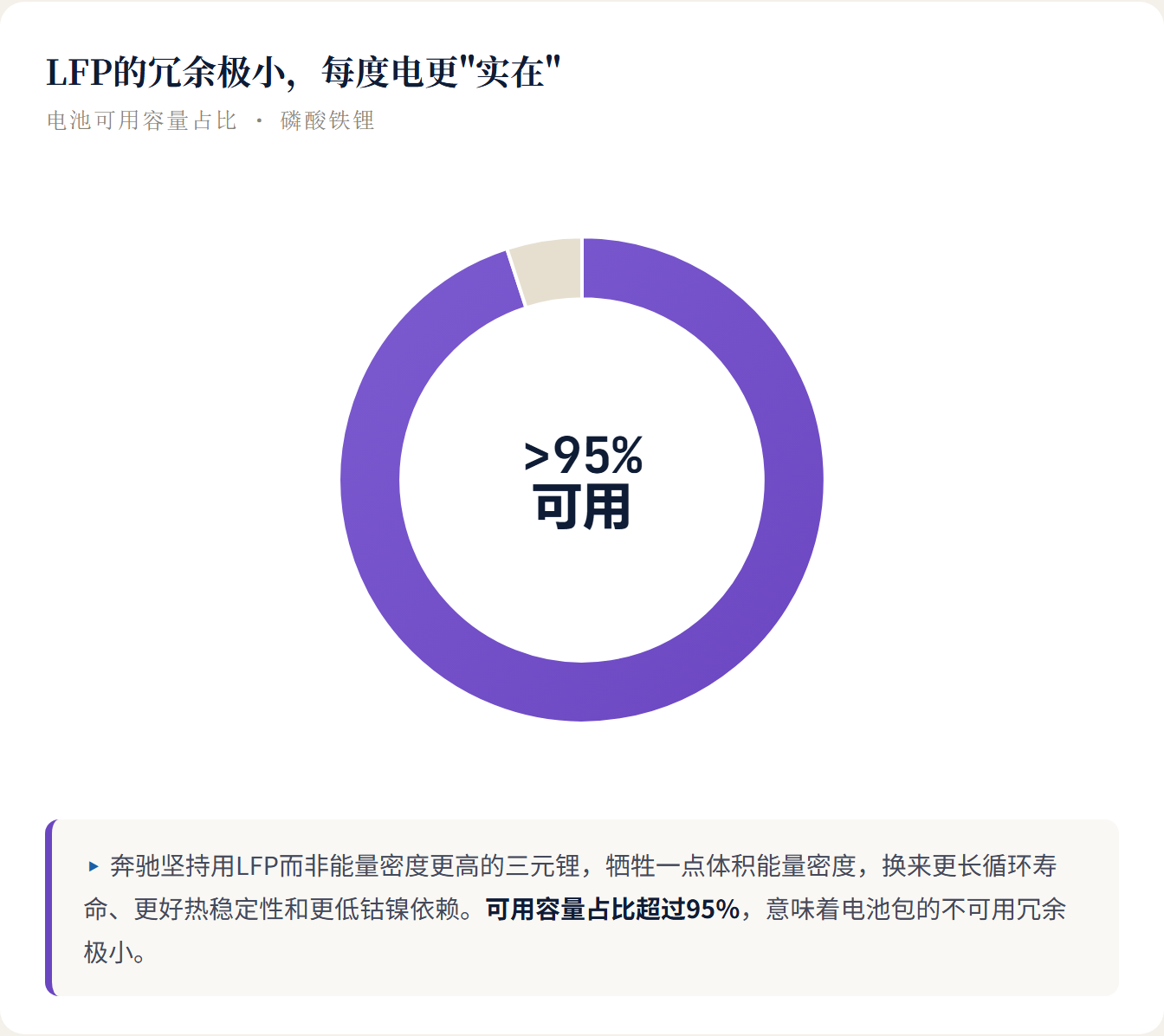 More interesting is the **optional MCS (Megawatt Charging System) provision**. The MCS standard theoretically supports charging power above 1 MW, and Europe is accelerating the build-out of the network, with density expected to increase significantly between 2027 and 2030. A Lowliner delivered today will not need to be replaced when the MCS network matures; only the connector needs upgrading to use higher charging power. In effect, this hedges in advance part of the biggest long-standing uncertainty for electric trucks: infrastructure not yet keeping pace. 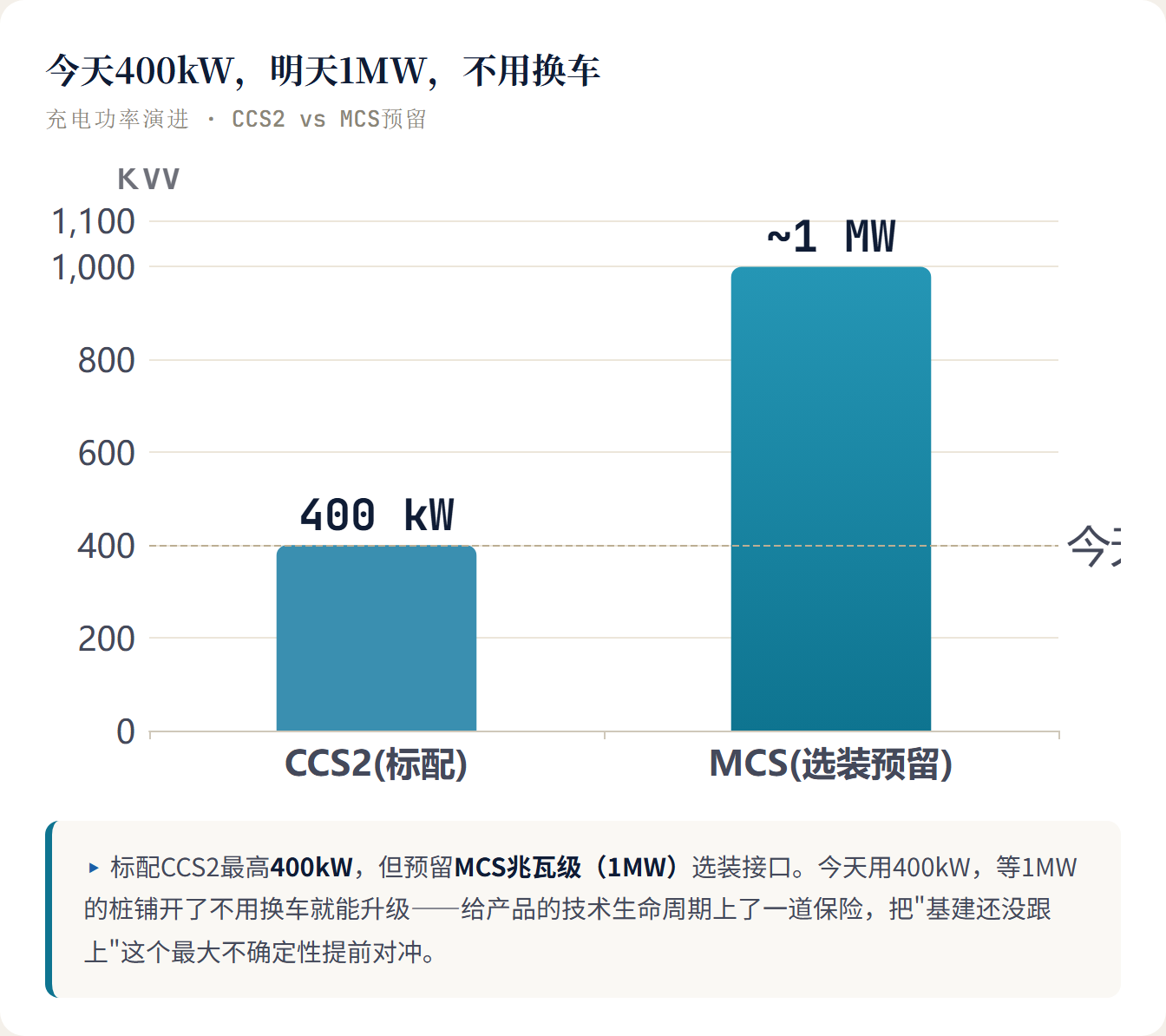 The timing of this move is carefully calculated: orders open in the EU30 market in Q3 2026, with **volume production at Wörth in Q2 2027**. From 2027 to 2030, enforcement of the EU's heavy-duty CO2 standards enters a clearly tougher phase. By delivering early and building an operating track record, a proven product will have a first-mover advantage when compliance pressure and MCS infrastructure ramp up at the same time.  Volume transport: a blue ocean long overlooked by the range narrative For the past few years, the dominant narrative around electric heavy trucks has been a "range race": who can do 500 km, who can do 800 km. But that narrative obscures a specific need: medium-distance intercity distribution of e-commerce parcels, corrugated boxes and light industrial goods, routes where trucks max out on volume long before they reach their payload limit. Short-haul distribution is already covered by medium electric trucks, and long-haul heavy trunk routes are dominated by long-range models; **medium-distance, volume-sensitive intercity distribution was previously an overlooked gap**. The Lowliner does not compete with the 600 version on long haul or with medium trucks on short haul, but targets this specific use case. 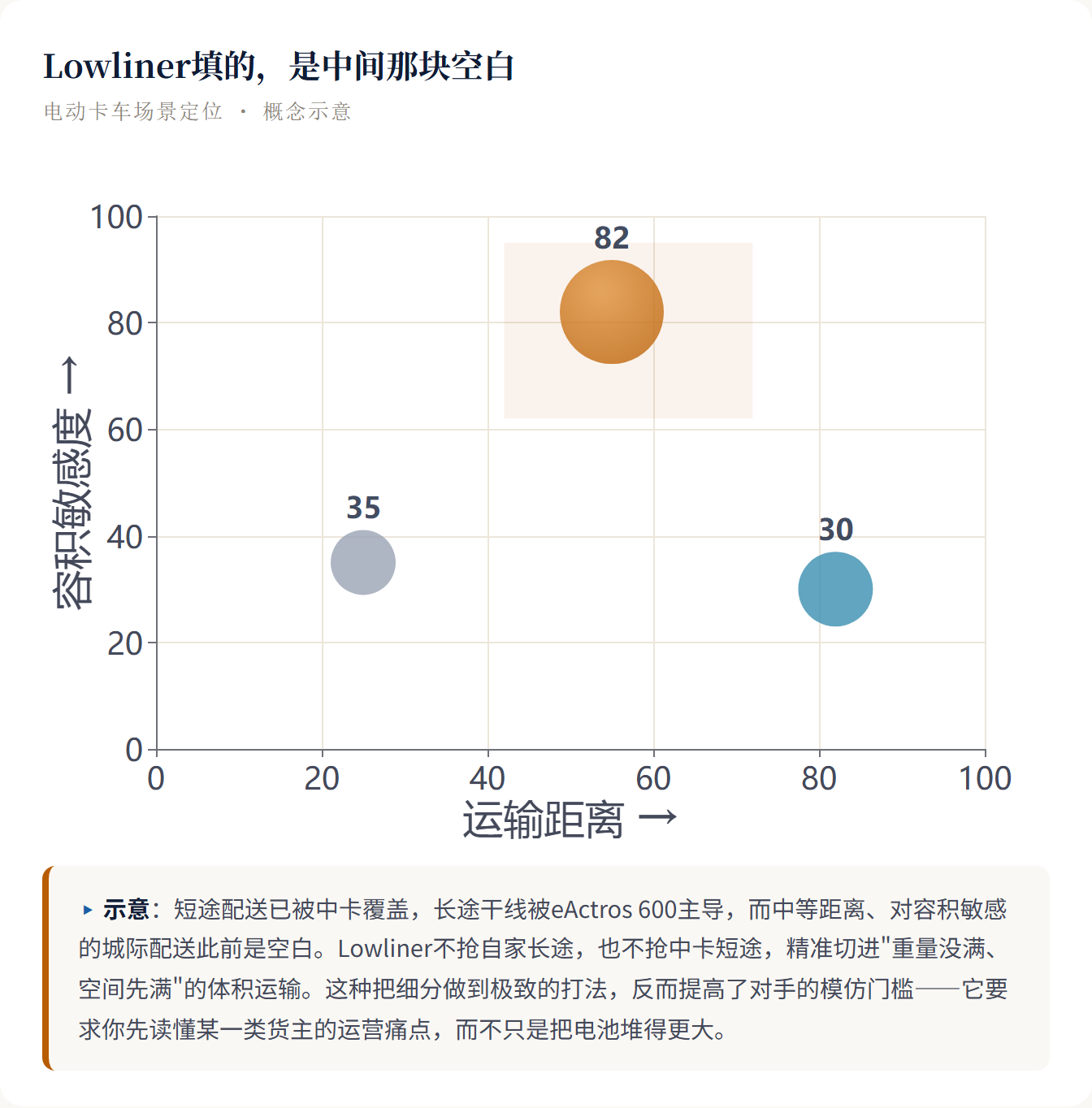 The competitive barrier to getting this use case right is not low. It requires suppliers to have a deep understanding of European Mega-Trailer standards and loading facility specifications; it requires vehicle structural engineering that can genuinely bring fifth-wheel height down within the constraints of an electric architecture; and it requires a service network that can support rapid repeat purchases and fleet renewal by such customers. Taken together, these conditions cannot be met simply by piling up specs. In this niche, companies that truly understand a particular shipper's operational pain points face an entirely different barrier from those that merely offer longer range. 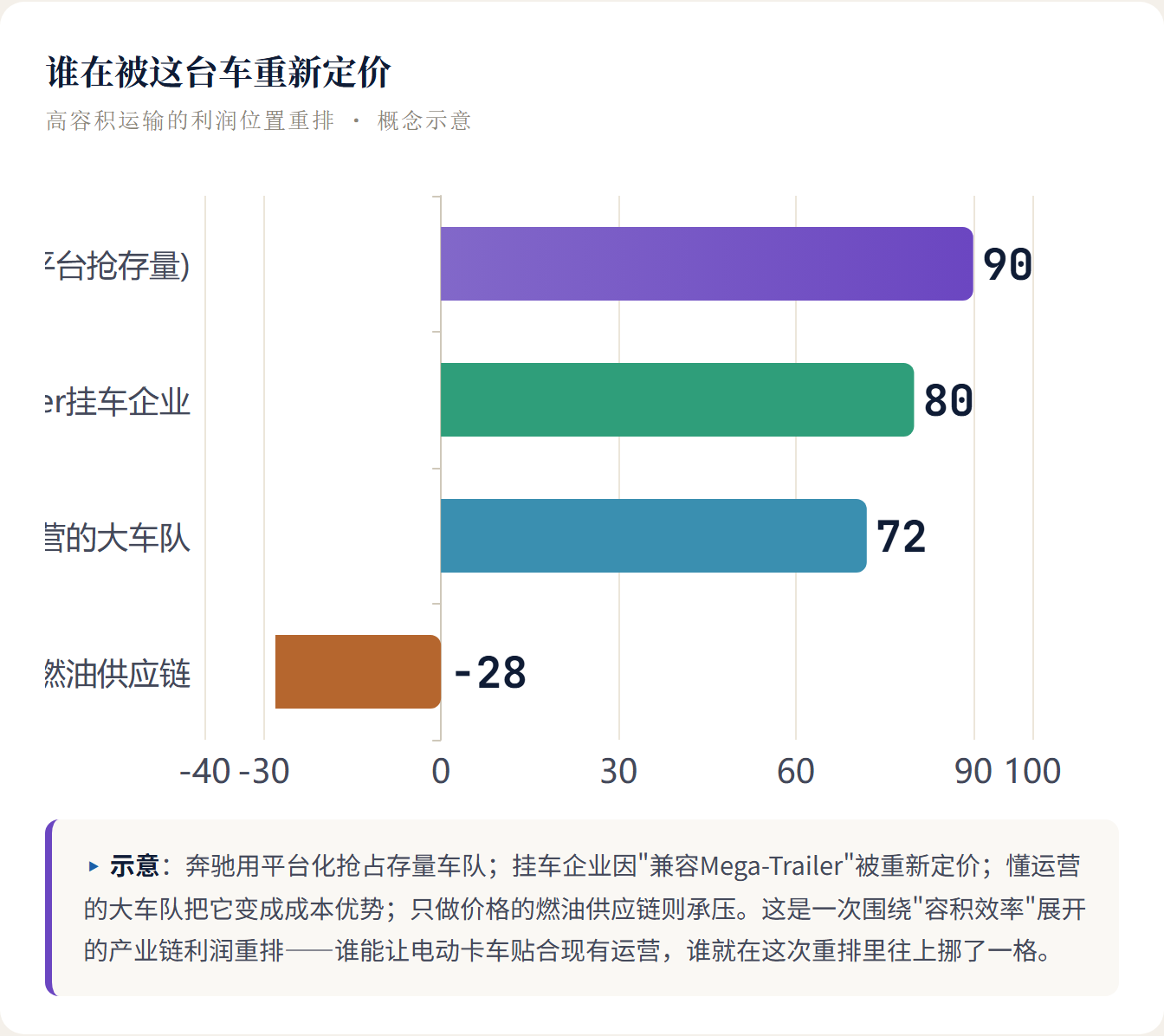 Not shying away from concerns: four risks worth facing Having covered the advantages, several risks should also be put on the table. **First, a gap of nearly 14 months before series production.** From launch (Jun 2026) to series production at the Wörth plant (Q2 2027), competitors have a full year. Volvo, Scania and several Chinese heavy truck brands accelerating their European expansion could all bring out products for volume transport in that time. It remains uncertain how much customer loyalty the launch-day pre-order campaign can lock in. **Second, scale dependence is the flip side of platform strategy**. Platforms only dilute costs if total volume is large enough. As a niche variant, the Lowliner's profitability curve will be steeper than that of mainstream models if demand for electrified low-density freight transport in Europe ramps up more slowly than expected. 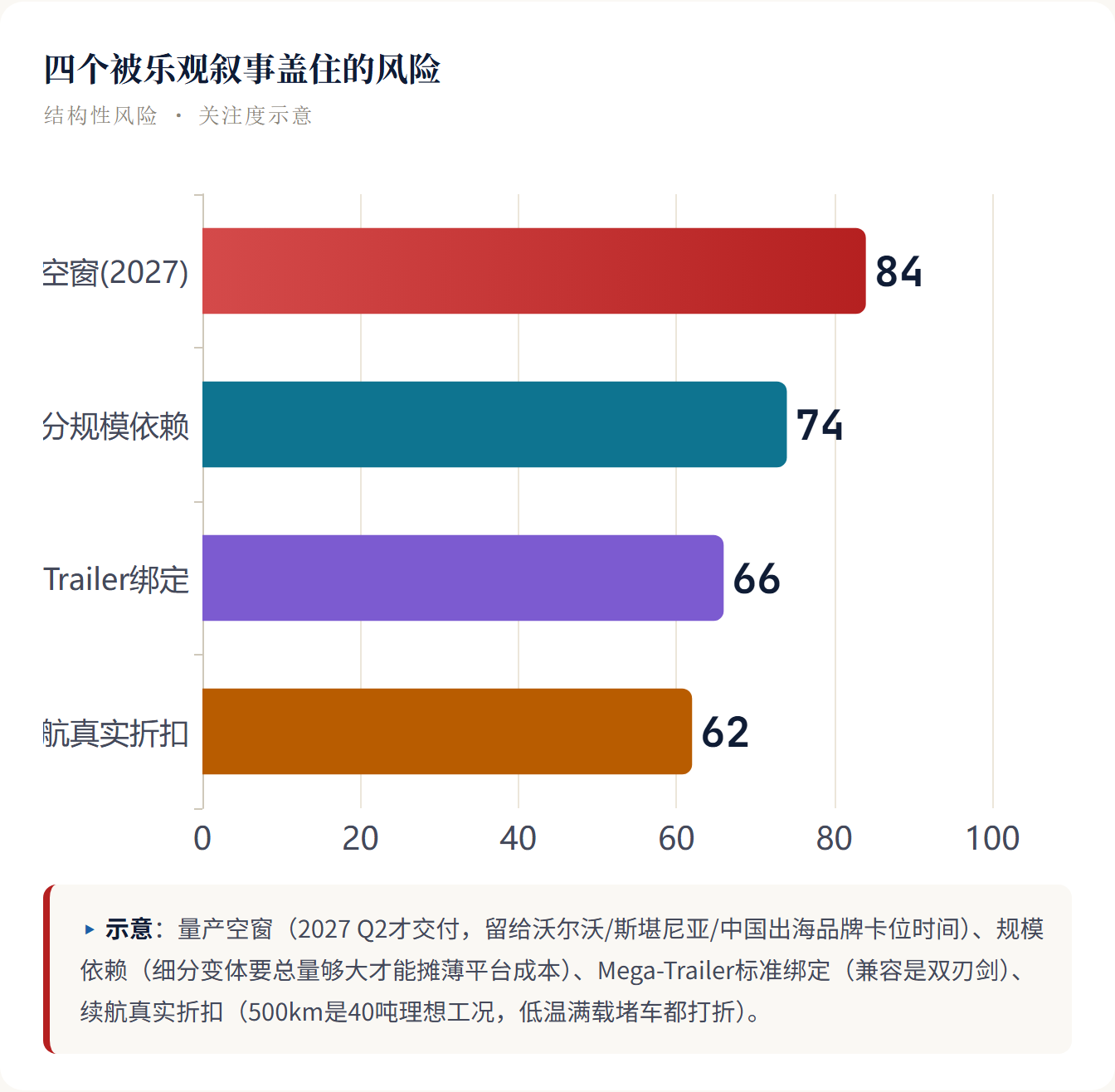 **Third, being tied to the Mega-Trailer is a double-edged sword**. Fitting the existing trailer ecosystem is an advantage, but it also means the product logic depends heavily on the Mega-Trailer standard staying unchanged. If the EU amends its trailer height regulation, or major logistics companies shift to other formats, a design "built for compatibility" will need to be reworked.  **Fourth, 500 km is an ideal-conditions figure**. In real operation, low temperatures, traffic jams and fully loaded hill climbs all cut range. Fleet dispatchers usually apply a conservative factor, meaning usable range may be only 70%-80% of the rated figure. Purchase decisions should be modelled on real road conditions, not taken straight from launch specs. 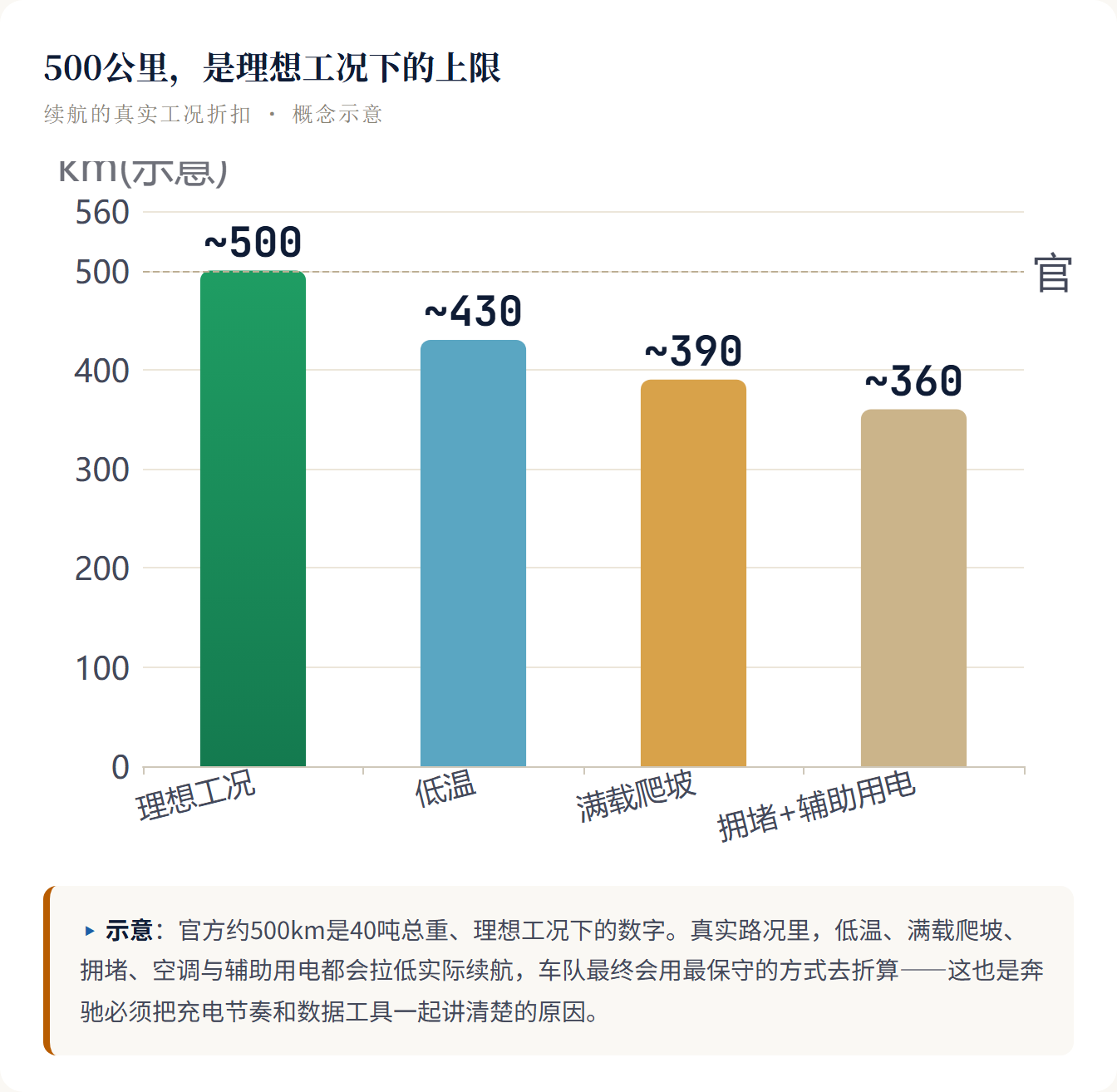 --- The industry significance of the eActros Lowliner is that, with a single engineering decision on a "low fifth wheel", it shifts the focus of competition in electric heavy trucks from the spec sheet to operational compatibility. While rivals are still competing on range, Mercedes-Benz has started answering a harder question: how electric trucks can slot seamlessly into existing logistics systems. By playing three cards—accumulated platform know-how, well-timed market positioning and modular payload trade-offs—Mercedes-Benz is shifting from challenger to rule-setter in electric heavy trucks. Once series deliveries begin in 2027, real-world operating data will be the final judge of this assessment. Do you think Lowliner's strategy of "trading compatibility for market access" could be replicated in the electrification of China's heavy trucks? Share your thoughts in the comments. #Electric heavy trucks#MercedesBenz#eActros#NEVCommercialVehicles#LogisticsElectrification#HeavyTruckElectrification#EuropeanElectricTrucks#GreenLogistics#CommercialVehicleTransition |