European zero-emission buses: sales (may) double in 2035
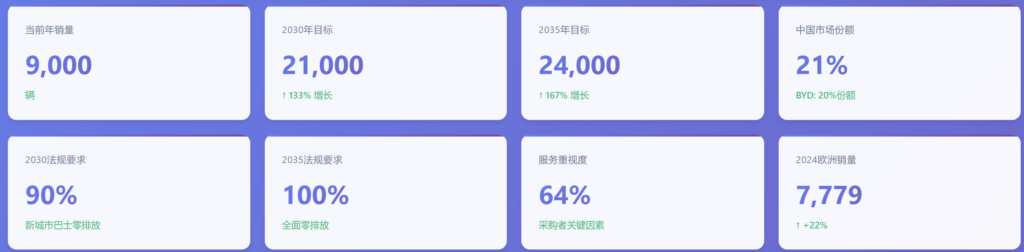
By 2035, annual sales of zero-emission buses in Europe will very likely rise from the current 9000 to 24000 units, and the entire public transport system will gradually be restructured. From procurement…
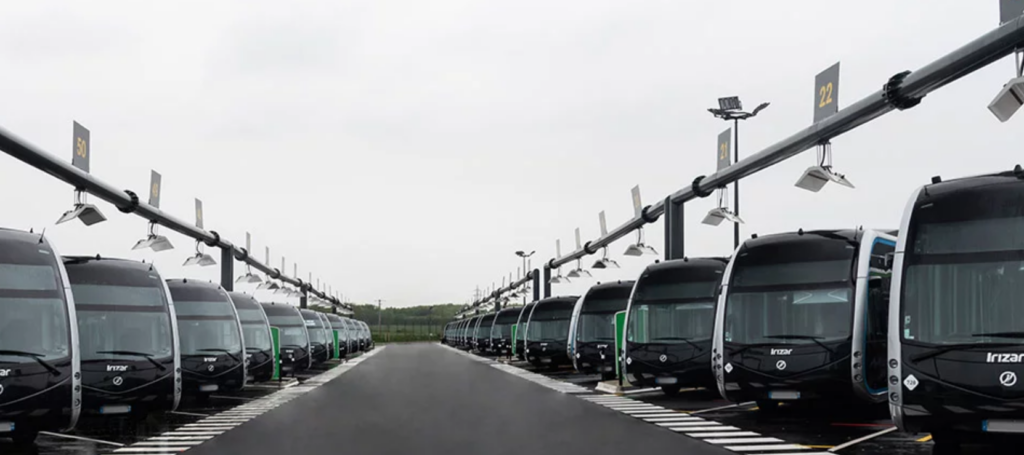
By 2035, annual sales of zero-emission buses in Europe are likely to rise from the current 9000 units to 24000 units, gradually reshaping the entire public transport system.
From purchase price to total lifecycle value
In 2019, purchase price and residual value accounted for 60% of tender decisions by German public transport operators. By 2024, that share had fallen to 40%. Meanwhile, the weighting of services such as software, fleet management and battery optimization rose from 25% to 40%, and 64% of buyers said they will place particular emphasis on services in their next tender.
Public transport operators no longer treat buses as one-off "hardware" purchases but as a "service" requiring continuous operation and optimisation. Software-defined fleets, battery lifecycle management, remote monitoring and predictive maintenance have moved from "optional extras" to "core requirements". For OEMs, this means the business model is shifting from "selling products" to "selling services". Manufacturers able to offer complete solutions, including software platforms, fleet management tools and battery optimisation services, will have the edge in future tenders. Pure hardware suppliers will face margin pressure, while service-oriented manufacturers can lift margins from the current average of 2.5% to 8–10%.
Although electric buses cost more to buy than diesel buses (about EUR 500,000 vs EUR 250,000), over a 12-year lifecycle the electricity cost (about EUR 0.8 per km) is far lower than the diesel cost (about EUR 1.2 per km).
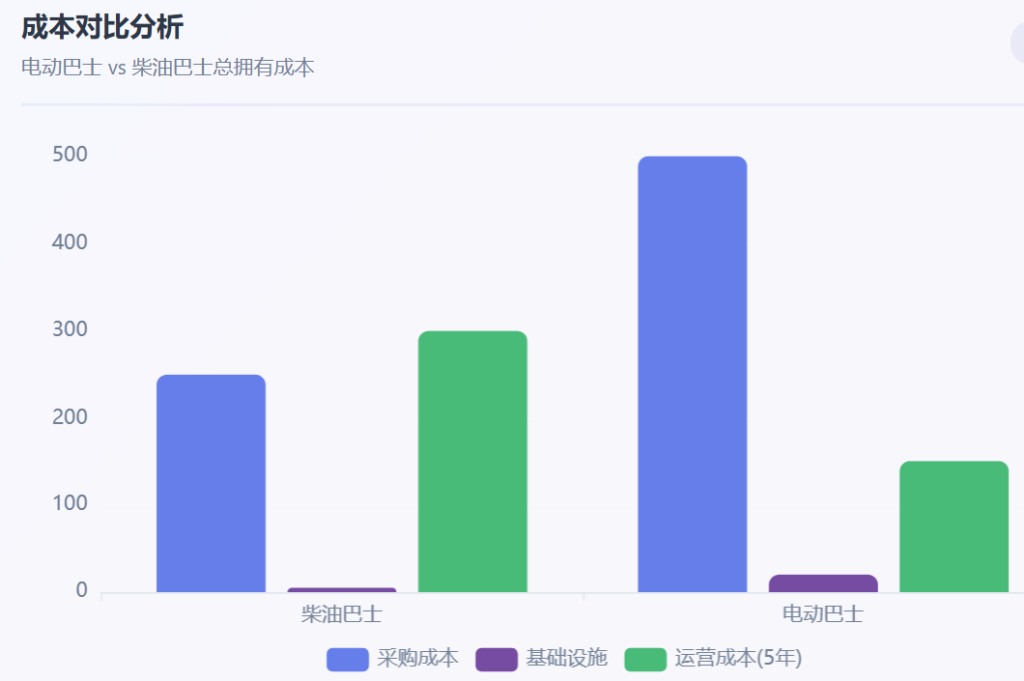
Add lower maintenance costs (an electric bus costs about 30% less to maintain than a diesel bus), and total cost of ownership can reach parity within 5–7 years. More importantly, operators are starting to look at a bus's whole-life value. Battery health monitoring, charging optimization, remote diagnostics and predictive maintenance can significantly raise bus availability (from 90% to above 95%), reduce downtime and cut operating costs. For an operator with 500 buses, each 1% gain in availability saves several hundred thousand euros a year.
Driven by EU regulation: 90% in 2030 – 100% in 2035
The EU has set a clear timetable: 90% of new city buses must be zero-emission by 2030, rising to 100% by 2035. To reach this, annual European sales must rise from the current 9000 units to 21000 units in 2030, and then to 22000-24000 units in 2035.
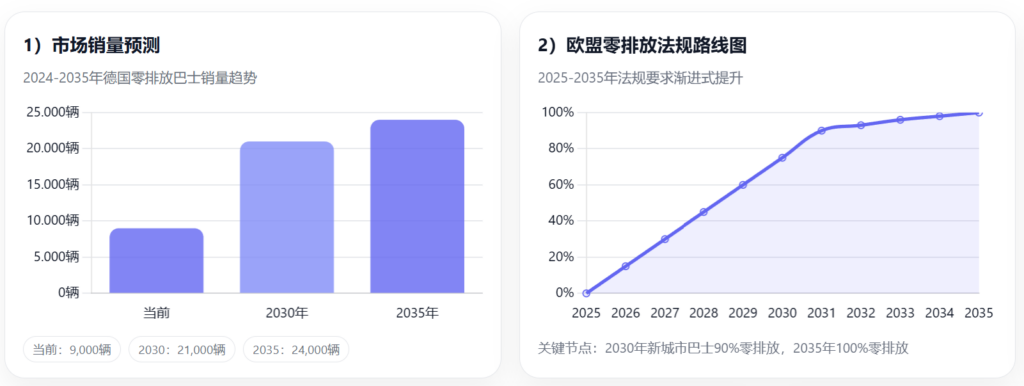
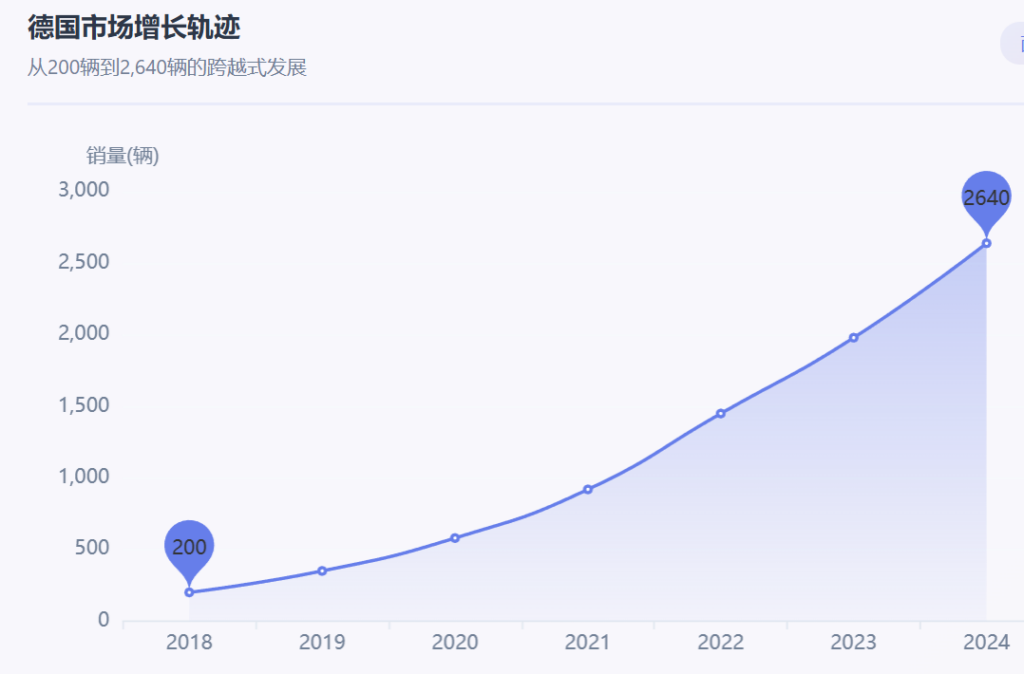
German market data show growth from about 200 electric buses to 2640. However, the funding programme ended in 2024 with no successor, leaving growth in 2026-2027 uncertain. Without new government funding, only about 1200 electric buses may be added in 2026, falling further to 450 in 2027.
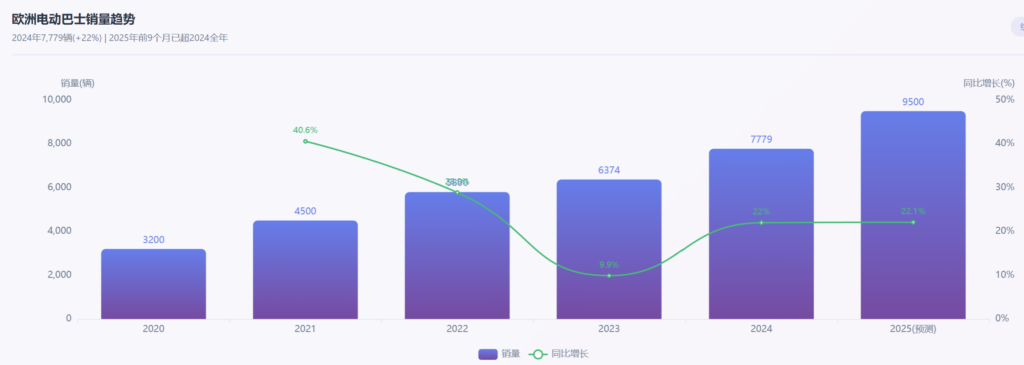
Across Europe as a whole, zero-emission bus sales reached 7779 units in 2024, up 22% year on year. Sales in the first 9 months of 2025 already exceeded the full-year 2024 total, showing strong growth momentum. But progress varies widely by country: the Netherlands, Norway, Luxembourg and other Northern European countries lead, while Central and Eastern European countries lag behind.
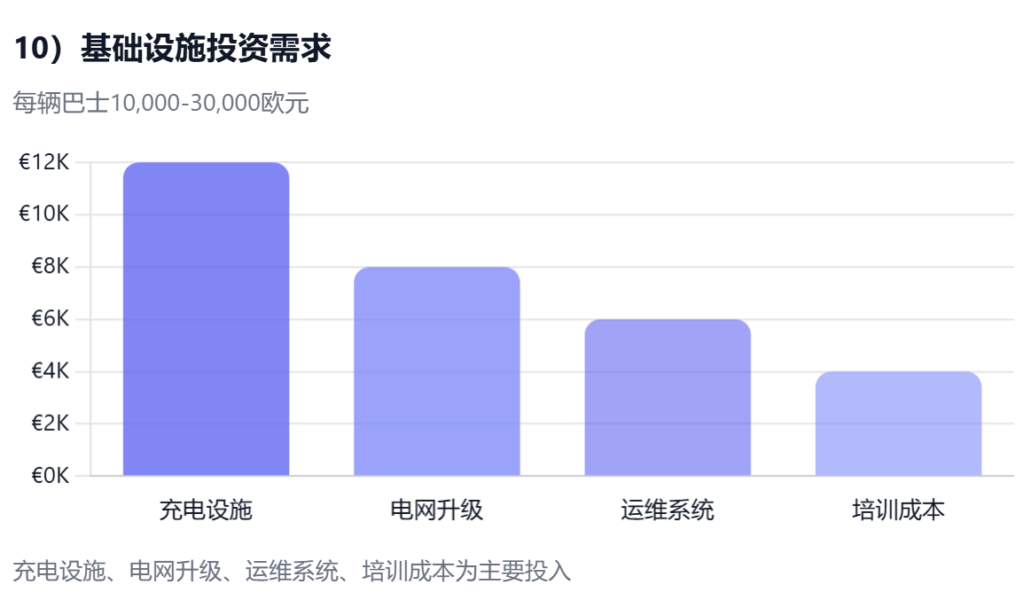
Infrastructure is another bottleneck. Each electric bus needs EUR 10,000–30,000 of infrastructure investment, covering chargers, grid upgrades and operations and maintenance systems. For a fleet of 100 buses, that means an extra EUR 1–3 million. For many cash-strapped public transport operators, this is a major challenge.
Chinese OEMs: 20% market share
Chinese OEMs have held a steady 20–25% share of Europe's zero-emission bus market over the past 5 years, reaching 21% in 2024. BYD has delivered, or taken orders for, more than 1500 electric buses in Europe, about 20% of the market. Other Chinese brands such as Yutong and King Long are also pushing hard into Europe.
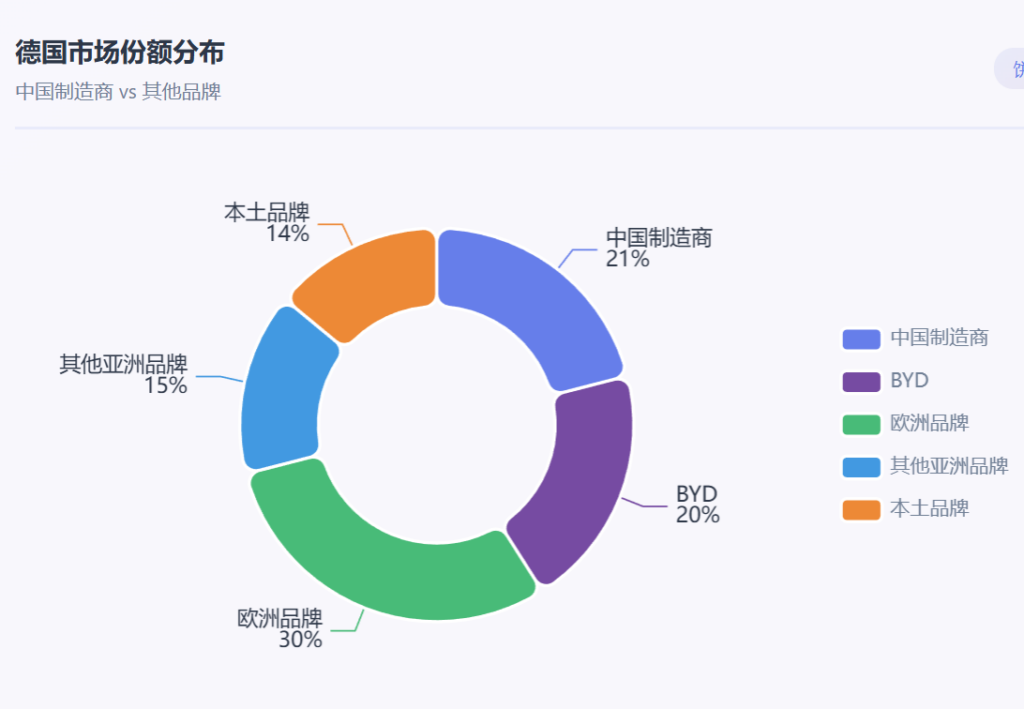
In the zero-emission transition, European OEMs face competitive pressure from China. Chinese OEMs' advantage lies not only in price (typically 15–20% below European brands), but also in accumulated electrification technology, large-scale production capacity and a complete supply chain.
For European OEMs, the response is not price competition but building differentiation in service, software and localised support. MAN is investing nearly EUR 1 billion in Germany, securing jobs until at least 2035; long-term commitments like this are the foundation of customer trust. The Iveco Crossway LE ELEC and MAN Lion's City E won the "Sustainable Bus of the Year 2024" award, showing that European manufacturers still have a degree of competitiveness in product strength and technology. Another advantage of European brands is their local service networks. Operating electric buses requires technical support, training, spare-parts supply and other services, and a service network spanning Europe is a natural advantage for European manufacturers. For manufacturers from China, building trustworthy local service capability is a key challenge.
Autonomous driving: a 5-year window for 30% of buyers
30% of buyers are considering purchasing autonomous buses within 5 years, and 30% already treat advanced driver assistance systems (ADAS) as a main selection criterion. This suggests autonomous driving is entering an early stage of commercialisation. Autonomous driving will bring a new bus format: small autonomous buses of about 20 passengers for fixed routes, campuses, business parks and similar settings. This new format will change the density and flexibility of urban transport and places new demands on manufacturers' product planning.
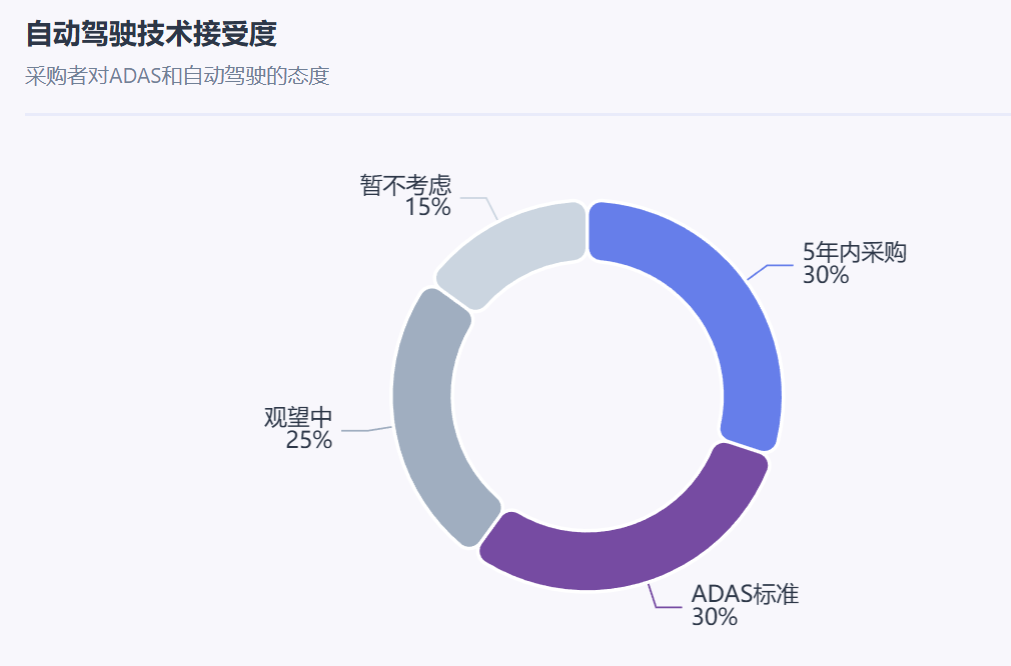
Commercialising autonomous buses faces multiple challenges. The first is technological maturity: the reliability of current autonomous driving technology in complex urban environments has yet to be proven. The second is the regulatory framework: European countries have inconsistent requirements for autonomous driving, creating legal obstacles to cross-border operation. The third is public acceptance: passenger trust in driverless buses will take time to build.
For manufacturers, this means investing in the development and commercialisation of autonomous driving on top of the zero-emission transition. For smaller manufacturers with limited resources, this is a huge technical and financial challenge. Large manufacturers such as Mercedes-Benz, Volvo and MAN have already invested hundreds of millions of euros in autonomous driving — a scale of investment not every manufacturer can afford.
Public transport share rises from 15% to 17%
Public transport's share of personal travel in Europe is set to rise from 15% today to 17% by 2035. This 2-percentage-point increase means hundreds of millions of trips shifting mode. The drivers include urbanisation (Europe's urbanisation rate is expected to reach 75% by 2035), environmental policy (more than 200 cities have announced low-emission zones) and better public transport services (electric buses bringing lower noise and emissions).
Zero-emission buses cut CO2 emissions (each electric bus saves about 80 tonnes of CO2 a year) and reduce urban noise pollution (electric buses are about 10 dB quieter than diesel buses), improving the travel experience for residents. This "positive externality" is one of the drivers behind government efforts to electrify public transport.
Opportunities for Chinese OEMs
The opportunity in Europe is real, and a 21% share shows that Chinese brands have established a solid market position; pure price competition is unsustainable, and differentiation must be built in service, software and localised support. For Chinese heavy truck and bus OEMs, the success in Europe's electric bus market can be replicated in other commercial vehicle segments. The keys are understanding the shift in customer needs from price to service, building complete service capabilities, and making a long-term commitment to localisation.
While the policy window is opening, the real hurdles facing Chinese OEMs lie in compliance, localisation and service networks. Technology is not the biggest obstacle; business model innovation and localisation capability are what will determine long-term competitiveness.
BYD sells more than vehicles. It offers complete solutions that include charging infrastructure, driver training and maintenance services. This "product + service" model helps BYD build stronger customer loyalty and hold up against competition on price alone.
Regional differences within the European market deserve particular attention. Northern European markets show high acceptance of electric buses and stable subsidy policies, with fierce competition but attractive margins. Southern and Central and Eastern European markets have strong growth potential, but subsidy policies are unstable, infrastructure is lacking and risks are higher. Chinese OEMs need differentiated market entry strategies for each region.
Final thoughts
Based on the current regulatory framework, OEM plans, operator plans and policy signals, Europe's zero-emission bus market is likely to reach 21000 units by 2030 and 24000 units by 2035. For OEMs, the keys to success are shifting from a "hardware mindset" to a "service mindset," from "product sales" to "full lifecycle management," and from a "single market" to a "global footprint." OEMs that adapt quickly to these shifts will gain the advantage as the market is reshaped.
In this zero-emission transition, European manufacturers have the edge in brand, service networks and local support, while Chinese manufacturers have the edge in cost, accumulated technology and supply chains. The eventual market landscape will depend on who best understands customer needs, offers a more complete value proposition and builds a more sustainable business model.
**Reproduction or excerpting without permission is strictly prohibited.** Questions and comments are welcome. Follow us for ongoing analysis of the latest developments in China and abroad.