Daimler Buses signs framework agreement for 500 electric buses
Daimler Buses has announced a framework agreement for up to 500 electric buses. This is a highly Europeanized, institutional…
Dec 27, 2025
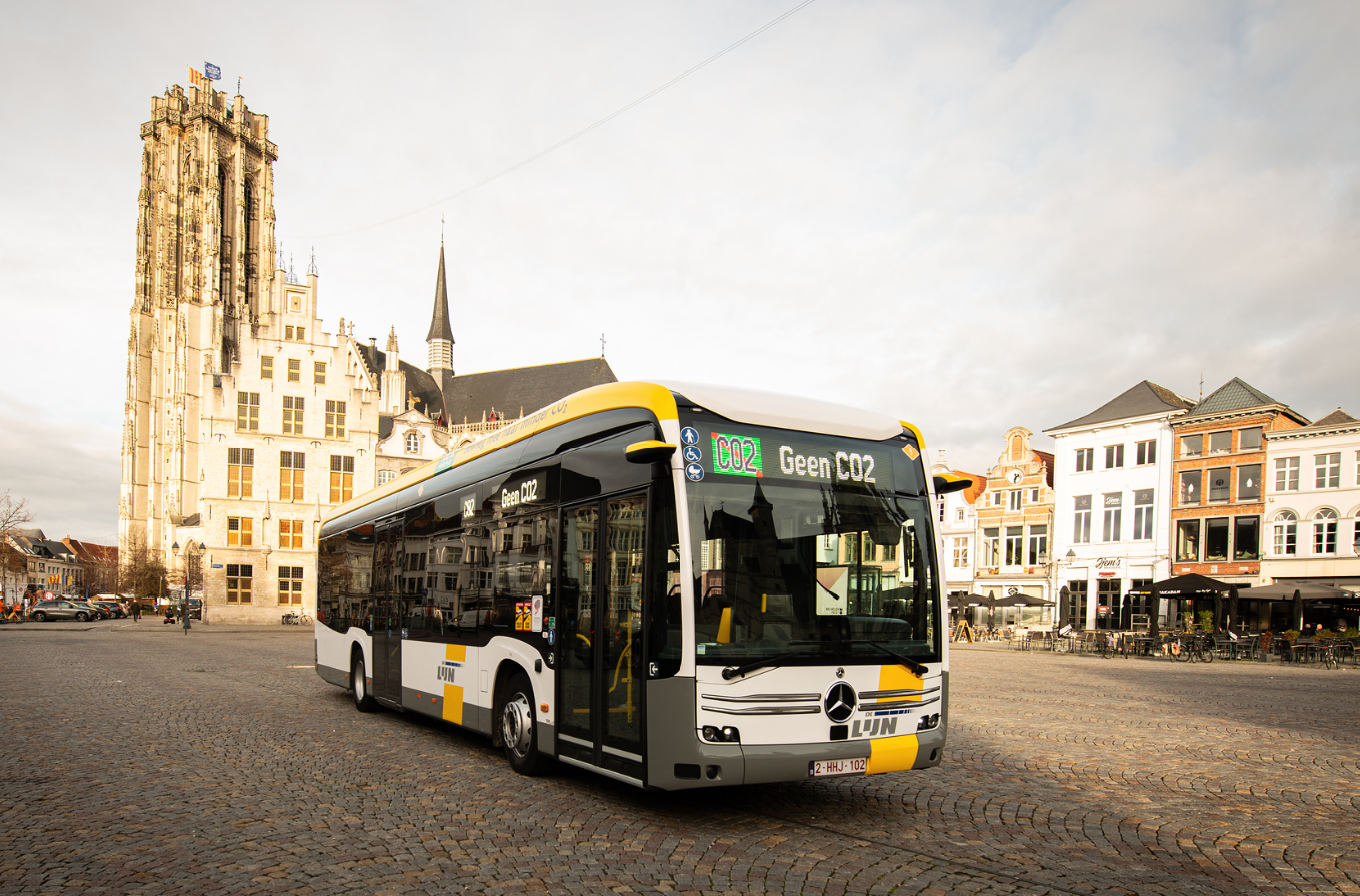
Daimler Buses recently announced a framework agreement for up to 500 electric buses. This reflects a highly European, institutionalized logic of public transport procurement, and it is exactly the logic many Chinese bus makers need to understand.
A framework agreement for up to 500 buses
The core of the deal is not a one-off purchase of 500 buses, but the framework agreement itself. In the European public transport system, a framework agreement means three things:
– The quantity is a ceiling, not a commitment: the 500 buses are a "call-off allowance" over the next 4–8 years
– Deliveries come in batches, depending on fiscal years, the pace of route electrification and infrastructure progress
– Models and specifications can be adjusted dynamically, revised continually in line with range, charging methods and evolving regulation
In essence, such agreements spread technical risk, fiscal pressure and policy uncertainty over a longer timeline.
Daimler Buses' advantages
In the European bus market, Mercedes-Benz's eCitaro is not a new model, and its advantage lies less in vehicle specs than in system capabilities: a mature localized service network (maintenance, spare parts, driver training), project experience from close collaboration with city transport authorities, and a strong fit with European subsidy, tender and compliance processes. In Europe, bus procurement is generally a system decision spanning a 10–15-year lifecycle. This can be seen as the moat of European OEMs.
A procurement language problem
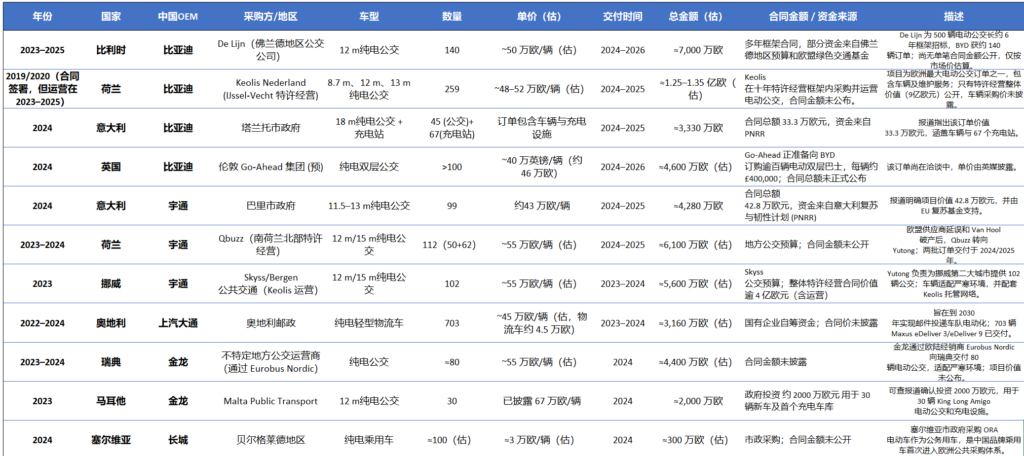
Chinese bus OEMs are actually already ahead in batteries, e-drives and cost control, and have already won contracts, but in the European bus market their challenges currently center on:
– Limited familiarity with the framework agreement mechanism: many Chinese OEMs still view the European market through a "one-off order" mindset rather than as a long-term supply relationship
– Insufficient local delivery and service capabilities: bus customers want "ten years of stable operation"
– Complex European compliance and liability boundaries: from vehicle homologation and after-sales liability to data compliance and labor systems, the "hidden barriers" in European bus projects are extremely high
So for now, it still looks very difficult for Chinese companies to enter long-term national or multi-city framework systems.
Conclusion: an opportunity, but not a "quick" one
European bus electrification is entering a "slow but certain" phase. For Chinese bus makers, a careful analysis of such agreements sends a fairly clear signal: growing big in the European bus market depends not on price and specs, but on institutional understanding + local capabilities + long-term patience. European public transport does not give "sprinters" many chances, but once a company is inside the system, the payback period is equally long and stable.
DaimlerBuses, eCitaro, Chinese automakers going global, Daimler Buses, European public transport, European public procurement, European market, Electric buses