China-built Mazda launches in Europe
Mazda has confirmed it will bring its China-built electric SUV to Europe as the CX-6e, priced from EUR 49990 in Germany and arriving at dealers this summer. This shows that more global brands are taking Chinese manufacturing "off the shelf", and European competition is shifting from a battle of brands to a battle of systems.
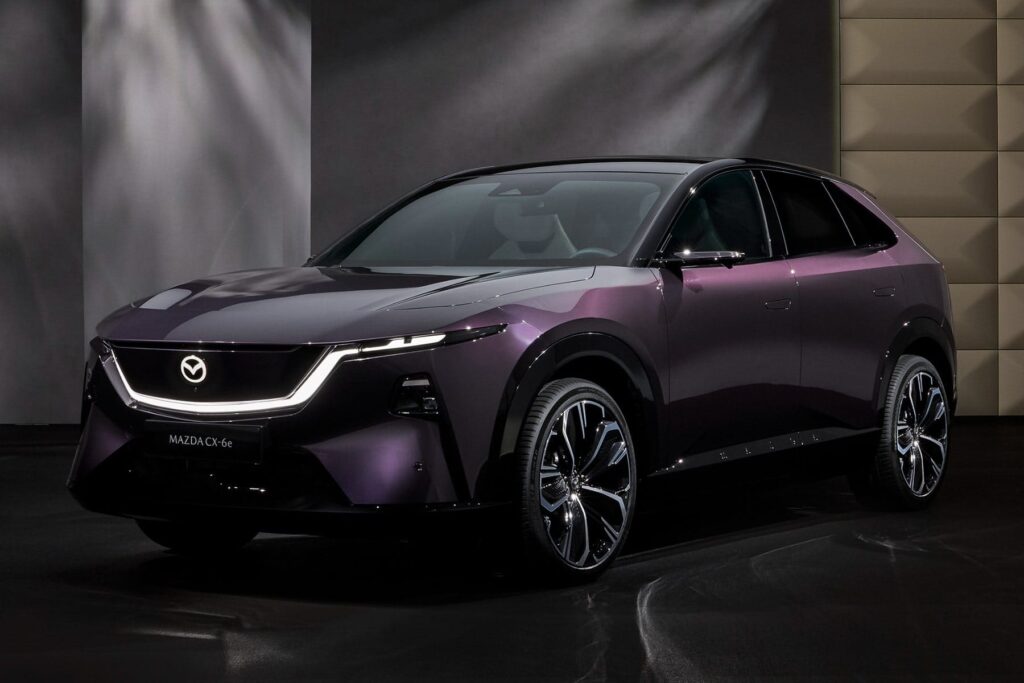
A Chinese EV platform re-electrifies Mazda's brand and dealer network
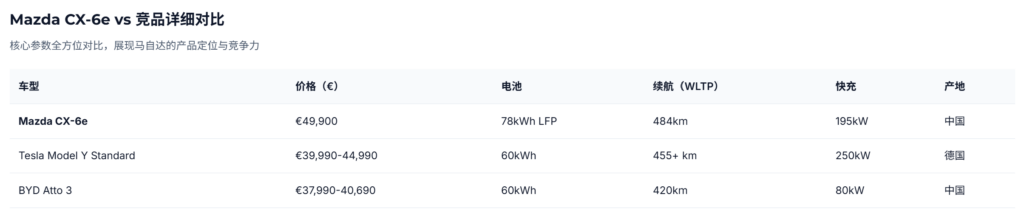
In product terms, the CX-6e is the SUV counterpart of the Mazda 6e. Both are based on the same electric platform family, with chassis and driving calibration localized for Europe.
In the D-SUV segment, Tesla launched the Model Y Standard Long Range RWD in Jan 2026 at a European price of EUR 44990. The BYD Atto 3 sells in Europe for EUR 37000–45000, and the BYD Dolphin now starts from EUR 22990. For European consumers, the real deciding factors for such products are usually whether winter range and thermal management are reliable (heat pumps and energy consumption calibration are key), whether motorway charging is hassle-free, and whether the infotainment and driver assistance systems are "low-fuss".
Same vehicle, vastly different prices in China and Europe
What most deserves wider discussion this time is actually pricing: the equivalent model in China starts at about RMB 119990 (about EUR 14700), while the German starting price jumps straight to EUR 49990. The price gap comes from the stacking of "base tariff + anti-subsidy duty + compliance and distribution costs". The EU's anti-subsidy measures on Chinese-made battery-electric cars already form a clear duty-rate framework. For a "Japanese brand + Chinese production" combination like Mazda, the cost pressure has two layers. The first is ocean shipping, inventory turnover, exchange-rate fluctuations, anti-subsidy duties and compliance validation. The second is that, for the product to "feel like a Mazda" in Europe, it requires investment in local European calibration and quality systems (especially chassis, steering, braking, driving character and ADAS experience). This investment shows up in the cost.
Competition in Europe shifts from brand vs. brand to system vs. system
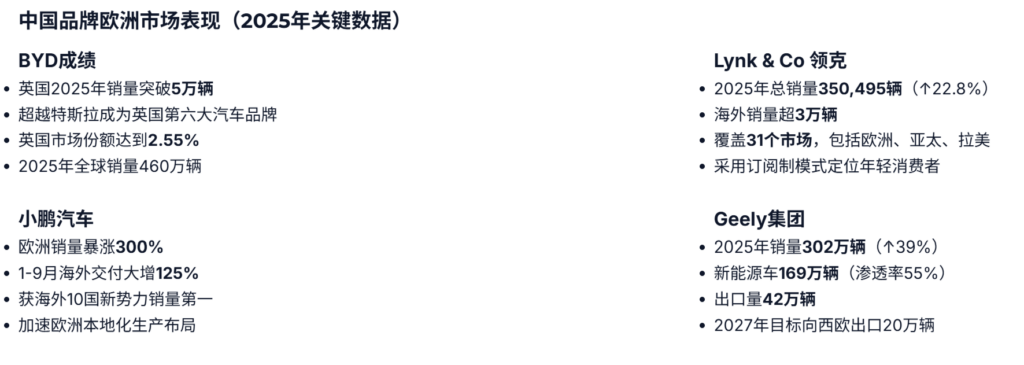
Competition in the European market used to be viewed mainly as a question of who sells better: Tesla, traditional European OEMs or Chinese EV startups. Now there is another track: who can scale "core EV capabilities" faster, more reliably and with less risk. The European launch of the CX-6e represents a pragmatic strategy: the EV platform and supply-chain efficiency come from China, sales and service in Europe run through a mature local dealer network, and a European R&D center handles driving dynamics and regulatory adaptation, reducing the risk of a poor fit with the local market. For European OEMs, the competitor is no longer just Chinese brands themselves, but the spillover effect as China's EV ecosystem is "borrowed" by more global brands. The pressure on European automakers shifts from "keeping out a particular brand" to facing an ecosystem with overwhelming force.
Tariff uncertainty and the sustainability of localization
The anti-subsidy duty framework is in place, but how subsequent legal challenges, room for negotiation and individual automakers' "individual duty rates" evolve will continue to affect the marginal cost of Chinese-made cars in Europe.
Mazda emphasises local European calibration and adaptation, but if volumes ramp up, whether after-sales, parts supply and software and feature updates can keep a steady pace will determine whether it moves from "able to sell" to "able to sell long term".
The CX-6e looks like a test of whether European consumers will pay for "a familiar brand + Chinese-made EV capability", and of whether global automakers can keep replicating the supply-chain advantages of electrification worldwide as geopolitical policy tightens.
For Chinese companies going global, the real challenge is not competing on price but building brand premium in global markets. Chinese brands already have technology, cost and scale advantages; what they need next is long-term investment in brand building. As the policy window opens, the more critical question is how to build brand premium rather than getting drawn into a price war.
**Reproduction or excerpting without permission is strictly prohibited.** Questions and comments are welcome. Follow us for ongoing analysis of the latest developments in China and abroad.