China-exclusive Audi E5 Sportback sparks uproar in Germany: Germans "want to buy it but can't"
Audi sparks controversy in Germany The Audi E5 Sportback without the 4 rings, a BEV sold only in China, in the German auto…
Audi sparks controversy in Germany
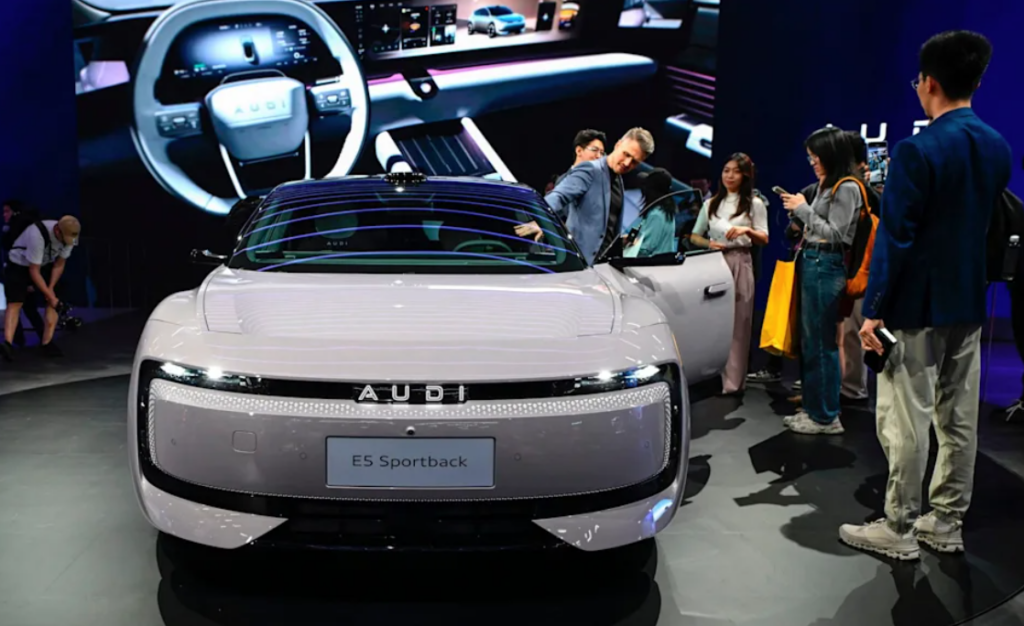
The Audi E5 Sportback without the four rings, a BEV sold only in China, has sparked intense interest and "purchase anxiety" among German car enthusiasts. A review by a German blogger passed a million views, with the comments full of questions like "Why can't we buy a car like this?" While Chinese consumers are snapping up orders, German media are focused on one question: what does it signify? Is it a simple price gap, or a deeper industrial problem?
China's "special edition" strategy: cost and market
Brand positioning and product strategy
Audi officially describes the E5 Sportback as a BEV designed specifically for the Chinese market under the AUDI brand (without the traditional four rings), stressing that it "retains Audi DNA while integrating China's digital ecosystem". Developed jointly by Audi and SAIC Motor, the car combines high performance with deep digital integration. The so-called China-exclusive strategy is essentially local customisation, which sets it apart from traditional export-oriented model planning.
Structural cost advantage
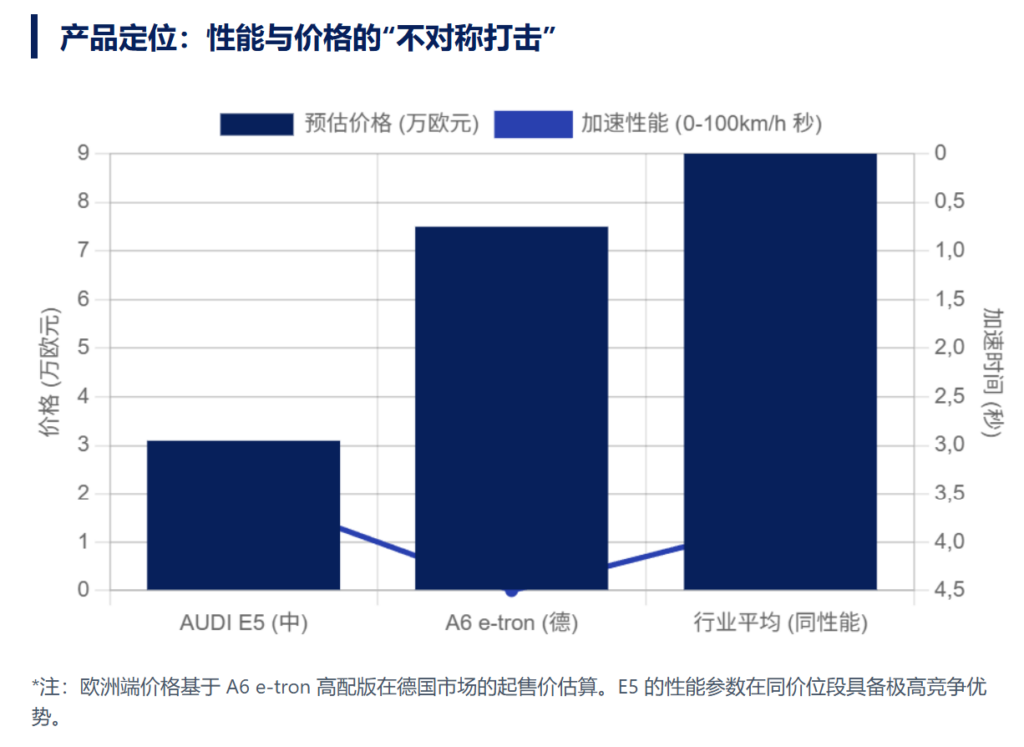
The E5 launched in China at a price range of about RMB 235,900 to 319,900 (approx. €30,000–€40,000). It features an 800V charging architecture and a highly integrated smart cockpit. This overall package has virtually no equivalent in the European and American premium markets. The E5 is not simply a "rebadged cheap car" but reflects a structural cost advantage stemming from the combination of China's domestic supply chain, large-scale production and digital architecture. If the E5 were produced and sold in Germany with identical specifications, its price could not stay in the current range; several German automotive media outlets estimate it would double or more.
German public opinion and market reaction
Mixed feelings among German media and car enthusiasts
Leading German media and tech enthusiasts have reacted to the E5 with clearly mixed feelings:
- On technology and value for money, the E5 is seen as "a car truly worth waiting for", offering a combination of performance and technology that luxury brands usually do not deliver at this price.
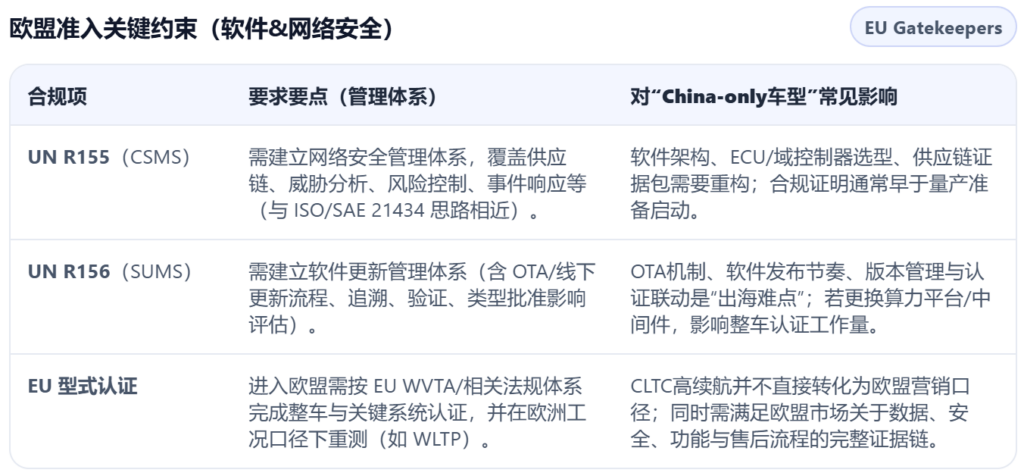
- Mainstream German opinion stresses that the E5 is unlikely to enter the European market, citing EU certification barriers, automotive software safety standards, differences in ADAS regulation, and crash and EMC testing, none of which can be solved by simple price adjustments.
German consumers place more weight on engineering heritage, driving experience and brand provenance, while Chinese consumers focus more on smart features and real value for money**.**
From cost advantage to the battle to define the market
Over the past 5 years, China has moved beyond being the "world's factory" to become a "rule-maker", so the arrival of the E5 is no accident but a sign of the maturity of China's new energy vehicle ecosystem. Chinese vehicle development and intelligent architectures no longer rely on traditional Western players; software and OTA capability have become the core of product evolution, and domestic consumers are willing to redefine luxury by data and experience. This market-side shift is fundamentally driving product definition away from an "engineering-led" approach toward one based on "digital experience and scenario adaptability".
In the short term, Germany's traditional auto industry faces pressure not only from falling sales and an employment crisis but also from a shift in influence over the core links of the value chain. For example, battery supply and cost control are no longer led by Europe, and software and smart cockpit ecosystems favour openness and rapid iteration over closed engineering. New consumer trends in Europe no longer centre solely on brand heritage. So even if Europe imposes tariff or non-tariff barriers on Chinese NEVs, it cannot fundamentally stop these technology and cost advantages from spreading.
The power to define is the core competitive edge
The "purchase anxiety" the E5 has triggered in Germany is about far more than the price tag. It reflects that traditional luxury cars no longer define their value through mechanical premium alone; intelligent driving and digital ecosystems are becoming the core of the new luxury competition. Innovation in the Chinese market is driving the evolution of global product standards.
European manufacturing can no longer rely on its heritage alone to sustain a premium; it must fundamentally rebuild its innovation system.
Reproduction or excerpting without permission is strictly prohibited. Questions and comments are welcome. Follow us for ongoing analysis of the latest developments in China and abroad.