The agency model recedes: is power in Europe's car retail returning to dealers?
Volkswagen's decision to fully abandon the agency model for EVs in Europe is an industry-level strategic recalibration. In the European market, OEMs' patience with the "direct-sales fantasy" is running…
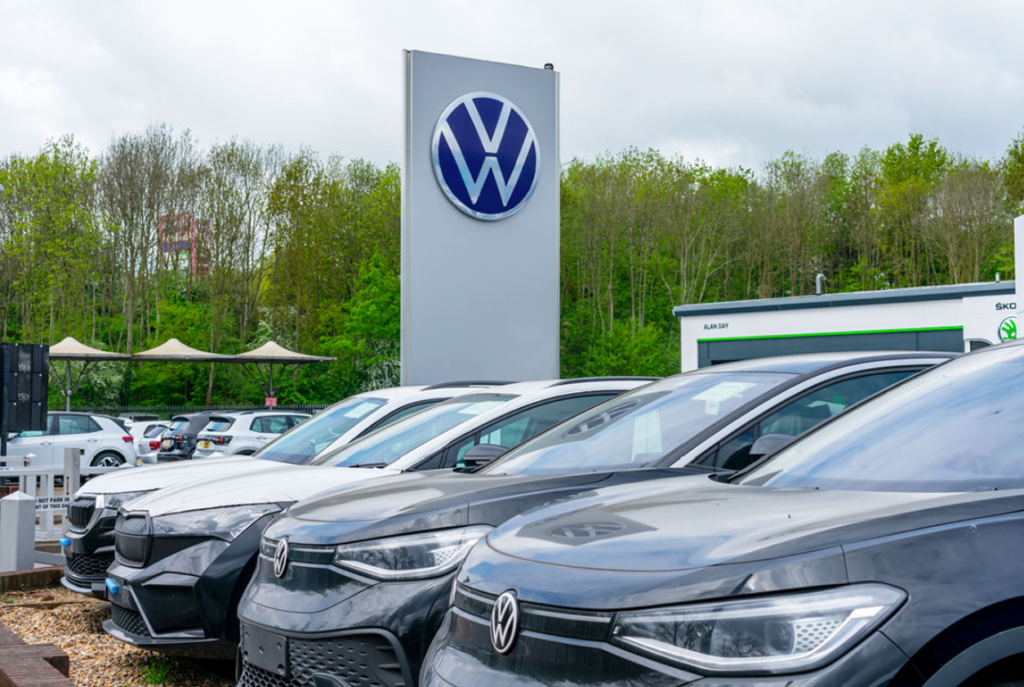
Volkswagen's decision to drop the agency model for EVs across Europe is an industry-wide strategic recalibration. In Europe, OEMs are running out of patience with the "direct-sales dream", and dealers are once again a core factor that cannot be bypassed. This is not just Volkswagen's call. It is becoming a shared reality for Ford**, JLR**** and** Stellantis , among other mainstream OEMs.
Why the agency model is cooling across Europe
Volkswagen: from "most aggressive" to "most complete retreat"
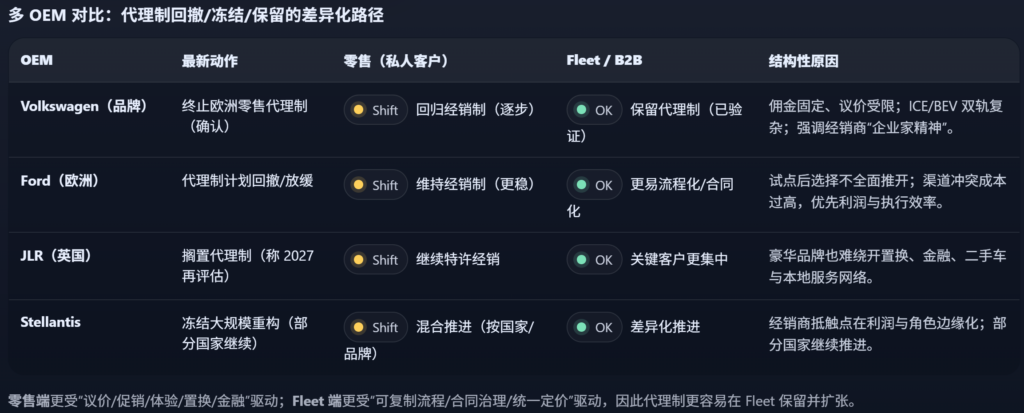
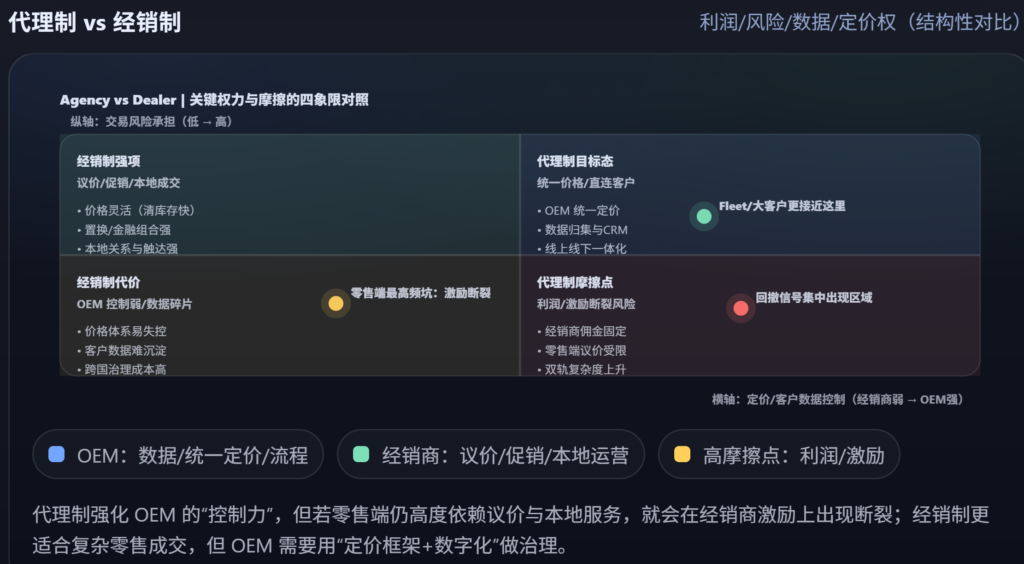
Volkswagen has been one of the most committed OEMs pushing the agency model in Europe. From 2020, alongside the launch of BEVs on the MEB platform, Volkswagen introduced the agency model in Germany and several other European markets with a clear goal: the OEM directly controls customers and pricing, dealers become "sales agents" on fixed commissions, and the OEM bears inventory and financing risk. Five years on, however, the agency model has not worked in the private customer market. Volkswagen's sales chief has publicly acknowledged that running combustion and battery-electric models on two parallel systems created unnecessary complexity, while capped dealer margins systematically eroded motivation. The end result: a full return to the dealer model, with the agency model kept only for fleet sales.
Ford's slowdown is essentially about "stopping the losses"
Ford also once talked up the agency model in Europe, especially for its EV business. But the reality is weak European sales, a shrinking network and rising cost pressure, with dealers bearing aftersales, financing and residual value risk. Against this backdrop, escalating the conflict of interest with dealers carries far more risk than reward.
Ford has chosen not to reject the model loudly but to **slow down, delay and reassess,** which in itself amounts to a verdict against the agency model's viability.
JLR: even luxury brands were not spared
JLR had planned to lead the move to the agency model in the UK, hoping its brand premium would ease channel friction. In practice, however, it found that private customers still relied heavily on local dealers, that used cars, trade-ins and finance remained dealer-led, and that dealers were highly wary of being "sidelined". JLR ultimately paused its agency model rollout. Even luxury brands find it hard to bypass the dealer system in Europe.
Stellantis: the "hybrid camp"
Stellantis is more cautious. Rather than a full agency model, it uses different models for different brands and countries, and dealers retain some flexibility on inventory and pricing. In Europe, therefore, there can be no one-size-fits-all channel model.
Europe is not a single market
The agency model has stumbled in Europe, mainly because dealer ecosystems differ enormously from country to country.
In Germany and France, dealers are "part of the industrial structure"
- Dealers are large, family-run and well capitalized
- Deep involvement in financing, used cars and local employment
- Close ties with unions and local governments
In such markets, the agency model represents a direct challenge to entrenched interests and faces strong resistance.
Southern Europe: price-sensitive, relationship-driven sales
- Consumers are highly price-driven
- Bargaining, promotions and relationship selling still dominate
An agency model with fixed prices and no room for negotiation directly undermines deal conversion.
Nordics: the agency model "looks like the best fit, but is still limited"
With high EV penetration and strong price transparency, the Nordic countries look like the best fit for the agency model.
But in reality:
- After-sales, replacement cycles and residual value management still depend on local networks
- Dealers bear much of the cost of customer relationship management
The agency model here can be piloted but is unlikely to become the only model.
Channel risks for Chinese OEMs
Chinese players already in or planning to enter Europe need to read this retreat from the agency model correctly and avoid misjudging the form it takes.
1. Treating the agency model as the "standard EV model": Tesla's success is not replicable.
2. Underestimating dealers' political and social role: in Europe, dealers are not just sales outlets but hubs of local employment and tax revenue.
3. Overestimating how much direct sales help a brand's early penetration: for an unfamiliar brand, dealer endorsement often matters more than OEM-run retail.
A more realistic path is therefore to rely initially on strong local dealers for a quick launch, retain some flexibility on pricing and promotions, and try a more centralised model in the fleet and B2B channels. Pushing the agency model too aggressively too early would very likely amplify the systemic risks of entering Europe.
How will European auto distribution channels change?
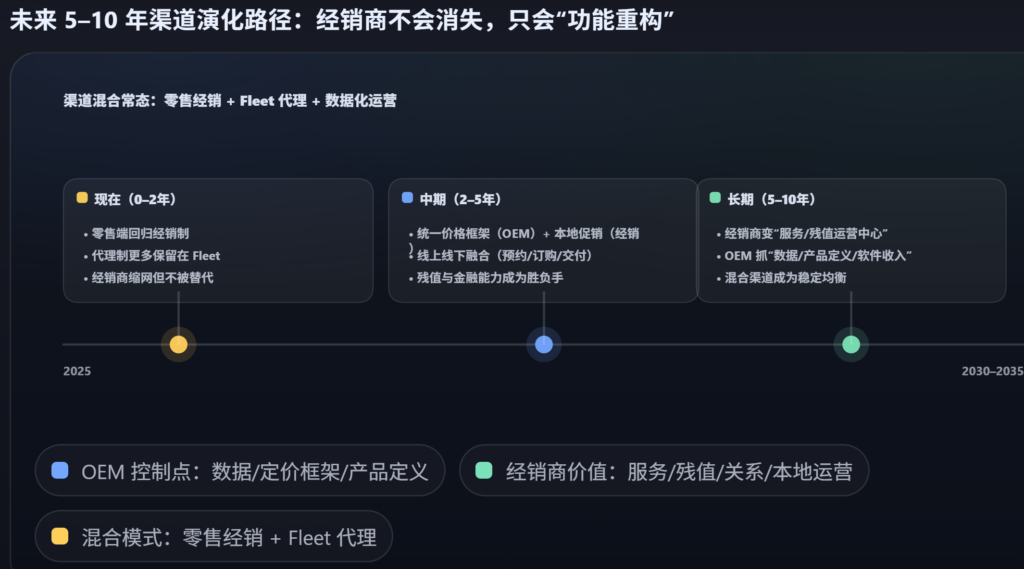
Dealers will not disappear but will be "functionally restructured", shifting from simply selling cars to serving as hubs for customer relationships, service and residual value management, with aftersales, finance and used cars growing in importance. Channel models will stay "hybrid" for the long term: private customers will mainly be served through dealerships, while agency and direct sales will gain share among fleet customers. OEMs' key control points will shift to data and product definition rather than trying to control the transaction itself end to end.
Final thoughts
Volkswagen's abandonment of the agency model does not mean its EV strategy has failed. It is an acknowledgement that in Europe, sales channels are not a variable that can be easily restructured, but a structural force that must be respected. The agency model will not disappear entirely, but it has gone from the consensus "standard answer for the future" back to an option under limited conditions.
**Reproduction or excerpting without permission is strictly prohibited.** Questions and comments are welcome. Follow us for ongoing analysis of the latest developments in China and abroad.