Europe's best-selling passenger cars of 2025 – all budget models?
2025 best-seller ranking remains simple European passenger car sales data for 2025 through month 11 show a highly consistent picture: Da…
The 2025 bestseller list is still simple
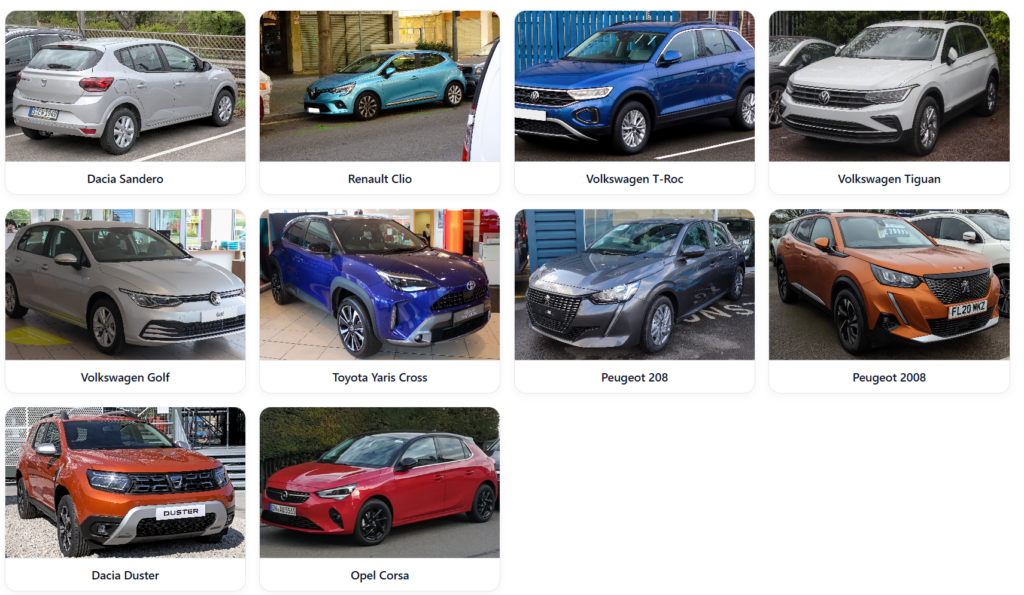
European passenger car sales from January 2025 to 11 show a very consistent picture. The Dacia Sandero remains Europe's best-selling car of the year with 225862 units, followed by the Renault Clio (206583 units), VW T-Roc (196123 units), VW Tiguan (180562 units) and VW Golf (179890 units). The data covers the EU, EFTA and UK markets and broadly reflects the real structure of European passenger car demand. Sales of the Dacia Sandero actually fell by about 8.7% year on year, yet it still holds a firm lead. Its lead does not come from "explosive growth" but from a structural, stable advantage. There are almost no battery-electric models in the top ten, in sharp contrast to the public impression that "Europe is going fully electric".
European consumers have not become poorer, but they are extremely rational
Saying that "European purchasing power is declining" is clearly inaccurate. A more plausible explanation is that European consumers are systematically refusing to pay for uncertainty. The core of car-buying decisions is shifting from "product selling points" to "long-term risk control".
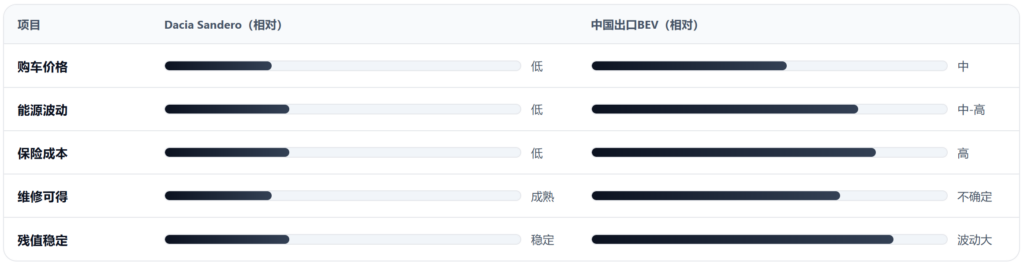
In Europe, buying a car is increasingly seen as a household asset decision spanning 5–8 years. Buyers look well beyond the purchase price to the whole ownership cycle, for example:
- Whether insurance costs are stable or structurally high
- Whether repairs are convenient and labor and parts prices transparent
- Whether the dealer and after-sales network is dense enough
- Whether used-vehicle residual values have a clear anchor
So European consumers are not rejecting new technology; they are highly wary of products whose future costs are unpredictable.
The success of the Dacia Sandero
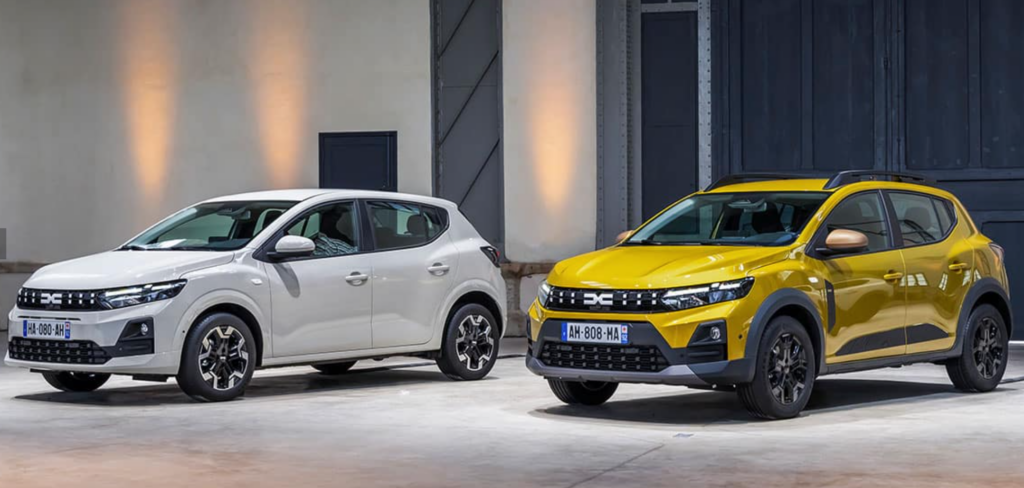
The Dacia Sandero's long run as a bestseller cannot be summed up simply as "cheap". More precisely, its competitiveness comes from a complete, mature, low-risk industrial and commercial system.
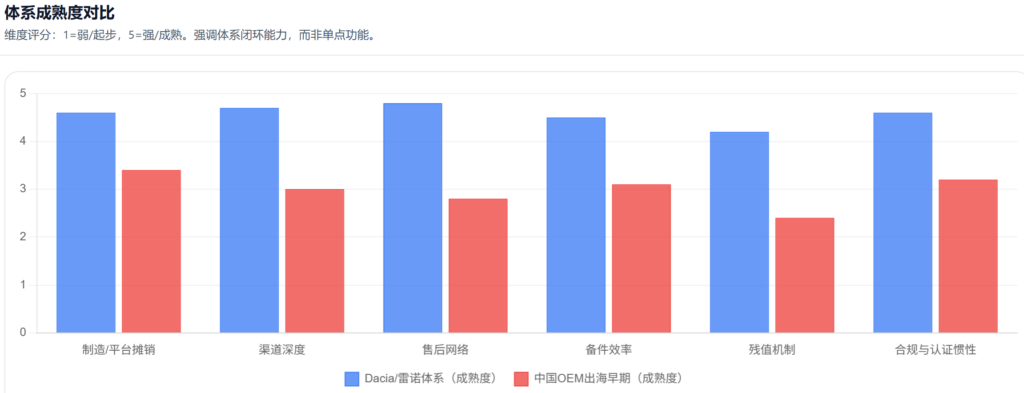
The system's core features include:
- Platform and component costs are largely amortized, keeping manufacturing costs under control over the long term
- Mature sales and service network built on the Renault system
- Users have clear expectations about repair difficulty, cost ranges and parts availability
- Used-car market forms a stable consensus on model residual values
The Sandero's appeal lies not in its features or design but in **"this is a car that won't spring unexpected risks on you while you own it"** — its selling point is stability. Models like this play a role in Europe closer to that of a "low-volatility consumer good".
Rivals to Chinese cars in Europe
A common misconception in discussions of Chinese automakers in Europe is treating Volkswagen, or even premium brands, as Chinese brands' main competitors in Europe. Judged by the logic of best-selling models, however, this view does not fully hold.
In terms of volume and scale, Chinese brands' more realistic competitors are often French and "low-cost system" players such as Dacia, Renault and Peugeot. Volkswagen still sustains high volumes largely thanks to platform scale, channel depth and system inertia rather than a brand premium.
This also explains why many Chinese EVs exported to Europe run into the problem of "good product reviews, but sales that are hard to scale". The issue is not product strength but that uncertainty over total cost of ownership is magnified, so once prices move up, that uncertainty quickly turns into resistance to demand.
Three paths for Chinese OEMs entering Europe
Working backwards from the current mix of Europe's best-selling cars, Chinese OEMs' overseas expansion paths fall roughly into three types, with markedly different rates of market success:
The first is a premium entry: entering the European market with high specification, advanced smart features and high pricing in an attempt to sidestep mainstream competition. This approach is clearly effective for brand exposure, but faces equally clear obstacles in volume, mainly due to European consumers' aversion to the risk of new brands and the uncertainty created by insurance, residual value and after-sales systems not yet being established.
The second is competing in the mainstream price band, taking on mainstream European models head-on on product strength. In theory this path offers the most room, but it is also the hardest, because it requires a company to come close to the level of mature European automakers simultaneously in cost control, channel coverage, after-sales network, compliance and localization. For most Chinese OEMs still in the early stages of going global, it is an extremely resource-intensive option.
The third is a low-risk model logic benchmarked against the Sandero: deliberately giving up feature stacking and expectations of a high premium, and building the product and business model around predictable TCO, ease of repair and stable residual values. Judging by how Europe's best-sellers actually perform, this approach may not stand out in brand visibility, but it is in fact the most certain choice in terms of "success rate in scaling volume".
The window is open only to proven players
Judging by actual performance in the European market, it is not that electric vehicles "don't sell", but that under current conditions they struggle to form a low-risk proposition. This means that if Chinese OEMs want to break into Europe's "best-sellers", their priorities need to shift significantly. More important than product specs is whether they can be first to close the risk loop. Only when customers believe a vehicle "won't become a burden" in the coming years can sales shift from tentative entry to sustained volume growth.
The European market has not shut its doors to Chinese brands, but its selection criteria are clear: it is not about who is more advanced, but who is more dependable. In a highly mature market with little tolerance for error, what really determines scale is industrial organisation and risk management capability, not isolated technological breakthroughs.
**Reproduction or excerpting without permission is strictly prohibited.** Questions and comments are welcome. Follow us for ongoing analysis of the latest developments in China and abroad.