Iveco and PlusAI start Level 4 autonomous truck testing in Spain
Iveco and PlusAI's project in Spain marks the expansion of autonomous trucking from Northern to Southern Europe. The multi-year testing starting in 2026 will run in Madrid…
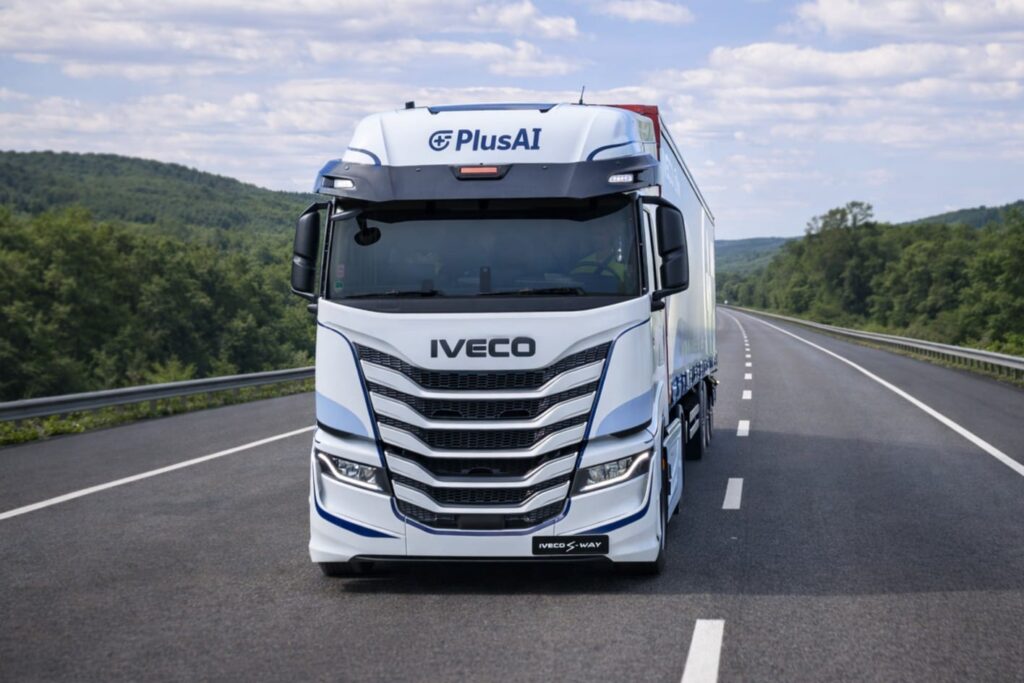
The Iveco–PlusAI partnership in Spain marks the expansion of autonomous trucking from northern to southern Europe. Multi-year testing starting in 2026 will take place on a freight route of around 300 km between Madrid and Zaragoza, using Iveco S-Way heavy trucks equipped with the SuperDrive system.
A Level 4 automated driving system is technically "driverless": under specific conditions the vehicle can drive fully autonomously without human intervention. Safety drivers will still be on board during testing, however, which shows how seriously the industry takes safety. Even with a system at Level 4, commercial deployment still needs careful validation.
From Northern to Southern Europe
PlusAI has already completed public-road testing in Germany, and the Spanish project is its first autonomous truck project in southern Europe. The choice of Munich for its operating base is also clear-cut: PlusAI is developing autonomous driving solutions for Traton Group, Volkswagen Group's commercial vehicle subsidiary (which includes MAN and Scania), and Traton is headquartered in Munich.
Autonomous truck testing in Europe is taking shape as "multiple hubs in parallel". In northern Europe the lead is Germany, while in southern Europe Spain is the starting point. Different geographies, road conditions and regulatory frameworks all need to be validated. For Iveco, this is a key pillar of its technology strategy. More importantly, Iveco is developing Level 2+ assistance systems at the same time. OEMs are taking a "gradual path" from driver assistance to high-level automated driving, running both tracks in parallel so that each builds on the other's technical progress.
PlusAI's European strategy
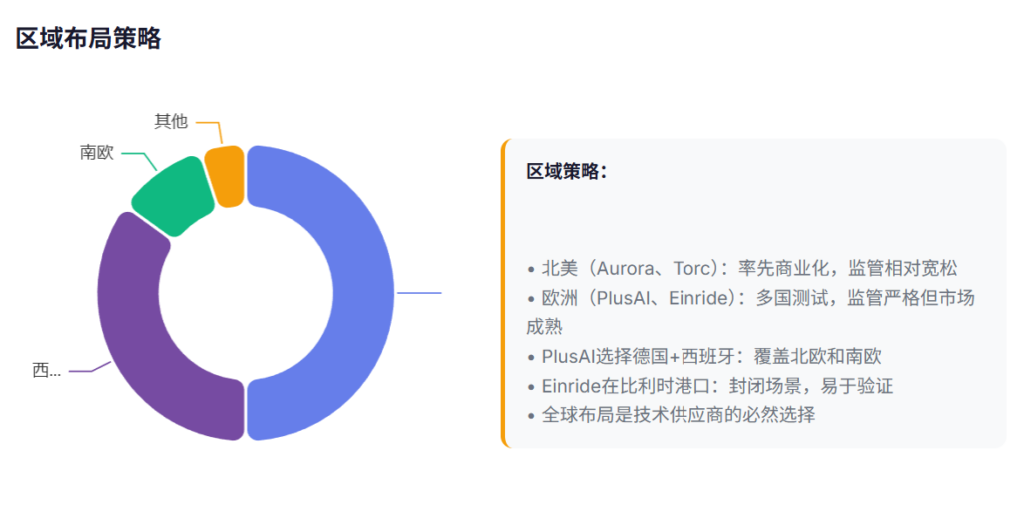
PlusAI is headquartered in Santa Clara, California, with operations in Silicon Valley and Munich. The US tech company's choice of Europe as a key market reflects strategic considerations.
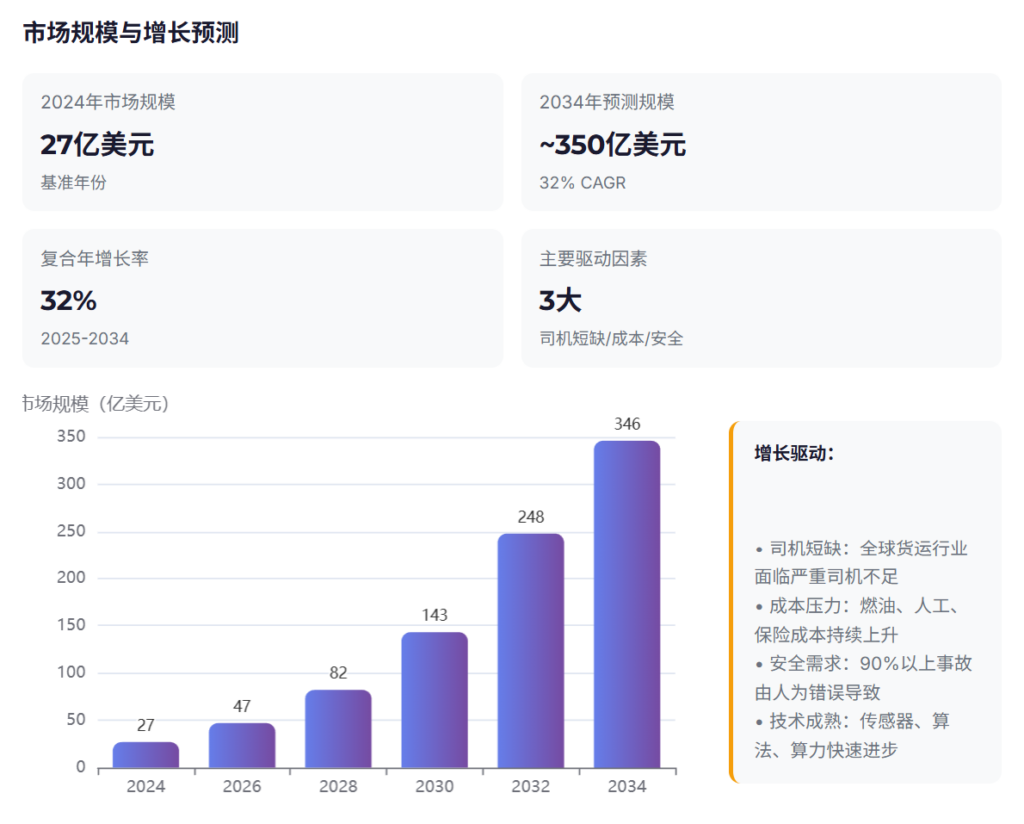
European freight has a clear need for autonomous driving technology. Long-haul freight faces driver shortages, rising operating costs and tighter safety rules, and Level 4 autonomy is seen as one of the solutions. What makes Europe complex is that regulation differs from country to country, road conditions vary and safety requirements are extremely high. By partnering with Iveco and testing in both Spain and Germany, PlusAI is using a multi-site approach to reduce risk. The Spanish project is not a one-off but part of its wider European strategy.
A multi-player **** competitive landscape
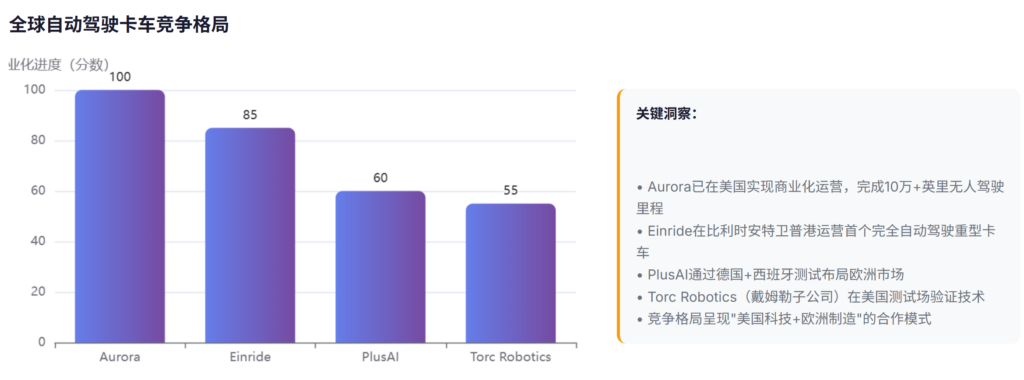
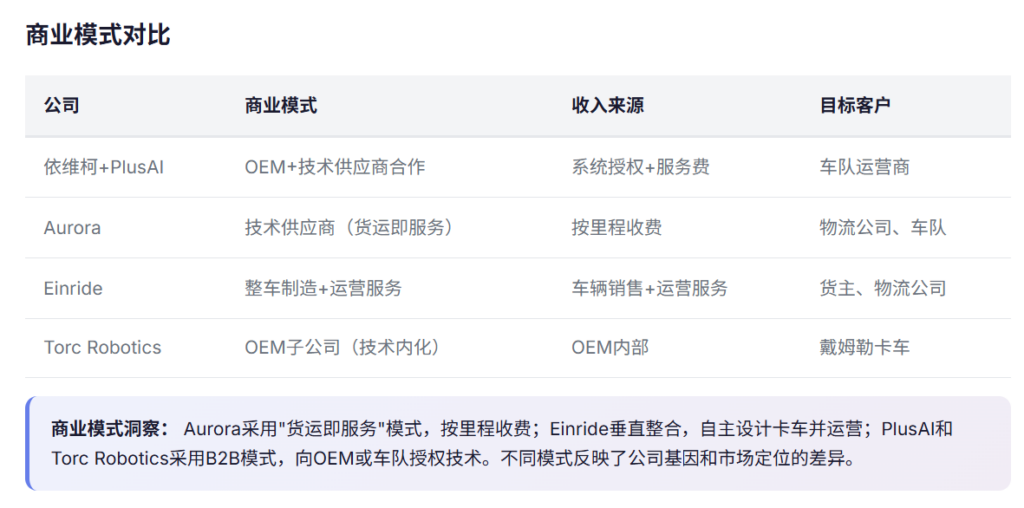
The competitive landscape for autonomous trucks is beginning to take shape. US-based Aurora runs a commercial freight service between Dallas and Houston and works with Germany's Continental. Sweden's Einride developed an all-new autonomous electric truck from scratch. Torc Robotics, a Daimler Truck subsidiary, successfully tested a driverless battery-electric Freightliner eCascadia in 2024.
The technology supplier + OEM partnership model has thus become mainstream, as shown by PlusAI with Iveco, Aurora with Continental, and Torc Robotics with Daimler Truck. Tech companies provide autonomous driving solutions, while traditional OEMs bring vehicle manufacturing capability and market access, so each side complements the other. PlusAI and Aurora are both US companies but are actively expanding in Europe. Together with Tesla Autopilot and Waymo in passenger cars, this shows US autonomous driving technology expanding globally.
The role of Chinese brands
According to currently available public information on progress in China's autonomous trucking sector, Chinese companies such as Inceptio Technology, Seyond and PlusAI have already carried out Level 4 autonomous truck testing in China, and some technical solutions have reached commercial viability in specific scenarios.
For Chinese brands entering the European market, the challenges are not just technical. They also include regulatory certification, localised service, data privacy and other hurdles. However, the European market is open to autonomous trucks: as long as the technology meets requirements and safety validation is in place, the market opportunity exists.
From testing to commercialization
Iveco and PlusAI's Spanish project is a "multi-year test", signalling that both sides are prepared for a long-term commitment. But how long is the road from testing to commercial operation?
Commercialization of Level 4 autonomous trucks currently requires three conditions:
The system runs reliably across all road, weather and traffic conditions, with sufficient safety redundancy.
European governments need clear regulations that allow Level 4 vehicles to operate commercially on public roads and that set out how liability is allocated.
Fleet operators need to run cost-benefit calculations on whether the purchase and maintenance costs of autonomous driving systems will deliver efficiency gains and cost reductions.
On current progress, technology is moving fastest: PlusAI's SuperDrive system has already completed testing in Germany and Spain. On regulation, the EU is working on relevant rules, but national implementation timelines differ. On business models, long-haul freight is the scenario most likely to be commercialized first, because motorway conditions are relatively simple and fleet operators face clear cost pressure. For autonomous commercial vehicles, the shift from testing to commercialization will speed up only once technology, regulation and business models are all in place.
**Reproduction or excerpting without permission is strictly prohibited.** Questions and comments are welcome. Follow us for ongoing analysis of the latest developments in China and abroad.