MAN delivers 620 electric heavy trucks in 2025
MAN Truck & Bus delivered 620 electric trucks in 2025; set against total annual sales of 101600 units, this figure…
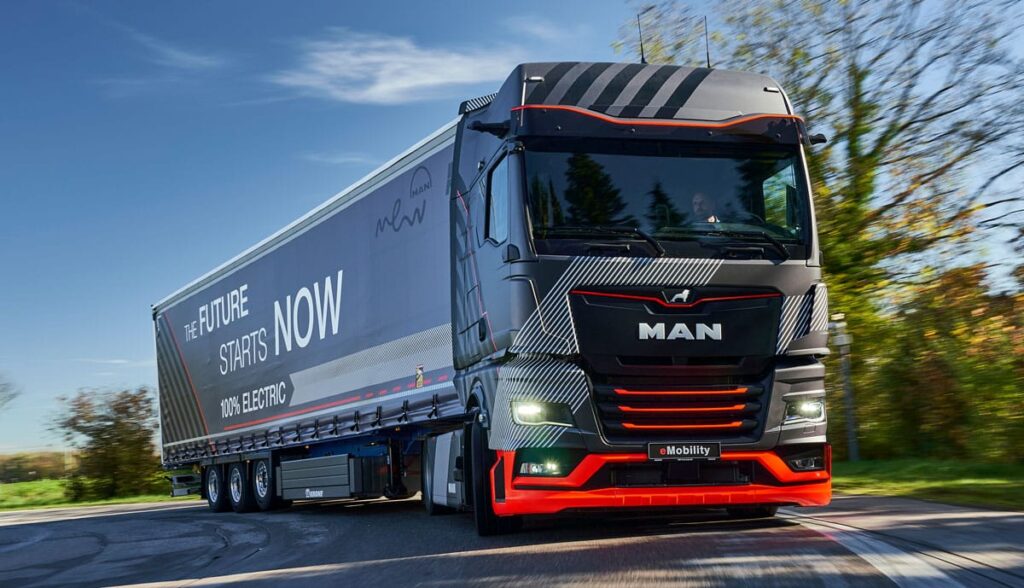
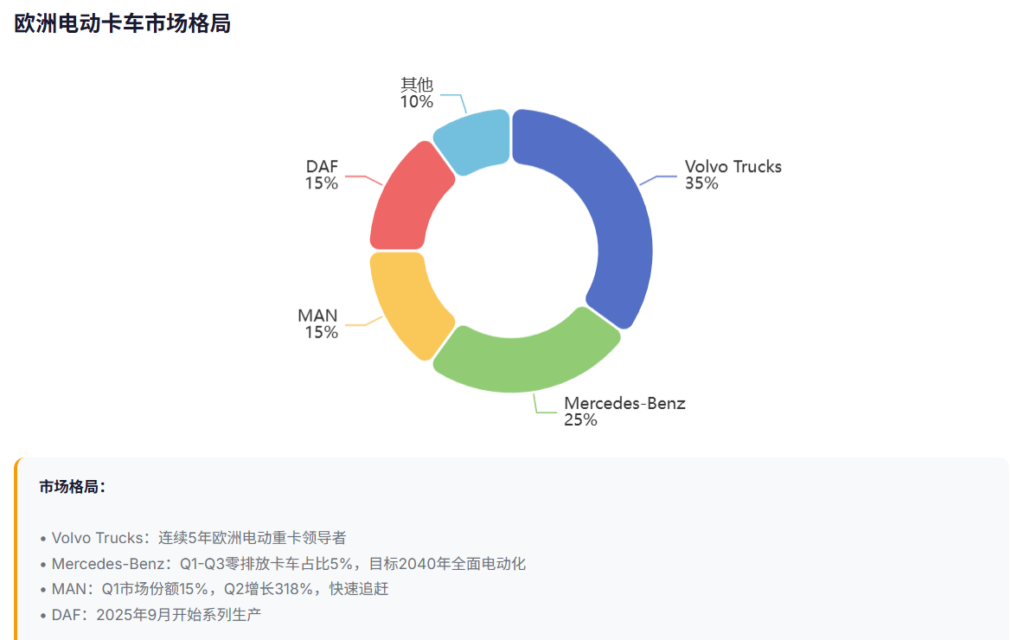
MAN Truck & Bus delivered 620 electric trucks in 2025. That is less than 1% of its total annual sales of 101600 units, but year-on-year growth reached 318% (Q2 data). MAN's commercial vehicle electrification is shifting from competing on generic products to competing on use-case-specific customization.
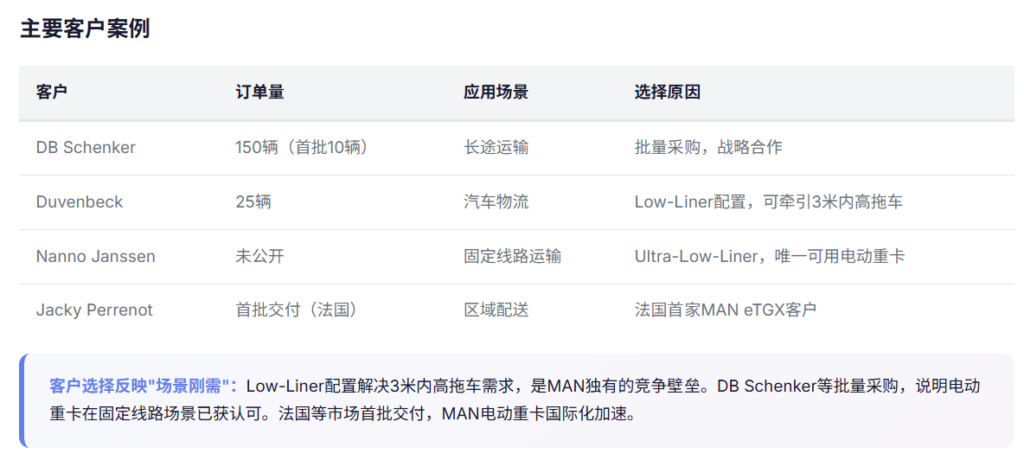
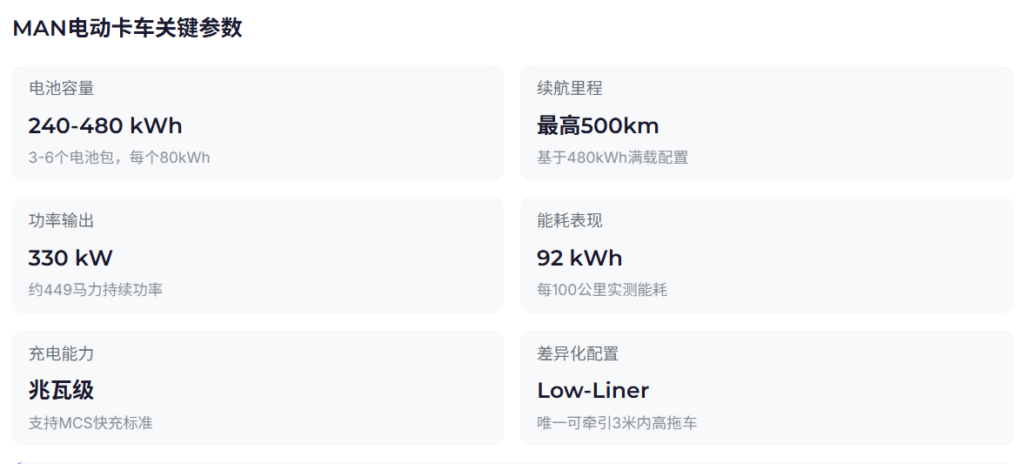
The MAN eTGX is the only electric heavy truck on the market available in a Low-Liner configuration, allowing it to haul trailers with an internal height of 3 meters. This seemingly minor product difference has given MAN a competitive edge in specialized transport segments such as automotive logistics. German logistics company Duvenbeck has ordered 25 MAN eTGX trucks for routes serving automakers, and another logistics company, Nanno Janssen, chose the truck for the same Ultra-Low-Liner configuration. Real-world operating data show the MAN eTGX consumes about 92 kWh/100 km, a solid efficiency figure.
Early on, the question was "who has an electric heavy truck"; now it is "whose electric heavy truck best fits my use case." Fixed routes, specific payloads and specialized configurations matter more in the electric era: battery costs are high, so vehicles must be precisely matched to their use case for the economics to work.
But use-case customization is only a transitional strategy; real competitiveness still lies in the product itself. The MAN eTGX comes with 240-480 kWh battery packs, a maximum range of 500 km and 330 kW of power. Compared with the Mercedes-Benz eActros 600 (621 kWh battery capacity, longer range, LFP battery technology), MAN still lags in battery capacity and battery technology. The market broadly believes MAN needs to add 100-150 kWh of battery capacity and switch to LFP to remain competitive in the long run.
MAN's electrification is advancing faster in its bus business. In 2025, total bus sales rose 49% to more than 7000 units, including more than 1300 electric city buses, up 118% and a record high. Electric buses have moved from pilot demonstrations to large-scale deployment; in use cases with fixed routes, high utilization and depot charging, electrification spreads faster. The same logic applies to trucks: urban distribution moves faster than heavy trucks, and specific use cases faster than general ones.
MAN says its 2026 electric heavy truck order books are fully booked, and it plans to start series production of the 12-tonne eTGL at the end of 2026, extending electrification from a breakthrough in heavy tractors to the broader urban and regional distribution segment, a sign that market demand continues to grow.
For Chinese brands, growth in Europe's electric heavy truck market means a window of opportunity is opening. Chinese brands could build competitive advantages in product iteration speed, battery technology and cost control, but the real barriers are compliance, localization and the service network. MAN's Low-Liner strategy is worth learning from: rather than rolling out across the board, first find the use cases where you can build a differentiated advantage.
The winners of the next phase are often not the manufacturers with "the best vehicle specs," but the players that can truly integrate electric vehicles into the traditional commercial vehicle system, so that they pay off for customers, run reliably, are easy to service and hold predictable residual values.