German automakers' profits fall nearly six times as fast as revenue: Volkswagen scraps die-casting center, Mercedes-Benz may pause new investment at home
According to CAM, combined profits at 21 automakers fell 11% in the first nine months of 2026, while revenue fell only 1.9%. In the same week, Volkswagen confirmed it will not build the large die-casting centre in Wolfsburg, and the Mercedes-Benz board, amid deadlocked wage talks, announced a halt to new investment in its German plants.
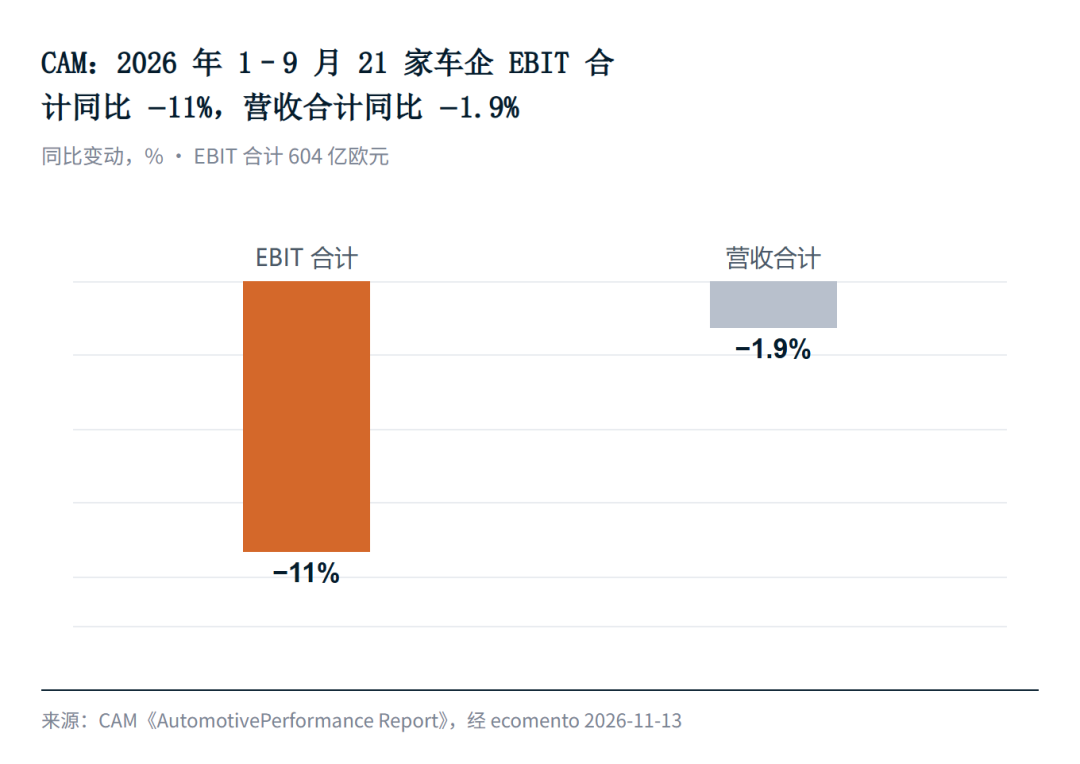
On Nov 13, the German automotive research institute CAM published its report on carmakers' earnings for the first nine months of 2026: combined EBIT at 21 carmakers was EUR 60.4 billion, down 11% year on year, while revenue fell only 1.9%. The same week, Volkswagen confirmed it would no longer build a large die-casting center at its main Wolfsburg plant, and Mercedes-Benz's board told staff on the company intranet that it might suspend all new investment in its German plants.
With profits falling far faster than revenue, German automakers are first adjusting investment not yet spent and where next-generation models will be built. Volkswagen's project cuts are a confirmed company decision, while Mercedes-Benz's suspension order is a stance taken amid deadlocked wage talks; the two carry different weight.
Profit fell nearly six times as much as revenue
For the 21 automakers tracked by CAM, the revenue-weighted EBIT margin for the first nine months fell from 4.0% to 3.6%, and two-thirds of the companies saw margins decline. Working back from the 11% drop, profits were about EUR 7.5 billion lower than a year earlier, a decline roughly 5.8 times that of revenue.
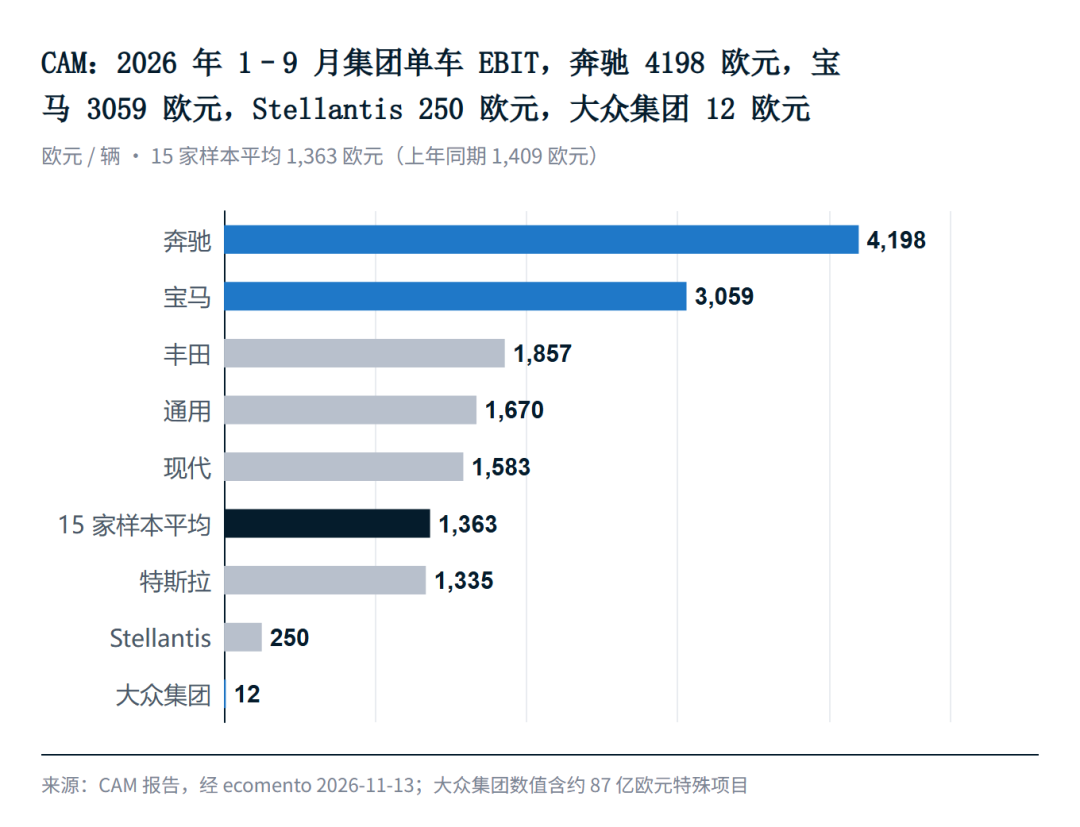
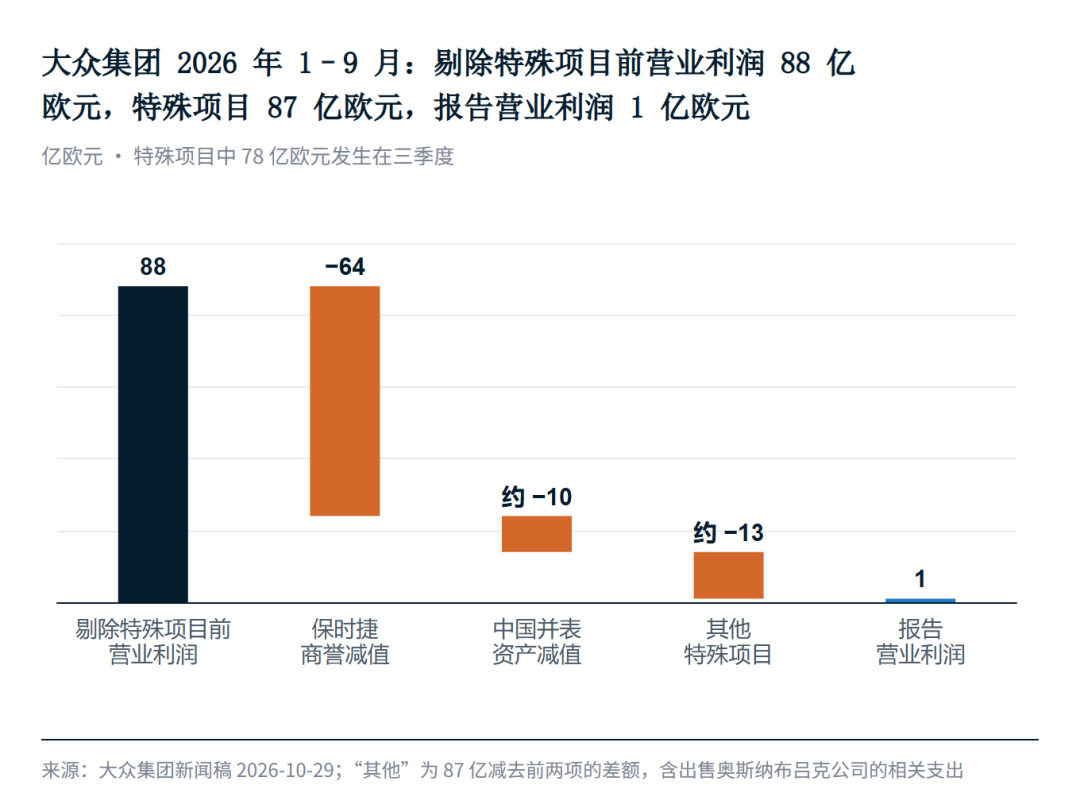
Group EBIT divided by unit sales comes to EUR 4,198 per vehicle at Mercedes-Benz, EUR 3,059 at BMW, EUR 250 at Stellantis and EUR 12 at the Volkswagen Group. Volkswagen and Mercedes-Benz sit at opposite ends, but each has its own context. The Volkswagen Group's operating profit for the first nine months was just EUR 100 million, against EUR 5.4 billion a year earlier. Its accounts included EUR 8.7 billion in special items, mainly a EUR 6.4 billion impairment of Porsche goodwill; excluding these, the margin was 3.8%. Presenting the results, the CFO said this level is not enough to keep funding heavy investment. Mercedes-Benz Group's margin rose from 4.4% to 5.5%, driven by Financial Services and Vans, while Mercedes-Benz Cars' EBIT fell by about 56% in the first nine months.
CAM says German automakers face three growing pressures at once: competition in China, US tariffs and exchange rates, and fixed costs that are hard to cut when plants run below capacity. Mercedes-Benz Group's margin rose and Volkswagen's reported profit was close to zero, but the car business at both companies is getting worse. This is the background to both companies' changes at their German plants this week.
Volkswagen scraps die-casting centre at German headquarters
A Volkswagen spokesperson confirmed to the weekly Die Zeit this week that Gamechanger, the production overhaul at Volkswagen's Wolfsburg headquarters, will not proceed as planned and that its large die-casting centre has been cancelled, citing the company's tight financial situation. Development of the next-generation SSP electric platform is unaffected; models based on it will be built using conventional processes instead.
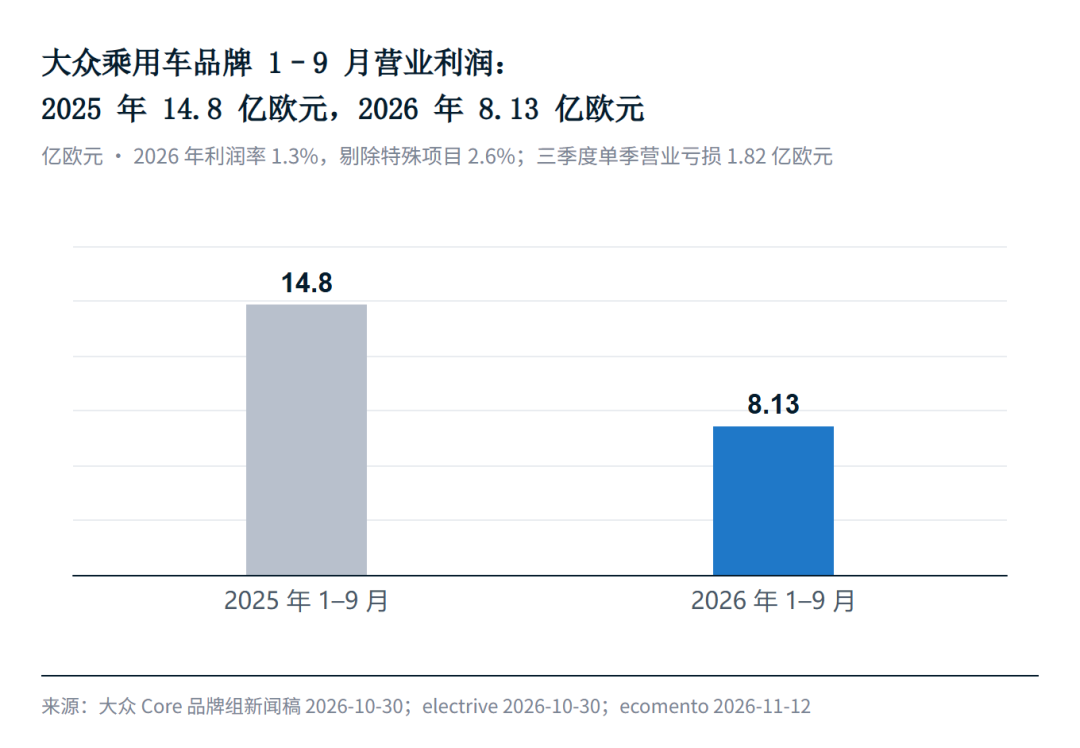
This is the second cut announced in Wolfsburg in three weeks. On Oct 30, the Volkswagen passenger car brand said it was pausing development of the electric ID. Golf until funding is secured. The brand's operating profit for the first nine months fell from €1.48 billion to €813 million, down about 45%, a margin of 1.3%.
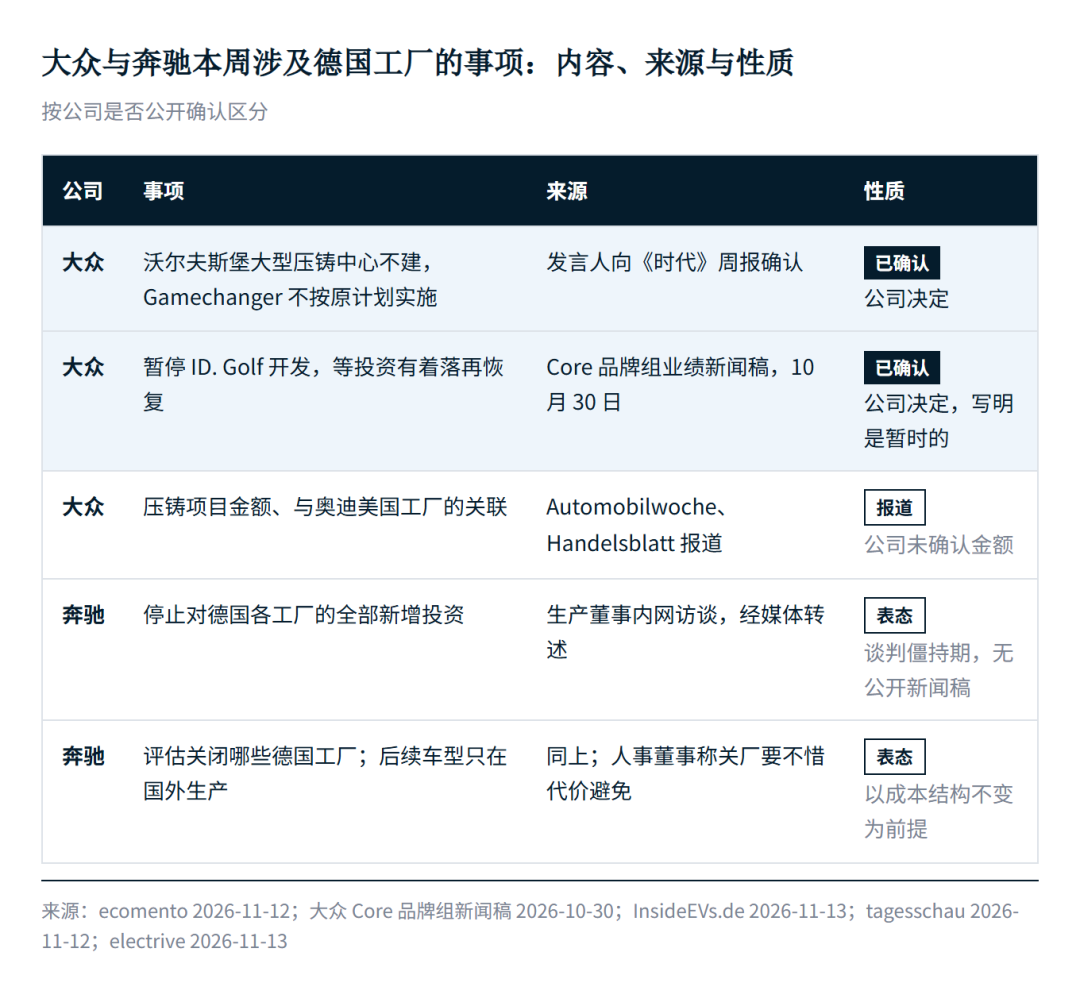
According to the trade weekly Automobilwoche, Volkswagen has set aside EUR 135 billion for capital expenditure and R&D over 2027–2031, and in the latest planning round the combined projects exceeded that budget. In late October, Audi announced its first US plant, in Georgia, with investment of about USD 4 billion. Handelsblatt says this is one of the main reasons other projects were cut back. The project amounts and their link to the US plant come from media reports. What Volkswagen has publicly confirmed is that the project will not go ahead as originally planned.
The cancelled project was part of the Dec 2024 labour agreement, which provides for cutting more than 35,000 jobs by 2030 with no plant closures and no compulsory redundancies. Production of the combustion Golf moves to Mexico from 2027, and Wolfsburg is switching to a cheaper large-scale die-casting process to prepare for the SSP platform and the electric Golf.
Mercedes-Benz's investment freeze
The Mercedes-Benz news comes from an interview posted on the company intranet on Nov 12. Michael Schiebe, board member for production, said the board jointly decided to halt all new investment in German plants; if the cost structure doesn't change, the company will carefully assess which German plants to close, and future models will be built only abroad.
Talks have been deadlocked since the end of June. Management wants staff to work longer hours without extra pay, with a 40-hour week under discussion to replace the 35-hour week, along with cuts to bonuses and profit-sharing. According to Handelsblatt, the aim is to save €800 million a year. The 35-hour week is a landmark achievement of German metalworkers' union IG Metall, which treats it as a red line.
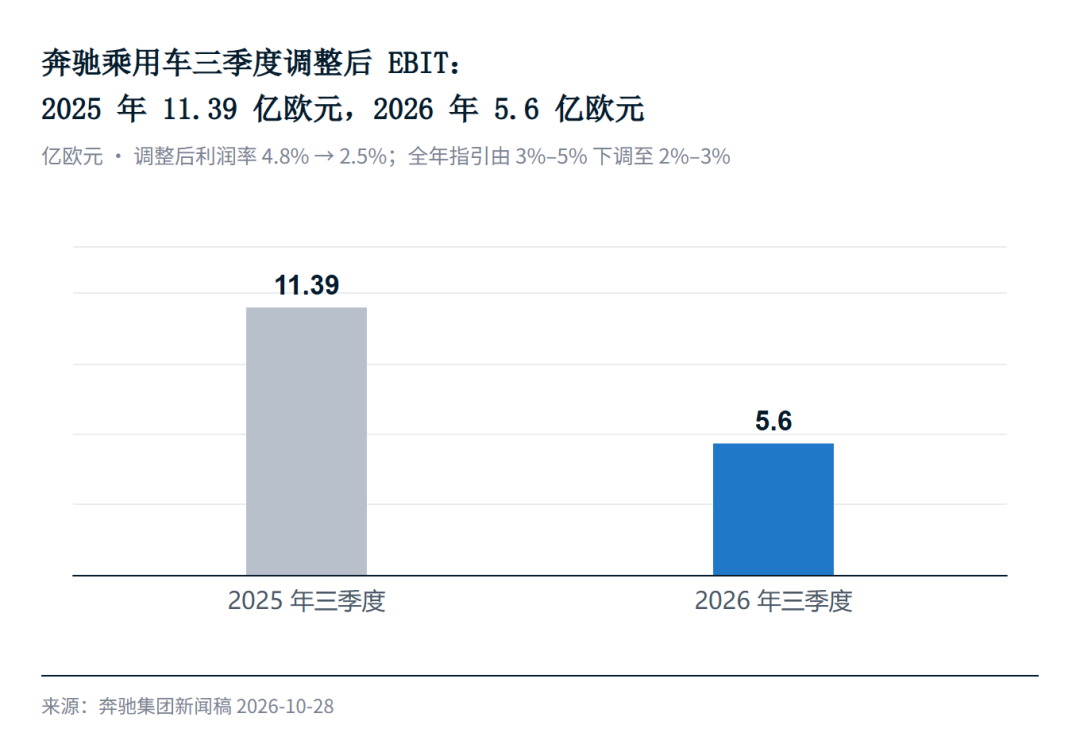
The pressure on management comes from the passenger car business. In Q3, Mercedes-Benz Cars' adjusted EBIT was EUR 560 million, roughly half the EUR 1.139 billion of a year earlier, and full-year margin guidance was cut from 3%–5% to 2%–3%. The same earnings release disclosed that the company returned EUR 5.2 billion to shareholders through dividends and buybacks in the first nine months.
Mercedes-Benz's halt order is a bargaining chip, but production locations for next-generation models must be set years in advance. The longer talks drag on, the more uncertain German OEMs' position becomes in this round of production allocation.
Five times the labor cost
Schiebe said in an interview that labour costs per production hour in Germany are in some cases up to five times those at Eastern European plants.
Data from the German Association of the Automotive Industry (VDA) show average hourly labour costs in the German automotive industry of EUR 62 in 2023. On an all-industry basis, Germany's Federal Statistical Office puts the 2025 average at EUR 45 for Germany, EUR 15.20 for Hungary and EUR 13.60 for Romania, making Germany about 3 times the former and 3.3 times the latter.
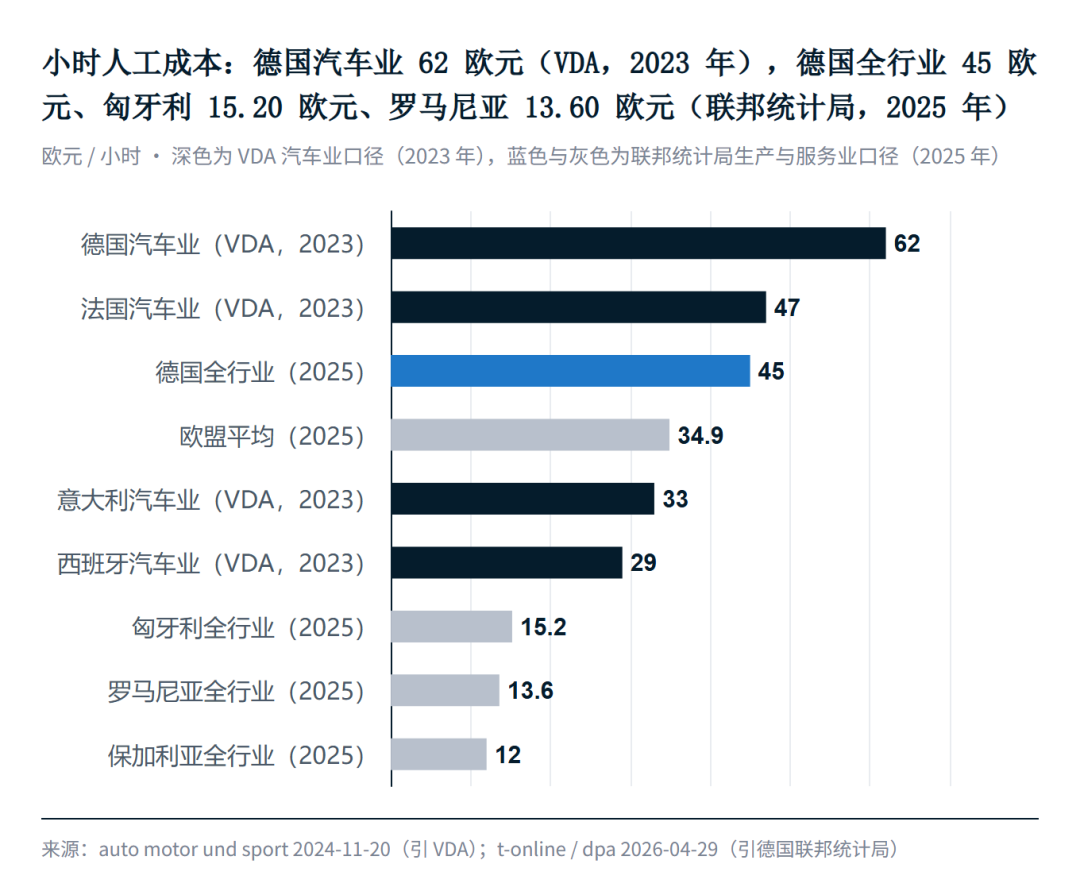
The gap does exist, but the multiple depends on which two plants are compared; if new models go to Eastern Europe or the US, parts sourcing will also have to be renegotiated.
Raw materials and chips in 2027
Labor is not the only cost going up. On Nov 12, Stellantis's CEO told the annual meeting of Italian components association ANFIA that in 2027, and possibly 2028 as well, the company and its suppliers will face significant raw material inflation, with prices of memory chips, printed circuit boards and semiconductors also rising. When Mercedes-Benz cut its full-year guidance in 10, one of the reasons it gave was higher raw material costs in the fourth quarter.
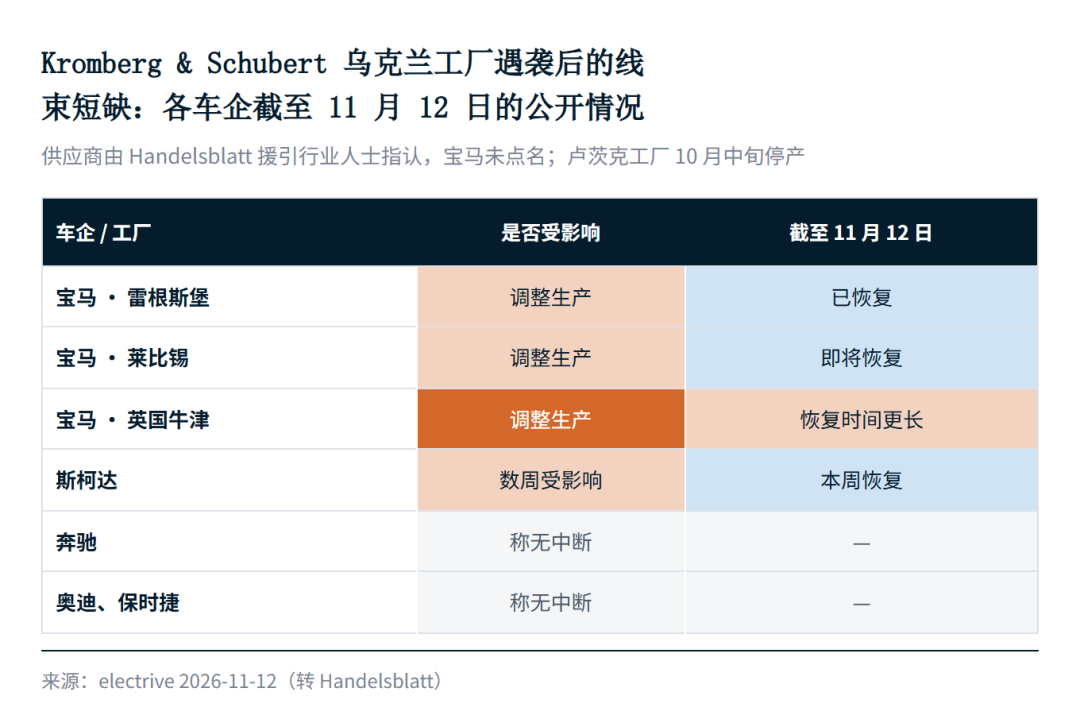
Plants in Ukraine belonging to German wiring harness supplier Kromberg & Schubert were attacked, and its Lutsk plant halted production in mid-10. BMW confirmed parts shortages and adjusted production at its Regensburg, Leipzig and Oxford (UK) plants, without naming the supplier. Automakers can hardly absorb rising costs for raw materials, chips and wiring harnesses on their own, so price-cut demands on the procurement side will tighten.
Source: Chart by AutoMusic based on the public sources listed in the article; first published on the AutoMusic WeChat account.
Final thoughts
As of this week, Volkswagen has confirmed two changes: it has cancelled the die-casting centre in Wolfsburg and paused development of the electric Golf. Mercedes-Benz's plant closures and moves of models to plants abroad are still under negotiation.
For Chinese suppliers serving European automakers, demand for equipment and castings from this one die-casting project in Wolfsburg is gone, while the outcome of Mercedes-Benz's negotiations will influence whether next-generation models are sourced in Germany or in Eastern Europe and North America. The future of Europe's auto industry remains uncertain.