UK's largest electric heavy truck hub: 32 chargers sharing 2.4 MW
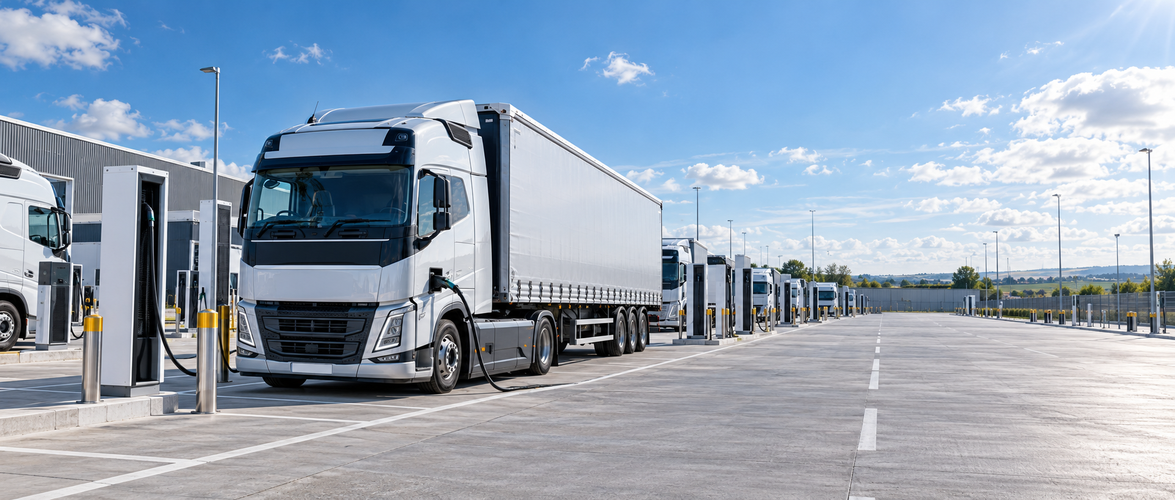
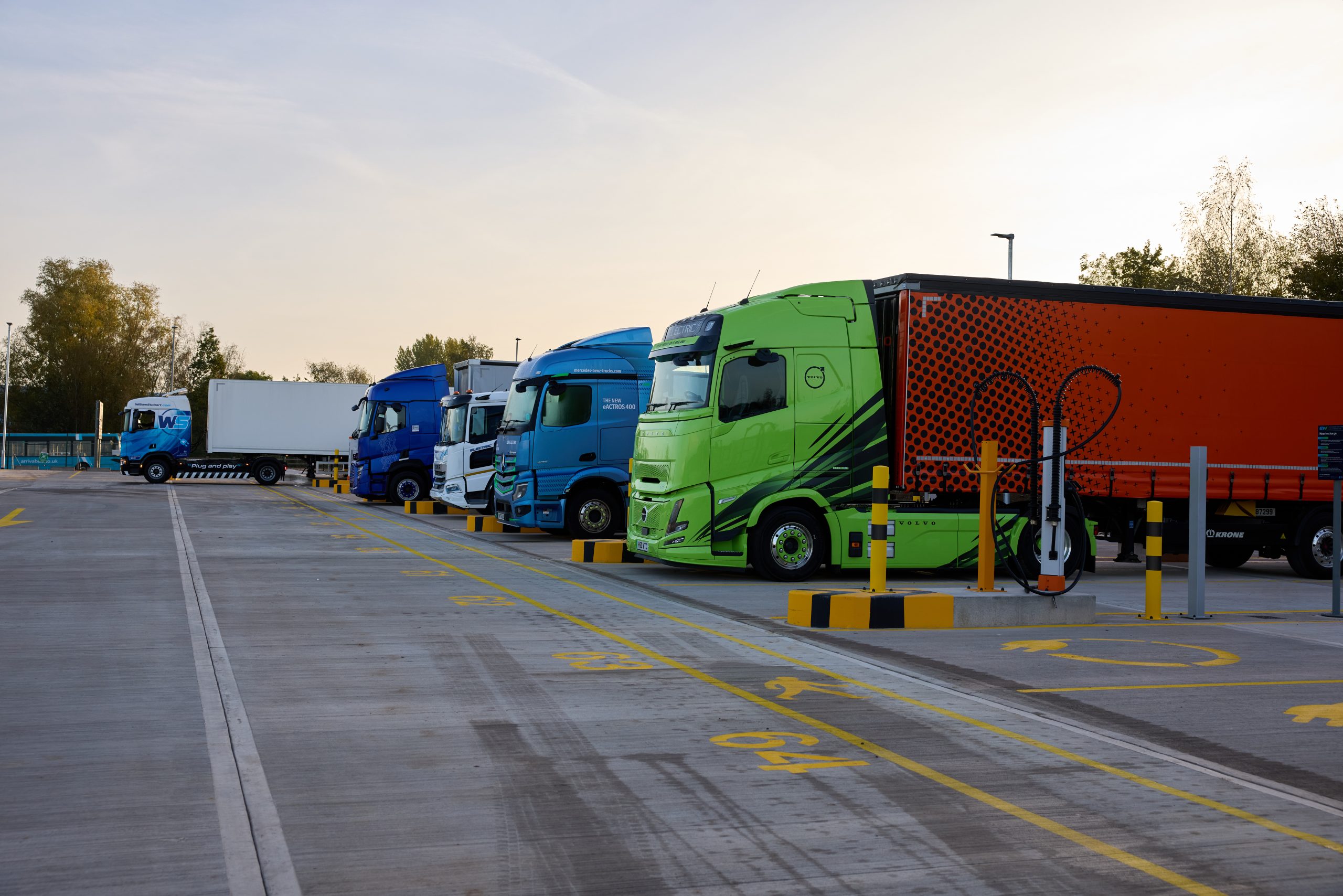
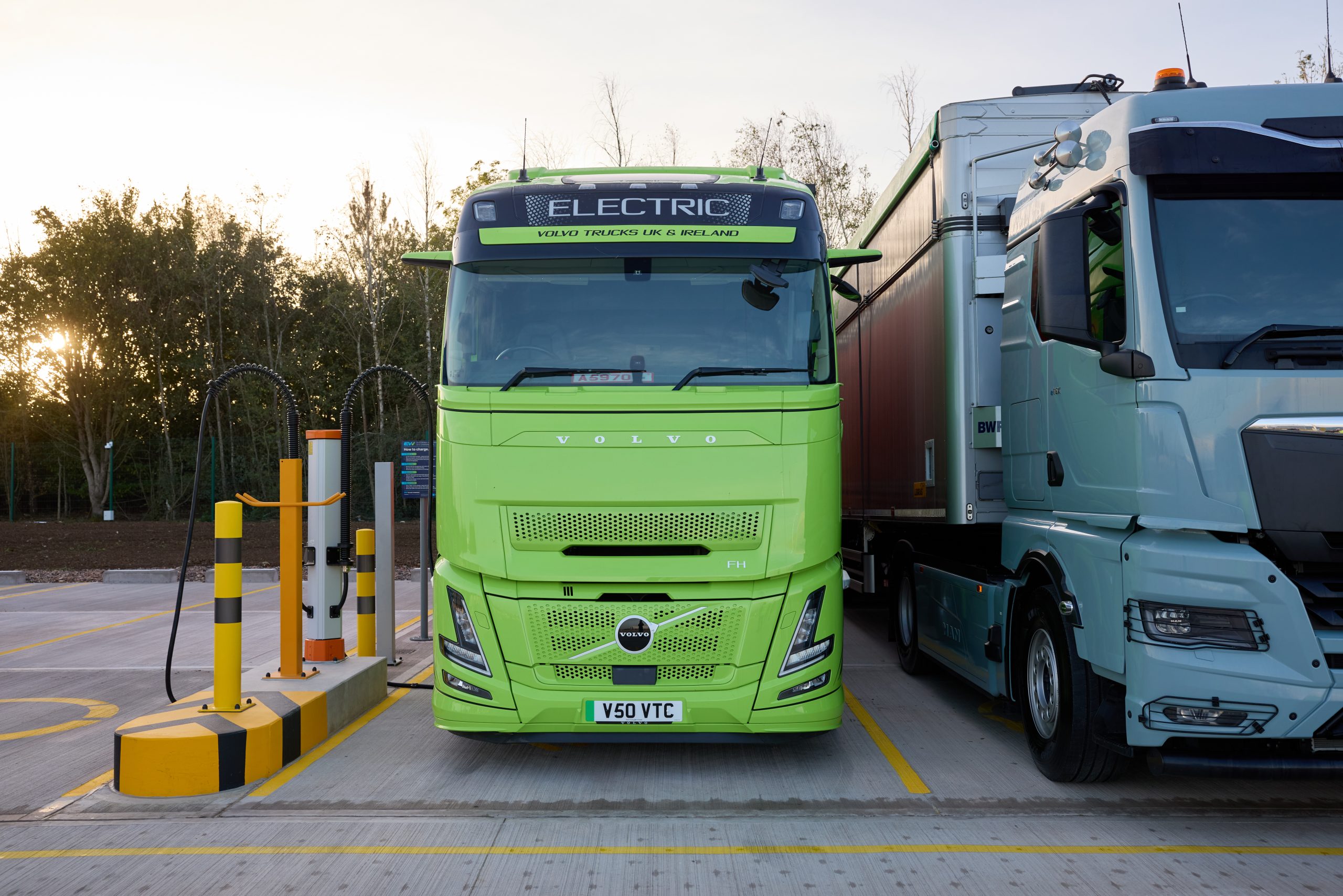
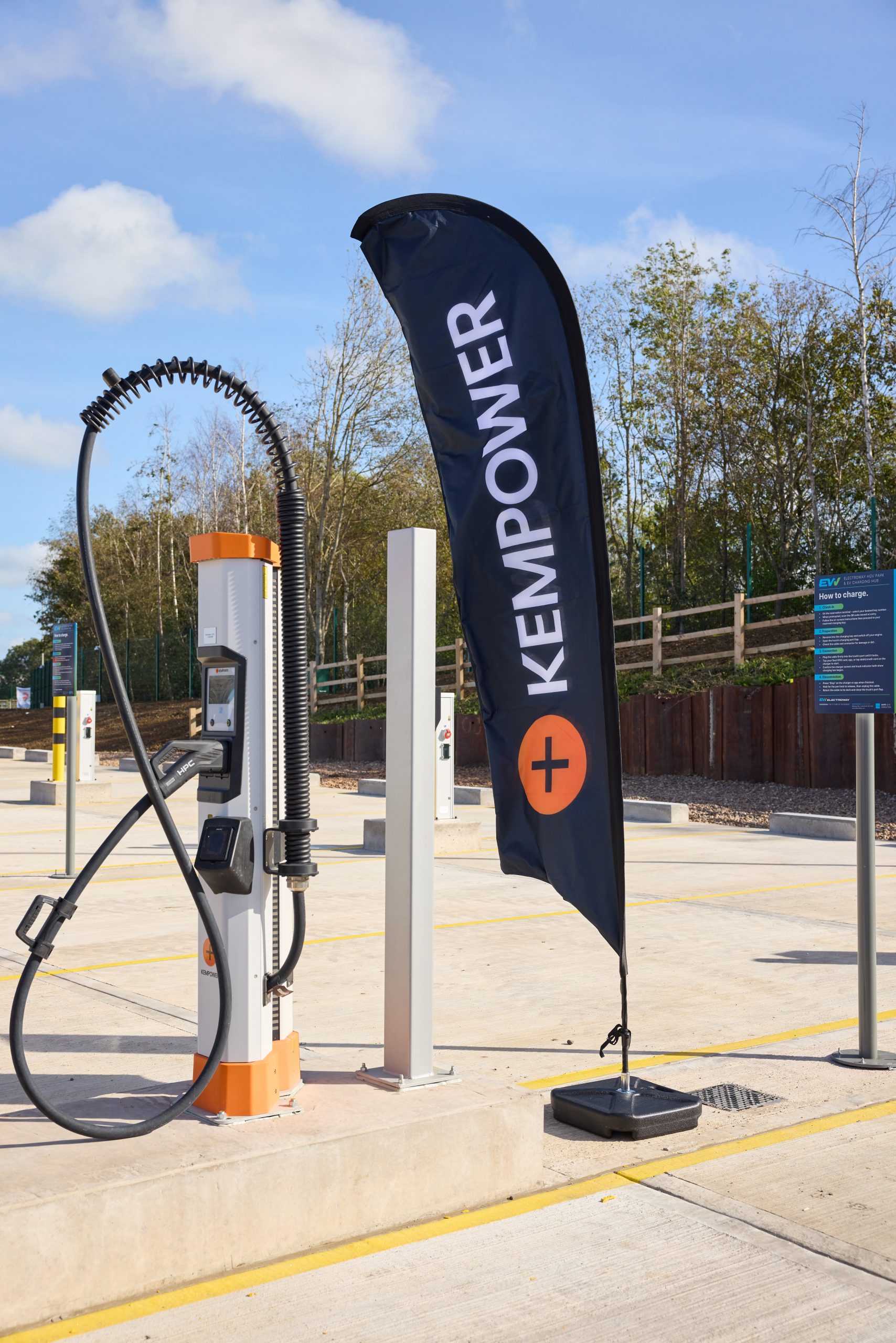
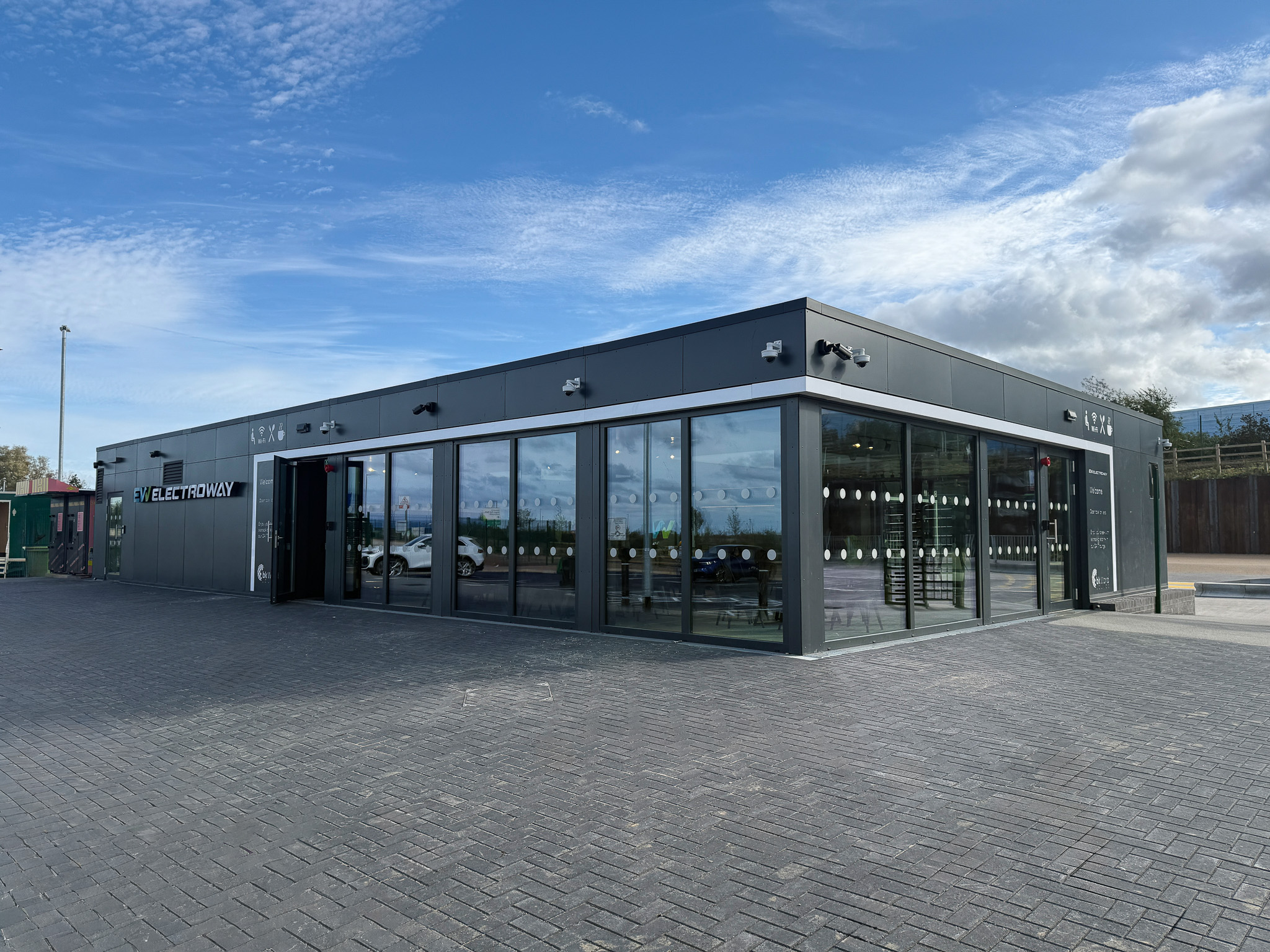
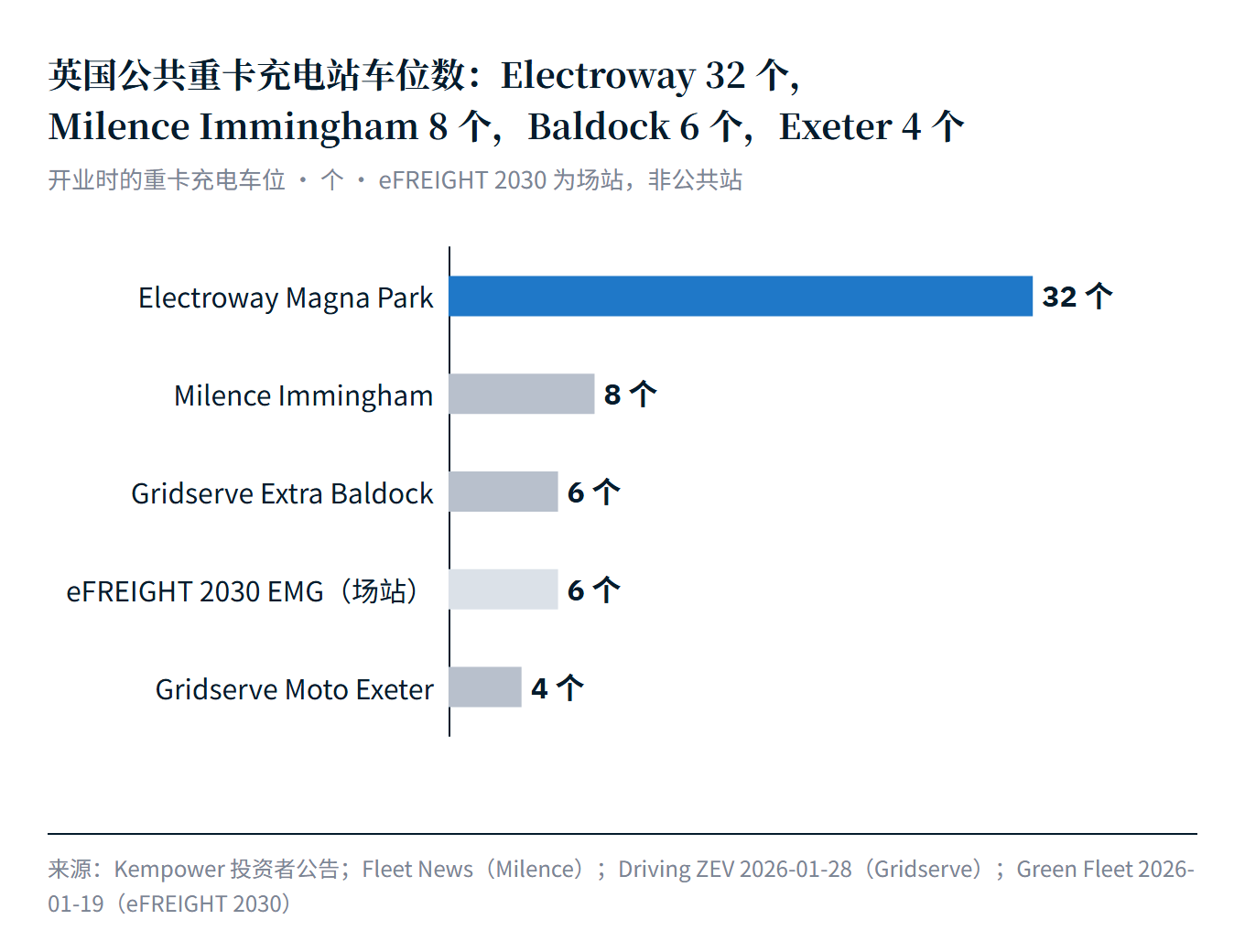
The Electroway truck stop at Magna Park logistics park in Leicestershire, England, opened in Oct 14. It has 180 secure parking bays and 32 DC charging bays, with up to 400 kW per connector, and prices start at 39p per kWh. The site was funded by GSIM and developed by Keoma Energy, with Bosch Road Services handling technical operations. It received no government funding, and its equipment comes from Finland's Kempower.
Power ratio
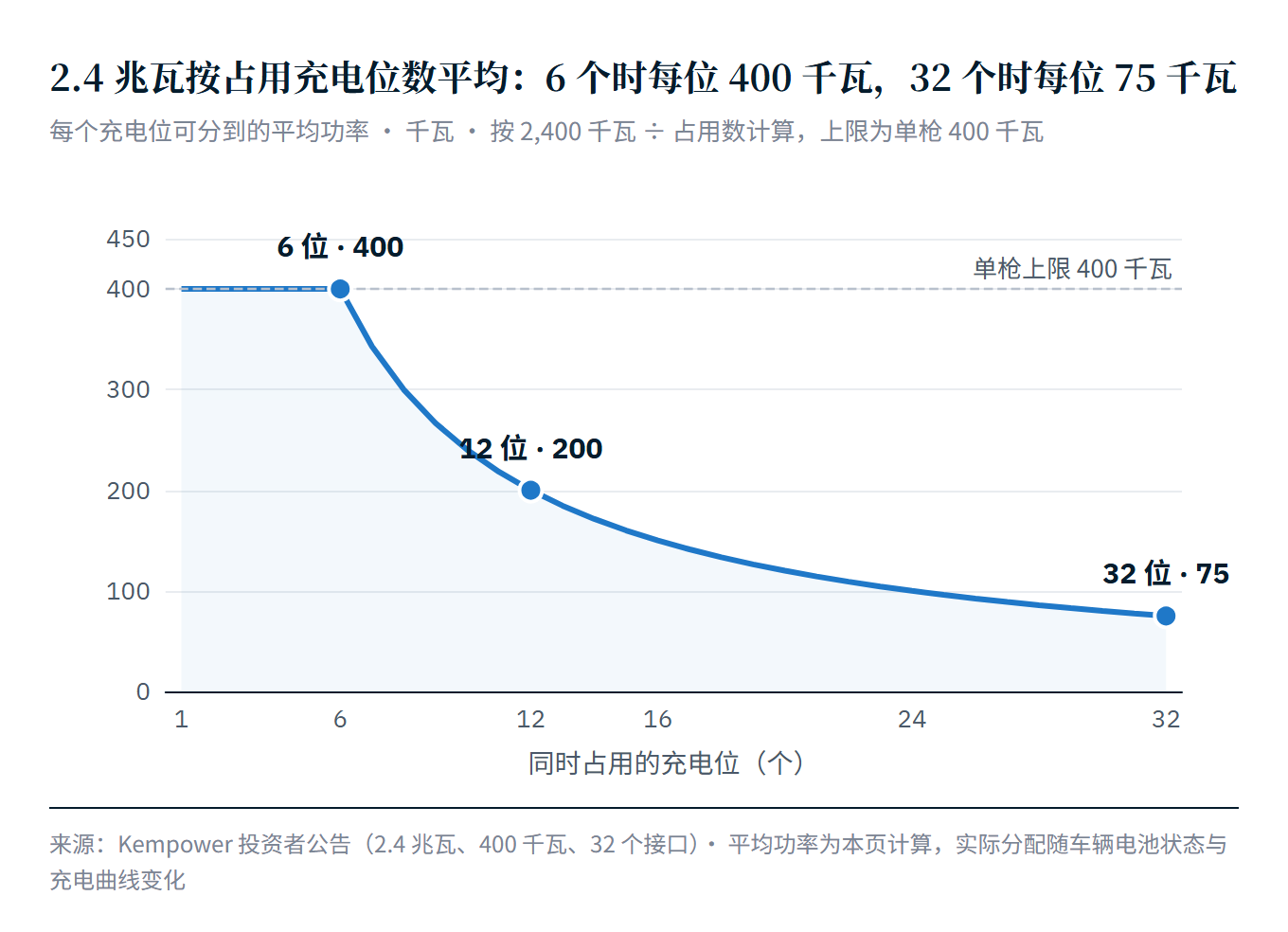
The whole site has only 2.4 MW of installed capacity, dynamically shared across 32 charging bays. 2.4 MW divided by 400 kW equals 6, so at most 6 vehicles can charge at full power at the same time; with all 32 bays plugged in, each averages about 75 kW. The equipment supplier says a 45-minute break can add 300 kWh, enough for about 150 miles (about 240 km), equivalent to charging at the full 400 kW throughout. At most 6 vehicles can get that much at any one time, and only if the vehicle can accept 400 kW.
The site plans to add megawatt charging in phase two early next year, with up to 1.2 MW per connector; eventually the number of connectors will rise to about 180, matching the number of bays. Nearby in the East Midlands, a similarly configured depot belongs to eFREIGHT 2030, a demonstration project led by Voltempo, where 6 bays share a single 1 MW charger. Booking is also used to allocate power: fleets can reserve specific chargers and guaranteed power on the Bosch platform, and contracts of one year or longer get fixed pricing.
Pricing and funding
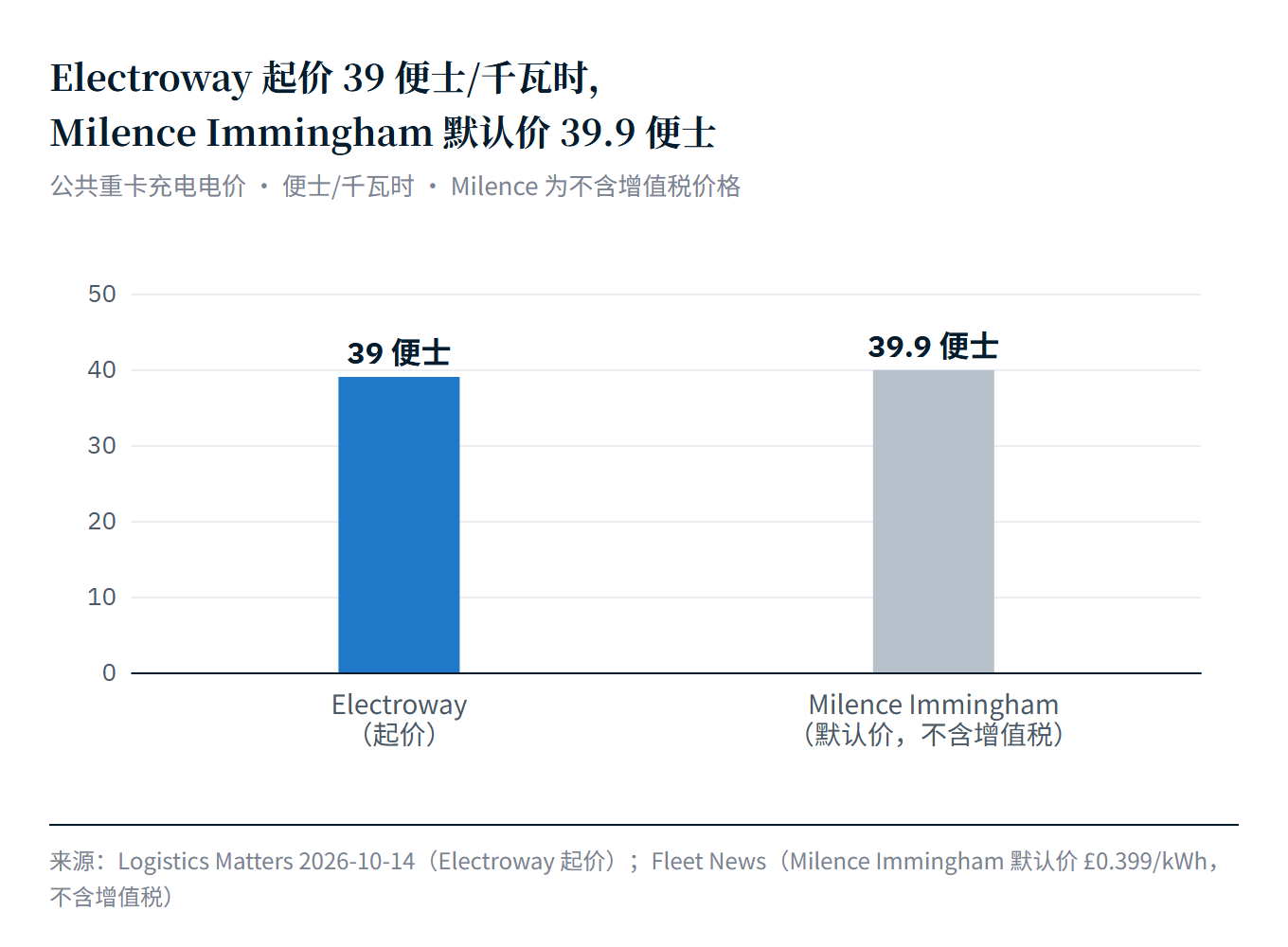
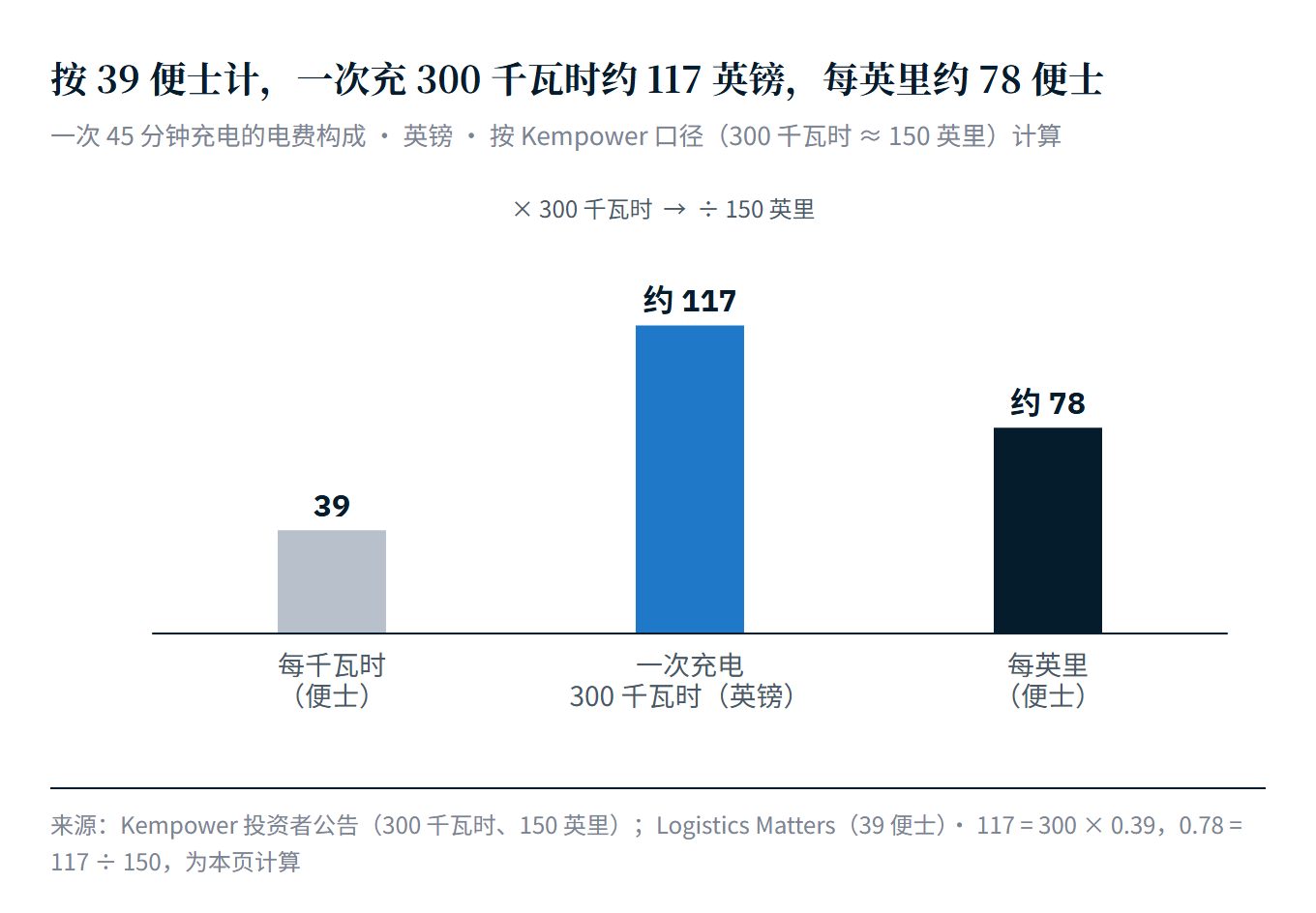
39p is the starting price. Milence's base price at Immingham is £0.399 (excluding VAT), so the two operators' list prices are close. Milence is a joint venture of Daimler Truck, Traton and Volvo. At 39p, charging 300 kWh costs about £117; spread over 150 miles, that comes to about 78p per mile. On the same basis, consumption is about 2 kWh per mile.
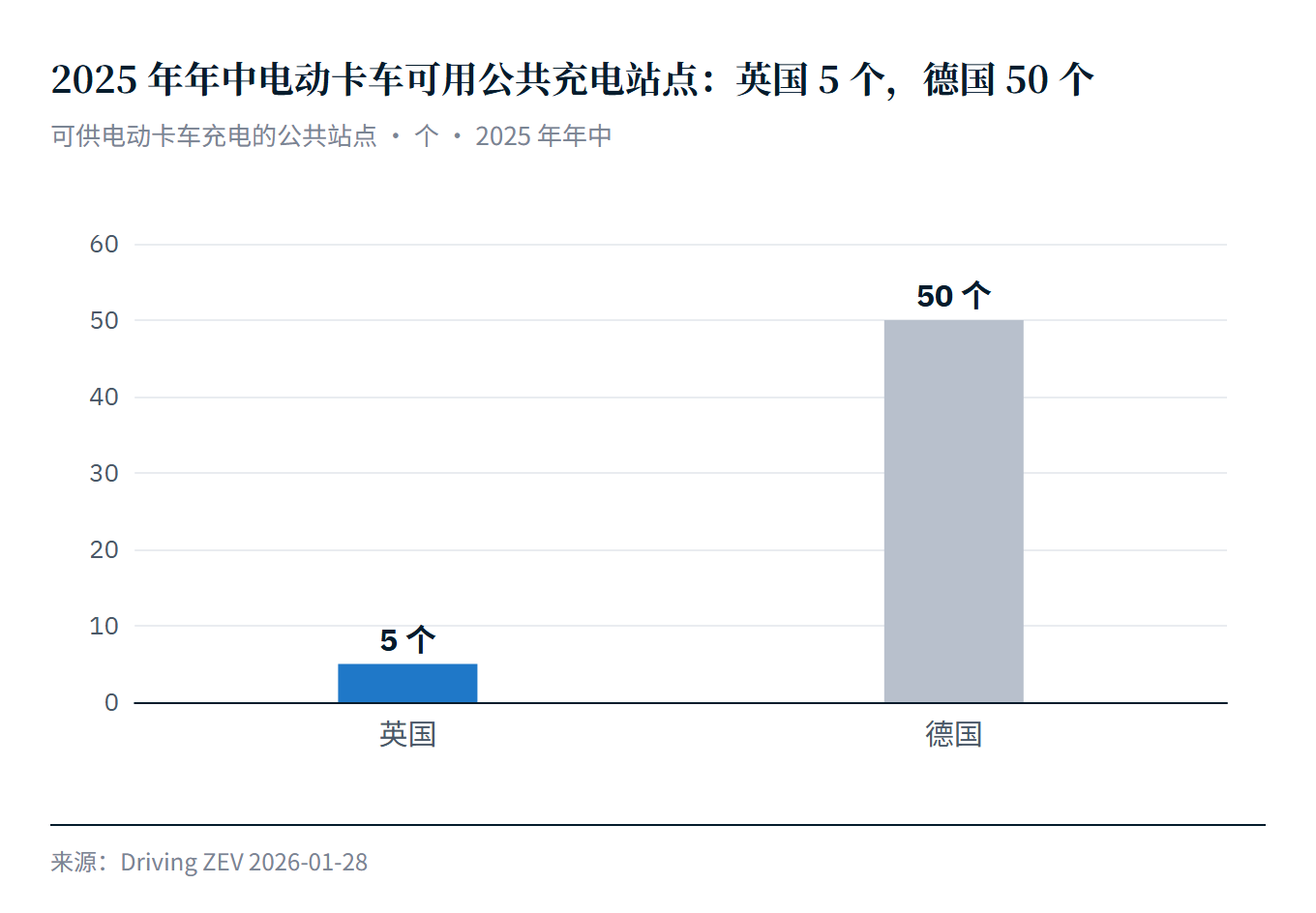
The difference is where the money comes from. The UK's earlier public motorway truck charging sites were funded by the Department for Transport's GBP 200 million Zero Emission HGV and Infrastructure Demonstrator (ZEHID) programme. The Gridserve-led project received GBP 62.7 million in government funding covering both vehicles and charging. The two sites it opened in Baldock and Exeter in January have only 6 and 4 truck bays respectively. In mid-2025 there were only 5 public sites across the UK able to charge electric trucks, against 50 in Germany. Keoma plans to build 30 similar sites, which will need investment of nearly GBP 1 billion once complete.
Park site selection
The park has about 50 warehouses, with Amazon, ASDA and Marks & Spencer already on site. Around 40% of the businesses there have set net-zero targets, and the site is served by three motorways: the M1, M6 and M69. The UK is short of about 11,000 truck parking spaces. The bays at the site have security measures, including 78 smart cameras, and the driver rest building is open 24 hours with 11 showers and washing machines. Zero-emission models currently make up less than 1% of new heavy truck registrations in the UK, so charger utilisation will only rise as fleets electrify.
Two things to watch next: whether the phase-two megawatt chargers can be installed early next year, and how many of Keoma's 30 stations actually break ground.
Source: Chart by AutoMusic based on the public sources listed in the article; first published on the AutoMusic WeChat account.