UK puts £100 million into subsidising on-street slow charging
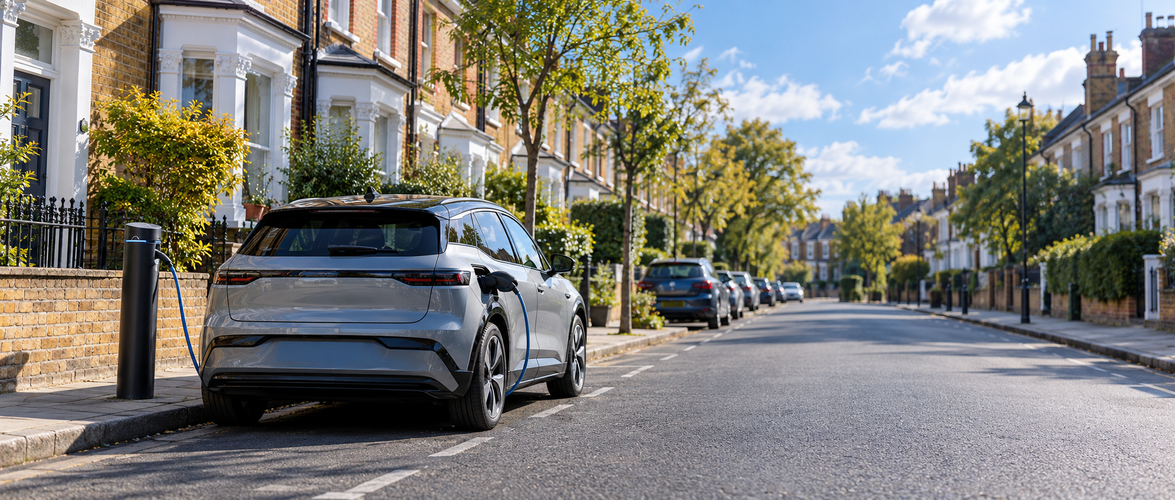
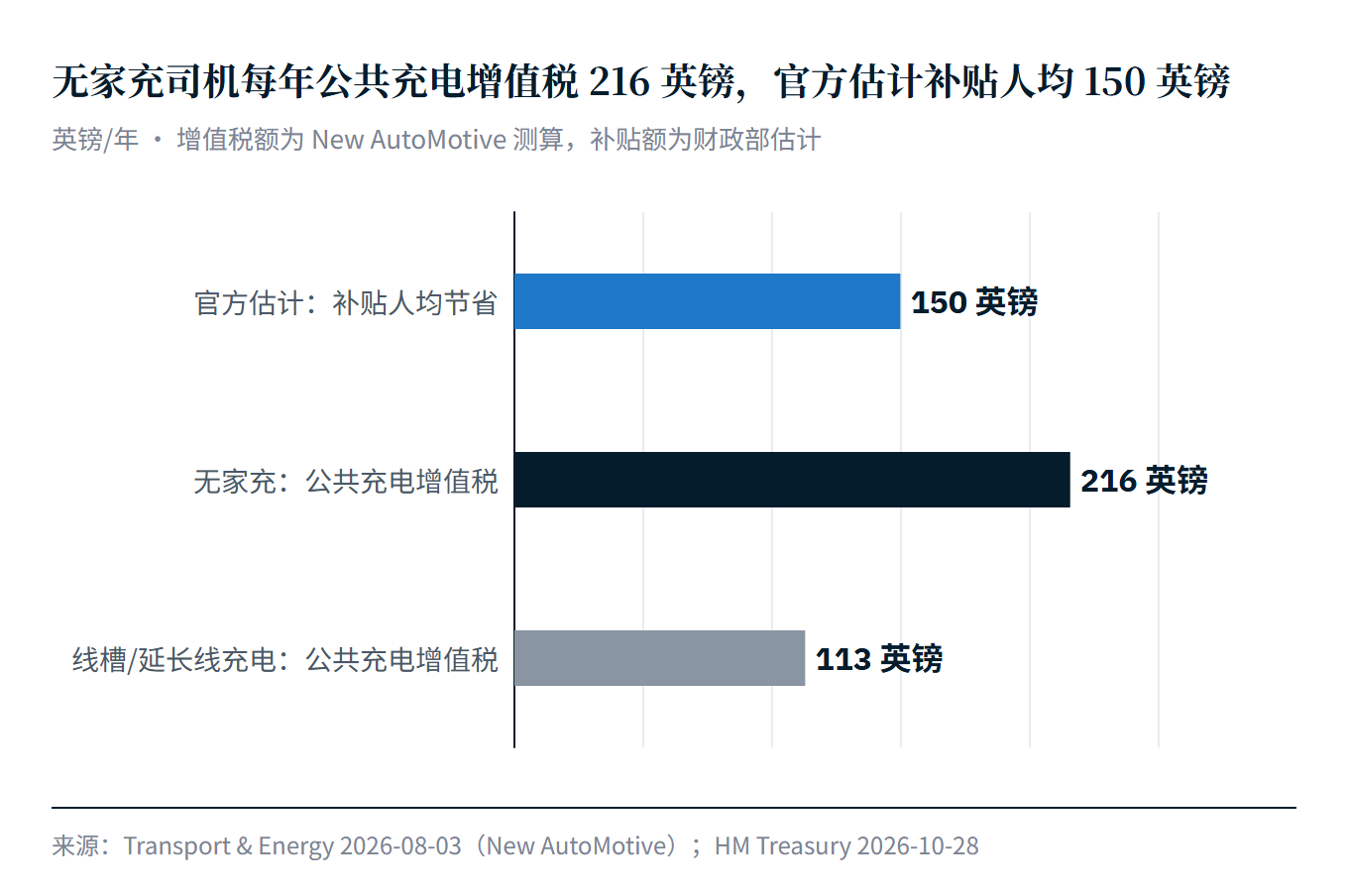
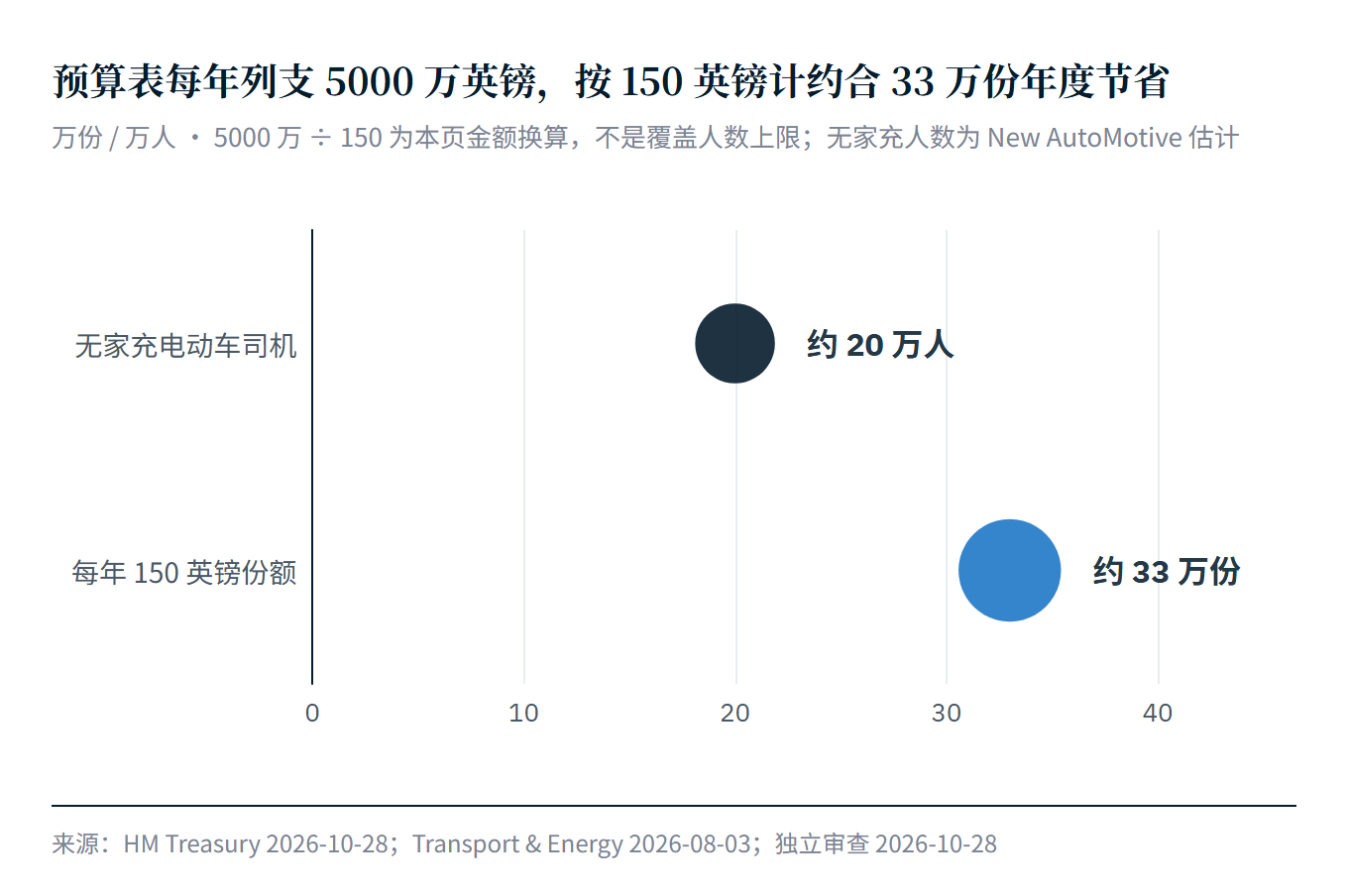
The UK Autumn Budget announced on Oct 28 that, for two years from spring 2027, the government will spend £100 million to cut electricity prices at low-power public chargers near residential areas in Great Britain (England, Scotland and Wales, excluding Northern Ireland). The Treasury says these chargers make up about a third of the public network, and drivers without home charging who rely on on-street chargers could save about £150 a year on average. It has not yet said whether the subsidy will go to operators or directly to drivers.
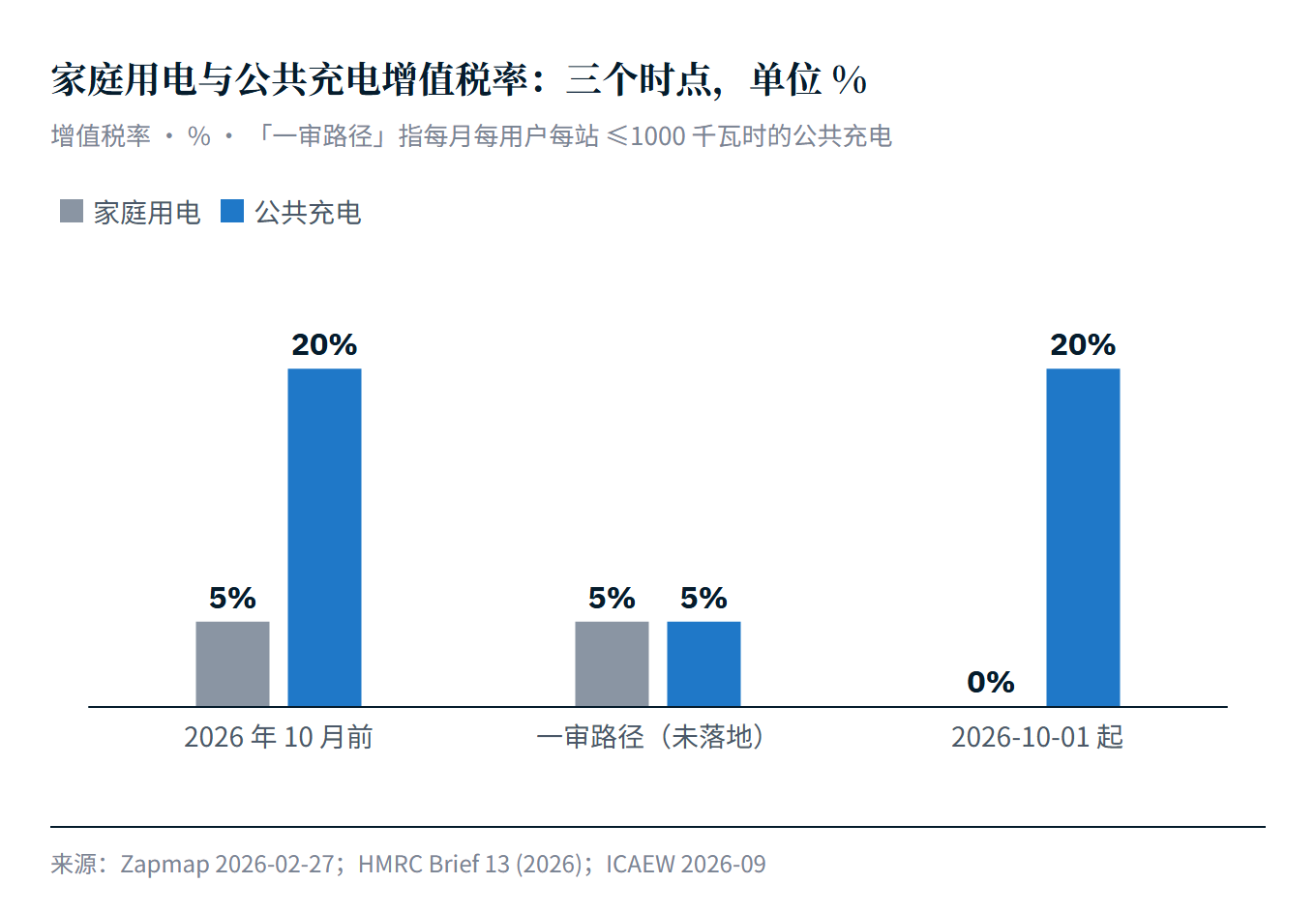
On the same day, HM Revenue & Customs (HMRC) issued a brief stating that electricity supplied through public and workplace chargers is not domestic supply and will be subject to VAT at the 20% standard rate from Nov 1. Public charging was already taxed at 20%; this change writes long-standing practice into law.
Tax rate gap has reached 20 points
VAT on household electricity in Great Britain (England, Scotland and Wales) was cut from 5% to 0 from Oct 1, and the budget extends this relief to Jul 1, 2027; Northern Ireland remains at 5%, with a similar relief expected from month 4 next year. The tax rate gap between home and public charging thus changes from 15 percentage points to 20.
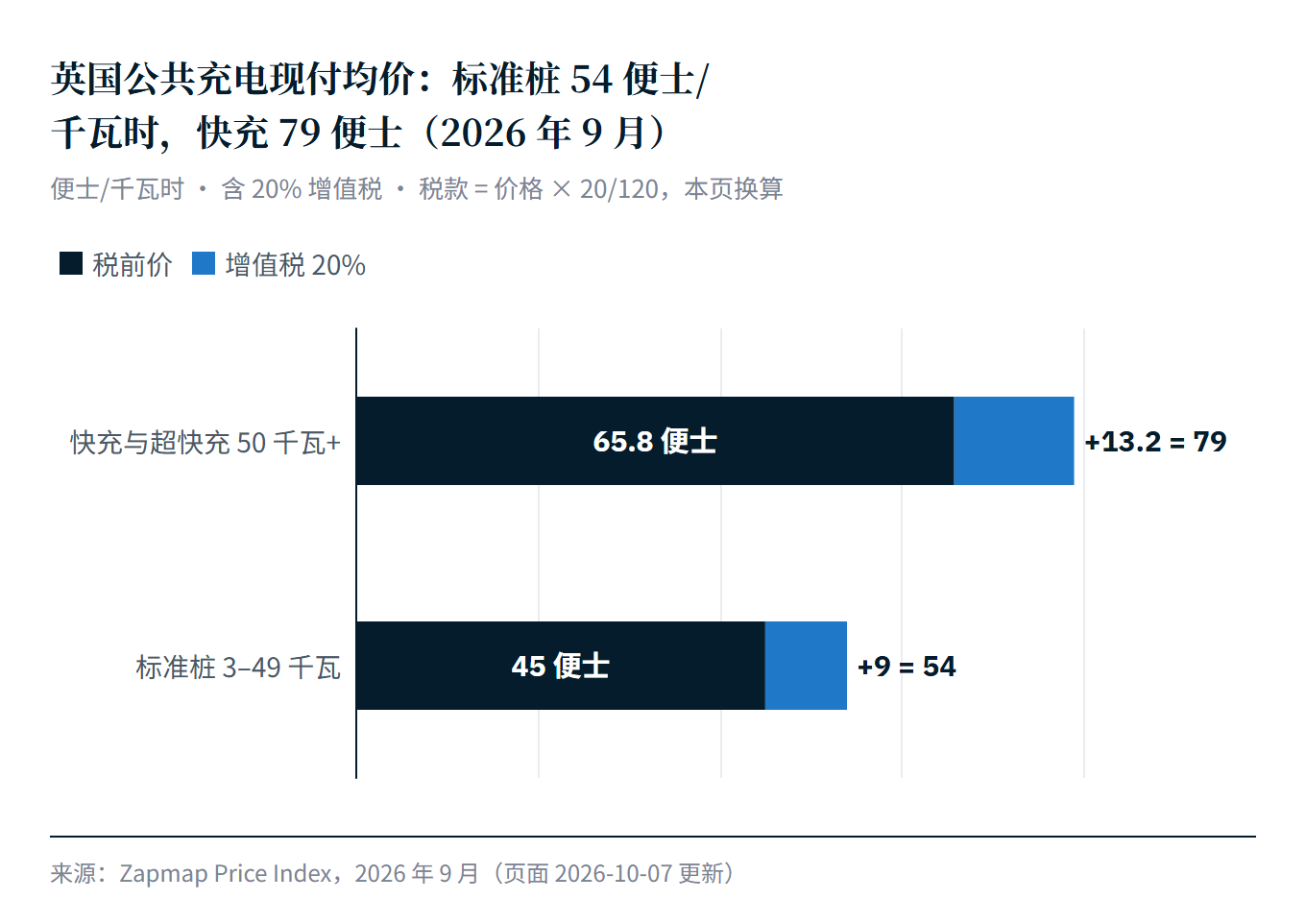
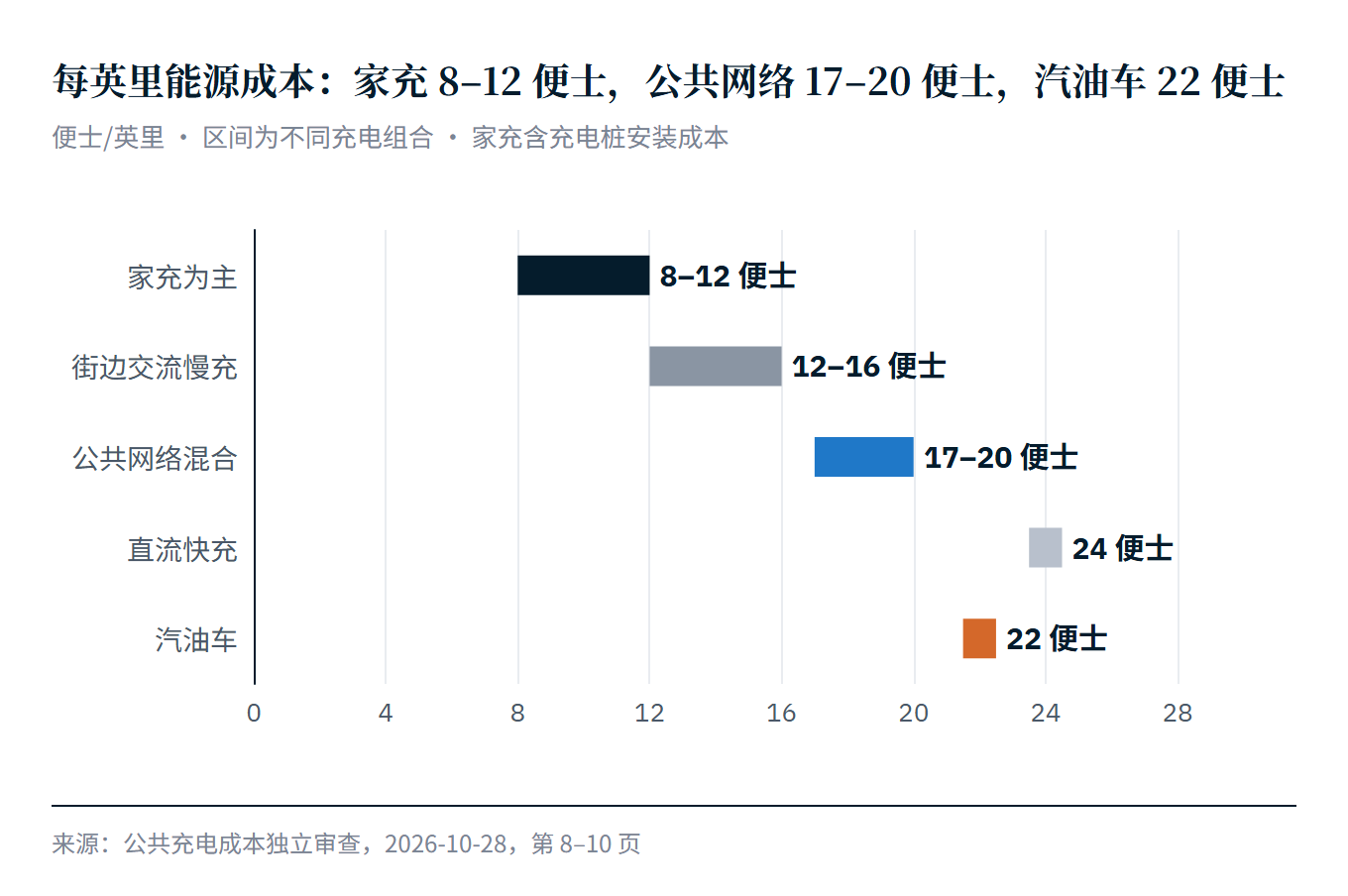
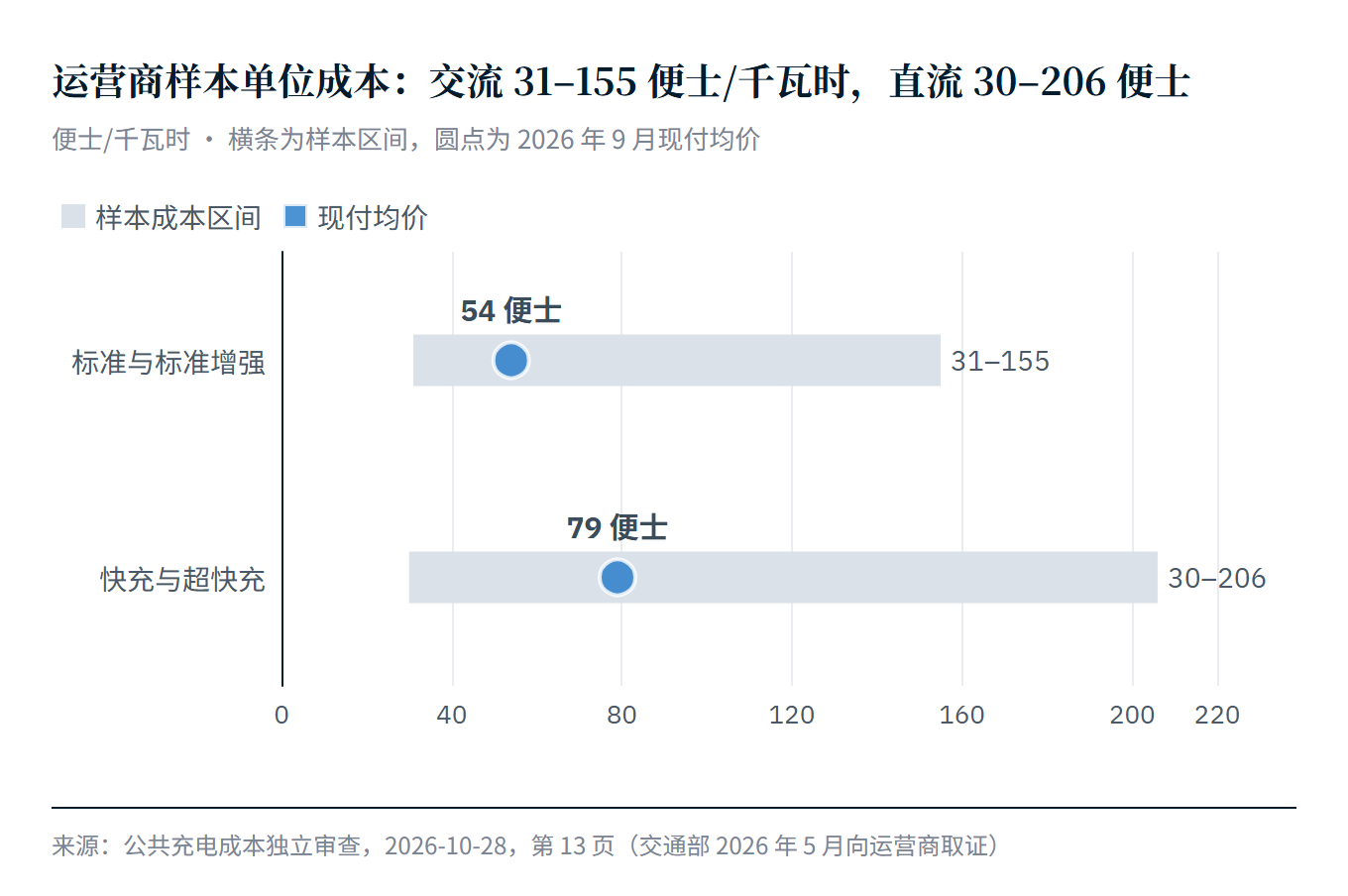
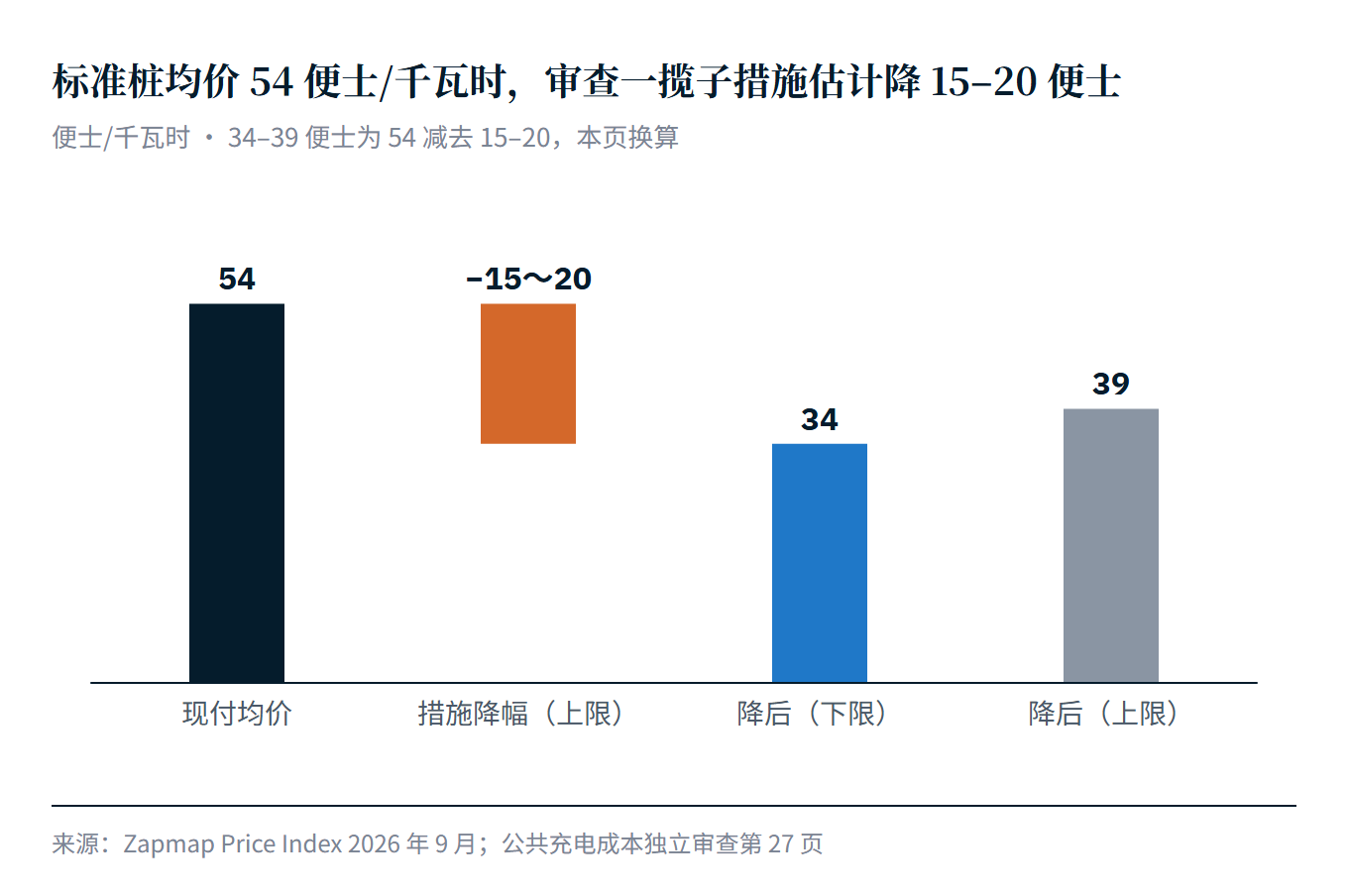
Zapmap data for 9 show that the average pay-as-you-go price at standard chargers (3–49 kW) was 54p/kWh, of which about 9p was tax. An independent government-commissioned review estimated that drivers charging at home pay 8–12p per mile, those relying solely on on-street AC chargers 12–16p, and those using a mix of public charging 17–20p, compared with about 22p for petrol cars.
The budget allocates £50 million a year, which at £150 each is equivalent to about 330,000 savings. UK research group New AutoMotive estimates that about 200,000 drivers without home charging pay £216 a year in VAT at public chargers; £150 is roughly 70% of that tax.
Low utilization drives up unit prices
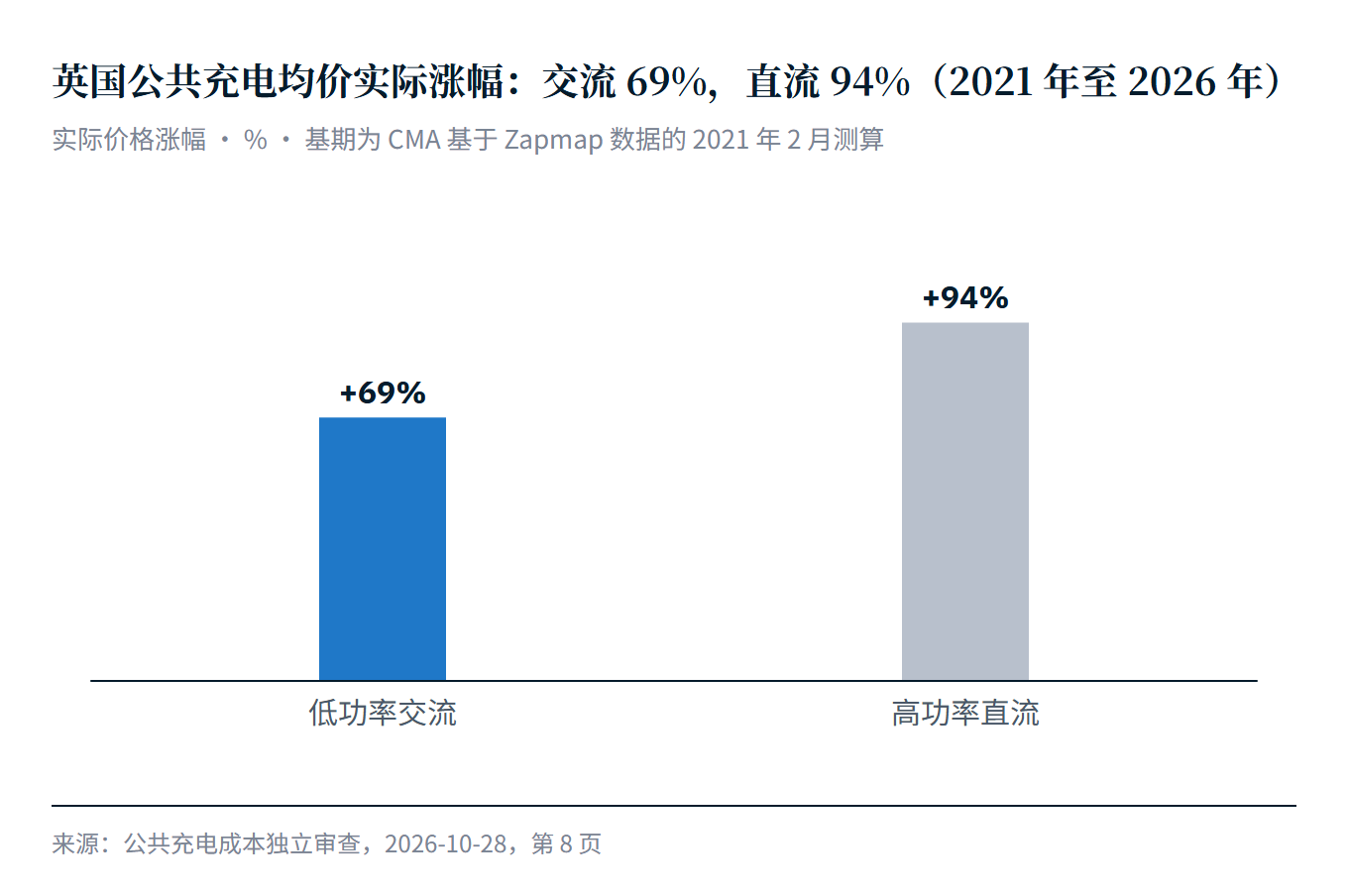
The review found that since 2021, real prices for AC slow charging have risen 69% and for DC rapid charging 94%, driven mainly by grid costs billed on connection capacity. In 2025, AC charger utilization (by energy) was only 3–7%. At an average price of 54p, AC chargers overall cannot recover their costs, and some networks would need to more than double utilization to break even.
The review therefore makes passing savings on to drivers a condition of subsidy, requiring operators to report charging volumes, prices and subsidies received, to prevent raising prices first and then discounting. The longer-term direction is tariff portability: drivers without off-street parking would pay their home electricity rate at nearby public chargers, plus an access fee, which the review puts at around GBP 200 a year as an example. The review estimates that, together with proposals such as renewable electricity certificates, the package could cut local public charging prices by 15–20p per kWh.
The fuel tax math
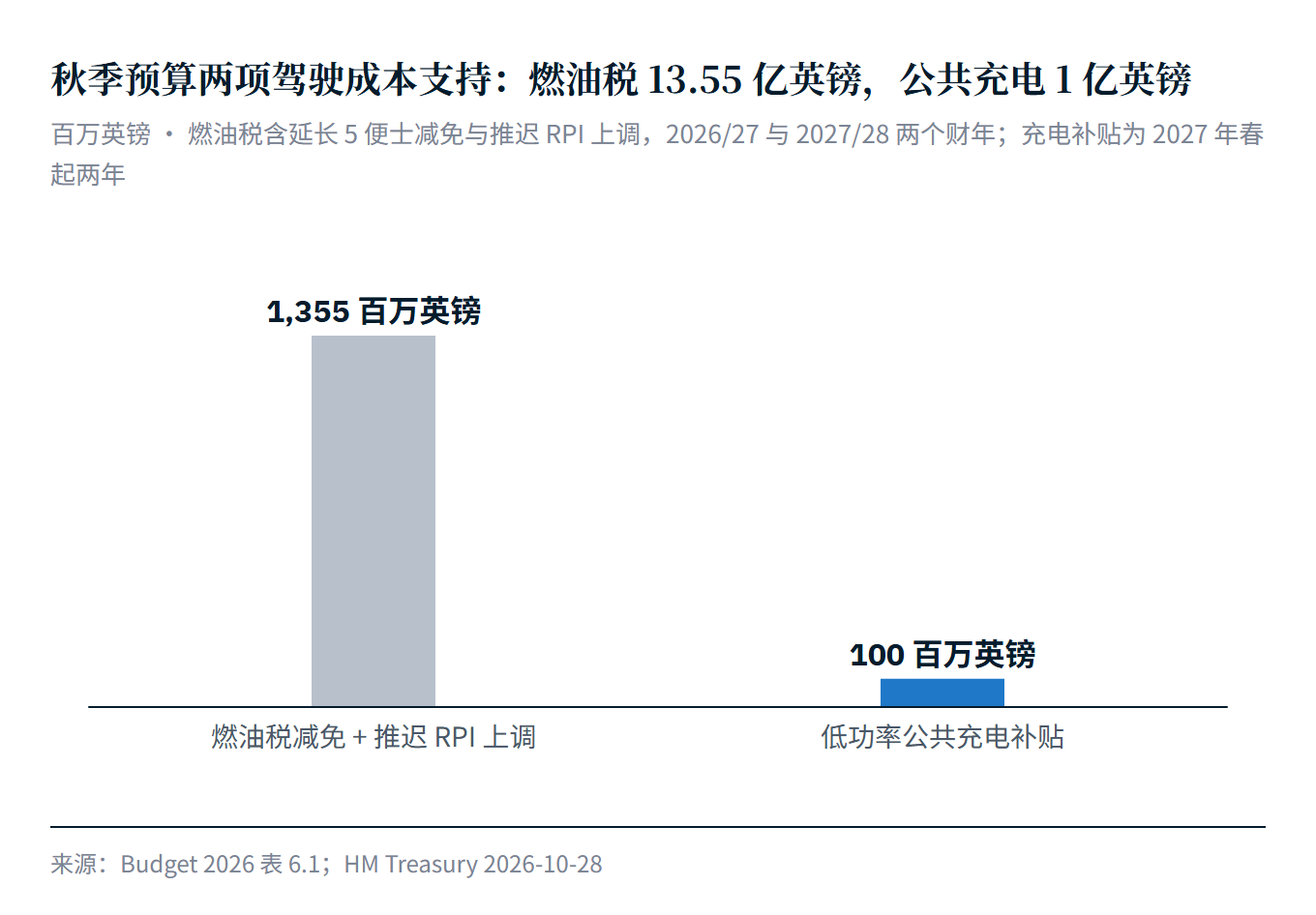
The same budget extends the 5p-per-litre fuel duty cut to Jul 1, 2027 and postpones the RPI-linked increase in fuel duty, reducing revenue by a combined GBP 1.355 billion over two fiscal years, about 13.6 times the charging subsidy. From Apr 2028, battery-electric passenger cars will also pay a mileage charge of 3p per mile, or GBP 150 a year for 5,000 miles driven.

Source: Chart by AutoMusic based on the public sources listed in the article; first published on the AutoMusic WeChat account.