BYD India: shifting from CBU to SKD becomes unavoidable
India has brought an old question back to the table: once demand picks up, how long can a pure import model hold? BYD's showroom No. 47 in India. BYD's core … in India…
India has brought an old question back to the table: once demand takes off, how long can a pure import model hold up?
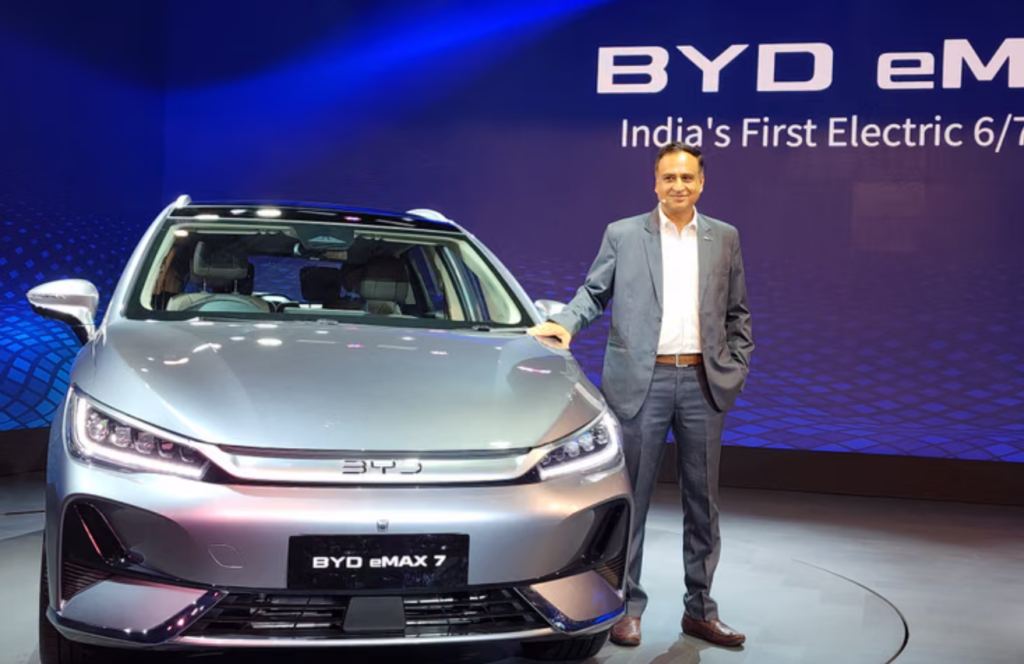
BYD's 47th showroom in India
BYD's core problem in India is clear: demand is rising, but the "import model" is starting to hit its ceiling. Localization is not about optics. It is about getting delivery and pricing back under control.
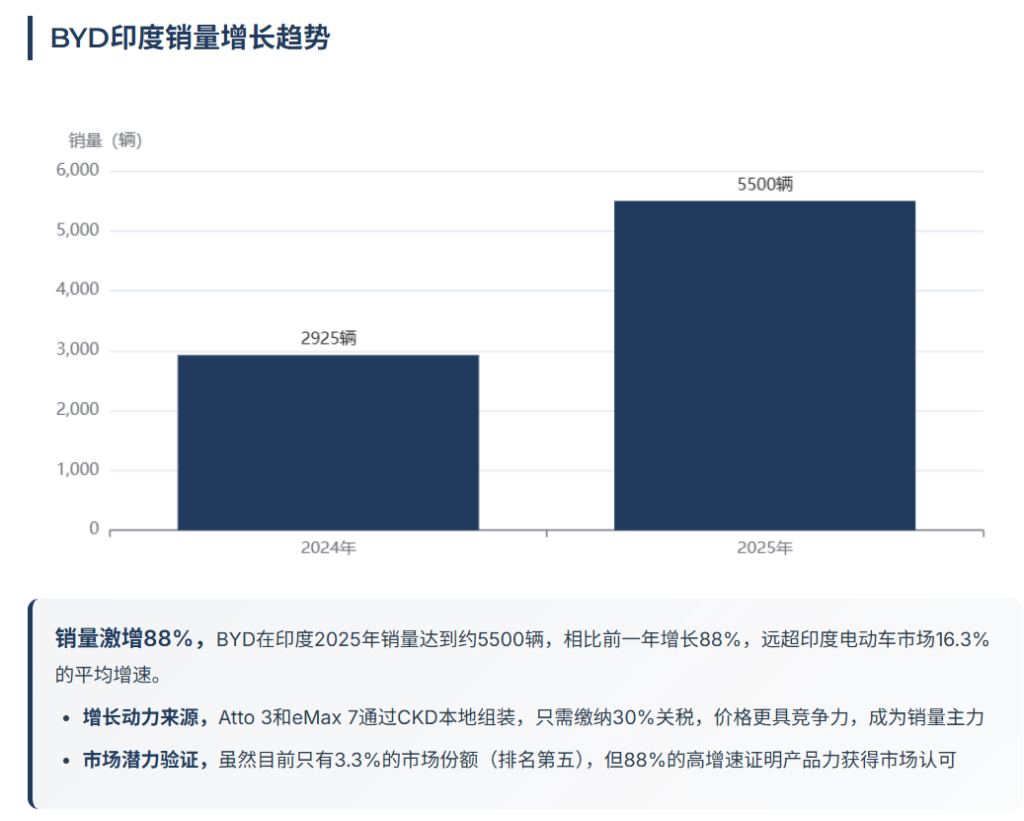
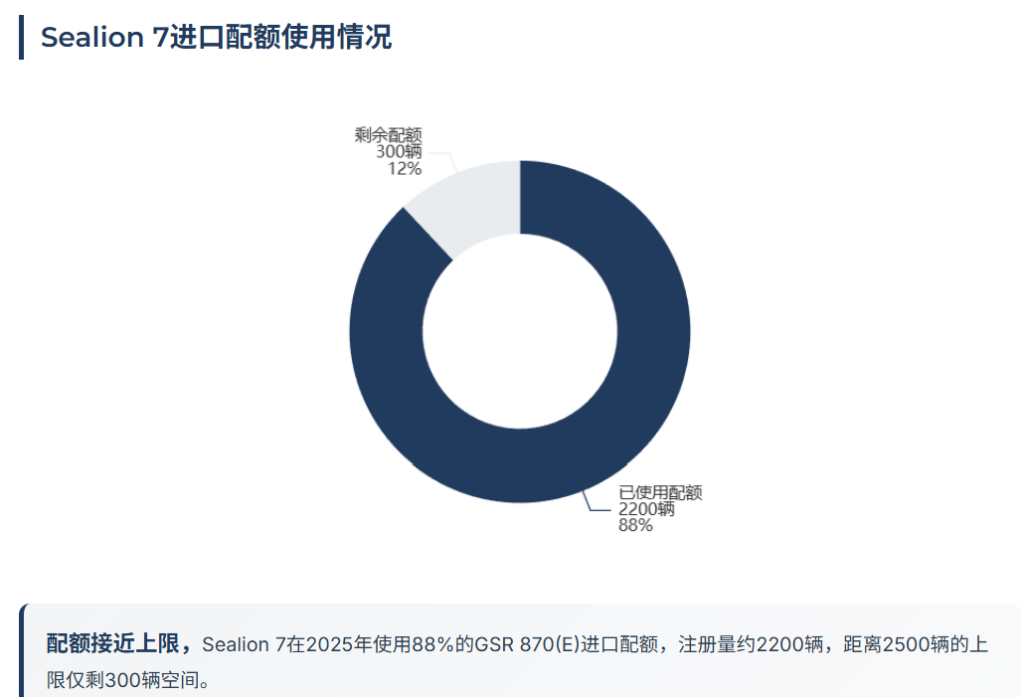
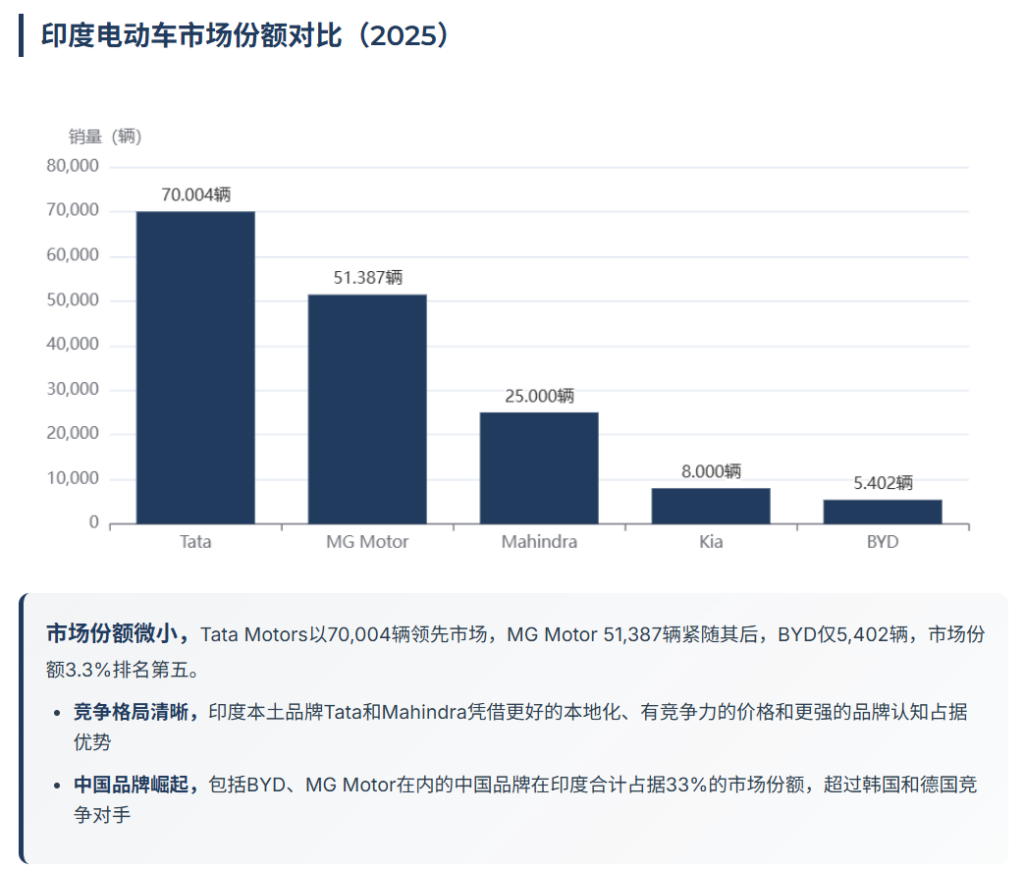
Over the past year, BYD sold about 5,500 units in India, up 88% year on year, and expanded its network to 47 dealers covering 40 cities. But a hard supply-side constraint has already appeared. Registrations of the Sealion 7 (the Sealion 07 EV in China) under a specific scheme reached about 2,200 units, using up roughly 88% of the annual cap of 2,500 units. Delivery times have lengthened and a backlog of several hundred orders has built up.
The quota is the ceiling on volume growth
As the annual quota nears exhaustion, dealers can take orders but cannot deliver. When one hit model eats up the quota, it squeezes the room for other models, so the product mix actually narrows. For the brand, uncertain delivery directly erodes reputation and pricing power. Supply follows the quota, not the orders.
High CBU tariffs lock in the price band
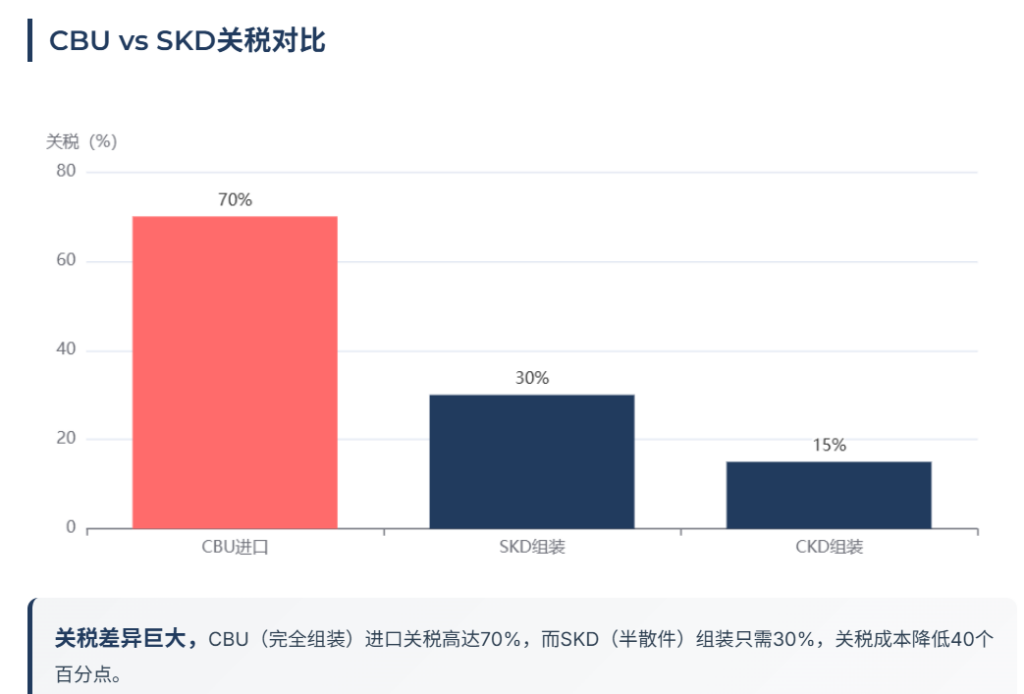
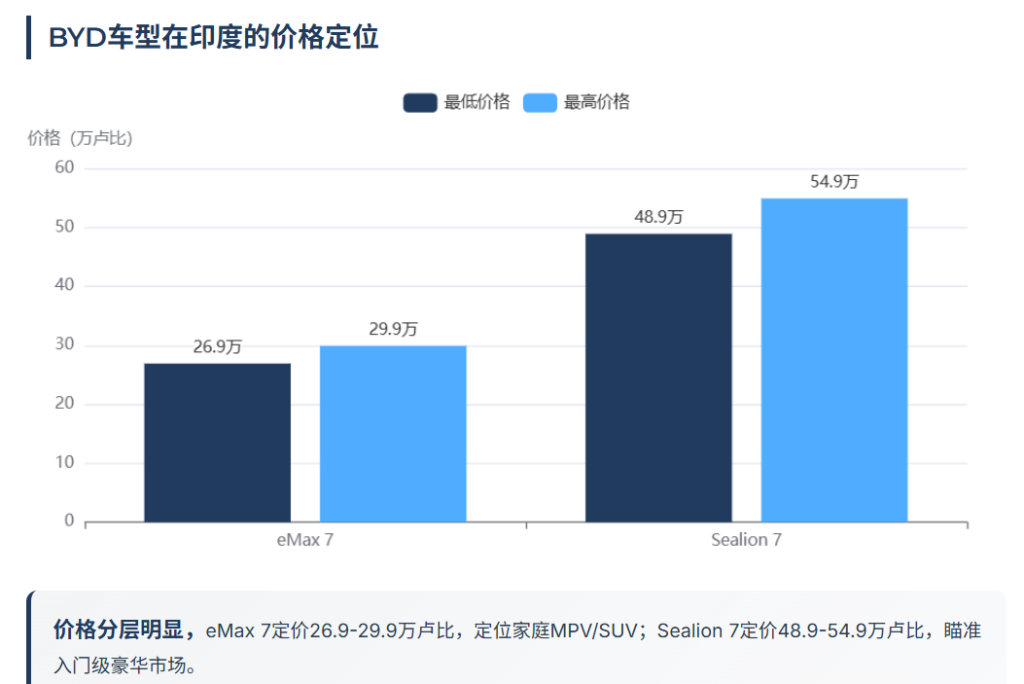
Import duties on fully built vehicles are about 70%, which pushes up the prices of premium models. The Sealion 7 is listed at about INR 4.94 million to 5.49 million, so its target customer base is limited to begin with. Add delivery delays and alternatives quickly multiply.
Switching to SKD (duty of about 30%) improves both the tax burden and delivery flexibility. The contrast is already obvious: the Atto 3 and eMax 7, assembled locally via CKD, face only 30% duty, are more competitively priced and have become the volume drivers.
Localization in India looks more like an asset-light ramp-up
BYD already assembles the Atto 3 and eMax 7 from kits at Sriperumbudur in Tamil Nadu, so an assembly base is in place. The next step is bringing more models into local assembly, where the main hurdles are certification, compliance and supply chain adaptation rather than building a plant from scratch.
In a market where policy and approval uncertainty remain high, SKD/CKD offers a better risk-reward balance. After its USD 1 billion plant plan was rejected in 2023, BYD became more cautious, and SKD emerged as the best way to balance cost and approval speed.
Localization is the infrastructure for growth
India is forcing automakers to answer one question: are you relying on imports to build an "image", or on localization to deliver scale and reliable supply? When quotas and tariffs push the import model to its limits, localization becomes the infrastructure for growth. The quota won't go away, but it can be worked around. From CBU to SKD, from imports to assembly, from test market to a bet on the future: BYD needs to prepare for a larger market share.