Dongfeng and BAIC Group's Spanish partner: localized supply chain enters Europe
At the end of 2024, long-established Spanish automaker Santana Motors, in restarting its Lina… in Andalusia
At the end of 2024, after restarting its Linares plant in Andalusia, long-established Spanish automaker Santana Motors publicly set a clear target: raise the share of locally sourced vehicle components to around 60% within 3–5 years. Santana's core partners today are China's Dongfeng Group and BAIC Group.
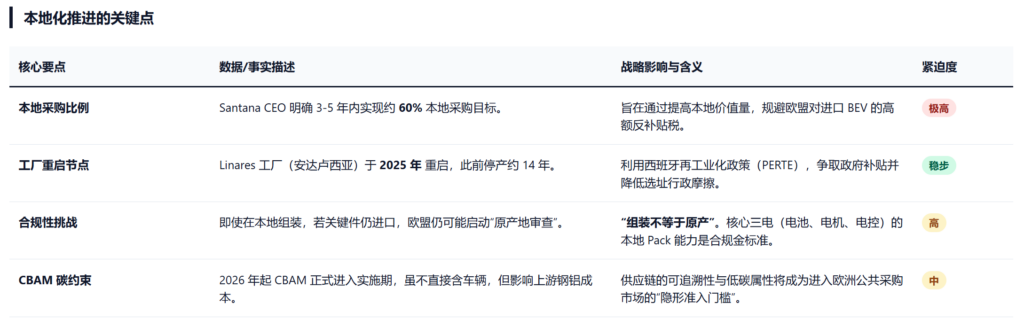
60% localisation target
Based on publicly available information, Santana Motors' Linares plant currently uses an SKD (semi-knocked-down) assembly model. According to management, vehicles currently arrive in Spain as about 20-plus imported assemblies/component modules for final assembly, with localisation close to zero. This is workable in the short term, but under the EU's current policy framework it will most likely be hard to sustain long term. Santana's target of "60% localisation within 3–5 years" is therefore essentially a strategy to secure a compliance buffer period for Dongfeng and BAIC in the European market.
Dual production line structure
In terms of plant layout, the Linares project follows a "two parallel lines" approach:
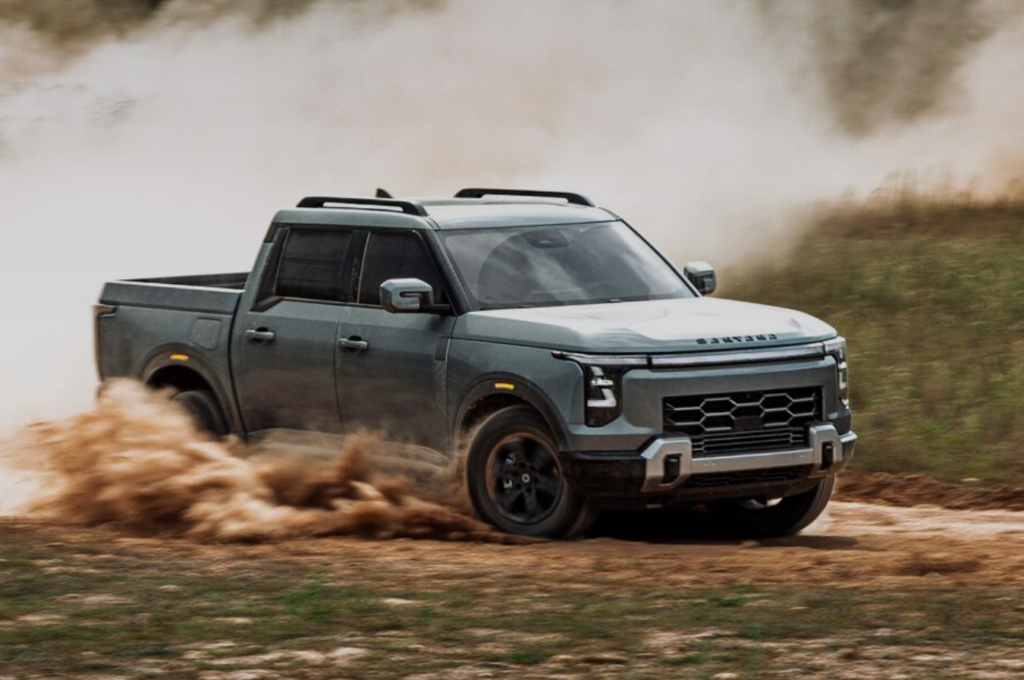
- Production line 1: already used to assemble platform models based on the Dongfeng system (including pickups and light commercial derivatives), sold in Europe under the Santana brand
- Production line 2: reserved for BAIC models and scheduled to start production shortly; the exact timing will depend on regulatory and market feedback
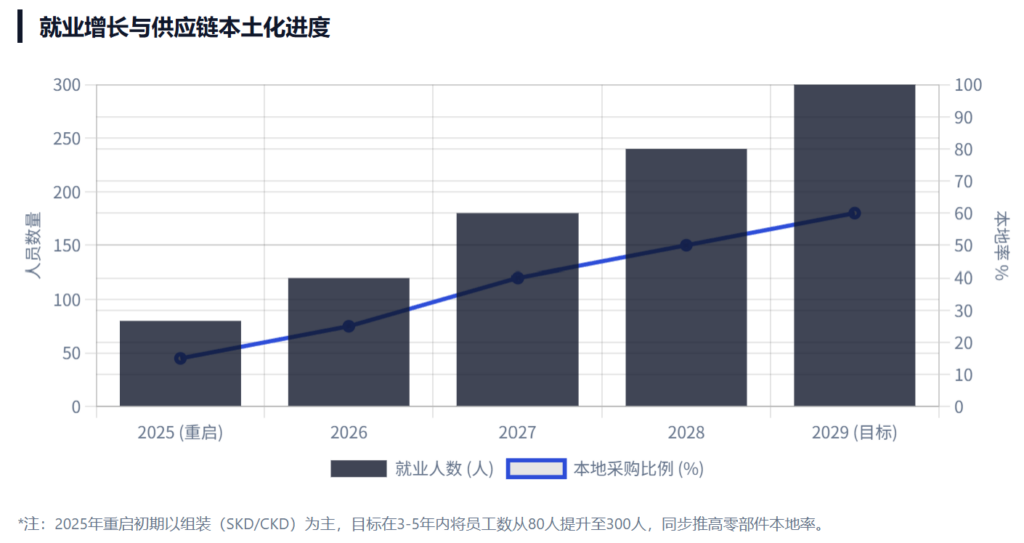
Dongfeng, as the first mover, is testing plant operations, regulatory engagement and market acceptance, while BAIC keeps more room to adjust. Staffing and capacity figures show the plant currently has fewer than 100 employees, with about 300 planned, and annual output remains well below that of mainstream European OEM plants.
More significant for policy than for engineering
Within the EU regulatory framework, localization is assessed along three dimensions:
- Value: how much of the vehicle's value is created within the EU
- Key processes: whether substantive manufacturing or system integration activities are involved
- Continuity: whether long-term, stable local production arrangements are in place
SKD assembly is very likely to be deemed circumvention, especially with anti-subsidy investigations and rules-of-origin reviews running in parallel. For Dongfeng and BAIC, setting a clear medium- to long-term localisation target through Santana looks more like laying the groundwork for future compliance determinations.
Localization challenges
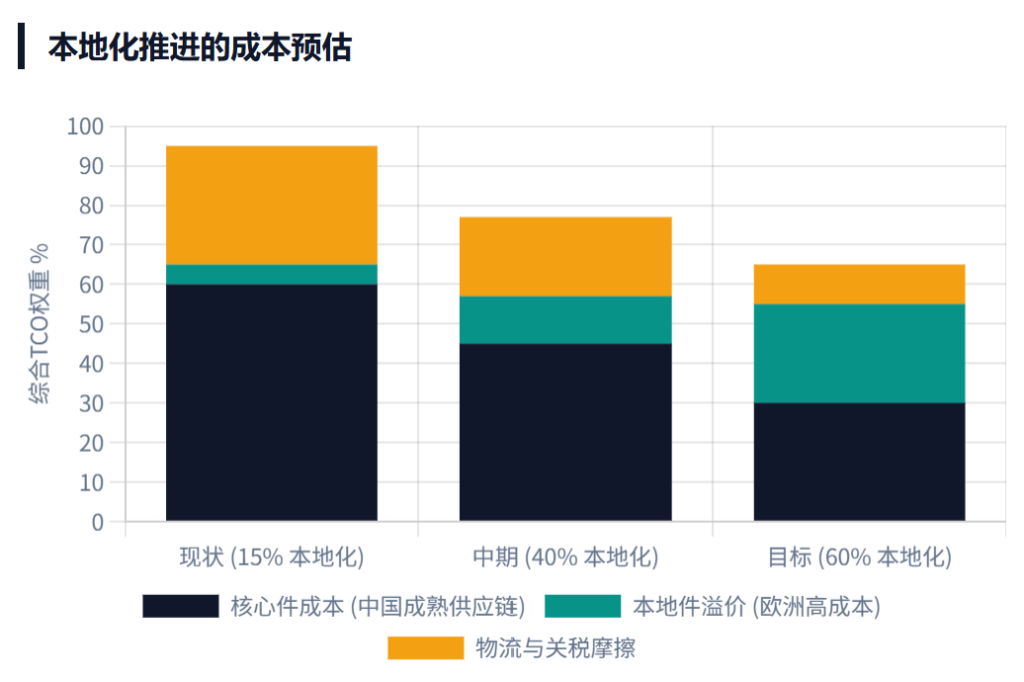
Local sourcing means giving up the advantages of China's highly mature, large-scale supply chain. Taking battery systems as an example, public industry data and multiple interviews show:
- Within China's mature ecosystem, battery system costs are among the lowest globally
- In Europe, even with only pack localisation while cells are still imported, system costs are significantly higher than with the domestic Chinese supply chain
- At this stage, a cost gap of 30%–50% is already an industry consensus
If localization of 40%–60% proceeds as Santana plans, vehicle cost problems are almost unavoidable, a major challenge for newcomers Dongfeng and BAIC.
Europe remains highly dependent on external supply chains for some key components, including high-performance battery cells, rare-earth permanent magnet materials (global capacity is highly concentrated in China) and some automotive-grade electronic components.
So the "small-scale battery assembly" Santana referred to can in essence only cover the pack stage. Cells still have to be imported, and it remains uncertain whether this model would count as "localisation" under EU rules.
Spain's geopolitical significance
There are clear reasons the Santana project landed in Andalusia. Labour and land costs are lower than in core manufacturing countries such as Germany and France. Proximity to ports suits the logistics structure of an SKD model. The regional government has a strong incentive to revive industry. And the Santana brand still carries some historical legitimacy, which helps with market entry. The Santana plant illustrates how Chinese automakers are building their presence in Europe:
- Leading players tend to build their own plants and localize deeply
- Companies with small initial volumes use partnerships and SKD assembly to buy time and policy flexibility
- Smaller brands continue to rely on parallel imports and face greater uncertainty