Daimler Truck sold 6726 electric commercial vehicles in 2025
Daimler Truck 2025 sales: the group sold 422510 trucks and buses for the full year, down from the previous year; electric commercial vehicle sales rose about 67…
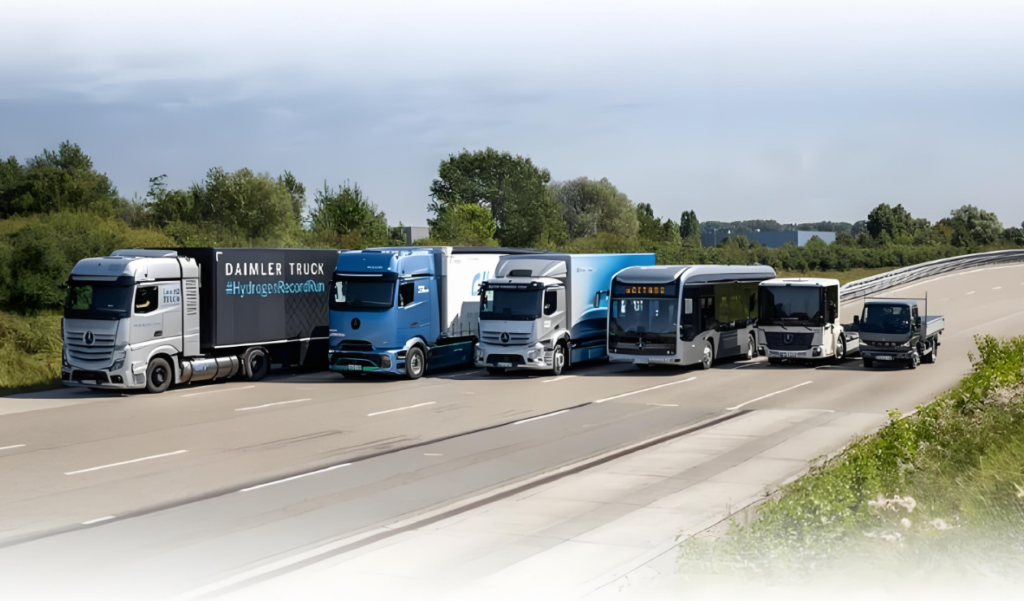



Daimler Truck 2025 sales: the group sold 422,510 trucks and buses for the full year, down from the previous year. Electric commercial vehicle sales rose about 67% year on year to 6,726 units (4,035 in 2024). Group sales in Q4 reached 117,974 units, the highest quarter of the year, and electric commercial vehicles also hit 2,902 units in Q4, up 52% year on year. Electric commercial vehicles can now be delivered and shipped in volume, but the system conditions for mainstream substitution are not yet in place.
Electrification is growing, but its share is small
A 67% growth rate looks high, but 6,726 units is still a small share of total sales of around 420,000. It is not mainstream yet. The key question is not the growth rate but whether growth can be sustained for two or three consecutive years, and whether deliveries can expand from a handful of projects to more routes and customer types.
Regions move at different speeds
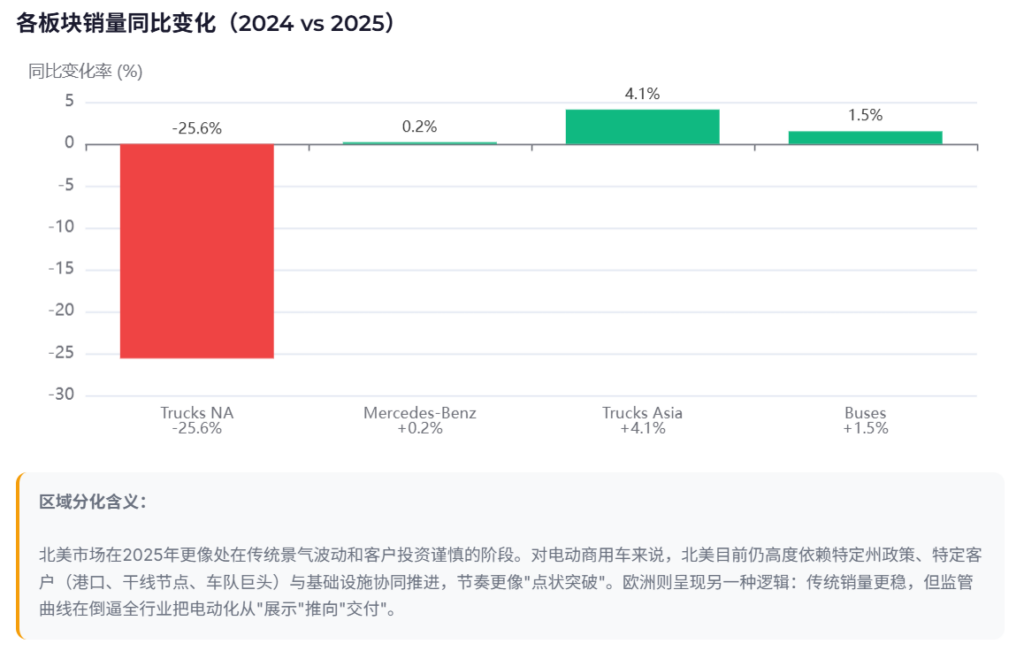
Sales across segments diverged sharply in 2025:
– Trucks North America: 141,814 units (down from 190,727 the previous year)
– Mercedes-Benz Trucks in Europe: 159,871 units (broadly flat)
– Trucks Asia: 107,055 units (slight growth)
– Buses: 26,991 units (broadly flat)
Europe is driven more by regulation and corridor charging build-out; North America relies more on specific state policies and projects with major fleets; in Asia, light trucks and urban delivery are more likely to scale first.
Operations matter more than vehicle manufacturing
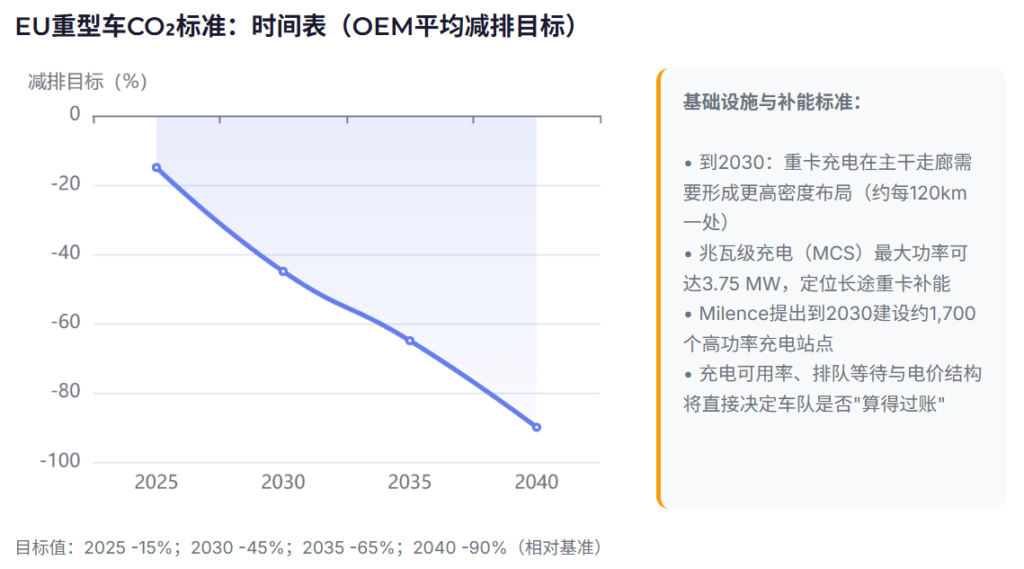
The bottleneck for electric commercial vehicles is shifting from vehicle performance to operating conditions: charging infrastructure density, availability of high-power charging, waiting times, electricity tariff structures and peak demand charges all directly affect fleet total cost of ownership. If charging corridors and megawatt charging (MCS) are not rolled out fast enough, electric heavy trucks will remain confined for a long time to port shuttles, regional trunk routes and urban delivery. If the charging network is reliable, electric heavy trucks will turn from demonstration vehicles into replicable operating assets.
6,726 units is only a starting point. The next questions are whether the quarterly peak can become a stable delivery curve in 2026, and whether the rollout of high-power charging and MCS along European corridors can keep pace with the regulatory timeline.