European electric heavy trucks accelerate further in 2026: gap between countries keeps widening
The EU's 6 million medium and heavy trucks account for 6% of total CO2 emissions each year. The market share of electric heavy trucks (>16 t) rose from 1… in 2024
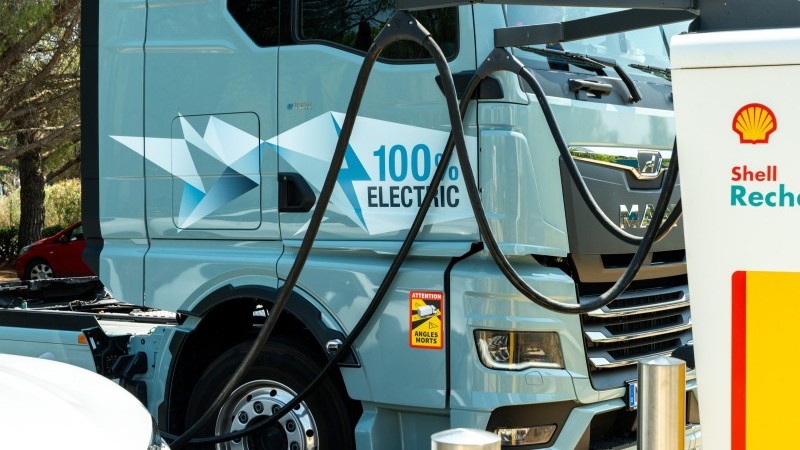
The EU's 6 million medium and heavy trucks account for 6% of total CO2 emissions each year. The market share of electric heavy trucks (>16 t) jumped from 1.5% in 2024 to 3% in 2025 and is expected to exceed 5% in 2026. The industry is moving from "demonstration projects" into the early stage of "series deliveries plus discussions of routine procurement". The reality: electric heavy trucks are accelerating, gaps between countries are widening, and infrastructure sets the ceiling.

Growth driven by regulation and toll systems
Europe's CO₂ targets for heavy vehicles are stepped: new vehicle CO2 must fall by 15% from the baseline in 2025 and by 43% in 2030. Under current policy, diesel technology will find it very hard to clear the 2030 threshold through combustion engine improvements alone, so OEMs must put zero-emission heavy trucks into production.
Charging infrastructure is the real watershed
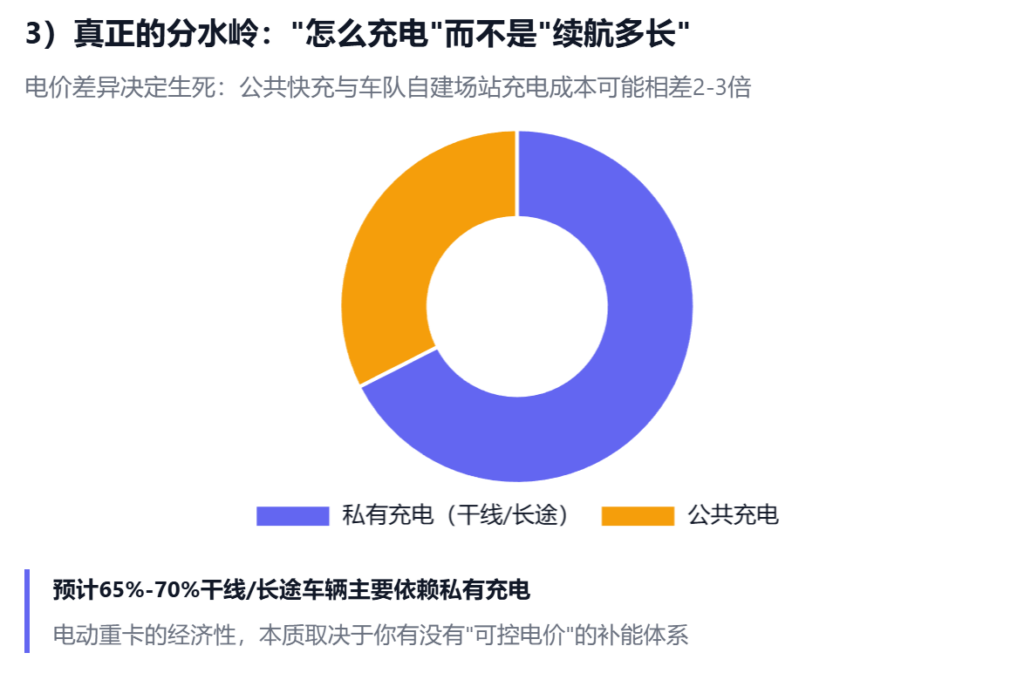
Electric trucks still cost as much as EUR 250,000–350,000, two to three times the price of diesel trucks. But battery prices have fallen from USD 148/kWh in 2023 to USD 108/kWh in 2025, and the cost of Mercedes-Benz's E-Actros 600 electric heavy-duty tractor is below EUR 300,000. The key factor in the economics of electric heavy trucks is how they are charged. For the same kilowatt-hour, the charging location and contract structure can make a big difference:
- Public fast charging: Milence's price in 2025 was about €0.4/kWh
- Fleet-owned depots: charging at warehouses, logistics parks and fleet bases costs two to three times less
For high-purchase-cost assets like electric heavy trucks, electricity price differences directly affect the payback period and may even determine whether a route is viable. A practical structure is expected to emerge for electric heavy trucks in Europe: 65%–70% of trunk-line and long-haul vehicles will rely mainly on "private charging" and 30%–35% on "public charging"; in small countries such as the Netherlands and Belgium the private share may be higher, and in regional distribution private charging may approach 90%. Retail, FMCG and urban delivery will scale up earlier because they have fixed warehouse networks and overnight slow-charging windows, allowing charging to fit into their operating rhythm.
The second wave of infrastructure expansion will be harder
Distance-based charging is reshaping how TCO is calculated. Germany's distance-based Maut toll accounts for more than 7–8% of transport costs, and electric trucks can be fully exempt. The revised Eurovignette Directive requires member states to adopt pay-per-use systems with emissions-based rate differentiation, and EU rules allow electric trucks to be exempted from tolls until 2031. At an annual mileage of 150,000 km, tolls alone can save EUR 22,500–90,000 per year. Once policy internalises externalities, the cost balance starts to tip.

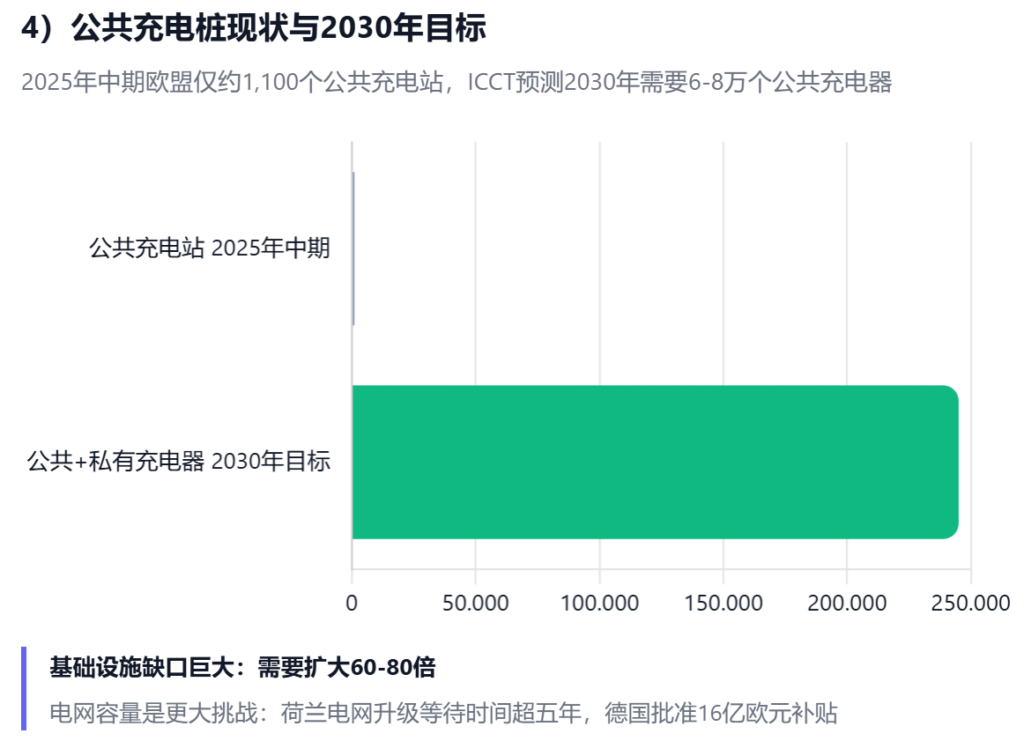
In mid-2025, the EU had only about 1,100 public charging stations, mainly in northwestern Europe. The ICCT projects that by 2030 it will need 150,000–175,000 private chargers, 60,000–80,000 public chargers (22–750 kW) and 4,000–5,300 megawatt chargers. Existing public charging infrastructure would need to grow 60 to 80 times. Grid capacity is another major problem: grid upgrade waiting times in the Netherlands exceed five years, while France faces fewer congestion and capacity issues. These differences mean that even with funding, the pace of infrastructure rollout is constrained by physical conditions. Infrastructure is not a bottleneck that policy alone can quickly solve.
Accelerating, but unevenly
Electric heavy trucks are concentrated first in countries such as Germany, France and the Netherlands, mainly because incentives and toll exemptions are clearer there. "Frontier markets" such as the Nordics and Switzerland already posted double-digit registration figures in the first three quarters of 2025. Volvo leads this market: in the first three quarters of 2025, its share of the battery-electric heavy truck market in the EU-29 reached 56.8%, up from 47% in 2024. DAF's XD and XF electric models won the 2026 International Truck of the Year award, and traditional European brands are fully committed. Growth in Central and Eastern Europe and in Southern European countries without financial support is almost negligible.
Chinese brands' window of opportunity
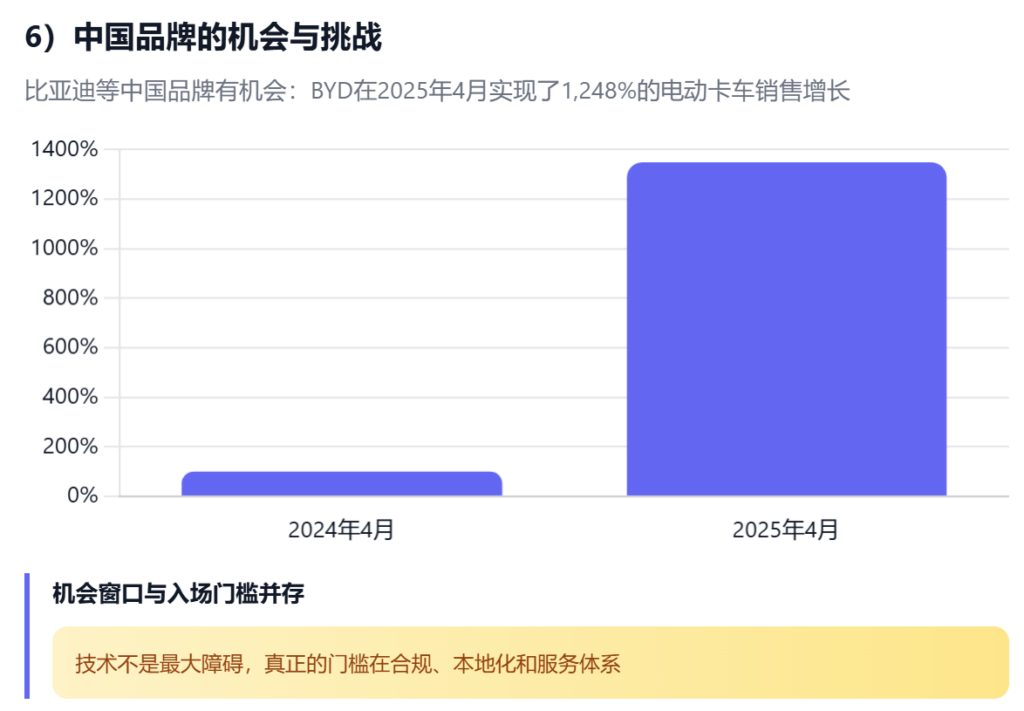
Electrification lowers the barriers for new entrants. Uptime and after-sales are critical in the truck market, and new entrants need to build a complete localized service network. Adoption of electric heavy trucks will not be linear. The first wave is retail distribution (about 30% of current sales), with fixed end-to-end routes, dense delivery networks and depot charging. The second wave is regional haulage, with trips broken into legs of about 400-500 km. Only the third wave is long-haul and cross-border transport. Each step up makes exponentially greater demands on infrastructure, operating models and customer coordination. So the window of opportunity is open, but the price of entry is the ability to coordinate locally.
2026 will not be a year of tiering
Electric heavy trucks in Europe are not on a straight upward curve. Regulation and toll systems are pushing the industry toward electrification, and falling battery costs and maturing models have made the technology viable, but gaps in the grid, depot construction and cross-border public charging along trunk routes keep the pace of expansion tied to infrastructure. 2026 looks more like a "stratification year": northwestern Europe and policy-strong countries will keep scaling up, while regions lacking fiscal support or facing grid constraints will fall behind; the industry is shifting from "buying trucks" to "buying operating solutions"; and OEMs and fleets are shifting from "competing on specs" to "competing on charging networks and service capability". Only those who can bring together electricity prices, grid connection, depots, routes and customer coordination are in a position to talk about scale.
**Reproduction or excerpting without permission is strictly prohibited.** Questions and comments are welcome. Follow us for ongoing analysis of the latest developments in China and abroad.