Electric heavy trucks in Germany: an analysis of real-world operating cases
The industry has long been divided over whether electric heavy trucks are viable for long-haul transport in Europe. One view holds that range, charging speed and infrastructure remain hard-to-overcome barriers; another argues that with new-generation models and expanding charging networks, the technical problems are largely solved. The latest empirical research from Germany finds: electric heavy trucks are largely usable at a technical level, but scaled operation still depends heavily on a systemic overhaul of charging infrastructure and operating models.
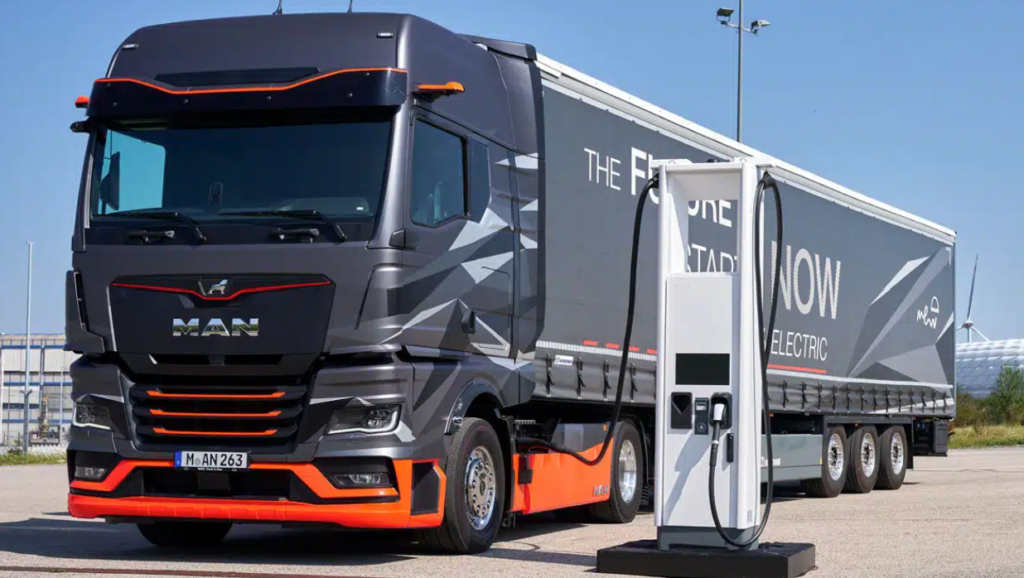
Electric heavy trucks are viable for long-haul operations

The study is based on 23 real daily itineraries of German national long-haul transport, with three typical routes selected for in-depth analysis. Assuming a vehicle configuration typical of today's mainstream, with about 600 kWh of battery capacity and energy consumption of about 0.96 kWh/km, the study clearly concludes:
- Most routes have a daily driving distance within 500–600 km
- About 60% of trips need no en-route charging
- Even when the remaining 40% need to recharge, they typically require only a few dozen kWh
Where 300–400 kW charging is available, this kind of top-up generally takes 4–40 minutes, and in many cases it can be done during the rest breaks drivers are already legally required to take. On technology and vehicle capability alone, the study concludes: the current generation of electric heavy trucks can already cover a substantial share of national long-haul transport tasks.
Daytime isn't the problem; the bottleneck is at night
Night-time operations expose a systemic weakness. The study shows that about 87% of vehicles in the sample do not return to the company's own depot at night, but stay in public areas or near customers. Overnight charging has therefore become the most fragile link in the entire long-haul electrification system.
Overnight charging points badly misaligned with transport end points
Heavy truck charging infrastructure currently available is mostly located along motorway corridors, while actual transport destinations tend to be on urban fringes, in industrial parks and around customer warehouses. As a result, drivers often have to detour an extra 20–60 minutes at the end of the day to reach a usable overnight charging point.
Regulatory constraints leave very little flexibility
At night, exceeding the daily driving limit, shortening the statutory rest period or moving the vehicle again during a rest break all fall foul of strict EU driving and rest time rules. This makes overnight charging a compliance issue.
Overnight, fast charging isn't needed, but "all-night parking" is
The study finds that average charging power required overnight is only about 30 kW. What is actually scarce is not high power but charging bays that can be occupied all night without repeatedly moving the vehicle, with a degree of predictability and plannability. At its core, the overnight problem is a system mismatch created by the combination of charging, parking and regulation.
Full electrification of large depots: technically viable, but requires dedicated build-out
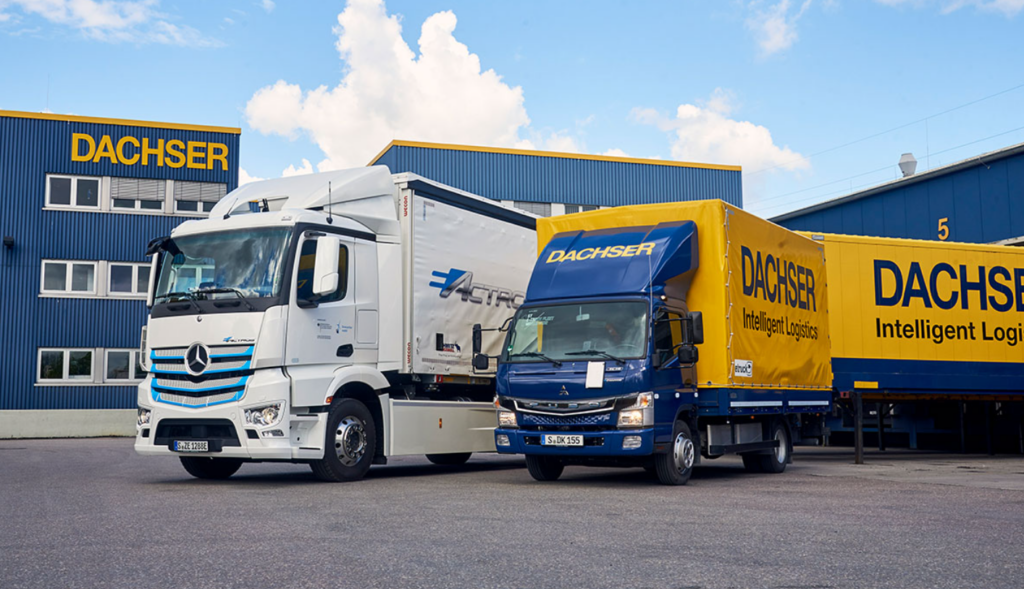
The second study takes a large Dachser logistics hub with around 250 vehicles as a case study (Dachser) to assess the feasibility of full electrification. Without any load management, vehicles returning to the depot to charge at the same time would create peak loads of 22–27 MW, far beyond the grid capacity realistically available to most logistics parks. With systematic design, using off-peak charging and charging based on dwell time, the peak can be cut to 4.3 MW. Adding on-site energy storage can compress the peak further to 3.8 MW
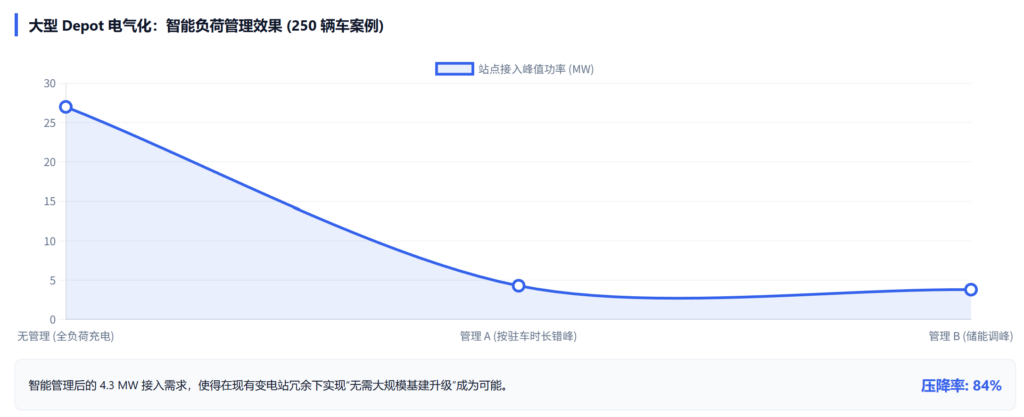
The study concludes that full electrification of a large depot is technically feasible with the right site and system design. The real challenge, however, lies not in the equipment but in operations, including:
- Frequent vehicle dispatching and repositioning
- Charging priority and energy management logic
- Deep integration with transport management and energy systems
- Redesigning driver workflows and on-site organization
- Long-term cooperation with local grid operators
The window for Chinese heavy trucks
The cases show that **Europe's current shortcomings lie less in the vehicles themselves than in infrastructure layout, night-time operating scenarios and the ability to coordinate complex operating systems.** So the real window for Chinese heavy trucks entering Europe depends not only on vehicle specs, such as bigger batteries or lower unit prices, but on whether they can help solve these structural problems, including:
- Providing complete solutions for fixed-route, fixed-customer scenarios
- Work with logistics companies and energy providers and embed in their operations
- Provides proven expertise in depot-level operations, grid connection and charging management
A more realistic path may therefore be embedded entry rather than full-scale, across-the-board competition.
The shift to electric heavy trucks won't "happen on its own"
There are no longer any fundamental technical barriers to using electric heavy trucks in long-haul transport and large fleets. But the shift will certainly not happen on its own without changes to the existing system. A full transition needs four things: charging infrastructure planned around real operating needs, clear assessments of costs and processes, deep changes to how operations are run, and coordination among logistics companies, grid operators and other parties. Until these conditions are gradually in place, the rollout of electric heavy trucks in Europe will be phased and uneven. Yet it is in this transition period that new players and new models may find room to break in.
**Reproduction or excerpting without permission is strictly prohibited.** Questions and comments are welcome. Follow us for ongoing analysis of the latest developments in China and abroad. If you need the original German research report, please leave a comment.