DAF brings its "flagship cab" to battery-electric long-haul heavy trucks
At the start of 2026, DAF electrified its "long-haul flagships", the XG and XG+. Europe's major heavy truck makers are using the same…
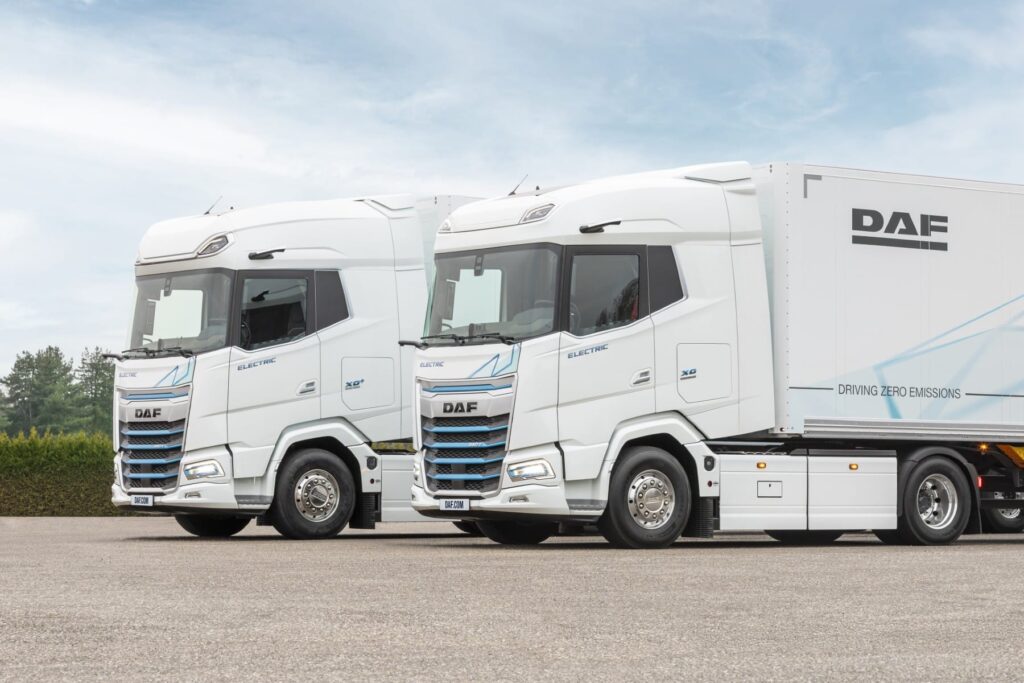
At the start of 2026, DAF officially electrified its "long-haul flagships", the XG and XG+. Europe's mainstream heavy truck makers are using a single set of e-drive and battery modules to stretch a continuous product range across urban delivery, regional and long-haul. With a flagship cab paired with 500 km-class range, European electric heavy trucks are approaching the real operating limits of long-haul transport. The newly launched XG/XG+ Electric shares much of its technology with the earlier XF Electric, differing mainly in cab design and interior space. DAF is extending its existing electric platform "upward", which is more realistic in terms of cost, supply chain and production ramp-up.
Range anxiety gives way to cab design and duty-cycle fit
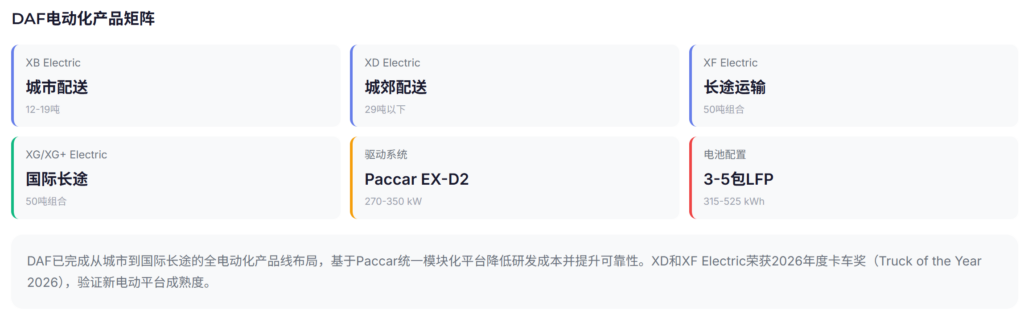
Over the past two years, range and charging have dominated the debate on electric heavy trucks, but in long-haul transport the real productive asset is the driver. In Europe the XG and XG+ are seen as fairly premium long-haul models, and the cab is the main reason. The electric versions keep this positioning: the cab is longer and taller than the XF's. DAF quotes a total interior volume of about 12.5 cubic metres, standing height of up to about 2.2 metres and a full-length bed about 80 cm wide. These space figures are aimed at more typical cross-regional and cross-border routes, where drivers need rest and living conditions closer to those of a conventional long-haul truck.
Behind this lies an often-overlooked structural shift: around 2021, Europe began allowing larger vehicle dimensions and weights, which gave new long-haul cabs regulatory room to grow. DAF moved quickly at the time with the XF/XG/XG+ trio, and is now electrifying the same flagship cab to carry it into the zero-emission era.
Modular e-drive + LFP batteries
The XG/XG+ Electric follows the modular approach of DAF's electric platform, with motors, gearboxes and battery packs available in configurable combinations. The powertrain uses PACCAR's e-drive system, with motor outputs in 270/310/350 kW classes, peak torque raised to 2,400 Nm, and a three-speed gearbox.
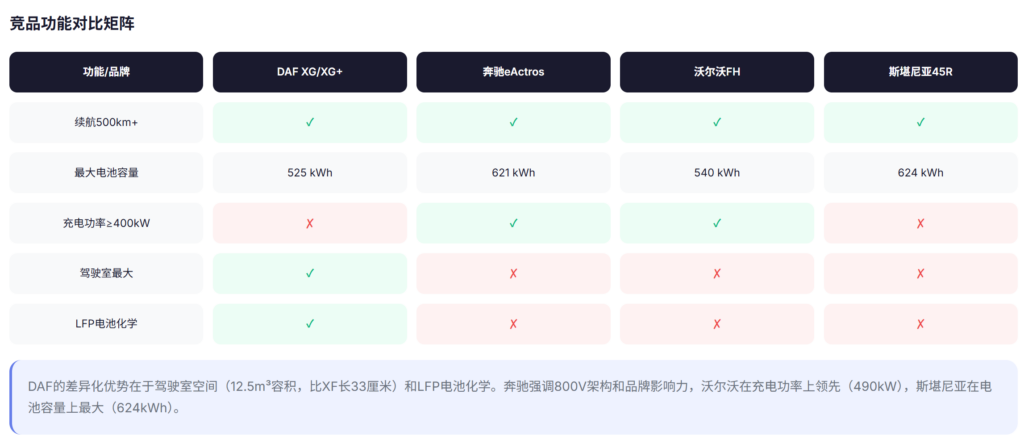
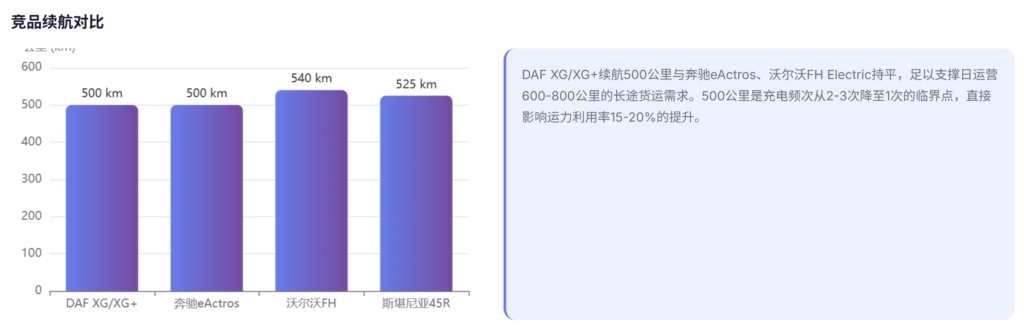
On batteries, configurations range from 3 packs/315 kWh to 5 packs/525 kWh, corresponding to the officially stated range of around 500 km. For commercial vehicles, LFP is more "operations-oriented" in cost, thermal stability and cycle life. To offset its lower energy density, DAF lets the battery packs be placed flexibly on the chassis, so different bodies and axle configurations still keep a degree of freedom.
The real tipping point for long-haul still lies in MCS and depots
The XG/XG+ Electric is rated for DC fast charging at up to 325 kW, with an AC charging option of up to 22 kW. Official charging times, from 10% to 80%, are about 45 minutes for the 3 battery and about 2 hours for the 5 battery; the battery carries a 8-year warranty.
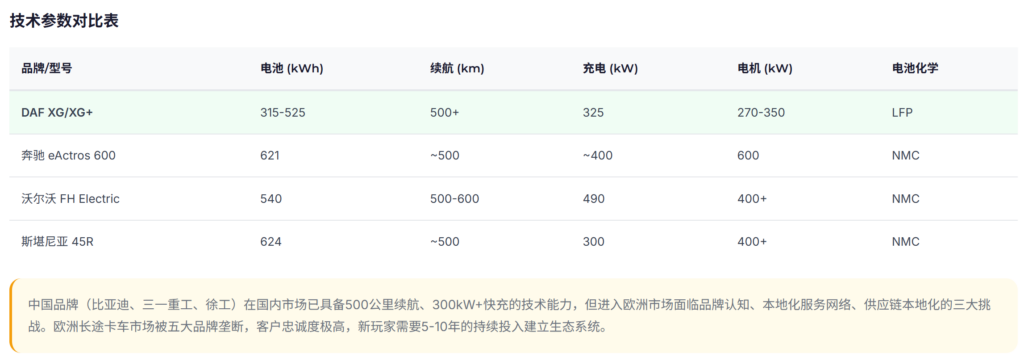
But there is a practical threshold here: 325 kW is still more of a "transitional" level for long-haul heavy trucking. Bringing long-haul electric trucks fully into "all-weather trunk-line" operation typically requires a standardised, higher-power charging system and a replicable network of dedicated depots. DAF has not said whether or when it will introduce the MCS interface. In other words, the vehicle-side capability is in place, but industry-wide system capabilities (standards, depots, electricity pricing mechanisms, grid connection) still need to catch up.
Capacity and delivery pace are key
DAF's latest generation of electric heavy trucks went back and forth on its production ramp-up: the models were unveiled as early as 2022, but stable production and deliveries only became clearer at the end of 2025. Now, with the XG/XG+ Electric joining the lineup and production still centered in Eindhoven, DAF aims to turn electric heavy trucks from a "project" into a "systematic product line".
In the electric heavy truck industry, whoever can make the "delivery – maintenance – used-vehicle residual value" chain work will reap the benefits of scale in the next replacement wave.
Electrifying the flagship: necessary but not sufficient
In bringing the XG/XG+ Electric to market, DAF is essentially answering one question: with zero-emission rules on a countdown, can long-haul transport go electric without sacrificing the driver experience? From cab space and powertrain configuration to battery modules and charging capability, DAF's approach is "engineering under control, operations first".
But to truly cross the tipping point for long-haul electrification, the industry still needs stronger system-level factors: MCS standardisation, a denser depot and charging network, predictable electricity prices and grid connections, and mature tools for residual values and financing.
**Reproduction or excerpting without permission is strictly prohibited.** Questions and comments are welcome. Follow us for ongoing analysis of the latest developments in China and abroad.