EU "carbon costs" fully take effect in 2026: shipping EU ETS and CBAM come into force together
In Jan 2026, EU climate policy entered a new phase: shipping under the EU ETS moved to the 100% compliance-cost stage, and CBAM moved from the reporting period to…
On January 2026, EU climate policy entered a new phase: shipping under the EU ETS moved to 100% compliance costs, and CBAM shifted from its reporting period to a mechanism with real payments. Although the two are often discussed together, they are in fact two ends of the same "carbon cost transmission chain": the EU ETS pushes the carbon price into operating costs within the EU, while CBAM extends the same carbon cost to the EU border and imported goods.
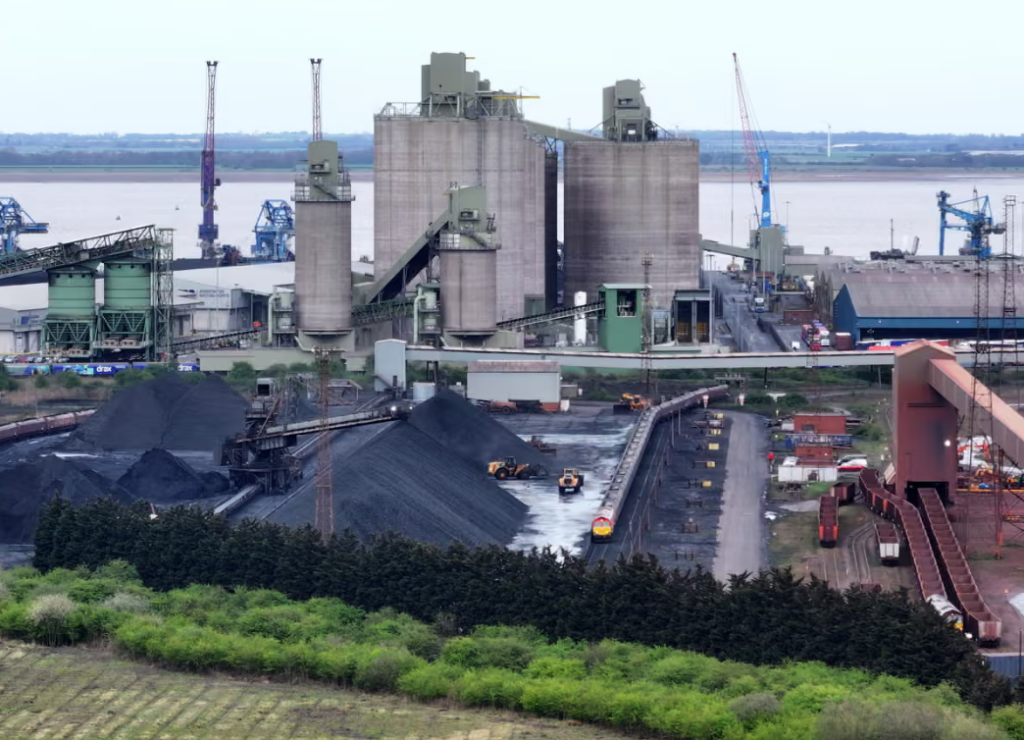
Shipping moves to full payment under the EU ETS in 2026
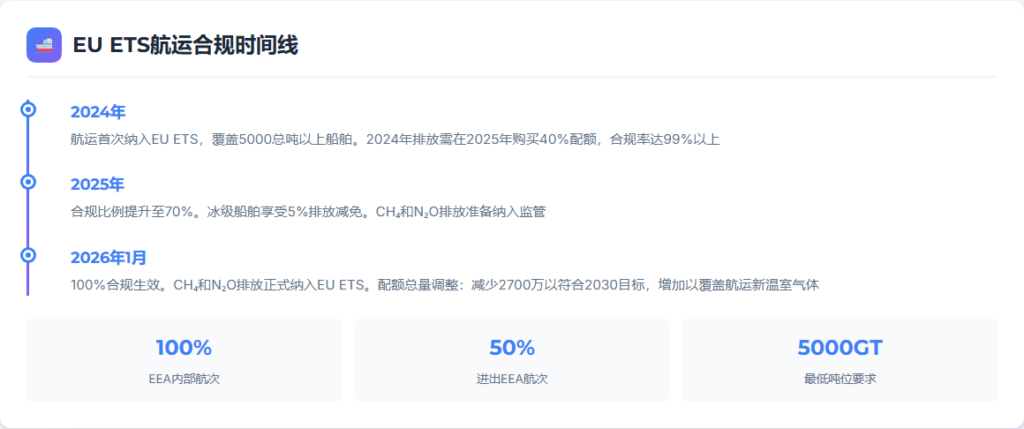
Since bringing shipping into the EU ETS, the EU has increased the pressure step by step: 40% of compliance costs for 2024 emissions, 70% for 2025, and from Jan 2026, 100% of compliance costs must be covered. This means that from 2026, the carbon price works more like a fixed operating cost and will be built into freight rates and contracts across the board.
2024 was the first year the EU ETS covered shipping emissions, and shipping companies reported 89.8 million tonnes of verified CO₂ emissions. In the first compliance period, they surrendered allowances on time covering more than 99% of the required emissions; the shortfall of just 54 million allowances will be deducted from future auction volumes.
2026 brings not just a "higher percentage" but also a wider scope of shipping greenhouse gases covered. Under the EU scheme, shipping will include non-CO₂ greenhouse gases (such as methane CH₄ and nitrous oxide N₂O) from 2026, adding more directly to compliance complexity.
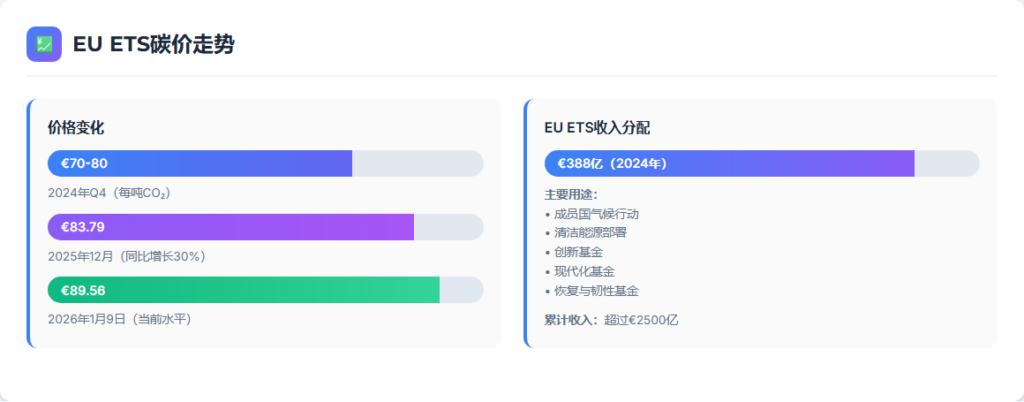
EU ETS allowance auction revenue is a major source of funding for the EU's green transition. In 2024, the system generated EUR 38.8 billion, bringing cumulative revenue to over EUR 250 billion. The funds go mainly to member states for climate action and clean energy deployment, and also flow to the Innovation Fund, the Modernisation Fund and the Recovery and Resilience Facility.
CBAM enters the payment phase from 2026
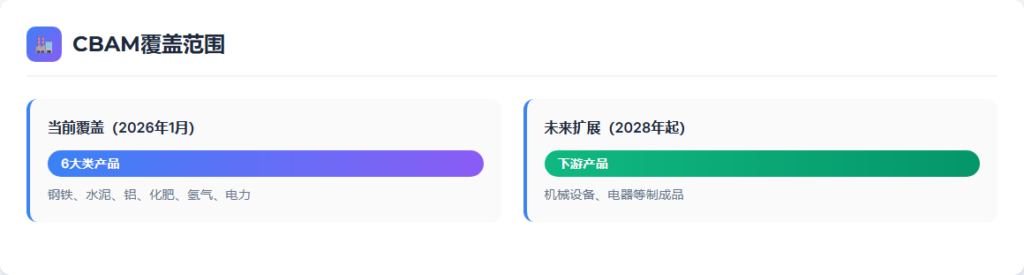
For more than two years CBAM has been in a "transitional reporting period", functioning mainly as an additional compliance task. But the EU has made clear that CBAM enters the definitive regime from Jan 1, 2026: importers must become authorised declarants and buy and surrender CBAM certificates corresponding to the embedded emissions of their products.
The initial sector coverage is also fairly narrow: iron and steel, aluminium, cement, fertilisers, electricity, hydrogen and other carbon-intensive goods. From 2028, CBAM will also extend to downstream products that use steel and aluminium, such as machinery and electrical appliances, to stop manufacturers from avoiding carbon costs by moving production outside Europe.
The EU wants imported goods to bear carbon costs similar to those of EU-made products, reducing "carbon leakage" and unfair competition. CBAM is therefore not simply a trade barrier but an institutional means of extending the EU's internal carbon price beyond its borders along the supply chain.
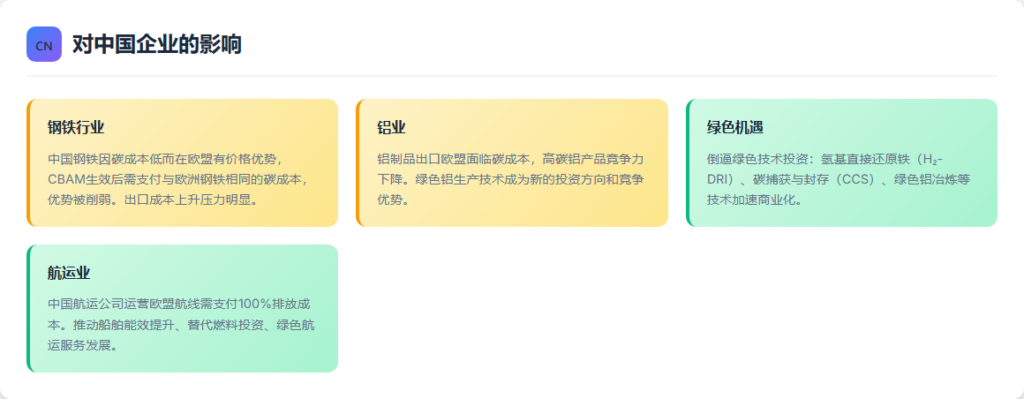
The direct impact on Chinese companies (and any company exporting to Europe) falls mainly on two areas:
- Orders: customers are starting to treat "embedded product emissions" as part of the quote
- Supply side: supply chains will be forced to build auditable carbon data systems; otherwise they must use default values (usually unfavourable) or lose transparency and credibility in negotiations.
EU ETS and CBAM form a "closed carbon-cost loop"
Taking the two policies together:
- Shipping's inclusion in the EU ETS makes the carbon cost of "getting goods to Europe" clearer and more rigid
- CBAM makes the carbon cost of "selling high-carbon products into Europe" settleable, but hard to pass on
Combined, the two extend carbon costs from "production within the EU" to "cross-border flows + imported goods". For companies, the key is to build a response mechanism that translates into contracts, pricing and organisational capability, turning carbon costs from an "uncontrollable variable" into a cost item that can be itemised, hedged and negotiated.
Companies' 2026 "execution checklist"
- Build the accounting system for your products' embedded emissions: which processes, which energy sources, which boundaries. Settle on a stable methodology first, then optimise. CBAM sets clear requirements for authorised declarant status, certificate purchases and annual surrender
- Standardise carbon clauses in transport contracts: template in advance how carbon surcharges on freight rates are calculated, reconciled, borne and allocated across customers
- Make "low-carbon capability" part of the sales pitch: European customers want suppliers who can deliver, explain and comply, and internally they are more willing to pay for certainty
Europe's "carbon ledger"
After 2026, the EU is turning carbon from a moral issue into a settlement system. The shipping EU ETS makes the carbon cost of cross-border logistics explicit, and CBAM institutionalizes border costs for carbon-intensive products. Together they are driving **dual-track deals combining price negotiation and carbon negotiation**. Whoever turns carbon costs into manageable, explainable and optimizable "accounts" first will find it easier to win stable orders and a stronger bargaining position in Europe.
**Reproduction or excerpting without permission is strictly prohibited.** Questions and comments are welcome. Follow us for ongoing analysis of the latest developments in China and abroad.