EU plans "Made in Europe" rules for green tech, turning public procurement into an industrial policy tool
The European Commission plans to introduce minimum "Made in Europe" requirements for green technologies in public procurement. Affected technology areas include batteries, …
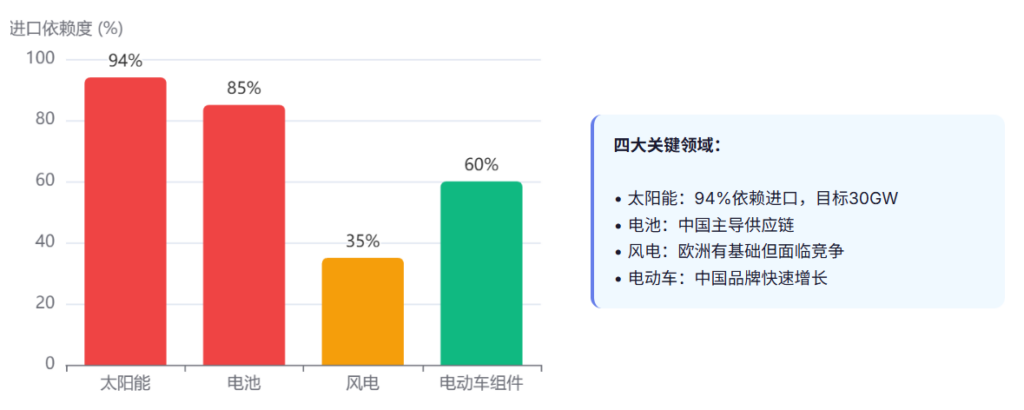
The European Commission plans to introduce minimum "Made in Europe" requirements for green technologies in public procurement. Affected technology areas include batteries, solar panels, wind turbines and EV components. The draft legislation will be published next week.
Capacity gap and policy tools
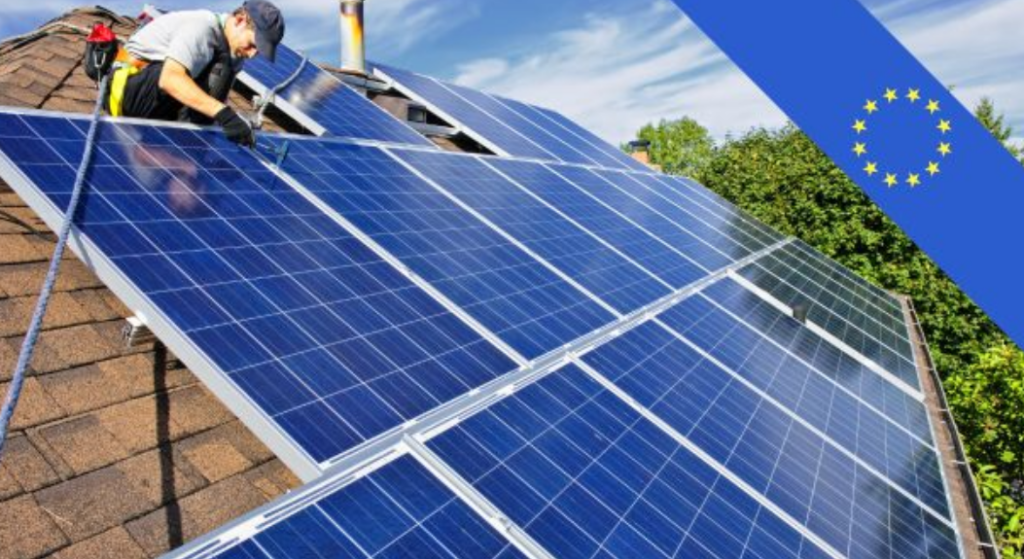
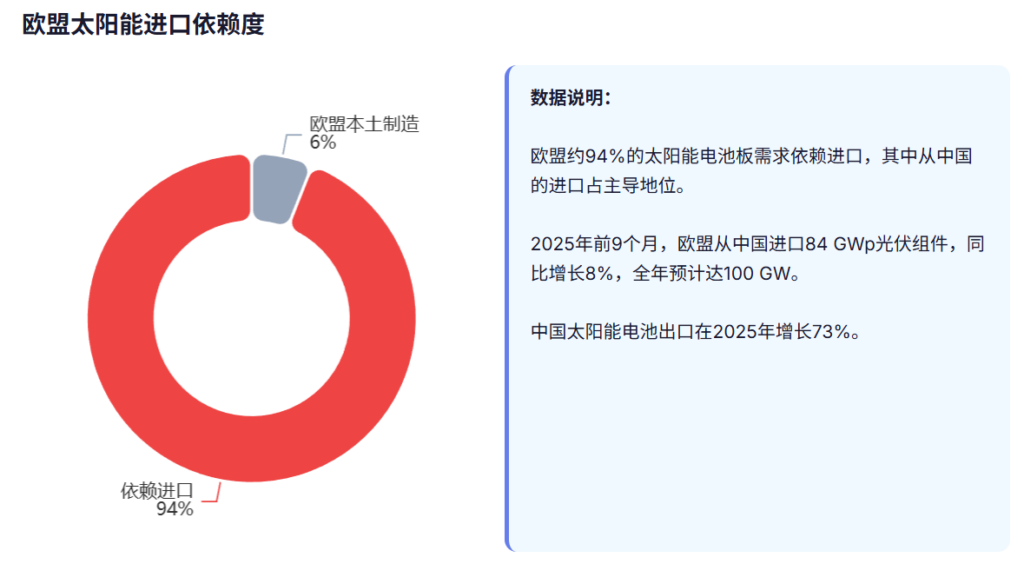
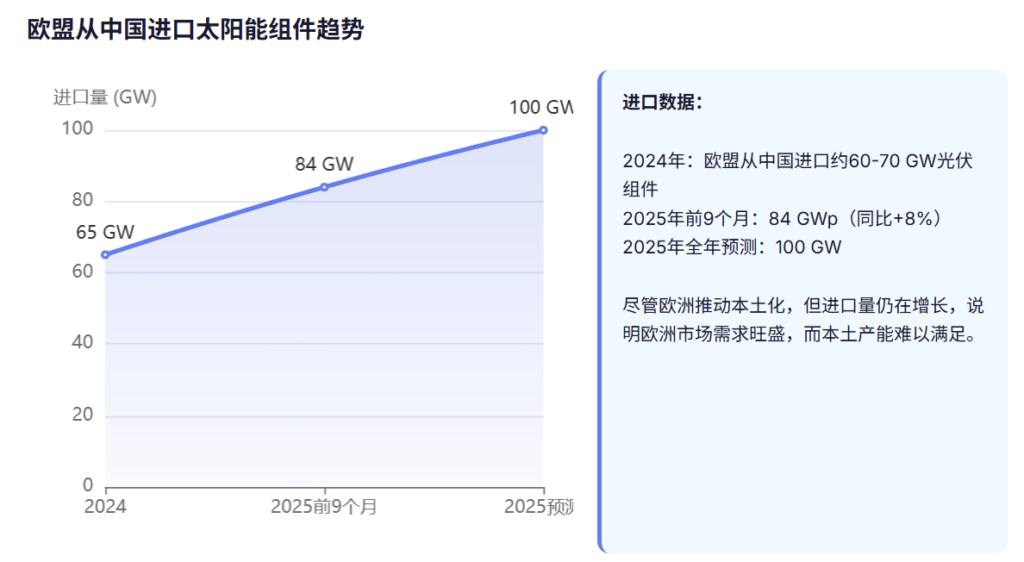
The EU accounts for only about 1% of global solar cell and module manufacturing capacity, and about 94% of its solar panel demand is met by imports. In the first 9 months of 2025, the EU imported from China about 84 GWp of PV modules, up 8% year on year, with full-year imports expected at about 100 GW.
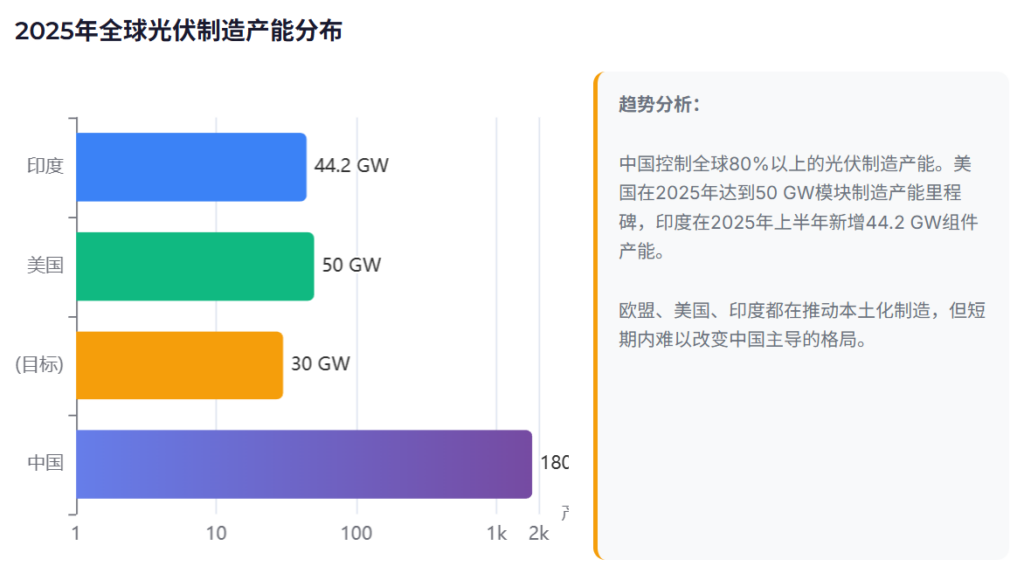
China's solar PV capacity is expected to approach 900 GW by the end of 2025, with plans for more than 1000 GW of N-type cell capacity. In 2025, China's solar cell exports grew 73%.
The EU trails China by a wide margin in green manufacturing capacity, and is trying to close the gap through public procurement rules. Public procurement makes up about 14% of EU GDP, which makes it a powerful industrial policy tool. If the rules are adopted, competition in green technology will shift from "who is cheaper" to "whose supply chain is more European".
Battery rules are the most specific
The proposed framework sets clearer phased requirements for batteries. About 12 months after the regulation takes effect, battery systems bought through public procurement must be assembled in the EU, with key components such as the battery management system sourced from the EU. After about 24 months, the rules tighten further: the battery system itself and more core components must be "Made in Europe", and the requirement may extend further upstream to cells.
For companies, this becomes an exercise in "component-level documentation". Public-sector orders are often the starting point for demonstration projects and scale markets; once tender terms require "European origin", the requirement will quickly spill over into supplier selection by main contractors, financiers and private projects.
The impact reaches investment
The proposals target more than batteries: they extend minimum "Made in Europe" shares to key solar and wind components, low-carbon industrial products, power cables and EV charging infrastructure. All of these sit in the "infrastructure layer" of the energy transition. Once that layer is locked into "Made in Europe", the entire supply chain will be forced to recalculate costs and delivery times.
Another key point is that foreign investments of more than EUR 100 million in strategic sectors may face added conditions, such as using European-made components and meeting EU labour-related requirements. This extends "market access" from products to investment. The EU is institutionalising its sense of "industrial security": products, orders and investment approvals are being tightened simultaneously, forming a closed loop.
De-risking and rising costs
The policy is part of the EU's "de-risking" strategy, aimed at reducing dependence on China. The EU previously adopted the Net-Zero Industry Act to counter competition from Chinese renewable energy companies. The rules will set minimum local content requirements and give priority to products made in EU member states. The act also includes a fast-track permitting mechanism and supply chain monitoring provisions.
Some EU member states have reservations, arguing it could raise procurement costs. EU-made products are generally more expensive than imports, especially in solar. China's response to the EU plan has been to call for business investment confidence not to be undermined.
Turning localisation from a cost item into a capability
For companies with green-tech business in Europe, the most practical response is to prepare for it as an upcoming new threshold for tenders.
First, set up a component-level origin register as soon as possible, especially for battery systems, BMS, key electrical parts, power modules and structural parts, and prepare the chain of evidence and auditable documentation in advance.
Second, make "European assembly/European key components" part of the product roadmap: split modules and standardise interfaces so localisation can be replicated quickly.
Chinese companies also need to rethink their European partner strategy: joint ventures, licensed manufacturing, joint certification and joint bidding will work better than going it alone.
Finally, watch closely for changes in the technical clauses of public procurement projects. Public bodies often use tender documents to turn abstract policy requirements into specifics. Whoever understands "tender language" first wins orders first.
Final thoughts
The EU is tightening local-content requirements for green technologies in pursuit of "strategic autonomy", and public procurement has become a key tool for this. The EU hopes to use government purchasing power to stimulate domestic manufacturing. Global green supply chains are being reshaped, with both Europe and the US pushing for local production. Europe is trying to use policy tools to narrow its gap with China in green manufacturing.
Historical experience shows that building capacity takes time and economies of scale. The EU's effort to rebuild solar manufacturing faces the scale advantages and cost competitiveness China has already established. Green technology competition between the EU and China will become more complex: trade friction is increasing, while both sides still need to cooperate on climate change. Balancing competition and cooperation will be a key issue in the coming years.
**Reproduction or excerpting without permission is strictly prohibited.** Questions and comments are welcome. Follow us for ongoing analysis of the latest developments in China and abroad.