DHL systematically accelerates logistics decarbonization
In 2025, logistics giant DHL systematically disclosed its latest global decarbonization progress: from full electrification of the last mile to hydrogen trucks entering…
In 2025, logistics giant DHL publicly disclosed its latest global decarbonization progress in a systematic way: from full electrification of the last mile, to hydrogen trucks entering multi-region testing, to fuel substitution in aviation and shipping, and energy self-sufficiency for logistics infrastructure.
Last-mile decarbonization
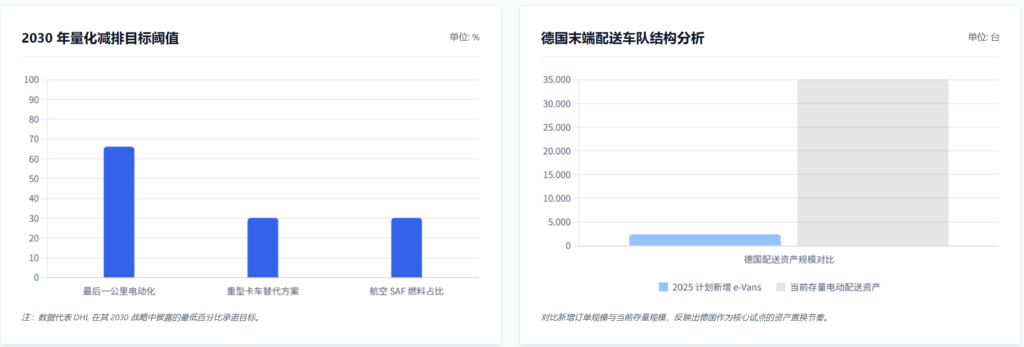
DHL's target is very clear: by 2030, around 66% of its global last-mile deliveries will be electrified. In 2025, DHL ordered 2400 Ford-brand electric vans in one go for its German post and parcel business, its largest-ever single order of electric commercial vehicles, and most of the vehicles are already in operation. To date, DHL's electric delivery system in Germany includes:
– More than 35000 electric vehicles
– Multiple last-mile formats, including e-vans, e-trikes and e-bikes
About 1/3 of postcode areas now have zero-emission delivery
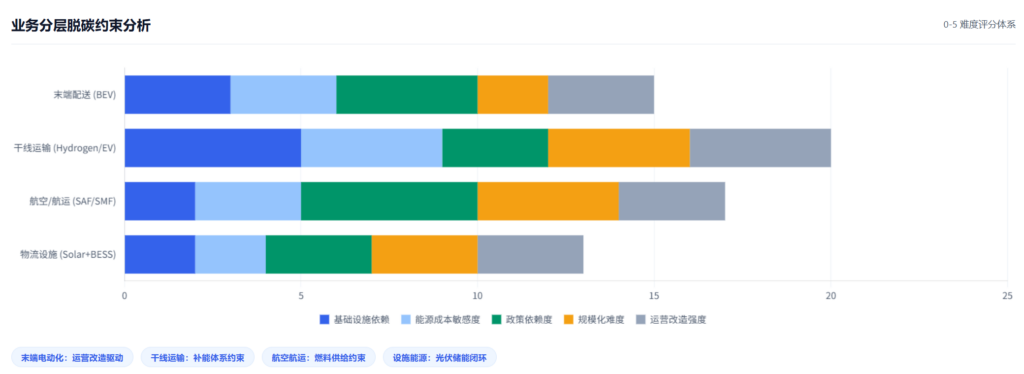
DHL no longer agonizes over "per-vehicle cost", instead solving the TCO problem directly through network density and economies of scale. But this is a playbook only top-tier logistics companies can really pursue.
Trunk transport: hydrogen is only a supplementary solution
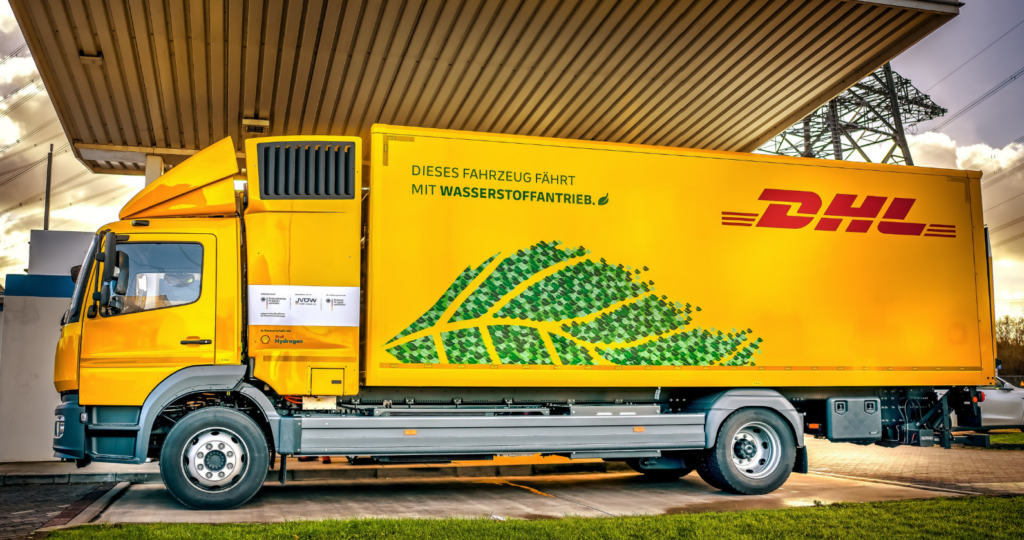
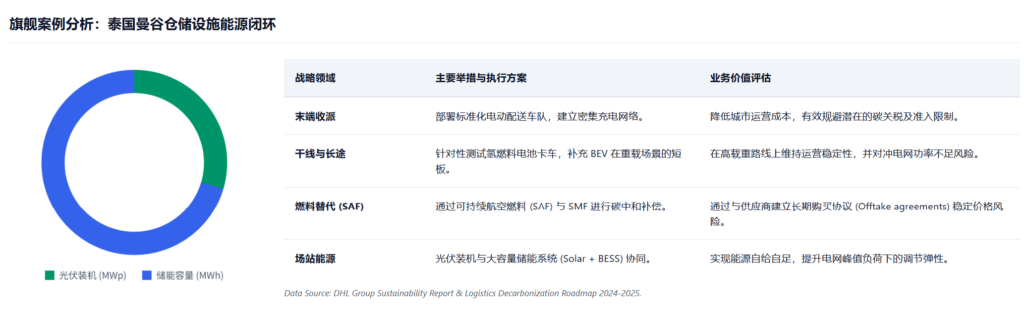
DHL points out that hydrogen fuel cell trucks have potential advantages in long-distance, heavy-payload scenarios, particularly in range, refueling time and operational continuity. DHL has therefore launched hydrogen truck tests simultaneously in Europe, North America and Asia-Pacific, and plans to bring the solution to the Middle East. Electric trucks are better suited to urban and regional logistics, while hydrogen looks more like a "fallback option" for cross-regional trunk routes.
Aviation and shipping decarbonization
Compared with road transport, air freight remains the mode with the highest emissions per tonne-kilometer. DHL does not shy away from this, instead focusing on gradually scaling up sustainable aviation fuel (SAF). Meanwhile, given that global trade still relies mainly on sea freight, DHL also sees sustainable marine fuel (SMF) as a key tool for medium- to long-term emission cuts. As long as international trade exists, aviation and shipping cannot be bypassed, and decarbonization can only come from gradually changing the fuel mix.
Self-built logistics infrastructure begins to scale
DHL has opened a solar-powered logistics center in Thailand. The facility is equipped with a 4.2 MWp PV system and a battery energy storage system, and can in theory achieve 100% self-consumption of its own generated power. For logistics companies, this is a matter of energy cost control and operational resilience.
Zero-carbon logistics is a systems engineering project
DHL breaks decarbonization down into operational modules that can be executed, replicated and scaled. For the logistics industry as a whole, decarbonization is in fact a long-term test of organizational capability, capital patience and systems engineering capability.