2025 How BYD is "disrupting" Europe with a single car
BYD Seal U tops the European chart: in Nov 2025, the BYD Seal U PHEV&n…
BYD Seal U tops the European chart
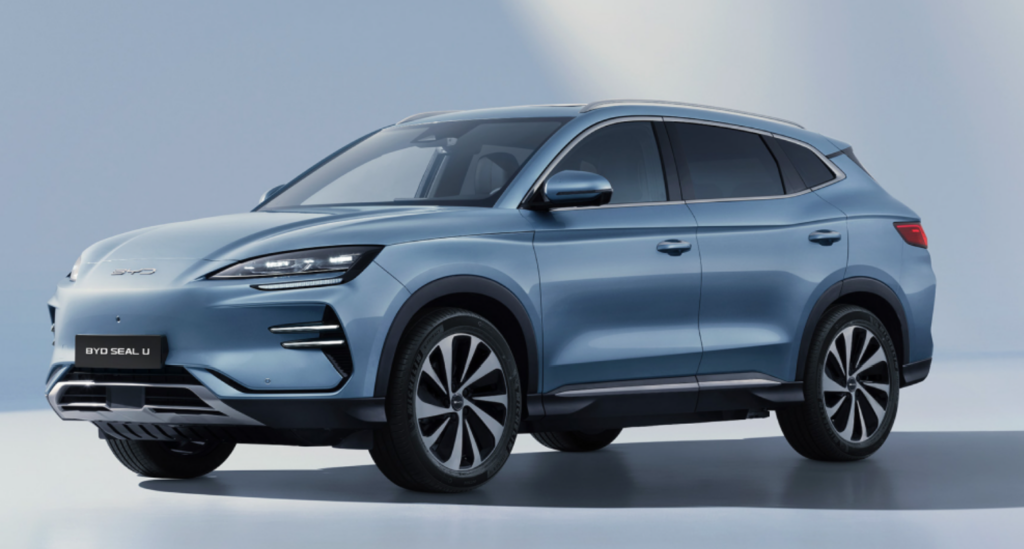
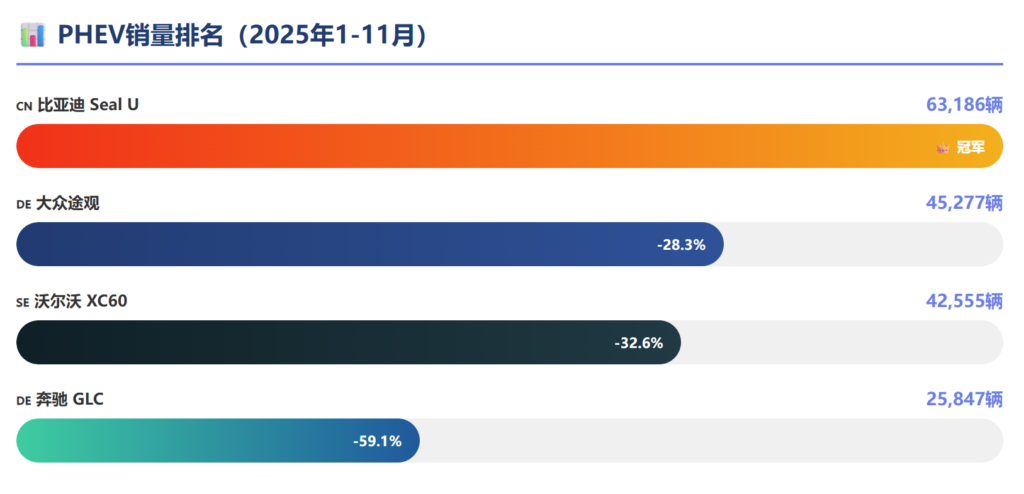
In Nov 2025, the BYD Seal U PHEV topped Europe's plug-in hybrid (PHEV) market with cumulative sales of 63186 units, dethroning the Volkswagen Tiguan, which had long held the segment's crown.
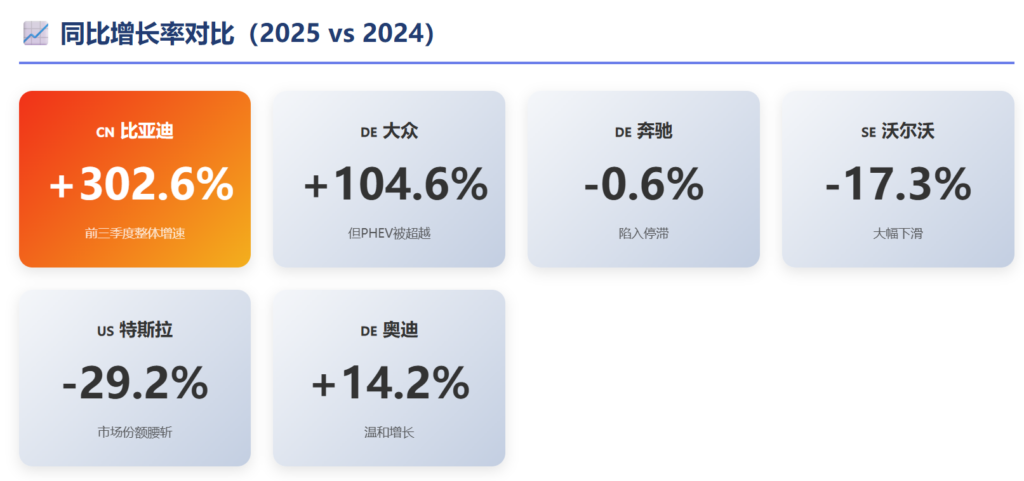
This is the first time a Chinese brand has ranked first by cumulative sales in a European NEV segment, and it got there without relying on subsidies. Tesla's European sales fell 29.2% year on year, Mercedes-Benz stalled at zero growth and Volvo dropped 17.3%, while BYD achieved 302.6% year-on-year growth in Europe.
Pricing is strategy
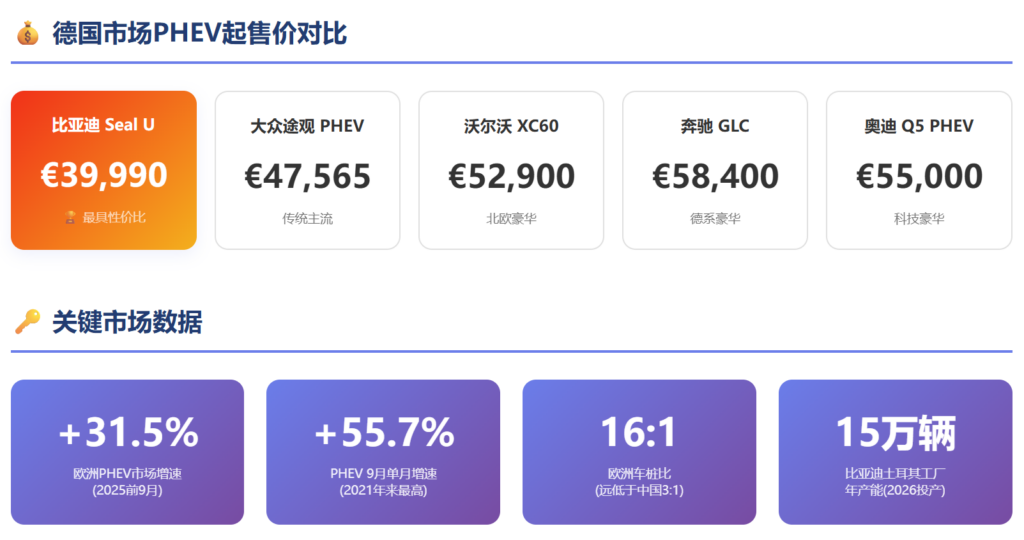
In Germany, the Seal U PHEV starts at **€39990, and the price has a clear rationale. The EU imposes anti-subsidy tariffs of up to 38.1% on China-made battery-electric vehicles (BEVs), while PHEVs remain subject only to the standard 10% import duty. Rather than colliding head-on with policy, BYD has sidestepped it through its choice of powertrain, in contrast to some other Chinese automakers that have bet their entire European strategy on BEVs.
At €39990, the price sits below the roughly €55000 entry point of the Audi Q5 PHEV, yet well above budget-brand territory: rational without looking cheap. With European consumers still cautious about Chinese brands, this pricing approach makes sense.
In the first 9 months of 2025, the European PHEV market grew 31.5% year on year, well ahead of BEVs at 25%; in 9 alone, PHEV sales surged 55.7% year on year, the steepest increase since 2021.
With the vehicle-to-charger ratio still as high as 16:1 (around 3:1 in China)** and long-distance charging anxiety yet to be resolved, PHEVs are what European consumers are actually willing to pay for at this stage.
The timing advantage of the Turkish plant
The Seal U's sales surge has bought BYD a window of time. According to disclosed information, BYD's vehicle plant in Manisa (Türkiye), a $1 billion investment, is scheduled to start production at the end of 2026 with a designed annual capacity of 150,000 units, and its first model will be the Seal U PHEV. Türkiye is not an EU member but has a customs union with the EU, so vehicle exports can enjoy zero tariffs, with its location also covering
EU + Middle East market strategy
Compared with the Hungarian plant, which was only scheduled to start production in October 2025, the Turkish base offers stronger overall advantages in cost structure, geopolitical resilience and policy buffers. Multiple sources indicate the plant could exceed its planned capacity of 150,000 units as early as 2027, with further expansion in 2028. BYD may therefore transform between 2026 and 2028 from "a Chinese automaker exporting to Europe" into "an automaker producing within the European system".
Product portfolio strategy
On Sep 2025, BYD launched the Seal 6 DM-i Touring estate, taking direct aim at the Volkswagen Passat and Škoda Superb. This is the most symbolic model segment for Europe's middle-class families, and one where Chinese brands have long been absent. At the same time, BYD is rolling out models such as the Seal BEV, Dolphin and Atto 3 across Europe. Its strategy is actually simple: **PHEVs deliver volume and cash flow, BEVs deliver technology image and long-term penetration.** By contrast, Tesla's heavy reliance on the Model Y / Model 3 and Volkswagen's strategic wavering between PHEV and BEV leave both noticeably less resilient to volatility.
European automakers' anxiety
- Volkswagen: BEV growth is genuinely strong, but its PHEV line-up is clearly ageing; the Tiguan has not regained the top spot since being overtaken by the Seal U
- Mercedes-Benz: Unwilling to move down-market because of its brand premium, yet its product strengths (range, smart features, value for money) struggle to justify the high price; GLC PHEV sales are only about 40% of the Seal U's
- Volvo: electrified too fast, cut combustion and PHEV capacity too early, and its BEV pricing is squeezed by both Chinese and US rivals
PHEV is not the endgame
BYD's PHEV offensive in Europe is essentially a balance between market education and building trust. Seal U's strong sales are not the finish line but the ticket in. The real test will come after 2026: once its local plants start production, DM technology moves further down the range and the BEV market reaccelerates, can BYD make the genuine leap to a mainstream brand?
**Reproduction or excerpting without permission is strictly prohibited.** Questions and comments are welcome. Follow us for ongoing analysis of the latest developments in China and abroad.