Spain commercial vehicles in October: down for the month, up year to date
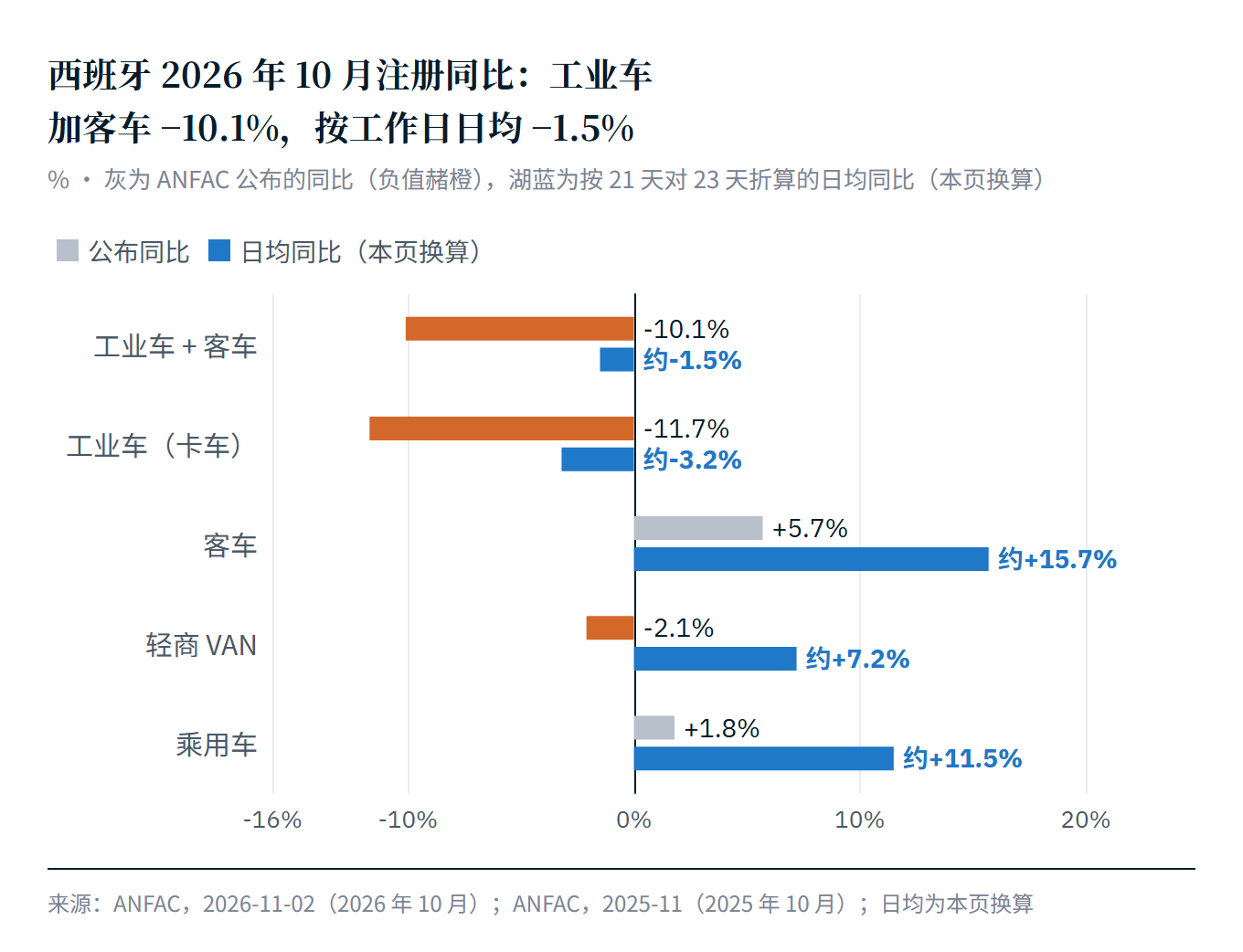
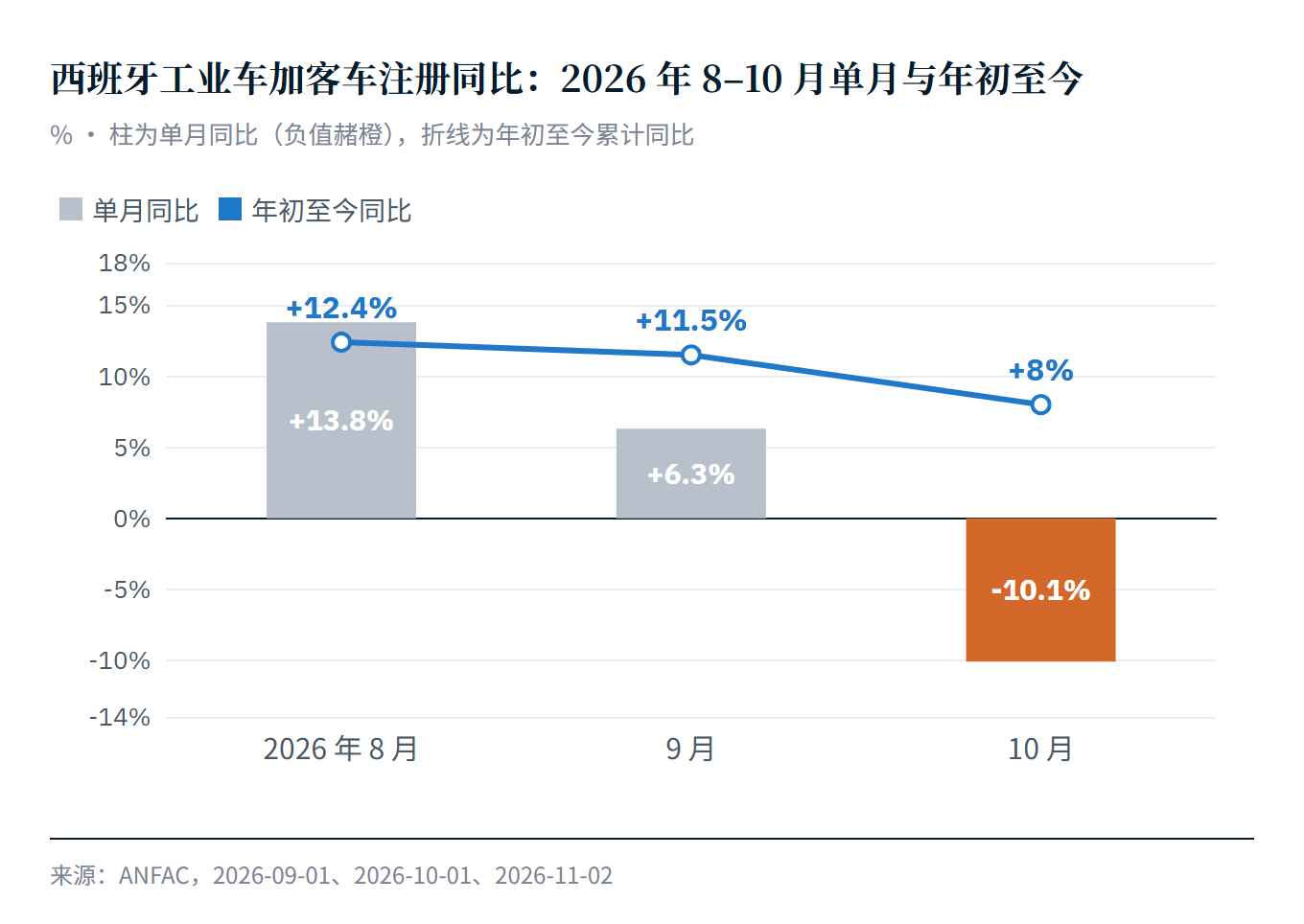
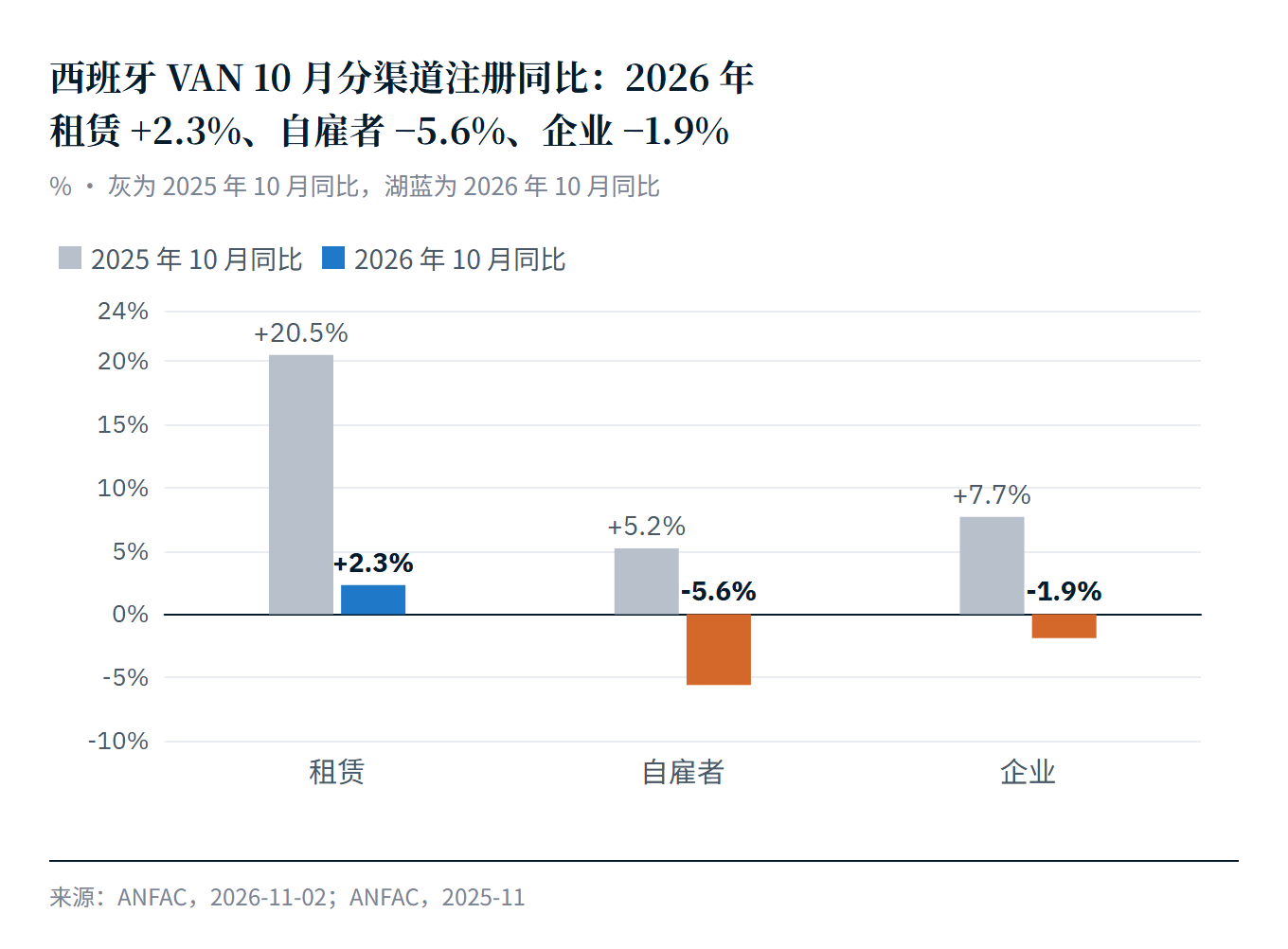
Spanish vehicle manufacturers' association ANFAC reported on Nov 2 that registrations of industrial vehicles (trucks) and buses fell 10.1% YoY to 4165 units in Oct 2026, after four consecutive months of growth; cumulative registrations for 1–10 rose 8% to 31183 units. Light commercial vehicle (VAN) registrations fell 2.1% to 16318 units in 10, with the cumulative total up 5.4% at 163171 units. Passenger car registrations that month rose 1.8% to 98487 units, with BEVs and PHEVs accounting for 31.5%. The monthly decline largely reflects fewer working days, while the cumulative growth for trucks and buses mainly makes up for last year's drop.
Two fewer working days
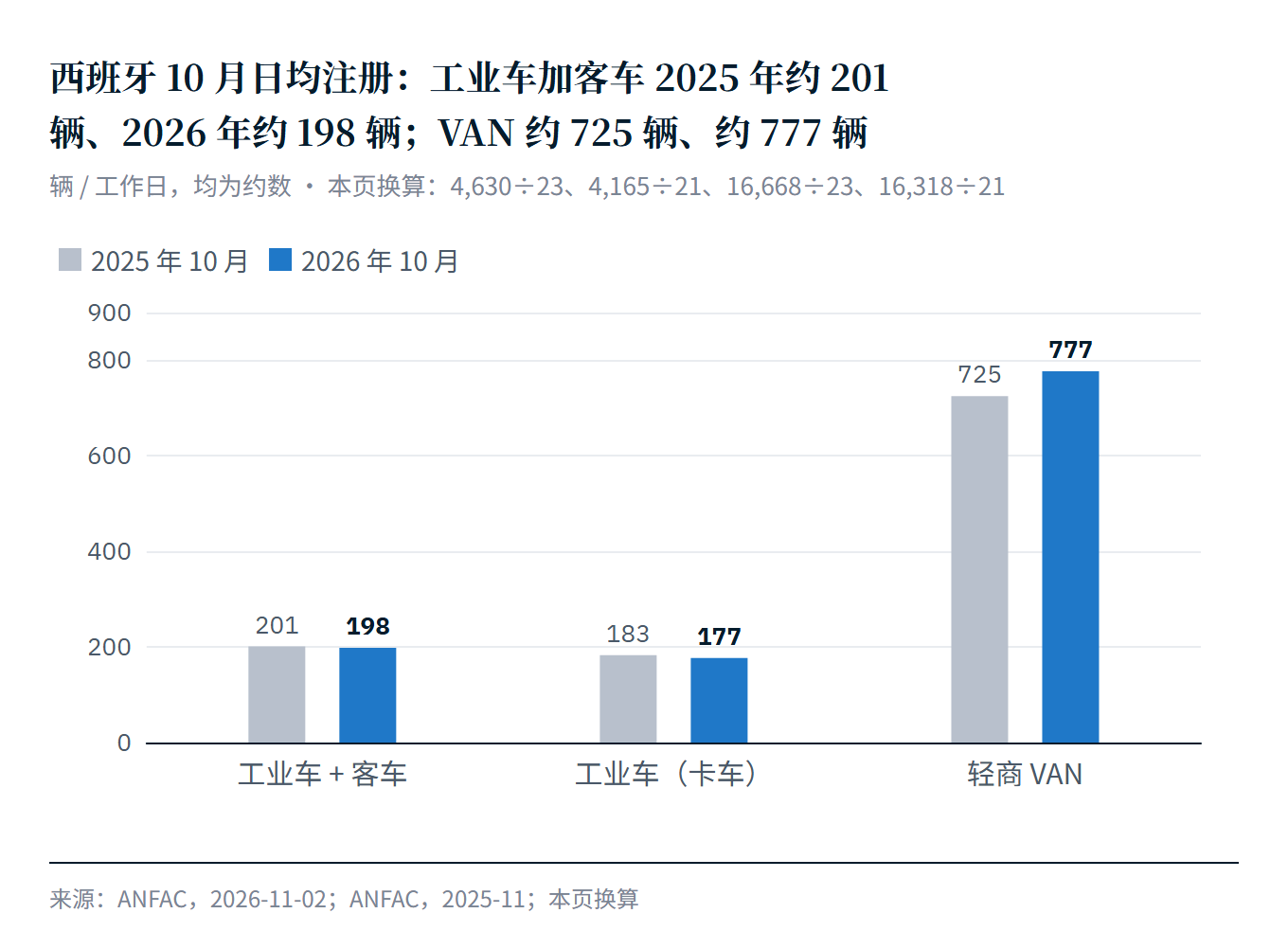
ANFAC said month 10 this year had two fewer working days than the same month last year. The Oct 12 National Day holiday fell on a Monday this year and on a Sunday last year. ANFAC said the autonomous communities with the highest sales last year did not move the holiday to the Monday. Based on the national calendar, this year had 21 working days versus 23 last year. On this basis, average daily registrations of industrial vehicles and buses were about 198, compared with about 201 in the same month last year, only about 1.5% lower. Industrial vehicles totalled 3717 units, down 11.7% year on year, but only about 3% lower on a daily basis. Buses totalled 448 units, up 5.7%. Vans averaged about 777 per day, about 7% more than the roughly 725 in the same month last year. Most of the year-on-year decline in month 10 can be explained by fewer registration days, and does not yet indicate that fleet purchasing demand is weakening.
Year-to-date growth slows
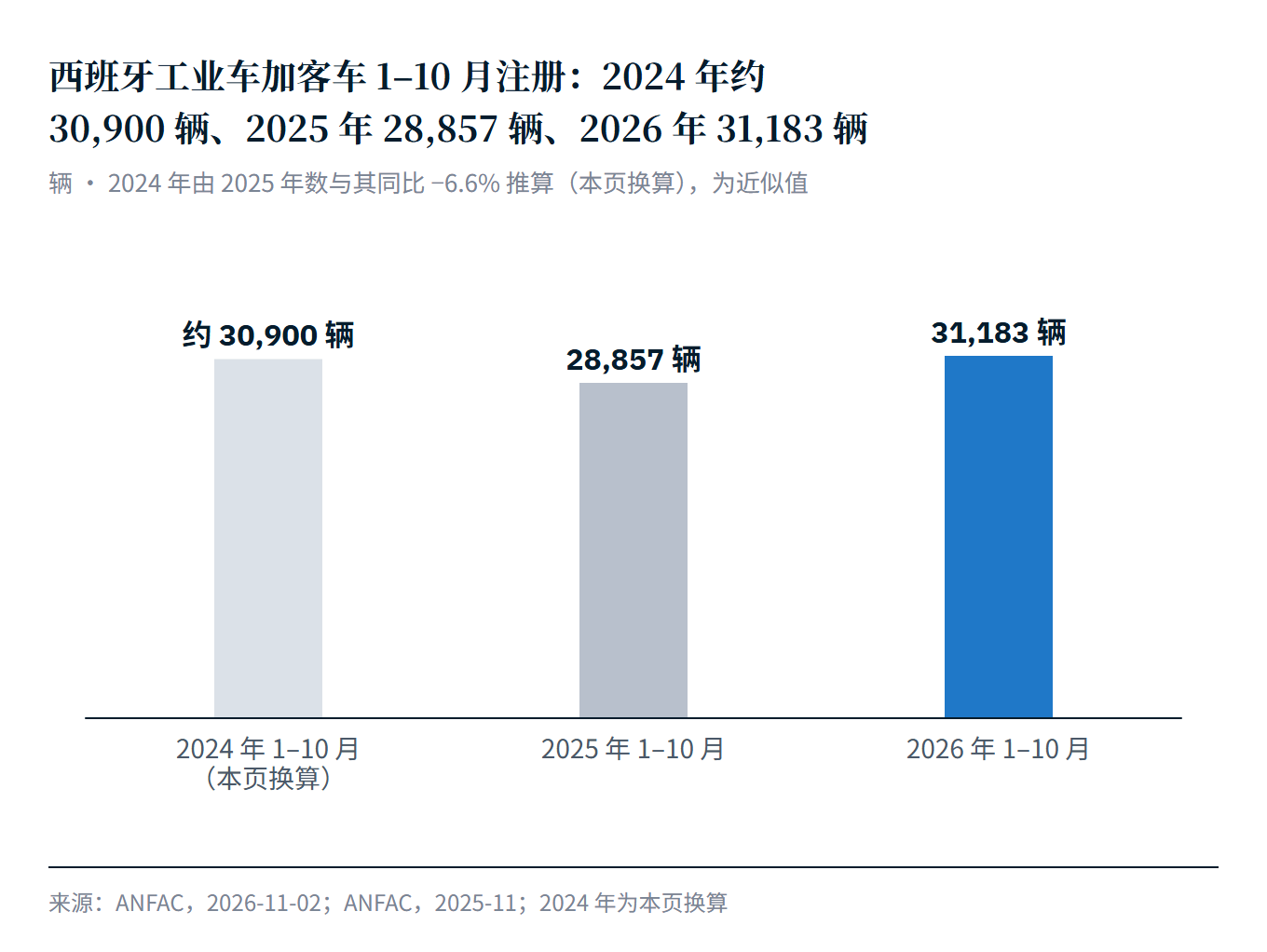
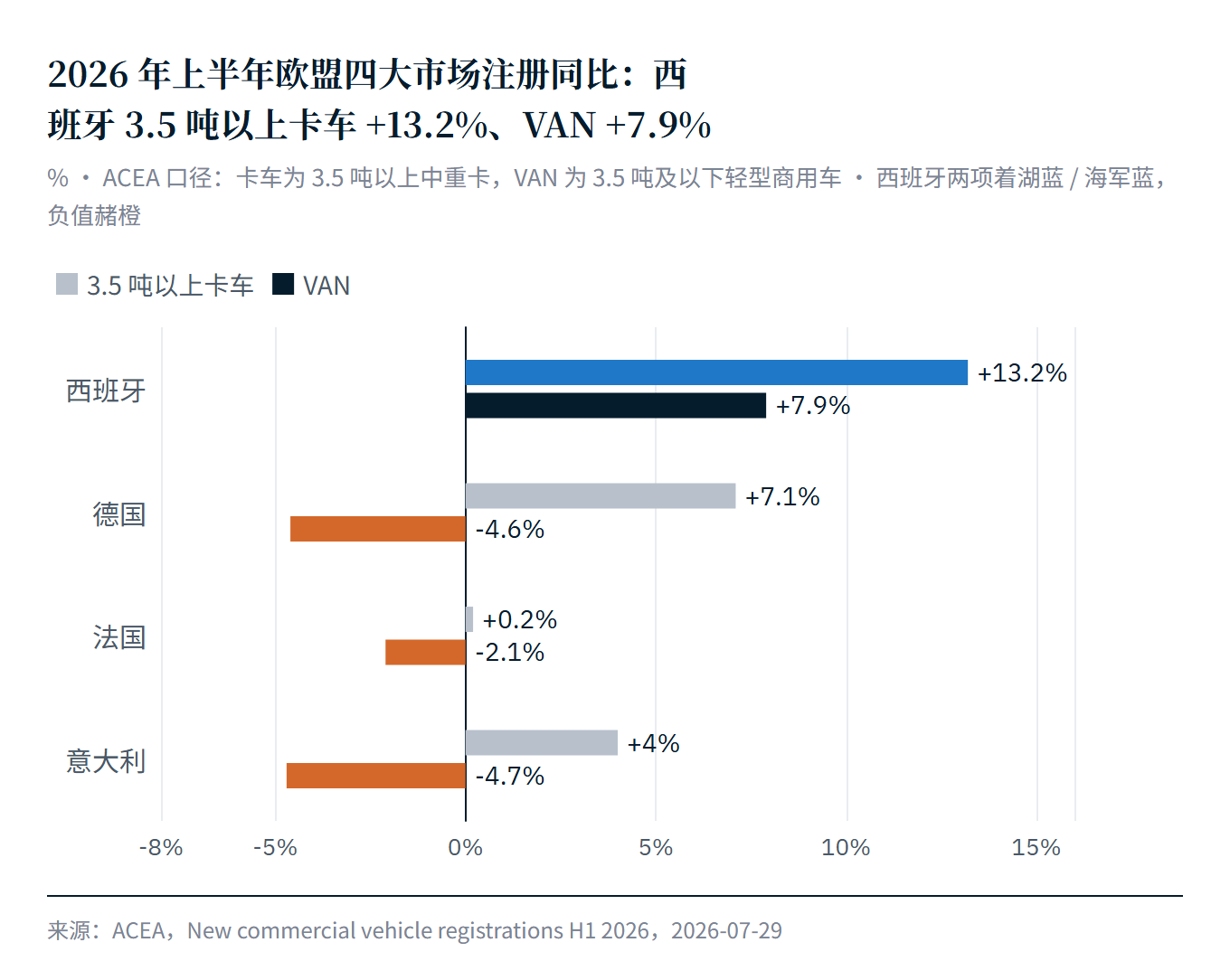
Cumulative growth for industrial vehicles and buses was 12.4% in August and 11.5% in September, easing to 8% in October. January–October 2025 reached 28,857 units, down 6.6% year on year, versus about 30,900 in the same period of 2024, only about 1% more this year. Vans are different: January–October 2024 was 137,498 units, and this year's equivalent period is up about 18.7%. First-half data from the European Automobile Manufacturers' Association (ACEA) show trucks over 3.5 tonnes up 13.2% in Spain and 7.1% in Germany, with France roughly flat; vans rose 7.9% in Spain but fell in Germany, Italy and France, making Spain the only one of the four major markets where both segments grew.
Spain's truck and bus markets are recovering to 2024 levels this year, while the van market is significantly larger than two years ago.
Differences in subsidy coverage
Van purchases are eligible for incentives. The Ministry of Industry and Tourism opened applications from individuals under the Auto+ plan on August 4, with a budget of EUR 350 million, covering purchases made after January 1. Individuals buying zero-emission N1 vans can receive up to EUR 5,000. A second application channel for businesses and the self-employed opened on October 1 with a budget of EUR 50 million; both channels close on December 31. There is no equivalent purchase incentive for trucks and buses: a roadmap published by ANFAC in September states that the EUR 450 million fleet renewal scheme launched by the transport ministry in 2021 has not been replaced since it ended on April 30, 2024.
For manufacturers selling electric trucks and buses in Spain, customers calculating purchase costs have no purchase subsidy to deduct. What they can use is the energy-saving certificate (CAE) value that the manufacturer passes on to the buyer as a discount at the point of sale; whether the rest of the price gap can be recouped depends on operating cost savings.


Source: Chart by AutoMusic based on the public sources listed in the article; first published on the AutoMusic WeChat account.