UK BEV vans up 58% in month 10; share of 11.0% in months 1–10, less than half the target
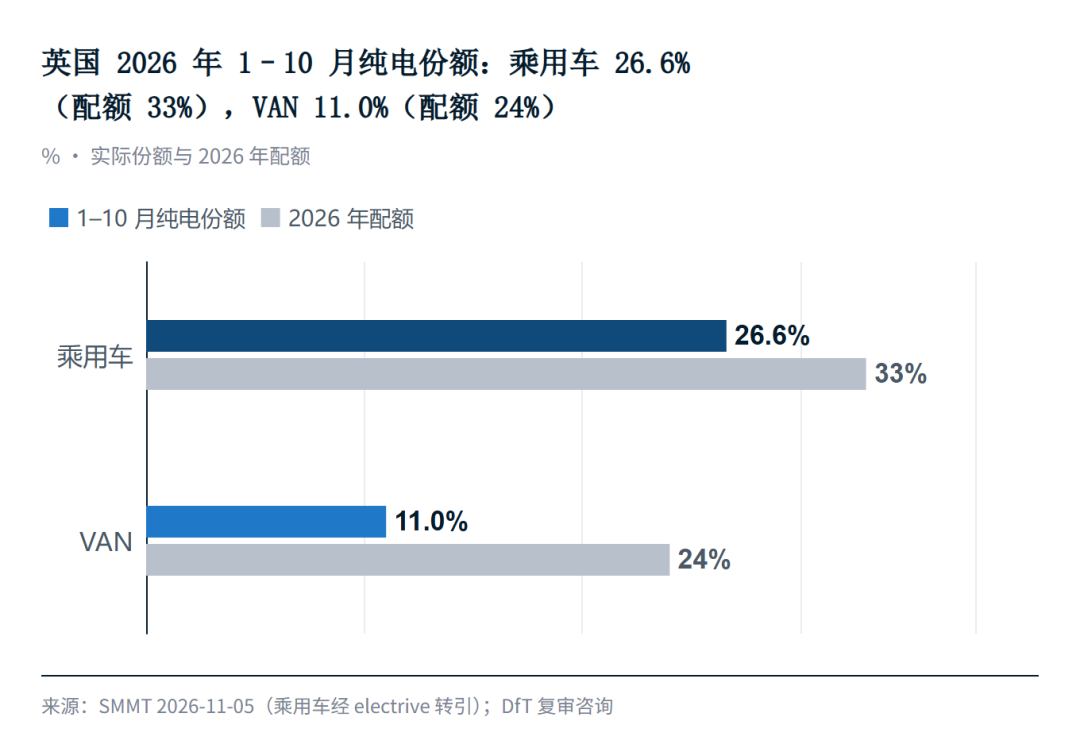
UK BEV van registrations reached 3369 units in month 10, up 58%, but the share for months 1–10 was 11.0%, less than half the 24% quota. Even the most lenient option in the review remains above SMMT's forecast, and the second round of depot charging grants did not open on schedule.
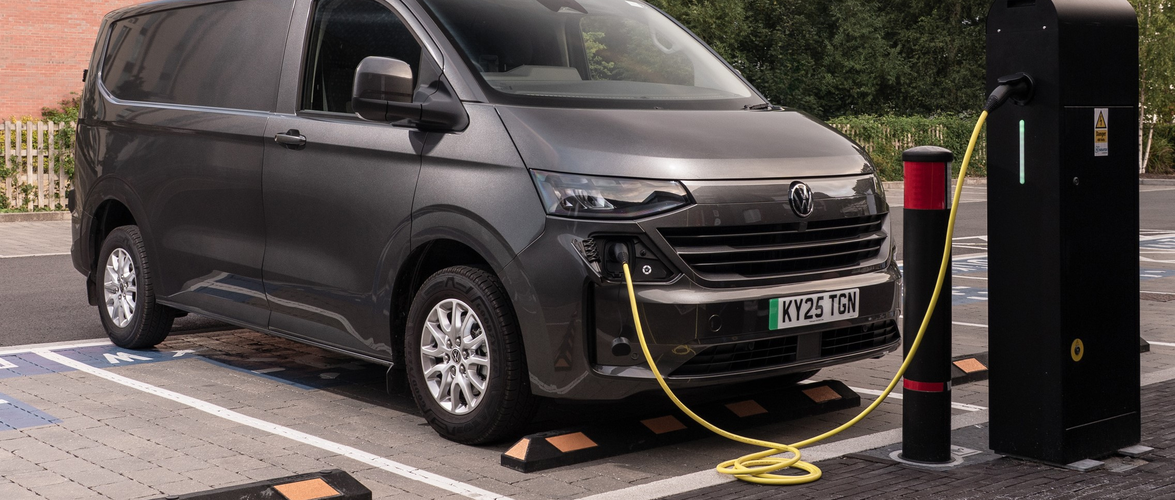
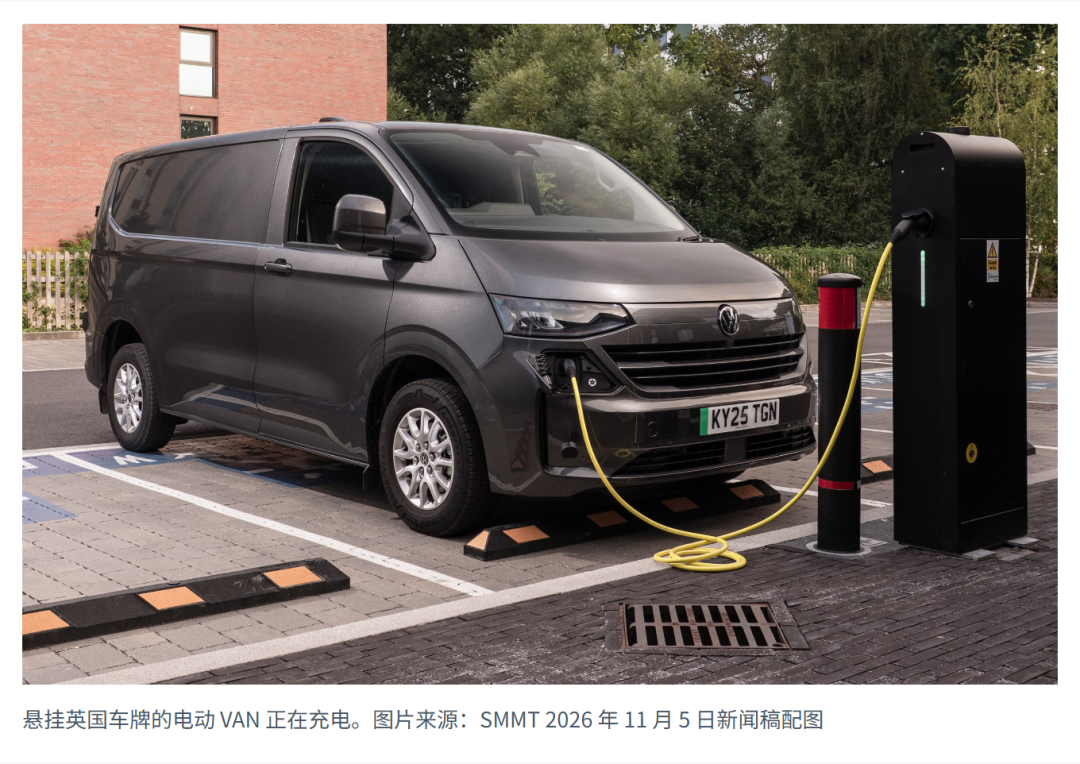
On Nov 5, the Society of Motor Manufacturers and Traders (SMMT) published light commercial vehicle data for month 10: battery-electric van registrations reached 3369, up 58.0% year on year, for a 12.9% share — the highest ever for month 10. But the share for months 1–10 was only 11.0%, less than half the 24% set for vans under this year's Zero Emission Vehicle (ZEV) Mandate. The Department for Transport's consultation on reviewing the quotas closed on Oct 23, and the government has pledged to complete the review by early 2027; even the most lenient option would leave quotas above SMMT's own forecast.
October's growth came from large vans
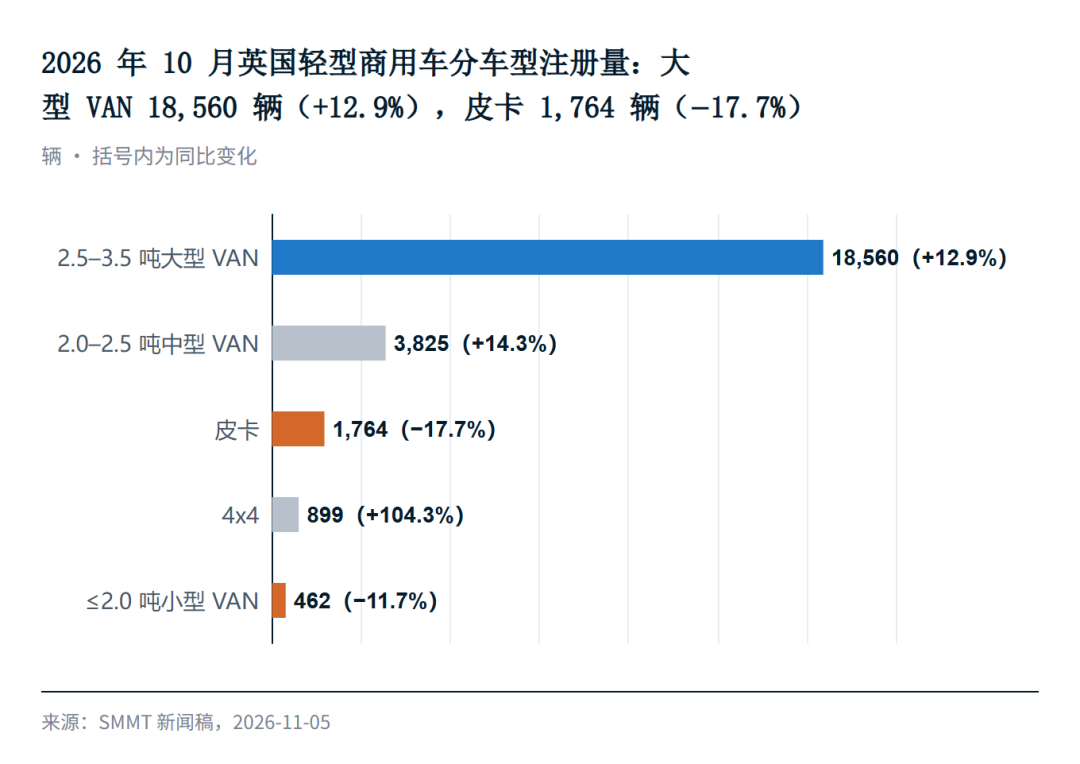
New light commercial vehicle registrations in the UK reached 25510 units in 10, up 11.4%, the 7th consecutive month of growth; large vans of 2.5–3.5 t accounted for 18560 units, or 72.8%. Battery-electric van sales were up 1237 units year on year, of which battery-electric goods vehicles of 3.5–4.25 t (SMMT category: rigid) totalled 588 units, up 223.1%, contributing about one-third of the increase; BEVs under 3.5 t totalled 2781 units, up 42.6%. The Department for Transport had earlier relaxed licensing, MOT and driving-hours rules for electric vehicles in this class.
In months 1–10, the BEV share rose from 9.1% in the same period last year to 11.0%, up 1.9 percentage points in a year; over the same period the quota rose from 16% to 24%, up 8 percentage points.
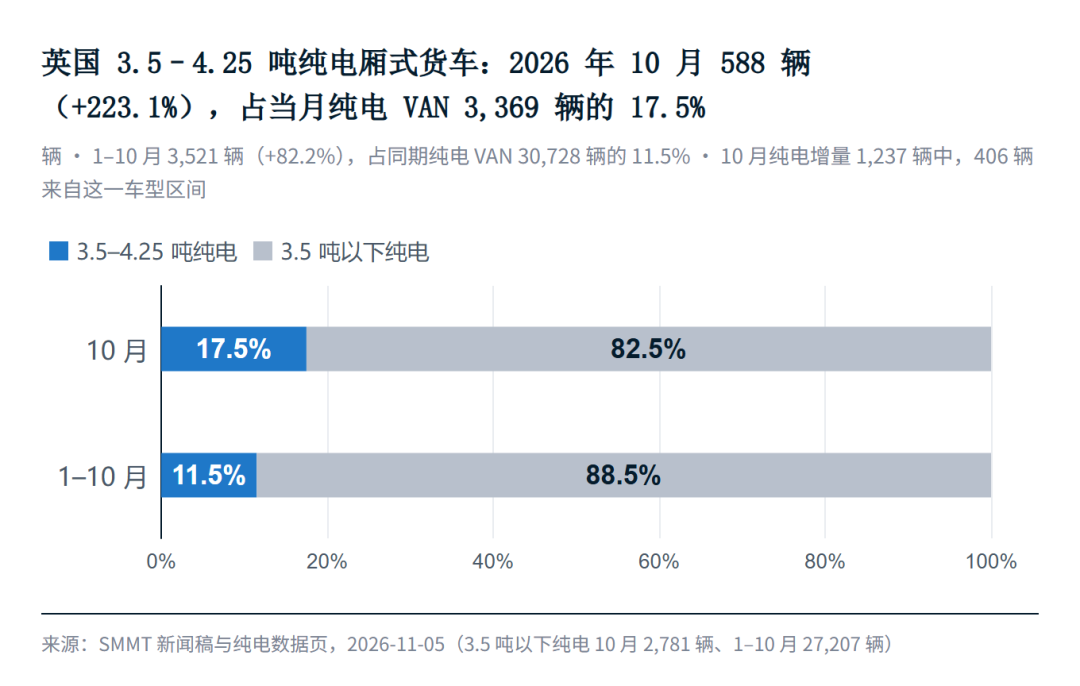
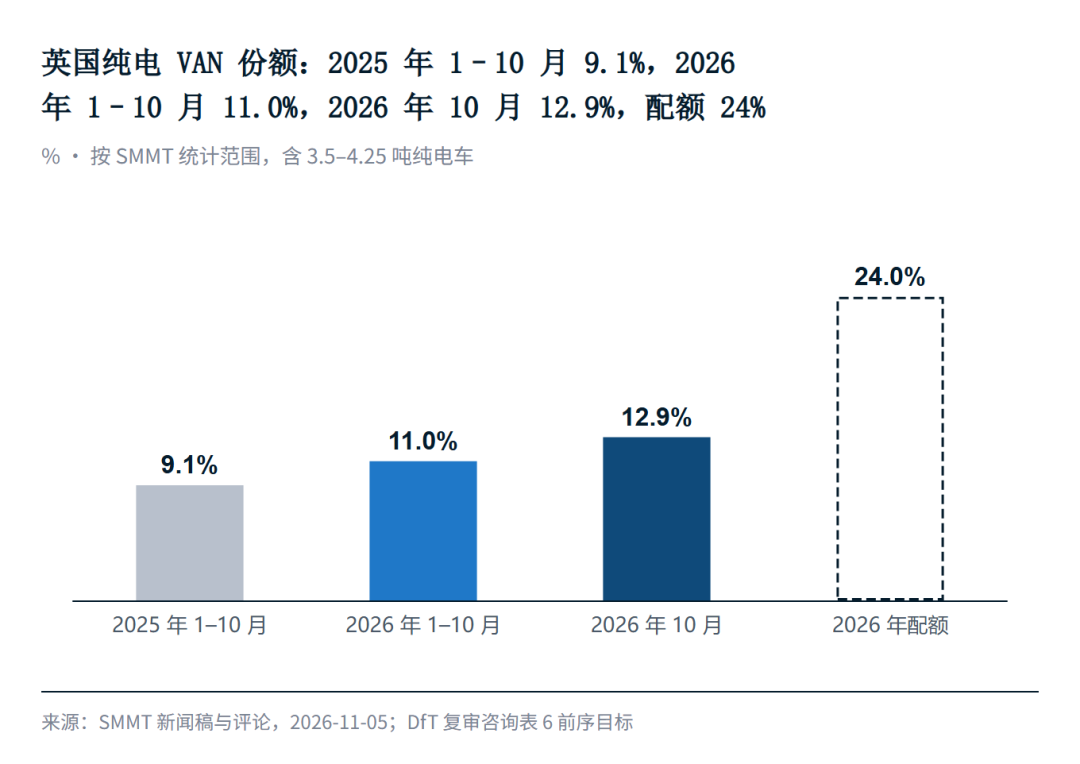
A considerable part of the monthly growth comes from the small base of heavy-duty models. Full-year share is rising far more slowly than the quota is being raised.
Forecasts and review options
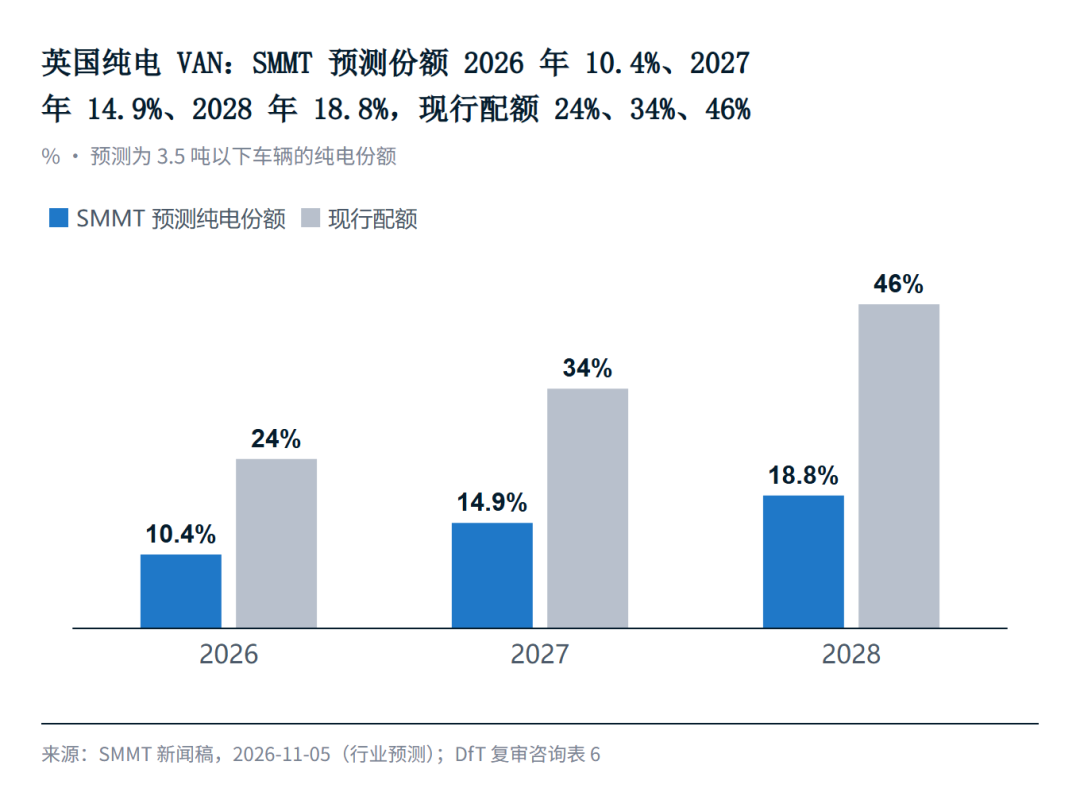
SMMT forecasts a BEV share for vehicles under 3.5 tonnes of 10.4% in 2026, 14.9% in 2027 and 18.8% in 2028; the current mandates are 24%, 34% and 46% respectively, widening the gap from 13.6 to 27.2 percentage points. The forecast excludes 3.5–4.25 tonne vehicles and is a market indicator, not manufacturers' statutory compliance gap.
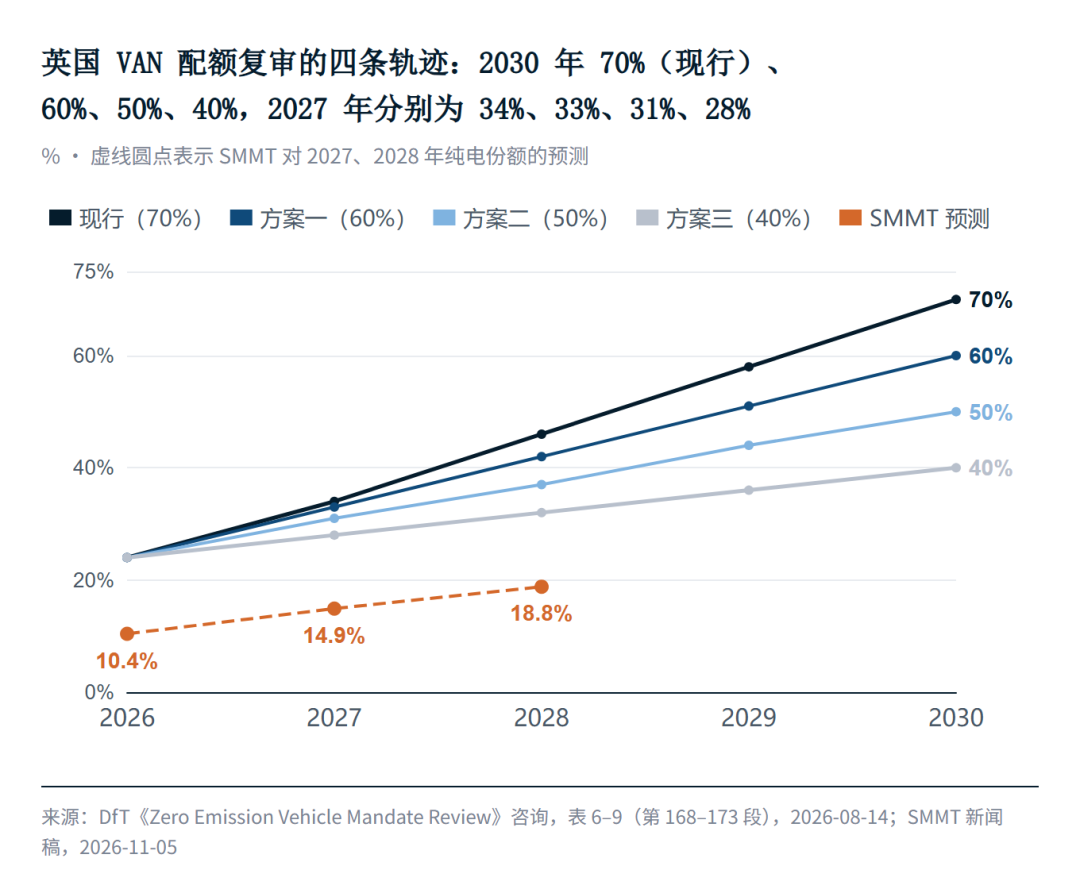
The review consultation published by the Department for Transport in month 8 sets out four options for vans: cut the 2030 target from the current 70% to 60%, 50% or 40%, or keep 70% and extend flexibilities such as borrowing, banking and CO2 conversion to 2034. The most lenient, option three, sets 28% and 32% for 2027 and 2028, still about 13 percentage points above SMMT's forecast. The department's own estimate is that meeting the 2030 target without flexibilities would require zero-emission van sales to grow by an average of 52% a year; actual growth in 2022–2025 was 18%.
So far, the gap on paper has been covered by flexibilities: the actual zero-emission van share in 2024 was 6.8%, equivalent to 12.1% after flexibilities, against a 10% target. Any gap still uncovered after exhausting these routes incurs a compliance payment of £15,000 per van. SMMT says manufacturers are heavily discounting BEVs to avoid higher compliance costs; by its estimate, manufacturer discounts on electric vans approached £400 million in 2025.
Subsidy rules
The zero-emission van grant provides a discount of 35% of the price, applied directly by the dealer: up to £2,500 for small vans under 2.5 tonnes gross weight and up to £5,000 for large vans of 2.5–4.25 tonnes. According to the government subsidy register and a report by the UK Competition and Markets Authority (CMA), the new van and truck grant runs from Apr 1, 2026 to Mar 31, 2030, or until the budget is exhausted, with a total budget of £877 million; eligibility and amounts may be adjusted during that period.
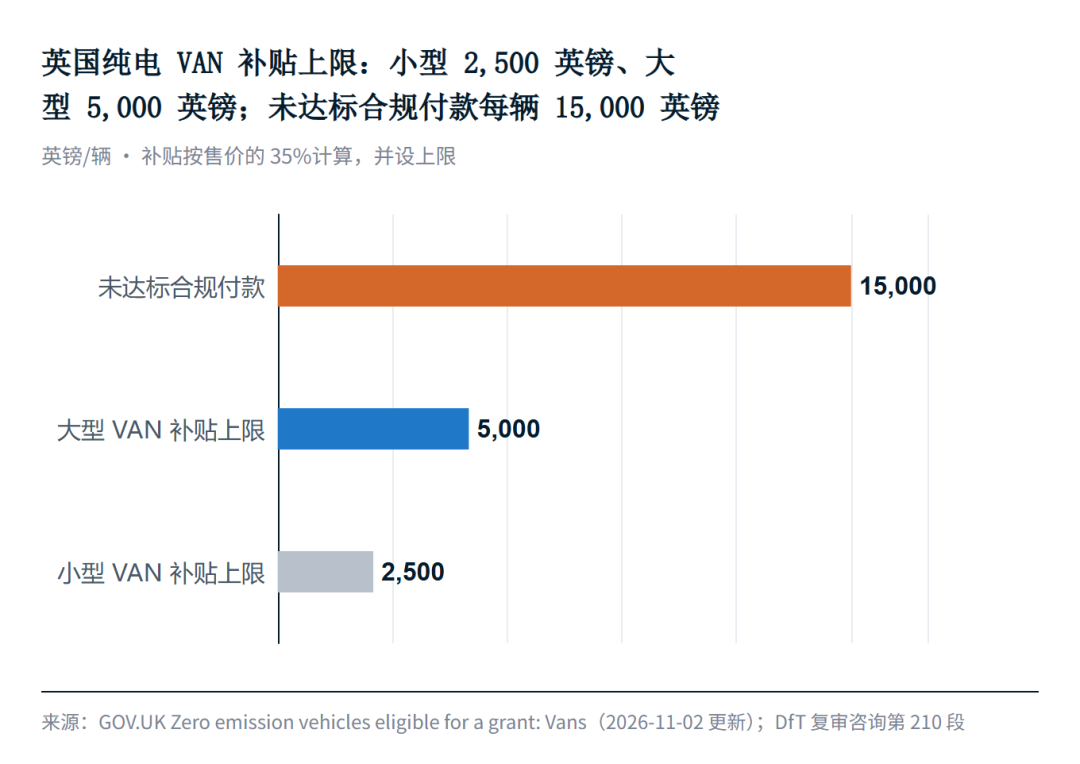
The current uncertainty around the subsidy is the annual amount and how long the budget will last. If the amount is cut, the difference will show up in prices quoted to buyers or in manufacturer discounts.
Depot charging subsidy extended
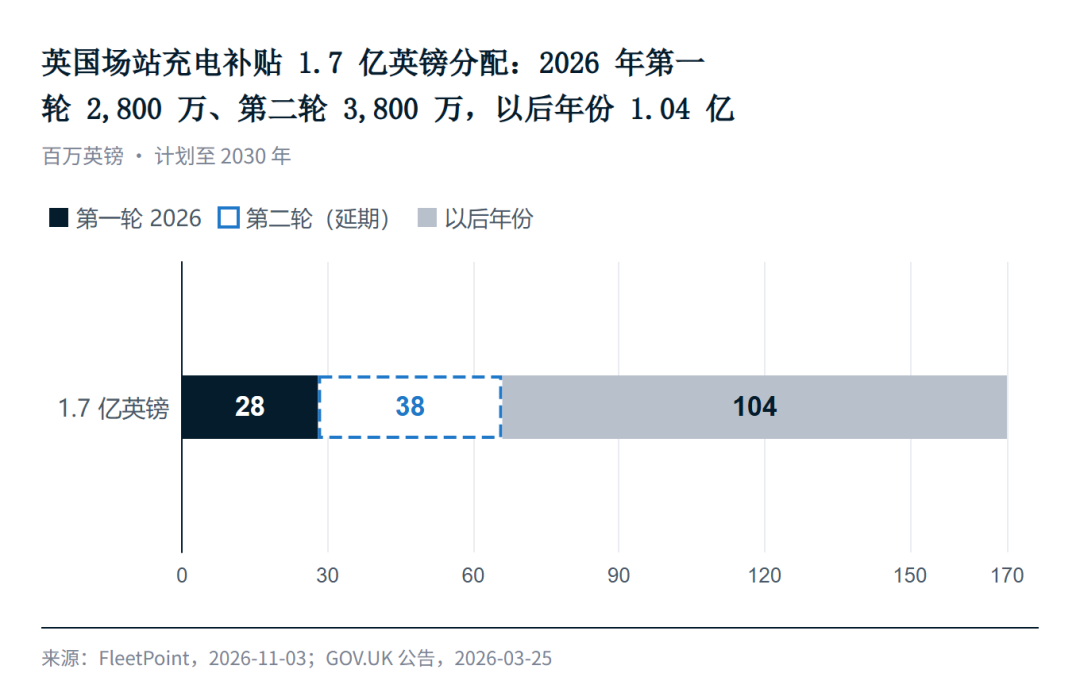
The Depot Charging Scheme received £170 million in March to run until 2030, with £66 million across two rounds this year. The first round covered 70% of charger and civil works costs, up to £1 million per organisation, excluding grid upgrades. According to FleetPoint on Nov 3, the £38 million second round was due to open on Oct 28 and close on Jan 29, 2027, but it did not open that day, and the Department for Transport has not given a new opening date. Costs incurred before a grant agreement is signed are not reimbursed, so fleets cannot start work while they wait.
The problem is not a lack of industry ambition but insufficient charging infrastructure, grid capacity and affordable power. SMMT is also calling for shorter waiting times for depot grid connections.
Review timeline
The Autumn Budget on Oct 28 confirmed that the government will publish its consultation response by the end of 2026; SMMT is calling for a "clear and substantial" adjustment to the trajectory. Meanwhile, the BEV share of UK passenger cars in 1–10 was 26.6%, about 80% of this year's 33% mandate, while vans were at less than half. The text adopted by the European Parliament's Environment Committee on Nov 4 lowers the EU van CO2 reduction target for 2030 from 50% to 35%, which still requires a plenary vote and trilogue negotiations.
Source: Chart by AutoMusic based on the public sources listed in the article; first published on the AutoMusic WeChat account.
Before year-end, watch for the 2027 van quota figure in the review response, the opening date and rates of the second round of depot charging grants, and next fiscal year's budget for the zero-emission van grant.
Vans are mostly bought by fleets, which must weigh payload, range and depot charging, so progress in passenger cars cannot be applied directly to vans. Relaxing quotas eases manufacturers' compliance pressure, but whether fleets renew their vehicles still depends on subsidy levels and whether depot charging is delivered on time.