UK energy services firm orders 1986 Volkswagen vans
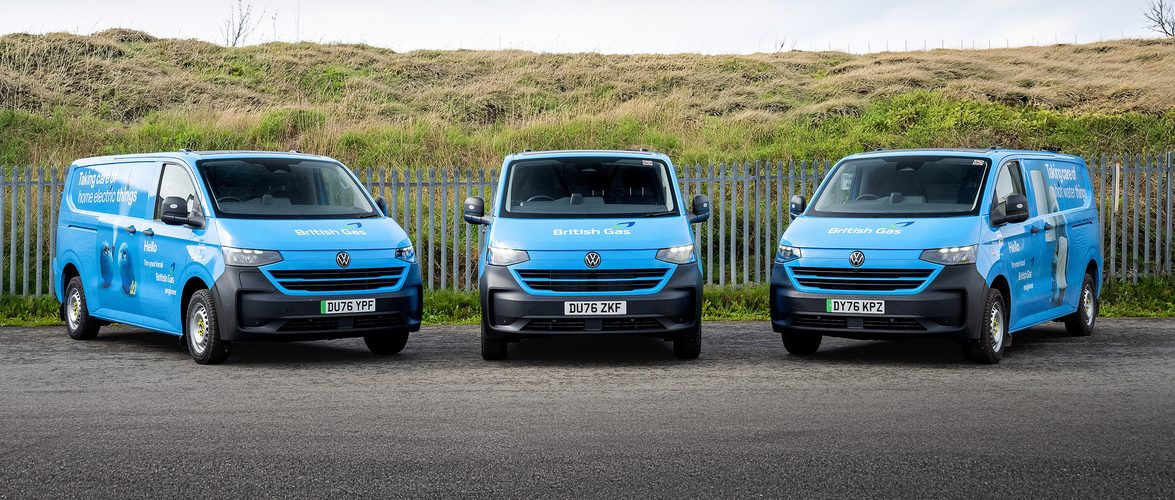
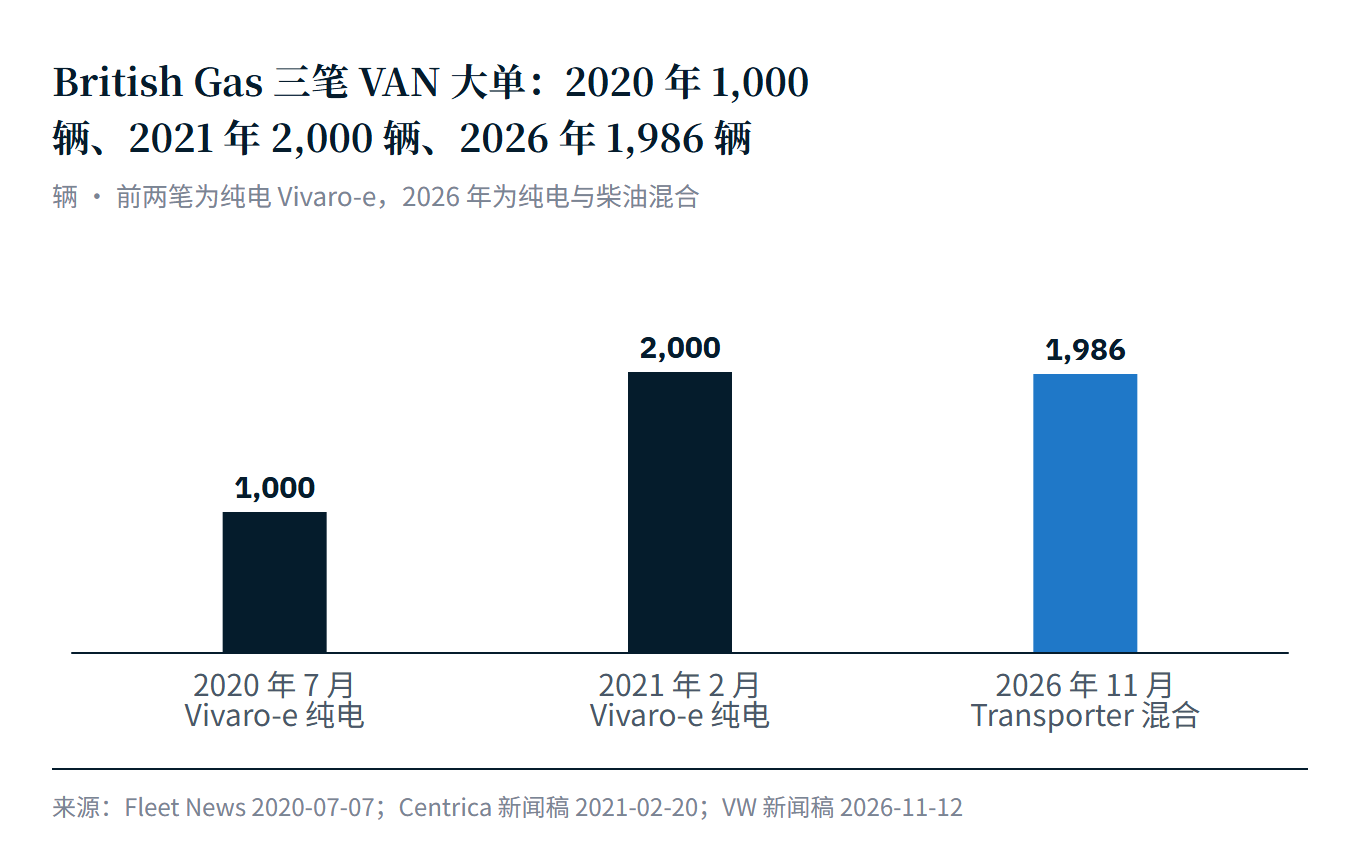
On Nov 12, Volkswagen Commercial Vehicles announced it will supply 1986 Transporters to UK energy services provider British Gas, in both battery-electric and diesel versions; the split was not disclosed. The first vehicles are already on the road, and the rest will be delivered by early 2027. British Gas announced in 2021 that it would stop buying combustion vehicles; parent company Centrica's 2025 sustainability report changed its 2030 van target from "an all zero-emission fleet" to "all new orders zero-emission". In this fleet, whose engineers take their vans home, the zero-emission share rose only from 29% to 33% in two years, held back by charging and downtime.
Order size and use
The vans are used by field engineers to install and repair boilers, heat pumps and chargers. British Gas has 8000 vans and said in 1 that 2500 new vehicles would join the fleet from 2026 to 2027; the 1986 vehicles equal about a quarter of the fleet and 80% of this renewal round. Centrica fleet operations director Simister said the vehicles were chosen for their reliability, adding that the e-Transporter supports electrification goals and the Transporter range as a whole provides "the flexibility we need".
Electrification targets revised three times
In 2019, Centrica pledged to fully electrify its fleet of about 12000 vehicles by 2030. In 2020 and 2021, British Gas ordered 3000 Vauxhall Vivaro-e vans in two batches, all battery-electric, and brought the deadline forward to 2025. Its 2023 annual report pushed the deadline back to 2030, explaining that not every engineer has off-street parking at home and that public charging has grown more slowly than expected. The zero-emission share of the van fleet was 29% in 2023, 32% in 2024 and 33% in 2025; for company cars, the share is 91%.
Limits on home charging
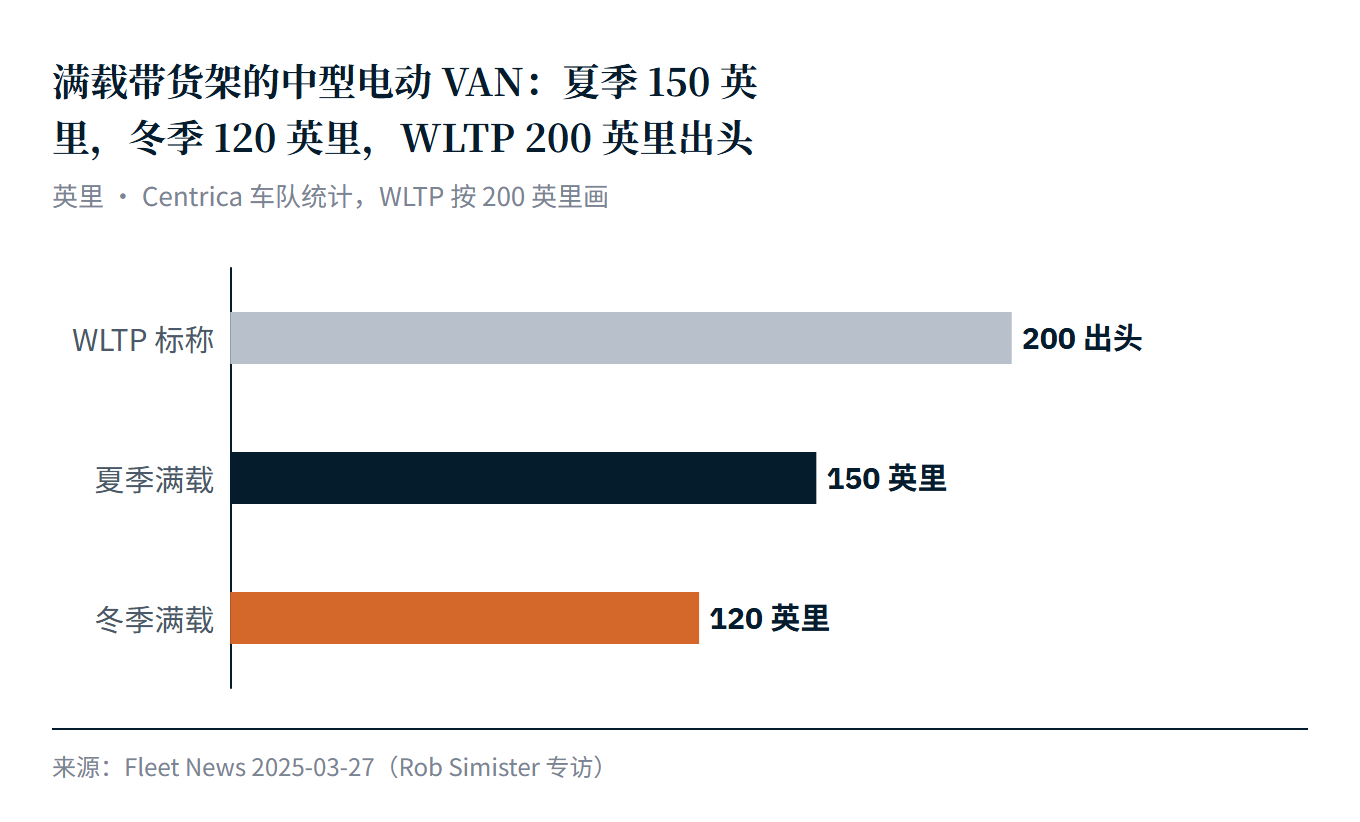
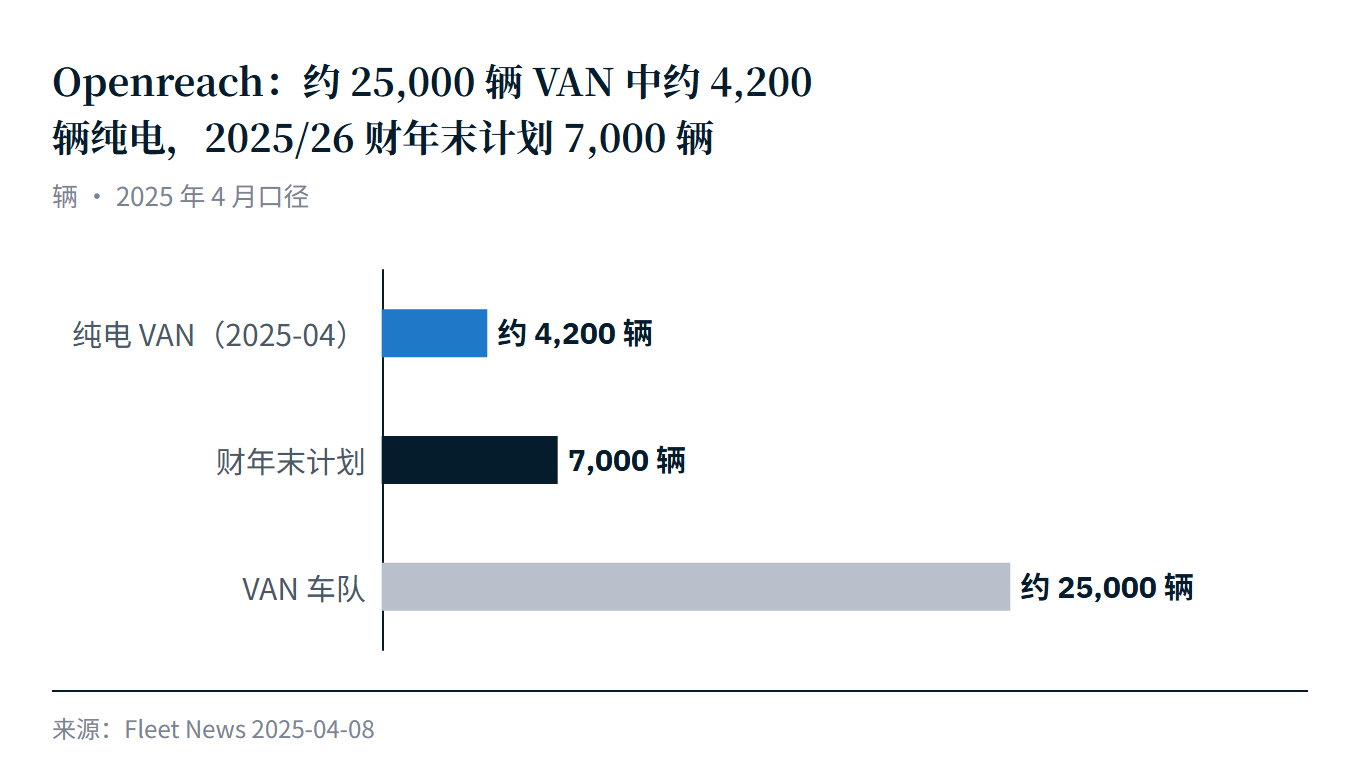
Centrica fleet operations director Simister said in month 3 last year that its mid-size electric vans in service, once fitted with racking and fully loaded, achieve 150 miles in summer and 120 miles (about 193 km) in winter. He ranked charging options in order of preference: home charging first, with total cost of ownership clearly below diesel; nearby charging on the driver's behalf close to diesel; and public rapid charging last, as each charge takes vehicles off the road for 40 minutes across the fleet, with utilisation losses far exceeding electricity costs. Openreach, part of BT, whose staff also take vans home, estimates that about 30% of its fleet can have home charging installed. The same electric van yields different costs depending on whether it can be charged at home.
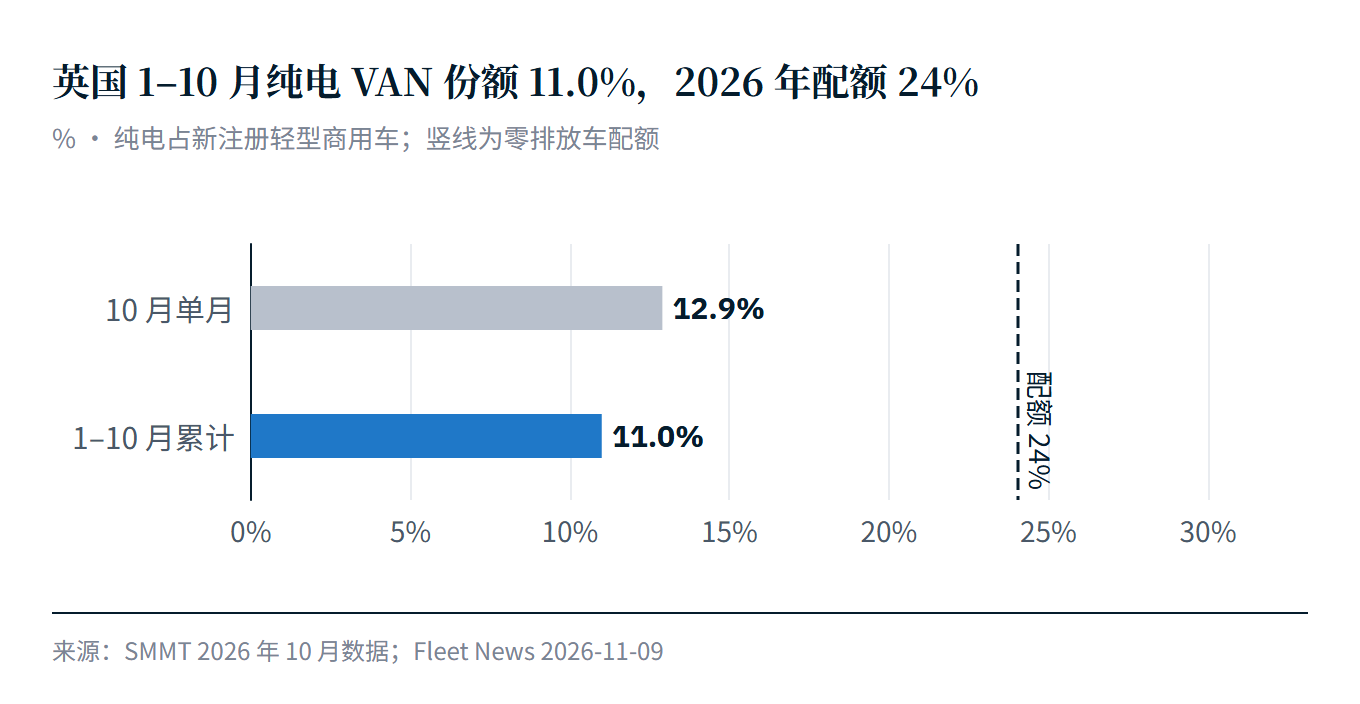
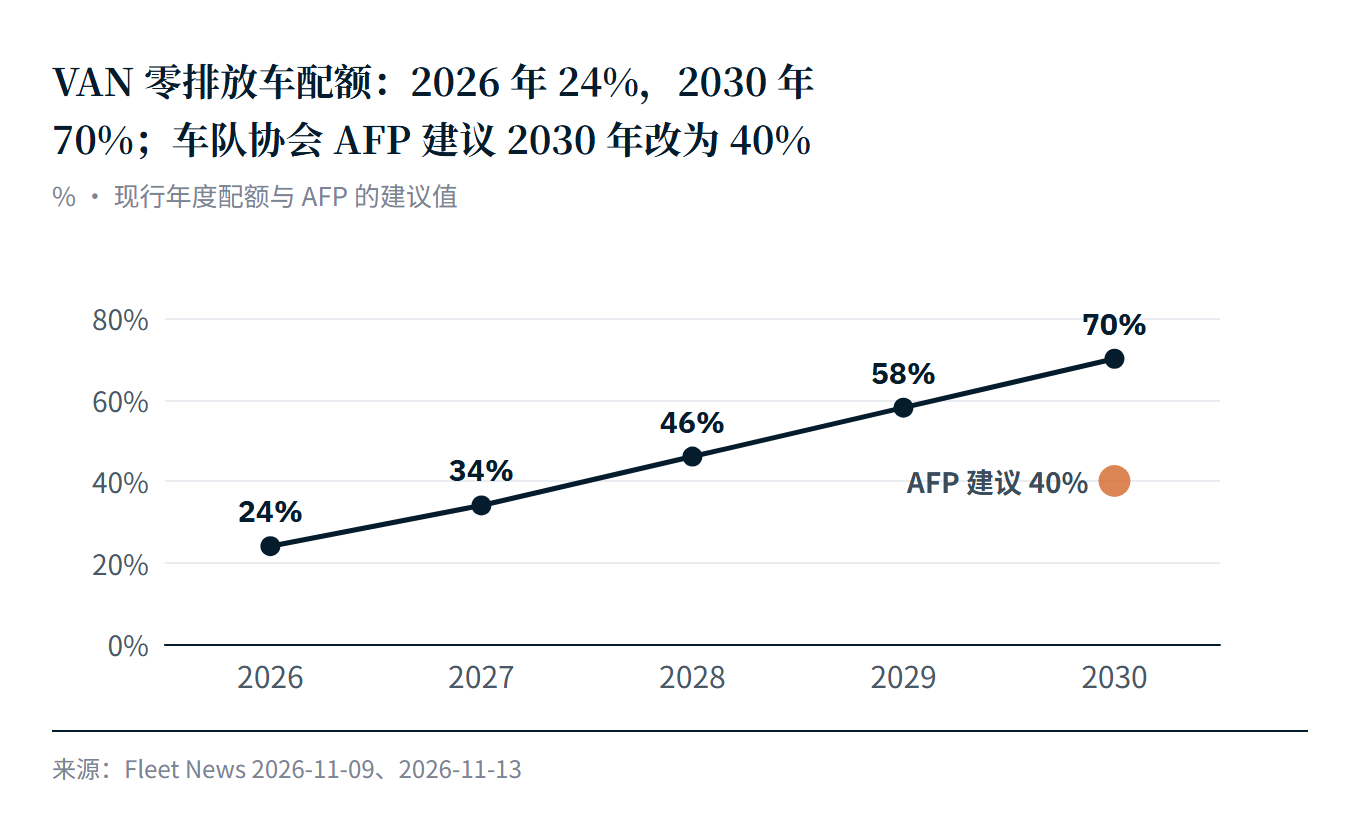
The UK's zero-emission mandate for vans this year is 24%; from month 1 to 10, BEV vans made up 11.0% of new registrations. To sell electric vans to these fleets, suppliers first need to know where the vehicles park overnight and where they will charge.
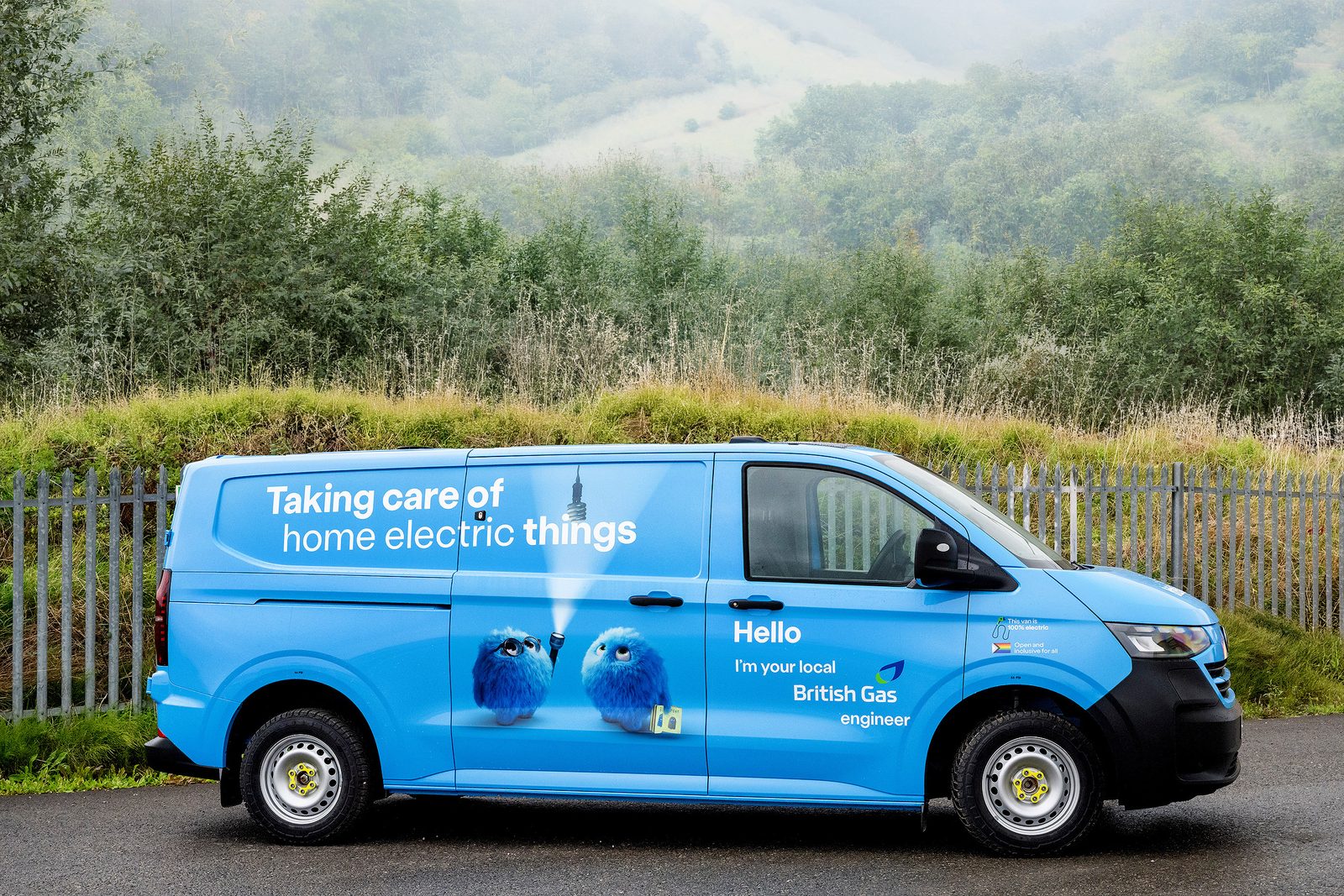
Image source: Volkswagen Commercial Vehicles.
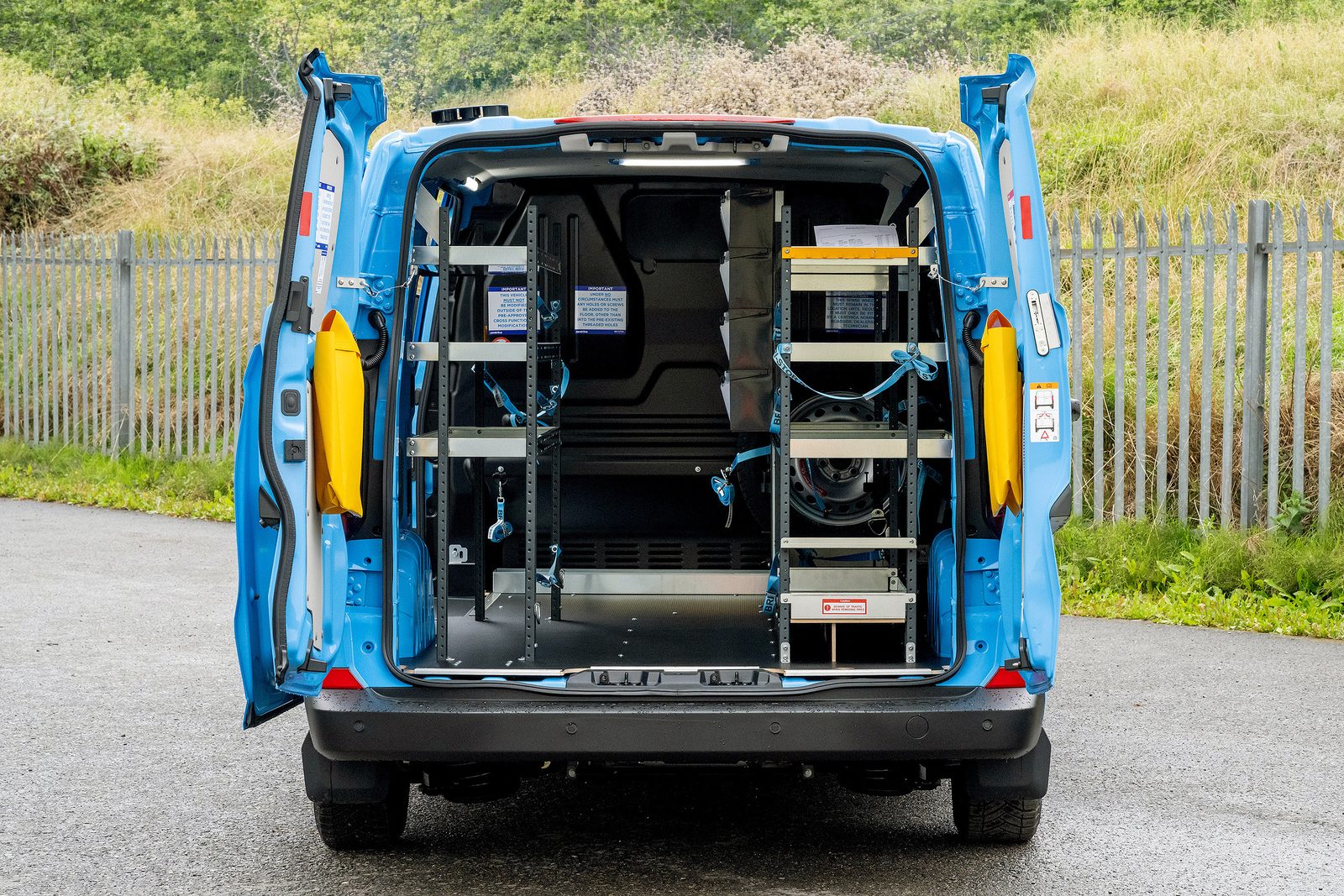
Image source: Volkswagen Commercial Vehicles.
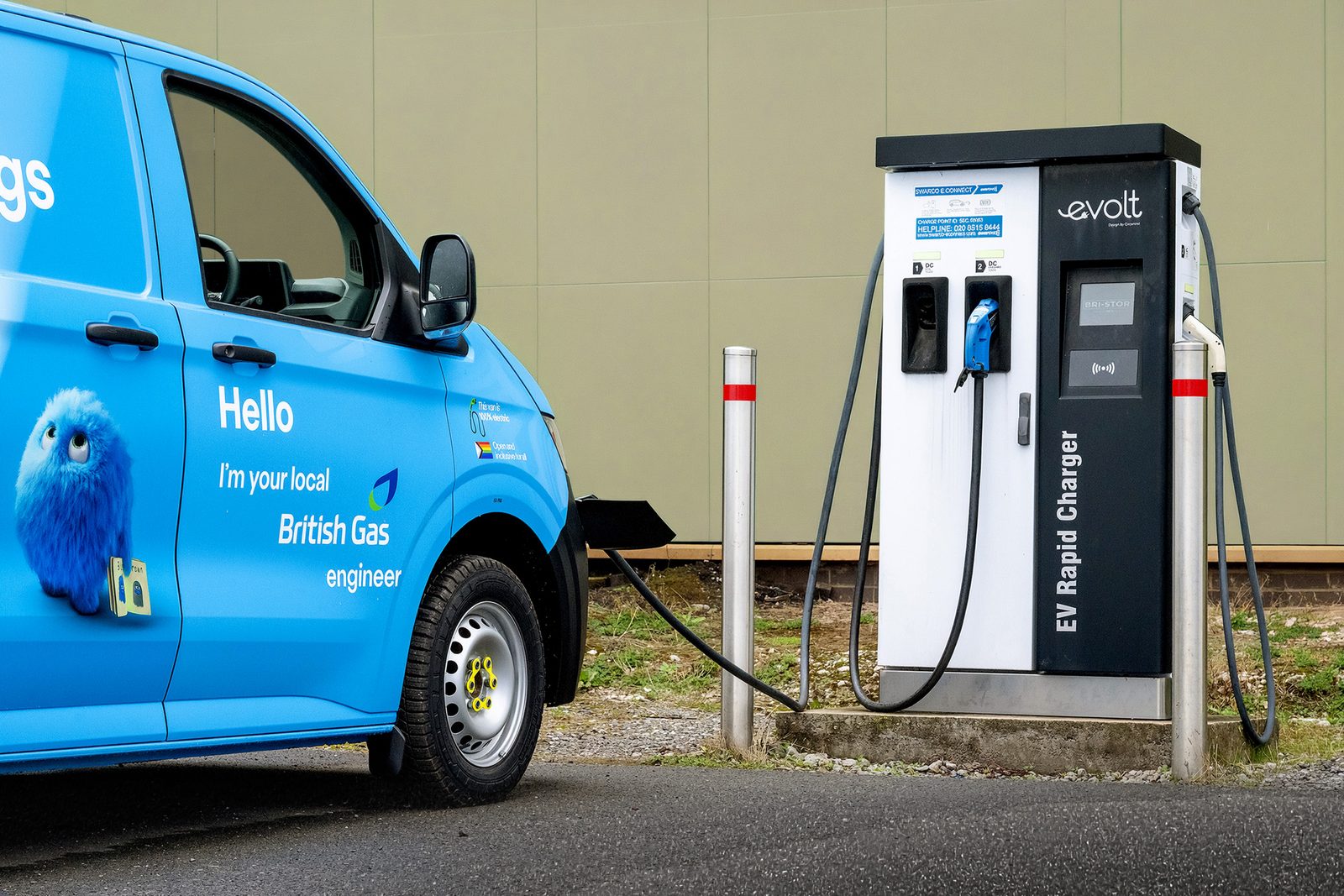
Image source: Volkswagen Commercial Vehicles.
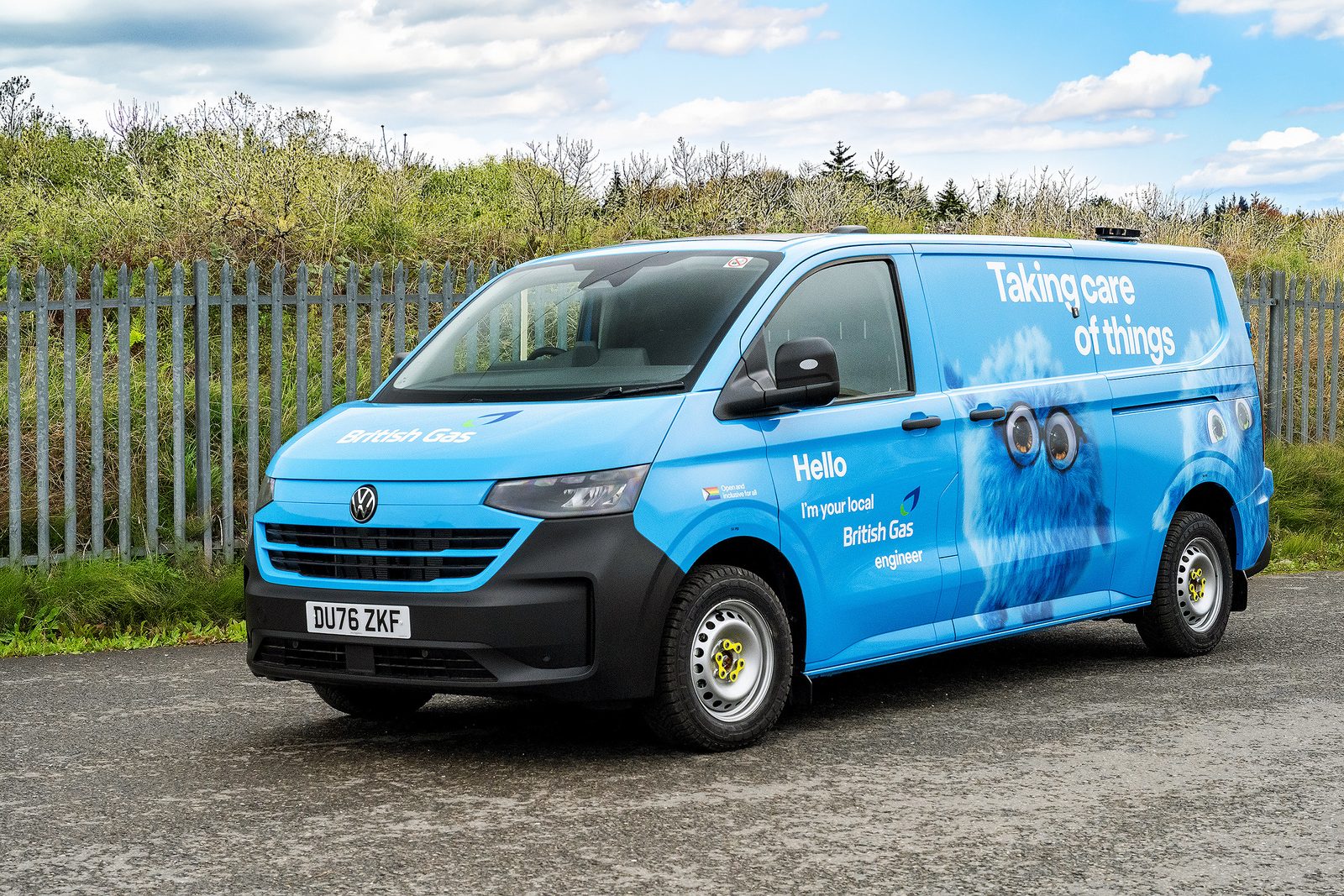
Image source: Volkswagen Commercial Vehicles.
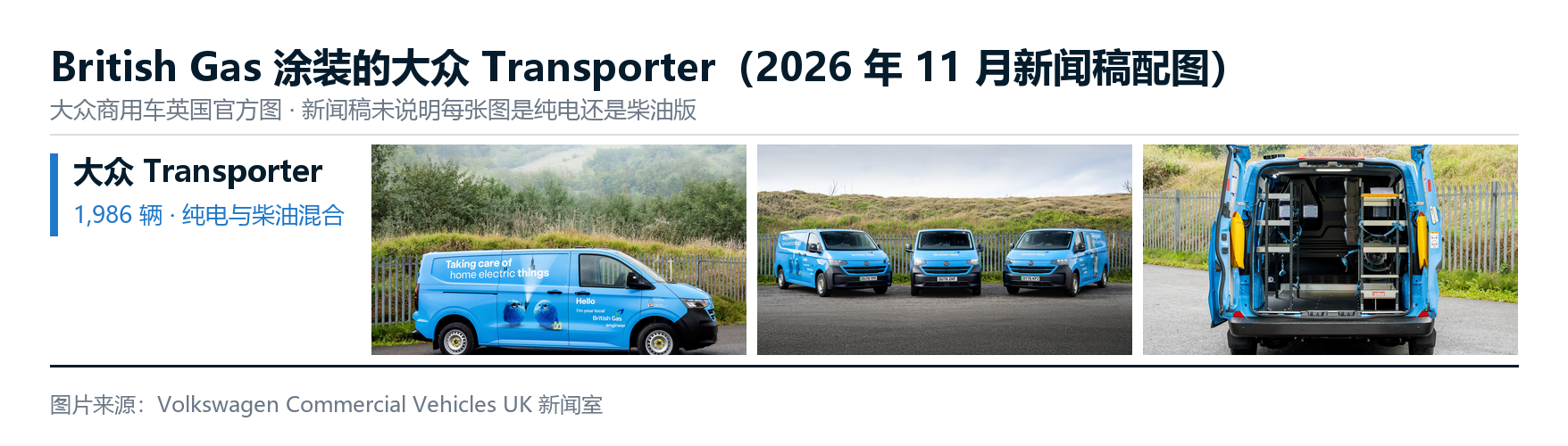
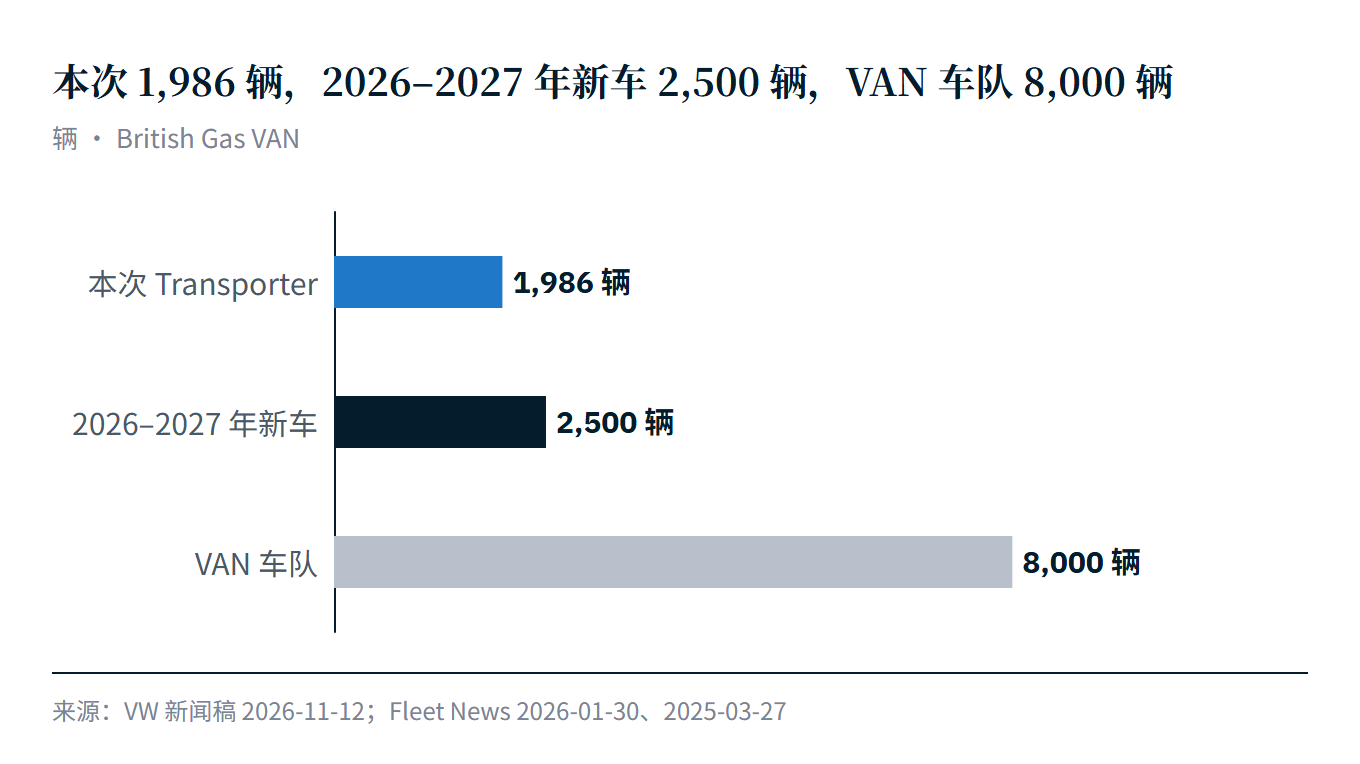
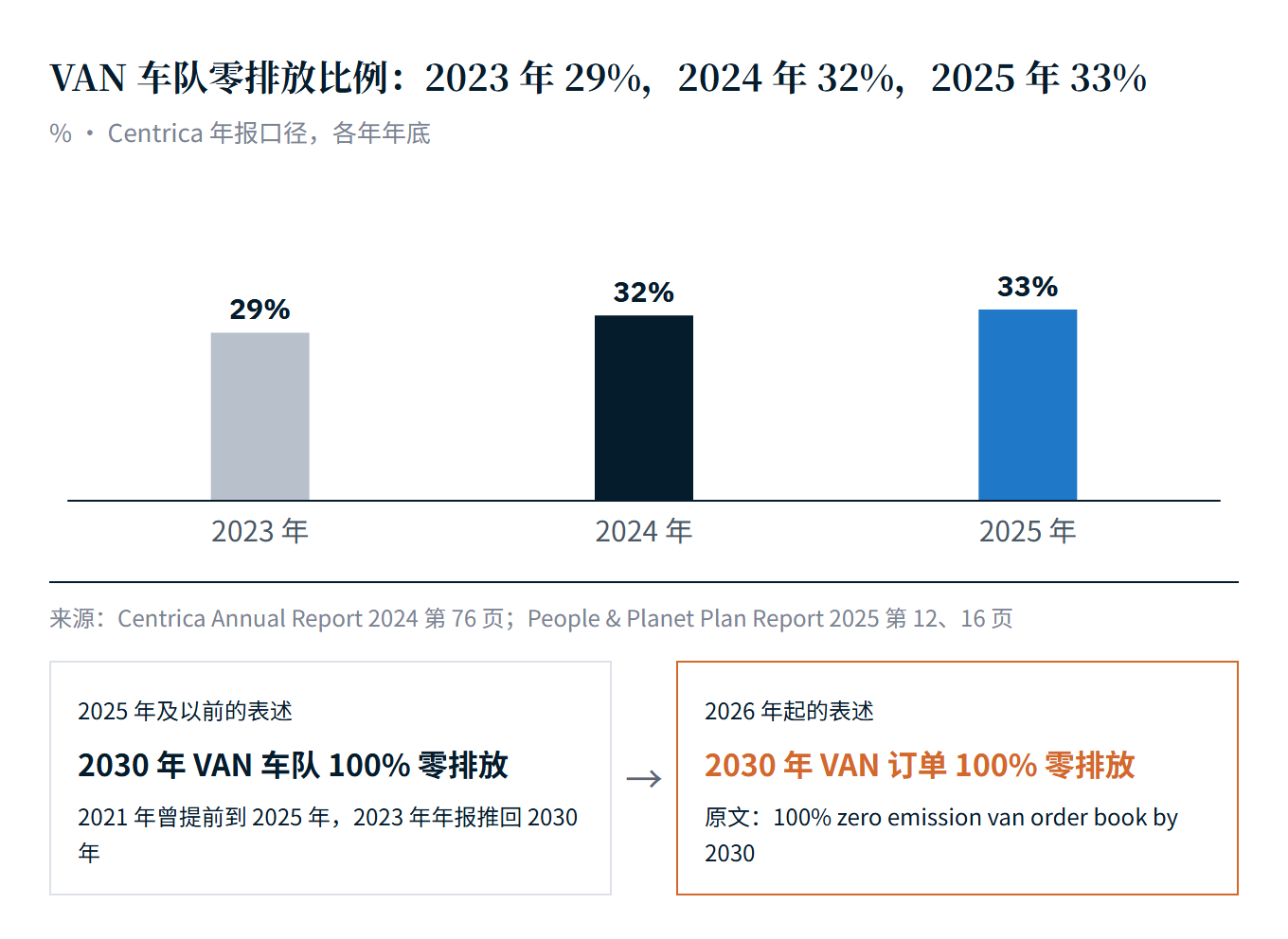
Source: Chart by AutoMusic based on the public sources listed in the article; first published on the AutoMusic WeChat account.