European heavy trucks: Euro 7 delayed, CO2 rules linked to charging points
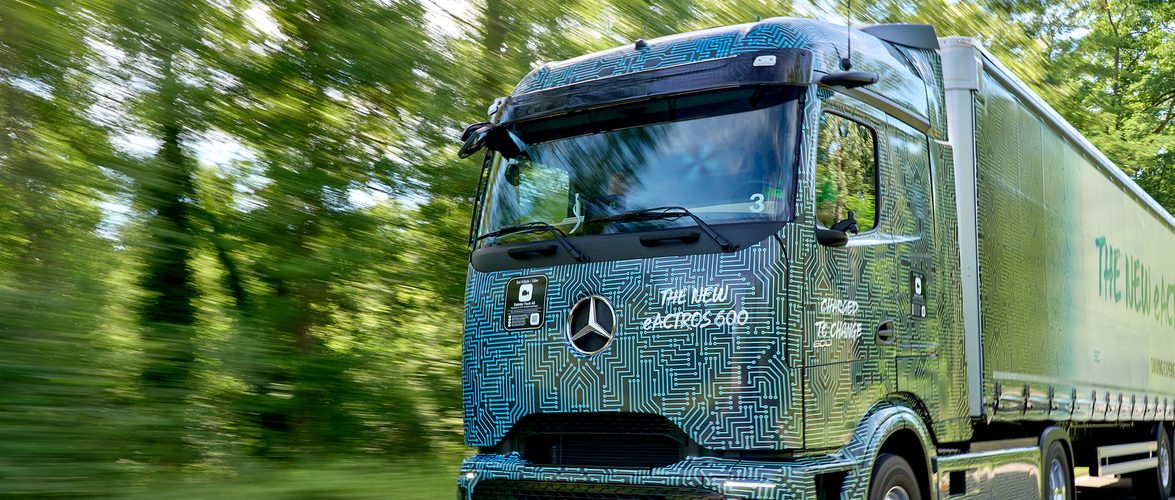
On Oct 20, the European Automobile Manufacturers' Association (ACEA) wrote to Members of the European Parliament asking for the application date of Euro 7 for heavy-duty vehicles to be pushed back by two years, and the brake emission requirements by five years. Daimler Truck board member Puchert then argued in an interview with Welt am Sonntag that CO₂ targets for heavy trucks should be tied to the actual build-out of charging infrastructure. Neither request seeks to change the limits themselves. What they want changed are the deadlines: manufacturers want compliance deadlines to adjust to external conditions beyond their control.
Euro 7 timeline
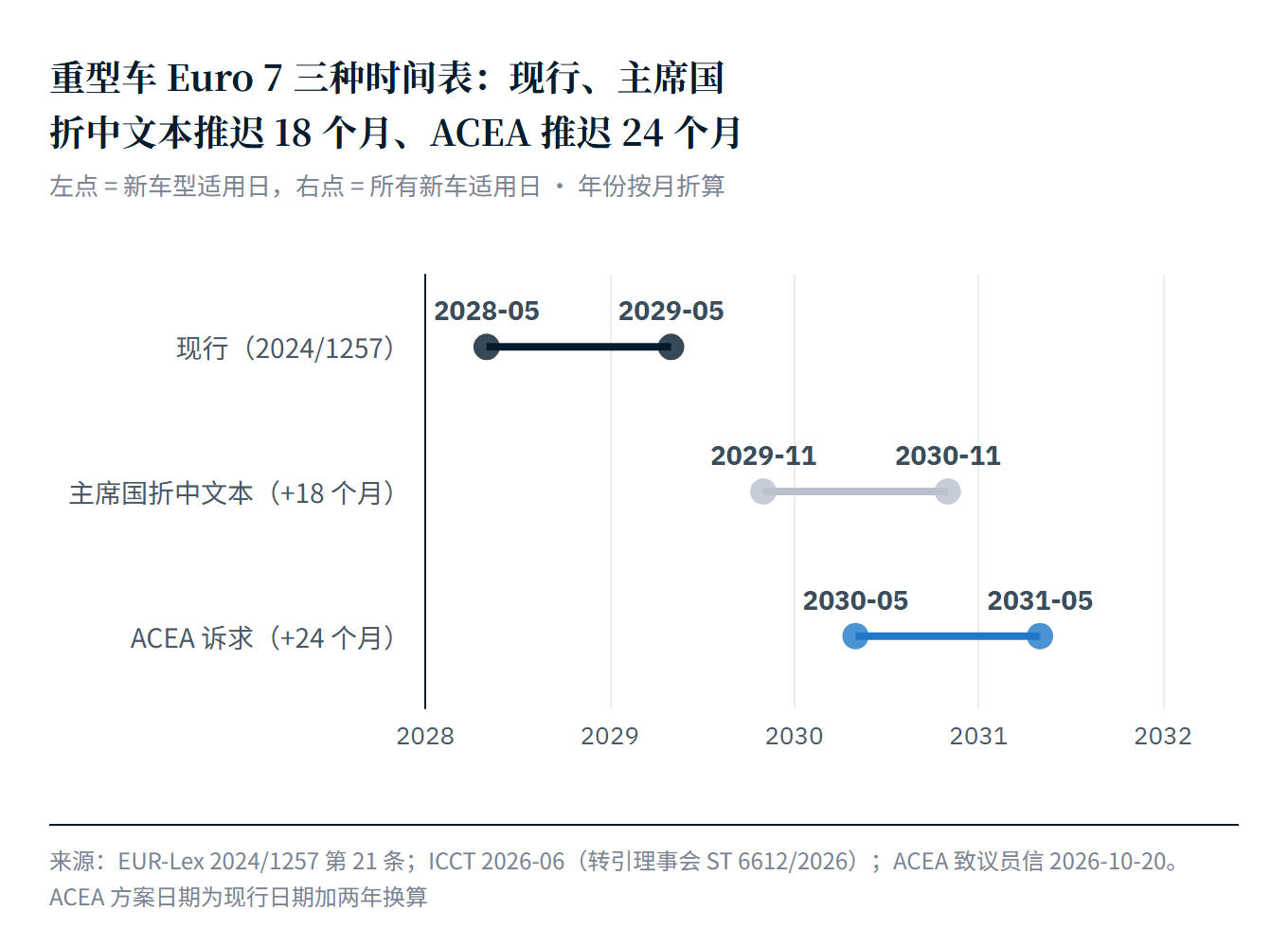
Under EU Regulation 2024/1257, new heavy-duty vehicle types must meet Euro 7 from May 29, 2028, and all new vehicles from May 29, 2029; a two-year delay would push these to month 5 of 2030 and 2031. ACEA's rationale is that the test method is not settled: the dedicated brake-particle test cycle for heavy-duty vehicles has been delayed, and how component test-bench results translate into whole-vehicle compliance values has not been validated.
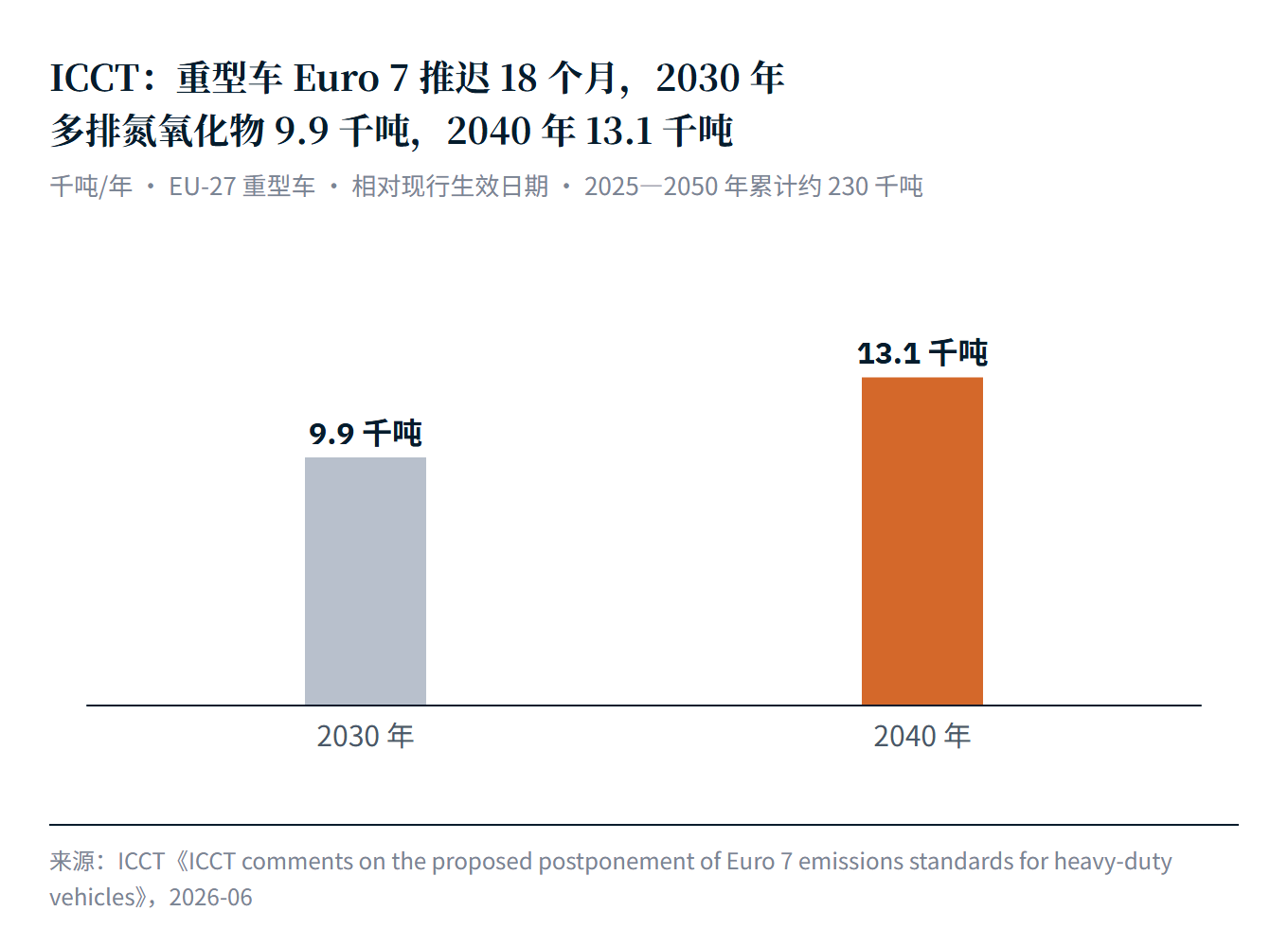
The Council presidency's February compromise text proposed an 18-month delay. ICCT estimates this would add about 230,000 tonnes of NOx emissions from EU heavy-duty vehicles over 2025–2050. Euro VI has applied to all new vehicles since the end of 2013; if Euro 7 were delayed by another two years, the gap between the two standards would exceed 17 years.
If the postponement is approved, new Euro VI diesel vehicles could be registered for two more years, and fleets would not need to switch their purchasing before May 2029.
CO2 targets and charging points
Puchert said "we do not question the targets", but infrastructure development is "clearly slower than expected", and it is unfair to hold only manufacturers responsible when the conditions are not in place. At the IAA Transportation show in Hanover in month 9, the CEOs of seven manufacturers including Daimler Truck and Volvo jointly called for the 2030 CO₂ compliance deadline to be postponed by three years.
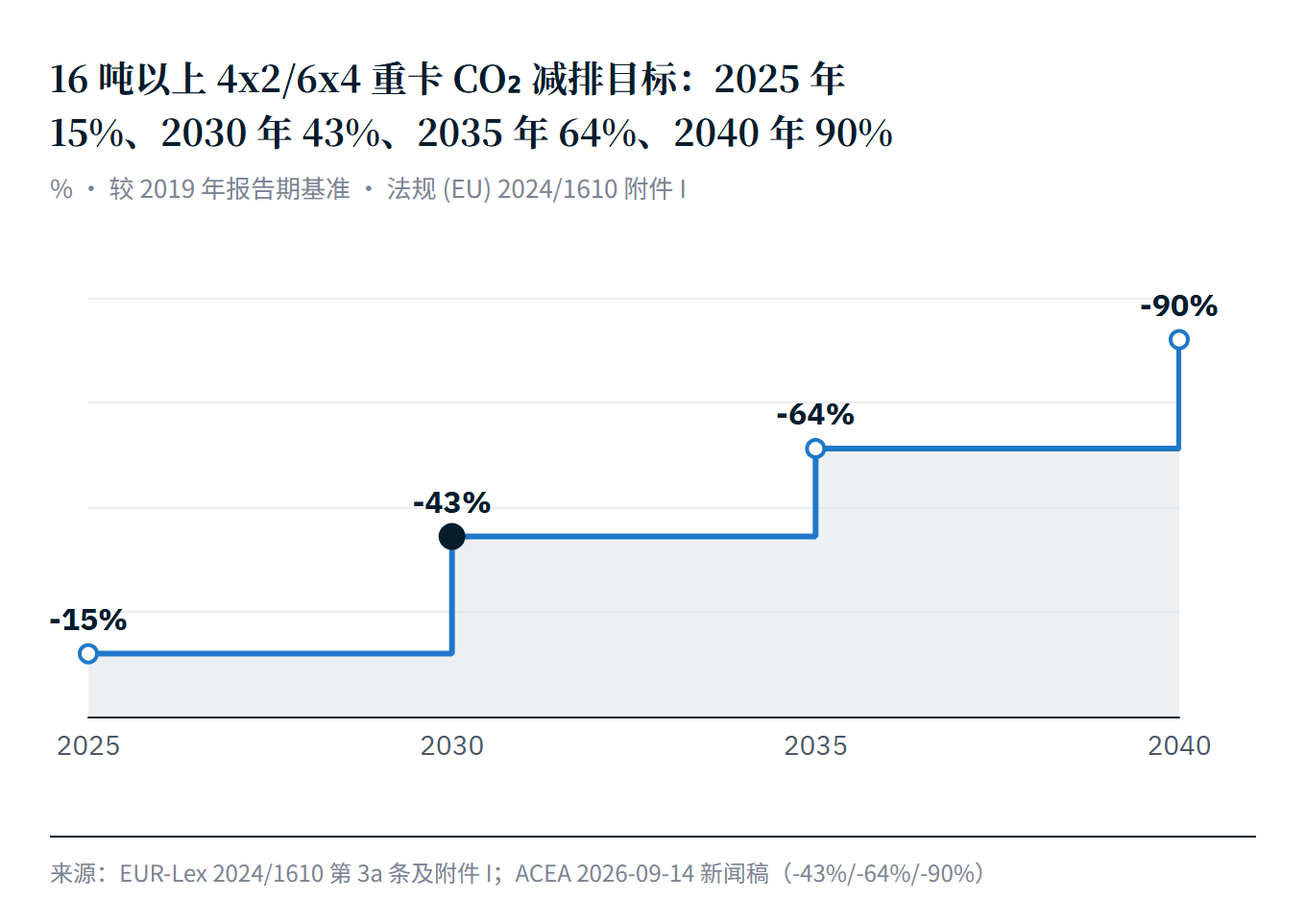
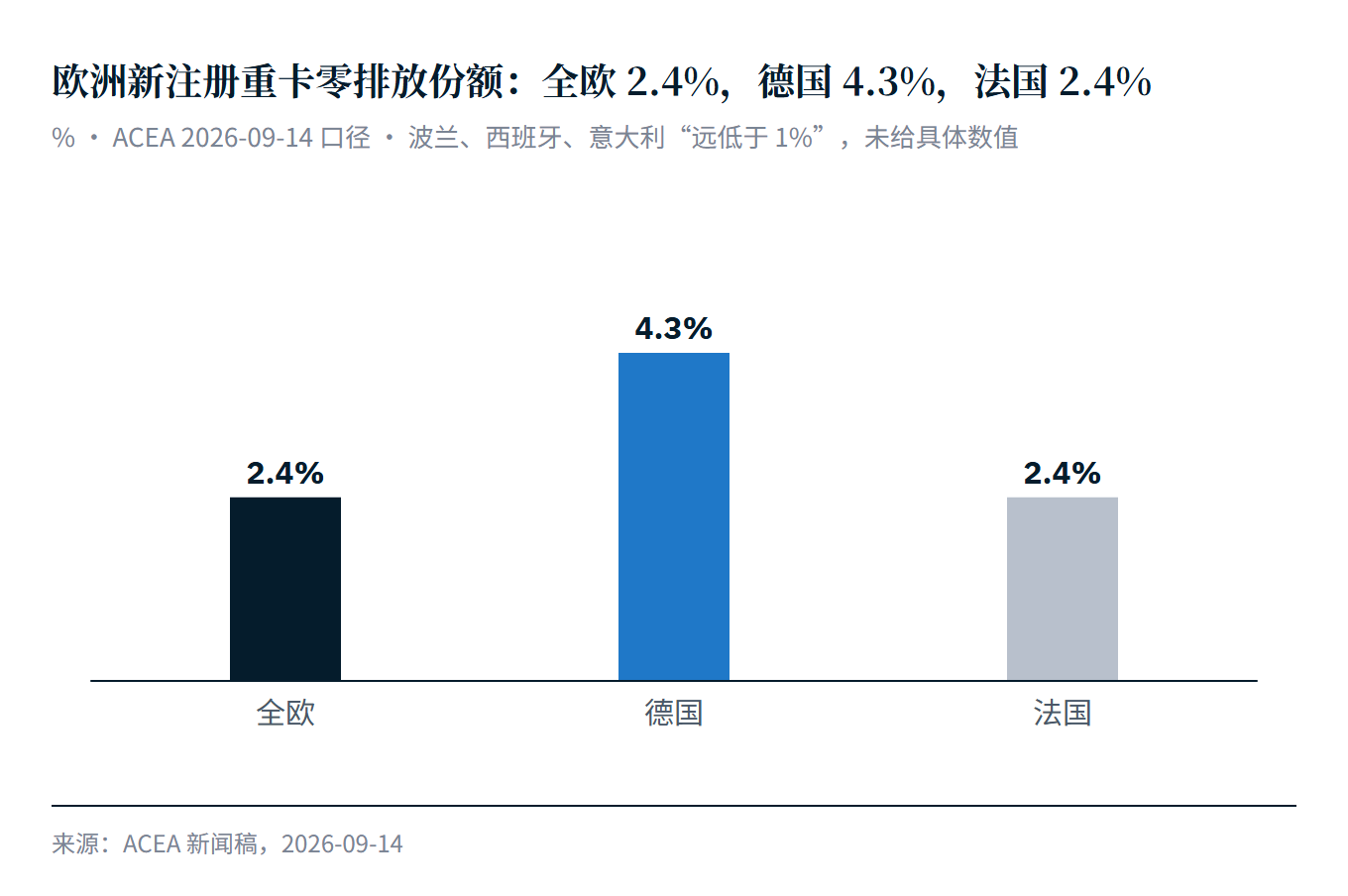
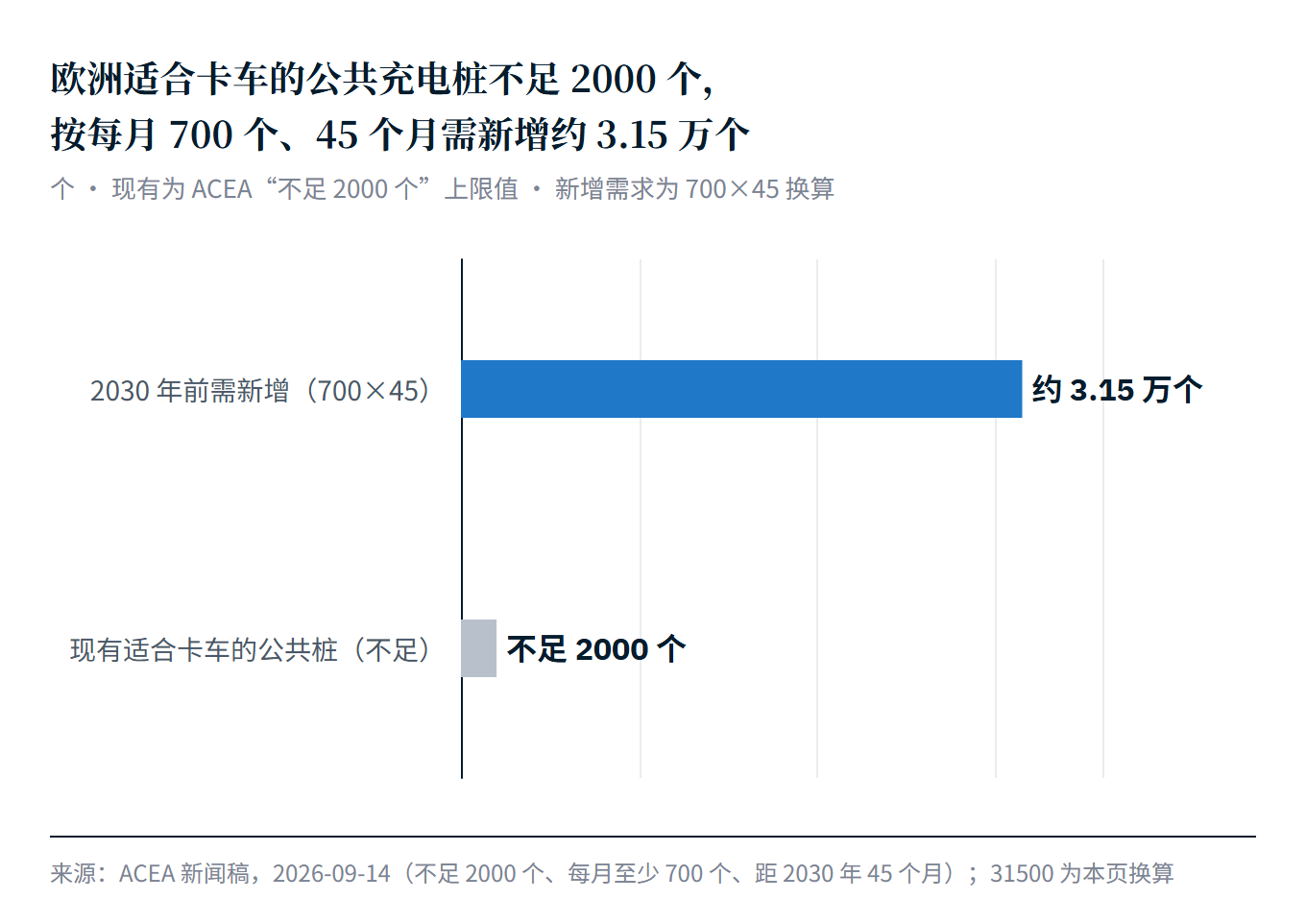
Under Regulation 2024/1610, heavy trucks over 16 tonnes must cut emissions 43% from 2019 levels by 2030. According to ACEA, zero-emission vehicles account for only 2.4% of new heavy truck registrations in Europe, and there are fewer than 2,000 truck-suitable public chargers. At least 700 must be added per month, totaling about 31,500 over the 45 months to 2030. ACEA estimates that a 3-percentage-point shortfall in 2030 would mean fines of about EUR 2.2 billion.
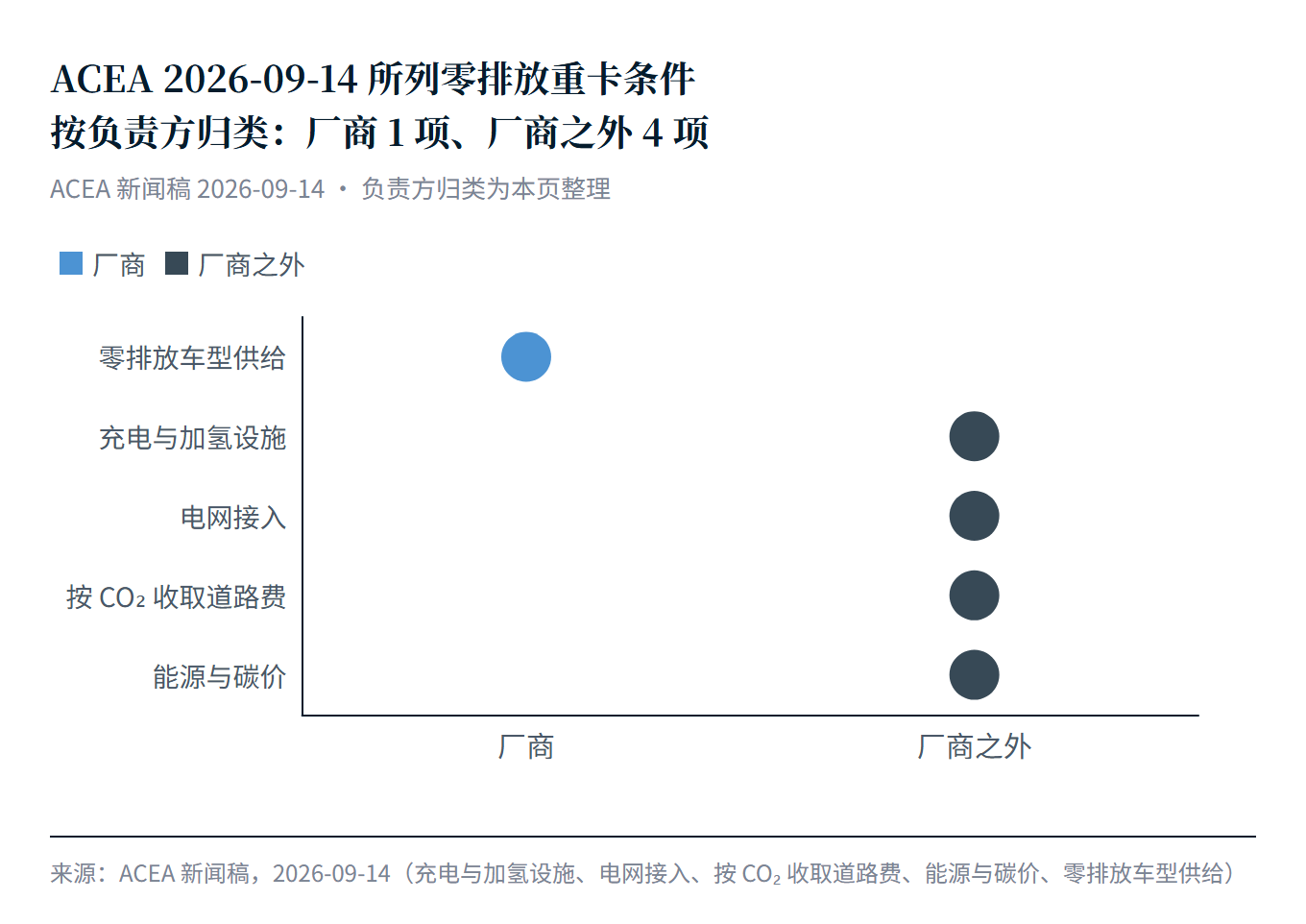
By tying penalties to the pace of charger rollout, manufacturers want national governments and energy companies, which are responsible for building chargers and grid connections, to share the delivery burden.
2027 review
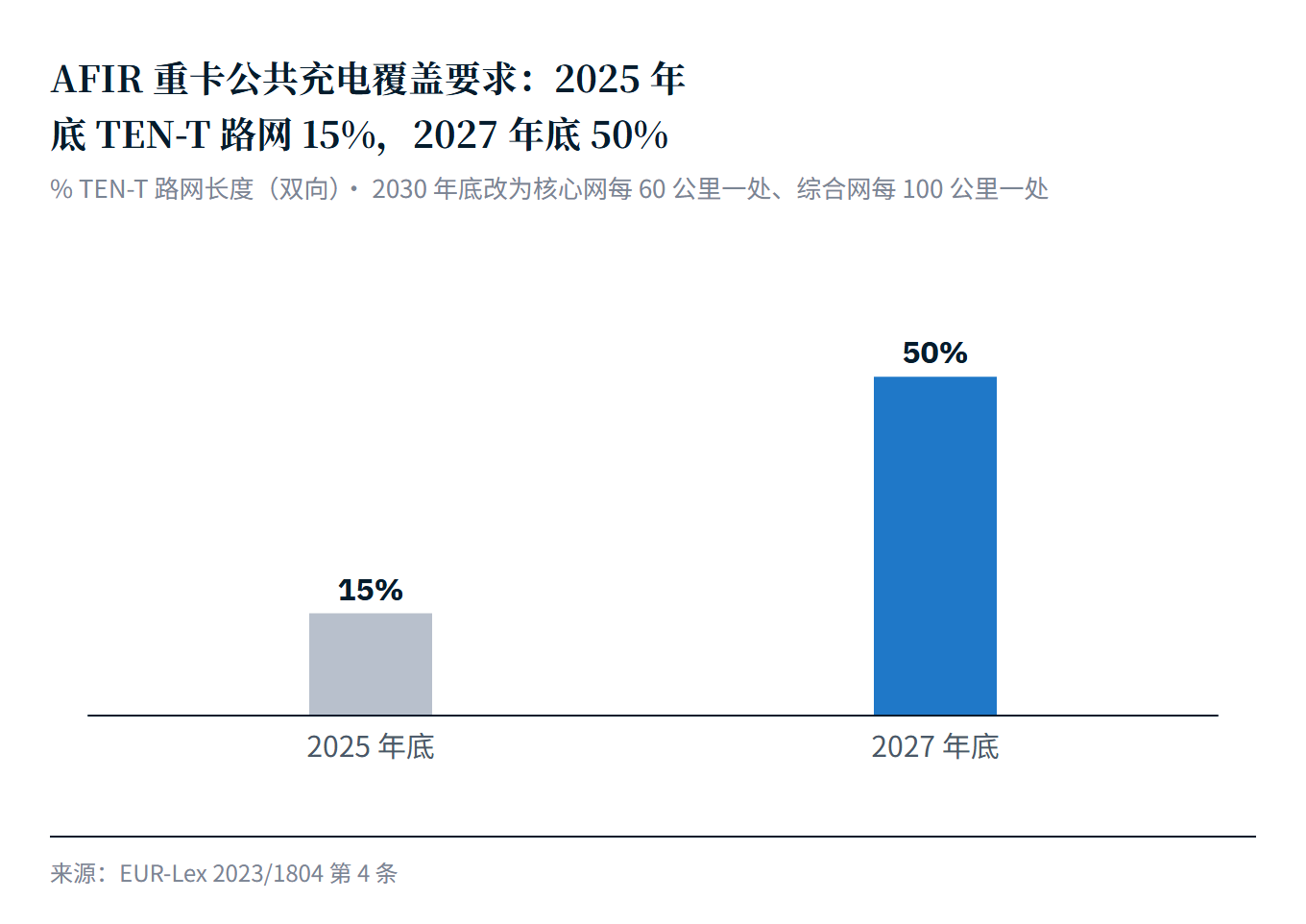
The existing framework already leaves room for such a link. Regulation 2024/1610 requires the Commission to complete a review by the end of 2027, assessing zero-emission heavy truck registrations and progress on heavy truck charging infrastructure. In 3 this year, the EU already relaxed the carbon credit calculation for 2025–2029, citing slow charging build-out along motorways, while leaving the targets unchanged. AFIR also requires heavy truck charging stations to cover 50% of the length of the TEN-T network by the end of 2027.
Both deadlines fall at the end of 2027, so the review of charging progress can draw directly on whether AFIR's interim milestones have been met.
Both demands remain industry requests for now, and the Euro 7 amendment is still under negotiation in the Council. For Chinese electric heavy-truck makers preparing to enter Europe, a postponed CO₂ deadline would ease the electrification compliance pressure on their European rivals, and orders would depend more on charging conditions along routes and operating costs.
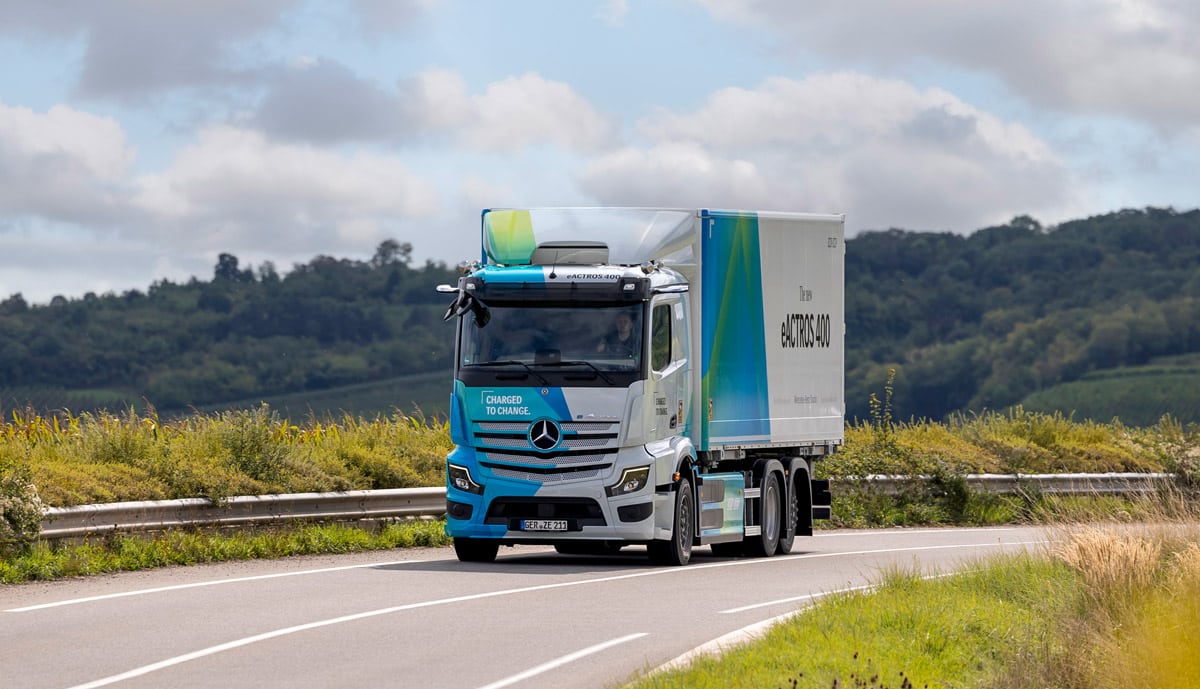
Image: Daimler Truck.
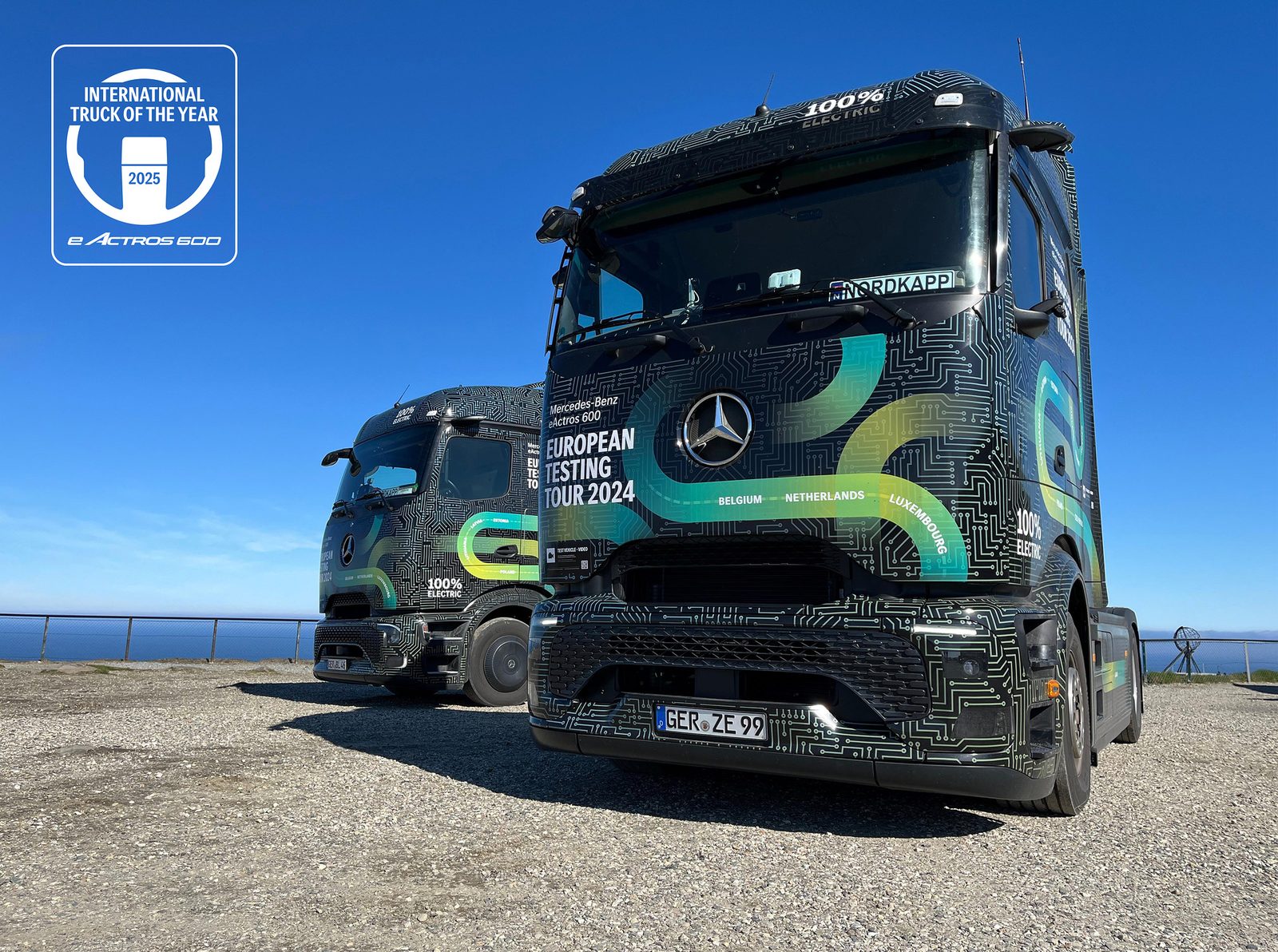
Image: Daimler Truck.
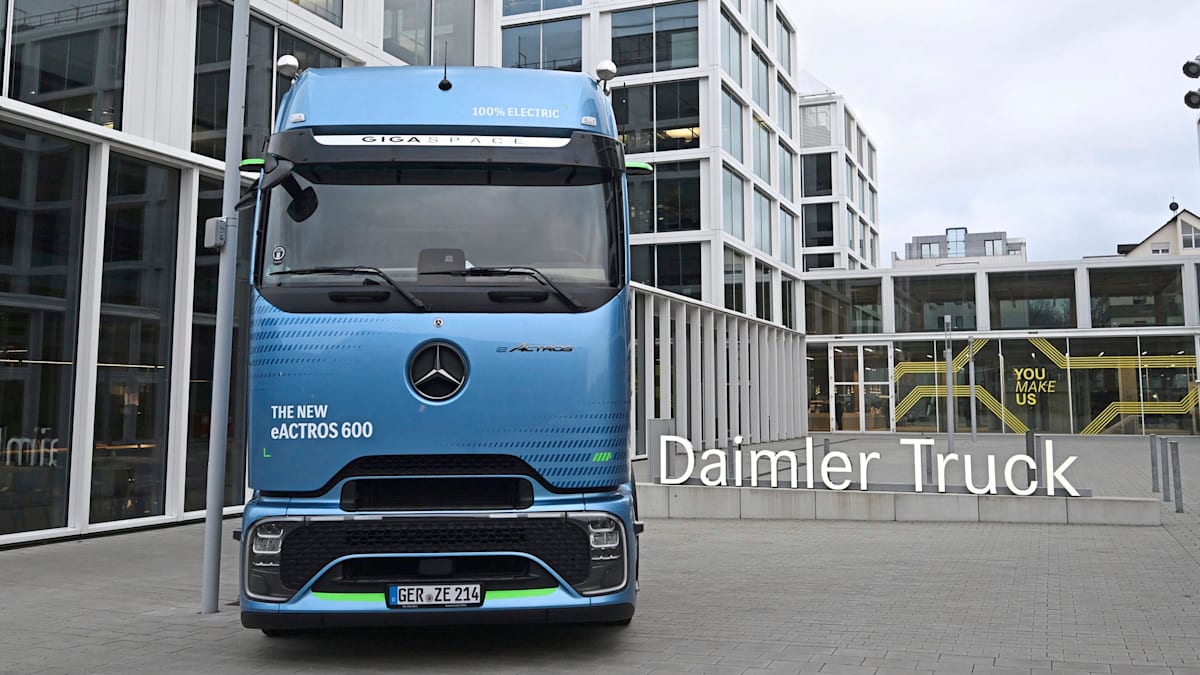
Source: Chart by AutoMusic based on the public sources listed in the article; first published on the AutoMusic WeChat account.