SPIRIT-E project ends: MAN eTGX bidirectional charging feeds back up to 350 kW
MAN says a MAN eTGX in the SPIRIT-E project fed power back to the depot grid and the public grid via a bidirectional DC charging station at up to 350 kW.
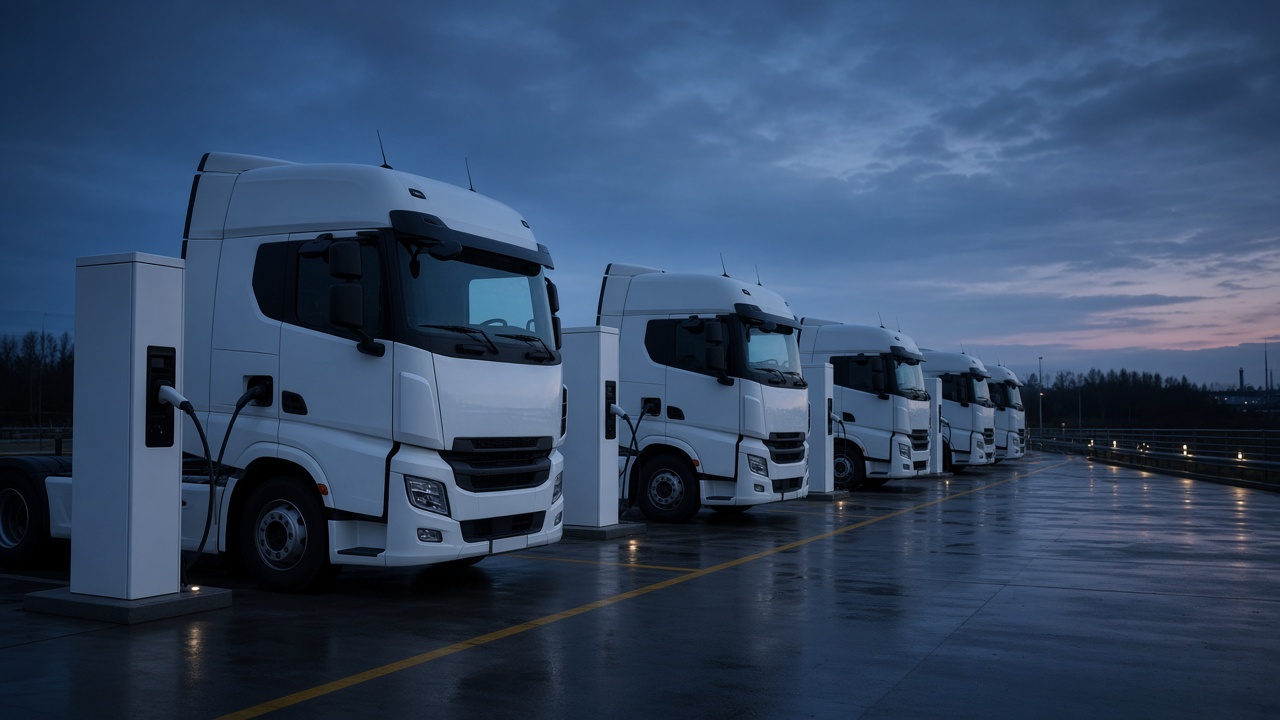
MAN (MAN Truck & Bus) said in a press release on Oct 30, 2026 that SPIRIT-E, a research project on bidirectional charging of electric heavy trucks in which it took part, has concluded. In the project, a MAN eTGX fed power back to the depot grid and the public grid at up to 350 kW via a bidirectional DC charging station.
The project is led by the Technical University of Munich (TUM) with eight partners, and a real-world test site has been set up at Regensburg logistics company Spedition Schmid. According to the press release, the test vehicle, a MAN eTGX, has 480 kWh of usable energy, and communication between the vehicle and charging infrastructure uses the ISO 15118-20 standard. The trial covers three use cases: vehicle-to-site (V2S), vehicle-to-grid (V2G) and using a heavy truck's battery to charge other vehicles (V2V).
On power trading, the project simulated buying electricity when prices were low and selling when high in a test environment from software provider PowerBot, and tested, via European platform EQUIGY, how electric heavy trucks can help grid operators relieve local congestion.
On economics, the press release says internal project calculations show smart charging cuts energy costs by about 10% on average, and by up to 20% under the best conditions. The gains come mainly from V2S and V2V, and the feature suits electric heavy trucks with fixed depot dwell times and annual mileage below 100,000 km. Georg Grüneißl, head of product strategy at MAN, said the company is working to bring the feature into series-production models and is developing accompanying consulting services for customers.
Scope: Germany; SPIRIT-E project, Aug 2023 to Oct 2026; MAN eTGX electric heavy trucks and SBRS mobile and stationary charging systems. Metrics: trial feed-back power, usable vehicle energy, energy cost reduction as estimated internally by the project.
| Item | Published details |
|---|---|
| Feedback power | Up to 350 kW via bidirectional DC charging stations |
| Usable vehicle battery capacity | 480 kWh |
| Energy cost reduction | About 10% on average, up to 20% under optimal conditions |
| Communication standard | ISO 15118-20 |
| Start of mass production | Not disclosed |
| Project funding | Not disclosed |
Reading notes: Published by MAN on Oct 30, 2026, the same day the project results were announced. The baseline for the cost reduction is energy cost without smart charging; the figures come from internal project estimates, not actual fleet operating data, and there is no comparison period. The press release states that benefits depend on conditions including operating mileage, parking time, battery capacity, electricity prices and grid fees, on-site solar PV and available connection capacity. The project was funded by Germany's Federal Ministry for Economic Affairs and Energy (BMWE) and managed by the DLR Project Management Agency.
The press release attributes the main obstacles to market rollout to electricity trading standards, digital connectivity between the logistics and energy sectors, and the expertise of fleet operators, rather than vehicle and charger technology. It cannot be inferred from this when bidirectional charging will reach production models; MAN has not given a timeline.
Source: MAN Truck & Bus Newsroom.