European 40-tonne electric heavy truck completes battery-swap operational validation
Germany has completed live testing of a key project: eHaul, Europe's first automated battery-swap station for electric trucks, located in Lübbenau, Germany. Key figures: the project's fund…
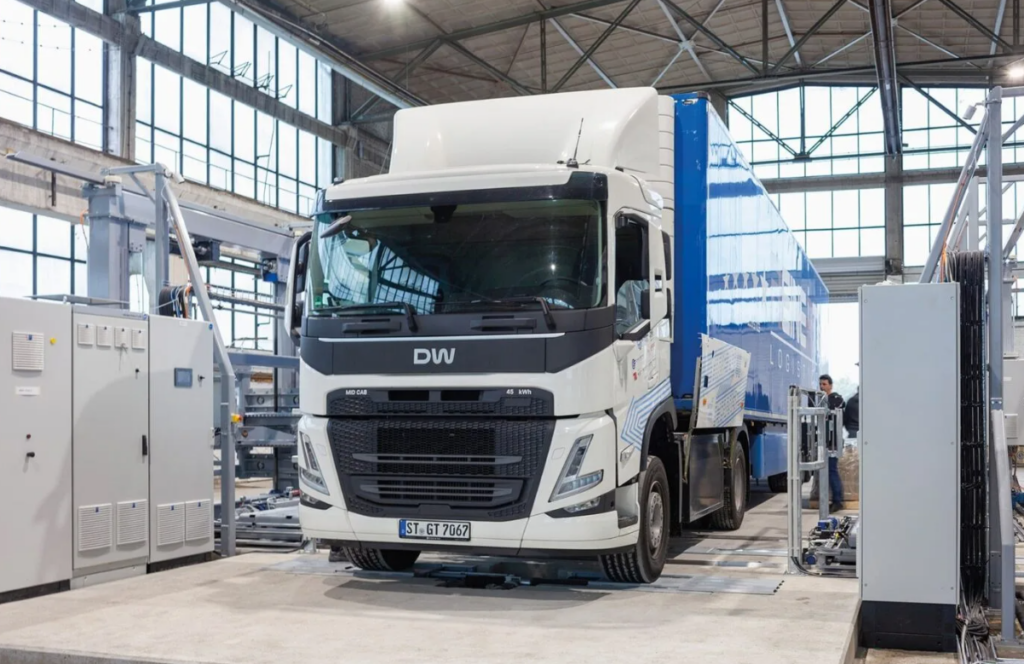
Germany has completed a key field test: the eHaul project, Europe's first automated battery-swapping station for electric trucks, located in Lübbenau, Germany.
Key figures
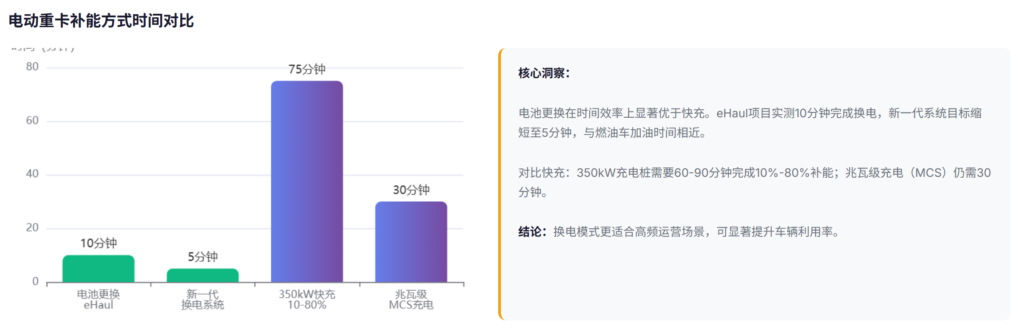
The project has €5 million in funding from Germany's BMWK. A battery swap currently takes 10 minutes, with a target of under 5 minutes. The test route runs from Berlin to Dresden.
**The core value of swapping is predictability
**Battery swapping is not just about speed; its real value is predictability. A 40-tonne truck with a 600 kWh battery still needs 1.5 hours even on a 350 kW ultra-fast charger. For long-haul transport that is an unacceptable time cost, dragging down driver working hours, vehicle utilisation and delivery times.
A swap station is roughly the size of a large garage. It can balance grid load by slow-charging at low power and then deliver swaps intensively at peak times. Fleets can calculate swap times, plan routes and build in buffers in advance, without worrying about uncontrollable factors such as charger queues, breakdowns or power derating.
For the logistics industry, predictability matters more than technical sophistication. It means swap stations can become fixed, reliable points in fleet operations, much like "filling stations".
**Europe is catching up on standardisation
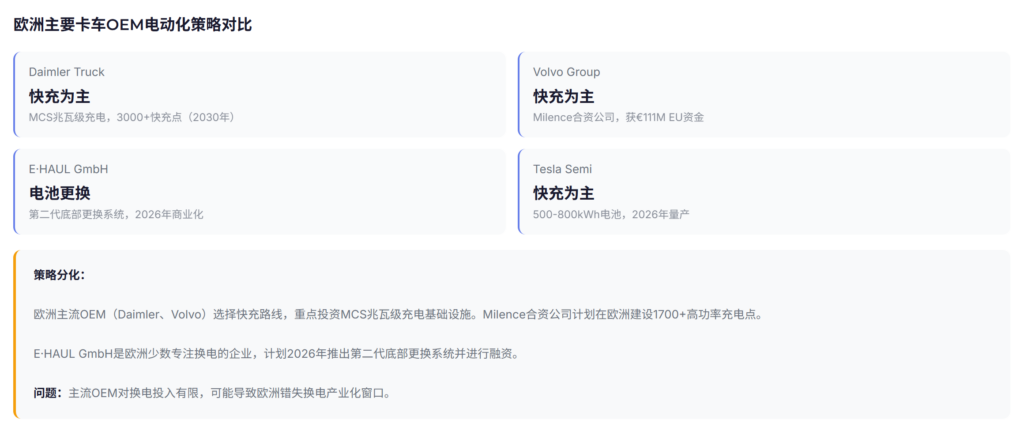
**The UniSwapHD project is drafting a DIN standard for truck battery swapping, with the DIN SPEC 91533 specification expected in Q1 2026. A key detail behind the standard is that Germany's DIN is working with companies including China's NIO to develop it. Europe lags in swap standardisation and needs to draw on China's experience.
E·HAUL's managing director believes the standardisation process is crucial for German and European industry, especially given that battery swapping is already widely used in China. If Europe cannot establish its own standard, future truck swap networks may be forced to adopt Chinese standards, weakening Europe's influence in the EV value chain.
**A clear path to commercialisation, but a tight window
**E·HAUL GmbH (a spin-off of TU Berlin) plans to launch its second-generation swap system and close its first funding round in 2026. The new system will switch from side swapping to underbody swapping, improving speed, reliability and compatibility. The policy window is already open: electric trucks in Germany remain exempt from tolls in 2026, which directly improves the economics of battery swapping. Future swap stations will be deployed strategically along motorways and at logistics hubs to provide dense coverage at key nodes.
**The global influence of Chinese battery swapping
**33% of newly registered electric trucks in China use battery swapping, meaning swapping has moved from "pilot" to "mainstream option" there. The standardisation experience of Chinese companies such as NIO is being drawn on by European bodies like DIN. China is exporting not only products but also standards and technology systems.
For European OEMs, this leaves two options: move quickly with the European standard and launch swappable electric trucks compliant with DIN SPEC 9733, or accept Chinese standards and work with Chinese supply chains to cut costs.