Analysis: Changan accelerates into Europe with three brands and eight models
Changan is raising Europe from one overseas market among many to one of the core battlegrounds of its international strategy. Recent public information shows that over the next three years, Changan plans to…
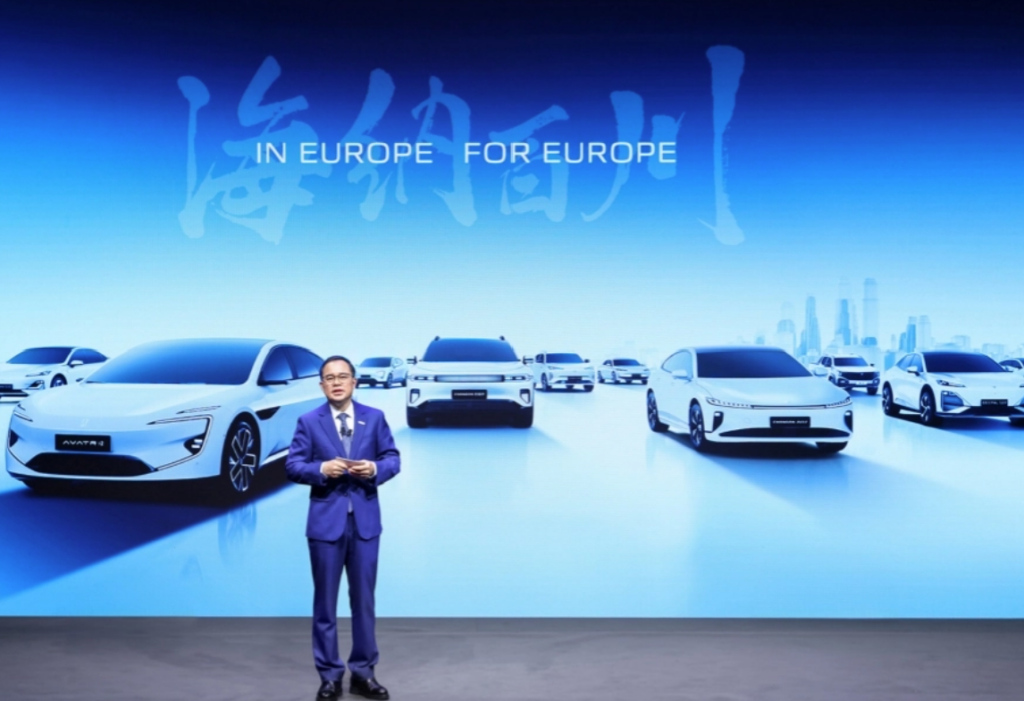
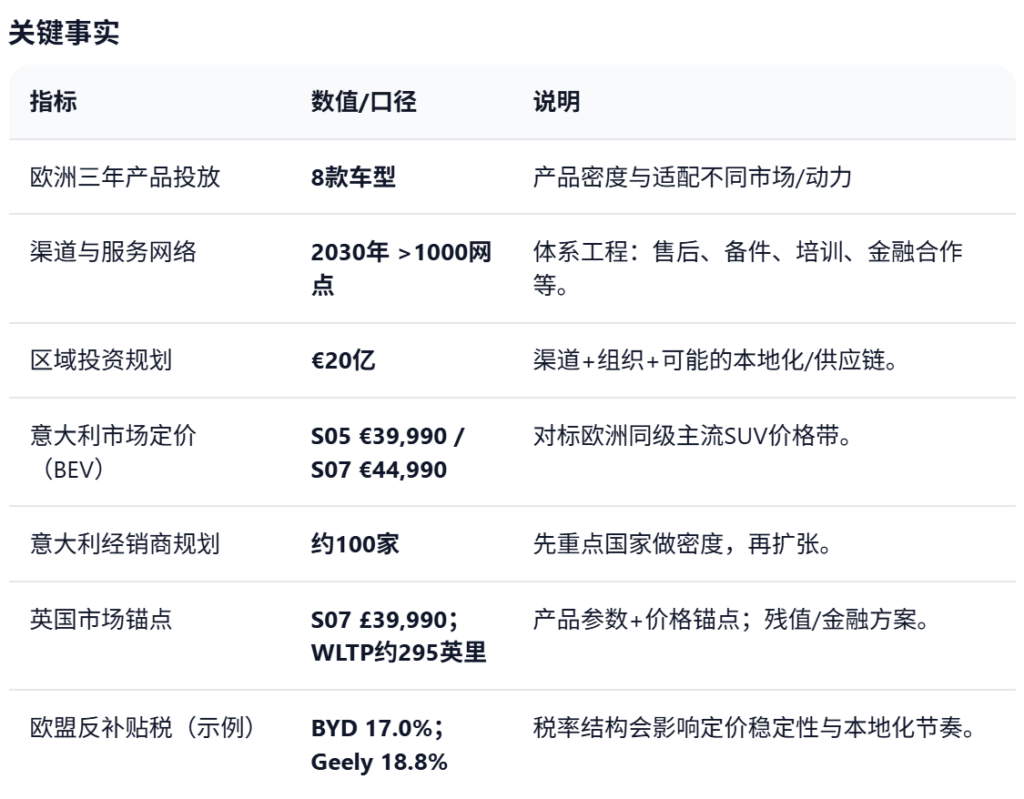
Changan is elevating Europe from one overseas market to one of the core battlegrounds of its international strategy. Recent public information shows Changan plans to launch 8 new models in Europe over the next three years, spanning its three product and brand lines: Changan, DEEPAL and AVATR. The DEEPAL S07 will be among the first models to arrive, entering markets in phases including the UK, Germany, the Netherlands, the Nordics and Southern Europe. Changan has also set a target of building more than 1000 sales and service outlets in Europe by 2030, and has disclosed its European investment plans and organisational direction.
With Europe's electrification, tariff policy, dealer landscape and competitive intensity all shifting at once, Changan's multi-pronged strategy is about more than "launching more models". It is an attempt to accomplish three tasks in a mature market: landing products, building a sales network and establishing the brand.
Three brands in parallel, with emphasis on coverage and pacing

Based on public statements and reports, the core of Changan's European strategy is "prepare three tracks in parallel and advance in phases":
- Product plan: 8 models over the next three years, covering BEV and PHEV. The Deepal brand will lead the launch, first bringing scalable mainstream models to market before gradually expanding the line-up.
- Organization and channels: targets 1000+ sales and service outlets by 2030, while building out the dealer network, service capability and spare-parts supply in parallel.
- Brand structure: the core Changan brand targets the mainstream mass market; Deepal serves as the NEV workhorse; Avatr carries more premium smart-tech and design positioning.
The advantage of this structure is broader coverage and more flexibility in responding to diverging demand. Europe varies widely internally: the Nordics have high EV penetration and strong consumer acceptance; the UK has fierce price competition; Southern Europe has greater practical demand for PHEVs; and Germany and France impose stricter requirements on service networks and compliance. Preparing multiple brands and powertrains objectively helps Changan "test multiple markets in parallel and find the best entry point."
SAIC Motor's MG vs. BYD
Chinese brands are no strangers to the European market; MG and BYD represent two typical paths:
- MG looks more like a "long-haul operator": building on existing brand awareness and established local channels, it drives sales through continuous product iteration and price competitiveness.
- BYD is more of a "system-driven" player: with vertical integration, fast product iteration and strong supply chain control, it has quickly established a presence in multiple European markets while pushing ahead with localisation.
What Changan shares with the two is that all three see Europe as a medium- to long-term strategic market and emphasize dense product launches and a systematic approach. The difference is that Changan has chosen a "multi-brand coordination" organizational model and places more emphasis on "phased expansion" in its entry pace. So rather than "copying" MG or BYD, Changan is pursuing a different solution for the European market.
Three brands in Europe
In Europe, a brand's first task is often not to "explain the technology" but to "help customers quickly understand who you are". With Changan pushing three brands in parallel, what the market most needs is a clear division of roles and a consistent narrative. Based on current information, their potential roles can be summarised in more "European" terms:
Changan brand: a mainstream choice geared more toward families and multi-purpose use
Suited to a broader customer base, emphasising space, practicality, reliability and value for money. In Europe, whether this line works usually depends on pricing structure + after-sales availability + residual value expectations.
DEEPAL: the volume driver for new energy vehicles
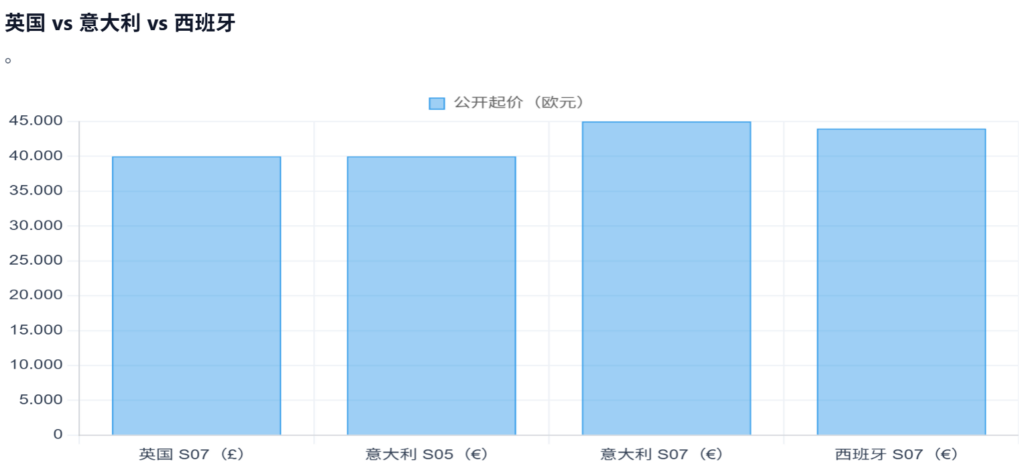
As the spearhead model, the Deepal S07 is positioned closer to Europe's most crowded yet largest segment: the mainstream compact/midsize SUV band. Deepal's key task is to deliver a package that "adds up" across price, range, space, equipment and delivery experience, serving both retail customers and corporate fleets.
AVATR: carrying "premium smart tech and design expression"
In Europe, premium brands tend to be tested on their whole system: not only the product, but also dealer image, service experience, financing and long-term cost of ownership. Avatr's value lies in raising the group's brand ceiling and technology image, but its rollout is usually better paced in step with the maturity of its service capabilities, so that it delivers a more consistent, end-to-end user experience.
This "division of roles" narrative is not about ranking the brands. It is meant to make the three brands easier to understand in the European market: one mainstream, one high-volume NEV, one premium image. As long as the narrative stays consistent, the three brands can reduce mutual interference and work together more efficiently.
Beyond the product: what decides whether it gets going
In Europe, product strength matters, of course, but scale is usually determined by three variables beyond the product. For Changan, these three variables are more like "infrastructure that must be built in parallel".
Cost of policy and tariffs
The EU's anti-subsidy tariff framework on Chinese EVs directly affects retail prices and margins, and indirectly affects finance and residual value models. For any brand entering Europe, the more practical question is not "what is the tariff rate" but whether the cost change can be absorbed by the supply chain, whether retail pricing can stay stable, and whether European financial institutions and leasing companies can build confidence in residual values.
This is also why many brands make localisation (joint production, assembly, local supply chains) their ultimate long-term strategy. It is not just a cost issue; it also relates to policy certainty and market trust.
How quickly sales channels and service capabilities take shape
In Europe, "network size" signals capability, but what matters more is the capability behind the outlets: spare parts supply and lead times, technician training and certification, execution of warranty and recall systems, and consistency across customer touchpoints (test drives, delivery, after-sales). Changan's outlet target is essentially a statement about how fast it can build this system. The market will ultimately test the target's real value through the "delivery experience" and "after-sales availability."
Financing packages and fleet channels
In many European markets, company cars, leasing and fleet purchases make up a large share of sales. For new entrants, fleets and leasing are often one of the more effective "scaling paths", because they build visible parc and word of mouth faster. But this path also depends on residual values, service networks and reliable supply. It is a systemic undertaking, not a single-point breakthrough.
2026–2028: the "system-building window"
Placed on a more realistic timeline, Changan's European push in 2026–2028 can be seen as a "system-building window":
- Early phase (2025–2026): establish a market presence with 1–2 core models and build a baseline dealer/service network and delivery cadence.
- Medium term (2026–2028): expand the product line-up and cover more countries, while integrating financing, fleet channels and after-sales into a replicable operating model.
- Later stage (after 2028): depending on policy and scale, pursue deeper localization and supply chain build-out to further improve costs and certainty.
This is not a judgement on whether Changan is "faster or slower", but a common pattern in the European market: building trust and systems takes time. Changan's strengths lie in its product pipeline and its willingness to commit organisational resources; the challenge is that the European market's systemic requirements are higher, and it must keep a steady pace while advancing on multiple fronts at once.
In Europe, it ultimately comes down to system capability
Seen more objectively, Changan's European push looks like a textbook globalisation move: a dense product plan to win market coverage, sales and service networks to earn customer trust, and a multi-brand structure to fit different segments, while keeping strategic flexibility at a time when policy and cost variables are uncertain.
Whether expectations are met ultimately depends on whether the system can produce a "replicable model": whether product introduction, dealer coordination, end-to-end service, financing support and compliant operations form a stable combination. Once that system is in place, expansion becomes easier and smoother; until then, the market cares less about slogans than about tangible delivery and service experience.
**Reproduction or excerpting without permission is strictly prohibited.** Questions and comments are welcome. Follow us for ongoing analysis of the latest developments in China and abroad.