Parts of this page are still being translated from Chinese.
Original report · 2026-11-19
TCO of electric heavy trucks in Europe: parity with diesel already reached in Germany, driven mainly by toll exemptions
MAN's benchmark customers and three case studies, ICCT's four-country calculations, Germany's toll exemption deadline and THG quota revenue
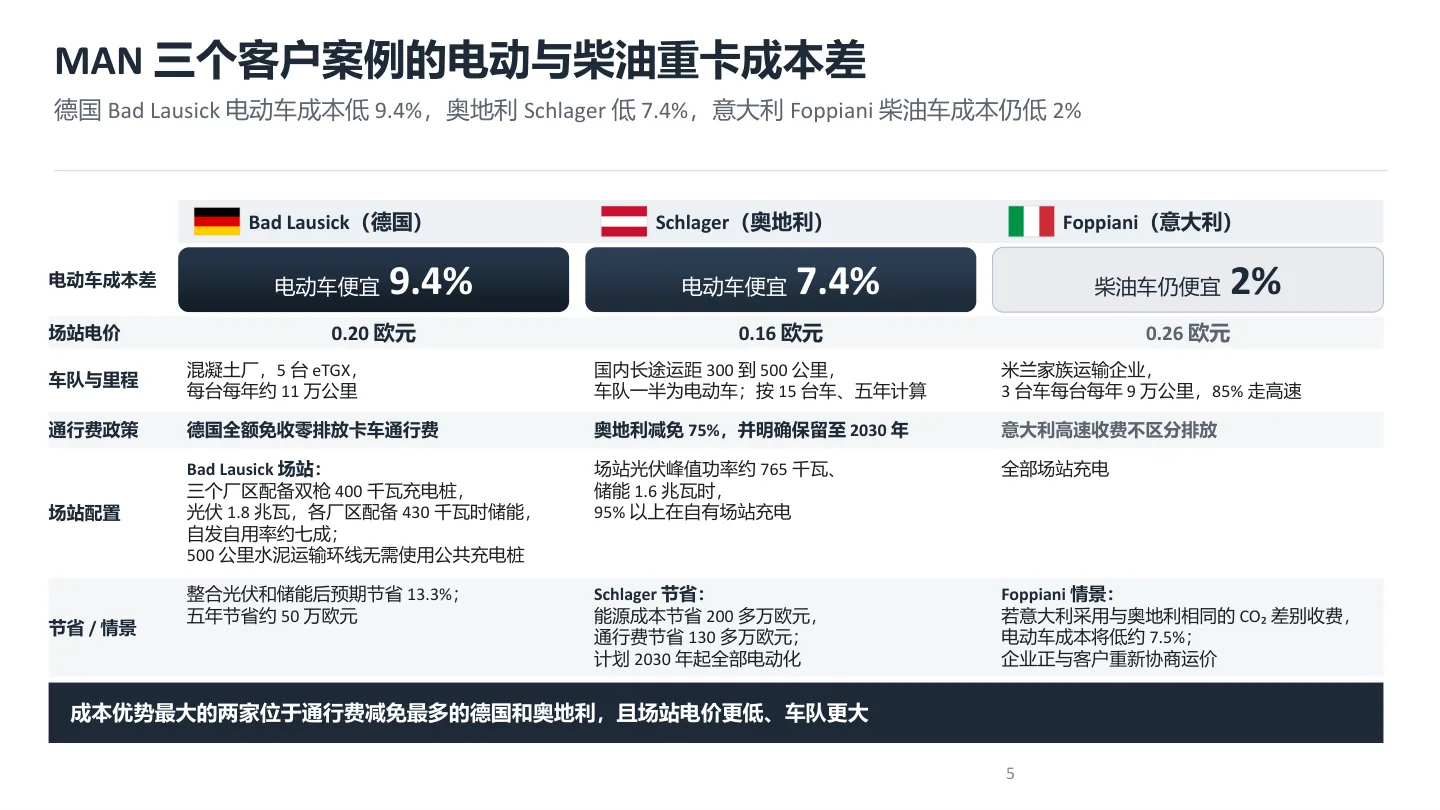
This report breaks down the per-kilometer cost of electric and diesel heavy trucks for MAN's baseline customer, tests the impact of assumptions such as tolls, ETS2, subsidies and annual mileage, compares three customer cases in Germany, Austria and Italy with ICCT's five-year total cost of ownership for four countries, and then calculates how the expiry of Germany's toll exemption affects five-year leases and how much revenue per kilometer THG quotas can generate from 2027. Data as of Oct 29, 2026.
If it won't open in WeChat, tap "…" at the top right and choose "Open in browser", or visit automusic123.cn/r/364 on a computer.
Key findings
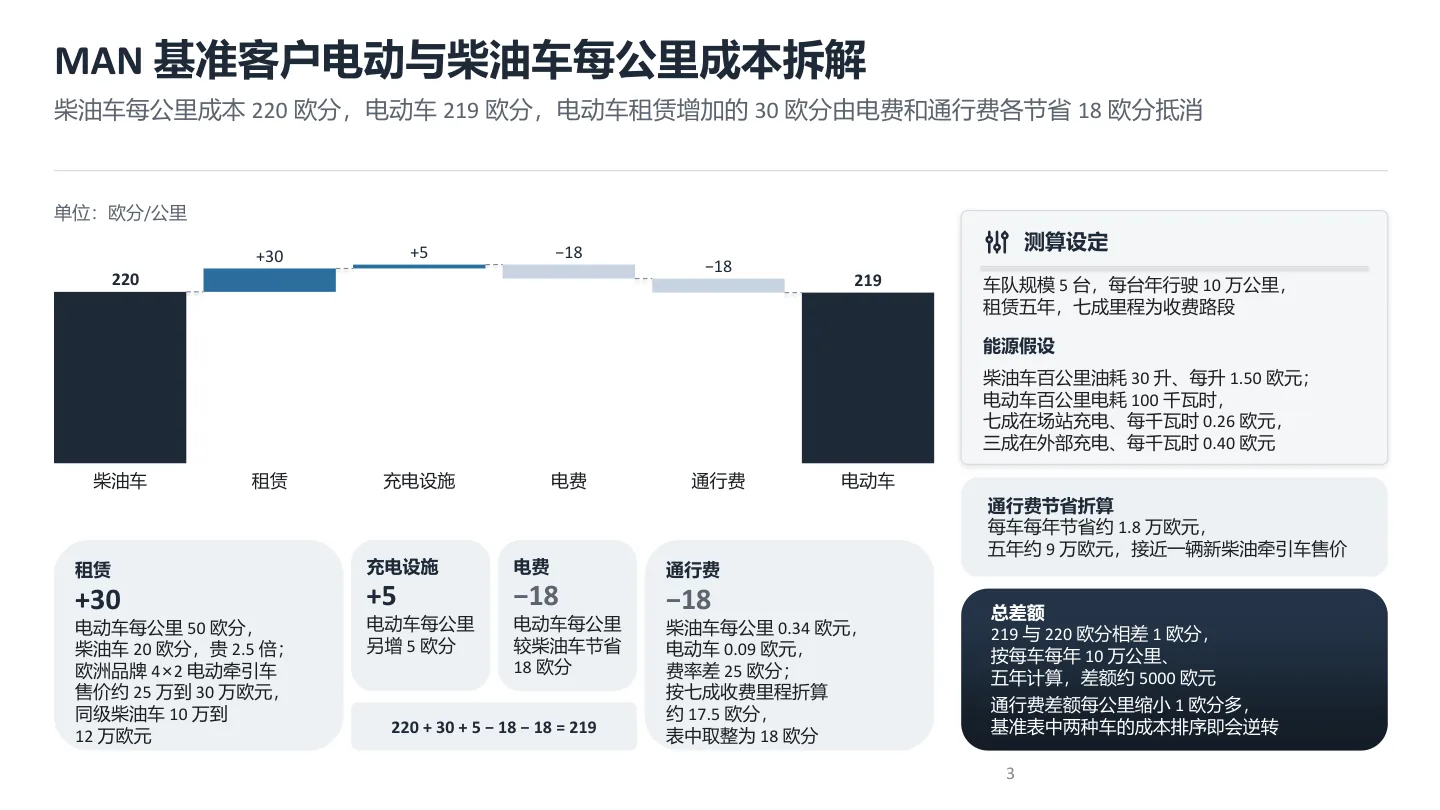
- In MAN's benchmark customer calculation, the electric heavy truck costs 219 euro cents per km versus 220 cents for diesel: the EV's lease is 30 cents more expensive, offset by savings of 18 cents each on electricity and tolls. If the toll differential were removed, the EV's advantage would shrink by 7.5 percentage points.
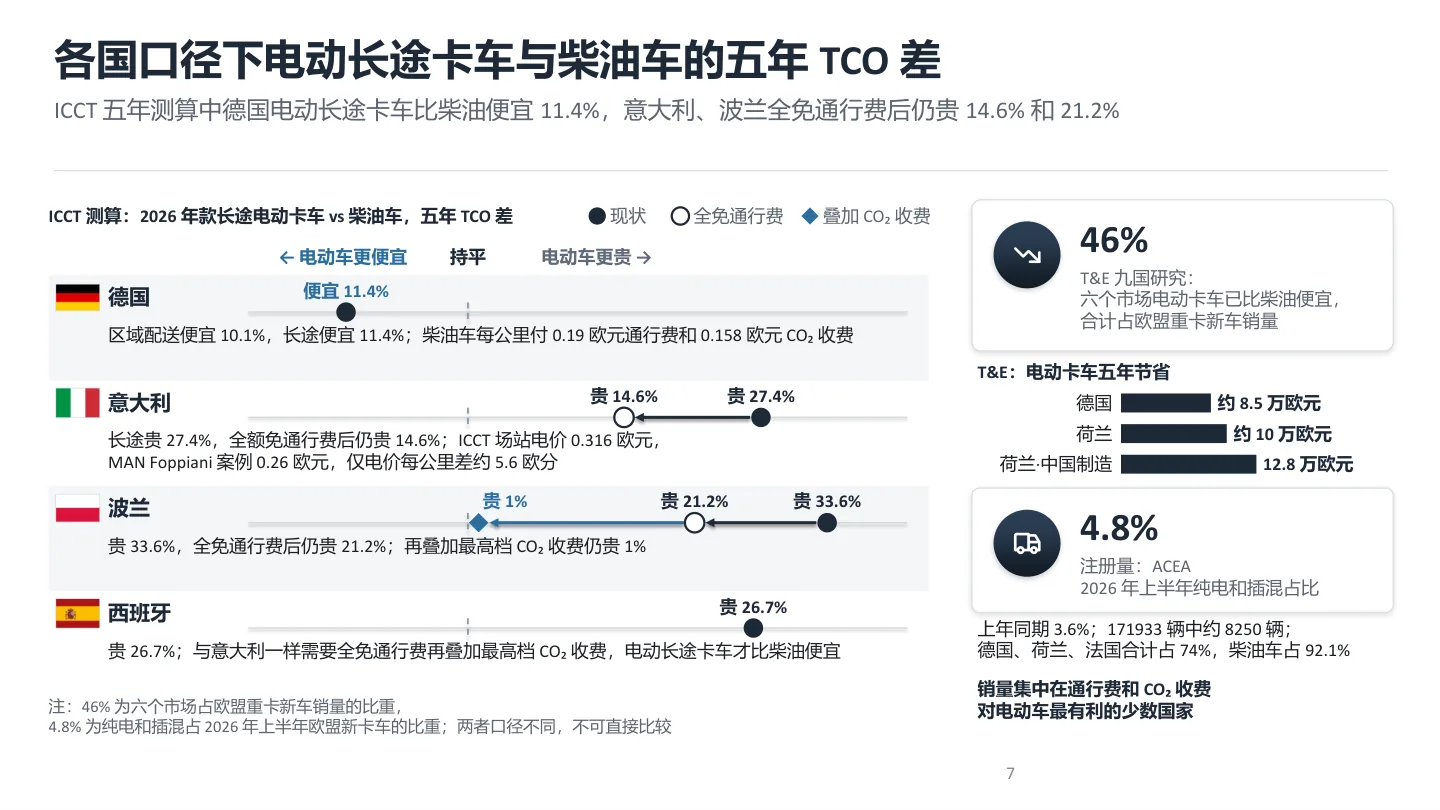
- In ICCT's five-year calculation, battery-electric long-haul trucks are 11.4% cheaper than diesel in Germany, but 27.4%, 33.6% and 26.7% more expensive in Italy, Poland and Spain respectively; even with full toll exemption, Italy and Poland remain 14.6% and 21.2% more expensive.
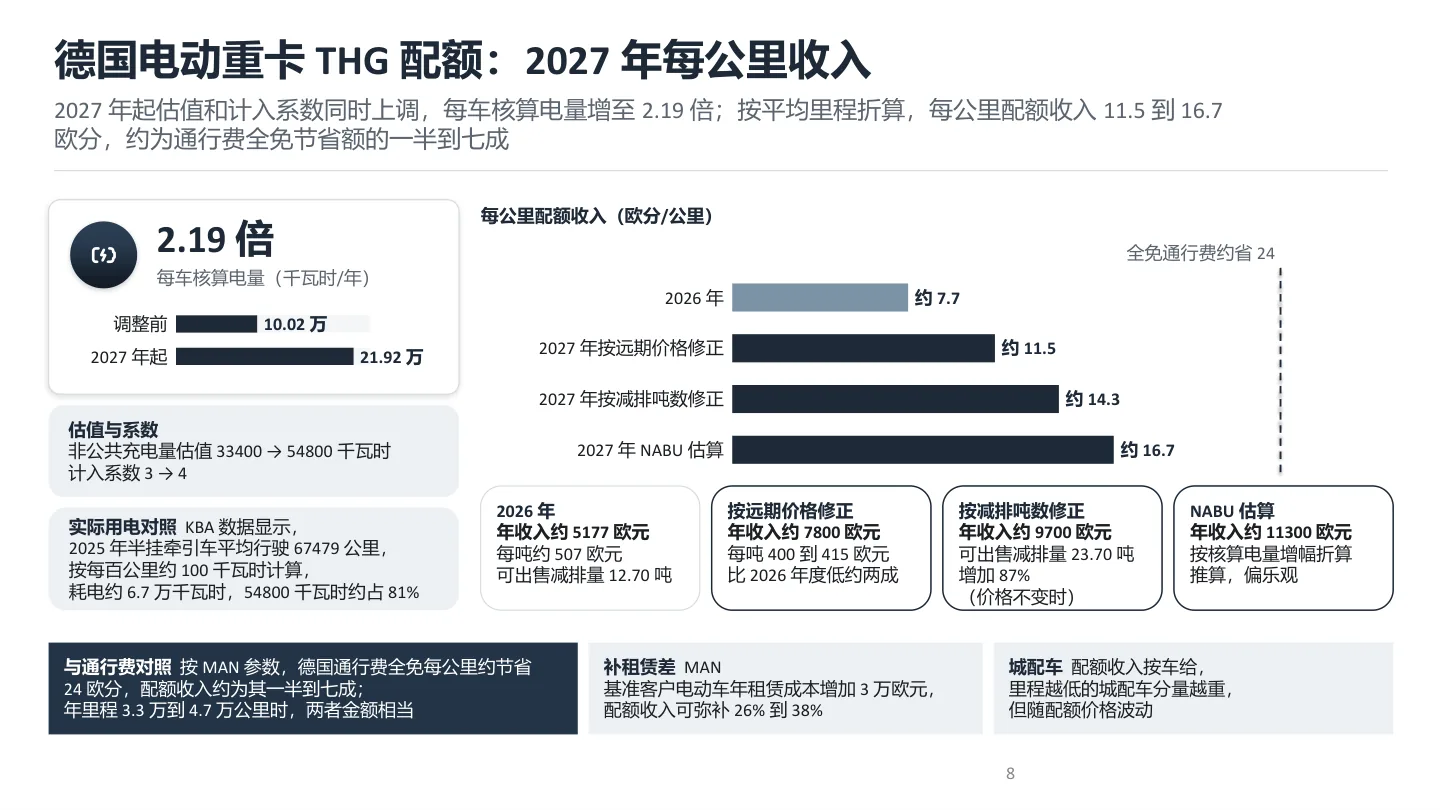
- Zero-emission trucks in Germany are fully exempt from tolls until Jun 30, 2031, with a reduction of up to 75% thereafter. From 2027, the electricity credited for THG quota calculation for each N3 electric heavy truck rises 2.19-fold, yielding quota revenue of about 11.5 to 16.7 euro cents per km.
Page preview
Click an image to enlarge; download the PDF for all 9 pages.
Contents
- Executive summary: per-km cost of electric vs. diesel heavy trucks2
- MAN benchmark customer: per-km cost breakdown, electric vs. diesel3
- MAN benchmark customer: impact of changing assumptions on the EV cost advantage4
- MAN: electric vs. diesel heavy truck cost gap across three customer cases5
- Germany's toll exemption period for zero-emission trucks and five-year leases6
- Five-year TCO gap between battery-electric long-haul trucks and diesel trucks, by country methodology7
- German THG quota for electric heavy trucks: revenue per km in 20278
- Policy and infrastructure milestones affecting cost estimates for electric heavy trucks in Europe9
Read the article version first
This report draws on the following 2 articles, all available to read online, including the full arguments and links to data sources.
More original reports
Report update alerts
-

WeChat official account
Chexun Zongheng RZ
Search for "Chexun Zongheng RZ" on WeChat and follow us
On a computer, scan the code with WeChat; if you opened this page in WeChat, long-press the code to scan it.
-

Work WeChat
AutoMusic
Add WeChat ID Frontline_vehicle
On a computer, scan the code with WeChat; if you opened this page in WeChat, long-press the code to scan it.
Also available via RSS: ArticlesWeek in review