Parts of this page are still being translated from Chinese.
Original report · 2026-11-20
European electric commercial vehicles in the first three quarters of 2026: electric shares and enabling conditions for buses, vans and trucks
Externally chargeable share of new EU buses, vans and trucks; buyers and financing; public charging gaps and UK–EU rules of origin
Based on ACEA registration data for the first three quarters, this report compares the powertrain mix of new buses, vans and trucks in the EU. It then uses the Pescara electric bus tender, zero-emission van shares and total cost of ownership in five countries, and electric heavy truck leasing and diesel tractor orders in month 11 as examples to show who buys each of the three vehicle types, how they are financed and how charging is arranged. Finally, it sets out the gap between public charging and the 2030 targets, and the tariff cost of the tighter UK-EU rules of origin in 2027. Data as of Nov 12, 2026.
If it won't open in WeChat, tap "…" at the top right and choose "Open in browser", or visit automusic123.cn/r/454 on a computer.
Key findings
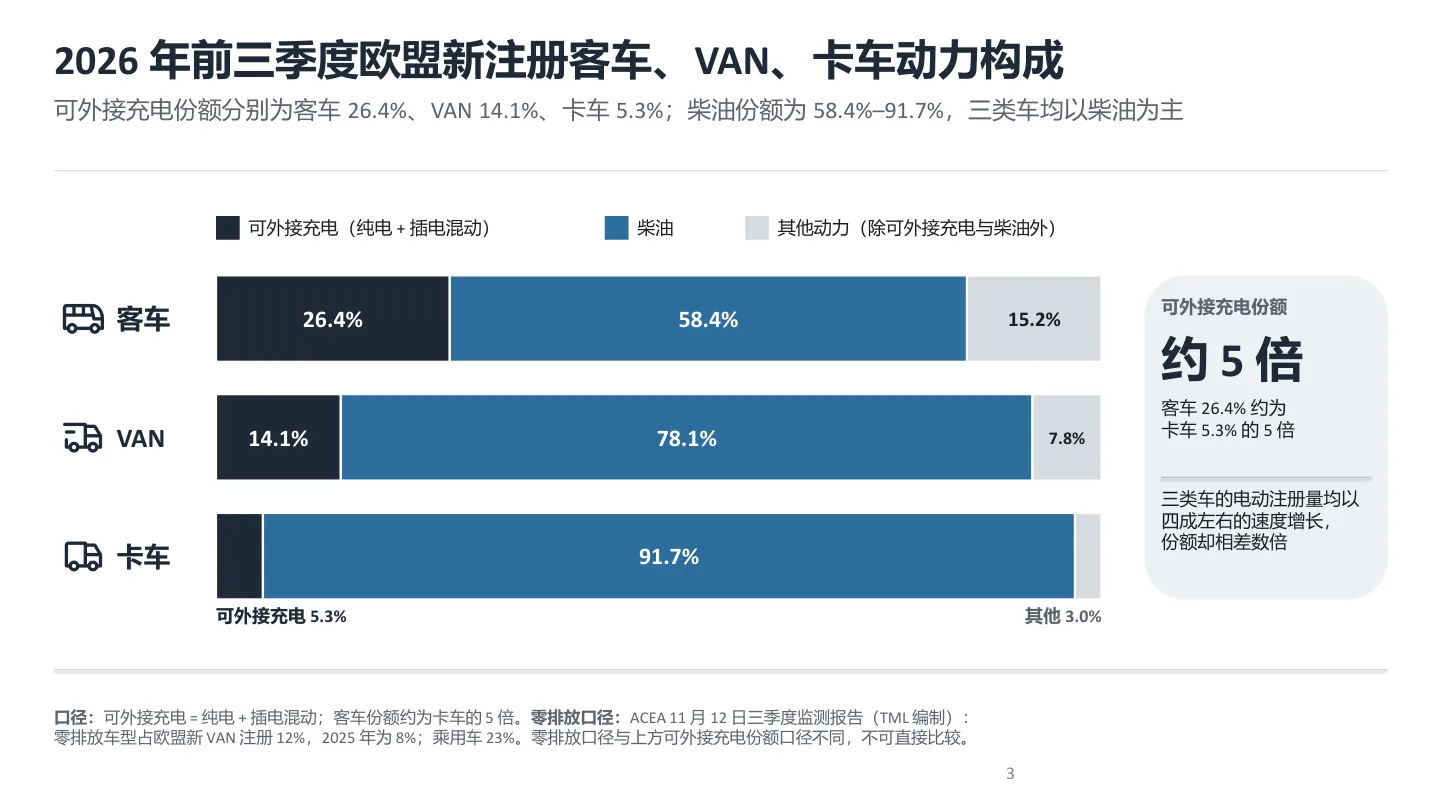
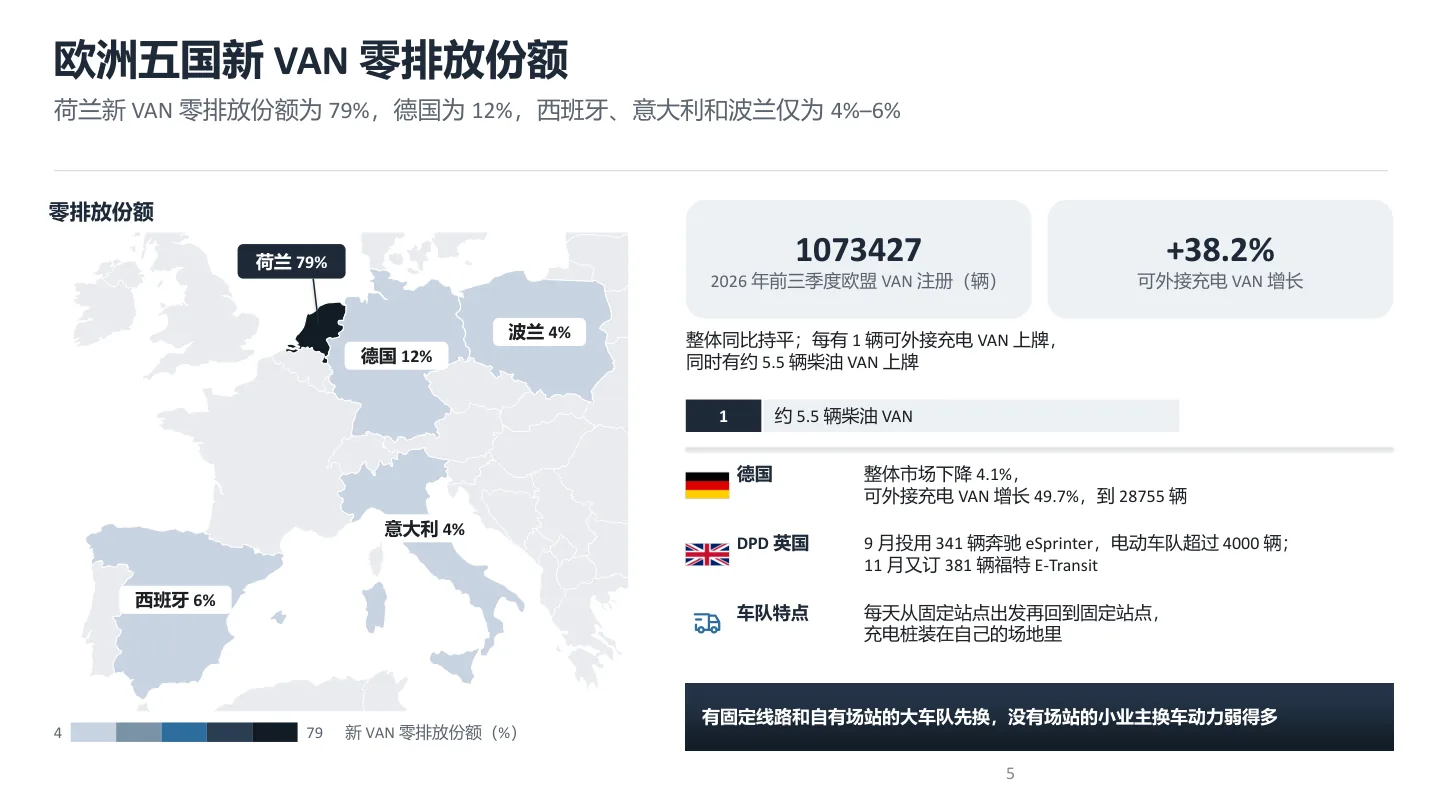
- In the first three quarters of 2026, plug-in models accounted for 26.4% of new bus registrations, 14.1% of new van registrations and 5.3% of new truck registrations in the EU, while diesel's share ranged from 58.4% to 91.7%. The zero-emission share of new vans was 79% in the Netherlands and 12% in Germany, but only 4% to 6% in Spain, Italy and Poland.
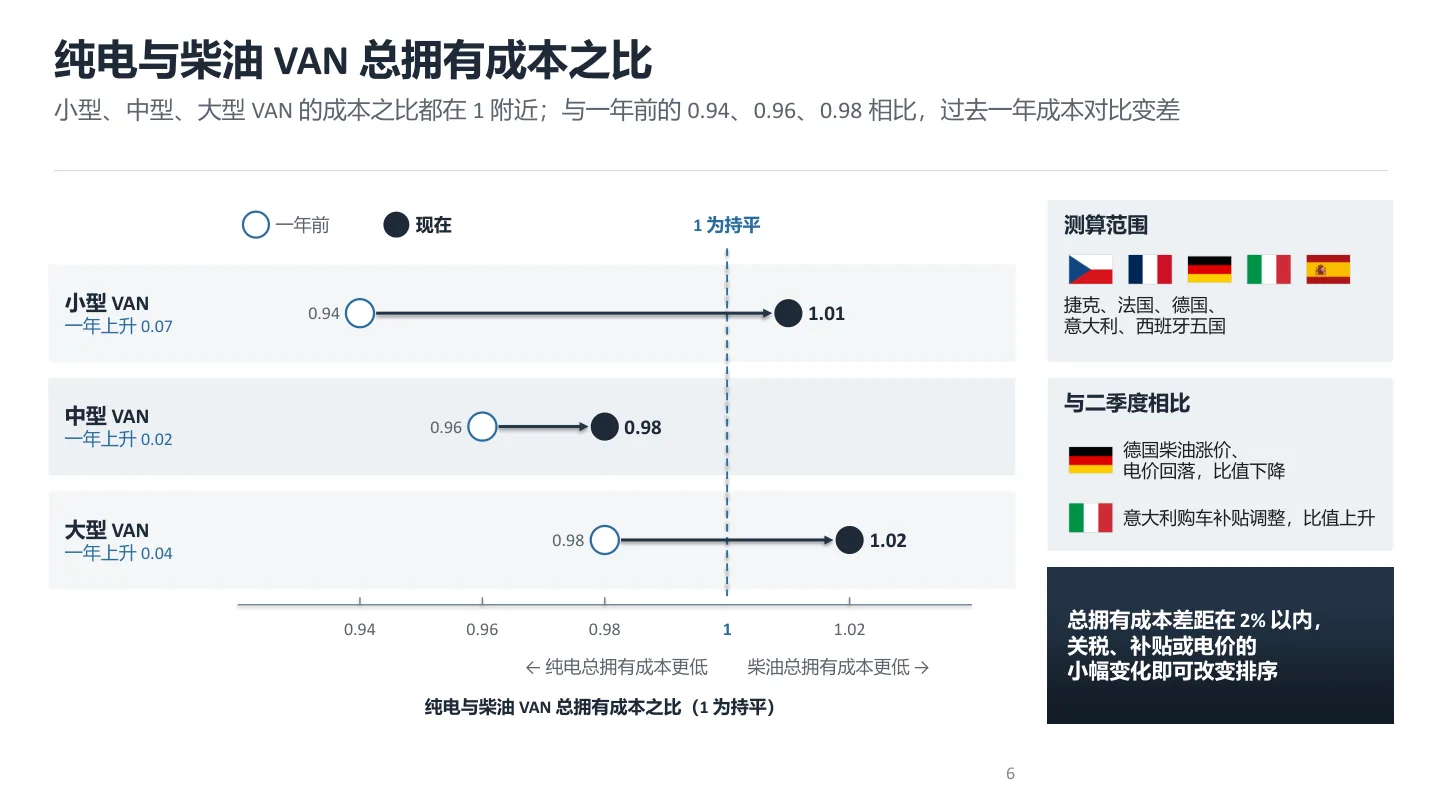
- In the five-country analysis, the TCO ratio of battery-electric to diesel vans is 0.98 to 1.02, versus 0.94 to 0.98 a year ago. In month 11, three leasing deals for electric heavy trucks totalled 74 units, while a single Iveco order in the same period was for 100 diesel tractors.
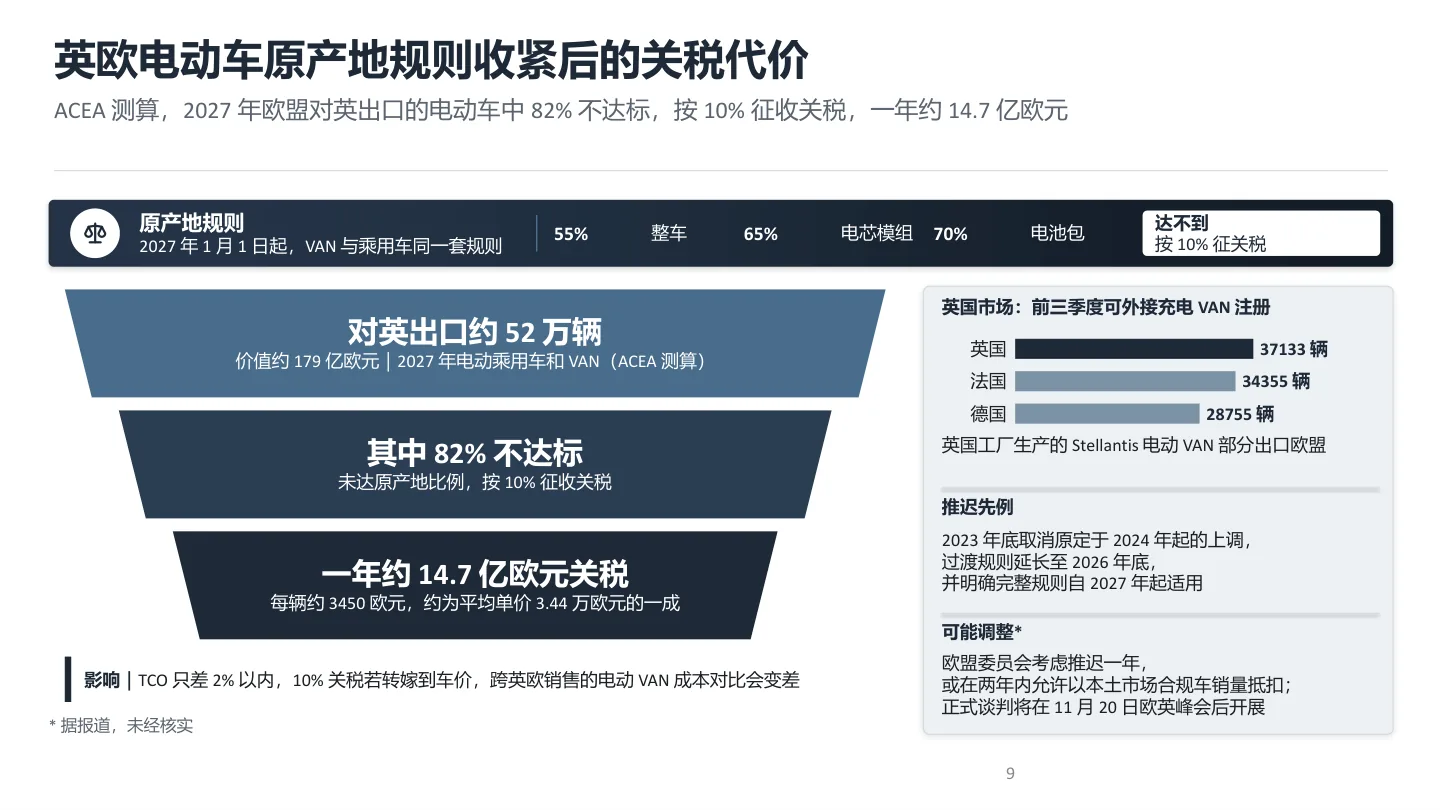
- The EU has about 1.2 million public charging points, 34% of its 2030 target of 3.5 million. ACEA estimates that 82% of the EVs the EU exports to the UK in 2027 will fail rules of origin, which at a 10% tariff would cost about €1.47 billion a year.
Page preview
Click an image to enlarge; download the PDF for all 10 pages.
Contents
- Share, buyers and charging across three types of electric commercial vehicles2
- Powertrain mix of new EU bus, van and truck registrations, Q1–Q3 20263
- Pescara electric city bus tender and the EU zero-emission timeline4
- Zero-emission share of new vans in five European countries5
- TCO ratio of battery-electric to diesel vans6
- Month 11 orders compared: 74 battery-electric heavy trucks leased vs. 100 diesel tractors7
- The gap between EU public charging and the 2030 target8
- Tariff cost of tighter UK–EU EV rules of origin9
- Buyers, financing and charging for three types of electric commercial vehicles10
Read the article version first
An article version on the same topic is available to read online, with the full argument and links to data sources.
More original reports
Report update alerts
-

WeChat official account
Chexun Zongheng RZ
Search for "Chexun Zongheng RZ" on WeChat and follow us
On a computer, scan the code with WeChat; if you opened this page in WeChat, long-press the code to scan it.
-

Work WeChat
AutoMusic
Add WeChat ID Frontline_vehicle
On a computer, scan the code with WeChat; if you opened this page in WeChat, long-press the code to scan it.
Also available via RSS: ArticlesWeek in review